What to see
Zipaquirá Salt Cathedral from Bogotá: bus, train, times and prices
We may earn a commission when you book through links on this page, at no extra cost to you. We don't visit or try the places we cover: we summarize published sources. How we work
In short
- From Bogotá, take TransMilenio to Portal del Norte then a bus: about 1 h to 1 h 30; the tourist train runs only on weekends and holidays and takes a full day.
- The cathedral is open daily from 9 am to 4:40 pm (last ticket sold at 4:40 pm); allow 3 to 4 hours there.
- The adult international Basic pass cost 118,000 COP in 2025, with Standard (126,000) and Premium (150,000) passes above it; confirm on the official site.
- ID is required at the entrance: bring your passport or a copy.
The Zipaquirá Salt Cathedral can be visited as a day trip from Bogotá: about 1 h to 1 h 30 by bus from Portal del Norte, or on the tourist train on weekends. It is open daily from 9 am to 4:40 pm; for a foreigner, the basic ticket is priced in the hundreds of thousands of pesos, to be checked on the official site.
In short: leave Bogotá around 8 am by TransMilenio and then by bus from Portal del Norte (transport budget: around ten thousand COP), book your ticket online and plan 3 to 4 hours there. The weekend train is more picturesque but much longer.
Zipaquirá Salt Cathedral: what is it?
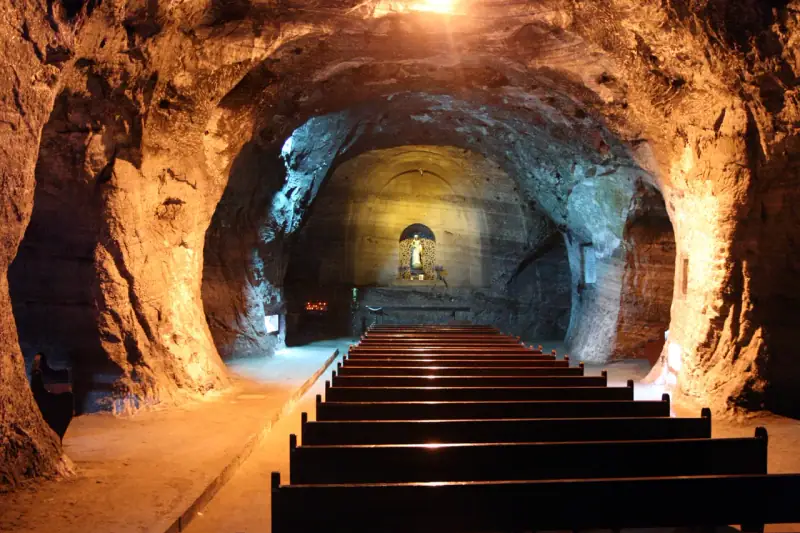
The town of Zipaquirá (Cundinamarca department) lies about fifty kilometers (31 mi) north of Bogotá, at about 2,650 m (8,695 ft) of altitude. The cathedral is built in a former salt mine: galleries dug into the rock lead to a Way of the Cross, then to a large underground nave lit with colored lights.
It is not a church in the classic sense: there is no facade to admire, everything happens underground. One practical detail matters: the site is a full visitor park, with shops, cafés and side attractions. Hence the difference between the simple mine route and the more complete options.
How to get from Bogotá to Zipaquirá
The bus from Portal del Norte (the simplest)
This is the method most visitors choose. Take TransMilenio to the Portal del Norte station, from which frequent intercity buses leave for Zipaquirá. The trip goes through Chía and generally takes 1 h to 1 h 30 depending on traffic. Local guides give a fare of around 8,000 to 13,000 COP depending on the departure point; ask the price before boarding.
Once in Zipaquirá, reach the cathedral (corner of Calle 1 and Carrera 6, according to the official site) on foot or by taxi: just ask for “la Catedral de Sal”.
The tourist train (weekends and holidays)
The Tren Turístico de la Sabana runs only on weekends and public holidays. According to Bogotá’s city hall (2025 program), it leaves Gran Estación around 8:45 am or Usaquén station around 9:15 am, arrives in Zipaquirá around 10:45 am and leaves again around 3:15 pm, for a return in late afternoon. The full day lasts about 8 h 30: it is an excursion with entertainment on board more than a simple means of transport. The adult ticket was announced at 85,000 COP. Times and fares change: confirm them before booking.
By ride-hail or taxi
For two or three people, a round-trip ride-hail remains reasonable and saves you the wait at Portal del Norte. The article on Uber in Colombia explains what is allowed and how to pay. Agree on the price and return time if you take a regular taxi.
On an organized visit
If you prefer to manage nothing, several operators combine Zipaquirá, sometimes with the Laguna de Guatavita, from Bogotá.
Zipaquirá excursion from Bogotá: compare day excursions with transport, entry and guide, with traveler reviews.
Hours: what time to arrive
The official site shows it is open daily from 9 am to 4:40 pm, with a last ticket sale at 4:40 pm. Aim to arrive around 9:30 am on weekdays: school groups and excursions arrive mostly in late morning, and on weekends attendance is much higher.
If you come on a Colombian public holiday or during Holy Week, expect a big crowd and higher fares. In that case, an online reservation is almost essential.
Prices: which ticket to choose
The official site offers three “passports” (Basic, Standard and Premium), each with a national and an international rate. The figures are updated every year: here are ballpark figures, to confirm on the prices page.
| Option | International adult (press, 2025) |
|---|---|
| Basic passport | 118,000 COP |
| Standard passport | 126,000 COP |
| Premium passport | 150,000 COP |
Other benchmarks from the official site:
- Free for children under 4; those aged 4 to 12 and over 60 get a reduced rate.
- Ruta del Minero: 13,000 COP, as an add-on to a Basic or Standard passport.
- Private guide: 110,000 COP at the ticket office.
- Parking: 13,000 COP; luggage storage: 7,000 COP.
ID is requested at the entrance: bring your passport or a copy. To place these amounts in your overall stay, see the page on the budget in Colombia. Card payment is possible at the ticket office, but keep a little cash for buses and cafés: see the guide to withdrawing money in Colombia.
What to see during the visit
The main route takes a little over an hour on a guided visit. Here are the stages in order:
- The access galleries: a long, gently sloping corridor where you go from daylight to artificial lighting.
- The Way of the Cross: fourteen chapels carved into the rock, each with a cross, retracing the Passion.
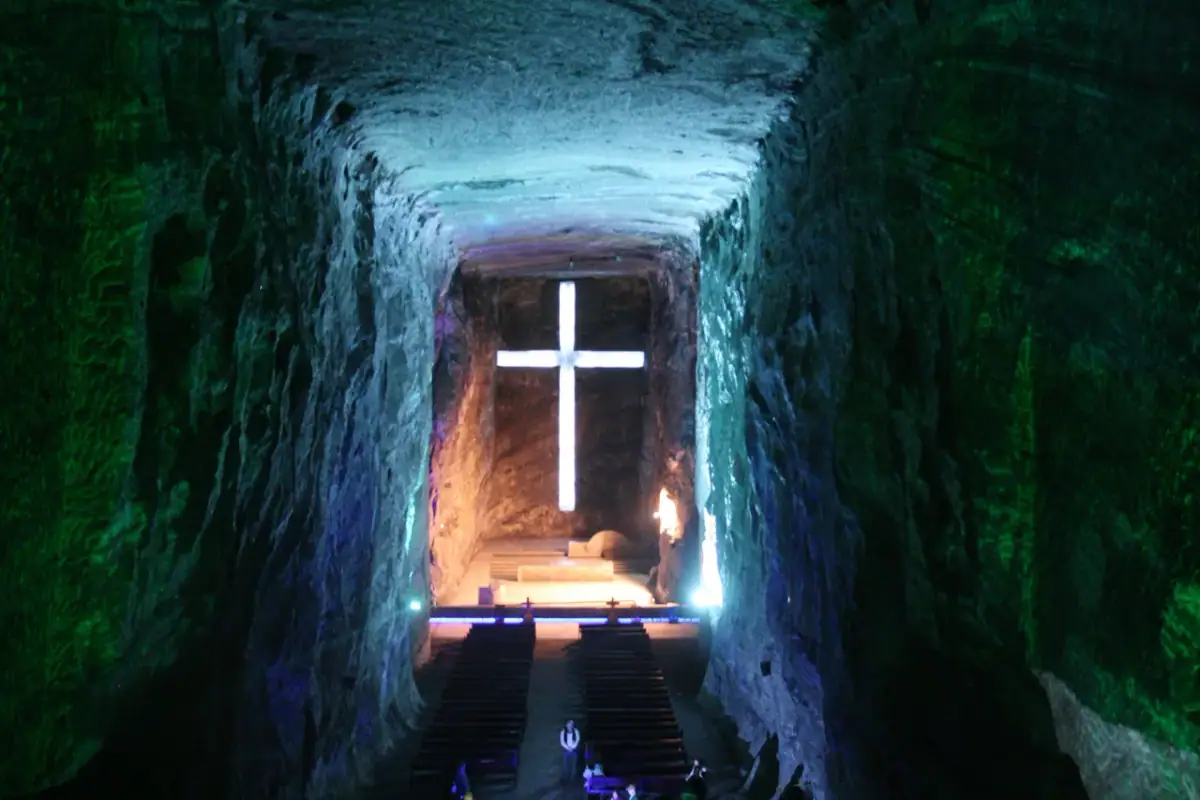
- The great nave: the main hall, with its large cross sculpted in salt and its play of light.
- The side areas: souvenir shop, cafés and sometimes a sound and light show, extra depending on the option.
If you like the mine, you can extend with a tour of the town, notably the central square. The rest of the visit is essentially a moment of calm under the vault.
Sleeping in Bogotá before the excursion
Stay in a neighborhood well linked to TransMilenio to save time in the morning.
Altitude and fatigue: what to know
Zipaquirá is at an altitude comparable to Bogotá’s. Ask your doctor or a travel clinic, and see the official travel health pages (CDC in the US, TravelHealthPro in the UK), and the article on altitude in Bogotá. The visit itself is not very athletic, but walking on slopes and the cool mine air tire you more than you might think.
Leaving at the right time
The best organization for a quiet day:
- 7:30 am: leave your hotel for Portal del Norte.
- 9:30 am: arrive at the cathedral, buy or collect tickets.
- 10 am-12 pm: route through the mine.
- 12:30 pm: lunch in the town of Zipaquirá. The local daily special is detailed in the guide to the almuerzo corriente.
- 2 pm: return to Bogotá, before the evening traffic jams.
This day fits well into a stay of a few days in the capital: see the Bogotá guide.
What to bring
No technical gear, but a few details change the comfort: a warm layer, shoes that grip on wet rock, your ID and a little change.
Quick recap
| Question | Answer |
|---|---|
| Distance from Bogotá | About 50 km (31 mi) north |
| Simplest access | TransMilenio to Portal del Norte, then bus |
| Trip duration | About 1 h to 1 h 30 |
| Tourist train | Weekends and holidays only |
| Hours | Daily, 9 am-4:40 pm |
| Visit length | Guided route: a little over an hour; plan 3 to 4 h there |
| International adult ticket (2025) | From 118,000 COP |
| ID | Required at the entrance |
Sources
Frequently asked questions
How long does it take to get from Bogotá to the salt cathedral?
Allow about 1 h to 1 h 30 by bus from Portal del Norte, more at rush hour or on weekends. The tourist train is longer: it is a full day. Plan 3 to 4 hours in total, meals included.
What are the Zipaquirá Salt Cathedral's hours?
The official site indicates it is open daily from 9 am to 4:40 pm. Hours may be extended on certain dates (Holy Week, for example): check catedraldesal.gov.co before you go.
How much does entry cost for a foreigner?
According to the Colombian press, the adult international "Basic passport" cost 118,000 COP in 2025, with more expensive Standard and Premium options. Prices are reassessed every year and rise in high season: check the official prices page.
Can you go without booking?
Yes on weekdays outside holidays, but booking online on the official site avoids the ticket-office line, especially on weekends and public holidays. The last ticket is sold at 4:40 pm.
Do you need a guide?
The route is marked and the basic guided tour, a little over an hour, is included in the standard route. A private guide costs extra (110,000 COP at the ticket office according to the official site); it is not essential.
Is it cold in the mine?
It is cool and damp underground all year, even more so after a day in the Sabana sun. A light jacket is enough. The mine is reached on foot through gently sloping galleries.
More Colombia guides
Keep reading

Visiting Bogotá: a complete guide to Colombia's capital
Everything you need to visit Bogotá: La Candelaria, Museo del Oro, Monserrate, Usaquén, budget, transport and practical tips for 2026.
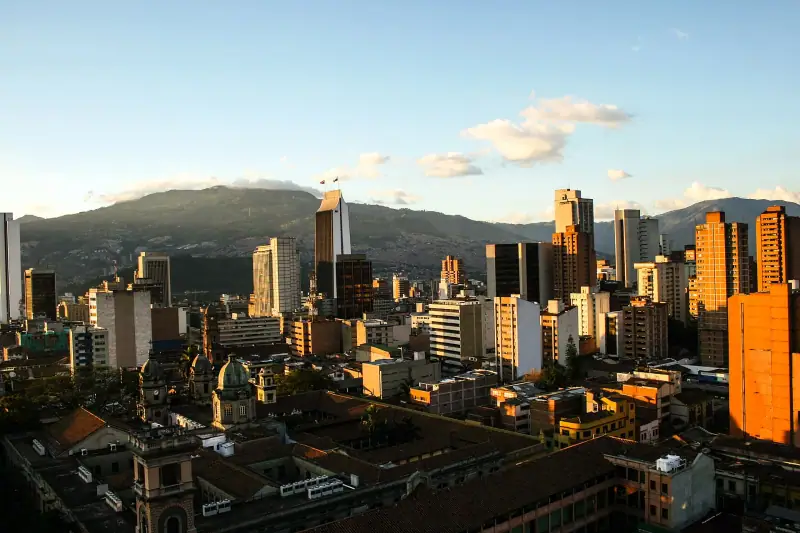
Visiting Medellín: a complete guide to the city of eternal spring
Everything you need to visit Medellín: El Poblado, Plaza Botero, Comuna 13, Guatapé, lodging, budget and practical tips for 2026.
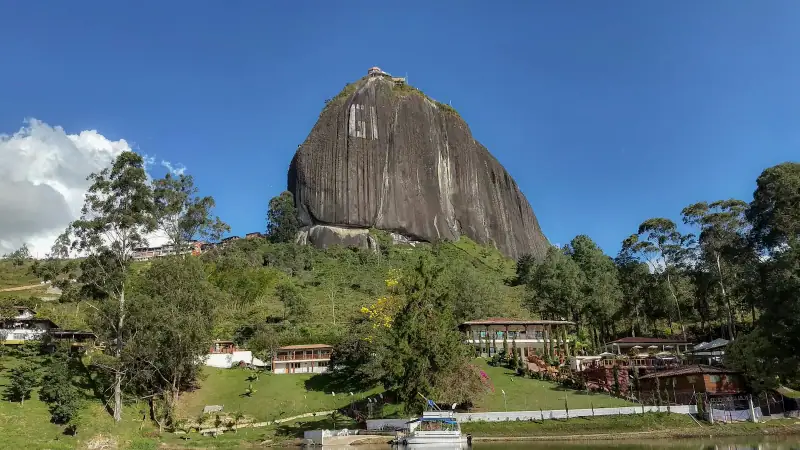
Visit Guatapé and the Piedra del Peñol without a car: bus from Medellín, times and prices
Guatapé without a car from Medellín: Terminal del Norte buses, times, prices, the 700 steps of the Piedra del Peñol and tips to avoid the crowds.
Ready-made
Colombia itineraries

20 days
Colombia road trip: a 3-week itinerary by car
A 3-week Colombia road trip from Bogotá to Cartagena via the Andes, the coffee region and the Caribbean coast. Routes, stops and practical tips.
11 days
Colombian Andes road trip: mountain ranges, colonial towns and coffee country
The Colombian Andes in 10 to 12 days: Villa de Leyva, Barichara, Medellín and Salento. Stage-by-stage route, practical tips and where to stay.
10 days
Colombia in 10 days without a car: a realistic itinerary by plane and bus
Colombia in 10 days without renting a car: Bogotá, Medellín, Salento, Cartagena. Stops, distances, travel times, flights and buses, transport budget.