Plan your trip
Best time to visit Colombia: a month-by-month guide
We may earn a commission when you book through links on this page, at no extra cost to you. We don't visit or try the places we cover: we summarize published sources. How we work
In short
- Colombia has a main dry season from December to March and a smaller one in July-August; the Caribbean coast is driest from November to April.
- If you only have one window, December to March suits beaches, the Andes and the coffee region; July-August is a good alternative.
- Humpback whales visit the Pacific coast from July to November, with a peak in August-September (Bahía Solano and Nuquí).
- Key dates: Barranquilla Carnival (February), Medellín's Feria de las Flores (early August) and Cali's Feria (December 26-30).
Colombia is one of the few destinations in the world where the question “when to go?” has no simple answer. Crossed by the equator, with an Atlantic coast and a Pacific coast, Andean highlands and Amazon forests, Colombia has microclimates that vary considerably from one region to another. There is no “bad season” to visit Colombia, but there are optimal periods depending on your destination and activities.
Understanding the Colombian climate
Unlike temperate countries, Colombia does not have summer and winter seasons in the traditional sense. Being close to the equator, temperatures stay fairly stable all year. What varies is rainfall, with dry and rainy seasons that differ by region.
The two national seasons (approximate)
Main dry season (December to March): This is generally the sunniest period across most of Colombia. The Andes, the Caribbean coast and many other regions have their driest period. It is high tourist season, with higher prices and more people at popular sites.
Rainy season (April to June): Rains arrive gradually. It is not a period to avoid, though: showers are often short and intense, landscapes are brilliantly green and there are far fewer tourists.
Short dry season (July to August): A second, drier climate window, particularly marked in the Andes and on the Caribbean coast. It is high season for whale watching on the Pacific coast.
Secondary rainy season (September to November): The rainiest period in some regions, notably the Andes. Rains can cause landslides on some roads. It is also low tourist season with the lowest prices.
Weather by region
Caribbean coast (Cartagena, Santa Marta, Tayrona)
The north coast is Colombia’s driest and sunniest region. This is where the climate is most predictable.
- Best time: November to April (dry season, accessible beaches, calm sea)
- To avoid: May to October (frequent rain, rough sea, some Tayrona beaches closed)
- Temperatures: 28-33 °C (82-91 °F) all year
- Worth knowing: the trade winds blow strongly in January-February, making the sea sometimes rough in Cartagena but ideal for kitesurfing at Cabo de la Vela
The Andes (Bogotá, Medellín, Cali, Salento)
In the Andes, the climate varies enormously with altitude. Bogotá (2,600 m / 8,530 ft) is cool, Medellín (1,500 m / 4,920 ft) is spring-like, Cali (1,000 m / 3,280 ft) is warmer.
- Best time in Bogotá: December to March and July to August (dry seasons)
- Best time in Medellín: December to March and July to August (less rain)
- Flower season in Medellín: August (Feria de las Flores, one of Colombia’s most beautiful festivals)
- Coffee region (Salento): can be visited all year, but December to February and July to August are the driest
Pacific coast (Bahía Solano, Nuquí)
The Pacific coast is one of the rainiest areas in the world (up to 8,000 mm / 315 in of rain a year in Nuquí). Paradoxically, it is also one of the most spectacular.
- Best time for whales: July to November (humpback whales)
- Best time for the beach: January to March (less rain)
- Watch out: “rains” on the Pacific happen even in the dry season; bring a raincoat
The Amazon (Leticia)
- Best time: June to September (high water, easier access by boat; wildlife more visible)
- High water: March to May (some villages flooded, primary forest reachable by dugout canoe)
- Temperatures: 30-35 °C (86-95 °F) with high humidity all year
Month by month: what to do in Colombia
January: dry season at its best
January is one of the best months to visit Colombia. The dry season is in full swing on the Caribbean coast and in the Andes. It is ideal for Cartagena, Santa Marta, Tayrona Park and the coffee region.
- Event: the Festival Centro in Bogotá, generally in January (check the edition’s dates)
- Crowds: relatively high (North American holidays)
- Prices: high until mid-January, then normal
February: Barranquilla Carnival
February is the month of the Barranquilla Carnival, listed by UNESCO as intangible heritage and considered the second-largest carnival in the world after Rio’s. Four days of festivities, music, dance and spectacular costumes.
- Headline event: Barranquilla Carnival (4 days before Mardi Gras)
- Climate: dry season on the coasts and in the Andes
- Tips: book your lodging in Barranquilla 3-4 months ahead during the carnival
March: last good days of the dry season
The dry season starts to decline in some regions, but March remains an excellent month to visit the Caribbean coast and the Andes. Vegetation begins to turn green again.
April: Holy Week and the start of the rains
Holy Week (Semana Santa) is a period of major religious celebrations in Colombia, with spectacular processions, notably in Popayán, nicknamed “the white city”.
- Event: Semana Santa in Popayán (magnificent night processions)
- Climate: start of the rains in the Andes, Caribbean coast still lovely
- Crowds: high because of local Easter holidays
May-June: green low season
The rainy season sets in in the Andes. Landscapes are extraordinarily green, tourist sites less crowded and prices more affordable. Excellent for nature lovers.
- Advantage: fewer tourists, low prices, lush landscapes
- Drawback: frequent afternoon rain in the Andes
July-August: whales and Feria de las Flores
July and August mark the return of a drier period in the Andes and an ideal season for the Pacific coast.
- Headline event: Feria de las Flores in Medellín (early August, 10 days of festivities)
- Whale watching: Pacific coast (Bahía Solano, Nuquí)
- Feria de Cali: December (worth noting when planning your year)
- Climate: good period for the Andes and the Caribbean coast
September-November: whales and the Pacific
The rainy season is at its peak in the Andes, but the Pacific continues to offer wonderful whale sightings until November. The Caribbean coast starts to get its good weather back in November.
December: festivities and doing nothing
December is festive in Colombia. The dry season returns in most regions, Christmas lights illuminate the cities (Medellín is famous for its spectacular decorations), and the Feria de Cali (December 26-30) turns the city into a huge salsa party.
- Event: Feria de Cali (December 26-30, the biggest salsa festival in the world)
- Christmas lights: Medellín offers Colombia’s most beautiful lights
- Crowds: high season, high prices around Christmas and New Year
- Weather: dry season in most regions
Recommendation by traveler profile
| Profile | Best time | Priority destinations |
|---|---|---|
| Beaches and sun | December to March | Cartagena, Tayrona, San Andrés |
| Hiker | December to March, July | Lost City, Cocora, La Macarena |
| Festival lover | December to February | Barranquilla Carnival, Feria de Cali |
| Whale watching | July to November | Nuquí, Bahía Solano |
| Coffee and the Andes | December to March | Salento, Armenia, Manizales |
| Tight budget | April-June, Sept-Nov | The whole country at lower cost |
| Avoiding crowds | April-June | The whole country with fewer tourists |
In summary, if you have only one period to choose, prefer December to March to enjoy the Caribbean beaches, the Andes and the coffee region in optimal conditions all at once. July and August are an excellent alternative, especially if you want to combine Medellín (Feria de las Flores) and the Pacific coast (humpback whales).
Frequently asked questions
When is the dry season in Colombia?
Colombia has two dry seasons: December to March (main) and July to August (secondary). These periods vary by region: the Caribbean coast is dry from November to April, the Andes from December to March and from July to August.
Can you go to Colombia in July-August?
Yes, July and August are the second dry season in Colombia, drier in the Andes and on the Caribbean coast. It is also the period for watching humpback whales on the Pacific coast (July to November), where it nevertheless rains even in the dry season: bring a raincoat.
What is the weather in Cartagena in December?
December in Cartagena is one of the best periods with a dry season, little rain, temperatures of 28-32 °C (82-90 °F) and a calm sea. It is also high tourist season with higher prices.
When can you watch whales in Colombia?
Humpback whales visit the Colombian Pacific coast from July to November, with a peak in August-September. Bahía Solano and Nuquí are the best watching spots.
Can you visit Colombia all year?
Yes, Colombia can be visited all year thanks to its climatic diversity. By choosing the right regions for the season, you will always find a place with pleasant weather.
More Colombia guides
Keep reading
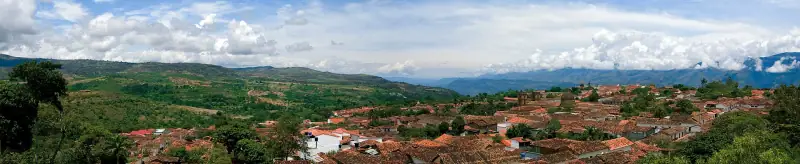
Barichara from Bogotá: bus via San Gil, travel time, prices and tips
How to get from Bogotá to Barichara: bus to San Gil then a local bus, travel time, flying via Bucaramanga, the Camino Real to Guane, where to stay.
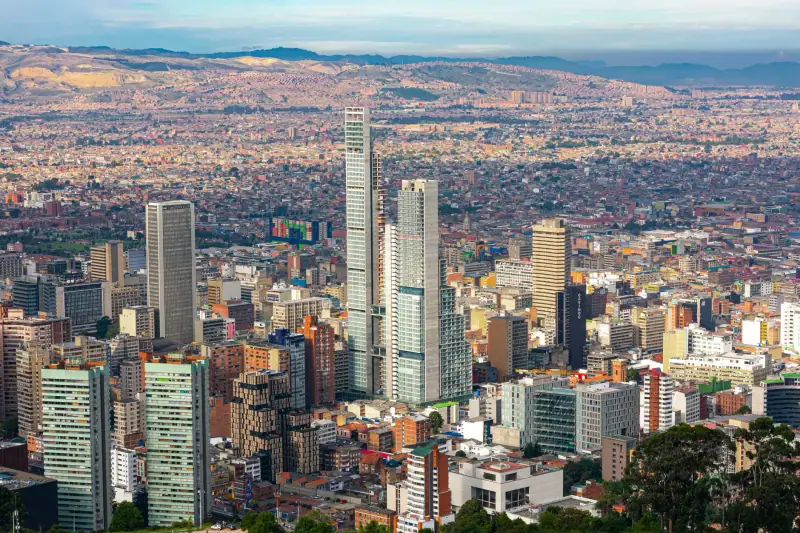
Visiting Bogotá: a complete guide to Colombia's capital
Everything you need to visit Bogotá: La Candelaria, Museo del Oro, Monserrate, Usaquén, budget, transport and practical tips for 2026.
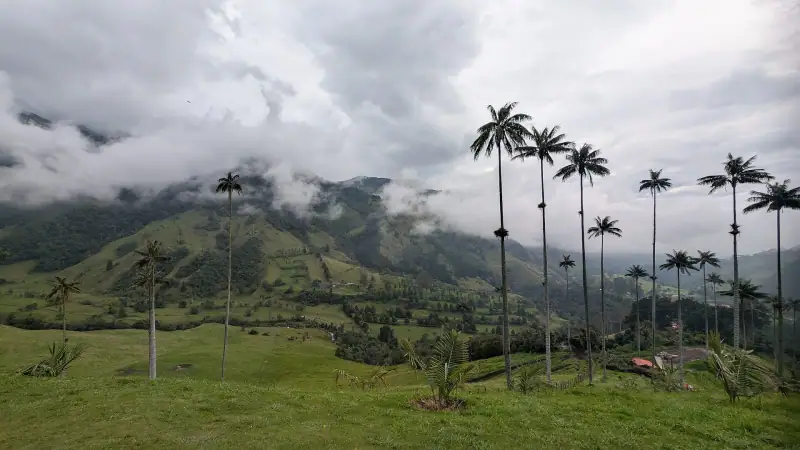
Valle de Cocora without a guide: jeep, prices, loop and difficulty
Hiking the Valle de Cocora without a tour: Willys jeep from Salento, prices, which loop to pick, difficulty and mistakes to avoid. A practical guide.
Ready-made
Colombia itineraries
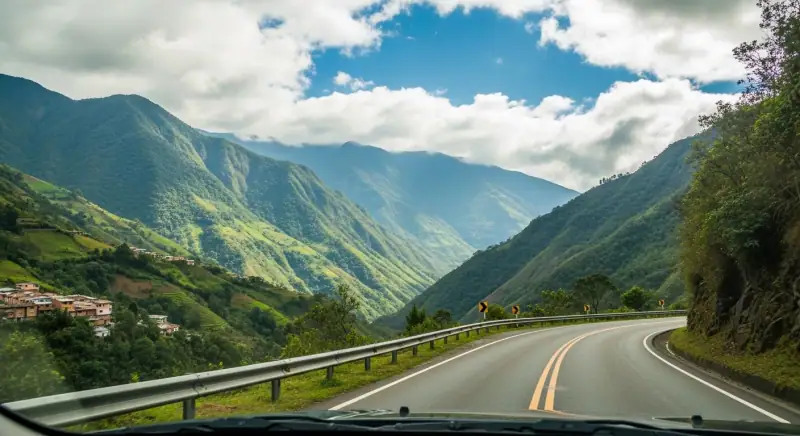
20 days
Colombia road trip: a 3-week itinerary by car
A 3-week Colombia road trip from Bogotá to Cartagena via the Andes, the coffee region and the Caribbean coast. Routes, stops and practical tips.
11 days
Colombian Andes road trip: mountain ranges, colonial towns and coffee country
The Colombian Andes in 10 to 12 days: Villa de Leyva, Barichara, Medellín and Salento. Stage-by-stage route, practical tips and where to stay.
10 days
Colombia in 10 days without a car: a realistic itinerary by plane and bus
Colombia in 10 days without renting a car: Bogotá, Medellín, Salento, Cartagena. Stops, distances, travel times, flights and buses, transport budget.