What to see
Visiting Cali: a complete guide to the salsa capital of the world
We may earn a commission when you book through links on this page, at no extra cost to you. We don't visit or try the places we cover: we summarize published sources. How we work
In short
- Plan 3 to 4 days in Cali for the historic quarters, salsotecas, the zoo and an outing to the Farallones or Lake Calima; a week suits salsa fans.
- Cali sits at 995 m (3,265 ft) with 22-30 °C (72-86 °F) all year; the dry season (June-August, December-January) is ideal.
- Stay in San Antonio, Granada or El Peñón, and use InDriver or Cabify rather than street taxis.
- The Feria de Cali (generally December 25-30) is a unique salsa festival; book far ahead and expect prices 2 to 3 times higher.
Cali is a city that takes you by surprise. You think you are arriving in an industrial metropolis on the Colombian Pacific side, and you discover a lively, warm city, musical to the core. Salsa capital of the world, Colombia’s third city with 2.5 million inhabitants, Cali is also the gateway to the Pacific region, bordered by the Farallones National Park and crossed by the Río Cauca. Its colonial neighborhoods, legendary salsotecas, zoo reputed to be one of the best in South America and unique food make it a stop that travelers who skip it in favor of Cartagena or Medellín often regret.
At 995 meters (3,265 ft) of altitude in the Cauca valley, Cali enjoys a permanent spring: 26 to 30 °C (79-86 °F) by day, cool nights, no cold season and no stifling heat. Here is the complete guide to making the most of the sucursal del cielo, the branch of heaven, as its residents proudly call it.
Cali at a glance
- Department: Valle del Cauca
- Altitude: 995 m (3,265 ft)
- Climate: tropical highland, 22-30 °C (72-86 °F) all year
- Population: 2.5 million
- Nickname: La Sucursal del Cielo / La Capital de la Salsa
- Currency: Colombian peso (COP), €1 ≈ 3,700 COP (November 2026, the rate varies)
- Airport: Alfonso Bonilla Aragón (CLO), 20 km (12 mi) northeast of the center
Cali is 450 km (280 mi) southwest of Bogotá (1 h by plane, 9 h by bus) and about 330 km (205 mi) south of Medellín (as the crow flies, or 423 km / 263 mi by road). The city spreads across the Cauca valley, flanked to the west by the Western Cordillera of the Colombian Andes.
Cali’s essential neighborhoods
San Antonio: the bohemian heart
This is Cali’s most charming neighborhood, perched on a hill southwest of the center. Its cobbled streets, colorful houses with flowered balconies and small cafés make it the favorite of travelers and local artists. The top of San Antonio hill holds an 18th-century white chapel and offers a panoramic view over the whole city.
On Sunday mornings, the Parque de San Antonio turns into a craft market and a relaxation space where Caleño families come to stroll. This is where you will find the best Colombian craft shops, independent art galleries and trendy restaurants. Do not miss the terrace of the Mirador de San Antonio at sunset: the view of the city bathed in golden light is unforgettable.
Stays in Cali
Charming hostels in San Antonio, design hotels in Granada, boutique hotels with a view.
Granada: nightlife and restaurants
Granada is Cali’s trendy neighborhood, northwest of the center. Avenida 9N and the surrounding streets are lined with restaurants, bars, salsa clubs and terraces that stay lively until dawn. This is where you will find the most comfortable lodging options for foreign travelers, as well as a concentration of ATMs and convenient shops.
The neighborhood is safe in the evening as long as you stay on the main arteries. The atmosphere is young, cosmopolitan and festive.
El Centro Histórico: the colonial heritage
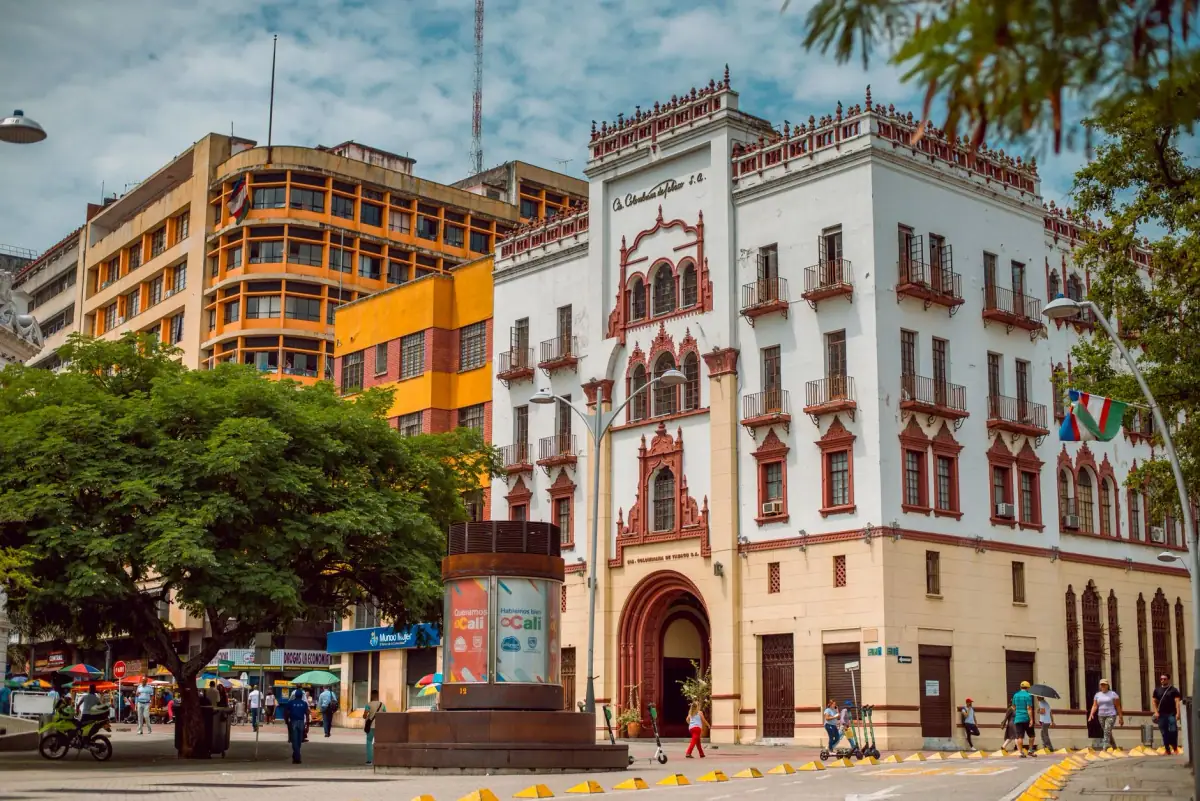
Cali’s downtown gathers the historic monuments and local markets. The Plaza de Caycedo is the symbolic heart, flanked by the San Pedro metropolitan cathedral and the Palacio de Justicia. The area is lively by day but calls for extra vigilance in the evening.
Highlights in the center:
- Iglesia La Ermita: a neo-Gothic church of immaculate white on the banks of the Río Cali, one of the most photographed in Colombia
- Iglesia San Francisco: an 18th-century baroque ensemble with its red and gold Mudéjar tower
- Museo La Tertulia: Colombia’s first modern art museum, on the banks of the Río Cali
- Mercado Alameda: an authentic covered market to taste local food at rock-bottom prices
The Cristo Rey and the Farallones
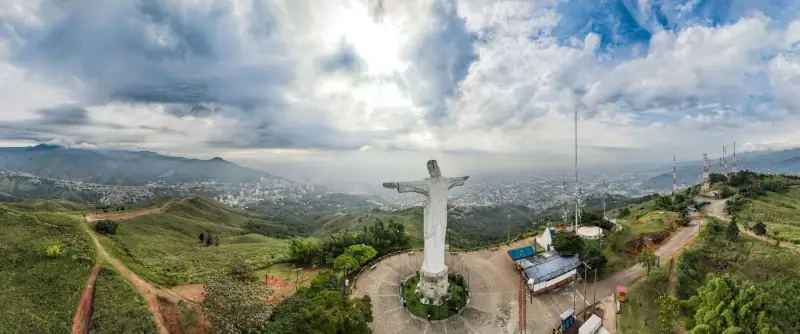
Set at 1,440 meters (4,725 ft) of altitude on the Cerro de los Cristales, the Cristo Rey is a 26 m (85 ft) statue inaugurated in 1953, slightly smaller than its Rio de Janeiro counterpart but superbly overlooking the city. The trip to the top is by taxi or an organized excursion from the center (20-30 minutes). The 360° view over Cali, the Cauca valley and the Western Cordillera is spectacular, especially late in the day when golden light floods the plain.
A few kilometers to the west, the Farallones de Cali National Natural Park protects 200,000 hectares (494,000 acres) of montane forest and páramo. With 543 recorded bird species, including the rare Andean Condor, it is a paradise for birders and hikers. The most accessible entrances are at Pichindé and Tocotá, 40-60 minutes from the city.
The Cali Zoo: one of the best in Latin America
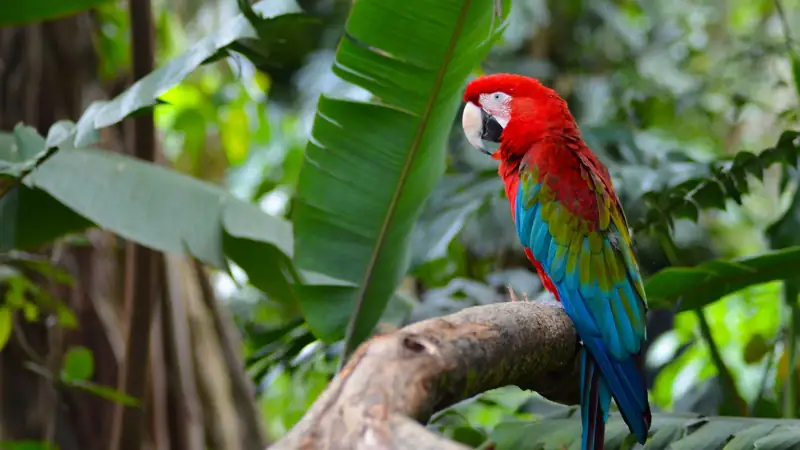
The Zoológico de Cali is an institution. Founded in 1969 and reputed as one of the best zoological parks in South America, it houses more than 2,500 animals of 230 species in an 11-hectare (27-acre) setting crossed by the Río Cali. Unlike many South American zoos, animals live in spacious enclosures and conservation efforts are serious.
Highlights:
- Pumas, jaguars, tapirs and peccaries in large planted areas
- A spectacular tropical aviary with macaws, toucans and endemic birds
- A reptile section with anacondas, boas and caimans
- An Andean Condor breeding program
Practical info: Entry about 35,000 COP adult / 20,000 COP child. Open daily, 9 am-4:30 pm. 15 minutes from the center by taxi (Calle 14 Oeste). Allow 3 to 4 hours there.
Activities and excursions in Cali
Salsa classes, Cristo Rey tours, Farallones excursions, zoo visit and more.
Salsa in Cali: a culture in itself
Here, salsa is not entertainment, it is a language. The Caleño style of salsa stands clearly apart from New York or Cuban salsa: the steps are faster, more in the feet, with discreet arm movements and a unique energy at floor level. This dance developed in Cali’s working-class neighborhoods (Juanchito, Aguablanca, Buenaventura) in the 1950s-1970s, imported from Afro-Cuban and Caribbean rhythms and then reinterpreted with the sensitivity and liveliness of the city.
The legendary salsotecas
A salsoteca is a dance hall where salsa is queen and the city’s best dancers meet to dance, not just to watch. Cali’s most famous:
- Tin Tin Deo (Calle 5 con Carrera 38): one of the oldest, authentic atmosphere, a crowd of experienced dancers
- La Topa Tolondra (Calle 5): a favorite, with a mix of beginners and advanced dancers, live music some nights
- Changó (Avenida 6N): more modern, in Granada, themed nights and concerts
- Zaperoco: specialized in the salsa dura classics of the 1960s-70s (Richie Ray, Bobby Cruz, Sonora Ponceña)
Most salsotecas open Friday and Saturday from 10 pm. Entry costs 10,000-25,000 COP. Get used to dancing as a couple: unlike in many Western clubs, in Cali you dance with a partner.
Taking salsa classes
Whatever your experience, a few hours of classes with a Caleño teacher will transform your evening. Private classes (30,000-50,000 COP/hour) or group classes (15,000-25,000 COP) are available throughout the San Antonio and Granada neighborhoods. Some hotels also offer classes for their guests.
Recommended schools:
- Son de Luz (San Antonio): progressive teaching, excellent for beginners
- Swing Latino: a professional school training competitive dancers
- Escuela de Salsa Rumbayá: good reputation, classes for all levels
Food in Cali and the Valle del Cauca
Caleño cooking is one of the tastiest in Colombia. Influenced by Afro-Colombian, indigenous and Andean traditions, it showcases the produce of the fertile Cauca valley.
What to taste:
- Lulada: Cali’s iconic drink. Iced juice of the lulo fruit (a local exotic citrus) with water and sugar, refreshing and tangy, perfect in the heat
- Pandebono: a Colombian white-cheese bread roll, crisp outside and soft inside, eaten hot at any hour
- Chontaduro: the fruit of the peach palm, sold by street vendors, eaten with salt and honey, a unique flavor between chestnut and avocado
- Aborrajados: ripe plantain stuffed with melting cheese, battered in a golden dough and fried, the city’s most addictive snack
- Sancocho de gallina: a chicken soup simmered for hours with yuca, corn, plantain and cilantro, the comfort dish of family Sundays
- Champús: a drink made from corn, fruit (lulo, pineapple, soursop) and orange leaves, served cold, a heritage of pre-colonial traditions
Where to eat:
- Mercado Alameda (Carrera 26 con Calle 8): the most authentic market for a local lunch at 12,000-20,000 COP
- Galería Alameda: covered market for fresh produce and street food
- La Cali a Pié (San Antonio): a modern restaurant showcasing traditional Valle del Cauca cooking
- La Fragata: quality seafood, specialties from the Pacific coast
Car rental in Cali
Explore the Farallones, Lake Calima and the villages of the Valle del Cauca freely.
Excursion to Lago Calima

Ninety kilometers (56 mi) northeast of Cali (1 h 30 by road), Lago Calima is one of the best windsurfing and kitesurfing spots in South America. This artificial lake, perched at 1,500 m (4,920 ft) of altitude in the Western Cordillera, offers steady afternoon winds, mild fresh water and green hill landscapes that contrast with the valley’s heat.
Even without water sports, the lake is a nice excursion: the villages of Darién and Calima El Darién have restaurants with views, lakeside hotels and a relaxed atmosphere that does you good after a few days in the city. You can also rent a kayak or paddleboard to explore the wooded shores.
Practical info: Reachable by bus from the Cali Terminal (Transipiales, departures every hour, 2 h, about 20,000 COP) or by car. Plenty of lodging around the lake from 80,000 to 300,000 COP/night.
Suggested itinerary: 4 days in Cali
Day 1: arrival and San Antonio Settle in San Antonio. Stroll the colorful streets, view from the mirador at sunset. Dinner in a neighborhood restaurant, then a first evening in a salsoteca to get introduced to the Caleño style.
Day 2: Centro Histórico and the Zoo Morning: Iglesia La Ermita, Plaza de Caycedo, Mercado Alameda for lunch (don’t miss the sancocho and lulada). Afternoon: Cali Zoo (2-3 h). Free evening in Granada.
Day 3: Cristo Rey and the Farallones Leave early for the Cristo Rey (sunrise from the top for the brave). Excursion into the Farallones in the afternoon: a 2-3 h hike in the montane forest, birdwatching. Back in town for dinner, then a salsa class in the evening.
Day 4: Lago Calima (excursion) or free day Excursion to Lake Calima for nature and water sports fans. Or, for salsa fanatics, a day of intensive classes and a last night in the salsotecas before leaving.
Where to stay in Cali
San Antonio (best for atmosphere and charm)
The ideal neighborhood for independent travelers. Charming hostels, colonial houses converted into boutique hotels, an artistic atmosphere. Budget: 40,000-80,000 COP in a dorm, 120,000-250,000 COP in a private room.
Granada (comfort and nightlife)
A lively residential neighborhood, calmer than San Antonio, with excellent restaurants and most of the clubs. Modern hotels, tourist apartments. Budget: 150,000-400,000 COP.
El Peñón (calm and residential)
A neighborhood between the center and Granada, safe and pleasant, liked by families. Fewer salsotecas, more quiet restaurants.
Getting to Cali
By air
Alfonso Bonilla Aragón Airport (CLO) is 20 km (12 mi) northeast of the city. Direct flights from Bogotá (45 min, Avianca/LatAm/Viva, 80,000-300,000 COP), Medellín (50 min), Cartagena (1 h). Airport-to-city transport: Uber/InDriver (25,000-35,000 COP) or MIO bus (limited service, 2,800 COP but less practical with luggage).
By bus
The Terminal de Transportes de Cali (Calle 30N) is the hub for long-distance lines. Bogotá (9-10 h, 60,000-100,000 COP), Medellín (8 h, 70,000-120,000 COP), Cartagena (18 h with a change). The companies Flota Magdalena, Expreso Palmira and Bolivariano are reliable.
Practical tips for visiting Cali
Safety: Cali’s reputation looks scary on paper but often contrasts with the reality in tourist areas. Stay in San Antonio, Granada and El Peñón. Use InDriver or Cabify (never unlisted street taxis). Do not take your phone out on the street. Avoid Aguablanca and Siloé. The historic center is safe by day, avoid it at night.
Daily budget:
- Low budget (hostel, street food, public transport): 60,000-90,000 COP/day
- Mid-range (hotel, restaurants, activities): 150,000-250,000 COP/day
- Comfort (boutique hotel, trendy restaurants, taxis): 350,000 COP+/day
Money: Bancolombia and Davivienda ATMs work well with foreign cards (maximum withdrawal 400,000-600,000 COP). Carry cash for markets, salsotecas and local transport.
Health: Do not drink tap water. Ask your doctor or a travel clinic about health precautions, and see the official travel health pages (CDC in the US, TravelHealthPro in the UK). Pharmacies are available throughout the city.
Language: Spanish is essential, with little English spoken outside hotels. Caleños are patient and welcoming with foreigners who make the effort of a few words.
Feria de Cali: If you visit in late December (generally December 25-30), the Feria de Cali is one of the biggest salsa festivals in the world. Concerts, competitions, parades: an unforgettable experience, but book long in advance and expect prices 2 to 3 times higher.
To plan your trip to Colombia and understand the best time to go, see the guide to the seasons. Cali fits perfectly into a road trip across Colombia, and the city’s culinary richness is well covered in the guide to Colombian food.
Cali is one of those cities you leave changed. Salsa is not a show you watch: it is learned, felt and shared. Caleños have that particular warmth, that quiet pride in living in the most musical of Colombian cities, and a natural generosity toward curious travelers. Whether you came to dance until dawn in a Granada salsoteca, admire the zoo’s jaguars, hike in the misty Farallones or simply eat a hot pandebono in a San Antonio lane, Cali will not leave you indifferent. The sucursal del cielo well deserves its nickname.
Frequently asked questions
Is Cali dangerous for tourists?
Like all big Colombian cities, Cali has neighborhoods to avoid (Aguablanca, Siloé at night). Staying in the tourist areas (El Poblado de Cali, San Antonio, Granada, the historic center by day), the risk is comparable to any big Latin American city. Use ride-hailing apps (InDriver, Cabify) rather than street taxis, do not hold your phone in your hand on the street, and you will do very well.
How many days should you plan for Cali?
3 to 4 days are enough to discover Cali: the historic quarters, the salsotecas, the zoo, an outing to the Farallones or Lake Calima. For salsa enthusiasts who want to take classes and go out several evenings, a full week is fully justified.
What is the best time to visit Cali?
Cali enjoys a pleasant climate all year thanks to its altitude (995 m / 3,265 ft). The dry season (June-August and December-January) is ideal. The Festival de la Salsa Cali (Feria de Cali) takes place in late December, a unique experience but with higher prices and crowds. Avoid March-April and October-November (the most intense rainy seasons).
How do you get around Cali?
The MIO network (articulated buses) covers the city for 2,800 COP a ride, economical but crowded at rush hour. The InDriver and Cabify apps are more comfortable and secure for tourists (motorbike or car, 5,000-15,000 COP depending on distance). Avoid unlisted street taxis.
Do you need to speak Spanish to visit Cali?
A minimum of Spanish is strongly recommended: English is not widespread in everyday Cali life, except in a few high-end hotels and bars in the Granada neighborhood. Learn at least the basics (ordering, asking the price, bargaining). Caleños are warm and patient with foreigners who make the effort.
Where can you take salsa classes in Cali?
The best salsa schools are in the San Antonio neighborhood and around Calle 5 in Granada: Son de Luz, Swing Latino, Código Cali, Escuela de Salsa Rumbayá. Expect 30,000-50,000 COP per hour for a private class, 15,000-25,000 COP in a group. Most offer beginner classes from day one.
What should you eat in Cali?
Do not leave without trying lulada (a cold drink made from lulo fruit), pandebono (a cheese bread roll), aborrajados (plantain stuffed with cheese, battered and fried), chontaduro with honey and salt (peach palm fruit) and a good sancocho de gallina (slow-simmered chicken soup). The Mercado Alameda is the ideal place to taste everything in one outing.
More Colombia guides
Keep reading
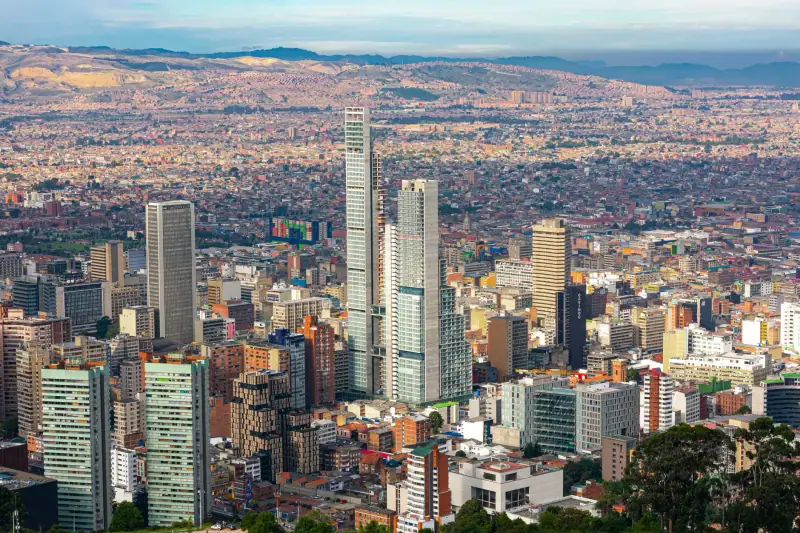
Visiting Bogotá: a complete guide to Colombia's capital
Everything you need to visit Bogotá: La Candelaria, Museo del Oro, Monserrate, Usaquén, budget, transport and practical tips for 2026.
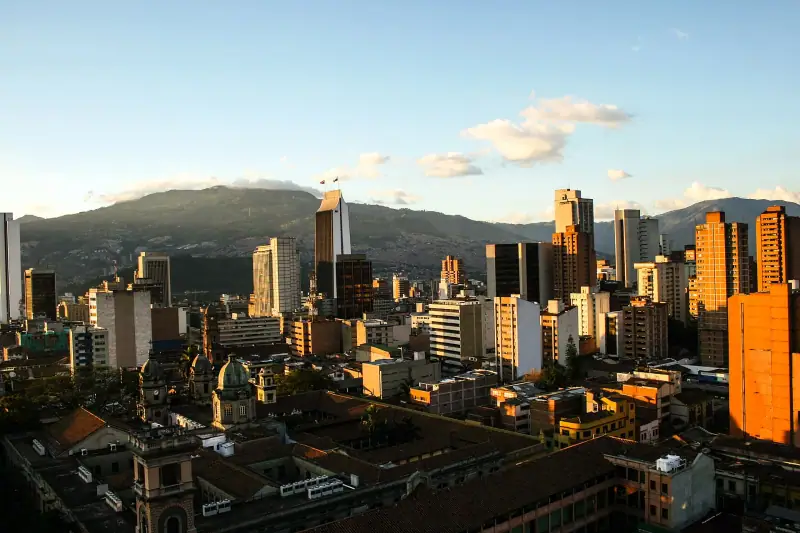
Visiting Medellín: a complete guide to the city of eternal spring
Everything you need to visit Medellín: El Poblado, Plaza Botero, Comuna 13, Guatapé, lodging, budget and practical tips for 2026.
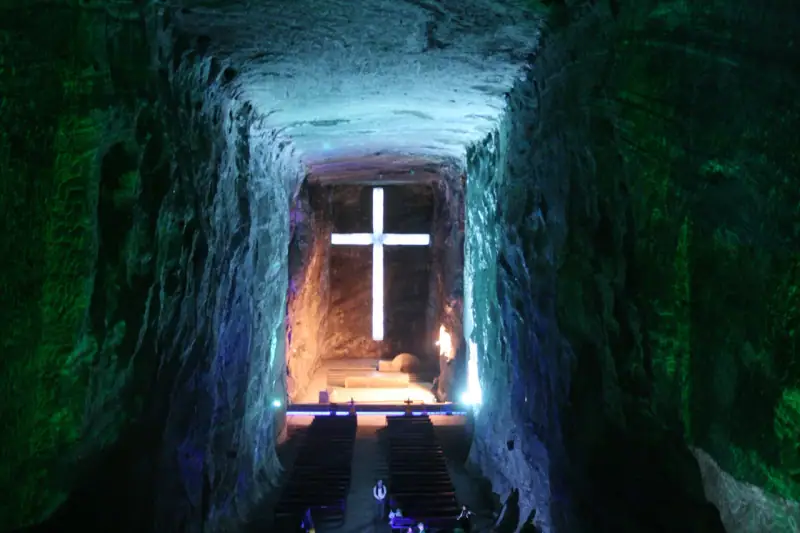
Zipaquirá Salt Cathedral from Bogotá: bus, train, times and prices
Visit the Zipaquirá Salt Cathedral from Bogotá: bus or train, hours 9 am-4:40 pm, ticket prices, visit length and mistakes to avoid.
Ready-made
Colombia itineraries
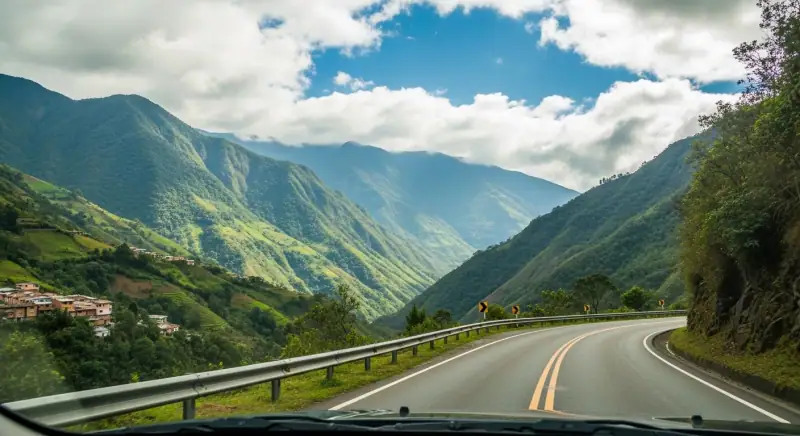
20 days
Colombia road trip: a 3-week itinerary by car
A 3-week Colombia road trip from Bogotá to Cartagena via the Andes, the coffee region and the Caribbean coast. Routes, stops and practical tips.
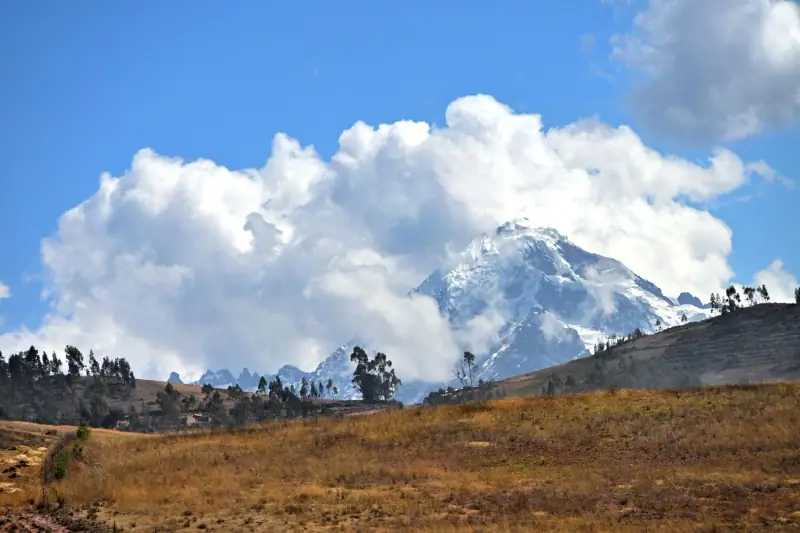
11 days
Colombian Andes road trip: mountain ranges, colonial towns and coffee country
The Colombian Andes in 10 to 12 days: Villa de Leyva, Barichara, Medellín and Salento. Stage-by-stage route, practical tips and where to stay.
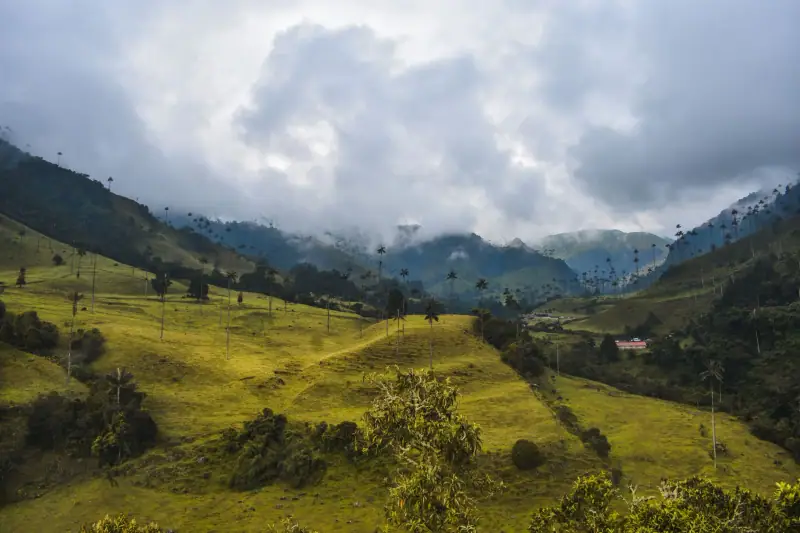
10 days
Colombia in 10 days without a car: a realistic itinerary by plane and bus
Colombia in 10 days without renting a car: Bogotá, Medellín, Salento, Cartagena. Stops, distances, travel times, flights and buses, transport budget.