What to see
Visiting Calgary: What to See and Do at the Gateway to the Rockies
We may earn a commission when you book through links on this page, at no extra cost to you. We don't visit or try the places we cover: we summarize published sources. How we work
In short
- One to two days are enough for downtown, the historic neighborhoods and one or two attractions such as Heritage Park or the zoo.
- The Calgary Stampede runs for about ten days each July; book flights and lodging very early because prices climb sharply.
- Banff is about 130 km (81 mi) west, roughly an hour and a half by road; a car is the most flexible way to see Banff, Kananaskis or Drumheller.
- Summer (June to September) is the most comfortable season; winter is cold but often sunny, with the warm chinook wind.
In the heart of Alberta, a few hours’ drive from the country’s most beautiful national parks, Calgary is often reduced to a simple stopover: you land, pick up your car and head for Banff. That is a pity. This city of skyscrapers on the Bow River, where the great plains meet the foothills of the Rockies, has much more to offer than an airport parking lot. It has a lively downtown, interesting museums, vast urban parks, a strong Western culture and, in July, one of the biggest rodeo gatherings in the world.
This guide details what to see in Calgary, how to organize, which excursions to add and where to sleep. If you are planning a wider trip in the West, it combines very well with our Banff or Jasper comparison and our itinerary on the Icefields Parkway.
Planning your visit: access, season and entry rules
Calgary has a major international airport, the main air access point to the Alberta Rockies. Many travelers arrive via a connection, others prefer to go through Vancouver. Entry rules depend on your passport. Check the official travel advice of your government before you book: travel.state.gov (US), GOV.UK (UK), travel.gc.ca (Canada), Smartraveller (Australia) (checked November 2026). Do it well before departure and check the validity of your passport.
As for season, summer is the most comfortable period: from June to September, days are long and temperatures pleasant, even if storms can break out in the late afternoon. Winter is cold, but Calgary is known for its sunshine and for the chinook, the warm wind that comes down from the mountains and sometimes makes the thermometer jump suddenly. Spring and early fall are more variable. Our article on the best time to go to Canada helps you decide according to your wishes.
An important organizational point: in July, the Stampede makes attendance soar. If you did not come for the event, avoid those dates; if you want to experience it, book flights and lodging very far in advance.
Flights to Calgary
Calgary is the main gateway to the Rockies: compare flights for your dates.
Downtown and the Calgary Tower
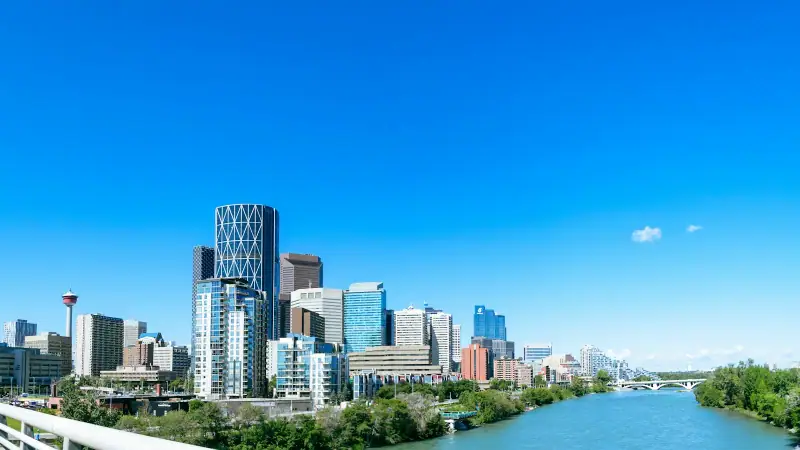
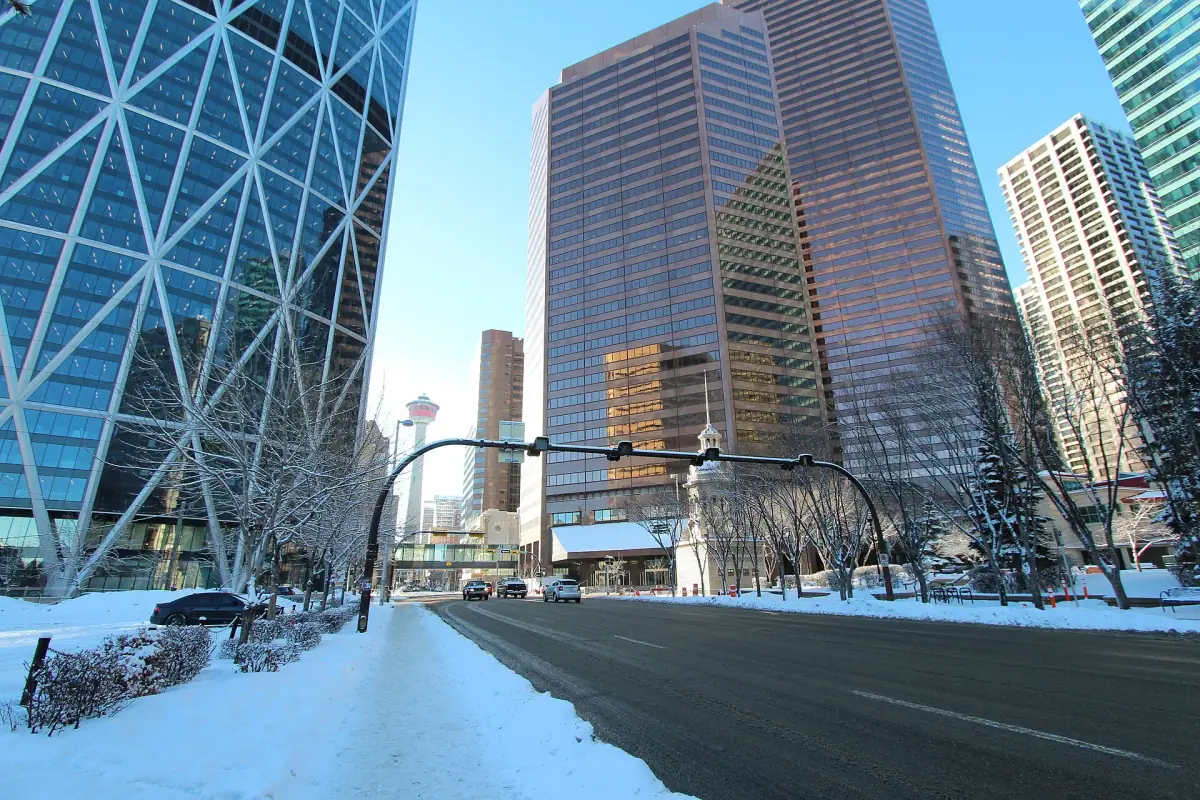
Downtown Calgary is compact and easy to explore on foot. It is a dense business district, but it keeps real points of interest. The best known is the Calgary Tower, an observation tower built in the late 1960s. It overlooks downtown and offers, in clear weather, a panorama of the city, the prairie to the east and the line of the Rockies to the west. Part of the floor is glass, enough to give a few shivers. Check hours and rates on the official website before coming.
Downtown is also linked by the “+15” network, a set of covered walkways connecting buildings at the second-floor level. It is very handy in winter, when you want to cross the district without facing the cold. In summer, prefer the streets and patios: the pedestrian Stephen Avenue, lined with old buildings, restaurants and cafés, is the lively heart of the city.
Prince’s Island Park and the Bow River
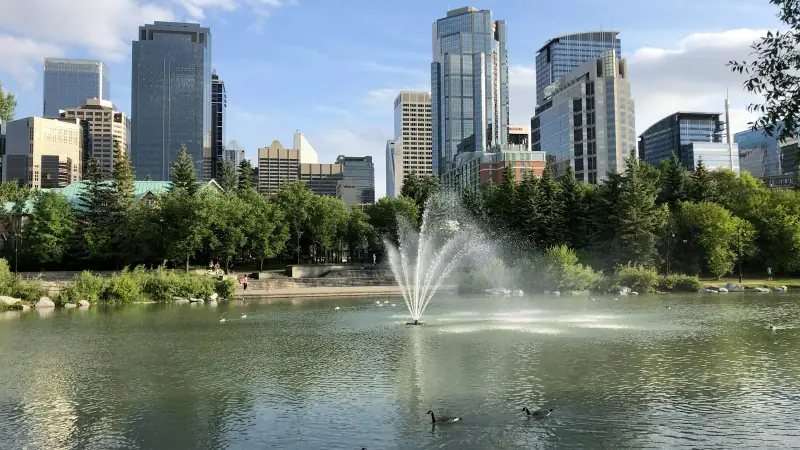
North of downtown, Prince’s Island Park is one of the locals’ favorite places. This landscaped island in the middle of the Bow River offers shaded paths, lawns, picnic spots and views of the downtown towers. People come to run, stroll, read or enjoy the festivals held there in summer. From there, it is easy to follow the riverbanks for several kilometers, on foot or by bike.
Nearby, the Peace Bridge is a pedestrian and cycle bridge with very contemporary lines, designed by the architect Santiago Calatrava. Its red and white helical structure makes it one of the most photographed structures in the city. The nearby Eau Claire district groups cafés, restaurants and access to the river, for a pleasant break between two visits.
Fort Calgary, Inglewood and the city’s history
Calgary was born from a North-West Mounted Police post set up at the confluence of the Bow and Elbow rivers. Fort Calgary traces this history, from the ancient presence of Indigenous peoples to the arrival of the railway and the city’s rise. It is an interesting visit to understand why a city of this size developed here, and a good complement to the more touristy sites.
Right next door, the Inglewood district is one of the oldest in the city. Its streets of low façades now hold independent boutiques, record shops, galleries, bars and restaurants. It is not a neighborhood of monuments, but a place to stroll, stop for a coffee and feel the local spirit, more than in the business district.
Beyond downtown, you can also explore the Kensington district, across the river: small shops, bookstores, cafés and patios, with a village atmosphere that contrasts with the downtown towers.
Studio Bell, Telus Spark and the museums
Calgary has several museums worth the detour, especially when the weather turns bad. Studio Bell, home of the National Music Centre, is a modern building devoted to music, with historic instruments, exhibitions and interactive spaces. It is one of the most original cultural venues in the city, accessible even if you are not a musician.
For families, Telus Spark is a science center with interactive exhibits and workshops designed for children. It is a good half-day option on rainy days. Hours, rates and temporary exhibitions change regularly: check the official websites before planning.
The Calgary Zoo, near downtown on an island in the Bow River, is one of the city’s big family attractions. It presents animals from around the world and Canadian species, and is among the most visited zoos in the country. Allow half a day.
Heritage Park and the Stampede: the Canadian West from the inside

Heritage Park Historical Village is a large open-air museum that recreates life in the Canadian West of the past. You discover period houses, shops, farms and a steam train, with costumed interpreters. It is an excellent way to understand the history of pioneers, ranchers and settlers, and a much-loved outing for families. Allow most of a day, and check opening periods, which vary by season.
But what made Calgary world-famous is the Stampede. Every year in July, for about ten days, the city transforms: cowboy hats, boots, free pancake breakfasts in the streets, parades, concerts, a fairground and, of course, rodeos and chuckwagon races on the exhibition grounds. Even downtown businesses take on the colors of the event. If you like popular festivals and do not fear crowds, it is an unforgettable experience. If you prefer quiet, simply avoid those dates.
Tours and activities in Calgary
Guided tours, excursions to the Rockies or the badlands: browse the activities offered from Calgary.
Canada Olympic Park and the immediate surroundings
West of downtown, Canada Olympic Park, now run as WinSport, is a reminder that Calgary hosted the 1988 Winter Olympics. You can still see the ski jumps and the bobsled track, and the site offers activities depending on the season: ziplines, rail-track sled rides, mountain biking or skiing in winter. It is an original visit for fans of sport and Olympic history. The activities that are open vary by period, so check before coming.
For a breath of nature without leaving the urban area, several urban parks line the Bow and Elbow rivers, with very well-built walking paths and bike lanes. Calgary has one of the largest networks of bike and pedestrian paths in North America: it is a fine way to discover the city at your own pace.
Excursions from Calgary: Banff, Kananaskis and Drumheller
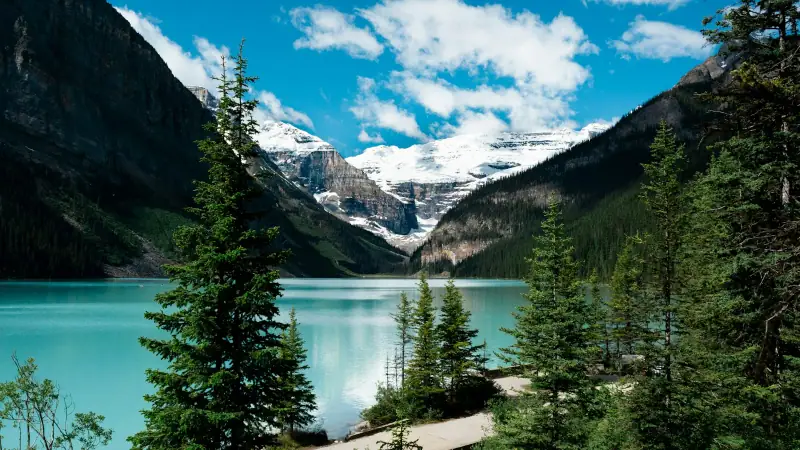
Calgary’s great strength is its location. Several quality excursions can be done in a day, or as the first stop of a longer trip.
- Banff: about 130 km (81 mi) west, roughly an hour and a half by road, the famous Rockies resort is the most obvious outing. Lake, peaks, hot springs, trails: it has it all. For a longer base, read our guide on where to stay in Banff and Lake Louise.
- Kananaskis Country: this vast mountain region southwest of Calgary offers lakes, forests and hiking trails, with often fewer crowds than in Banff National Park. Ideal for a nature day.
- Drumheller and the badlands: about an hour and a half by road to the northeast, this small town is surrounded by badlands landscapes carved by erosion. It is known for its rich paleontological heritage and its dinosaur museum, the Royal Tyrrell Museum, one of the big draws for paleontology fans.
- The Rockies further north: Calgary is also the natural starting point for the Icefields Parkway, the famous scenic road between Lake Louise and Jasper.
For these outings, a car is by far the most flexible solution, because it lets you stop at the viewpoints. If you have not yet chosen a rental company, you can compare offers.
Rent a car in Calgary
Banff, Kananaskis and Drumheller are one to two hours away by road: compare rental companies.
Where to stay in Calgary
For a first visit, the most practical is to stay downtown or in its immediate surroundings: you can walk to Stephen Avenue, the Calgary Tower and the riverbanks, and use public transit. Neighboring districts, such as Kensington or Inglewood, are quieter and more authentic, with small hotels and charming lodging. If you arrive late or leave early, a hotel near the airport can also be a logical choice.
During the Stampede, prices rise very sharply and rooms go months in advance. Outside the event, rates are often more moderate than in Banff or Vancouver, which makes Calgary an interesting base for a night before or after the Rockies. To estimate all your spending, see our Canada budget guide.
Sleep in Calgary
Downtown, Kensington or near the airport: compare lodging for your dates.
What to eat in Calgary
Alberta is cattle country, and Calgary readily claims its beef tradition. Grills and steakhouses are plentiful, but the city also has a diverse food scene, influenced by its communities of very varied origins: Asian cuisines, brunches, craft breweries and neighborhood cafés. Inglewood, Kensington and downtown are good starting points for finding a table.
During the Stampede, do not miss the tradition of free pancake breakfasts all over the city. Outside the event, farmers’ markets, food trucks and riverside patios offer casual meals at reasonable prices. Tipping is customary in restaurants, as everywhere in Canada, at about 15 to 20% on top of the bill.
Suggested 2-day itinerary
Day 1: downtown and the river. Start with the Calgary Tower for an overview, then head down to Stephen Avenue for lunch. In the afternoon, walk to Prince’s Island Park, cross the Peace Bridge and continue to Kensington for a coffee. End the day in Eau Claire or on a patio.
Day 2: history and culture. In the morning, visit Fort Calgary then stroll through Inglewood. In the afternoon, choose according to your wishes: Studio Bell for music, Heritage Park for Western history, or the zoo if you are traveling with children. If you have one more day, devote it to Drumheller or Banff.
This program fits easily into a longer trip. To continue toward the mountains, follow up with our Banff or Jasper comparison to choose your base in the Rockies.
Budget, transport and practical tips
Calgary is cheaper than Vancouver or Banff for lodging, outside the Stampede period. Downtown is served by a public transit network, including a light rail line, that links several neighborhoods; the main downtown sites are done on foot. More distant attractions, such as Heritage Park, the zoo or Canada Olympic Park, require a bus, a taxi or a vehicle.
- Pack layers: the weather changes quickly, and temperature differences between day and night can be large, even in summer.
- Protect yourself from the sun: the city’s altitude, above 1,000 m (3,300 ft), and the dry air make the sun harsher than it seems.
- Book early in July: the Stampede is the busiest time of the year.
- Check opening hours of museums and attractions before heading out; they change by season.
- Think about taxes and tipping: displayed prices generally do not include taxes, and service is extra.
To stay connected, check your carrier’s international plan or use a travel eSIM. Our article on SIM cards and eSIMs for Canada compares the solutions. Saily offers plans in more than 150 countries: check the offer for Canada before leaving.
Finally, consider appropriate travel insurance: medical costs in Canada can be high for visitors from abroad.
Frequently asked questions
How long do you need to visit Calgary?
One to two days are enough to see the essentials of downtown, the historic neighborhoods and one or two attractions such as Heritage Park or the zoo. If you add an excursion to Drumheller or Banff, allow an extra day for each.
Is Calgary worth a detour, or is it just a stopover city?
It is above all the gateway to the Rockies, but the city deserves a day or two: museums, walks along the Bow River, lively neighborhoods and, in July, the unique atmosphere of the Stampede. It is ideal to start or end a stay in the Canadian West.
When is the Calgary Stampede?
The Calgary Stampede takes place every year in July, for about ten days. Rodeos, chuckwagon races, concerts and parades fill the whole city. Book flights and lodging very early: prices climb sharply during the event.
How do you get from Calgary to Banff?
Banff is about 130 km (81 mi) west of Calgary, roughly an hour and a half by road on the Trans-Canada Highway. Shuttles and buses link the airport or downtown to Banff, but a car remains the most flexible solution for stopping in the parks.
Do you need to rent a car in Calgary?
To stay downtown, no: the city has public transit and many sites are reachable on foot. For Banff, Kananaskis or Drumheller, however, a car is strongly recommended. Calgary is a classic starting point for a rental.
What is the best time to visit Calgary?
From June to September, days are long and temperatures pleasant. Winter is cold but often sunny, with sudden thaws caused by the chinook, a warm wind from the mountains. Spring stays variable and can still be cool.
Can you see the Rockies from Calgary?
Yes, in clear weather the Rockies line the western horizon of the city. For a better view, go up the Calgary Tower or reach a high point on the outskirts. The real mountains, however, are about an hour and a half away by road.
More Canada guides
Keep reading
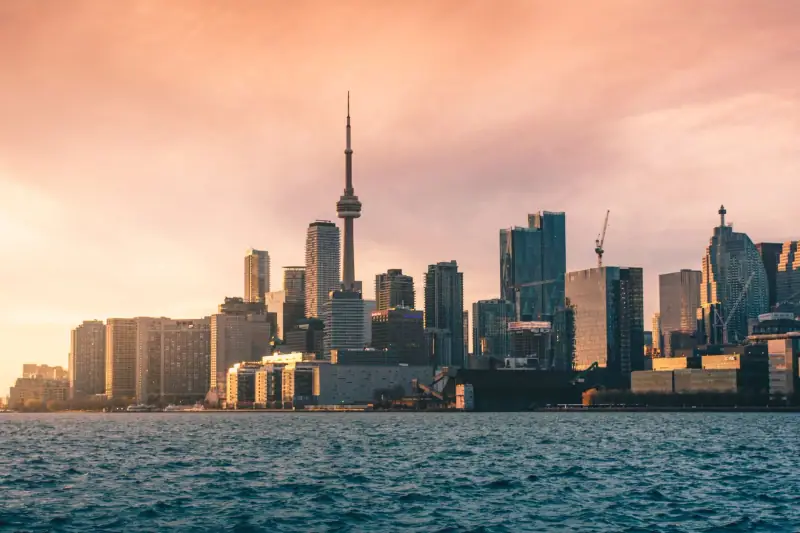
What to See in Ontario: Toronto, Niagara, Ottawa and the Great Outdoors
What to see in Ontario: Toronto, Niagara Falls, Ottawa, the Rideau Canal, Thousand Islands, Algonquin and the Bruce Peninsula. Routes, seasons and tips.
What to See in British Columbia: 10 Must-See Sights on the Pacific Coast
Vancouver, Whistler, Victoria, Tofino, Okanagan: what to see in British Columbia? Our must-sees, practical tips and a sample 10-day route.
What to See in the Canadian Rockies: 12 Must-See Sights
Banff, Lake Louise, Jasper, Yoho, Kootenay: what to see in the Canadian Rockies? Lakes, glaciers, canyons and wildlife, with tips to organize them.
Ready-made
Canada itineraries
3 days
Toronto in 3 Days: What to See and Do on a First Visit
Toronto in 3 days: CN Tower, the islands, markets, neighborhoods and a Niagara excursion. A day-by-day itinerary with lodging and transit tips.
2 days
Icefields Parkway Road Trip: Lake Louise to Jasper
Plan the scenic drive between Lake Louise and Jasper: stops, driving time, fuel, wildlife and tips for making the most of the Rockies.
7 days
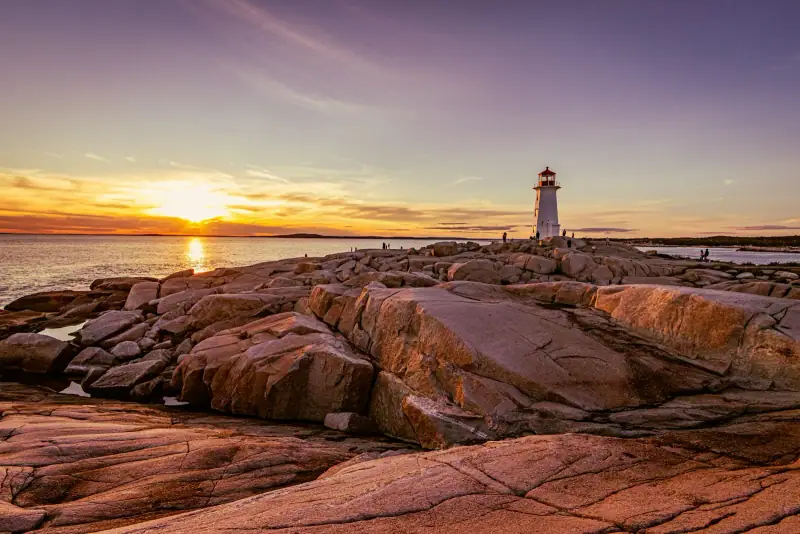
Nova Scotia in 7 Days: Halifax, the South Shore and the Cabot Trail
A one-week Nova Scotia itinerary: Halifax, Peggy's Cove, Lunenburg, then the Cabot Trail on Cape Breton. Stages, distances and practical tips.