What to see
Visiting Kep: Complete Guide to Cambodia's Little Crab Town
We may earn a commission when you book through links on this page, at no extra cost to you. We don't visit or try the places we cover: we summarize published sources. How we work
In short
- One to two days is enough for Kep: half a day for the crab market and beach, half a day for Koh Tonsay or the national park, and evenings for seafood.
- Kep is 173 km (107 mi) from Phnom Penh and 25 km (16 mi) from Kampot; most travelers base themselves in Kampot and visit Kep on a day trip.
- The signature dish is blue crab stir-fried with fresh green Kampot pepper, about $5-8 per medium crab, cooked on the spot at the crab market.
- The dry season, November to April, is the best time; boat trips to Koh Tonsay are less reliable in the rainy season.
Some places in Cambodia seem to have been spared by time. Kep, or Krong Kep in Khmer, is one of them. A small coastal town in the south, on the Gulf of Thailand, 173 km (107 mi) from Phnom Penh and 25 km (16 mi) from Kampot, it was the favorite seaside resort of the Cambodian elite and the French during the colonial period. Then the Khmer Rouge emptied the villas, and the town waited. What remains today is worth the trip: a world-famous crab market, an island paradise twenty minutes away by boat, a quiet national park and Art Deco ruins that face the sea with an elegant melancholy. This complete guide tells you what you need to know to visit Kep.
Why visit Kep?
Kep’s province has around 50,000 inhabitants today, but the town itself is tiny, more a seaside hamlet than a town in the strict sense. That is precisely its charm. No big shopping streets, no tuk-tuks cruising every corner, no T-shirt vendors calling out to you. Kep lives at its own pace: in the morning, fishermen come back with baskets of blue crabs; at noon, the market tables fill up; in the afternoon, the sun sinks into the Gulf of Thailand while the clouds fade over the silhouette of Koh Tonsay on the horizon.
Good reasons to come to Kep:
- The crab market, one of the most authentic seafood markets in Southeast Asia
- Green Kampot pepper crab, a culinary specialty found nowhere else
- Koh Tonsay (Rabbit Island), wild beaches 20 minutes away by boat
- Kep National Park and its trails through tropical forest
- The ruined French colonial villas, a poignant relic of the pre-Khmer Rouge era
- A calm, authentic atmosphere, a world away from mass tourism
Unlike Sihanoukville, which has seen chaotic tourism and real estate development in recent years, Kep has stayed out of it. It is not a party destination. It is a destination for flavors, nature and unhurried days.
The Kep crab market: the one thing you should not skip
The Kep crab market, called Phsar Kdam in Khmer, is the reason most travelers come all the way here. Set on a wooden pier at the water’s edge, a few hundred meters from the main beach, it brings together dozens of seafood stalls run by local fishing families.
The show starts at dawn, when the boats come back from open water. Baskets pile up: live blue crabs, shrimp, spiny lobsters, fish and shellfish go straight onto the stalls. Freshness is not a marketing pitch here, it is simply the reality.
Green Kampot pepper crab: This is THE specialty. Blue crab (Portunus pelagicus) from the Gulf of Thailand is stir-fried in a wok with garlic, oil and whole clusters of fresh green Kampot pepper, the undried pepper, still tender and herbal. The result is a burst of flavors: the salty sweetness of the crab, the green heat of the pepper, notes of garlic and fish sauce. A harmony that exists nowhere else to the same degree.
How to choose a stall: All vendors post their prices, usually calculated by the weight of the live crab (expect about $5-8 per medium crab, cooking included). The cooking is done on the spot, in front of you. Show the crab you want, bargain politely, choose the preparation (green pepper, ginger, soy sauce, steamed) and wait a few minutes. Plastic tables facing the sea complete the scene.
Tip: Come between 10 am and 1 pm, when the market is at full activity. Avoid Monday mornings, when few boats go out. Besides crab, fresh grilled shrimp and grilled squid are also excellent.
Hotels in Kep
Seafront boutique hotels, beachfront guesthouses. Book with free cancellation.
Koh Tonsay: Rabbit Island
Just 4 km (2.5 mi) off Kep, Koh Tonsay, which English-speaking travelers universally call “Rabbit Island,” is the ideal excursion from town. A small island of about 2 km² (0.8 sq mi) covered in dense forest, it is ringed by several white-sand beaches with shallow, calm water.
You reach the island by motorized longtail boat from the pier next to the crab market. The crossing takes 15 to 20 minutes depending on the weather. Boats leave regularly in the morning (generally between 8 and 10 am) and return in late afternoon. High season sees more departures; off-season, it can make sense to team up with other travelers to share the boat hire.
On the island: The main beach on Koh Tonsay is the most accessible, with very simple bamboo bungalows and a few beach restaurants serving grilled fish, seafood and young coconuts. The mood is relaxed, electricity is limited (usually only in the evening), and Wi-Fi is nonexistent or close to it. That is deliberate, and that is the charm.
The island has no roads. Marked trails cross the forest to other, quieter small beaches, notably on the north side. These secondary beaches, reachable on foot (30-40 min each way), are often deserted and good for swimming and snorkeling.
Overnight on the island: You can sleep on Koh Tonsay in very simple bamboo bungalows (usually $10-20 a night for a double room). If you want the experience of an island cut off from the world, spend one night and leave the next morning. For a more comfortable stay, Kep and Kampot offer better lodging options.
Snorkeling gear: The water is clear, but coral reefs around Koh Tonsay are limited. Snorkeling is pleasant, though not exceptional. For technical diving, see our guide to diving in Cambodia.
Kep National Park
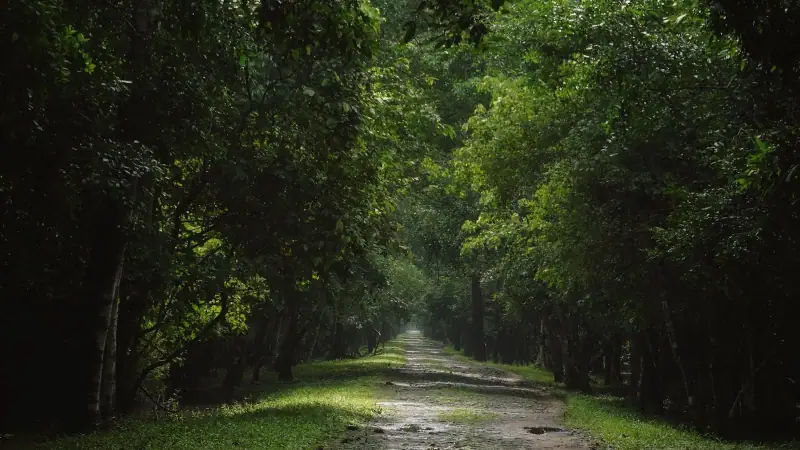
Right inside the town, the wooded hill that overlooks Kep is home to Kep National Park, a dense and relatively well-preserved forest of about 11.5 km² (4.4 sq mi), one of the smallest national parks in Cambodia, crossed by several marked trails.
The park is reachable on foot from central Kep. The main entrance is near the crab market. Hiking trails lead into the jungle. The best known runs partway around the hill and offers views over the Gulf of Thailand, Koh Tonsay and, on a clear day, the Vietnamese coast.
What you can see in the park:
- Macaque monkeys in the canopy (common over the first kilometers)
- Tropical butterflies in impressive numbers
- Forest birds typical of the region (kingfishers, rollers, bulbuls)
- Lush vegetation: strangler figs, bamboo, century-old vines
- With luck and in silence: harmless tree snakes, monitor lizards
The hike takes from 1 hour (short loop) to 3 hours (full circuit). Wear closed shoes and bring water; the climb is sometimes steep and the tropical heat makes itself felt. In the rainy season, the trails can be slippery.
Activities and excursions in Kep
Koh Tonsay, kayaking, hikes and guided tours. Book your activities online.
The ruined colonial villas: Kep’s wounded memory
One of the strangest and most moving things about Kep is the dozens of French villas from the 1900s-1970s left to decay. Founded as a seaside resort in 1908, Kep gradually took in the second homes of wealthy Phnom Penh families, French administrators and expatriates who came for the sea air on weekends. These houses, Art Deco, modernist, tropical colonial, were built over several decades.
When the Khmer Rouge arrived in 1975, Kep was forcibly evacuated, like all Cambodian towns. The villas were looted, sometimes burned, always abandoned. Some owners died during the regime, others fled the country and never came back. Many of these properties are now in a legal limbo: heirs are scattered, and land titles disappeared with the state archives.
The result is a partly inhabited ghost town, where modern guesthouse bungalows stand beside facades torn open by vegetation, swimming pools overrun by fig trees, and terraces opening onto the sea through cracked walls. Some of these buildings have been bought and renovated as boutique hotels or restaurants, giving Kep an air of quiet renewal. Others still stand in their decayed splendor, reachable on foot from the main road along the waterfront.
Wandering among these villas by bike or on foot is an experience of its own, a mix of architectural beauty, historical melancholy and humility before the passing of time. Respect the properties: some are guarded, others still house families.
Eating in Kep: seafood and pepper
Kep’s food revolves entirely around the sea and pepper. It is one of those destinations where eating well is almost automatic, as long as you follow a few basic tips.
Green pepper crab: The absolute star (see the crab market section). It is THE dish to eat in Kep, period.
Other seafood:
- Grilled tiger prawns with garlic butter
- Fried squid with lemongrass
- Grilled or steamed spiny lobster (more expensive, but exceptionally fresh)
- Line-caught fish grilled over embers
Khmer dishes:
- Seafood amok: The coastal version of the Cambodian curry, with fish and shrimp from the gulf
- Fish soup with vegetables: A light broth with fresh herbs and lime, perfect in the morning
- Fried rice with crab and Thai basil: The simple, hearty version of local cooking
Where to eat: The crab market is the main address for a quick lunch with a sea view. For dinner, several seafront restaurants in central Kep offer full seafood menus in the mid-range ($8-20 per person with drinks). Rather than hunting for specific addresses, look for restaurants whose tables are full of locals at lunchtime: that is the best sign of freshness.
Where to stay in Kep: small but well chosen
Lodging in Kep is more limited than in Kampot, but the quality is often there. Boutique hotels have opened in renovated colonial villas, offering intimate stays facing the sea.
Where to sleep in Kep:
Budget ($10-25 a night): Simple guesthouses and bungalow rooms are available, especially on the road to the national park and around the crab market. No great luxury, but clean and well located.
Mid-range ($30-70 a night): The best value in Kep. Several boutique hotels in renovated colonial villas or modern seafront buildings offer comfortable rooms, pools and breakfast included, at prices below Siem Reap or Phnom Penh standards.
High-end ($80-200 a night): A few eco-lodges and resorts have set up in the jungle above the sea or in former colonial gardens. This segment remains small in number but offers an exceptional experience at a reasonable price compared with other Southeast Asian destinations.
Location tip: The waterfront (Kep Beach and the road along the coast) is ideal for walking to the crab market and the beach. Lodging on the hill (national park) is quieter and often greener, but you need a tuk-tuk or scooter to reach the center.
Scooter or car rental in Kep
Explore Kep, Kampot and the salt flats at your own pace with a rental vehicle.
Kep and Kampot: the natural pairing
Kep and Kampot make the perfect duo on Cambodia’s south coast. The two towns are linked by a 25 km (16 mi) coastal road that crosses salt flats, fishing villages and pepper plantations, a ride of about thirty minutes by scooter or tuk-tuk.
Most travelers choose to sleep in Kampot (more restaurants, more lodging and livelier neighborhoods) and devote a full day to Kep: morning at the crab market, afternoon on Koh Tonsay or in the national park, back to Kampot in the evening. This setup is logistically simple and lets you enjoy the best of both towns.
The salt flats road: Between Kampot and Kep, the coastal salt marshes are active from January to May. Pyramids of pure white salt against a blue sky and green mountains make a photogenic, unexpected landscape. The salt workers start early in the morning, so pass by before 9 am to see the most activity.
To plan your stay in the region, see our complete guide to activities in Kampot and Kep and our Kampot guide.
Kep: practical information
How to get to Kep:
- From Phnom Penh: Direct bus or minibus (3.5-4 hours, $7-10) or shared taxi (2.5-3 hours, $12-18 per person). Several companies serve Kep, sometimes via Kampot.
- From Kampot: Tuk-tuk (25 km / 16 mi, 30-40 min, $8-12) or a scooter rented in Kampot ($8-12 a day). The road is pleasant and well paved.
- From Sihanoukville: Bus or minibus (2.5 hours, $6-9). A direct connection is possible, or via Kampot depending on the company.
- From Siem Reap: No direct connection. Go through Phnom Penh, then take a bus to Kep.
Getting around Kep: Kep is small, and the town center can be explored on foot. For excursions (national park, Koh Tonsay, salt flats, Kampot), your options are:
- Tuk-tuk: Available at the crab market and at hotels ($8-15 for a half day)
- Rented scooter: Ideal for total independence ($8-12 a day; a license is often not checked, but an international permit is recommended)
- Bicycle: For nearby areas and the waterfront ($3-5 a day)
- Boat to Koh Tonsay: From the crab market pier (about $4-6 round trip per person, depending on the season and the number of passengers)
Daily budget: Kep is one of the cheapest destinations on the south coast. Expect:
- Budget: $20-30 a day (dorm or simple guesthouse, market meals, tuk-tuk)
- Mid-range: $40-70 a day (boutique hotel, seafood meals, Koh Tonsay excursion)
- Comfort: $80-150 a day (resort, fine meals, guided activities)
Money: The US dollar is accepted everywhere. The Cambodian riel is used for change. There is no ATM in the heart of the village, so bring cash from Phnom Penh or Kampot, or check for ATMs at your lodging.
Phone and internet: 4G mobile coverage reaches Kep. Wi-Fi is available at lodging and restaurants. A local Cambodian SIM (Smart or Metfone, $5-10) is recommended for excursions.
Health and safety: Kep is a very safe town. When hiking in the national park, wear closed shoes (snakes are possible, but incidents are rare). For sea trips to Koh Tonsay, avoid bad-weather days (strong waves in the rainy season). Apply sunscreen, as the sun is treacherous on the Gulf of Thailand. For entry requirements to Cambodia, see our visa and entry requirements guide.
Kep may be the most discreet destination in Cambodia, and that is probably its greatest quality. It does not try to impress. It sets you down facing the sea, puts a crab in your hands, lets you watch the sun go down over Koh Tonsay and invites you to be nowhere else. In a country that has been through so much pain, this peaceful silence and generous food have something of a quiet victory. To fit Kep into a fuller trip, see our 10-day Cambodia itinerary or our guide to Cambodia’s beaches.
Frequently asked questions
How many days do you need to visit Kep?
One to two days is enough to see Kep properly: half a day for the crab market and the beach, half a day for Koh Tonsay or the national park, and the evening for seafood restaurants. Most travelers combine Kep with Kampot (25 km / 16 mi away) and spend 3 to 5 days in the region.
How do you get from Phnom Penh to Kep?
From Phnom Penh, the trip takes about 3.5 hours by bus or minibus ($7-10) or 2.5-3 hours by shared taxi ($12-18 per person). There is no direct train or air link to Kep. Most travelers go through Kampot, 25 km (16 mi) from Kep (30 minutes by tuk-tuk or motorbike).
When is the best time to visit Kep?
The dry season, from November to April, is ideal. December to February brings sunny, pleasant weather, perfect for boat trips to Koh Tonsay and walks in the national park. In the rainy season (May to October), boat excursions are less reliable and the jungle is denser.
Kep or Sihanoukville: which should you choose?
The two are very different. Kep is small, quiet and authentic, ideal for travelers looking to relax, eat well (pepper crab) and enjoy nature. Sihanoukville is a larger port with more developed beaches, but mass tourism has transformed the city. If you want authentic Cambodia, Kep is the better choice.
Can you swim in Kep?
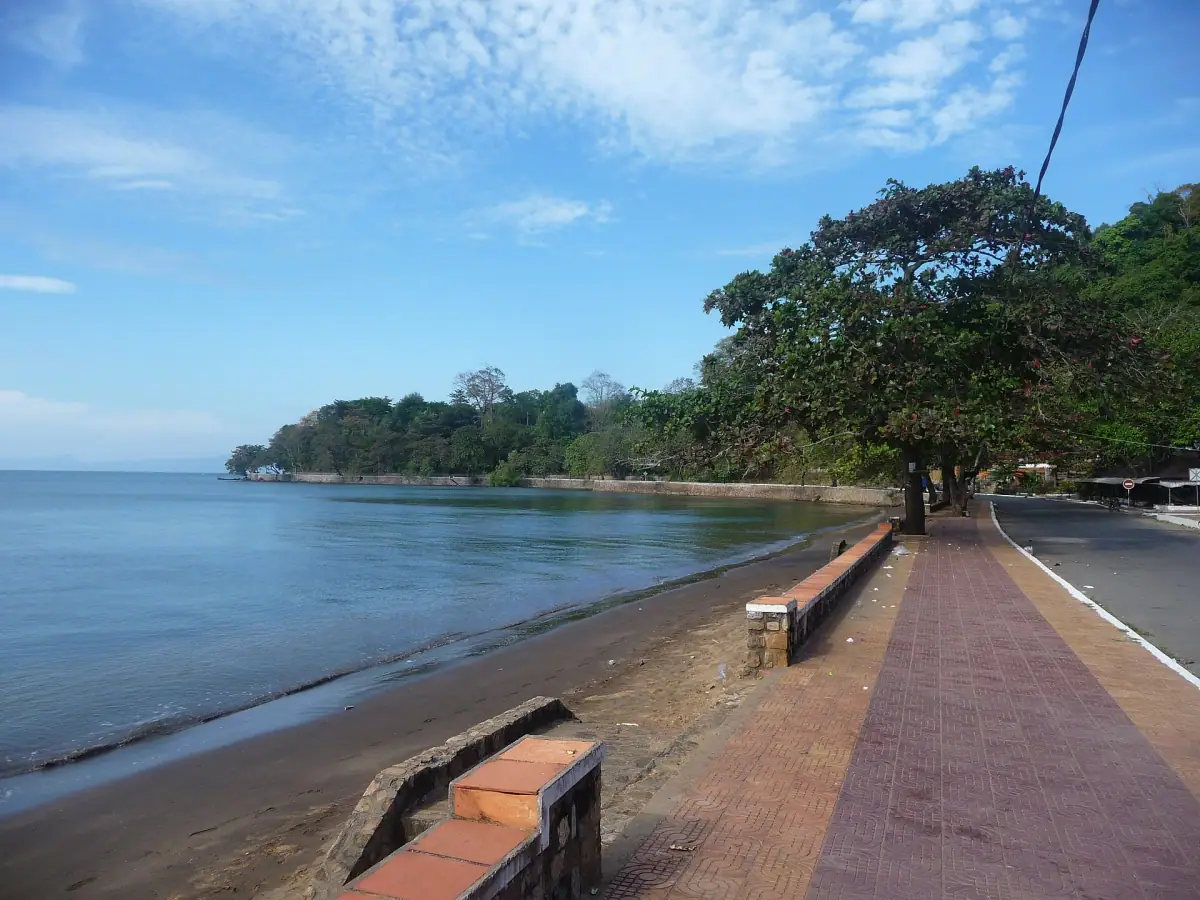
Kep's main beach (Kep Beach) is small and sandy and fine for a dip, but it is not a postcard beach. The water is usually calm. For nicer white-sand beaches, take the boat to Koh Tonsay (Rabbit Island), 20 minutes away, which has pretty, wild beaches with bungalows.
Is Kep crab really different?
The blue crab of the Gulf of Thailand caught at Kep is known for its fine, flavorful meat. The signature dish, crab stir-fried with fresh green Kampot pepper, is unique to this part of the world. The fresh (undried) green pepper adds a herbal heat that pairs perfectly with the sweetness of the crab. It is one of Cambodia's great culinary specialties.
More Cambodia guides
Keep reading
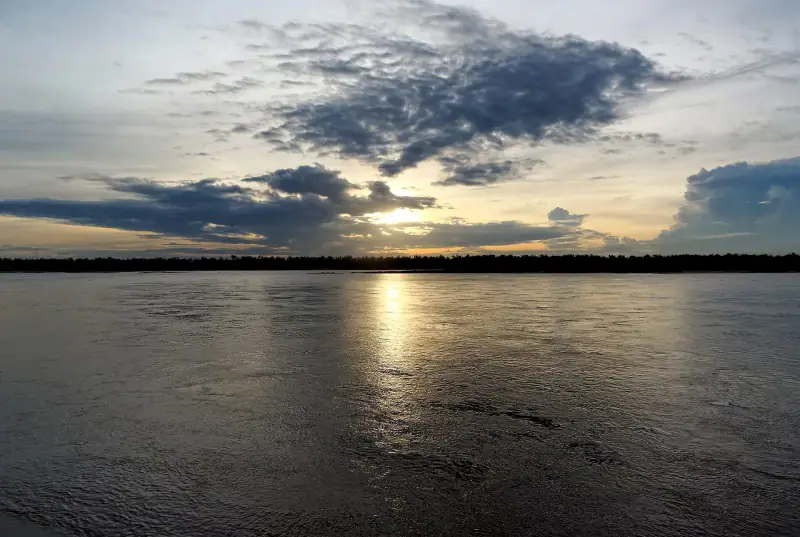
Eastern Cambodia: Kratie, Ratanakiri and Mondulkiri, the wild east
Exploring eastern Cambodia: Mekong dolphins at Kratie, Yeak Loam lake in Ratanakiri, ethical elephant experiences in Mondulkiri. A practical guide.
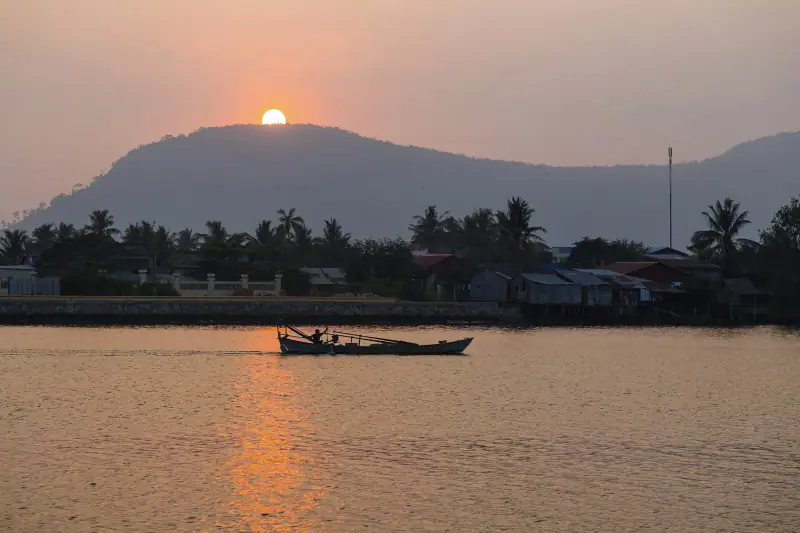
Visiting Kampot: a complete guide to Cambodia's most romantic town
Complete guide to visiting Kampot: the Kampot River, pepper, caves, kayaking, villages and where to stay. All you need to know before you go.
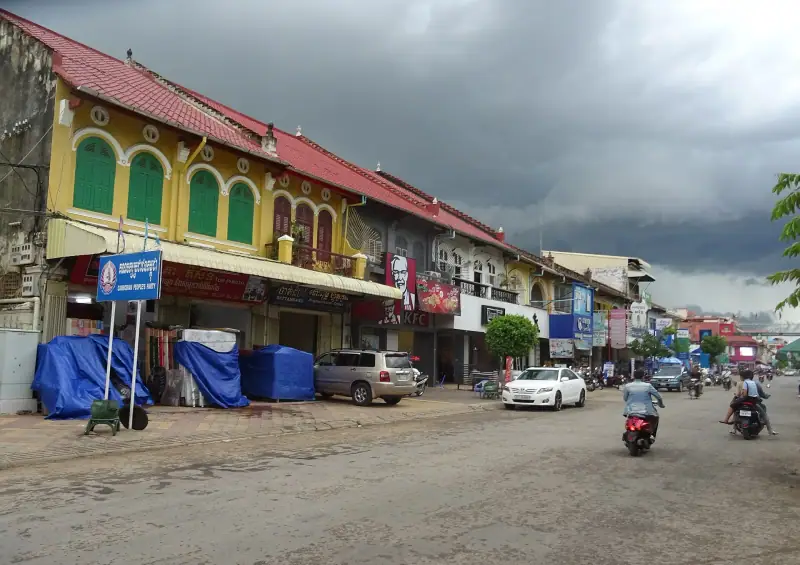
Visiting Battambang: a complete guide to Cambodia's northwest pearl
Complete guide to visiting Battambang: bamboo train, colonial architecture, Phare circus, bat cave and where to stay.
Ready-made
Cambodia itineraries
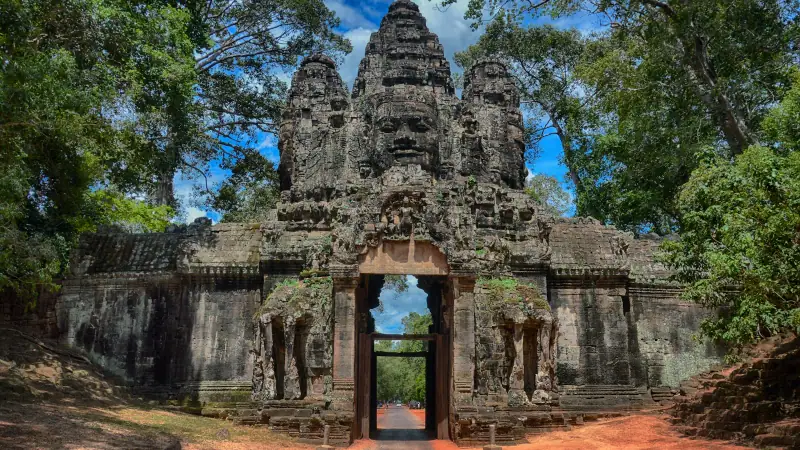
12 days
Cambodia in 12 Days with Kids: Stops, Distances and a Realistic Pace
Siem ReapPhnom PenhKampotKoh Rong Samloem
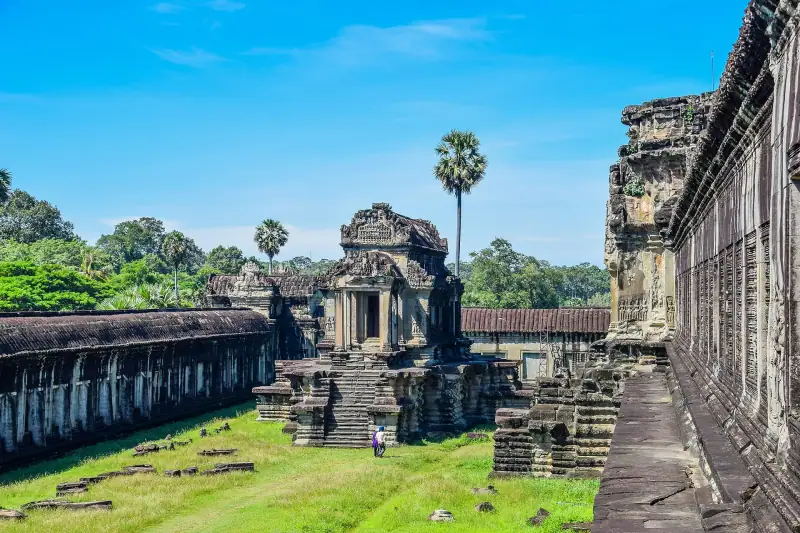
7 days
Cambodia in 7 Days: The Perfect One-Week Itinerary
Phnom PenhSiem Reap
Can be adapted in the planner
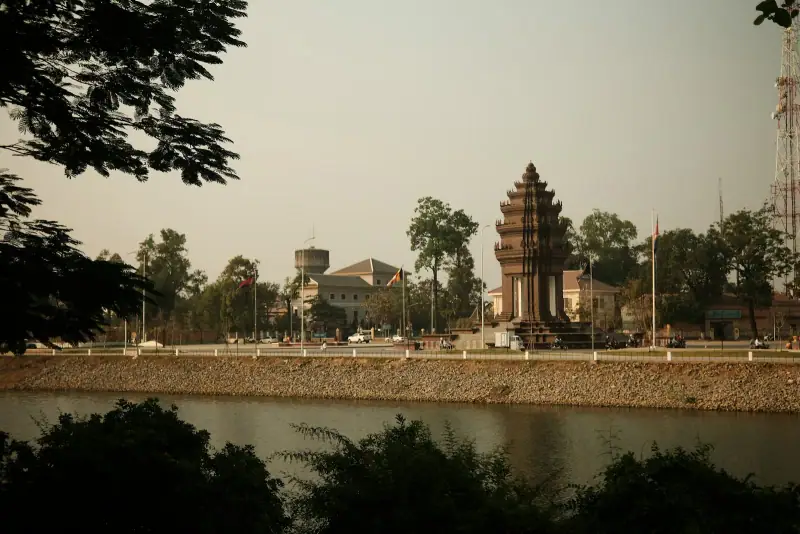
4 days
Road Trip in Northwest Cambodia: Battambang and Around in 4 Days
4-day road trip itinerary in northwest Cambodia: bamboo train, rice paddies, Phnom Sampeau bats and Angkorian temples away from the crowds.
Can be adapted in the planner