What to see
Eastern Cambodia: Kratie, Ratanakiri and Mondulkiri, the wild east
We may earn a commission when you book through links on this page, at no extra cost to you. We don't visit or try the places we cover: we summarize published sources. How we work
In short
- Irrawaddy dolphins are visible year-round at the Kampi pool, about 15 km (9 mi) north of Kratie. The best season is the dry season, November to April.
- From Phnom Penh by bus: Kampong Cham about 2 hours, Kratie 5-6 hours, Sen Monorom 5-6 hours, Ban Lung 9-10 hours (or a flight of about 1 hour).
- Plan about $30-50 a day for a comfortable trip. The Elephant Valley Project is the ethical elephant option in Mondulkiri.
- Malaria risk exists in Mondulkiri and Ratanakiri forests. Talk to your doctor before you go and drink only bottled water.
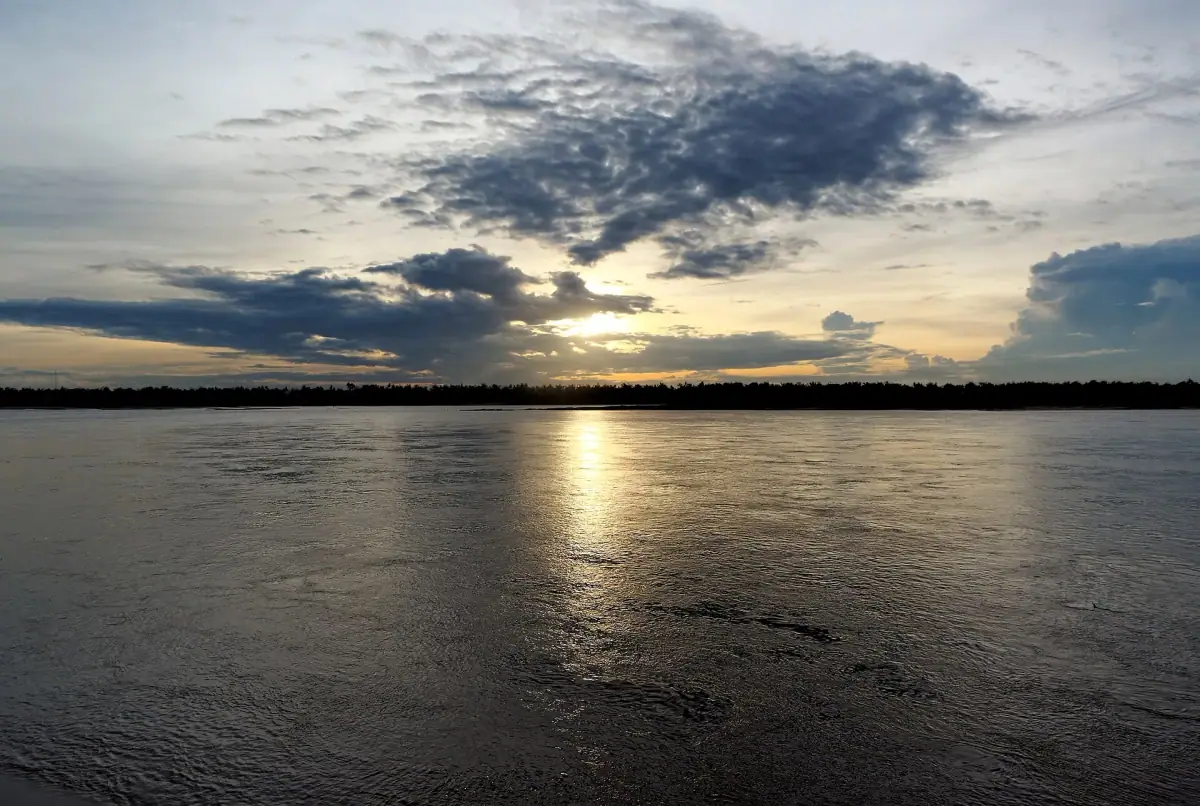
Eastern Cambodia is the hidden face of a country that usually shows only its temples. Here, there are no crowds at Angkor and no tuk-tuks storming colonial streets: only the Mekong rolling its slow waters, freshwater dolphins surfacing at dawn, highlands covered in primary forest and indigenous communities whose traditions go back centuries. If you are looking for the Cambodia from before mass tourism, you will find it here.
Why explore eastern Cambodia?
This region, which stretches from Kampong Cham to the Laotian border and from the Mekong plains to the highlands of Mondulkiri and Ratanakiri, is the least visited in the country. For many travelers who have been there, it is also the most memorable.
Reasons to venture there:
- See Irrawaddy dolphins (a critically endangered species) in the Mekong near Kratie
- Swim in the Yeak Loam volcanic crater lake in Ratanakiri
- Have an ethical experience with semi-free elephants in Mondulkiri
- Meet the Bunong, Tampuan, Kreung and Brao indigenous peoples in their villages
- Explore nearly untouched primary forest in Virachey National Park
- Ride along the Mekong banks by bike between Kampong Cham and Kratie
This part of Cambodia is for curious, patient travelers who prefer authentic experiences to packaged tours.
Kampong Cham: the gateway to the east
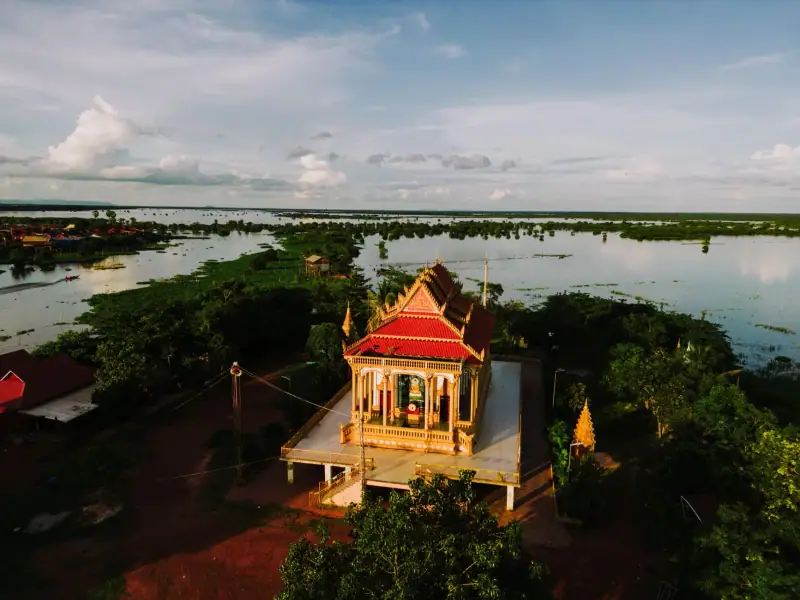
About 120 km (75 mi) northeast of Phnom Penh (about 2 hours by bus), Kampong Cham is often the first stop for travelers heading east. A mid-sized city on the Mekong, it has a relaxed atmosphere and several interesting sights.
The bamboo bridge (seasonal): Every year in the dry season, villagers hand-build a bamboo bridge several hundred meters long to link the bank to the island of Koh Paen. This handmade structure, taken down before the floods, is a symbol of local ingenuity. Crossing it on foot or by bike is Kampong Cham’s signature experience.
Wat Nokor: A few kilometers north of the city, this 11th-century Angkorian temple is one of the best preserved in the region. Unlike the temples of Angkor, overrun by tourists, Wat Nokor gets few foreign visitors. A modern Buddhist wat was built inside the walls of the ancient temple itself, creating a blend of past and present that is deeply Cambodian.
Phnom Pros and Phnom Srei: These two hills (the Man’s Hill and the Woman’s Hill) overlook the plain south of Kampong Cham. Pagodas crown them, and the view of the Mekong from their summits is panoramic. The legend that links them, a building contest between men and women to decide who would rule, is told by every local guide.
Hotels in Kampong Cham and Kratie
Guesthouses on the Mekong, hostels and charming hotels in eastern Cambodia.
Kratie: the Irrawaddy dolphins
Kratie is the most emblematic Cambodian town of the eastern Mekong. About 220 km (137 mi) northeast of Phnom Penh, it is the essential starting point for seeing the rare Irrawaddy dolphins (Orcaella brevirostris).
The Kampi dolphins
The Kampi pool, a deep arm of the Mekong about 15 km (9 mi) north of Kratie, is home to one of the last populations of Irrawaddy dolphins in the world. This freshwater species, of which an estimated 110 to 120 individuals remain in this stretch of the Cambodian Mekong according to the most recent official counts (2026), is critically endangered.
Motorboat trips leave every morning from Kratie for the Kampi pool. The dolphins, stocky with rounded foreheads and no pronounced beak, surface regularly to breathe. Watching these cetaceans in their natural habitat, in the calm of a dawn on the Mekong, is a profoundly different experience from any aquarium or animal park.
Practical info for dolphin watching:
- Departure from the Kratie pier, reached by tuk-tuk (about 15 km / 9 mi)
- Best time: early morning (before 9 am) or late afternoon
- Boat trip duration: about 1 hour
- Sightings are not guaranteed, but the success rate is high in the dry season
Koh Trong: the Mekong island
Across from Kratie, the island of Koh Trong is a few minutes away by ferry. This island, several kilometers long and home to a community of fishers and farmers, is crossed by a laterite track ideal for biking. No cars, few tourists: you will discover Cambodian rural life at its slowest pace. Guesthouses have opened there for those who want to linger: see where to stay in Kratie, in town or on Koh Trong island.
Kratie’s colonial architecture
Kratie’s center keeps a fine group of early 20th-century French colonial villas. The central market and the walk along the Mekong make it a pleasant town to explore on foot. The atmosphere is provincial and welcoming, very different from the bustle of Siem Reap.
Excursions in eastern Cambodia
Dolphin cruises, forest trekking, craft villages: book your activities.
Mondulkiri: the elephant highlands
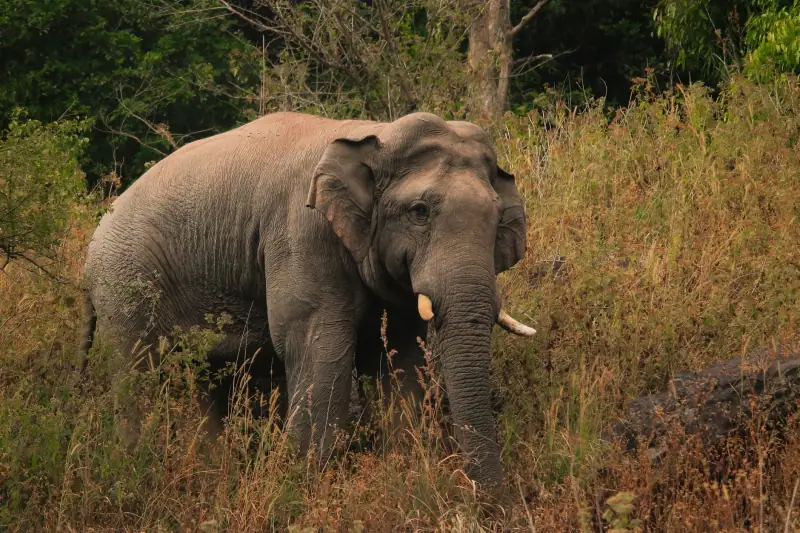
About 370 km (230 mi) east of Phnom Penh (about 5-6 hours by bus via Sen Monorom), Mondulkiri is Cambodia’s largest province and its least densely populated. The highlands roll between 500 and 1,000 meters (1,640 to 3,280 ft) in elevation, covered in pine forest, a landscape totally unexpected in a country often imagined as flat and tropical.
Sen Monorom is the provincial capital, a quiet town with a mountain-village feel. Mornings are cool (sometimes 15 °C / 59 °F in December-January), the sky clear and the air clean. It is the ideal base for all excursions in the region.
The Elephant Valley Project (EVP)
The Elephant Valley Project is an ethical sanctuary that takes in elephants formerly used for work (logging, riding tourism). In this setting of forest and hills, the elephants live semi-free, without forced contact with visitors.
A typical day at the EVP means following the elephants in their natural environment, watching them feed and bathe in the river, without ever riding them or forcing them to interact. The EVP team, in partnership with the local Bunong community (whose traditional mahouts keep an ancestral relationship with elephants), does exemplary rehabilitation and conservation work.
If you have to pick one elephant experience in Cambodia, pick this one.
Mondulkiri’s waterfalls
Mondulkiri’s forest is crossed by many waterfalls, especially impressive during and after the rainy season. The Bou Sra waterfalls (about 43 km / 27 mi from Sen Monorom) are among the most spectacular in Cambodia: two successive drops of several dozen meters in a setting of virgin forest. In the dry season, the flow is lower but reaching the foot of the falls on foot is easier.
The Bunong villages
The Bunong are the majority indigenous people of Mondulkiri. Their culture, their farming practices (traditional slash-and-burn cultivation) and their relationship with wild elephants are exceptionally rich. Several local organizations offer respectful visits to Bunong villages, with community guides who share their way of life, their traditional herbal medicine and their craft skills. These visits, conducted with respect, are among the most rewarding experiences in eastern Cambodia.
Ratanakiri: crater lakes and forest peoples
Ratanakiri is the wildest and most remote province in Cambodia. At the edge of Laos and Vietnam, it holds primary forests, ethnic minority villages and the Yeak Loam volcanic crater lake, one of the most beautiful natural sites in the country.
Ban Lung is the provincial capital, reached from Phnom Penh by bus (about 9-10 hours) or by a domestic flight (about 1 hour). The town is rustic, dusty in the dry season and muddy in the rainy season, but its authenticity and end-of-the-world atmosphere give it a particular charm.
Yeak Loam lake
This volcanic crater lake, about 5 km (3 mi) from Ban Lung, is Ratanakiri’s natural jewel. Perfectly circular, deep and a clear blue-green, it is surrounded by dense forest home to many birds and monkeys. The water is fresh and warm, ideal for swimming.
The lake is managed by the Tampuan community, which collects the entrance fees to fund community projects. A forest trail circles the whole lake in about 1.5 hours. Traditional shelters give you a place to rest in the shade. It is a place of absolute calm, far from any bustle.
Virachey National Park
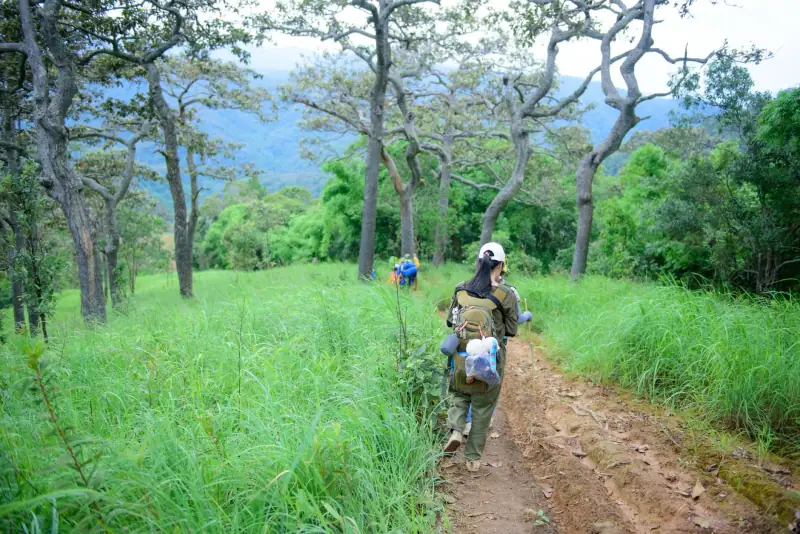
Virachey is Cambodia’s largest national park (about 3,325 km² / 1,284 sq mi), on the borders of Laos and Vietnam. The forest is nearly pristine, with exceptional biodiversity: wild elephants, gaurs (Asian wild buffalo), leopards, sun bears and remarkable birdlife. Access requires a park-approved guide (available in Ban Lung). Multi-day treks, with nights in the forest or in minority villages, are an unforgettable experience for travelers seeking wilderness.
The forest peoples’ villages
Ratanakiri is home to several indigenous groups (Tampuan, Kreung, Brao, Jarai) who live in villages scattered through the forest. Their stilt houses, their funerary houses (wood carvings), their rituals and their crafts (weaving, basketry, bead jewelry) represent a very rich cultural heritage. Community tourism organized by responsible local agencies lets you discover these cultures with mutual respect.
How to plan your eastern Cambodia route
Eastern Cambodia takes more time and planning than the classic circuits. Here are a few route outlines depending on the length of your stay.
Option 1: 3-4 days, the Mekong essentials Phnom Penh → Kampong Cham (1 night) → Kratie (2 nights) → back to Phnom Penh. Ideal for seeing the dolphins and the colonial architecture without going too far.
Option 2: 6-7 days, Mekong and highlands Phnom Penh → Kampong Cham (1 night) → Kratie (2 nights) → Sen Monorom/Mondulkiri (2-3 nights) → back to Phnom Penh. A route that pairs the river with the mountains.
Option 3: 10-12 days, the big eastern loop Phnom Penh → Kampong Cham → Kratie → Stung Treng → Ban Lung/Ratanakiri (flight or bus back to Phnom Penh). The full tour of the region for travelers with time.
To fit eastern Cambodia into a wider route, see our guide to the full Cambodia circuit and our 10-day Cambodia itinerary.
Practical info: eastern Cambodia in numbers
How to get to the region:
- Kampong Cham: Bus from Phnom Penh (about 2 hours, $5-8)
- Kratie: Bus from Phnom Penh (about 5-6 hours, $8-12) or from Kampong Cham (about 3 hours)
- Sen Monorom (Mondulkiri): Bus from Phnom Penh (about 5-6 hours, $10-15)
- Ban Lung (Ratanakiri): Bus from Phnom Penh (about 9-10 hours, $12-18) or domestic flight (about 1 hour)
Getting around: Motorbike taxis (moto-dops) and tuk-tuks are the usual way to get around in towns. Outside them, renting a scooter (about $8-15 a day) is the best option for exploring at your own pace. Some Ratanakiri tracks need a sturdy motorbike or a 4x4.
Indicative budget: Plan on $30-50 a day for a comfortable trip (guesthouse or simple hotel lodging, local meals, one transport leg a day). The Elephant Valley Project and some forest excursions are a separate budget item (booking direct is advised).
Lodging: The offering is more limited than in the big tourist cities but enough to travel comfortably. Kratie, Sen Monorom and Ban Lung have guesthouses and hostels on the Mekong or in the forest. Book ahead in high season (December-January).
Health and precautions: The region is classified as a malaria-risk area (especially in the forests of Mondulkiri and Ratanakiri). Malaria prophylaxis is recommended if you plan nights in remote forest areas. Talk to your doctor before you leave. Tap water is not drinkable: drink only bottled water.
For everything about entry requirements, insurance and health, read our guide to visas and entry formalities for Cambodia.
Eastern Cambodia can’t be summed up in a few photos. It is a place of slowness, vastness and authenticity that rewards those who take the time to immerse themselves in it. Dolphins at sunrise on the Mekong, a blue crater lake in the forest, free elephants in the Mondulkiri hills: these images look like nothing else in Cambodia, or in Southeast Asia. If you want to go beyond the beaten path, the east is waiting.
Frequently asked questions
How do you get to eastern Cambodia from Phnom Penh?
From Phnom Penh, regular buses serve Kampong Cham (about 2 hours), Kratie (about 5-6 hours) and Stung Treng (about 7-8 hours). For Mondulkiri (Sen Monorom), allow 5-6 hours by bus. Ratanakiri (Ban Lung) is the farthest: about 9-10 hours by bus or a domestic flight from Phnom Penh (about 1 hour; check with the airlines, notably Cambodia Angkor Air, to see which routes to Ban Lung currently operate). Roads in the main part of the region are paved, but laterite tracks remain toward the more remote areas.
Can you see Irrawaddy dolphins in Kratie all year?
Irrawaddy dolphins can be seen year-round at the Kampi pool, about 15 km (9 mi) north of Kratie. The best period is the dry season (November to April), when the Mekong is low and the dolphins gather in the deep pools. In the rainy season, they spread out more along the river. Boat trips leave every morning from Kratie.
Is Yeak Loam lake in Ratanakiri worth the trip?
Absolutely. This perfectly circular volcanic crater lake (about 800 meters / 2,625 ft across) is one of the most impressive natural sites in Cambodia. The deep blue-green water is crystal clear and ideal for swimming. The lake is managed by the local Tampuan community. A hiking trail circles the whole lake in about 1.5 hours. Admission is around $2 for foreigners according to recent sources (confirm the price there).
When is the best time to visit eastern Cambodia?
The dry season, from November to April, is the best time. The laterite tracks to the villages are passable, the highland waterfalls are accessible, and the heat is more bearable. The rainy season (May to October) makes some tracks impassable, but the forests are lushly beautiful and the Mekong is impressive in flood. Avoid July-August for very remote areas.
How can you see elephants ethically in Mondulkiri?
The Elephant Valley Project (EVP), near Sen Monorom, is a global benchmark for animal ethics. The elephants live there semi-free with no forced contact and no shows. Visitors watch the elephants in their natural environment, help prepare their food and bathe in the river alongside them (without riding on their backs). Book ahead in high season (check lead times and availability with the Elephant Valley Project).
Is eastern Cambodia suited to independent travelers?
Yes, but you need to plan more than in Siem Reap or Phnom Penh. Kratie and Ban Lung (Ratanakiri) have decent tourist infrastructure with guesthouses, restaurants and local agencies. Sen Monorom (Mondulkiri) is more rustic but perfectly accessible. For truly remote areas (minority villages, Virachey), a local guide is essential and recommended, both for logistics and for respect toward the communities.
More Cambodia guides
Keep reading
Visiting Kampot: a complete guide to Cambodia's most romantic town
Complete guide to visiting Kampot: the Kampot River, pepper, caves, kayaking, villages and where to stay. All you need to know before you go.
Visiting Battambang: a complete guide to Cambodia's northwest pearl
Complete guide to visiting Battambang: bamboo train, colonial architecture, Phare circus, bat cave and where to stay.
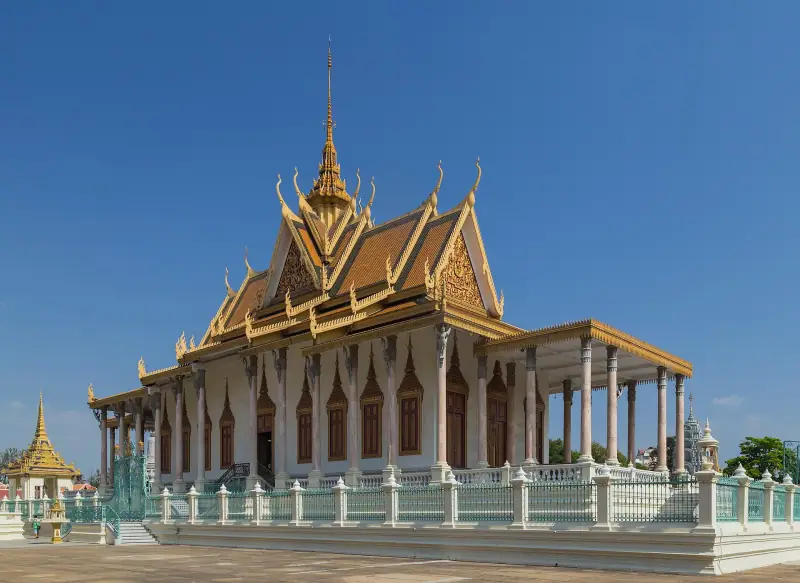
Phnom Penh essentials: the 10 things to do
The 10 essential things to do in Phnom Penh: Royal Palace, Tuol Sleng, Choeung Ek, Central Market, Riverside. A complete guide to Cambodia's capital.
Ready-made
Cambodia itineraries
12 days
Cambodia in 12 Days with Kids: Stops, Distances and a Realistic Pace
Siem ReapPhnom PenhKampotKoh Rong Samloem
7 days
Cambodia in 7 Days: The Perfect One-Week Itinerary
Phnom PenhSiem Reap
Can be adapted in the planner
4 days
Road Trip in Northwest Cambodia: Battambang and Around in 4 Days
4-day road trip itinerary in northwest Cambodia: bamboo train, rice paddies, Phnom Sampeau bats and Angkorian temples away from the crowds.
Can be adapted in the planner