What to see
Visiting Battambang: a complete guide to Cambodia's northwest pearl
We may earn a commission when you book through links on this page, at no extra cost to you. We don't visit or try the places we cover: we summarize published sources. How we work
In short
- Two days cover the essentials: bamboo train, colonial architecture, the Phare circus show and the Phnom Sampeau bat cave. Three days adds countryside by bike.
- From Siem Reap, the bus takes 3 to 4 hours ($3-6); the slow boat takes 4 to 6 hours (about $25-40) and is very scenic.
- The best season is November to April, with the mildest temperatures from December to February (25-30 °C / 77-86 °F).
- Budget about $35-60 a day for a comfortable trip, roughly 20 to 40% less than Siem Reap.
Battambang is Cambodia’s big overlooked city. While tourists rush to Siem Reap for Angkor and to Phnom Penh for its troubling history, this third city of the country dozes in its provincial gentleness, jealously guarded by those who know it. A city of architects, artists and rice fields. A city where tuk-tuks give way to bicycles, where café terraces stretch along the Sangkae River, where a bamboo train still runs on century-old rails. This complete guide tells you everything you need to know to visit Battambang.
Battambang at a glance: why go?
Battambang is the capital of the province of the same name, in northwest Cambodia. With about 196,700 inhabitants, it is the third city of Cambodia after Phnom Penh and Siem Reap, and yet it gets far fewer visitors than those two.
That is precisely what makes it charming. Here, mass tourism has not disfigured local authenticity. The French colonial streets are intact, the markets are used by local Cambodians, and the artists who live in the city give it a creative atmosphere that is rare in the country.
Good reasons to come to Battambang:
- The best-preserved French colonial architecture in Cambodia
- The norry, the famous bamboo train, unique in the world
- The Phare Ponleu Selpak circus, an arts school that has trained Cirque du Soleil artists
- Bike trips through rice fields and potters’ villages
- The Phnom Sampeau cave and its bat show
- A food scene and trendy cafés without Siem Reap prices
Colonial architecture: wandering the streets of Battambang
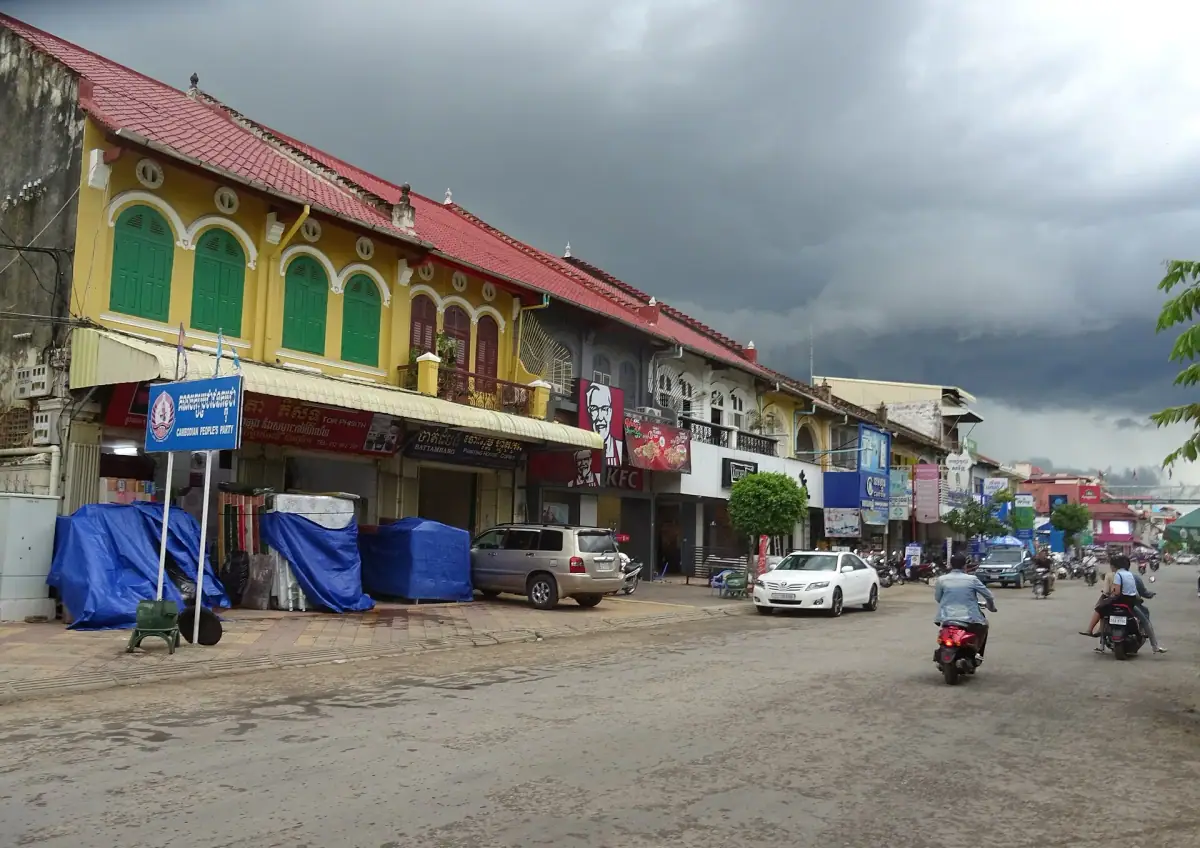
Battambang’s historic heart is an open-air museum of French colonial architecture. Unlike Phnom Penh, where rampant development has erased part of the heritage, Battambang’s streets have kept their Art Deco and neocolonial facades with rare integrity.
The Sangkae riverfront: The walk along the Sangkae River is a must. Colonial villas with colorful shutters are reflected in the water. Trendy cafés and restaurants have settled into these restored buildings, creating an atmosphere that is both nostalgic and lively.
Street 2.5: This central artery has the finest examples of Art Deco architecture. Yellow and white facades, wrought-iron balconies, shaded arcades: a setting that has barely changed since the 1940s. This is where the central market (Phsar Nat) stands, a colonial hall still heavily used by locals.
The temple district: Several wats (Buddhist temples) dot the city, including the magnificent Wat Damrey Sar (the White Elephant temple), in delicate pastel colors, and Wat Kandal, right in the center.
A 2-hour walk through these streets is enough to grasp the soul of Battambang. Take the time to sit in a café, watch the motorbikes weave between the tuk-tuks, and see kids head home from school in blue and white uniforms.
Hotels in Battambang
From family guesthouses to colonial boutique hotels, book with free cancellation.
The bamboo train (norry): the can’t-miss attraction
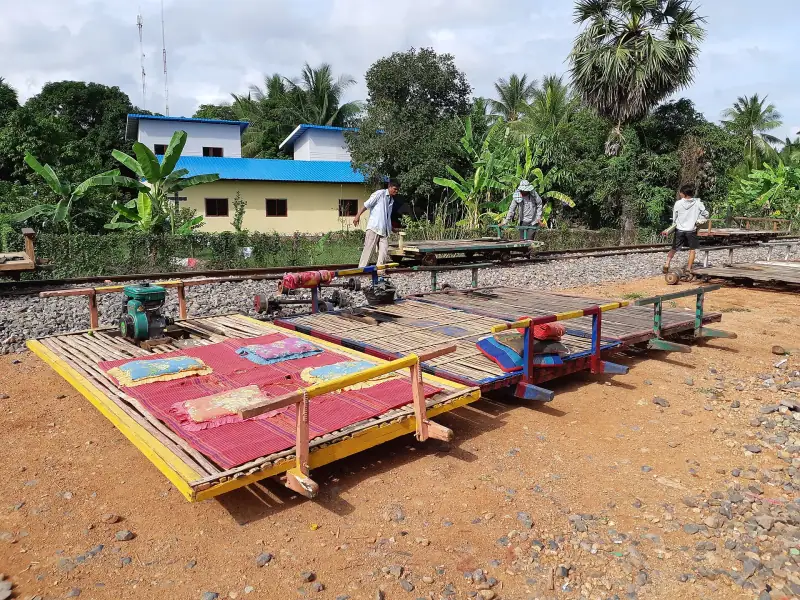
This is Battambang’s signature experience and one of the most memorable in Cambodia. The norry (or bamboo train) is a bamboo platform set on two metal wheel axles, driven by a small motor, that speeds along the rails of an abandoned French colonial railway line.
Because the track allows passage in only one direction, when two norries meet, one of them is taken completely apart in a few seconds to let the other pass, then put back together right away. It is a hilarious and perfectly rehearsed routine.
Practical information:
- Location: The bamboo train site is 7 km (4 mi) from the center (15 min by tuk-tuk)
- Duration: 30-45 minutes round trip through the rice fields
- Price: about $15-20 per platform (2-4 people), to confirm there
- Hours: generally from morning to sunset, every day (check there)
- Tip: Go in the late afternoon for the golden light on the rice fields
The train stops halfway at a village where local craftspeople sell souvenirs. Don’t feel obliged to buy, but take time to watch the daily life of this Cambodian farming village.
Phare Ponleu Selpak: the circus that changed lives
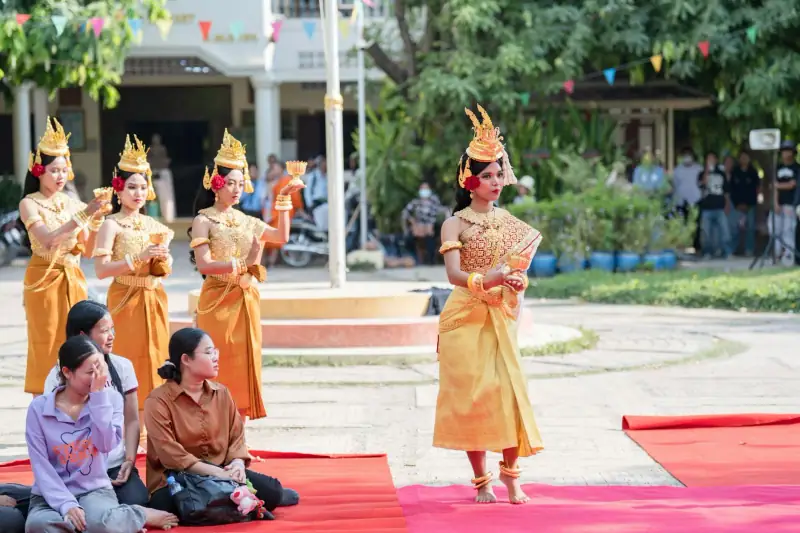
Phare Ponleu Selpak (The Brightness of Art, in Khmer) is much more than a circus school. It is a social project founded in 1994 by Cambodian refugees to help children traumatized by war and poverty through the arts. Acrobatics, contemporary dance, visual arts and music: more than 1,000 young Cambodians are trained there every year.
Some of its graduates have joined Cirque du Soleil. The school’s international reputation is deserved.
The evening show: Every evening of the week, Phare puts on a show of about an hour, combining acrobatics, theater, dance and music. The themes cover Cambodian history, Khmer traditions or contemporary stories. The performances are astonishing.
Practical info:
- Shows: Monday to Saturday (depending on the season, check the schedule)
- Time: generally 7:30 pm
- Duration: about 1 hour
- Price: varies by seat (check with Phare Ponleu Selpak)
- Booking: online or at the door (book ahead in high season)
Seeing a Phare show is, along with the bamboo train, the highlight of your stay in Battambang.
Activities and guided tours in Battambang
Bike trips, tuk-tuk outings, temple visits: book your experience in advance.
Phnom Sampeau and the bat cave
12 km (7 mi) southwest of Battambang stands the hill of Phnom Sampeau, a place that is sacred, historic and spectacular all at once. At the top (reachable on foot or by motorbike), several Buddhist temples coexist with caves that the Khmer Rouge used as execution sites, a reminder of the country’s painful history.
But what draws most visitors is the natural spectacle that happens every evening at sunset: millions of bats (estimated at 3 million) leave the Phnom Sampeau caves for their night hunt. This continuous stream of creatures rising into the pink sunset sky is a breathtaking phenomenon, one of the great natural shows of Southeast Asia.
How to get there:
- By tuk-tuk from Battambang: $12-15 round trip (waiting time included)
- By scooter on your own: 12 km (7 mi) on the main road
- By bike, for the brave: 25-30 min of pedaling on flat terrain
- Timing: arrive 30-45 min before sunset (around 5-5:30 pm)
Food and drink vendors are there. The summit also has a very nice view over the Cambodian plain.
Exploring the countryside by bike
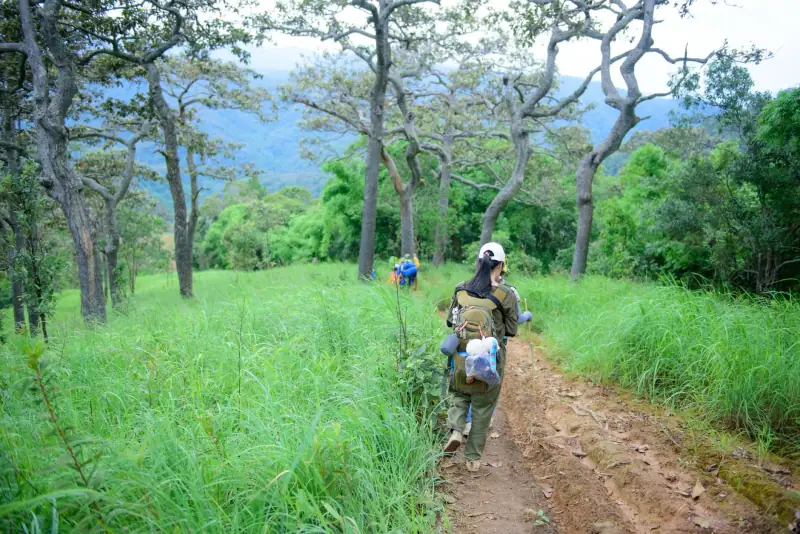
Battambang is the ideal starting point for bike trips into the surrounding countryside, a network of flat tracks crossing rice fields, potters’ villages, orchards and isolated temples. It is one of the best cycling experiences in Cambodia.
The bike-ride highlights:
Wat Kor: A few kilometers to the north, this craftspeople’s village keeps Khmer building and craft traditions alive. The traditional wooden houses and artisans’ workshops make it an authentic spot. You can watch local artisans at work and buy pieces directly.
Wat Ek Phnom: 13 km (8 mi) north of Battambang, the ruins of this 11th-century Angkorian temple (from the time of Suryavarman I) are surrounded by a modern wat that is still active. Together they give a striking picture of the continuity of Cambodian religious life across the centuries. The bike ride through the villages to get there is as beautiful as the temple itself.
The rice fields around Battambang: Battambang province is Cambodia’s rice bowl. The rice-field landscapes, especially beautiful at dawn and dusk, are reachable by bike in any direction from the center.
Bike rental: Most guesthouses rent bikes for $2-4 a day. For longer trips, a scooter rented for $8-12 a day is a comfortable option.
Battambang’s food scene
Battambang is, along with Phnom Penh, the Cambodian city with the most interesting food scene outside Siem Reap. Prices are much more reasonable, and the local cooking is authentic.
Where to eat in Battambang:
Local Khmer food: The restaurants around the Phsar Nat market serve everyday Cambodian dishes (amok, a steamed fish curry in a banana leaf; lok lak, stir-fried beef with pepper sauce; kuy teav, a rice noodle soup) for $2 to $5.
Cafés on the river: The street along the Sangkae is dotted with bohemian cafés that combine restored colonial architecture, specialty coffee and international menus. Ideal for a brunch or a cool-down break.
Jaan Bai: This social restaurant is run by the Cambodian Children’s Trust (check its hours before you come). The Khmer-Western fusion food is excellent, prices are reasonable and your meal funds a good cause.
Vegetarian: Battambang has a good vegetarian offering, driven in part by its cosmopolitan arts community. Vegetarian and vegan restaurants are found in the area around Street 2.5.
Flights to Phnom Penh or Siem Reap
Compare fares to start your trip around Cambodia.
How to fit Battambang into your itinerary
Battambang sits halfway between Siem Reap (172 km / 107 mi to the east) and the Thai border at Poipet (100 km / 62 mi to the west). Its position makes it a natural stop on several kinds of routes.
Option 1: Siem Reap → Battambang (2-3 days) → back The classic combination for a one-week stay in Cambodia: Angkor + Battambang. The two cities have very complementary personalities.
Option 2: Siem Reap → Battambang → Phnom Penh (full loop) Ideal for a stay of 10 days to 2 weeks. Take the bus from Siem Reap to Battambang, spend 2-3 nights in Battambang, then take the bus from Battambang to Phnom Penh (4-5 hours) and head home from the capital. This route covers the three essentials of Cambodia.
Option 3: Entering from Thailand If you come overland from Bangkok (Poipet/Aranya Prathet border, closed since June 2025 and still closed in September 2026: check whether it has reopened before you leave), Battambang is the first major Cambodian city. An excellent entry point to the country before heading up to Siem Reap.
For more complete route ideas, see our 10-day Cambodia itinerary and our guide to the full Cambodia circuit.
The Siem Reap to Battambang trip by boat
If you have time, take the boat rather than the bus to reach (or leave) Battambang from Siem Reap. This 4 to 6 hour crossing of Tonle Sap lake and the Sangkae River is one of the finest travel experiences in the country.
The boat leaves from the Siem Reap pier (reachable by tuk-tuk) around 7-7:30 am and reaches Battambang in the early afternoon. The route crosses Tonle Sap lake (the largest lake in Southeast Asia) and then goes up the Sangkae River through dense vegetation and stilt villages.
Practical info:
- Price: about $25-40 per person (check with the operator or your guesthouse)
- Booking: through your guesthouse or at the pier the day before
- Season: service depends on the water level and may be suspended in the dry season (check before you come). In the dry season (Jan-May), shallows can lengthen the trip
- Bring: sunscreen, a hat, water and patience
Where to stay in Battambang
Battambang offers excellent value for accommodation, with options ranging from budget family guesthouses to boutique hotels in restored colonial villas.
Recommended area: Stay downtown, close to the street along the Sangkae. You will be within walking distance of the main restaurants, cafés and the market, and 10-15 min by tuk-tuk from the bamboo train.
Budget ($10-25 a night): Downtown guesthouses offer clean rooms with air conditioning and breakfast. A local, family atmosphere.
Midrange ($25-60 a night): Several boutique hotels occupy renovated colonial villas. Pool, breakfast included, English-speaking staff. The best value.
Upscale ($60-120 a night): Battambang’s premium properties are still much cheaper than Siem Reap’s for an equivalent level of comfort.
See our guide to the best time to visit Cambodia to choose the ideal season for what you want to do.
Car or scooter rental in Cambodia
Explore the Battambang countryside at your own pace with a rental vehicle.
Battambang practicalities
How to get to Battambang:
- From Siem Reap: Bus (3-4 hours, $3-6) or boat (4-6 hours, about $25-40)
- From Phnom Penh: Direct bus (4-5 hours) or shared taxi (3-4 hours), from a few dollars (check fares with the companies)
- From Thailand: the Poipet border has been closed since June 2025; if it reopens, take a bus from Bangkok to Poipet, then a Cambodian bus to Battambang (2 hours, $5-8). Until then, fly (Bangkok to Siem Reap or Phnom Penh)
Getting around:
- Tuk-tuk: The most practical way to get to the excursions (bamboo train, Phnom Sampeau). Negotiate in advance ($10-25 for a half day)
- Bike: For rides in town and the nearby countryside ($2-4 a day to rent)
- Scooter: For longer excursions ($8-12 a day)
- Remork: A large tuk-tuk for groups
Currency and budget: Battambang accepts Cambodian riels and US dollars. Prices are generally 20 to 40% lower than in Siem Reap. Plan on $35-60 a day for a comfortable trip (midrange lodging, local meals, activities).
Internet and phone: Wi-Fi is available in all hotels and cafés. A local Metfone or Smart SIM (a few dollars, 4G data plan to check with the carrier) is recommended for rural excursions.
Battambang is the secret that travelers who know Cambodia well guard jealously. Less spectacular than Angkor but infinitely more authentic, less historically heavy than Phnom Penh but far more soothing, it is the city that may give you your most intimate memory of Cambodia. Take the time to wander there, pedal through its rice fields and watch the bats fly out at sunset. You will understand why people come back.
Frequently asked questions
How many days do you need to visit Battambang?
Two days are enough for the essentials: the bamboo train, the colonial architecture, the Phare circus show and the bat cave. Three days let you explore the surroundings by bike, the rice fields and satellite temples such as Wat Ek Phnom.
How do you get from Siem Reap to Battambang?
The trip from Siem Reap to Battambang takes 3 to 4 hours by bus ($3-6), or 4 to 6 hours by slow boat across the Tonle Sap (about $25-40), a highly recommended option for the scenery. By shared taxi, allow 2.5 to 3 hours ($8-12 per person).
Is the Battambang bamboo train really worth the detour?
Absolutely. The norry (bamboo train) of Battambang is one of the most original experiences in Cambodia. These motorized bamboo platforms speed along colonial-era rails through the rice fields, an attraction unique in the world. Expect about $15-20 (confirm there) for a 30 to 45 minute outing from the center.
Is Battambang safe for solo travelers?
Battambang is one of the safest and most pleasant cities in Cambodia for solo travelers. The atmosphere is relaxed, the locals are welcoming and the city is compact enough to explore on foot or by bike without stress.
Can you rent a bike in Battambang?
Yes, many guesthouses and shops rent bikes ($2-4 a day) and scooters ($8-12 a day). Battambang is one of the best cities in Cambodia for bike rides in the surrounding countryside: rice fields, potters' villages and rural temples.
When is the best time to visit Battambang?
The dry season, from November to April, is ideal. From December to February, temperatures are the mildest (25-30 °C / 77-86 °F). The rainy season (May to October) makes the surroundings greener and the Tonle Sap boat ride more spectacular, but rural tracks can be hard to get to.
More Cambodia guides
Keep reading
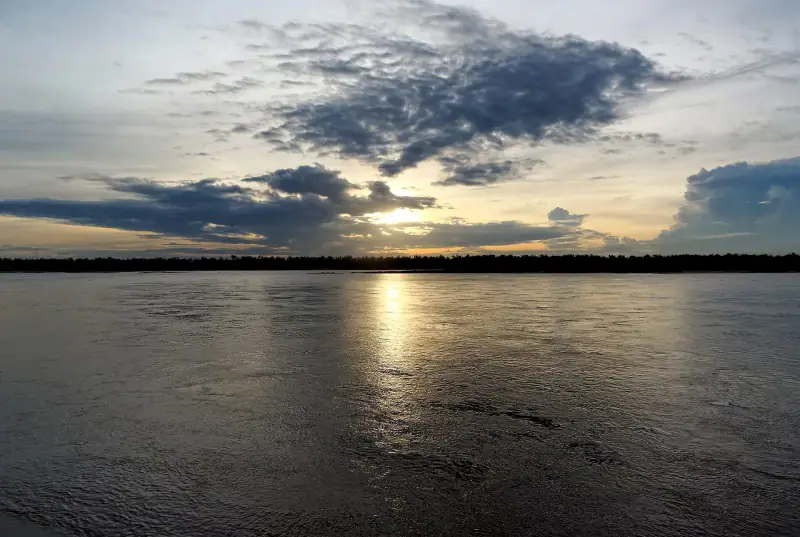
Eastern Cambodia: Kratie, Ratanakiri and Mondulkiri, the wild east
Exploring eastern Cambodia: Mekong dolphins at Kratie, Yeak Loam lake in Ratanakiri, ethical elephant experiences in Mondulkiri. A practical guide.
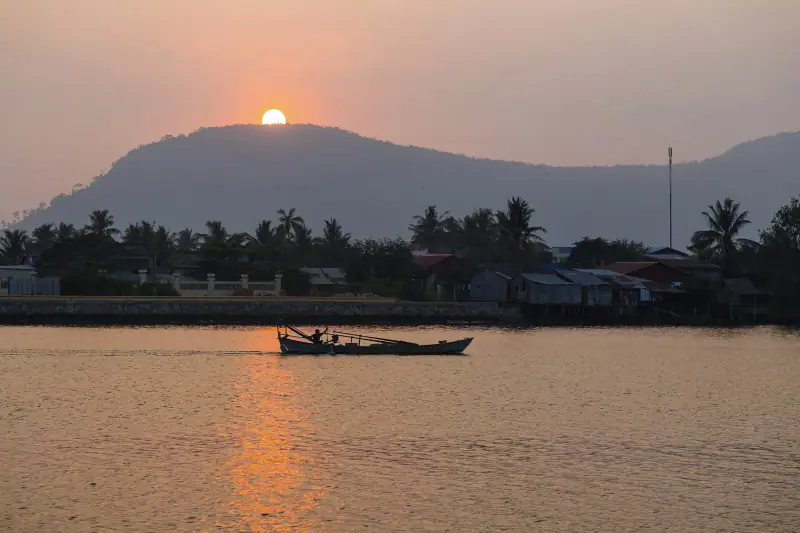
Visiting Kampot: a complete guide to Cambodia's most romantic town
Complete guide to visiting Kampot: the Kampot River, pepper, caves, kayaking, villages and where to stay. All you need to know before you go.
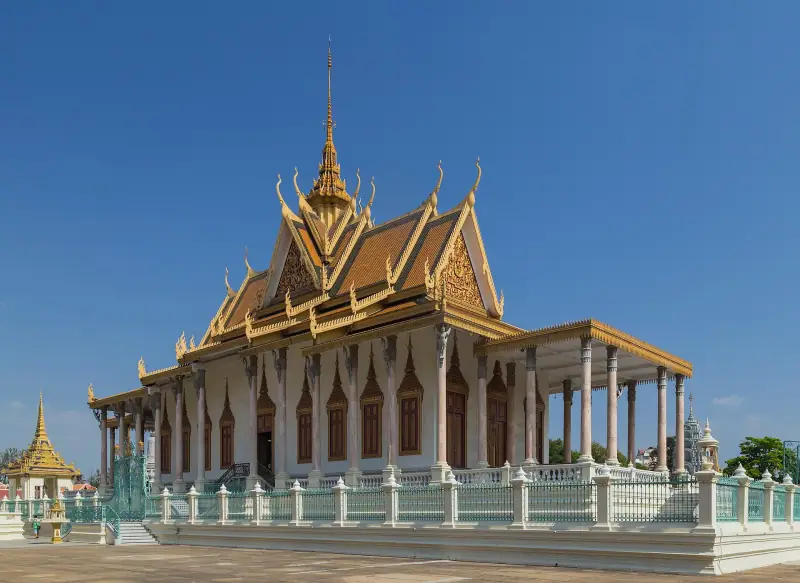
Phnom Penh essentials: the 10 things to do
The 10 essential things to do in Phnom Penh: Royal Palace, Tuol Sleng, Choeung Ek, Central Market, Riverside. A complete guide to Cambodia's capital.
Ready-made
Cambodia itineraries
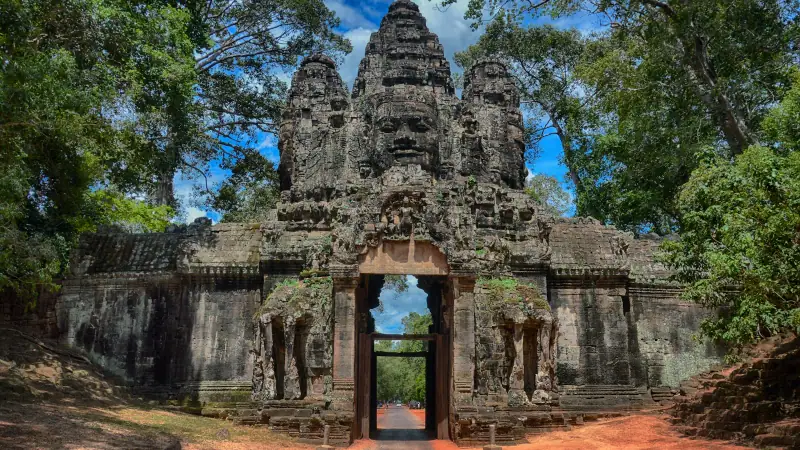
12 days
Cambodia in 12 Days with Kids: Stops, Distances and a Realistic Pace
Siem ReapPhnom PenhKampotKoh Rong Samloem
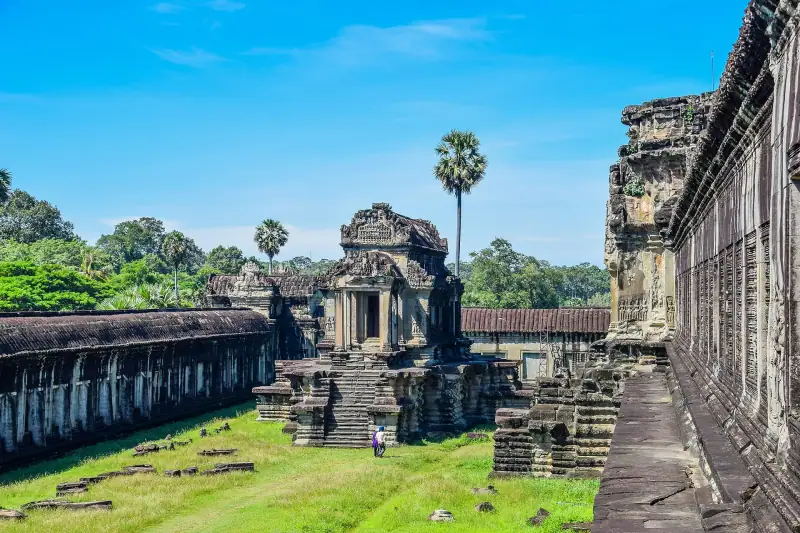
7 days
Cambodia in 7 Days: The Perfect One-Week Itinerary
Phnom PenhSiem Reap
Can be adapted in the planner
4 days
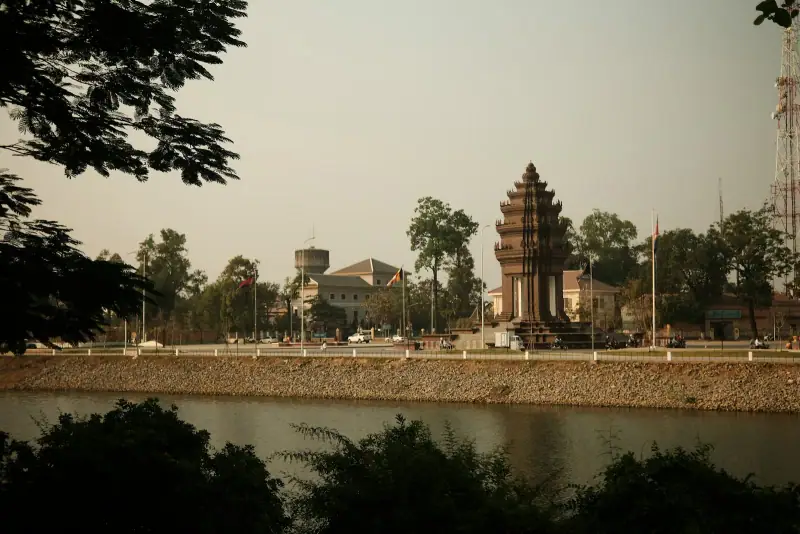
Road Trip in Northwest Cambodia: Battambang and Around in 4 Days
4-day road trip itinerary in northwest Cambodia: bamboo train, rice paddies, Phnom Sampeau bats and Angkorian temples away from the crowds.
Can be adapted in the planner