Things to do
Kampot and Kep: What to Do, See and Eat in Southern Cambodia
We may earn a commission when you book through links on this page, at no extra cost to you. We don't visit or try the places we cover: we summarize published sources. How we work
In short
- Plan 3 to 4 days minimum for Kampot, including a day trip to Kep (25 km / 16 mi away).
- Best season is November to April; June to October brings frequent rain and harder access to the caves.
- Top activities: cycling the countryside, Phnom Chhnork cave, pepper plantations, river kayaking, Kep crab market.
- Phnom Penh to Kampot takes about 3 h 30 to 4 h by bus or minivan ($6-10 USD).
Kampot and Kep are two of Cambodia’s best-kept secrets. While the classic circuits run between Phnom Penh, Angkor and the islands, these two southern destinations draw travelers looking for something different: a sleepy colonial atmosphere, world-famous pepper plantations, an unforgettable crab market and a coastline that is still unspoiled. Once you arrive, you will not leave in a hurry.
Kampot and Kep at a glance
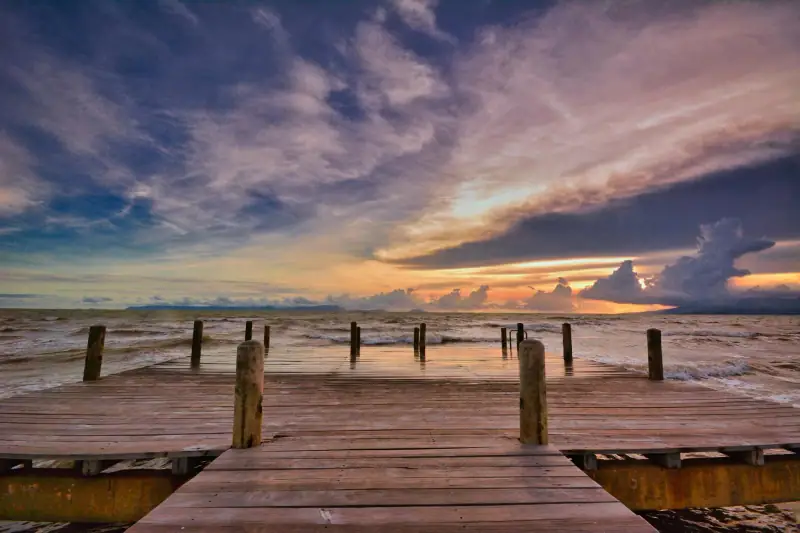
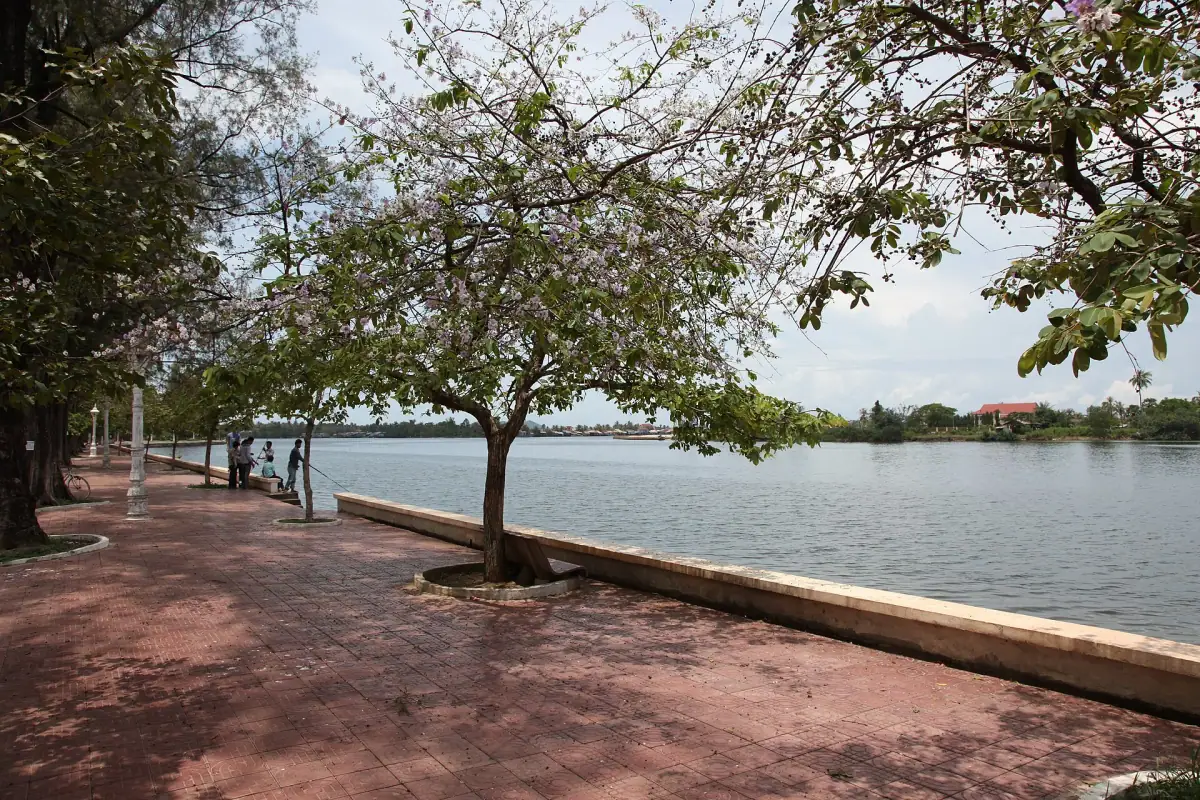
Kampot is a provincial town of 40,000 people, 150 km (93 mi) southwest of Phnom Penh, on the Praek Tuek Chhu River. It is known for its French colonial architecture, its protected-origin pepper plantations, its Khmer caves and a laid-back atmosphere that invites you to slow down. The Elephant Mountains (Phnom Damrei) close off the horizon to the west, producing striking sunsets.
Kep is a former French seaside resort founded in 1908, 25 km (16 mi) from Kampot. Devastated by the Khmer Rouge in the 1970s, it has been slowly rebuilding since the 2000s. Its colonial villas, overgrown with vegetation, have a unique, melancholy charm. It is best known for its fresh crab cooked with Kampot pepper, a pairing that has become emblematic of Cambodia.
5 top activities in Kampot
1. Cycling the countryside
A bicycle is the ideal way to get around Kampot. The roads are flat, traffic is light and the scenery is beautiful. Hotels rent bikes for $1-3 USD a day.
Popular loop (30-35 km / 19-22 mi, half day):
- Leave central Kampot heading east
- Rice paddies and fishing villages along the river
- Return via the pepper plantations
- Stop at the river bridge for sunset
Longer loop (50 km / 31 mi, full day):
- Visit the Phnom Chhnork cave (see below)
- Pass through the pepper plantations
- Return along the coastal road
Note: The Kbal Chhay waterfall is in Sihanoukville (16 km / 10 mi north), about 2 to 2 h 30 by car from Kampot. It does not fit practically into a Kampot-Kep itinerary.
2. Phnom Chhnork cave (a Hindu temple inside a cavern)
Eight km (5 mi) northeast of Kampot, the Phnom Chhnork cave is one of the region’s most remarkable sights. A climb of 203 steps leads up this limestone hill through the forest. At the top, a cave entrance opens onto a Hindu temple dating from the 7th century, in the Funan era, dedicated to Shiva. The shrine holds a representation of the lingam (a Hindu symbol). Stalactites and stalagmites frame this ancient sacred site to striking effect.
Practical info:
- Admission: $1 USD (approximate, check there)
- Time needed: about 1 h 30
- Getting there: by bike (30 min from the center) or by tuk-tuk
- The local guide offered at the entrance really adds to the visit (~$3 USD)
A second cave nearby, Phnom Kbal Romeas, is less visited and just as beautiful. You can combine the two in a half day.
3. Visiting the pepper plantations
Kampot pepper is one of the few peppers in the world with a protected geographical indication (PGI). Grown on the slopes of the Elephant Mountains in volcanic soil and a unique microclimate, it is prized for its complex floral aromas and its richness in essential oils. Top chefs around the world compete for it.
The main varieties:
- Black pepper: dry and intense, perfect for meat
- Red pepper: harvested at full ripeness, milder and fruitier
- White pepper: fermented then dried, earthy aromas
- Green pepper: fresh or dried, used in Kep’s crab dishes
Plantations to visit:
- La Plantation (9 km / 6 mi from Kampot, organic, free guided tour in French, shop)
- Sothy’s Pepper Farm (authentic family atmosphere)
- Pepper of Cambodia (check with the plantation about its Fairtrade certification, its shop and its visiting conditions)
Buy your pepper directly at the plantations. It is much cheaper than in town and the quality is guaranteed. Expect to pay $8-15 USD for 100 g (3.5 oz), depending on the variety.
Hotels in Kampot
Colonial guesthouses, riverside lodges and boutique hotels in the old quarter.
4. Kayaking on the Praek Tuek Chhu River
The Kampot river is ideal for a kayak outing. Calm water, mangroves, fishing villages and the Elephant Mountains as a backdrop make for an exceptional setting. Several operators offer rentals or guided outings from the town center.
Options:
- Rental only: $5-8 USD per half day, ideal if you already know how to kayak
- Guided tour: $15-25 USD per person, with guide, water and snacks included
- Sunset tour: 2 hours on the river in golden light, magical
- Mangrove tour: exploring the coastal areas, with a chance to see local wildlife (monkeys, birds)
The most popular outing heads up the river toward the fishing villages, crosses the mangroves and returns at sunset. Book ahead during school holidays.
5. Sunset from the Kampot bridge
Simple, free and unforgettable. Kampot’s old iron bridge (no longer used by cars) is the ideal spot to watch the sun drop behind the Elephant Mountains. Orange hues reflect on the river while fishing boats return to port. Locals and travelers naturally gather here in the late afternoon.
Settle in with a local beer (50 cents to $1 USD at the riverside grocery stores) and enjoy the moment. The old colonial quarter just behind, with its colorful-shuttered houses and terrace cafés, completes the picture.
Kep: the crab market and the highlights
The crab market
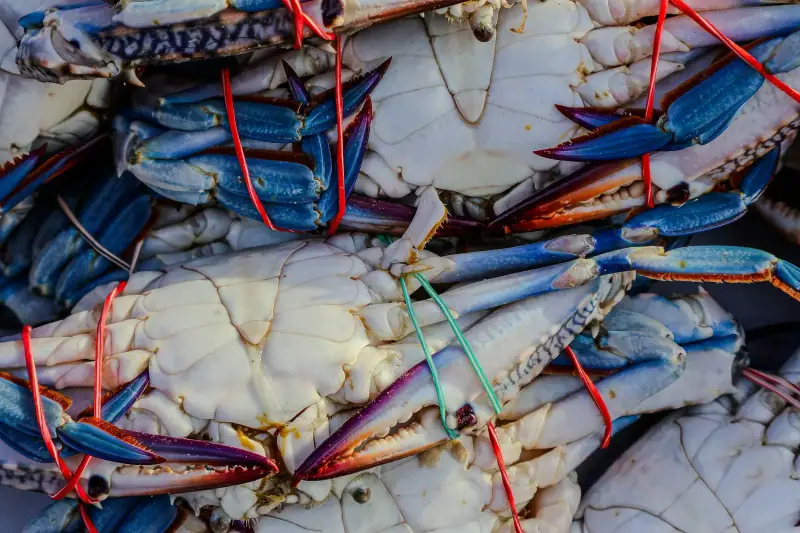
The Kep crab market is an institution. On the beach, dozens of stalls sell freshly caught crab, prepared in front of you in several ways, the most famous being crab with fresh Kampot green pepper.
The crab is seared in a smoking wok with garlic, fresh green pepper, galangal and lemongrass. The result is both explosive and fragrant, a seafood pairing unique to Cambodia.
How to navigate it:
- The stalls are run by local women fishers (the “fisherwomen”)
- Pick a stall based on how busy it is (a sign of freshness)
- Expect to pay $8-15 USD for a whole crab plus vegetables and rice
- Prawns with Kampot pepper are an excellent alternative
- The best times are 7-9 am, when the fishers arrive with the fresh catch, or around noon for lunch (the market closes at 5-5:30 pm)
Kampot & Kep tours
Full-day Kampot-Kep trip with the crab market, plantations and a cave.
The abandoned colonial villas
One of Kep’s oddities is its ghost real estate. In the 1960s, Kep was the beach of Cambodia’s elite and of the French community. Hundreds of modernist villas, some designed by well-known architects, lined the coast. When the Khmer Rouge took power in 1975, the owners fled and never returned.
Today, these villas are partly overgrown by vegetation. Some have been restored as boutique hotels or restaurants, while others remain photogenic ruins. Strolling through Kep’s villa district is an experience in itself, a meditation on time and history.
Kep National Park
Kep National Park (66.65 km² / 25.7 sq mi) is ideal for a short hike in tropical forest. An 8 km (5 mi) trail starts in central Kep and climbs toward the ridges, with views over the Gulf of Thailand and the surrounding islands. Macaque monkeys live in the canopy.
Info:
- Admission: about $1 USD
- Time needed: 2-3 hours for the full loop
- Level: easy to moderate (a few steep sections)
- Best time: early morning, to avoid the heat and see wildlife
Koh Tonsay (Rabbit Island)
Just 30 minutes by boat from Kep, Koh Tonsay (Rabbit Island) is an easy tropical getaway. White-sand beach, turquoise water, coconut palms and basic bungalows. The island has not changed in decades. It is ideal for a beach day or a night on the island to escape the mainland heat.
- Boat from the Kep pier: $7-10 USD round trip
- Bungalows on the island: about $15-30 USD a night (very basic, cold water; approximate rate, check with the bungalows)
- Snorkeling is possible around the island
- No ATM on the island, so bring cash
To learn more about Cambodia’s islands, see our guide to Cambodia’s islands.
Where to eat in Kampot
The essentials
Epic Arts Café: A community café that employs people with disabilities. Gentle atmosphere, good food, excellent smoothies. In the old colonial quarter.
Baguette & Croissant: A small French bakery, with the best croissant in Cambodia according to some travelers. Arrive early, as nothing is left after 10 am.
Noodle House: For a proper bowl of kuy teav (Cambodian noodle soup) like the locals eat, at $1-2 USD.
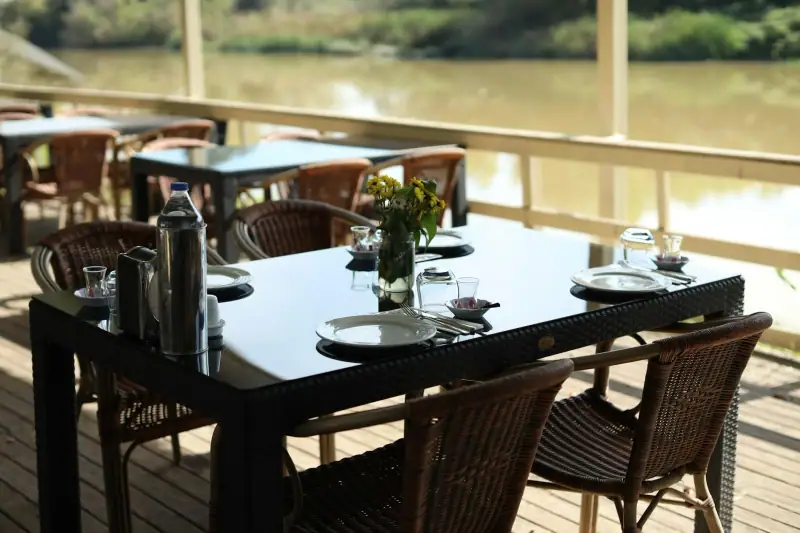
Rikitikitavi: Restaurant with a terrace on the river, international and Khmer menu, good value. Popular with expats.
Le Chef: French restaurant (check with the restaurant that it is still open before going). Grilled fish and pepper curries.
Specialties to try
Kampot pepper shows up everywhere on local menus. Do not leave without trying:
- Green pepper crab (in Kep, of course)
- Fish in pepper curry (the local amok)
- Stir-fried shrimp with garlic and Kampot pepper
- Prahok (fermented fish paste, the national condiment)
For street food, Kampot’s central market (Phsar Kampot) is the best place in the morning, from 6 to 10 am.
Where to stay in Kampot
Budget ($10-25 USD a night)
Olly’s Place: Friendly hostel with a pool and hammocks. Popular with backpackers. Bodhi Villa: Riverside lodge with a tropical garden and kayaks available. Kampot Riverside: River view, pool, breakfast included.
Mid-range ($25-70 USD a night)
Les Manguiers: French-Cambodian bungalows in a mango garden on the river. Idyllic. Mad Monkey: Complex with a pool, restaurant and bar. Excellent value. Naga House: Restored colonial house with only a few rooms, intimate atmosphere.
Top end ($70 USD+ a night)
Knai Bang Chatt: The region’s best-known resort, in Kep, with an infinity pool over the sea. Tastefully restored colonial villas. La Plantation Resort: On the grounds of a pepper plantation, huge rooms, spa, pool.
Hotels in Kep
Colonial resorts, beach bungalows and guesthouses facing the Gulf of Thailand.
Getting between Kampot and Kep
The distance from Kampot to Kep is 25 km (16 mi). Several options:
Tuk-tuk: $15-20 USD round trip with waiting time (2-3 hours there). The most practical option for a day trip. Your driver waits while you sightsee.
Moto-taxi: $8-12 USD round trip, faster but less comfortable.
Bicycle: For the more adventurous, the road is flat but long (1 h 30 each way). Leave early in the morning to avoid the heat.
Scooter rental: $8-10 USD a day, the best option if you want the freedom to explore at your own pace. An international driving permit is recommended.
Minivan: Some hotels organize transfers or shared excursions to Kep for $5-8 USD per person.
For longer trips (Phnom Penh, Sihanoukville), see our guide to Cambodia itineraries, which details all the options for travel between cities.
An ideal 4-day plan
Day 1: Arrival and exploring Kampot
- Morning: check in, stroll through the old colonial quarter
- Afternoon: rent a bike, ride through the rice paddies and along the river
- Evening: sunset on the bridge, dinner at Rikitikitavi
Day 2: Caves and pepper plantations
- Morning (8 am-noon): Phnom Chhnork and Phnom Kbal Romeas caves by bike
- Afternoon: visit La Plantation, buy pepper
- Evening: pepper shrimp dinner in the riverside district
Day 3: Kep and the crabs
- Morning: leave by tuk-tuk for Kep (30 min)
- 10 am-noon: Kep National Park (hiking trail)
- Noon-2 pm: pepper crab lunch at the crab market
- 2-5 pm: visit the abandoned colonial villas, Kep beach
- Option: spend the night in Kep to have more freedom the next day
Day 4: Koh Tonsay or kayaking
- Option A: day on Koh Tonsay island (boat at 8 am, back by 5 pm)
- Option B: sunset kayak outing on the Kampot river
- Evening: Kampot night market
Practical tips
Money: There are ATMs in Kampot. Carry cash in small bills for tuk-tuks and markets. The US dollar is widely accepted.
Health: Bring mosquito repellent (dengue is present in the region). Tap water is not safe to drink.
Language: A few words of Khmer are always appreciated. Shopkeepers in central Kampot often speak English, rarely French.
Weather: The best period is November to April. Avoid June to October because of rain and difficult access to the caves.
Safety: Kampot and Kep are very safe destinations. The usual precautions apply: do not leave valuables in view in tuk-tuks or on café tables.
Kampot and Kep show a side of Cambodia that the classic circuits too often miss. The slow pace, the flavors, Kep’s melancholy history and the river landscapes make this one of the best stops in the country. Complete your trip with our guide to Cambodia’s beaches to extend the adventure along the coast.
Frequently asked questions
How much time should I plan for Kampot and Kep?
Plan 3 to 4 days minimum to enjoy Kampot and make a day trip to Kep. If you like relaxing and cycling, a week goes by very fast. Kampot is one of those places where travelers stay much longer than planned.
How do I get from Phnom Penh to Kampot?
The trip from Phnom Penh to Kampot takes about 3 h 30 to 4 h by bus or minivan ($6-10 USD). Companies such as Giant Ibis and Capitol Tours run several departures a day. Booking ahead is a good idea in high season.
Can I visit the Kampot pepper plantations?
Yes. Several plantations welcome visitors for free or a small fee. La Plantation (organic, 9 km / 6 mi from Kampot) is one of the best organized, with a guided tour in French. Pepper of Cambodia and Sothy's Pepper Farm are also easy to reach.
When is the best time to visit Kampot and Kep?
The best season is November to April (dry season). Avoid June to October: rain is frequent and some roads to the caves can be hard to travel. In March and April, temperatures can exceed 35 °C (95 °F), but humidity is low.
Is Kep's crab really worth the trip?
Absolutely. Garlic crab or Kampot pepper crab from the Kep crab market is a food experience you will not find elsewhere. Expect to pay $8-15 USD for a fresh crab meal with vegetables and rice. The freshness and the local pepper make all the difference.
Can I do Kampot and Kep without a car?
Yes, by bicycle or tuk-tuk. Most hotels in Kampot rent bikes ($1-3 USD a day) for exploring the area. For Kep (25 km / 16 mi), a round-trip tuk-tuk costs $15-20 USD. Organized tours also let you see everything without handling the logistics.
More Cambodia guides
Keep reading
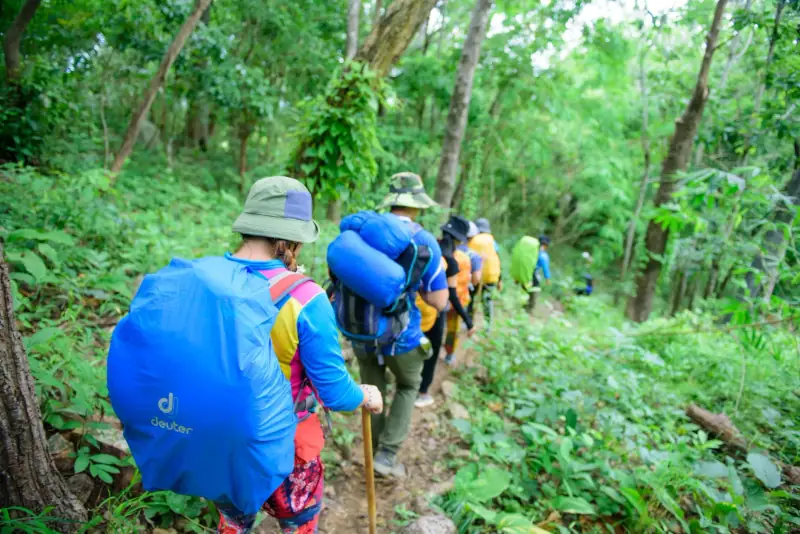
Hiking in the Cardamom Mountains: Ecotourism Guide to Cambodia
Hiking and ecotourism in the Cardamoms: Chi Phat, Tatai, Koh Kong. Wildlife, treks and practical tips for exploring this preserved wilderness.
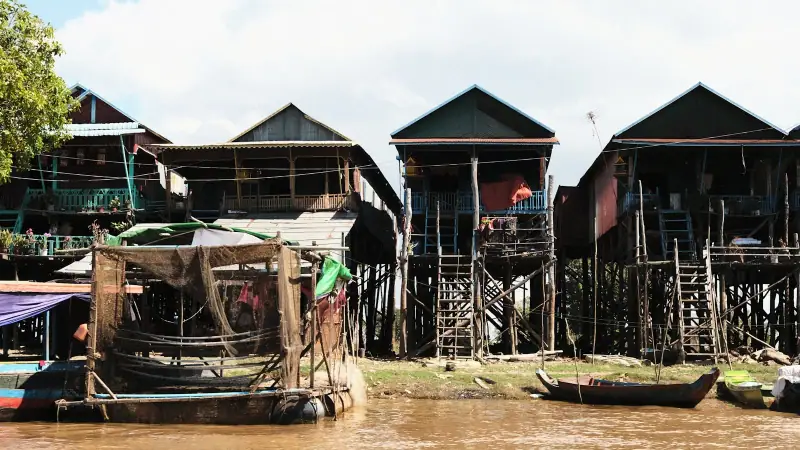
Visiting Tonle Sap: Floating Villages, Boat Trips and Nature in Cambodia
Complete guide to Tonle Sap lake: floating villages, Kampong Phluk, Chong Kneas, the Prek Toal bird sanctuary and excursions from Siem Reap.
Cambodia Travel Budget: How Much Does a Trip Cost in 2026?
How much does a trip to Cambodia cost? Daily budgets, hotel prices, transport, meals and activities so you can plan your stay without surprises.
Ready-made
Cambodia itineraries
12 days
Cambodia in 12 Days with Kids: Stops, Distances and a Realistic Pace
Siem ReapPhnom PenhKampotKoh Rong Samloem
7 days
Cambodia in 7 Days: The Perfect One-Week Itinerary
Phnom PenhSiem Reap
Can be adapted in the planner
4 days
Road Trip in Northwest Cambodia: Battambang and Around in 4 Days
4-day road trip itinerary in northwest Cambodia: bamboo train, rice paddies, Phnom Sampeau bats and Angkorian temples away from the crowds.
Can be adapted in the planner