What to see
Visiting Alcúdia: a complete guide to Mallorca's medieval town
We may earn a commission when you book through links on this page, at no extra cost to you. We don't visit or try the places we cover: we summarize published sources. How we work
In short
- Allow one full day for the old town and its walls (a circuit of about 1.5 km, or 0.9 mi), the Roman ruins of Pollentia (about €4, roughly $5) and a swim at Port d'Alcúdia.
- The market is held on Tuesday and Sunday mornings, from about 8 am to 1 pm, in and around the old town.
- s'Albufera Natural Park, under 5 km (3 mi) south of Port d'Alcúdia, has over 250 bird species; entry is free and the best time is 7 to 10 am.
- By car, Alcúdia is about 40 to 50 minutes from Palma; TIB bus line 302 links Palma, Alcúdia and Can Picafort (check tib.org).
In the north of Mallorca there is a town that resists time and fashion. Alcúdia was built on two thousand years of history: first Pollentia, a prosperous Roman city founded in the 2nd century BC; then a medieval stronghold ringed by walls that still defy the passing of centuries; and finally the starting point of one of the island’s finest shorelines. Less spectacular than Palma, less worldly than Ibiza, Alcúdia has that precious rarity: authenticity. And when you really stop there, you quickly understand why so many travelers return every year.
The old town: 2,000 years of history in one square kilometer
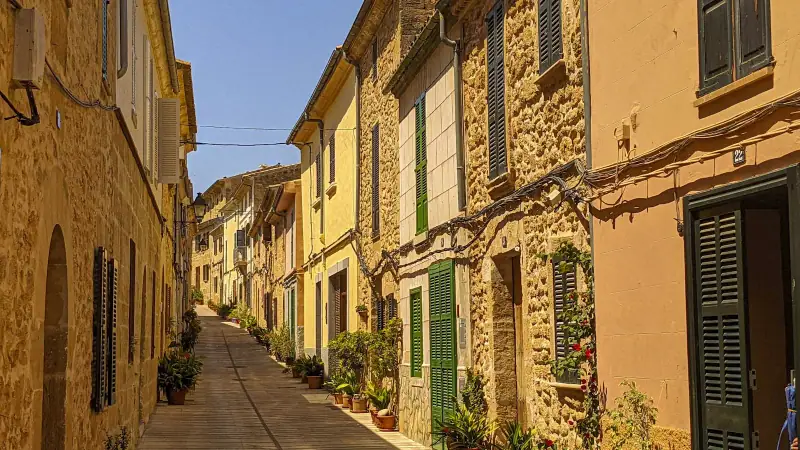
Alcúdia’s Casc Antic is one of the best-preserved historic centers in Mallorca. Enclosed within its 14th-century walls, this small square of cobbled lanes and ochre facades holds centuries of Mediterranean memory.
The medieval walls
The walls around Alcúdia’s old town were built in the 14th century by the Crown of Aragon, on even older foundations. Restored several times, notably in the 16th century during the Barbary raids, they now form a walking circuit of about 1.5 km (0.9 mi), almost entirely walkable.
Two monumental gates give access to the fortified town:
- Porta de Sant Sebastià (or Porta de Mallorca): to the south, the most imposing, with two round towers flanking a vaulted passage onto the main square
- Porta de Xara (or Porta del Moll): to the north, more discreet, opening toward the port and the sea
The wall walk offers open views over the old town, the Roman tile roofs and, in clear weather, the Bay of Alcúdia and the Serra de Tramuntana mountains in the distance.
Sant Jaume church
In the old town, the church of Sant Jaume is Alcúdia’s emblematic religious monument. Built in the 14th century on the site of a Moorish mosque, itself built on a Roman temple, it has undergone many transformations over the centuries.
The present building is Neo-Gothic, built between 1882 and 1893 after the collapse of the original structure. Designed by the architect Joaquín de Pavía and completed by the master builder Bartomeu Ferrà, it has the characteristic ribbed Gothic vaults. The plain, bright interior keeps several old altarpieces and a fine collection of silverwork. The side rose window, the work of the Alcúdia sculptor Lorenzo Ferrer Martí, casts colored light onto the local limestone paving.
Practical information:
- Access: Plaça de la Constitució (center of the old town)
- Hours: vary with the services, generally open in the morning
- Entry: free
The historic center and its lanes
Getting lost in Alcúdia’s lanes is one of the old town’s greatest joys. Between the Porta de Sant Sebastià and the Plaça de la Constitució, houses with green or blue shutters, bougainvillea spilling over facades and inner courtyards glimpsed through half-open gates make a very gentle Mediterranean picture.
A few essential routes:
- Carrer Major: the main street, lined with small shops, galleries and cafés
- Carrer d’en Serra: typical residential lanes with gardens spilling over the walls
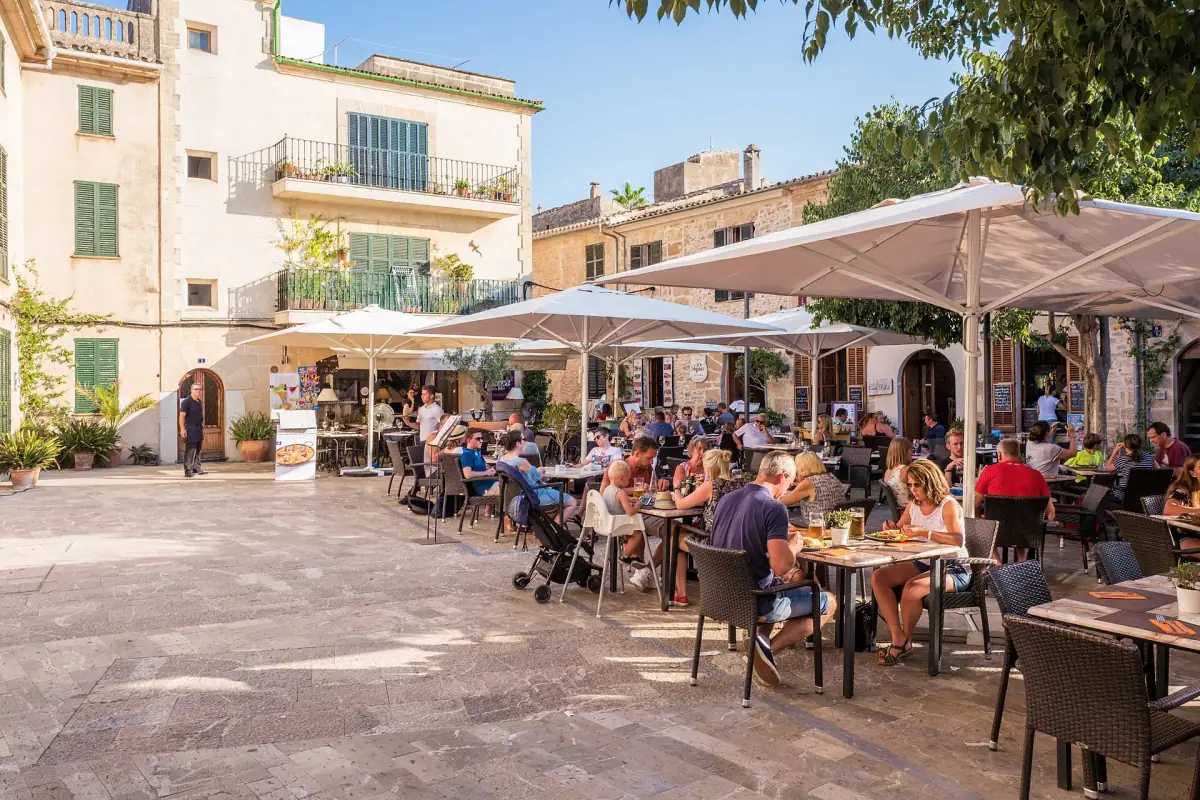
- Plaça de la Constitució: the central square, lively on market days, with its fountain and terraces
Guided tours of Alcúdia
Walking tours of the old town, Pollentia excursions, kayak and sailboat outings.
Pollentia: the Roman ruins at the gates of the old town
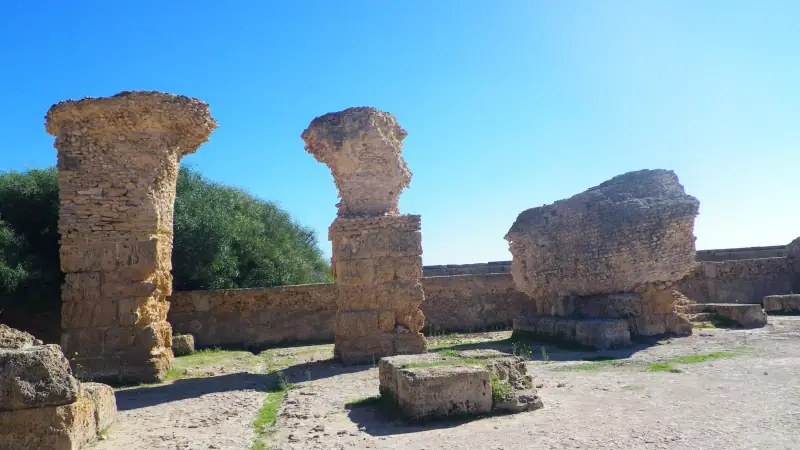
A short walk from the medieval walls, the Pollentia archaeological excavations reveal an even older layer of Alcúdia’s history. Founded around 123 BC by the Roman consul Quintus Caecilius Metellus after the conquest of the Balearic Islands, Pollentia was one of the island’s two capitals, with Palmeria (the future Palma), for several centuries.
The archaeological site
The Pollentia site is open for free visits. Several areas uncovered by the excavations can be made out:
The Forum: the Roman public square, the civic and commercial heart of the city. The foundations of temples, shops (tabernae) and administrative buildings are clearly visible. Bilingual information panels (Spanish / English) place each remain in context.
The houses of the Porta de Pollentia: a residential district reveals the plans of several aristocratic houses (domus) with their columned atria and opus signinum floors (the red mortar typical of ancient Rome).
The Roman theater: set back from the main site, a semicircular theater has been uncovered and partly restored. It is one of the few Roman theaters visible in the Balearic Islands. Shows and concerts are still held there in summer.
Access: via Avinguda dels Prínceps d’Espanya, 300 m (1,000 ft) from the Porta de Sant Sebastià. Hours: vary with the season (generally from 9:30 am until 8 or 9 pm in summer, reduced hours off-season): check with the Alcúdia tourist office. Fare: about €4 (about $5), combined access with the Museu Monogràfic.
The Museu Monogràfic de Pollentia
A short walk from the church of Sant Jaume, this municipal museum shows the archaeological objects unearthed during the Pollentia excavations since the 1920s. Collections of Roman coins, bronze and terracotta statuettes, jewelry, ceramics, architectural elements and reconstructed mosaics: an essential introduction before or after visiting the site.
The permanent exhibition is clear and well documented. One space is devoted to the pre-Roman (Talayotic) and Arab periods, which also left their traces in Alcúdia.
Car rental in Mallorca
Essential for exploring northern Mallorca, the Cap des Pinar coves and the Serra de Tramuntana.
Port d’Alcúdia and the bay: beaches and water activities
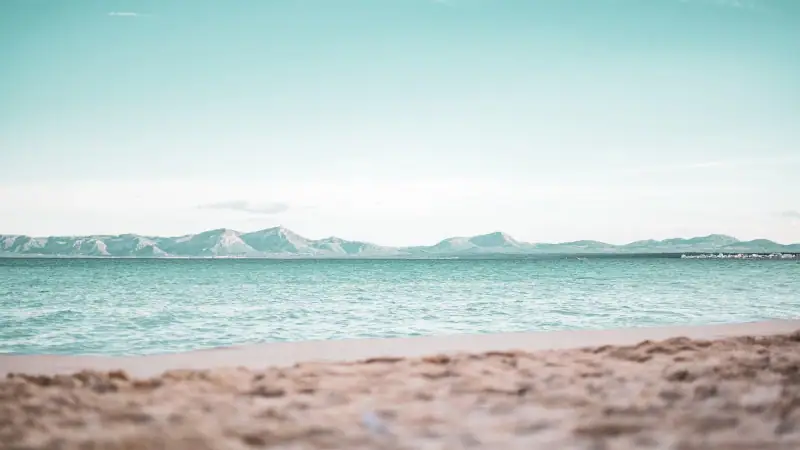
About 1 km (0.6 mi) from the old town, Port d’Alcúdia is the large seaside resort that has grown along the bay since the 1960s. Different in every way from the historic center (livelier, more commercial, more vacation-oriented), it remains the tourist hub of the area and an ideal starting point to enjoy the waters of the Mediterranean.
Platja d’Alcúdia
The main beach of Port d’Alcúdia is a long strip of fine, golden sand that stretches for several kilometers to the south, gradually joining Platja de Muro and Platja de Can Picafort. The water is shallow, calm and a lovely turquoise: perfect for families with children.
The beach is well equipped: sunbeds and umbrellas for rent, lifeguard posts, showers, playgrounds. In high season (July-August) it is busy but large enough never to feel cramped.
The coves of Cap des Pinar
Opposite the big beach, the wild Cap des Pinar peninsula closes the bay to the north. Classified as a restricted military zone, it can only be reached on foot via a forest track from the Victória road (about 2 h 30 round trip). The coves hidden under its cliffs, notably Coll Baix, Ses Caletes and Cala Solana, reward the effort with exceptionally clear water and welcome solitude.
Boat excursions from Port d’Alcúdia let you reach these coves without the walk.
Water activities
Port d’Alcúdia is one of the most active water-sports centers in northern Mallorca:
- Sea kayaking: several operators offer kayak outings to the Cap des Pinar coves
- Diving: the seabed of the bay is rich in posidonia and Mediterranean wildlife
- Sailing and catamaran: full-day or half-day excursions with a captain
- Paddleboarding: rentals available on the main beach
- Pedal boat: ideal for exploring the coast with children
For hikes and land activities in northern Mallorca, see our guide to hikes in Mallorca.
s’Albufera Natural Park: Alcúdia’s other treasure
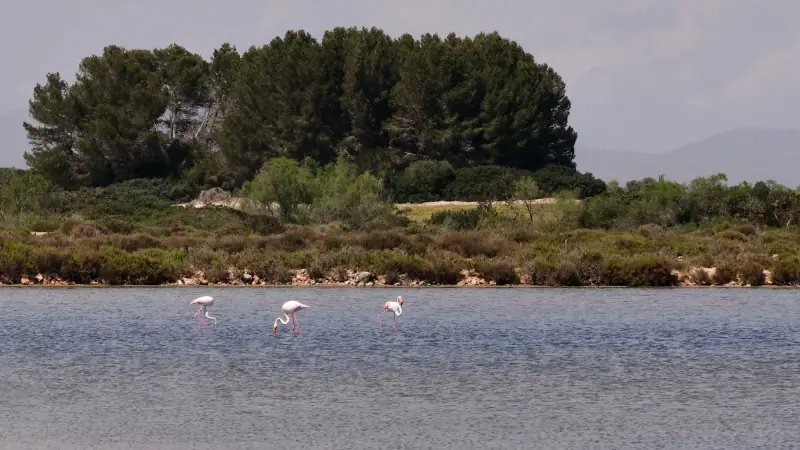
Less than 5 km (3 mi) south of Port d’Alcúdia, s’Albufera Natural Park is one of the most important wetlands in the western Mediterranean and a paradise for bird lovers.
Exceptional biodiversity
This 1,700-hectare (4,200-acre) park of lagoons, marshes, reed beds and dunes is home to over 250 bird species, including many rare or protected ones: purple heron, purple swamphen, kingfisher, marsh harrier, and during migration, dozens of northern species.
The best time for observation is early morning (7-10 am), before the first heat. The park has several observation hides and marked trails.
Practical information
Access: from the Ma-12 (Alcúdia-Can Picafort road), a clearly signed main entrance. Hours: open every day from 9 am to 6 pm (until 5 pm in winter). Entry: free. The information center issues visit permits there. Tip: bring binoculars and wear muted colors so as not to scare the birds.
Hotels in Alcúdia
Old-town hotels, beach resorts at Port d'Alcúdia, guesthouses and apartments.
The Alcúdia market: the liveliest in northern Mallorca
Twice a week, on Tuesday and Sunday morning, Alcúdia turns into a giant market that takes over the streets of the old town and the esplanades along the walls. With its hundreds of stalls, it is one of the biggest and liveliest markets in all of Mallorca.
What you find there:
- Local fruit and vegetables (figs, almonds, oranges, seasonal melons)
- Mallorcan cured meats and cheeses (sobrasada, camaiot, botifarró)
- Local crafts: pottery, basketry, roba de llengues (traditional tongue-patterned fabric)
- Clothing, shoes and tourist souvenirs
- Flowers, aromatic plants and natural cosmetics
The market is visited as much by locals as by tourists, a good way to take the pulse of everyday life in Alcúdia and bring back a few authentic products in your suitcase.
Tip: arrive early (before 9:30 am) to avoid the mid-morning crowd, especially in high season.
Food: what to eat in Alcúdia
Alcúdia’s cooking faithfully reflects Mallorcan cuisine in all its richness.
The essential dishes
Tumbet is Mallorca’s emblematic vegetarian dish: alternating layers of eggplant, zucchini, potato and pepper roasted in the oven with a homemade tomato sauce. Simple, fragrant and filling.
Frit mallorquí: a sauté of lamb offal (liver, heart, lungs) with potatoes, peas, peppers, onions, fennel and olive oil. A typical starter in village restaurants, served with farmhouse bread.
Pa amb oli (bread with oil): the Mallorcan open sandwich, rubbed with ripe tomato, drizzled with olive oil and topped as you like: sobrasada, cheese, Iberian ham, anchovies… The universal snack, served from morning to night.
Grilled fish: in Port d’Alcúdia, the seafront restaurants serve red mullet, sea bream and hake of the day grilled with garlic and lemon. Simple and excellent.
Where to eat in Alcúdia
- Bistromar (Port d’Alcúdia): fresh fish selected daily at the market, quality grills and homemade paellas (since 1993)
- Bodega d’es Port (Platja d’Alcúdia): seafood, fresh fish and Mallorcan cooking for over 20 years
- Bar/Forn Sa Placeta (Plaça de la Constitució): the best spot for a morning ensaïmada with a cortado coffee
For an overview of Balearic food, read our guide to Balearic food.
Planning your visit to Alcúdia
One-day itinerary
Morning (9 am-1 pm):
- 9 am: coffee and ensaïmada on a terrace, Plaça de la Constitució
- 9:30 am: visit the walls (walk the wall circuit, ~45 min)
- 10:30 am: visit Sant Jaume church and the old town’s lanes
- 11:30 am: Pollentia archaeological site and/or Museu Monogràfic
Lunch (1-3 pm):
- Lunch in an old-town restaurant or at Port d’Alcúdia
Afternoon (3-7 pm):
- Swim at Platja d’Alcúdia or a kayak outing to Cap des Pinar
- Optional: visit s’Albufera Natural Park if you are a nature fan
Evening (7-10 pm):
- Aperitif on the Plaça de la Constitució or on a terrace at the port
- Sunset over the bay from the seafront promenade
- Dinner of grilled fish at Port d’Alcúdia
Practical tips
Getting around: the old town is entirely walkable. For Port d’Alcúdia (2 km, or 1.2 mi), the bike path along Avinguda de la Platja is ideal by bike. Local shuttles run in season between the center and the beach.
Car: free parking around the walls (except on market days). For excursions to Cap des Pinar, s’Albufera or Pollença, a car is recommended.
When to go: May-June and September-October offer the best compromise: sea at a good temperature (May 19 °C, or 66 °F, June 22-26 °C, or 72-79 °F, September 26-27 °C, or 79-81 °F, October 22-24 °C, or 72-75 °F), moderate crowds, off-peak prices. In July-August, the old town and the beach are very busy but the atmosphere is festive.
Alcúdia + Pollença: these two towns in northern Mallorca combine perfectly over 2 days. Pollença (about 11 km, or 7 mi northwest) has a famous Sunday market and a Calvari of 365 steps with a striking panorama.
To prepare your stay in Mallorca, see our guide to where to stay in Mallorca and our selection of the most beautiful beaches of the Balearic Islands.
Alcúdia is one of those stops you leave changed. Neither a simple seaside resort nor an open-air museum frozen in time, it is both at once, and that is precisely what makes it so singular. Its centuries-old walls watching over the Mediterranean, its lanes scented with tomato and olive oil, its turquoise waters reflecting the glare of the Mallorcan sun: Alcúdia fully deserves more than an afternoon.
Sources
Frequently asked questions
How long do you need to visit Alcúdia?
Allow 1 full day to combine a visit to the medieval old town, the Roman ruins of Pollentia and a swim at Port d'Alcúdia. With 2 to 3 days, you can explore the s'Albufera Natural Park, the Muro beaches and the coves of the Cap des Pinar peninsula.
How do you get to Alcúdia from Palma de Mallorca?
By car, allow about 40 to 50 minutes from Palma (Ma-13 motorway toward Inca, then Ma-13a toward Alcúdia). By bus, line 302 of the TIB operator links Palma to Alcúdia and Can Picafort (check duration and timetables on tib.org). Private shuttles are also available from the airport.
When is the Alcúdia market?
The Alcúdia market is held twice a week: Tuesday and Sunday morning, from about 8 am to 1 pm. It spreads in and around the old town: streets, squares and the esplanade along the walls. It is one of Mallorca's biggest markets, with hundreds of stalls of fruit, vegetables, clothing, crafts and souvenirs.
Can you swim in Alcúdia?
Yes, Port d'Alcúdia has a long fine-sand beach (Platja d'Alcúdia) that stretches for several kilometers to Platja de Muro. These family beaches with calm water are among the busiest in Mallorca in summer. For more peace, head to the wild coves of Cap des Pinar, reached on foot or by boat.
Are the Roman ruins of Pollentia worth a visit?
Absolutely. Pollentia was one of the two main Roman cities of the Balearic Islands. The archaeological excavations, reachable on foot from the old town, reveal the remains of a forum, houses and a partly reconstructed Roman theater. The Museu Monogràfic de Pollentia in the old town holds the objects found on the site: mosaics, statuettes, ceramics and coins.
Is it better to stay in the old town or at Port d'Alcúdia?
It depends on what you expect. The old town (Casc Antic) is calmer, more authentic and better preserved, ideal for culture and architecture lovers. Port d'Alcúdia is a large lively seaside resort, with many beach hotels, restaurants and water activities. Many people combine the two by staying at the port and visiting the historic center on foot or by bike.
More Balearic Islands guides
Keep reading
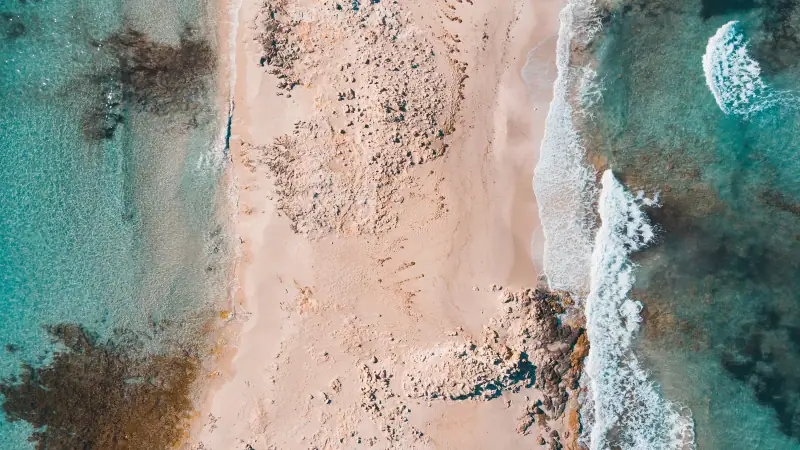
Visiting Formentera: a complete guide to the pearl of the Balearic Islands
Formentera, the smallest Balearic island: Ses Illetes beaches, La Mola plateau, salt flats, Sant Francesc village. A complete guide.
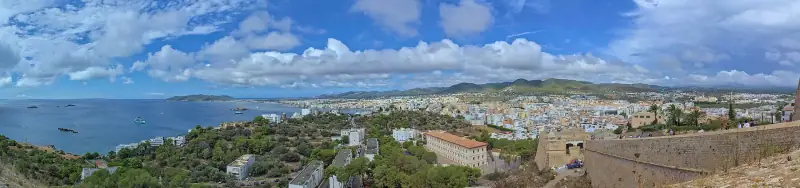
Visiting Ibiza: a complete guide to the White Isle of the Balearics
Complete Ibiza guide: UNESCO Dalt Vila, wild beaches, nightlife, the authentic north, food and practical tips for your stay on the White Isle.
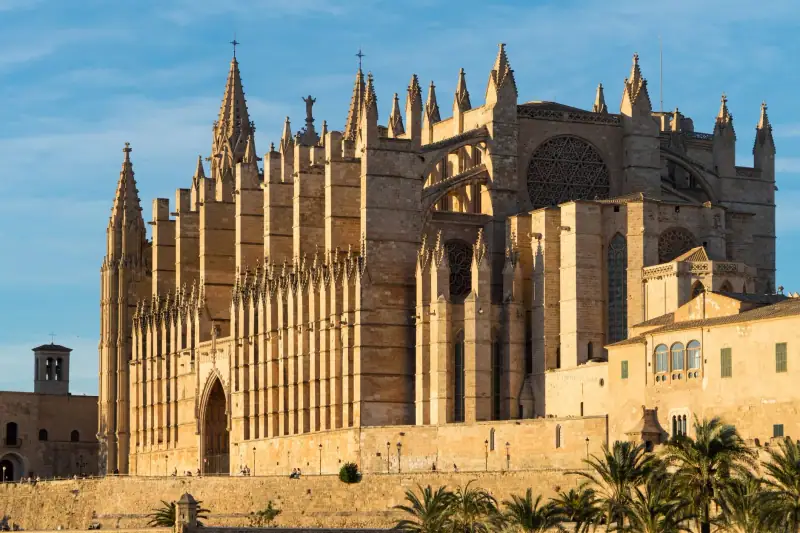
Palma de Mallorca's top sights: what to see and do
What to see in Palma de Mallorca? La Seu cathedral, old quarters, museums, restaurants and markets. A guide to the capital of the Balearic Islands.
Ready-made
Balearic Islands itineraries
5 days
3 days
Formentera in 3 days: a complete itinerary, beaches and practical tips
Discover Formentera in 3 days: the best beaches, Illetes, La Mola, the salt lagoons. Day-by-day itinerary, transport and places to stay.
7 days
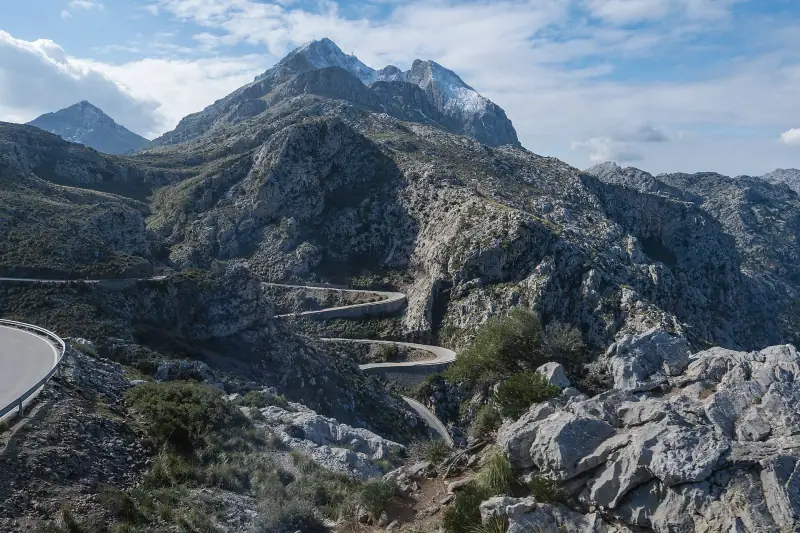
Mallorca in 7 days: a complete itinerary to discover the island
7-day Mallorca itinerary: Palma, Serra de Tramuntana, wild coves, picturesque villages. A practical day-by-day guide for a perfect road trip.