What to see
Palma de Mallorca's top sights: what to see and do
We may earn a commission when you book through links on this page, at no extra cost to you. We don't visit or try the places we cover: we summarize published sources. How we work
In short
- La Seu cathedral (begun 1229, finished 1601) has 7 rose windows and 83 stained-glass windows, plus work by Gaudí; adult ticket €9 (about $10), allow 1 h to 1 h 30.
- The Fundació Pilar i Joan Miró (€10, about $12) and Es Baluard modern art museum (€6, about $7) are the key museums; the Palau de l'Almudaina costs €7 (about $8).
- Walk the Barri Gòtic (medieval), Santa Catalina (food) and El Born (shopping); Mercat de l'Olivar is the big covered market.
- In July-August, visit monuments before noon and after 6 pm; the old town is hard to reach by car, so park at the edge.
Palma de Mallorca is often treated as a mere transit point to the island’s seaside resorts. That is a mistake. The capital of the Balearic Islands is one of the most beautiful Mediterranean cities in Europe: rich in thousand-year-old history, with an internationally recognized food scene and an urban energy that sets it apart from every other island city in the region. Here are the highlights.
La Seu cathedral: a masterpiece of Mediterranean Gothic
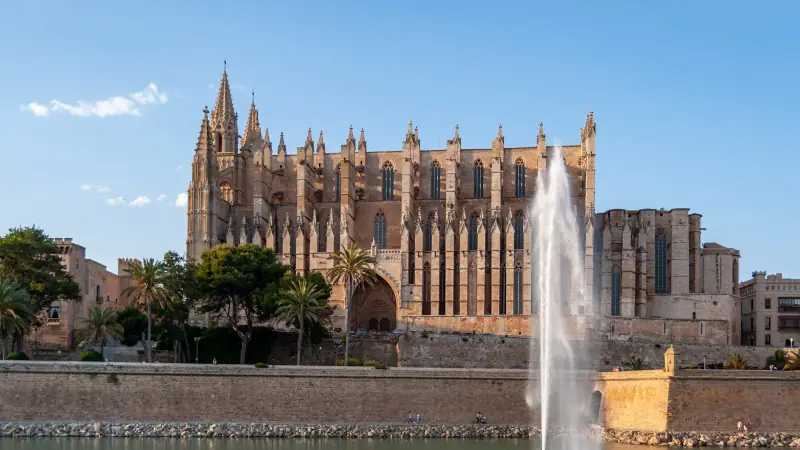
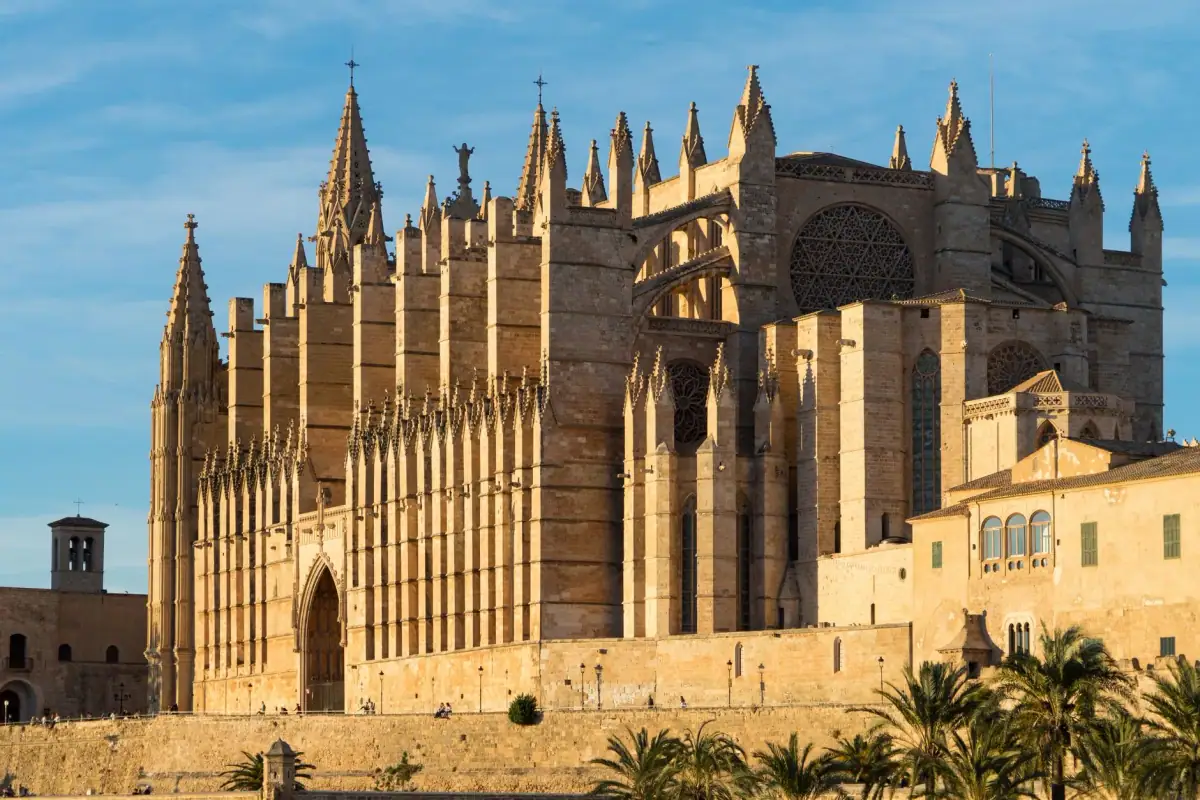
La Seu is Palma’s architectural signature. Visible from all around the Bay of Palma and the nearby open sea, its golden Gothic silhouette by the water is one of the most iconic images of the Balearic Islands.
The construction: Begun in 1229 after King James I of Aragon conquered Mallorca and finished in 1601, La Seu is one of the largest Gothic cathedrals in the world. Its dimensions are impressive: 109.4 m (359 ft) long, 39.45 m (129 ft) wide, 44 m (144 ft) vault height.
The windows: La Seu has 7 rose windows and 83 stained-glass windows. The great rose window of the apse (11.55 m, or 38 ft in diameter) is the largest Gothic rose window in the world. The sight of sunlight filtering through the stained glass in late morning is memorable.
Gaudí at La Seu: From 1903, Antoni Gaudí was commissioned to restore part of the interior. The actual work ran from 1904 to 1914. He moved the choir, created a metal canopy suspended above the altar and added a series of terracotta lamps shaped like corn kernels. This controversial intervention adds a unique modernist dimension to the Gothic interior.
Practical information:
- Opening: Monday-Friday 10 am-5:15 pm, Saturday 10 am-2:15 pm (hours vary with the season and services: check with the cathedral)
- Adult ticket: €9 (about $10)
- Guided tours: price varies by organizer (check with the cathedral or the guide; recommended to understand the history)
- Recommended arrival: late morning for the play of light
The Palau de l’Almudaina: a royal residence, Arab then Christian
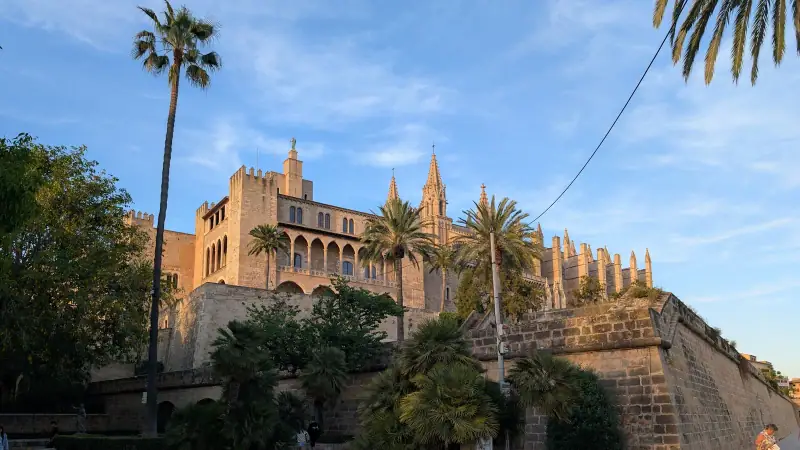
A short walk from La Seu, this royal palace is a jewel of medieval Mediterranean architecture. Built in place of a Muslim fortress after the 13th-century Christian conquest, the palace mixes Arab elements (horseshoe arches, inner gardens) and Catalan Gothic ones.
The palace is still used by the Spanish royal family for official receptions in summer. The throne room, the hanging gardens and the Chapel of Saint Anne (with its fine Gothic portal) are worth the visit.
Admission: €7 (about $8) Recommended time: 45 min to 1 h
The essential museums
The Fundació Pilar i Joan Miró
Joan Miró settled permanently in Mallorca in 1956 and lived there until his death in 1983, 27 years during which he produced most of his work. The foundation shows several hundred paintings, sculptures, ceramics and engravings in an architectural complex designed by Rafael Moneo.
Miró’s studio, preserved as he left it when he died in 1983, is a particularly moving moment: brushes, colors, sketches left on the tables… a poignant return to the great painter’s daily creative life.
Hours: Tuesday-Saturday 10 am-6 pm (10 am-7 pm from May 16 to September 15), Sunday 10 am-3 pm Admission: €10 (about $12)
Es Baluard (Museum of Modern and Contemporary Art)
Housed in the former bastions of the 16th-century ramparts with a panoramic view of the bay, Es Baluard shows works by artists with a link to Mallorca or the Mediterranean. The terrace on the ramparts is remarkable.
Hours: Tuesday-Saturday 10 am-8 pm, Sunday 10 am-3 pm Admission: €6 (about $7)
Neighborhoods to explore on foot
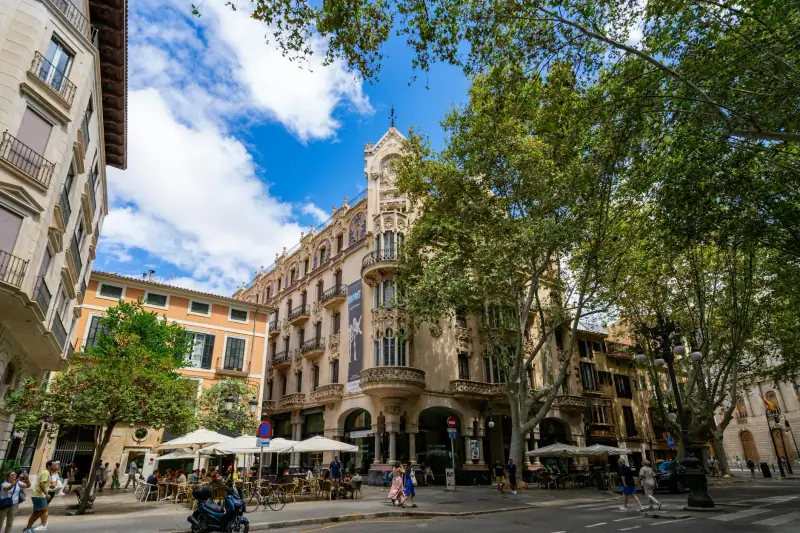
Barri Gòtic: the medieval heart
The Gothic quarter around La Seu is the Palma of centuries past. Noble palaces (Can Oleza, Can Vivot, Can Berga) with their columned inner courtyards form an architectural ensemble unique in the Mediterranean.
Highlights:
- Carrer del Conqueridor (Conqueror Street)
- Plaça Santa Eulàlia with its Gothic church
- The palaces Can Oleza and Can Vivot (courtyards open to the public on certain days)
- The bakery Forn des Teatre (19th century, restored in 1916)
Santa Catalina: the new food scene
The former fishermen’s district has become the temple of Palma’s food scene. Its colorful streets hold Palma’s best creative restaurants, vermouth bars that buzz on Sunday morning and the Mercat de Santa Catalina (Monday-Saturday 7 am-3 pm).
Highlights:
- The Mercat de l’Olivar for breakfast at the market bar
- The restaurants on Carrer Pare Rafel Ginard
- The tapas bar La Taberna del Caracol
El Born: the shopping artery
The Passeig del Born, Palma’s central boulevard, is lined with century-old trees and flanked by luxury boutiques, art galleries and lively cafés. The El Born district is the ideal place for shopping, an aperitif or a coffee.
Gardens and green spaces
Bellver gardens
Surrounding Bellver Castle (the only round castle in Spain, 14th century), these gardens offer a spectacular view over the Bay of Palma. The castle itself is worth a visit (€4, about $5, adult fare, Palma history museum; free on Sundays and for children under 14).
Jardí Botànic de Sóller
About 27 km (17 mi) from Palma, the Sóller botanical garden shows plant species endemic to the Balearic Islands and the Mediterranean. Ideal for a half-day cultural stroll.
Eating in Palma: the essentials
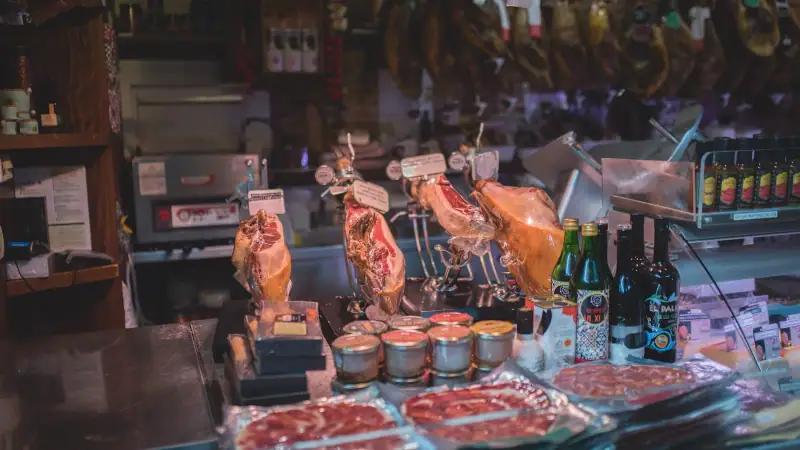
Palma has the best food in the Balearic Islands. For details, see our complete guide to restaurants in Palma, but here are the essentials:
- Mercat de l’Olivar: the big covered market for breakfast or lunch at the bar
- Pa amb oli: the local snack, hot bread rubbed with tomato and olive oil, with sobrasada or ham
- Ensaïmada: the Balearic pastry, to try warm from a local baker
- Bar España (historic center): the best café con leche in Palma according to the locals themselves
Practical tips for visiting Palma
- July-August heat: visit monuments in the morning before noon and resume in the evening after 6 pm. In the afternoon, choose air-conditioned museums.
- Parking: the old town is hard to reach by car. Park in an underground car park (Parc Rius i Taulet, Parc Unió) on the edge and explore on foot.
- Sunday: most shops are closed. It is the best day to visit monuments (fewer people) and have brunch in the cafés of Santa Catalina.
See our guide to restaurants in Palma and the food of the Balearic Islands to round out your cultural stay.
Hotels in Palma de Mallorca
Boutique hotels, charming hotels, city hotels.
Frequently asked questions
How long do you need to visit Palma de Mallorca?
A minimum of 2 days is recommended to see Palma's main sights without rushing. 3 days let you also explore the less touristy districts and the best restaurants.
Is La Seu cathedral in Palma worth a visit?
Absolutely. La Seu is one of the masterpieces of Mediterranean Gothic, with its 7 rose windows and 83 stained-glass windows creating spectacular play of light. The partial renovation by Antoni Gaudí adds extra interest. Allow 1 h to 1 h 30.
What is the best area for a walk in Palma?
The Barri Gòtic (historic center) is a highlight for its medieval lanes. Santa Catalina is the liveliest and most food-focused district. El Born is the trendy district with boutiques and wine bars.
Is there a market to visit in Palma?
Yes, the Mercat de l'Olivar is Palma's big covered market (open Monday to Saturday morning). The Mercat de Santa Catalina is open Monday-Saturday 7 am-3 pm (closed Sunday). El Rastro (flea market) is held on Saturday morning.
Can you swim in Palma?
Yes, Platja de Palma stretches east of the city center for 5 km (3 mi). By bus from the center (notably line 25; check which lines are running with the EMT), the beach is easy to reach from the historic center.
More Balearic Islands guides
Keep reading
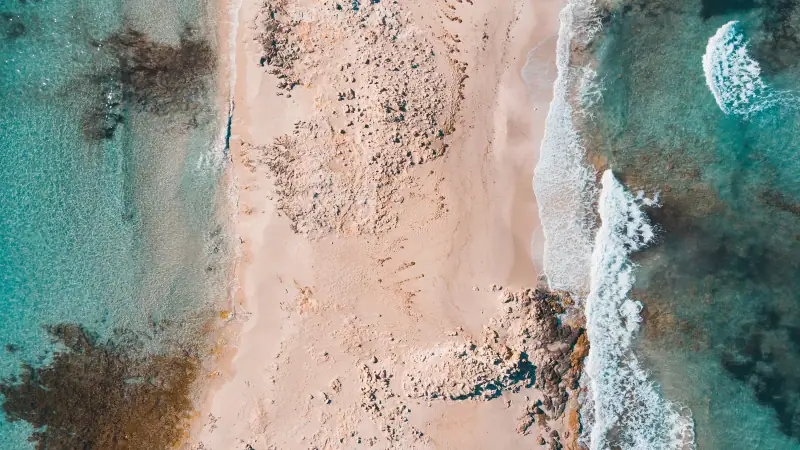
Visiting Formentera: a complete guide to the pearl of the Balearic Islands
Formentera, the smallest Balearic island: Ses Illetes beaches, La Mola plateau, salt flats, Sant Francesc village. A complete guide.
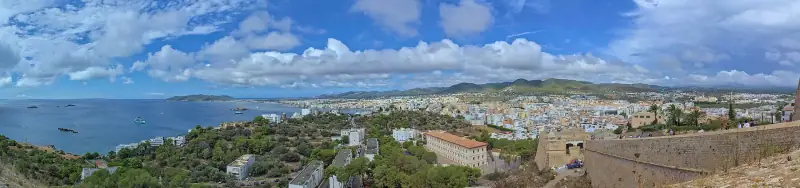
Visiting Ibiza: a complete guide to the White Isle of the Balearics
Complete Ibiza guide: UNESCO Dalt Vila, wild beaches, nightlife, the authentic north, food and practical tips for your stay on the White Isle.
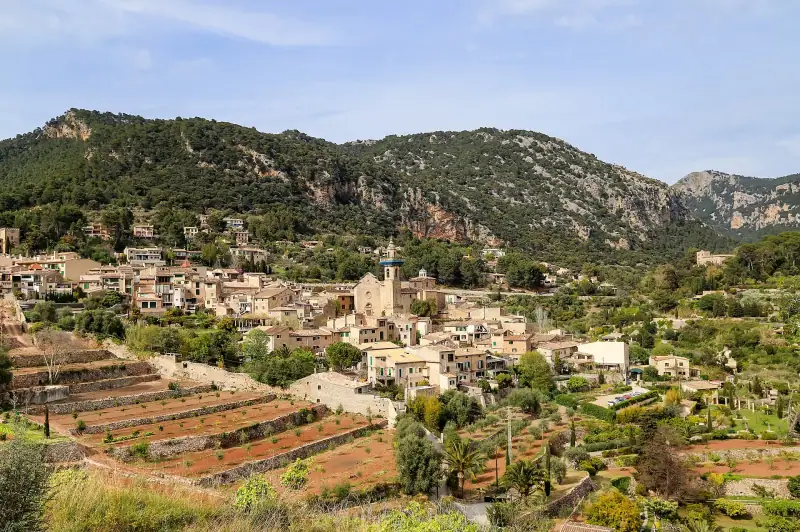
Valldemossa without a car: bus from Palma, the Carthusian monastery and what to see in half a day
Getting to Valldemossa without a car: bus 203 from Palma, Chopin's monastery, village lanes and a treat stop. A half-day plan and pitfalls to avoid.
Ready-made
Balearic Islands itineraries
5 days
3 days
Formentera in 3 days: a complete itinerary, beaches and practical tips
Discover Formentera in 3 days: the best beaches, Illetes, La Mola, the salt lagoons. Day-by-day itinerary, transport and places to stay.
7 days
Mallorca in 7 days: a complete itinerary to discover the island
7-day Mallorca itinerary: Palma, Serra de Tramuntana, wild coves, picturesque villages. A practical day-by-day guide for a perfect road trip.