Itineraries
Formentera in 3 days: a complete itinerary, beaches and practical tips
We may earn a commission when you book through links on this page, at no extra cost to you. We don't visit or try the places we cover: we summarize published sources. How we work
Day by day
- Day 1La Savina, Sant Francesc Xavier, Es Pujols, sunset
- Day 2Ses Illetes, Llevant beach, snorkeling, seafood dinner
- Day 3La Mola, El Pilar market, lighthouse, Cala Saona
In short
- Formentera has no airport: you arrive by sea, usually from Ibiza Town, in 30 to 40 minutes, about €20-35 one way (about $23-41).
- Day 1: La Savina, Sant Francesc Xavier and Es Pujols. Day 2: Ses Illetes and Llevant. Day 3: La Mola, its lighthouse and Cala Saona.
- A bike is the best way to get around (€10-15, about $12-17, a day; e-bike about €20-30, about $23-35); a scooter or car helps for La Mola.
- Estimated budget for 2 people over 3 days: €720-1,240 (about $835-1,440). Book ferries and hotels 2 to 3 months ahead for July-August.
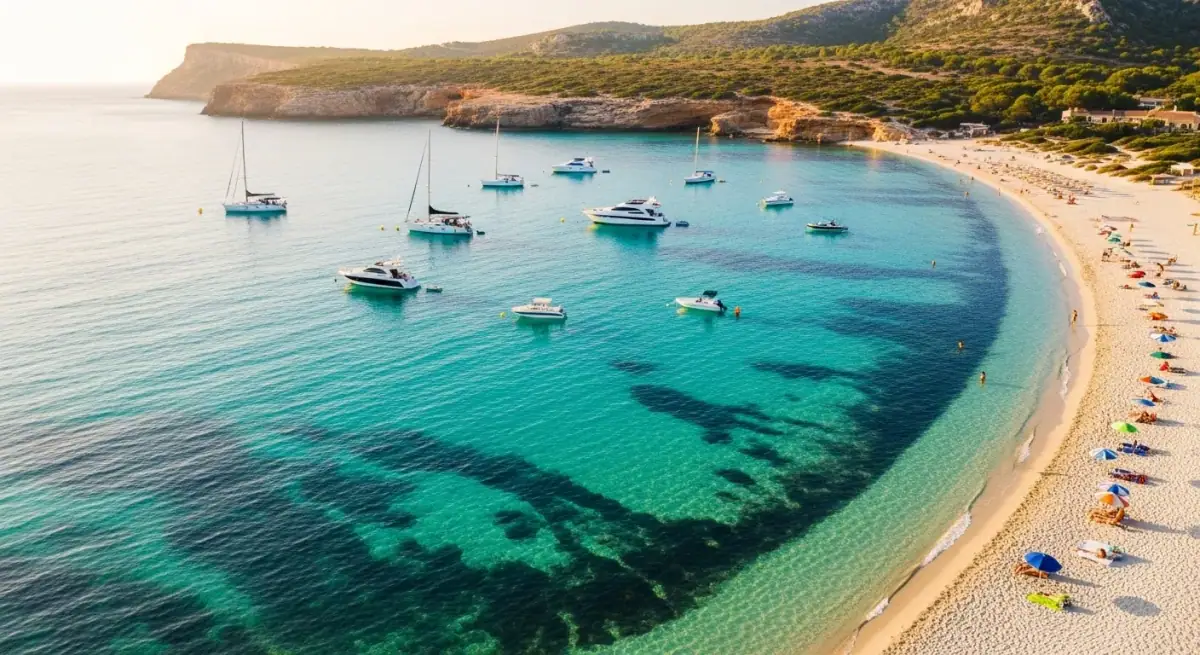
Formentera is the smallest of the inhabited Balearic Islands and, in the view of many travelers, the most beautiful. Long spared from mass tourism by the absence of an airport, the island cultivates a unique way of life: Caribbean-worthy turquoise water, white sand so fine it squeaks underfoot, remarkably intense light and a bohemian atmosphere inherited from the hippies who settled there in the 1960s. In three days you will have time to cross it from north to south, dip your feet at Illetes, cycle to the La Mola lighthouse and understand why connoisseurs sometimes prefer it to its far more famous neighbor, Ibiza.
This 3-day itinerary is designed for relaxed travel, without rushing, enjoying every beach and every sunset. It suits couples, families with children and travelers looking to disconnect.
Before you arrive: the crossing from Ibiza
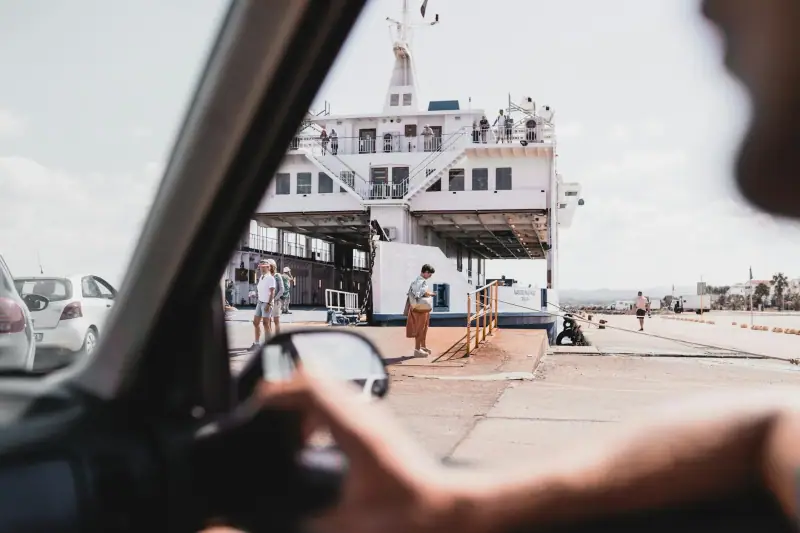
Formentera has no airport: you can only reach it by sea. The vast majority of visitors take the ferry from Ibiza Town. The companies Baleària, Trasmapi and Aquabus run regular services, with noticeably more crossings in high season (check timetables with the companies).
- Fast ferry: 30 to 40 minutes, about €20-35 one way (about $23-41; €45-60, about $52-70, round trip)
- Classic ferry: 1 hour, cheaper, ideal if you are bringing a bike (similar fare)
- Timetables: from early morning to late evening in high season (check with the companies; schedules change with the season)
Tip: book your ticket online ahead in July-August. Evening ferries can be full. Arrive at the port 30 minutes before departure.
If you stay in Ibiza before or after Formentera, see our guide to where to stay in Ibiza to choose the right area for the night.
Day 1: Arrival, La Savina and Es Pujols
Morning: La Savina, gateway to the island
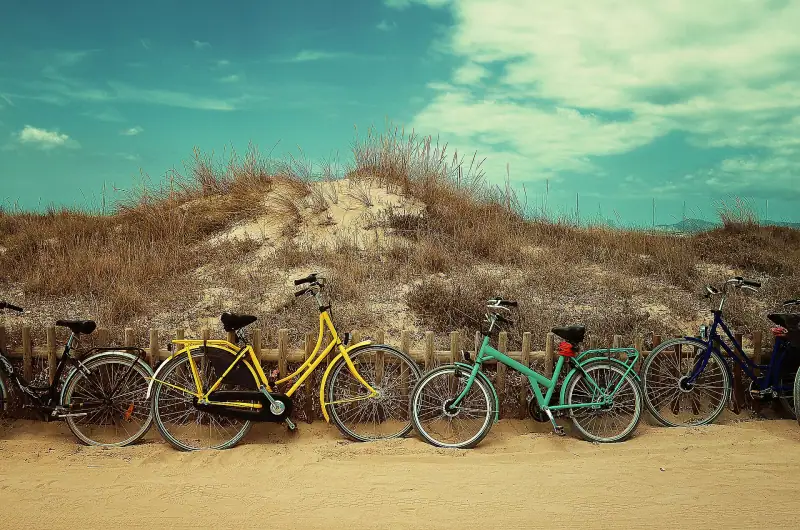
The ferry drops you at La Savina, Formentera’s only port. This is where your adventure starts and your first logistical decision: rent a bike, a scooter or a car. For a 3-day stay, an electric bike is the best mix of comfort and freedom (allow €15-25, about $17-29, a day).
From the port, the main road first runs along the Estanys, the salt lagoons of Ses Salines, a nature reserve. This pink-orange body of water, colored by algae and salt, is a habitat for migrating flamingos. Take 10 minutes to watch this unreal landscape at the entrance to the island.
About 3.5 km (2.2 mi) from the port, Sant Francesc Xavier is Formentera’s small capital. A white village of absolute calm, it deserves a one-hour stop: the 18th-century fortress church, a few art galleries, a crafts market (in summer) and the island’s best bakeries to stock up before the beach.
Afternoon: a first dip at Es Pujols
Es Pujols is Formentera’s main seaside resort. Without being overloaded with tourists, it has shops, restaurants and a beautiful white-sand beach open to the north. It is ideal for a first swim when you arrive on the island.
Es Pujols beach is flanked by Sa Roqueta nearby, a small, wilder and less busy cove. A coastal path links these spaces along the rocks, perfect for a late-afternoon walk.
Evening: sunset facing Ibiza
Sunset in Formentera is a ritual. From the village of Es Arenals, or from the point of Cap de Barbaria (about 50 minutes south of Sant Francesc by bike, for 9-10 km, or 6 mi), the view of Ibiza lit by the last rays is spectacular. Some evenings, the silhouette of Ibiza’s Dalt Vila stands out perfectly against an orange sky.
Day 2: The legendary northern beaches, Illetes and Llevant
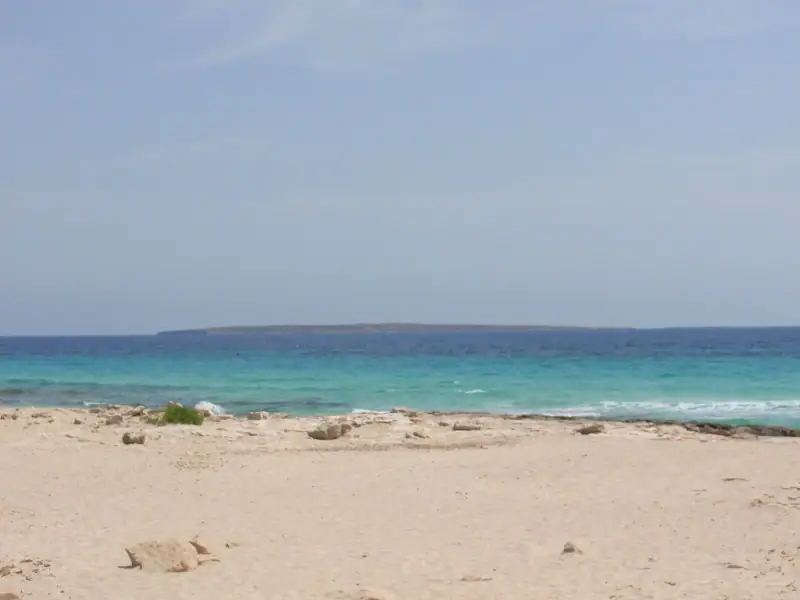
Day 2 is the big beach day. Get up early (8 am at the latest in summer) to reach Illetes before the crowds.
Morning: Illetes, the most beautiful beach in the Balearic Islands
Ses Illetes (also written Illetes) is regularly ranked among the 10 most beautiful beaches in the world and first in Europe. This fine white sandbar stretches over 450 meters (1,480 ft) between the Balearic Sea to the west and the Ses Estanys lagoon to the east, divided into two sections by a small rocky area, creating a doubly aquatic landscape of striking beauty.
The water is a limpid turquoise, shallow (1-2 m, or 3-7 ft), with a white sand bottom that gives that characteristic Caribbean color. The beach is naturist in its northern part (unofficial but tolerated).
How to get there: from La Savina by bike (about 15 minutes for 3.5 km, or 2.2 mi) or on foot (25 minutes) along the lagoon. In high season, a small boat service links La Savina to Illetes.
Practical tip: bring water, food and a beach umbrella. In high season, beach kiosks are few. There is no real commercial infrastructure, which is what preserves the beauty of the place.
Afternoon: Llevant beach and snorkeling in the posidonia reserve
The east face of the same promontory is occupied by Llevant beach, more exposed to west winds and less busy than Illetes. The water is just as clear and the bottom is partly made up of the famous Neptune grass (posidonia oceanica) meadow, a marine plant endemic to the Mediterranean.
Formentera’s posidonia is among the oldest and best preserved in the world (more than 100,000 years). It plays an essential role in water quality: it is what gives Formentera’s waters their unique color. Snorkeling in these underwater meadows is an unforgettable experience: colorful fish, sea urchins, moon jellyfish, octopuses and scorpionfish hide in the grass.
Warning: it is strictly forbidden to touch, tear up or anchor on posidonia. Fines are heavy for boats that anchor in protected areas.
Snorkeling and diving outings in Formentera
Explore the posidonia and the crystal-clear seabed with a PADI-certified guide.
Evening: seafood dinner in La Savina or Es Pujols
Back from the beach, have a light dinner of seafood. The restaurants of La Savina serve wood-grilled fish, Palamós prawns and the famous guisat de peix, Formentera’s fish stew served in a tasty broth with potatoes and aioli. For a livelier spot, the terraces of Es Pujols keep summer evenings going until midnight.
Day 3: La Mola, the plateau, the lighthouse and the hippie market
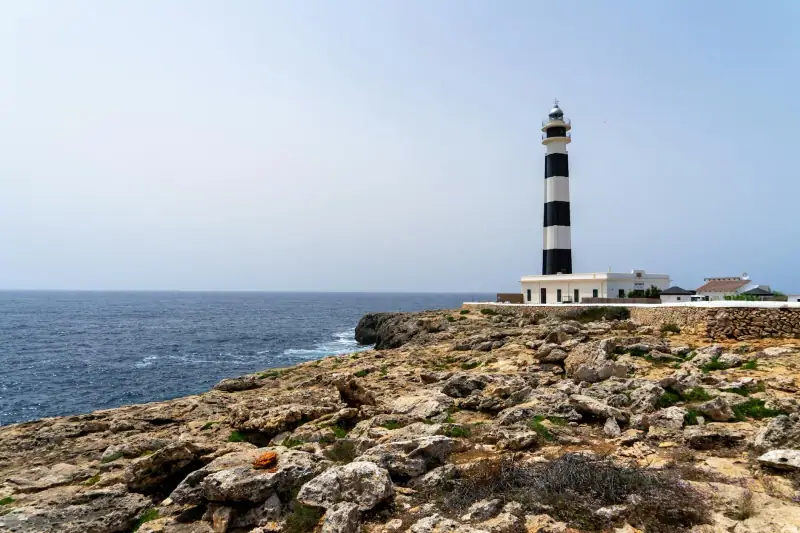
The third day is dedicated to La Mola, Formentera’s eastern limestone plateau that rises abruptly to 192 m (630 ft), another world compared with the flat beaches of the day before.
Morning: the climb to El Pilar de la Mola
The climb to La Mola is the island’s only real hill. On a standard bike it is a workout; on an electric bike it is pleasant. The road winds through fragrant pine groves and wild fig trees, with ever wider views over the island below.
El Pilar de la Mola is the central village of the plateau: a few white houses, an 18th-century church and the famous El Pilar hippie market (every Wednesday and Sunday in high season). It is one of the most authentic craft markets in the Balearic Islands: silver jewelry, ceramics, hand-dyed clothing, dreamcatchers… An hour of wandering is well worth it.
Midday: La Mola lighthouse
2 km (1.2 mi) east of El Pilar, the Faro de la Mola is Formentera’s emblematic lighthouse. Perched at the top of the cliff that plunges straight into the sea, it offers the island’s most spectacular panorama. Behind you, Formentera stretches to its white beaches; ahead, a 120 m (394 ft) cliff of red limestone drops into deep blue.
To see: a monolith erected in 1978 pays tribute to Jules Verne, who mentioned the island in his novel Hector Servadac. The lighthouse is still active. Sunset here is legendary (come back in the evening if you have time).
Afternoon: back along the south coast and Cala Saona
For the descent, take the southern road to pass through Cala Saona, the most beautiful cove on Formentera’s west coast. Framed by ochre cliffs and wind-bent pines, this fine-sand beach facing the open sea is less busy than the northern beaches. A historic hotel, Hotel Cala Saona & Spa, has overlooked the cliff since the 1950s.
Scooter or car rental in Formentera
To reach La Mola and Cala Saona in half a day, a scooter or compact car is still the most practical.
Where to stay in Formentera
Formentera is one of the most expensive Balearic Islands for accommodation. Options are concentrated in a few areas.
Es Pujols: the liveliest
This is the center of tourist life: shops, restaurants, a beach on foot. Family hotels, apartments and hostels for all budgets. Ideal if you want to go out in the evening.
La Savina: handy for the ferry
A few hotels and apartments near the port. Handy if you arrive late or leave early, but the atmosphere is less seaside.
Sant Francesc Xavier: calm and authentic
The “capital” is more residential. A few guesthouses and private rooms in the white streets. Ideal for a local atmosphere and a good table.
Cala Saona: total escape
A single hotel (Hotel Cala Saona & Spa) and a few rental villas surround this preserved cove. An exclusive experience, but priced accordingly.
Average accommodation budget: €80-150 a night in high season (about $93-175) for a standard hotel; €200-350 (about $232-405) for a seafront boutique hotel.
Hotels in Formentera
Compare availability and prices for your stay, from hostels to luxury boutique hotels.
Transport and getting around the island
Bike: the ideal solution
Formentera is made for cycling. The main road (PM-820) is wide, well maintained and mostly flat except for La Mola. Separate bike paths exist between La Savina, Es Pujols and Sant Francesc.
- Standard bike: €10-15 a day (about $12-17)
- Electric bike: about €20-30 a day (about $23-35), indicative price to check with the rental shops (strongly recommended for 3 full days)
- Tandem: a romantic option for couples
Scooter: to go further
A 50cc scooter lets you cover the whole island in half a day and gives access to the dirt tracks leading to the most secret coves. Allow €30-45 a day (about $35-52).
Bus: practical and cheap
The bus network (lines L1 to L6) serves La Savina, Es Pujols, Sant Francesc, El Pilar and La Mola lighthouse. Frequency: every 30 minutes in high season, every hour in low season. Ticket: about €2 to 3 per trip depending on the line (about $2-3.50; check fares with the Consell de Formentera).
Water taxi
Boat taxis run between La Savina, Illetes, Es Pujols and Es Arenals in summer. Ideal for reaching Illetes without a bike and saving your legs for the rest of the day.
Budget for 3 days in Formentera
Formentera is pricier than the Balearic average. Here is a realistic estimate:
| Item | Average budget |
|---|---|
| Accommodation (3 nights) | €250-450 (~$290-520) |
| Ferry round trip Ibiza-Formentera | €45-60 (~$52-70) / person |
| Bike rental (3 days) | €40-75 (~$46-87) |
| Meals (3 × lunch + dinner) | €120-200 (~$139-232) |
| Activities (snorkeling, market) | €30-60 (~$35-70) |
| Estimated total (2 people) | €720-1,240 (~$835-1,440) |
For a tighter budget, see our Balearic Islands budget guide with tips to cut costs on all the islands.
Tips for planning your stay
Book early: Formentera attracts an affluent, international crowd. In July-August, hotels and ferry tickets are booked 2 to 3 months ahead.
Bring cash: some small shops, bike rentals and beach vendors do not accept cards.
Respect nature: much of the island is a nature reserve. Do not pick flowers, do not take sand, do not anchor in posidonia areas and leave no trash on the beaches.
Check the local festivals: Sant Joan (June 24) and Sant Jaume (July 25) bring lively village festivals with music, dances and fireworks on the beach.
To fit Formentera into a wider trip covering several islands, see our island hopping in the Balearic Islands guide, which helps you plan a Mallorca-Menorca-Ibiza-Formentera circuit.
Formentera is rare: a Mediterranean island that has managed to preserve its nature and its soul despite tourist pressure. Three days are enough to fall in love with it. Seven days will make you regret having to leave. And the luckiest come back every year, as if the island had marked them with an invisible seal in the light of its turquoise waters.
Frequently asked questions
How do you get to Formentera from Ibiza?
By ferry or fast ferry from the port of Ibiza Town. The crossing takes between 30 minutes (fast ferry) and 1 hour (classic ferry). The companies Baleària, Trasmapi and Aquabus offer regular services throughout the day (check timetables with the companies). A one-way ticket costs €20-35 (about $23-41), a full round trip €45-60 (about $52-70) depending on the season.
Do you need a car in Formentera?
No, Formentera is ideal by bike: the island is flat for the most part, the main road is under 20 km (12 mi) from end to end, and many secondary lanes lead to the beaches. Bike rental is everywhere in La Savina. A scooter or car is still useful to reach La Mola (a steep hill) or to cover the whole itinerary quickly in one day.
What is the best time to visit Formentera?
May-June and September-October are ideal: warm sea (23-27 °C, or 73-81 °F), reliable sun, moderate crowds and cheaper lodging. July-August is magnificent but very busy: beaches can be packed and hotels full several months ahead. November-March, the island is almost deserted and many businesses close.
Can you do Formentera as a day trip from Ibiza?
Yes, in one long day (8 am-8 pm) you can see the beaches of Illetes and Es Pujols and take a tour of La Mola. But to really enjoy the island pace, 2 to 3 nights on the island are recommended. At night, Formentera has an incomparable serenity.
Is there public transport in Formentera?
Yes, buses link La Savina to Es Pujols, Sant Francesc, El Pilar de la Mola and La Mola, with decent frequency in high season. Taxis are available but pricey for short distances. Bike rental remains the most popular and practical way to get around.
Is Formentera suitable for children?
Yes, very much so. The water is shallow and clear in many coves, the terrain is gentle and there are few cars. Es Pujols has shops, a small market and family-friendly restaurants. Bring high-protection sunscreen: the reflection off the water and the white sand is intense.
More Balearic Islands guides
Keep reading
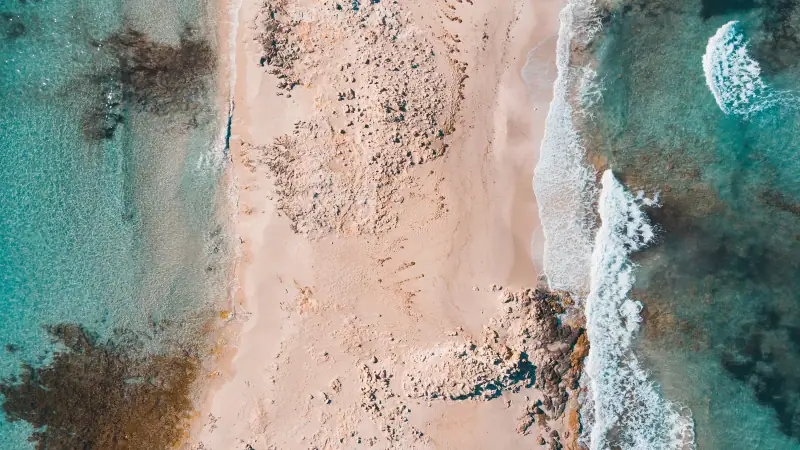
Visiting Formentera: a complete guide to the pearl of the Balearic Islands
Formentera, the smallest Balearic island: Ses Illetes beaches, La Mola plateau, salt flats, Sant Francesc village. A complete guide.
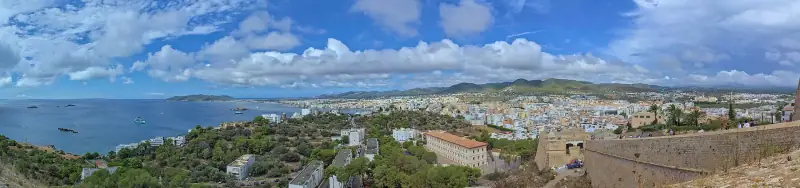
Visiting Ibiza: a complete guide to the White Isle of the Balearics
Complete Ibiza guide: UNESCO Dalt Vila, wild beaches, nightlife, the authentic north, food and practical tips for your stay on the White Isle.
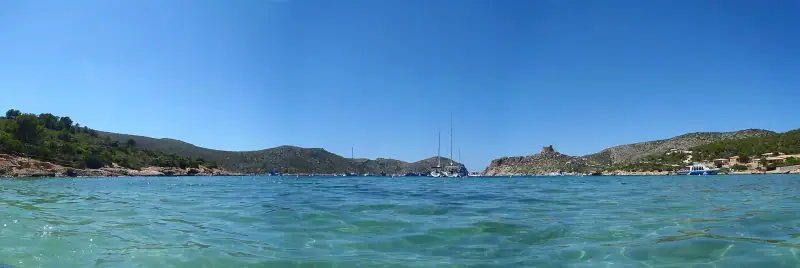
Cabrera from Mallorca: how to get there, book and what to bring
Getting to Cabrera from Mallorca: boat from Colònia de Sant Jordi, booking, national park rules, swimming, trails and what to bring.
Ready-made
Balearic Islands itineraries
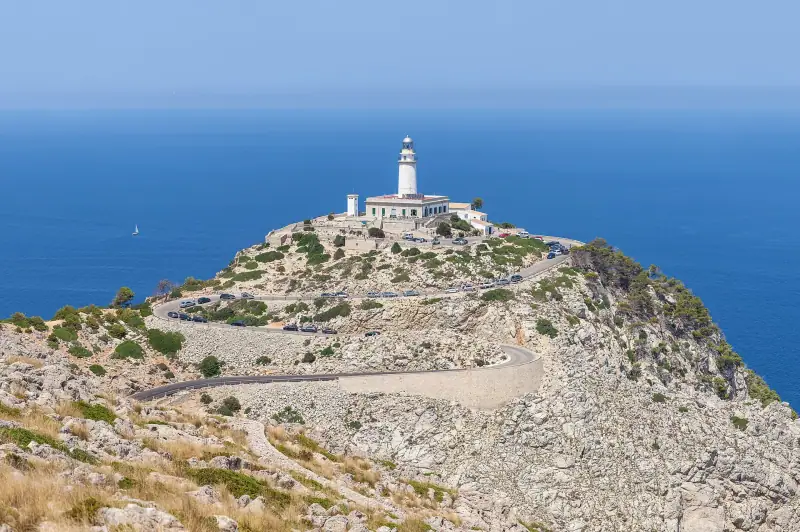
5 days
7 days
Mallorca in 7 days: a complete itinerary to discover the island
7-day Mallorca itinerary: Palma, Serra de Tramuntana, wild coves, picturesque villages. A practical day-by-day guide for a perfect road trip.