What to see
Horta: complete guide to the capital of Faial in the Azores
We may earn a commission when you book through links on this page, at no extra cost to you. We don't visit or try the places we cover: we summarize published sources. How we work
In short
- Horta's marina holds more than 30,000 paintings left by sailing crews; by tradition, skipping the painting brings bad luck.
- Faial's caldera (1,043 m / 3,422 ft) is reached by car, then a 3-to-4-hour loop trail; Capelinhos is about 30 minutes from Horta.
- Pico is a 30-minute ferry ride from Horta and works as a day trip; allow 2 to 3 days for Horta and Faial.
- Whale watching runs March to October, trips last 3 to 4 hours and cost about €40 to €65 (about $46 to $75) per person.
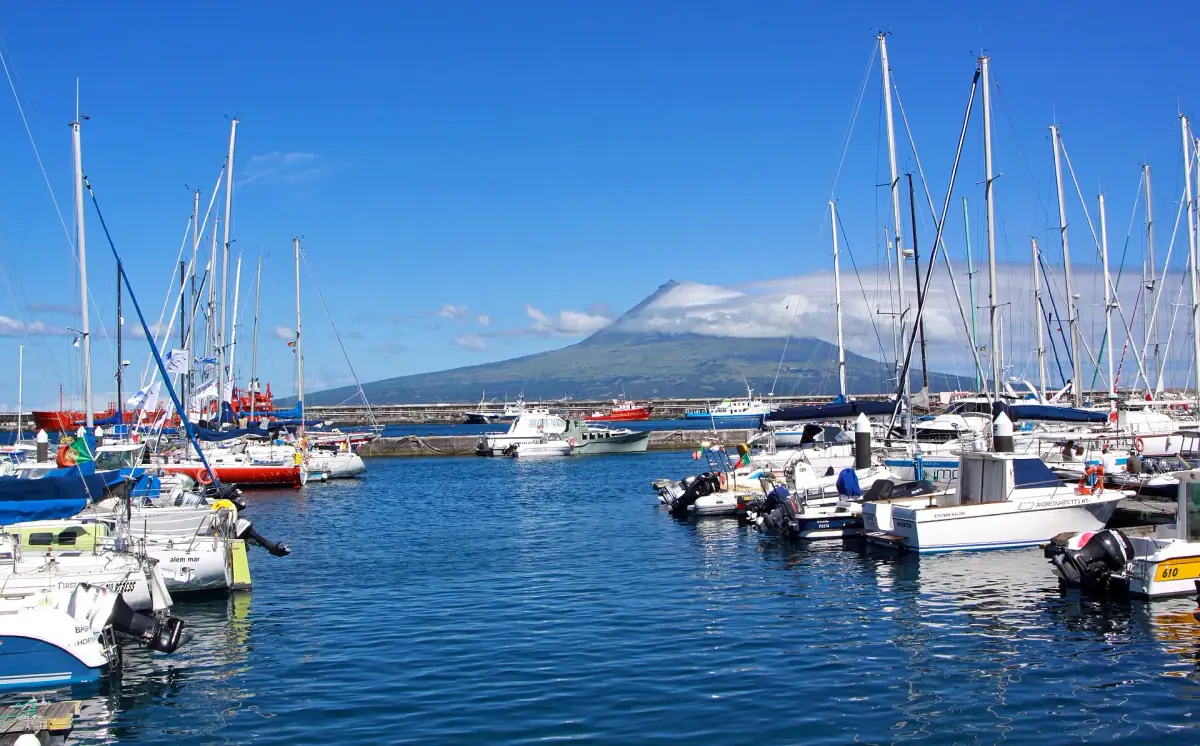
Horta is one of those end-of-the-world towns where you arrive for one night and end up staying three days. Capital of Faial, in the Azores’ central group, it turns its back on its volcano and faces the sea, and more precisely Pico, the sleeping giant that rises to 2,351 meters (7,713 ft) just 8 kilometers (5 mi) off its coast. The silhouette of Pico at sunset, seen from the marina quay, is one of the most striking images in the entire archipelago.
But Horta is also a sailors’ town. Transatlantic crossings have stopped here for centuries. Today its marina has become a worldwide nautical sanctuary, covered with 30,000 paintings left by crews from around the globe. And its most emblematic bar, Peter’s Bar, has been cited in maritime encyclopedias since the 1940s. Here is everything you need to know before setting foot on the “blue island” of the Azores.
Horta marina: the sailors’ 30,000 paintings
Horta’s marina is more than a yacht harbor: it is an open-air museum. By a tradition dating back to the 1940s, every crew that stops in Horta before or after an Atlantic crossing leaves a painting on the walls, docks, sidewalks and rocks of the port. These paintings show the name and identification number of the sailboat, often with a free-form drawing: a crew portrait, a national emblem, a maritime scene, an in-joke among the crew.
It is estimated that more than 30,000 paintings now cover all of the marina’s surfaces. The oldest painting still visible is said to date from the 1970s; the newest are fresh from the current season. Tradition holds that not painting brings bad luck for the rest of the voyage, a belief firmly rooted in local maritime culture. Sailors have reportedly turned back at sea to come paint their boat after forgetting to do so.
Walking the marina quays in Horta is a unique experience: you sense the history of thousands of crossings, of families who crossed the Atlantic under sail, solo adventurers, professional crews and amateur sailors. Each painting is a miniature story. Allow at least an hour to wander and take photos.
Hotels in Horta
Lodging facing the marina, with a view of Pico or right in the historic center.
Peter’s Bar: the most famous bar in the Atlantic
A stone’s throw from the marina, Peter’s Bar is an institution. Founded in 1918 by Henrique Azevedo, who renamed the previous establishment (Azorean House) as Café Sport, this bar has accompanied the rise of transatlantic yachting for more than a century. The nickname “Peter” comes from José Azevedo, Henrique’s son, who was given the name by a British officer. The interior walls are covered with photos, pennants, nautical charts and mementos left by passing sailors over generations. You regularly meet circumnavigators on a stopover, crews exhausted after weeks at sea, and locals who have had their habits here since childhood.
The bar serves a good selection of rums, Azorean wines and local Azorean gins (Goshawk Azores Gin, Ghosts of the Ocean, Azor Gin Premium). Prices are reasonable for such a legendary place. It is also where sailors swap weather reports, tips on the next legs and news of other boats met at sea.
Peter’s Bar generally opens in late afternoon and stays open until late at night. Even if you don’t sail, spending an evening here will bring you into a living maritime history that few bars in the world can match.
Horta’s historic center
The center of Horta is compact and pleasant to explore on foot. Built on a hillside that slopes gently toward the bay, the town spreads out its cobbled streets, its light-colored houses trimmed with black lava and its well-kept public gardens.
Praça do Infante Dom Henrique
Horta’s central square, dedicated to Prince Henry the Navigator, is the lively heart of the town. Surrounded by 19th-century institutional buildings, it hosts the weekly market and local festivals. Its café terraces are a good spot for breakfast facing the bay.
Museu da Horta
Housed in the former Jesuit college, the Museu da Horta traces the history of Faial and its role in 20th-century Atlantic communications. The most surprising collection is probably the one devoted to fig seeds: the artist Euclides Silveira da Rosa (1910-1979) spent ten years carving religious scenes, historical figures and buildings into fig seeds, a miniaturist practice that became an island tradition. The museum displays hundreds of these microscopic pieces, some no more than a centimeter (0.4 in) tall, from a collection of 70 miniatures made from 35,000 fig seed fragments.
Faial botanical garden
A few minutes’ walk from the center, the Faial botanical garden (Jardim Botânico do Faial) is one of the most varied green spaces in the archipelago. Species native to the Azores, giant ferns, blue hydrangeas (which bloom from June to September and line practically every road on the island), flame trees, araucarias: the plant diversity is striking for a volcanic island of modest size. Admission is free or nominal depending on the period.
Tours from Horta
Whale watching, caldera hike, 4x4 tour of Faial or an excursion to Pico.
Faial caldera: the most accessible crater in the Azores
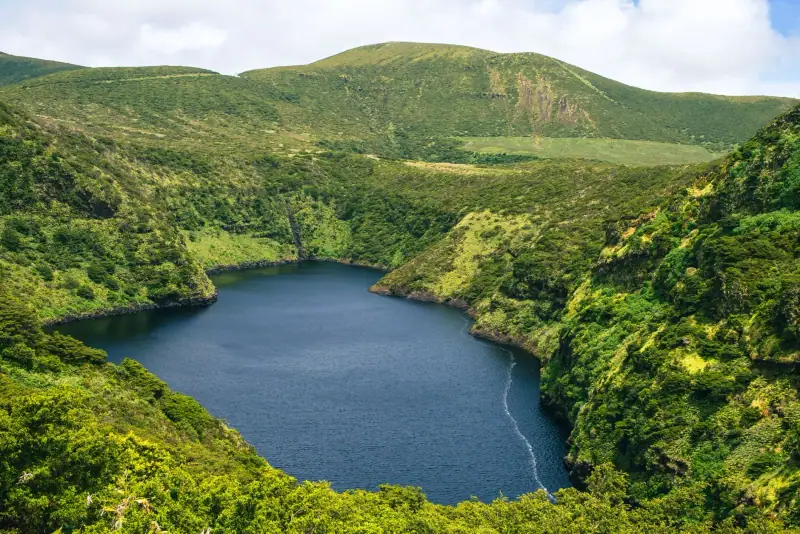
At 1,043 meters (3,422 ft) above sea level, the Faial caldera is one of the most accessible volcanoes in the whole archipelago. Unlike neighboring Pico, which demands a strenuous 7-to-8-hour climb, the Faial caldera can be reached by car to its rim, then explored on foot along the circular trail (PRC04FAI) that goes around the crater in about 3 to 4 hours.
The caldera is 2 kilometers (1.2 mi) across and 400 meters (1,310 ft) deep. The inside of the crater is filled with a forest of Japanese cryptomeria (conifers planted in the 20th century to fight erosion), tree ferns and mosses. In clear weather the view from the rim is striking: on one side the green floor of the crater, on the other the Atlantic and the islands of Pico, São Jorge and sometimes Terceira on the horizon.
Practical tips: The road to the caldera parking lot is narrow and winding. Start early (before 9 am) to avoid the morning mist that often rises in the caldera and to get better visibility. Bring a light rain jacket, as weather can change quickly at altitude. The trail is marked but some sections are wet and slippery. For hiking across the archipelago, see our guide to hiking in the Azores.
Capelinhos: when the sea gave birth to land
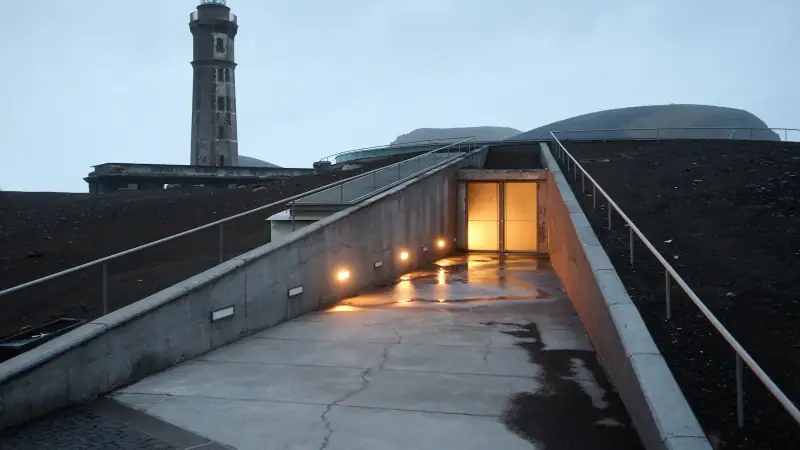
At the western tip of Faial, Capelinhos is one of the most extraordinary geological sites in the Azores, and one of the few places in the world where you can see the visible trace of a recent underwater volcanic eruption that created new land.
Between September 27, 1957 and October 24, 1958, a Surtseyan-type volcanic eruption emerged from the Atlantic floor a few hundred meters off Faial’s west coast. For thirteen months, lava, ash and lapilli covered the Capelo area, engulfed the Capelinhos lighthouse (only the top of its tower is still visible) and added about 2.4 km² (0.9 sq mi) of land to Faial. Thousands of residents had to flee; many emigrated to the United States.
Today the Capelinhos landscape is lunar: black ash cones, solidified lava flows, almost no vegetation on the new land created by the eruption. The Centro de Interpretação do Vulcão dos Capelinhos, opened in 2008 and partly buried in the volcanic ground, is an award-winning museum that tells the story of the eruption, the volcanic geology of the Azores and the Azorean diaspora in the United States. The climb up the lighthouse offers a dizzying panorama over the surrounding black landscape and the Atlantic.
Practical: The museum is open year-round (reduced hours off-season). Allow about 1 h 30 to 2 h there, museum and lighthouse climb included. The site is about 30 minutes by car from Horta along the south coast.
Whale watching from Horta
Horta is one of the best starting points for watching cetaceans in the Azores. Faial’s central position in the archipelago, at the crossroads of Atlantic migration routes, supports a great diversity of species. From March to October, boat trips regularly spot sperm whales (the most emblematic of the Azores), humpback whales (passing through in spring), common dolphins, Risso’s dolphins and, more rarely, blue whales.
Local whale-watching operators use land-based lookouts (vigias) set up on high ground to spot blows (exhalation jets) several kilometers away, a technique inherited from the old whalers. This method greatly increases the sighting rate compared with trips at sea without spotting from shore.
A typical trip lasts 3 to 4 hours, with a success rate generally above 90% from May to September. For everything on choosing your trip and maximizing your chances, read our complete guide to whale watching in the Azores.
Flights to Faial
Direct connections from Lisbon and from São Miguel (55 min). Compare the best fares.
The essential excursion: Pico Island
From Horta, Pico is only a 30-minute ferry ride away and can be seen from almost everywhere in town. The contrast between the two islands is striking: where Faial is green and bright, Pico is black and solemn, dominated by its volcano rising to 2,351 meters (7,713 ft), the highest point in Portugal.
Pico is best explored in a day from Horta:
- Morning: ferry from Horta to Madalena (30 min), visit the Verdelho wine cellars (Pico’s vineyard landscape has been a UNESCO World Heritage site since 2004 for its currais, basalt walls that protect the vines from wind and sea spray), lunch in Madalena.
- Afternoon: hike across the Mistérios Negros lava flows or visit the village of São Roque do Pico and the Museu dos Baleeiros (whaling museum).
- Return in the evening to Horta.
To explore the central islands triangle with Pico and São Jorge over several days, see our complete guide to the Faial-Pico-São Jorge triangle.
Food in Horta: what to eat on Faial
Local specialties
Faial’s cooking follows Azorean tradition: fresh fish, grass-fed beef, cheeses and sweet desserts. A few specialties to look for first:
- Salt-crust fish: several Horta restaurants serve whole rockfish baked in a salt crust, a technique that preserves the flesh and its briny flavors.
- Chicharros (braised mackerel) and lapas grelhadas (limpets grilled with butter and lemon): the Azorean seaside staples.
- Faial cheese: more discreet than São Jorge cheese but interesting, sold in local markets and delicatessens in the center.
- Queijadas and cavacas: small dry or sweet cakes typical of the archipelago, perfect with a coffee.
Where to eat in Horta
The waterfront and the lanes around the Praça do Infante hold most of the restaurants. Favor places that post the fish of the day on a board, a good sign of local sourcing. The marina cafés serve hearty breakfasts until mid-morning.
Nightlife revolves around the marina and Peter’s Bar. In summer, several bars stay open until 2 or 3 am on weekends.
Practical information for visiting Horta
How to get to Horta
By air: Faial Airport (IATA code: HOR) is about 9.5 km (6 mi) southwest of the center of Horta. There are daily flights from Ponta Delgada (São Miguel) with SATA Air Açores (a 55-minute flight). Flights from Lisbon with Azores Airlines, mainly in summer (a flight of about 2 h 15). Fare from São Miguel: about €70 to €130 one way (about $81 to $150) for non-residents depending on season and booking lead time.
By ferry: From Pico (Madalena to Horta): about 30 minutes, several sailings a day. From São Jorge (Velas to Horta or Calheta to Horta): about 2 h to 2 h 30. Atlânticoline runs the inter-island links. In summer, ferries also connect Faial to Terceira and São Miguel.
From the airport: A taxi from the airport to the center of Horta costs about €15 to €20 (about $17 to $23). Renting a car at the airport is strongly recommended for exploring the island.
Getting around Faial
The center of Horta can be seen entirely on foot. For the caldera, Capelinhos and the island loop, a car is essential. Faial is compact (173 km² / 67 sq mi) and can be driven around entirely in one day. Roads are well maintained but often winding and narrow at higher elevations.
There is no practical public transport for tourists outside Horta. Rent a car to enjoy the island at your own pace.
Budget for a stay in Horta
Lodging: Guesthouse or B&B €55 to €90 per night (about $64 to $105), 3 to 4-star hotel with marina view €100 to €160 per night (about $115 to $185).
Meals: Restaurant lunch €12 to €18 per person (about $14 to $21), dinner with wine €20 to €35 per person (about $23 to $41).
Sights: Centro de Interpretação do Vulcão dos Capelinhos about €7 to €10 (about $8 to $12), Horta museum about €2 to €3 (about $2 to $3), caldera (parking and trail) free.
Activities: 3-hour whale-watching trip from Horta €40 to €65 per person (about $46 to $75), kayak excursion or dive €45 to €80 per person (about $52 to $93).
Transport: Car rental from €35 to €45 per day (about $41 to $52), Horta to Madalena (Pico) ferry about €8 to €12 round trip (about $9 to $14).
For a full picture of what your trip to the archipelago will cost, read our detailed guide to the Azores budget.
Best time to visit Horta
May to September: High season brings most of the boat traffic into the marina (especially June and July for Atlantic crossings) and the most stable weather. Atlantic surface water reaches 21 to 23 °C (70 to 73 °F) between July and September.
June and July: Peak marina activity, festive atmosphere. This is the best time to see the largest number of sailboats from around the world and meet crews on stopover.
May to June: Start of the hydrangea bloom lining all the island’s roads (peak in June and July). Fewer people, lower prices, intensely green vegetation.
October to March: More uncertain weather, frequent winds. Some whale-watching services stop. Suited to travelers looking for peace and low prices.
To pick the best date for your whole Azores trip, see our guide to the best time to visit the Azores.
Car rental on Faial
Essential for reaching the caldera, Capelinhos and the island loop. Book at the airport.
Suggested itinerary: 3 days in Horta and Faial
Day 1: The town and the marina
- Morning: arrive, check in at your hotel, breakfast on the Praça do Infante.
- Mid-morning: visit the marina and its 30,000 paintings. Take your time and look for the most original or oldest ones.
- Lunch: seaside restaurant facing Pico.
- Afternoon: Museu da Horta (fig seed carvings and island history), botanical garden.
- Late afternoon: climb Monte da Guia (a small volcano south of Horta, 20 to 25 minutes on foot from the center) for the panorama over the bay and the marina at sunset.
- Evening: dinner in town, a drink at Peter’s Bar.
Day 2: The caldera and Capelinhos
- Early morning: leave for the caldera (arrive before 9 am to avoid the mist). Circular trail around the crater rim (3 to 4 h, about 7 km / 4.3 mi).
- Lunch: picnic or a restaurant in the village of Flamengos.
- Afternoon: drive to Capelo and Capelinhos. Visit the Centro de Interpretação do Vulcão dos Capelinhos (1 h 30), climb the lighthouse for the panorama over the volcanic lands.
- Return via the island’s north coast.
- Evening in Horta.
Day 3: Excursion to Pico
- Morning: ferry from Horta to Madalena, Pico (30 min). Visit the vineyards and the basalt currais.
- Midday: lunch in Madalena or São Roque do Pico.
- Afternoon: visit the Museu dos Baleeiros (whaling museum, exceptional) or hike the Mistérios Negros (18th-century lava flows overgrown by forest).
- Ferry back to Horta in the evening.
To fit Horta into a wider Azores trip, see our 7-day Azores itinerary.
Horta is one of those destinations you don’t really plan for: you arrive in transit to Pico, stay for the marina, and leave with the memory of Peter’s Bar at 11 pm and a full-moon night on the harbor. Faial is the ideal size to be truly explored in two or three days: small enough to miss nothing, rich enough not to get bored. And that view of Pico from the quay, snow-white in winter and lava-black in summer, will stay in your memory for a long time.
Frequently asked questions
Why is Horta's marina famous worldwide?
Horta's marina has been a key stop on major transatlantic crossings for decades. By tradition, every crew that stops there leaves a painting on the docks or harbor walls: the name and registration number of their boat, along with free-form drawings. Thousands of paintings now cover much of the breakwater. According to local legend, not painting brings bad luck. This unique nautical folklore has made Horta one of the most photographed marinas in the world.
How do you get to Horta from São Miguel?
Faial is linked to São Miguel by daily SATA Air Açores flights from Ponta Delgada (PDL) to Faial Airport (HOR), with a flight time of about 55 minutes. You can also reach Horta by ferry from Pico (Madalena) in about 30 minutes, the shortest inter-island link in the archipelago. Ferries also connect Faial to São Jorge (about 2 h to 2 h 30; check schedules with Atlânticoline). In summer, combined connections let you link several islands of the central group in a few days.
What is there to do in Horta besides Peter's Bar and the marina?
Horta and Faial hold many treasures beyond the marina: the Faial caldera (the most accessible in the Azores, reachable by car up to 1,043 m / 3,422 ft), the Capelinhos natural monument (the 1957-1958 volcanic eruption that created new land, with an award-winning volcanology museum), the Faial botanical garden (Jardim Botânico do Faial), the Capelo cliffs and the Museu da Horta. Not to mention whale-watching trips, which are particularly well organized from Horta.
How long do you need to visit Horta and Faial?
Allow 2 to 3 full days to enjoy Horta and the main parts of Faial. The first day goes to the town: marina, Peter's Bar, historic center, Museu da Horta and Monte da Guia in late afternoon. The second day covers the island loop: caldera in the morning, Capelinhos in the afternoon and sunset on the west coast. The third day can be an excursion to nearby Pico, visible from Horta in clear weather.
Can you go whale watching from Horta?
Yes, Horta is one of the best starting points for whale watching in the Azores. The town has several well-regarded whale-watching operators, active from March to October. The central islands (Faial, Pico, São Jorge) are especially rich in cetaceans: sperm whales, humpback whales, common dolphins and spotted dolphins are frequently seen. Trips generally last 3 to 4 hours at sea. For more, see our complete guide to whale watching in the Azores.
Is it better to stay in Horta or Ponta Delgada?
If you are only visiting Faial, stay in Horta: it is a charming town with good nightlife around the marina. If you plan to see several islands in a single trip, Ponta Delgada (São Miguel) is a more practical air hub with more flights and lodging. For the central islands (Faial, Pico, São Jorge), Horta is the ideal base: it serves the ferries to Pico (30 min) and São Jorge (2 h to 2 h 30).
More Azores guides
Keep reading
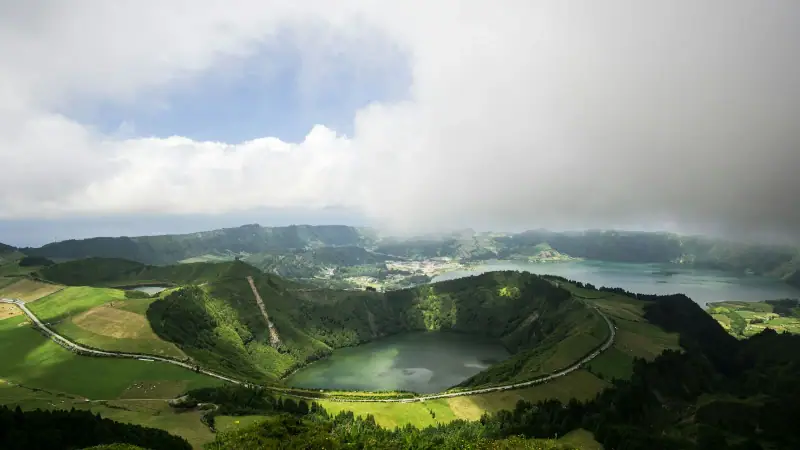
Azores Lakes and Volcanoes: The Main Natural Sites
The most beautiful volcanic lakes in the Azores. Sete Cidades, Fogo, Furnas, Algar do Carvão: the archipelago's natural wonders.

Corvo Island: A Complete Guide to the Smallest Island in the Azores
Complete guide to Corvo in the Azores: the Caldeirão, Vila do Corvo, birdwatching and practical tips for the archipelago's most remote island.
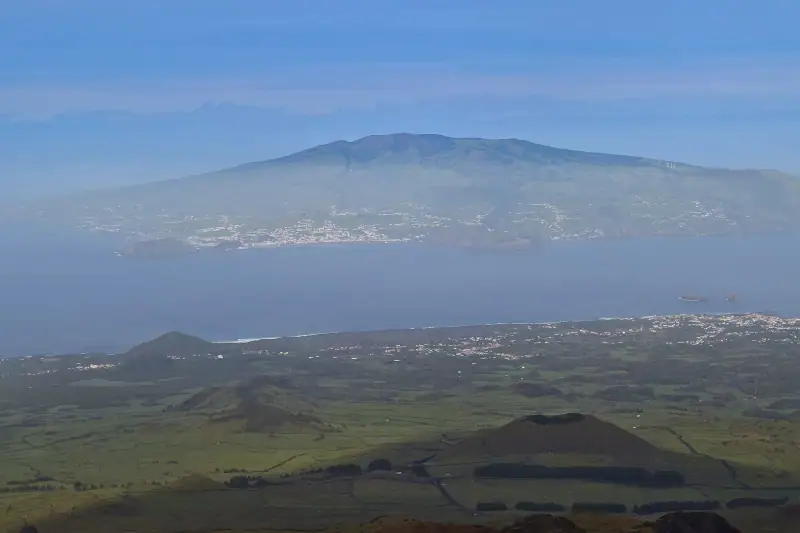
Faial Island: A Complete Guide to the Blue Island of the Azores
Complete guide to Faial in the Azores: the caldera, Capelinhos, Horta marina, beaches and hikes. Everything you need to visit the Blue Island.
Ready-made
Azores itineraries
São Miguel Road Trip: Driving Around the Island
A complete guide to driving around São Miguel in the Azores: route, essential stops, road tips and lesser-known spots.
4 days
São Miguel in 4 Days Without a Car: A Realistic Itinerary by Bus and Organized Tour
Can you visit São Miguel without a rental car? A realistic 4-day itinerary with public buses, organized tours, schedules, prices and distances.
5 days
São Miguel in 5 days with kids: stops, miles and a realistic pace
5 days on São Miguel (Azores) with kids: day-by-day stops, distances and drive times, naps, swims, whales and pace pitfalls to avoid.
Can be adapted in the planner