Things to do
Whale Watching in the Azores: Complete 2026 Guide
We may earn a commission when you book through links on this page, at no extra cost to you. We don't visit or try the places we cover: we summarize published sources. How we work
In short
- 28 species of whales and dolphins have been recorded in Azorean waters, about a third of the world's species.
- Sperm whales live here all year; blue, fin and sei whales migrate through from April to June, peaking in late April and early May.
- A 3-hour trip costs €60 to €90 (~$70 to 105) per adult (2026 prices); most operators offer a refund or a free new trip if no cetaceans are seen.
- São Miguel has the most operators; Pico is the top island for sperm whales.
The Azores have a worldwide reputation among cetacean lovers. It is no accident: the archipelago sits at the confluence of nutrient-rich ocean currents, which attract an incredible diversity of whales and dolphins. With 28 recorded species (21 toothed whales and 7 baleen whales, about a third of the world’s cetacean diversity) and a living whaling heritage (whaling banned since 1984, converted to ecotourism in the 1990s), the Azores are a top destination for anyone passionate about large marine wildlife.
Which species can you see?
Permanent residents
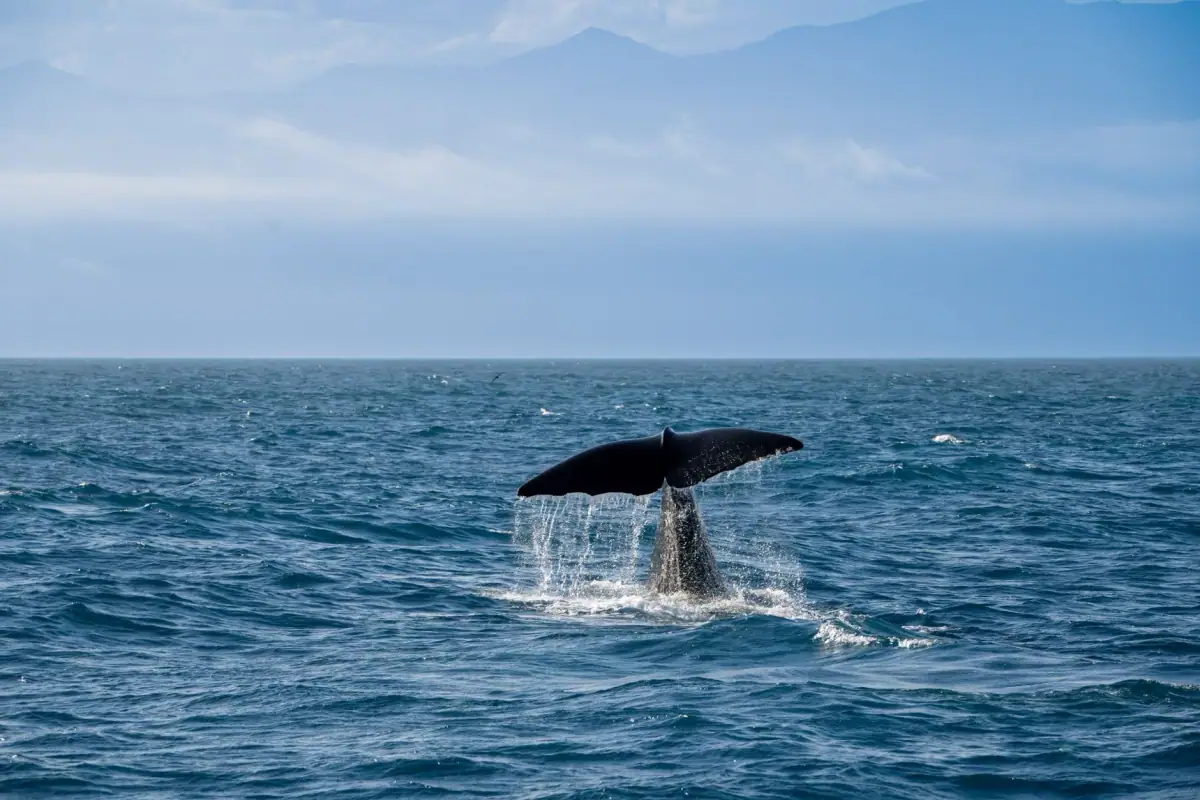
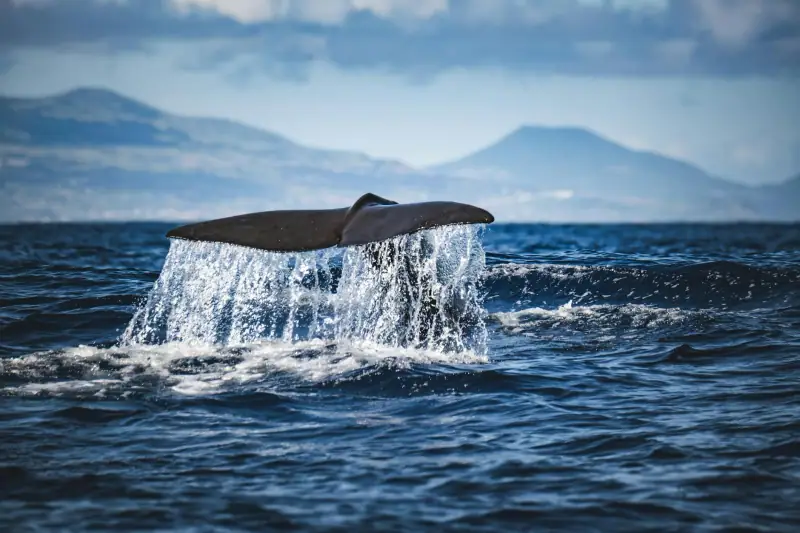
The sperm whale (Physeter macrocephalus) is the absolute star of the Azores and the largest toothed animal on the planet: adult males average 16 to 18 m (52 to 59 ft) (up to 20 m / 66 ft in exceptional cases) and weigh 40 to 50 metric tons (44 to 55 US tons). The Azores are one of the few places in the world where you can see sperm whales all year. The deep waters around the islands are home to a resident population of females and young; solitary males pass through mostly between May and September. Watching a sperm whale dive, its massive tail disappearing vertically into the depths, is an unforgettable sight.
The common dolphin (Delphinus delphis) is the most abundant cetacean in the Azores. Groups of several hundred individuals are regularly seen. Very playful, they often accompany the boats.
Risso’s dolphin (Grampus griseus) is common around the archipelago. It is recognizable by its silvery-white body covered in scars.
The bottlenose dolphin (Tursiops truncatus) is often seen near the coast, sometimes hunting.
Seasonal visitors (mainly April to June)
The blue whale (Balaenoptera musculus): the largest living animal on Earth (up to 30 m / 98 ft, 150 to 180 metric tons / 165 to 198 US tons). It crosses the archipelago from April to June, drawn by spring plankton blooms. The Azores are among the best places in the world to see it during this window of a few weeks (peak from late April to early May).
The fin whale (Balaenoptera physalus): the second-largest animal on the planet (up to 24 m / 79 ft). Visible from April to June during migration.
The sei whale (Balaenoptera borealis): seen mostly in May and June during the migratory passage.
The humpback whale (Megaptera novaeangliae): less common than the previous three species but possible in spring, sometimes with spectacular breaches.
Blainville’s beaked whale and other ziphiids (beaked whales) are regularly spotted offshore thanks to the vigias.
Sighting calendar
| Period | Main species |
|---|---|
| January to March | Sperm whales, bottlenose dolphins, common dolphins, Risso’s dolphins |
| April to June | Sperm whales + migrating blue, fin and sei whales (giant species, the most spectacular window) |
| July to September | Sperm whales, common dolphins, Atlantic spotted dolphins (Stenella frontalis), bottlenose dolphins, pilot whales |
| October to December | Sperm whales, common dolphins, Risso’s dolphins, occasional beaked whales |
For the large migratory rorquals: April to June (peak in late April and early May). For the widest range of species, dolphins plus sperm whales: June to September.
Whale-watching trips in the Azores
Book your whale-watching excursion with the best operators.
What a whale-watching trip is like
The vigia: the whalers’ legacy
The Azores have kept a unique system inherited from the great era of whaling: the vigias, lookouts posted high up in watchtowers, who spot whales and radio the boats. This technique, unique in the world, maximizes the chances of a sighting.
How a trip unfolds
Duration: Usually 3 to 4 hours.
Departure time: Often in the morning (8 to 9 am) because the sea is calmer.
Format: Leave the harbor, sail toward the areas flagged by the vigias, approach the cetaceans calmly while respecting the regulated distances, observation time, return to the harbor.
Equipment provided: Life jackets, waterproofs (if needed), sometimes hydrophones to listen to the whales’ sounds.
Refund guarantee
Most reputable operators offer a guarantee: if no cetaceans are seen (very rare), you are refunded or get a free trip. The overall success rate is above 95% in high season.
Island by island: where to go to see whales
São Miguel (Ponta Delgada)
The most accessible town, with the most companies. Ideal for first-time visitors. The deep waters south of the island are rich in sperm whales and host the large migratory rorquals in spring.
Main companies: Futurismo Azores Adventures (Portas do Mar, Loja 26, the oldest and most complete, since 1996), Picos de Aventura (Avenida João Bosco Mota Amaral) and Terra Azul (based in Vila Franca do Campo).
Pico (Lajes do Pico)
Pico is the top island for sperm whales: a former whaling capital (whalers’ museum in Lajes), where the deep waters of the Faial-Pico channel are a historic hunting ground. A more intimate atmosphere than São Miguel. Operators: Espaço Talassa (Lajes do Pico), CW Azores (Madalena).
Faial (Horta)
Horta shares the waters of the central channel with Pico, which are particularly rich. Norberto Diver, Naturalist and other operators offer trips from the marina.
São Jorge
More intimate, less touristy. There are fewer operators, but they are well trained.
Swimming with dolphins and whales
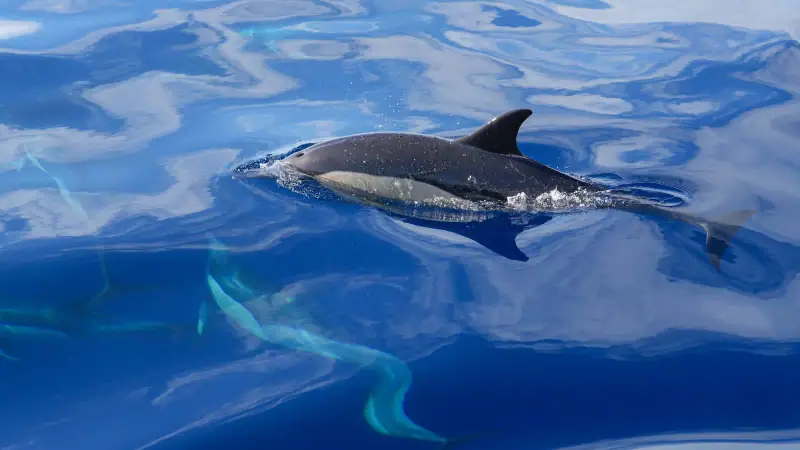
Some operators offer “swim with” trips, snorkeling at the surface with cetaceans:
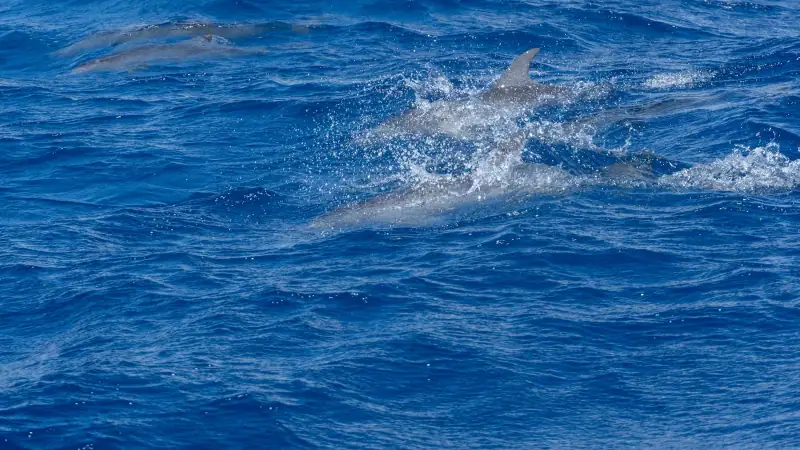
- Swimming with dolphins: common and accessible, notably with common dolphins, bottlenose dolphins, striped dolphins and Risso’s dolphins
Ethical rules: Never touch the animals, do not dive toward them, stay calm in the water, follow the guide’s instructions. Swimming is allowed only with the designated species, in line with the regulations protecting large cetaceans (sperm whales and baleen whales are excluded from swimming).
Practical tips
Seasickness: If you are prone to seasickness, take a preventive medication 1 hour before departure. The sea can be rough even in good weather.
Clothing: Even in summer, it is cold on the water. Bring a windbreaker and dress in layers.
Camera: Bring a good zoom for whale photos. Waterproof cases or waterproof cameras are handy.
Booking: In July and August, book at least 2 to 3 days ahead.
To round out your discovery of Azorean marine life, see our guide to diving in the Azores.
Places to stay in Ponta Delgada
Hotels and quintas near the harbor for your whale-watching trips.
Sources
Frequently asked questions
Can you see whales in the Azores?
Yes, the Azores are one of the best destinations in the world for watching cetaceans. 28 species of whales and dolphins (21 toothed whales and 7 baleen whales) have been recorded in these waters, about a third of the world's species.
What is the best time to see whales in the Azores?
Sperm whales are resident all year. The large migratory rorquals (blue whale, fin whale, sei whale) pass through from April to June (peaking in late April and early May). Common dolphins, spotted dolphins and pilot whales are frequent from April to October.
Which Azores island is best for whale watching?
São Miguel (Ponta Delgada) has the largest number of operators. Pico (Lajes do Pico) is the top island for sperm whales, with a living whaling heritage. Faial (Horta) and São Jorge are also excellent.
How much does a whale-watching trip in the Azores cost?
€60 to €90 (~$70 to 105) per adult for a 3-hour trip (2026 prices). Most operators guarantee a refund or a free new trip if no cetaceans are seen, with a success rate above 95% in high season.
Is whale watching in the Azores ethical?
The Azores are pioneers in ethical cetacean watching. Strict rules govern the minimum distance from the animals and the number of boats allowed at the same time.
More Azores guides
Keep reading

Climbing Mount Pico Without a Guide: Registration, Cost, Difficulty and Conditions
Climbing Montanha do Pico on your own: mandatory registration, gear, duration (7 to 9 h), when to hire a guide, season and mistakes to avoid.
Swimming With Dolphins in the Azores: Prices, Booking and Tips for 2026
Swimming with dolphins in the Azores: which island to pick, which species, what season, how much it costs and how to book an ethical tour.

Azores Lakes and Volcanoes: The Main Natural Sites
The most beautiful volcanic lakes in the Azores. Sete Cidades, Fogo, Furnas, Algar do Carvão: the archipelago's natural wonders.
Ready-made
Azores itineraries
São Miguel Road Trip: Driving Around the Island
A complete guide to driving around São Miguel in the Azores: route, essential stops, road tips and lesser-known spots.
4 days
São Miguel in 4 Days Without a Car: A Realistic Itinerary by Bus and Organized Tour
Can you visit São Miguel without a rental car? A realistic 4-day itinerary with public buses, organized tours, schedules, prices and distances.
5 days
São Miguel in 5 days with kids: stops, miles and a realistic pace
5 days on São Miguel (Azores) with kids: day-by-day stops, distances and drive times, naps, swims, whales and pace pitfalls to avoid.
Can be adapted in the planner