What to see
Corvo Island: A Complete Guide to the Smallest Island in the Azores
We may earn a commission when you book through links on this page, at no extra cost to you. We don't visit or try the places we cover: we summarize published sources. How we work
In short
- Corvo covers about 17 km² (6.6 sq mi), has one village, Vila do Corvo, and is reached by Atlânticoline ferry from Flores (about 40 minutes) or a short SATA Air Açores flight.
- The Caldeirão crater is about 2 km (1.2 mi) wide and 300 m (985 ft) deep. The trail from the village takes about 1 h to 1 h 30 up.
- No car is needed. Plan 1 to 2 days, and book lodging months ahead for July to September and for October birdwatching.
- Budget: guesthouses about €40 to €80 (~$46 to 93) a night, meals €10 to €20 (~$12 to 23), ferry from Flores about €10 to €20 (~$12 to 23) one way.
At the end of the world, there is Corvo. The smallest island in the Azores, and one of the westernmost in the European Union (the EU’s westernmost point being the Ilhéu do Monchique, an islet belonging to Flores), is little more than a dot on a map, lost in the Atlantic about 1,400 kilometers (870 mi) from mainland Portugal. And yet those who have set foot there agree on one thing: Corvo is an experience in its own right. Not just one island among the archipelago’s nine, but a destination for those seeking silence, the dizzying feeling of isolation and raw volcanic beauty.
About 18 kilometers (11 mi) northeast of Flores, its closest neighbor, Corvo covers about 17 km² (6.6 sq mi) and has about 380 residents (2021 census). One village, one caldera, a few roads, green pastures and the Atlantic all around. That is Corvo. That is why it is unforgettable.
The Caldeirão: going down into the heart of the volcano
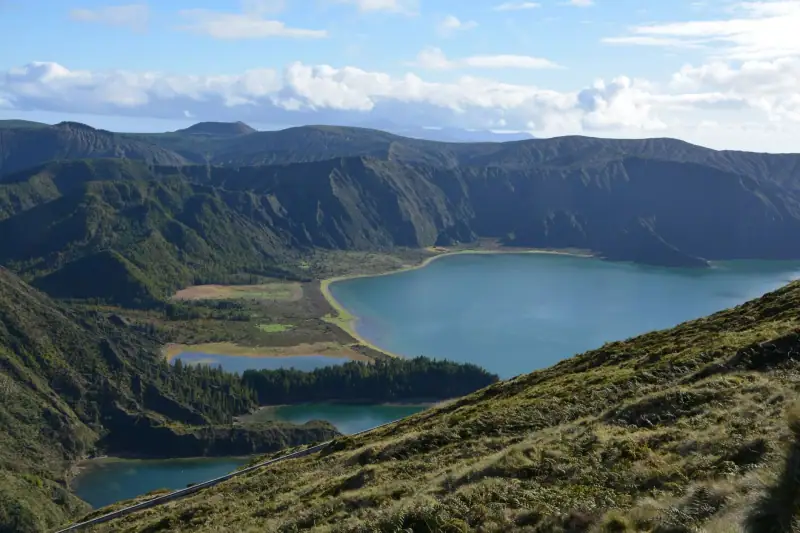
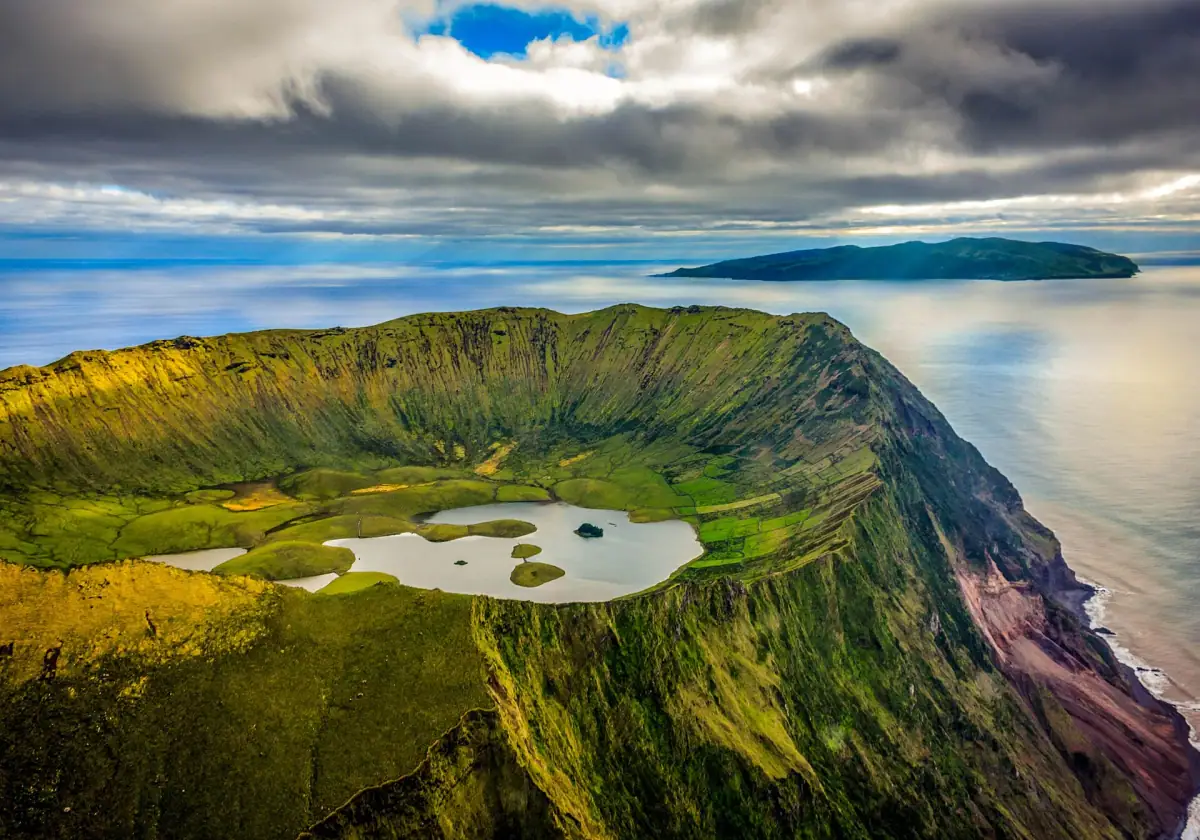
The Caldeirão is the soul of Corvo. This volcanic caldera, hollowed out at the top of the island like an immense bowl of stone and greenery, is the main reason people cross hundreds of kilometers of Atlantic to reach the smallest island in the Azores.
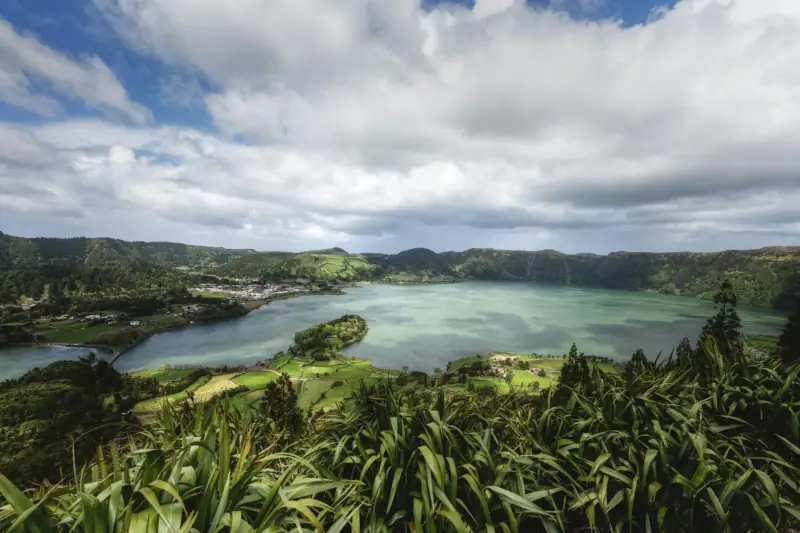
The caldera is about 2 kilometers (1.2 mi) across and about 300 meters (985 ft) deep. At the bottom of the crater, several small lakes form in the hollows of volcanic rock, surrounded by lush vegetation that contrasts with the dark basalt of the walls. Islets covered in ferns and moss rise from the water, giving the landscape the look of a lost world from another geological era.
The hike to the caldera rim
The Caldeirão is reached by a marked trail (PR1CVO) that starts at Vila do Corvo, the island’s only village. The trail climbs steadily through pastures and heather, with views that widen as you near the rim. The climb generally takes between 1 hour and 1 h 30 depending on pace, over a distance of about 3 kilometers (1.9 mi) from the village.
Once at the edge of the caldera, the view is striking. The scale of the crater can only really be seen from the top: the walls drop vertically, the lakes shine below, and on a clear day the silhouette of Flores appears on the horizon to the southwest. It is one of the most impressive natural sights in the entire Azores archipelago.
You can go down into the caldera by a steeper trail, which gives a completely different viewpoint from the bottom. The vegetation becomes denser and damper as you descend. Plan 3 to 4 hours for the full round trip from the village, including the descent into the caldera.
Guided tours on Corvo and Flores
Hiking to the Caldeirão, birdwatching, boat trips from Flores and discovery of the Azores' western group.
Vila do Corvo: the village at the edge of the Atlantic
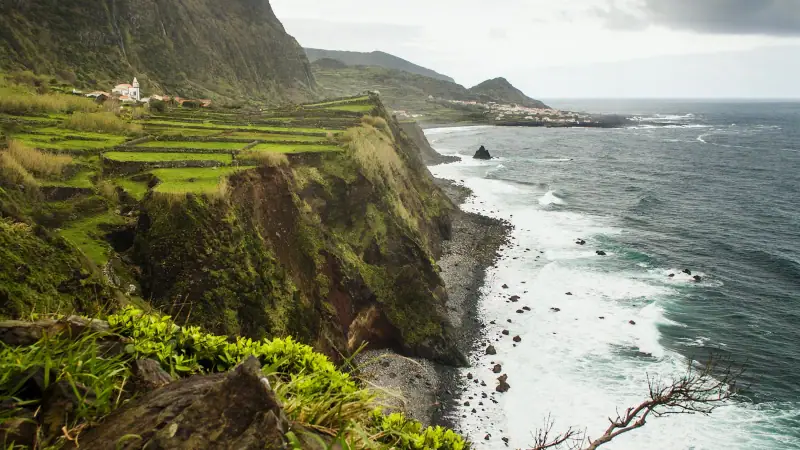
Vila do Corvo is one of a kind: it is the island’s only village, and one of the smallest inhabited localities in the entire European Union. A few hundred people live here, in white houses with black frames typical of Azorean architecture. The streets are narrow, cobbled and so quiet you can hear the gulls crying from the harbor.
The village and its atmosphere
Walking through Vila do Corvo means walking through an island community still spared the big changes of tourism. Residents greet you with a nod, children play in the alleys, and the village’s few grocery stores sell a bit of everything: canned goods, bread, water, bottles of wine, plastic sandals. Here, nothing is superfluous.
The village’s central square is the heart of social life: a modest garden, a few benches, and the main church with its whitewashed facades. The Igreja de Nossa Senhora dos Milagres, built in the 16th century and renovated several times since, is a symbol of the community. Its bell tower is visible from almost everywhere in the village.
Corvo’s harbor
The port of Vila do Corvo is the island’s only maritime entry point. It is a small facility built for the needs of an island community: Atlânticoline ferries dock here from Flores, and fishing boats moor with their daily catch. The bustle when the ferry arrives, when the whole village seems to turn out to see who is coming and what is being unloaded, is a striking scene of authentic island life.
From the harbor jetty, the view of the village climbing the hillside is especially lovely, with the caldera just visible at the top, hidden in clouds some days.
Birdwatching on Corvo: a worldwide reputation
Corvo is a tiny island, but in the European birdwatching world its name rings like a pilgrimage site. Every autumn, passionate birders arrive from Flores by ferry, with backpacks, binoculars and spotting scopes under their arms, for one specific reason: rare North American migrant birds.
The Atlantic migration phenomenon
The explanation is geological and meteorological. Corvo is the first land that North American birds meet when Atlantic winds carry them east during their autumn migration toward South America. Every year in October, species that normally have no business in Europe turn up exhausted on Corvo: warblers (rare North American species), wood thrushes, snipes, and dozens of other species that can be a first record for all of Europe.
For European birders, English and Dutch in particular, looking for rarities, Corvo is the Azorean equivalent of Cape May in New Jersey: an exceptional migrant trap.
Watching birds on Corvo
Birdwatching is done mostly in the wetlands and scrubby areas around Vila do Corvo, along the small streams and in the village’s gardens. The middle of the island, around the Caldeirão trail, is also productive. Outside the migration period (mainly October), nesting seabirds such as shearwaters, petrels and gannets can be seen around the coasts throughout the summer season.
If you come for birdwatching in October, book your lodging very early: the few rooms available on the island are quickly snapped up by birders.
Places to stay on Corvo and Flores
Authentic guesthouses in Vila do Corvo and hotels on Flores for exploring the Azores' western group.
Hikes and natural landscapes
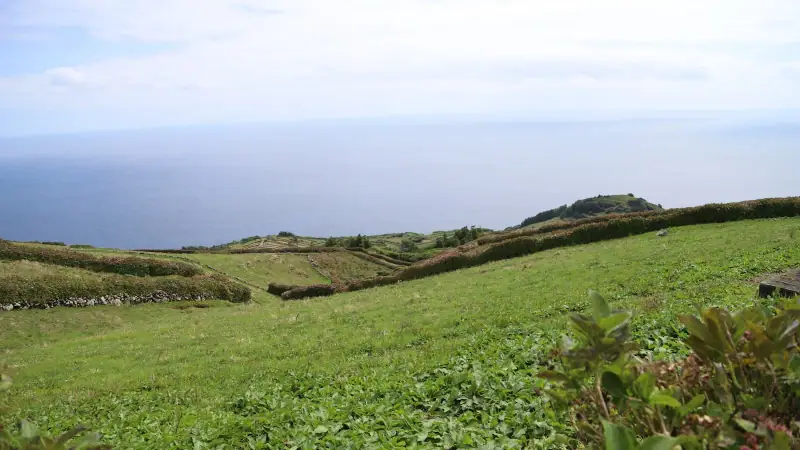
Corvo is an island you cover mostly on foot. You don’t need a car; the island is so small that an experienced walker can go around the coast in a day. Several marked trails let you explore the different facets of this volcanic territory.
The Caldeirão trail (PR1CVO)
This is Corvo’s essential hike. The trail climbs from Vila do Corvo through the pastures covering the island’s flanks, crossing zones of Atlantic heather and groves of cryptomeria (Japanese cedar, planted since the 19th century to stabilize slopes). The view from the caldera rim more than rewards the climb.
Coasts and cliffs
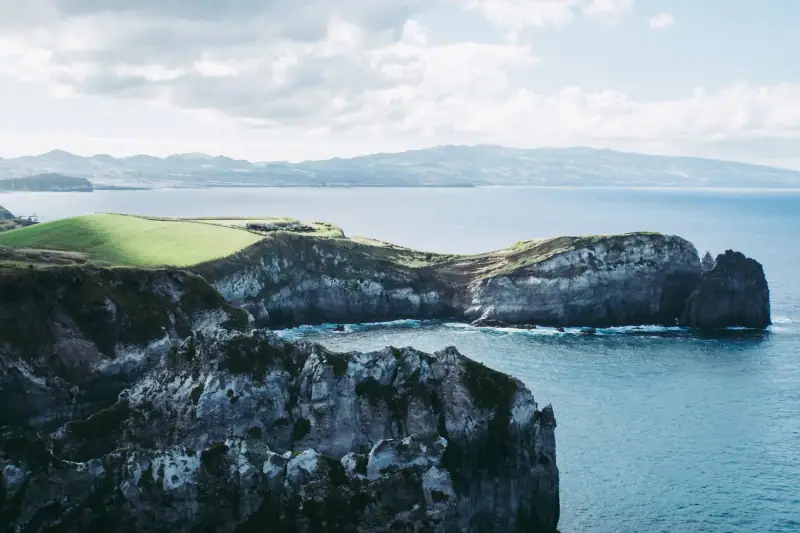
Corvo’s coast is entirely volcanic: black basalt, jagged rocks, a few sheltered coves. There is no real sand beach, but the flat rocks on the west coast offer natural swimming spots in remarkably clear water. The north and east coasts, more exposed to Atlantic winds, are the most spectacular: the cliffs plunge straight into the ocean, sometimes under low clouds that add to the dramatic atmosphere.
The coastal path around the island’s perimeter is partly passable, but some sections are rough and require good walking shoes. The views of the Atlantic from the high points of the coast are among the most beautiful and wildest in the entire archipelago.
Pastures and farming
The interior of Corvo is a patchwork of green meadows where Friesian cows graze, the great pride of Azorean agriculture. Dairy farming has been the island’s main economic activity for centuries. Corvo’s cheeses and butter are known throughout the archipelago for their quality.
Walking through the pastures, you sometimes come across basalt stone walls, the outline of an age-old farming landscape, and small irrigation channels that descend from the caldera’s wetlands. It is an island countryside of great quiet beauty.
For everything about hiking trails across the archipelago, see our guide to hiking in the Azores.
Flights to the Azores
Flights to São Miguel, then inter-island connections to Flores and Corvo with SATA Air Açores.
Food and daily life on Corvo
The dining scene on Corvo is modest but authentic. A few small restaurants and cafés serve traditional Azorean cooking, based on seafood and local livestock.
Specialties to try
Lapas grelhadas, limpets (patellas) grilled with garlic and butter, are a staple of the Azores and appear on every table on Corvo. The fresh fish of the day (atum, cherne, depending on the season) is cooked simply, grilled or over embers, with vegetables from the garden.
Corvo fresh cheese is a local product worth seeking out. Made from the milk of the island’s dairy cows, this semi-cooked cheese has a soft texture and a mild, slightly salty taste. You can find it in the village grocery stores.
For drinks, Azorean wine, imported from São Miguel or Pico, goes with meals, but Corvo residents also enjoy aguardente (local eau-de-vie) and strong Portuguese-style coffee. Macieira (Portuguese brandy) is often on the table.
Where to eat on Corvo
Corvo has only a few places to eat. The offerings change with the seasons and years; it is not unusual for a small snack bar to close or open depending on the owners. The best strategy is to ask on arrival, at the port or at your lodging, which restaurants are open during your stay.
The cooking is generous, portions are large and prices are very reasonable. Expect €10 to €20 (about $12 to 23) per person for a full meal with a drink. Travelers staying several days often appreciate the half-board option offered by some guesthouses, which simplifies logistics on an island where everything is scarce.
To learn more about Azorean cuisine, see our guide to Azorean food.
Practical information for visiting Corvo
How to get to Corvo
By ferry from Flores: This is the main way in. Atlânticoline runs regular connections between Santa Cruz das Flores and the port of Vila do Corvo. The crossing takes about 40 minutes in normal conditions. Frequencies vary with the season: more frequent in summer, much reduced in winter (sometimes only a few days a week). Weather can also cause cancellations, especially in autumn and winter, so it is wise to leave some margin in your departure dates.
By air: Corvo airport (IATA code: CVU) is one of the smallest in the European Union. SATA Air Açores operates the connection from Flores airport (to come from São Miguel, you must first reach Flores). Seats are limited and need to be booked well ahead, especially in summer.
Getting around the island
Corvo is so small that a car is not necessary. The village and the vast majority of sites can be reached on foot or by bike. The Caldeirão trail starts from the village center. A network of paved roads goes around the island and reaches the different sections of the coast.
If you want a motorized way to get around, ask your lodging directly: some local providers offer scooters or small cars. Options are limited and must be arranged in advance.
Budget for a stay on Corvo
Corvo is one of the cheapest destinations in the Azores, but not the easiest to reach given the cost of transport.
Transport: Flores–Corvo ferry about €10 to €20 (about $12 to 23) one way. Inter-island flight São Miguel–Flores between €50 and €120 (about $58 to 140) depending on season and availability, then the short Flores–Corvo hop (fare to confirm with SATA Air Açores).
Lodging: The few guesthouses and rooms available in Vila do Corvo are generally between €40 and €80 (about $46 to 93) a night for a double room. Availability is very limited: book several months ahead for July to September and for October (birdwatching).
Meals: Expect €10 to €20 (about $12 to 23) per person per meal in local restaurants, less if you opt for cafés and snack bars.
Activities: The hike to the Caldeirão is free. Birdwatching needs no specific equipment if you have your own gear. Most activities on the island are free, which is part of Corvo’s charm.
To compare the cost of the archipelago’s different destinations, see our complete guide to the Azores budget.
Best time to visit Corvo
June to September: The most accessible and comfortable period. The weather is more stable, ferries are more frequent, and lodging is open. It is also the season for shearwaters and petrels along the coasts.
October: The birders’ favorite month. The weather is less predictable, but rare bird migrations are the main attraction. Book very early if you come for birdwatching; the island is overrun (by Corvo standards) with bird enthusiasts.
November to May: Completely off-season. Ferries are less frequent, and some lodging and restaurants close. Best left to experienced travelers who accept uncertain crossings and total isolation. In return: low prices and complete immersion in real island life.
To choose the best dates for visiting the whole archipelago, see our guide to the best time to go to the Azores.
Car rental on Flores and in the Azores
To explore Flores before taking the ferry to Corvo. Compare the offers available at Flores airport.
Combining Corvo with Flores: the Azores’ western group
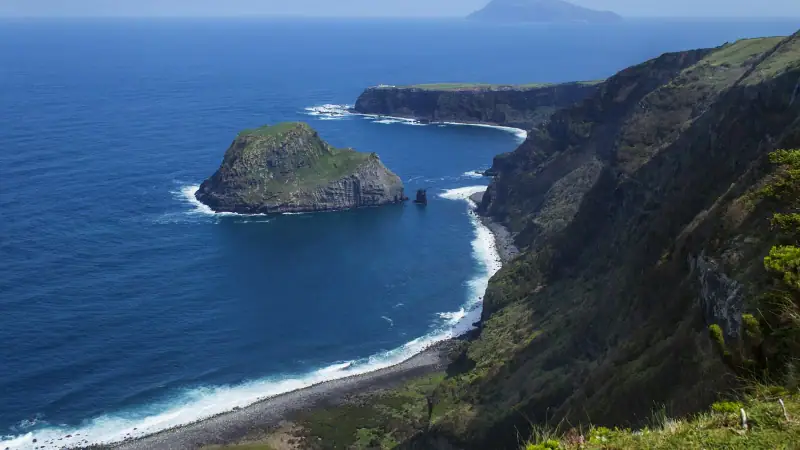
It would be a shame to visit only one of the two islands in the western group. Corvo and Flores naturally go together: Flores, larger and richer in waterfalls and lakes, offers the basic infrastructure (hotels, restaurants, car rental), while Corvo offers the ultimate experience of isolation and simplicity.
An ideal route: 5 to 7 days
Days 1-3: Flores
- Arrive at Flores airport from Ponta Delgada or Lisbon.
- Settle in at Santa Cruz das Flores or Lajes das Flores.
- Explore Flores’s waterfalls, volcanic lakes and cliffs.
- Visit the Museu das Flores and the villages of the interior.
- Take the scenic road around the island.
Days 4-5: Corvo
- Ferry crossing from Santa Cruz das Flores (about 40 minutes).
- Check in at a guesthouse in Vila do Corvo.
- Hike to the Caldeirão in the afternoon.
- Evening in the village, dinner at a local restaurant.
- Explore the coast and pastures the next morning.
- Ferry back to Flores in the late afternoon.
Days 6-7: Return
- Night on Flores before the flight back to São Miguel or Lisbon.
To learn more about Flores, see our complete guide to Flores Island.
Why Corvo is a different kind of experience
There are places in the world that aren’t justified by a list of museums to visit or starred restaurants. Corvo is one of them. You don’t go for a tourist program. You go to stand at the edge of the Caldeirão and watch the clouds reflected in the ancient lakes far below. To hear silence, real silence, with no engine noise, no urban background sound, just the Atlantic wind and the cries of gulls. To eat fresh cheese at a café table overlooking the Atlantic, without knowing whether morning or evening is beginning.
Corvo is the last island before America. And perhaps that is why it has that particular taste of the end of the world and of starting over.
Corvo fits into a few square kilometers of basalt and greenery, yet it holds everything essential about an authentic trip to the Azores: a dizzying crater, a village living at its own pace and the Atlantic as far as the eye can see in every direction. If you can choose only one off-the-beaten-path island in the archipelago, make the jump to Corvo. You won’t regret it.
Frequently asked questions
How do you get to Corvo from the other Azores islands?
Corvo is reached mainly from Flores by Atlânticoline ferry. The crossing takes about 40 minutes. A short flight (about ten minutes) also links Flores to Corvo with SATA Air Açores; to come from another island, you have to go through Flores. Corvo airport (code CVU) is very small and connections are limited, especially in low season. The ferry from Flores remains the most used option. Check schedules in advance, as they vary with the season and the weather.
What is the Caldeirão on Corvo?
The Caldeirão is Corvo's emblematic natural site. It is a giant volcanic caldera occupying most of the center of the island, about 2 kilometers (1.2 mi) across and about 300 meters (985 ft) deep. At the bottom are several small lakes and islets covered in vegetation. A marked trail leads to it from Vila do Corvo. The view from the rim is one of the most impressive in the entire Azores archipelago.
How much time should you plan to visit Corvo?
Ideally, plan 1 to 2 days on Corvo. The island is tiny (about 17 km² / 6.6 sq mi) and its only village, Vila do Corvo, can be walked in an hour. The hike to the Caldeirão takes about 2 to 3 hours round trip. In one well-organized day you can see the essentials. Two days let you take your time, explore the coast and enjoy the unique atmosphere without schedule pressure.
Is Corvo suitable for independent travelers?
Yes, but with some precautions. Tourist services on Corvo are very limited: a few guesthouses, two or three small restaurants and very few shops. There is no real car rental agency on the island; it is so small that you get around on foot or by bike. Book lodging well ahead, check ferry schedules with Atlânticoline and bring some cash in euros, as card payments are not always accepted.
Is Corvo a well-known birdwatching spot?
Yes, Corvo is considered one of the best birdwatching sites in Europe for rare North American migrant birds. Every autumn (mainly in October), Atlantic winds push North American species to the Azores, far outside their usual range: warblers, thrushes, snipes and other rarities delight European birders, who plan special trips to Corvo at this time.
What is the best time to visit Corvo?
From June to September, the weather is most stable and ferry crossings are most comfortable. It is also when lodging is open and trails are well maintained. Birdwatchers prefer October, despite more unpredictable weather, to see rare North American migrants. Outside the tourist season, the island is even quieter and more authentic, but some services may be reduced.
More Azores guides
Keep reading
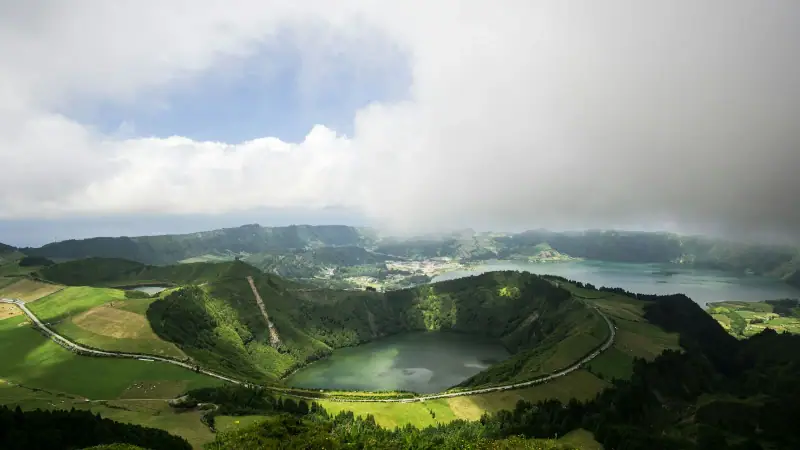
Azores Lakes and Volcanoes: The Main Natural Sites
The most beautiful volcanic lakes in the Azores. Sete Cidades, Fogo, Furnas, Algar do Carvão: the archipelago's natural wonders.
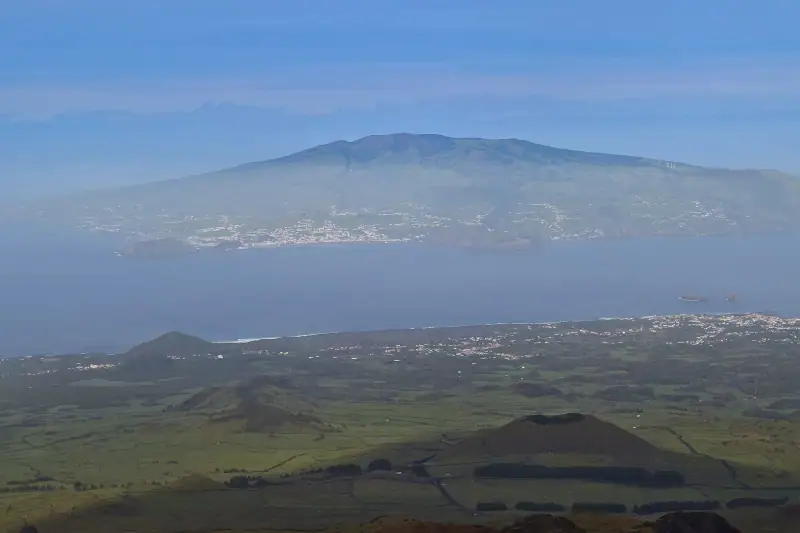
Faial Island: A Complete Guide to the Blue Island of the Azores
Complete guide to Faial in the Azores: the caldera, Capelinhos, Horta marina, beaches and hikes. Everything you need to visit the Blue Island.
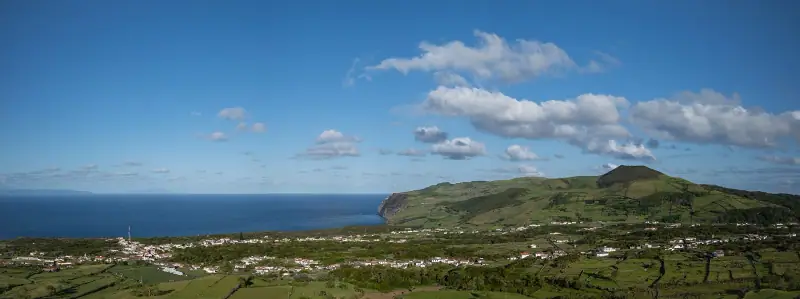
Graciosa Island: complete guide to the pearl of the Azores
Complete guide to Graciosa in the Azores: Furna do Enxofre, Santa Cruz, Carapacho hot springs, PDO wines and the UNESCO biosphere reserve.
Ready-made
Azores itineraries
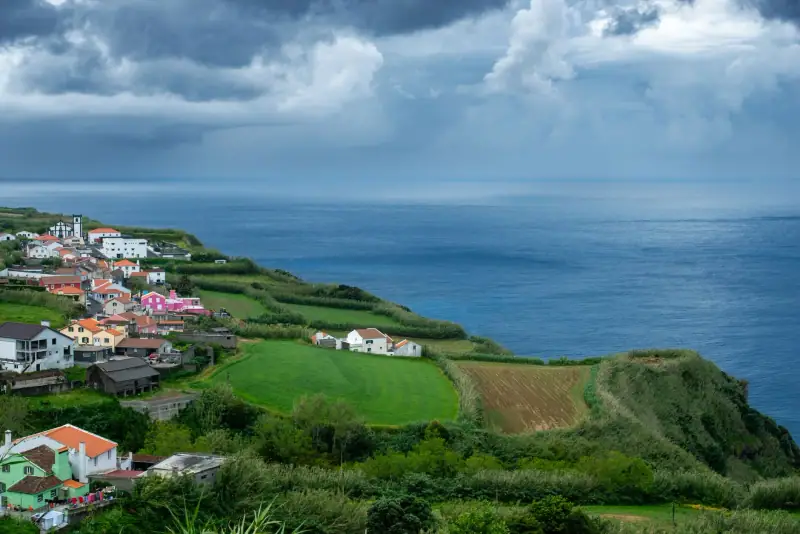
São Miguel Road Trip: Driving Around the Island
A complete guide to driving around São Miguel in the Azores: route, essential stops, road tips and lesser-known spots.
4 days
São Miguel in 4 Days Without a Car: A Realistic Itinerary by Bus and Organized Tour
Can you visit São Miguel without a rental car? A realistic 4-day itinerary with public buses, organized tours, schedules, prices and distances.
5 days
São Miguel in 5 days with kids: stops, miles and a realistic pace
5 days on São Miguel (Azores) with kids: day-by-day stops, distances and drive times, naps, swims, whales and pace pitfalls to avoid.
Can be adapted in the planner