Plan your trip
Best Time to Visit the Azores: Month by Month
We may earn a commission when you book through links on this page, at no extra cost to you. We don't visit or try the places we cover: we summarize published sources. How we work
In short
- June and September are the best months: good weather, warm sea, moderate crowds and reasonable prices. July and August are high season with the highest prices.
- Summer is pleasant (21 to 24 °C / 70 to 75 °F) but not hot; the sea reaches 22 to 24 °C (72 to 75 °F).
- Sperm whales can be seen all year; blue, fin and sei whales migrate from April to June, peaking in late April and early May.
- Winter is rainy and windy but not freezing (14 to 18 °C / 57 to 64 °F), with the lowest prices; some lodging and activities close from November to March.
The Azores climate is often described as “four seasons in one day.” It is one of the specific traits of this Atlantic archipelago: the weather can change several times in the same day, alternating bright sun, dense fog and tropical showers. This unpredictability is part of the charm of the Azores, but it is worth understanding before you choose when to travel.
The good news: there is no real “bad” season in the Azores. The archipelago is beautiful in all conditions. Some periods do suit certain activities better, though.
The Azores climate at a glance
The Azores have a mild oceanic climate, strongly influenced by the Gulf Stream. Temperatures are gentle all year:
- Winter: 14 to 18 °C (57 to 64 °F), sea at 17 °C (63 °F)
- Spring: 17 to 21 °C (63 to 70 °F), sea at 18 to 19 °C (64 to 66 °F)
- Summer: 21 to 24 °C (70 to 75 °F), sea at 22 to 24 °C (72 to 75 °F)
- Fall: 19 to 23 °C (66 to 73 °F), sea at 22 to 23 °C (72 to 73 °F)
Rain falls all year but is concentrated from October to March, especially on slopes exposed to the northeast wind. The south coasts of the islands are generally more sheltered.
Month by month: what each period is worth
January and February
Weather: Cold and rainy, strong wind, frequent fog at altitude. Temperatures: 14 to 16 °C (57 to 61 °F). Sea: 17 °C (63 °F), too cold for swimming. Tourists: Very few. The islands are quiet. Prices: The lowest of the year, with discounted lodging and flights. Activities: Hiking in the fog (a romantic atmosphere), spa stays at the hot springs. Good to know: Some lodging, restaurants and activities close during this period.
March
Weather: Early spring, still unsettled. First sunny days between showers. Sea: 17 to 18 °C (63 to 64 °F). Tourists: Few. Long weekends start to bring visitors. Prices: Still low, rising slightly toward the end of the month. Activities: Azaleas and camellias bloom. Hydrangeas start to appear.
April
Weather: Pleasant, alternating good weather and showers. Temperatures: 14 to 18 °C (57 to 64 °F). Sea: 17 to 18 °C (63 to 64 °F). Tourists: The season picks up. Still manageable. Prices: Mid-range, rising gradually. Activities: Peak of the season for large migratory cetaceans: blue, fin and sei whales cross the archipelago from April to early June (peak window: the last 2 weeks of April and the first 2 of May). The sea is sometimes rough, and boat trips are sometimes canceled.
May
Weather: Excellent, one of the best months. Frequent sun, mild temperatures (16 to 20 °C / 61 to 68 °F). Sea: 18 to 19 °C (64 to 66 °F). Tourists: Crowds growing but reasonable. Prices: Moderate to high depending on availability. Activities: Festas do Senhor Santo Cristo dos Milagres in Ponta Delgada (around the fifth Sunday after Easter, so in May in some years), the continuing large-cetacean season, diving resumes, first blooms (camellias, azaleas, agapanthus). Verdict: ⭐ An excellent choice for hikers and fans of migratory cetaceans.
June
Weather: Early summer, very pleasant. Temperatures: 18 to 22 °C (64 to 72 °F). Sea: 19 to 20 °C (66 to 68 °F), swimming is possible but cool. Tourists: High season begins. Popular sites get busier. Prices: High, book well in advance. Activities: Sanjoaninas in Angra do Heroísmo (late June, around June 24), hiking, diving, surfing, dolphins, cycling. Hydrangeas begin to bloom in the second half of the month. Verdict: ⭐⭐ An excellent month, with the best balance between weather and crowds.
July and August
Weather: High season. Generally fine weather, a few late-afternoon thunderstorms. 21 to 25 °C (70 to 77 °F). Sea: 22 to 24 °C (72 to 75 °F), pleasant, among the warmest of the year. Tourists: The year’s maximum. Reservations are required everywhere (hotels, ferries, the Pico climb, cozido in Furnas). Prices: The highest of the year (+30 to +50% on lodging). Activities: Everything is open and accessible. Hydrangeas in full bloom (peak in mid-July). Semana do Mar in Horta in early August, Maré de Agosto on Santa Maria in mid-August, Festas dos Baleeiros in Lajes do Pico in late August. Good to know: Viewpoints can be swamped. Arrive before 10 am. Verdict: ⭐ Good if you like lively places and swimming, less good if you want peace and quiet.
September
Weather: Excellent, often better than midsummer. Temperatures: 21 to 24 °C (70 to 75 °F). Sea: 23 to 24 °C (73 to 75 °F), the warmest of the year. Tourists: A significant drop after August 15. A calmer atmosphere. Prices: Down from summer. Activities: All of them, with swimming and diving at their best. Verdict: ⭐⭐ Our top recommendation, the best month in every category.
October
Weather: Mild fall, a few showers. Temperatures: 19 to 22 °C (66 to 72 °F). Sea: 21 to 22 °C (70 to 72 °F). Tourists: Very few. The Azores regain their calm. Prices: Low. Activities: Hiking in beautiful fall scenery. The last whale-watching trips of the season. Verdict: ⭐ Excellent for nature lovers and anyone after quiet.
November and December
Weather: Fall into winter. Rain, wind, frequent fog. The first truly bad days. Sea: 19 to 20 °C (66 to 68 °F). Tourists: Very few, except in December for the holidays. Prices: Low, except around Christmas. Activities: Hot springs and spa bathing, cultural visits, food.
Which period to choose for what you want to do
For hikers
Best time: May, June, September, October The vegetation is at its most beautiful in May with the hydrangeas. Trails are open and temperatures are ideal for walking. September offers beautiful light at the end of the day.
For whale watching
Best time: April to October The sperm whale lives here all year. Blue whales, fin whales and sei whales pass through on migration from April to June (peak in late April and early May). Common dolphins, spotted dolphins and pilot whales are frequent from April to October. More than 25 species of cetaceans have been recorded off the archipelago. See our guide to whale watching in the Azores.
For diving
Best time: July to October Maximum visibility (up to 40 m / 130 ft) and the warmest water. Whale sharks and mantas can be seen in summer. Our guide to diving in the Azores details the best spots.
For travelers on a tight budget
Best time: November to March (outside the holidays) Lodging prices can drop to half or a third of high-season rates. Flights are also cheaper. In exchange, you accept uncertain weather.
For families with children
Best time: July to early September Swimmable sea, all services open, the most reliable weather. Favor São Miguel and Santa Maria for beaches.
Hotels in the Azores
Real-time availability for your travel dates.
Weather differences between the islands
It is important to note that the weather varies significantly from one island to another, and even from one side of the same island to the other.
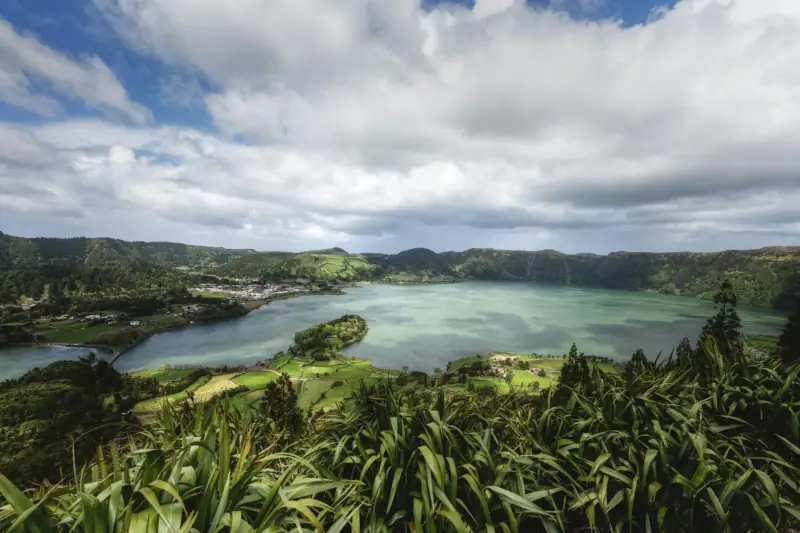
São Miguel is the largest island and the most varied in climate. Ponta Delgada, on the south side, gets less rain than the volcanic interior. The Sete Cidades caldera is often in the clouds even when the rest of the island is sunny.
Santa Maria is the driest and sunniest island of the archipelago, ideal if you want to maximize your chances of good weather.
Flores is the rainiest but also the most spectacularly green. Do not visit it just for a tan.
The Faial-Pico-São Jorge triangle enjoys a favorable microclimate in summer.
Our final recommendation
If you only remember one period: May-June or September. These months combine the best weather, reasonable prices, bearable crowds and all activities available. June is especially remarkable for the hydrangea bloom and the first swims. September is the secret of experienced travelers, who enjoy a warm sea without the summer crowds.
For a 7-day itinerary in the Azores, these periods let you explore São Miguel in the best conditions. If you have more time, the São Miguel road trip will let you discover all the island’s emblematic sights.
Sources
Frequently asked questions
What is the ideal month to visit the Azores?
June and September are the best months: good weather, warm sea, moderate crowds and reasonable prices. July and August are high season with the highest prices.
Can you go to the Azores in winter?
Yes, but expect more rain and wind. The landscapes stay beautiful and green, and prices are very low. Some lodging and activities close from November to March.
When is whale season in the Azores?
Sperm whales can be seen all year. Blue whales, fin whales and sei whales migrate from April to June (peaking in late April and early May). Dolphins and pilot whales are common from April to October. More than 25 species of cetaceans have been recorded in the archipelago's waters.
Is it hot in the Azores in summer?
Summer is pleasant (21 to 24 °C / 70 to 75 °F) but not scorching. The sea reaches 22 to 24 °C (72 to 75 °F). Wind and passing showers are still possible, even in August.
Does it snow in the Azores?
Snow is very rare at altitude (the summit of Pico in winter) and almost nonexistent at sea level. Winter is rainy and windy but not freezing (temperatures between 14 and 18 °C / 57 and 64 °F).
More Azores guides
Keep reading
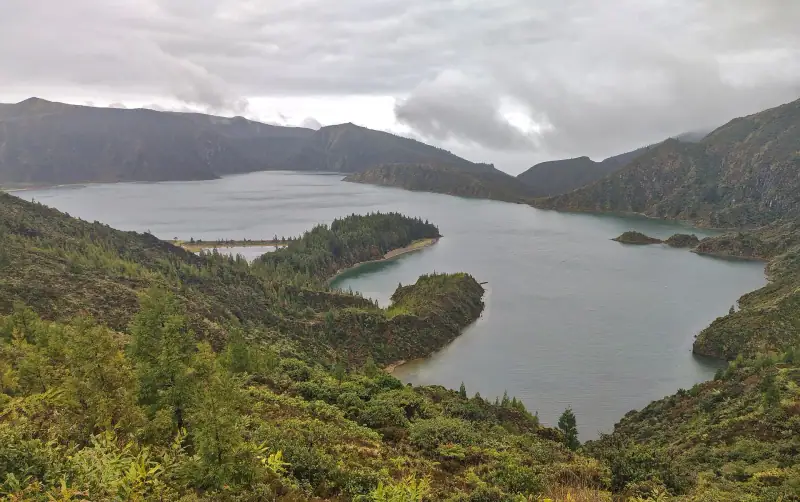
Azores Trip Budget: How Much to Plan for in 2026
What budget for a trip to the Azores? Flights, lodging, meals, activities: everything to know to travel to the Azores without nasty surprises.
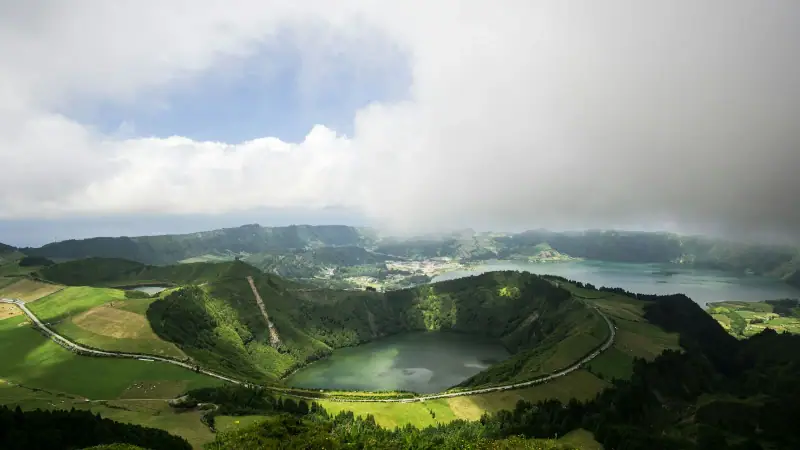
Azores Lakes and Volcanoes: The Main Natural Sites
The most beautiful volcanic lakes in the Azores. Sete Cidades, Fogo, Furnas, Algar do Carvão: the archipelago's natural wonders.
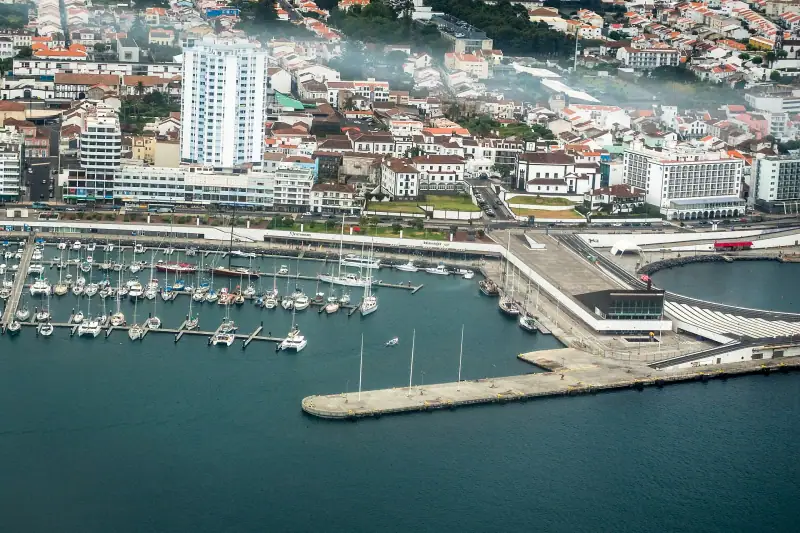
Where to Stay in São Miguel: Best Areas and Hotels
Where to stay on São Miguel in the Azores? A complete guide to the best areas of Ponta Delgada, rural stays and options for every budget.
Ready-made
Azores itineraries
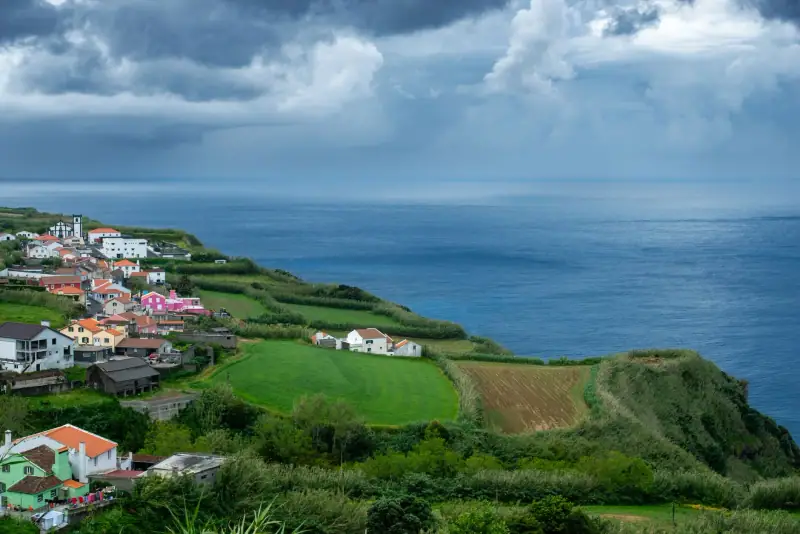
São Miguel Road Trip: Driving Around the Island
A complete guide to driving around São Miguel in the Azores: route, essential stops, road tips and lesser-known spots.
4 days
São Miguel in 4 Days Without a Car: A Realistic Itinerary by Bus and Organized Tour
Can you visit São Miguel without a rental car? A realistic 4-day itinerary with public buses, organized tours, schedules, prices and distances.
5 days
São Miguel in 5 days with kids: stops, miles and a realistic pace
5 days on São Miguel (Azores) with kids: day-by-day stops, distances and drive times, naps, swims, whales and pace pitfalls to avoid.
Can be adapted in the planner