Things to do
Climbing Mount Pico Without a Guide: Registration, Cost, Difficulty and Conditions
We may earn a commission when you book through links on this page, at no extra cost to you. We don't visit or try the places we cover: we summarize published sources. How we work
In short
- You can climb Montanha do Pico (2,351 m / 7,713 ft) without a guide, but you must register with the park before you start.
- Plan 7 to 9 hours round trip and about 1,200 m (3,940 ft) of elevation gain; start before 7 am.
- A licensed guide makes sense for night climbs, fog or bad forecasts, and off-season (October to April).
- Best season is June to September. Bring warm, waterproof layers and at least 2 liters (about 2 quarts) of water.
Yes, you can climb Montanha do Pico (2,351 m / 7,713 ft, the highest peak in Portugal) without a guide, as long as you register with the park before you set out and accept that staff may refuse your start or require a guide if the weather is bad. Allow 7 to 9 hours of walking, about 1,200 m (3,940 ft) of elevation gain and serious gear.
In short: registration is mandatory before the climb, daytime start before 7 am, 7 to 9 hours of walking, warm and waterproof clothing, at least 2 liters (about 2 quarts) of water. A licensed guide becomes useful in fog, at night or off-season.
Can you really climb Pico without an agency?
Yes. Contrary to a common belief, the climb is not reserved for guided groups. Pico Natural Park runs a registration system: you report your climb, sign a liability form and pick up the required safety equipment. Independent hikers therefore go alone or in a group, without an agency.
What the rules do not allow is turning up and improvising. The official sources we drew on (see the Sources section) mention prior authorization, a limited number of people on the mountain (the summit cone, the Piquinho, accepts only about forty people at a time, for about thirty minutes) and a check at the start. Fees and quota details are updated by the park: read them on the official booking site on the day you plan, rather than relying on a blog, this one included.
Booking: how it works and when to do it
The checkpoint is the Casa da Montanha, the visitor center at about 1,200 m (3,940 ft) on the mountainside, where registrations are checked. Parking and restrooms are available.
A few pointers to avoid unpleasant surprises:
- Register before you arrive on Pico. Without a confirmed registration, you may be turned away at the start.
- In July and August, morning slots go fast: plan to book several days ahead, more if you are a group.
- Watch the weather. Check the forecast the night before and again when you reach the trailhead: the mountain is often in the clouds even when the coast is sunny.
- Changes are possible within a limited window before the scheduled time, but do not count on a refundable cancellation: check the conditions on the booking page.
The official listing for the protected site mentions an equipment rental for hikers without a guide at €20 per day (about $23), to be returned at the end of the route. This rate may have changed: confirm it when you register.
Cost: climbing alone versus with a guide
Alone, the climb stays inexpensive: a registration fee and possible equipment rental, a modest sum compared with other activities on the island. The real expense is elsewhere: car or transfers, a night in Madalena or Lajes, and gear if you do not own any.
With a licensed guide, each guide leads a maximum of 15 people and sets their own rate. Our island guide gives a range of €50 to €70 per person (about $58-81) for a guided climb, but prices vary with the season, group size and type of climb (day or night). Always ask what is included (transfer, equipment, sunrise breakfast).
To compare guided climbs, by day or by night, you can browse the GetYourGuide listings and check the weather cancellation terms.
Difficulty: what to expect on the trail
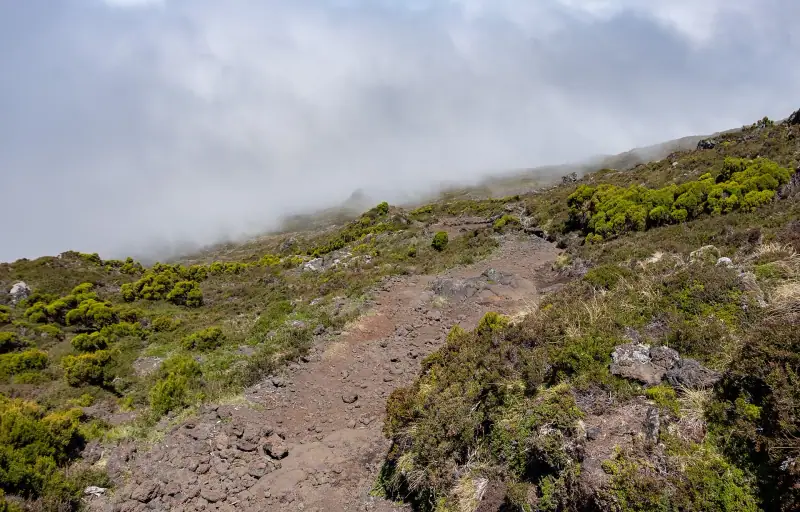
The climb is short in distance (about 8 km / 5 mi round trip) but vertical: 1,200 m (3,940 ft) of elevation gain in 4 to 5 hours. The terrain is made of lava flows, blocks and sections where you use your hands. The upper mountain is followed by marks painted on the rock, from marker to marker, and it is precisely when fog rolls in that the trail becomes hard to read.
The summit comes in two stages: the crater, at about 2,230 m (7,315 ft), then the Piquinho, a small 70 m (230 ft) cone that leads to 2,351 m (7,713 ft). This last section is steep; depending on crowds and weather, the park may limit access.
Physical level required: being comfortable on a 7 to 9 hour hike with sustained elevation gain. If you have never walked more than 5 hours in a row, choose another trail from our selection of hikes in the Azores.
When a guide is wiser than going alone
Going without a guide is legitimate in good conditions. A licensed guide makes more sense in four cases:
- Night climb for sunrise: navigating by headlamp is much trickier.
- Unstable weather or announced fog: park staff can require a guide or refuse your start.
- Off-season (October to April): wind, rain, sometimes frost.
- Your first big climb at altitude, or a group with very different fitness levels.
Best season and best time of day
From June to September the mountain is most stable, with July to September preferred. Even then, the summit can cloud over around 10 am, which is why you start early, before 7 am. See also our guide to the best time to go to the Azores to plan your stay.
For sunrise, the night climb often begins between midnight and 2 am, with a headlamp. Pack something warm: it can be very cold at the summit, wind included.
What to pack
Gear is what separates a successful day from a turnaround:
- high-top hiking boots (city sneakers do not hold up on lava);
- waterproof jacket and pants, a warm mid-layer, gloves and a hat;
- at least 2 liters (about 2 quarts) of water, plus energy food;
- headlamp with spare batteries if you leave before dawn;
- sunscreen, a hat, and trekking poles, useful on the descent;
- power bank and an offline map on your phone.
More gear ideas in our list of essential accessories for the Azores.
Where to sleep and how to reach the trailhead
The start is on the Pico mountainside, about 20 km (12 mi) from Madalena. Without a car, plan on a taxi or an organized transfer; with a rental car, leave early because the parking lot fills up. To get to the island from Horta, see the inter-island ferry in the Azores, or the guide to Pico island.
Sleeping in Madalena or Lajes lets you start early. For lodging, compare offers on Booking.com:
Stays on Pico
Compare hotels and guesthouses in Madalena and Lajes do Pico before your climb.
To plan your stay around the climb, see also the 3-day itinerary on Pico.
After the effort: the reward
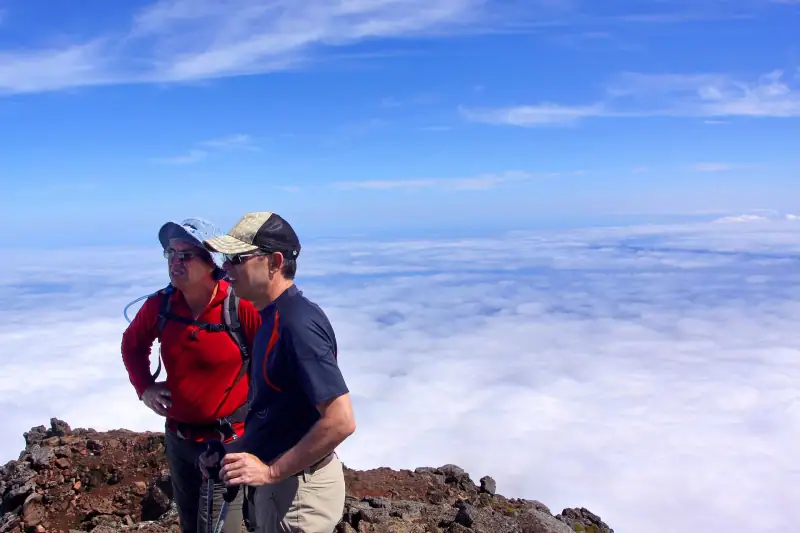
After 7 to 9 hours of walking and 1,200 m (3,940 ft) of elevation gain, your thighs will remember the descent for two days: plan a rest day before any other trail or boat outing. Pico suits this rhythm well, since the island offers low-effort activities a few kilometers from the trailhead. A rest day after the climb is essential. Visit Lajes do Pico, go whale watching or taste a Pico verdelho among the UNESCO-listed vineyards.
Summary table
| Item | What to remember |
|---|---|
| Altitude | 2,351 m / 7,713 ft (Piquinho) |
| Duration | 7 to 9 h round trip |
| Distance | about 8 km / 5 mi |
| Elevation gain | about 1,200 m / 3,940 ft |
| Registration | mandatory before departure |
| Guide | not required, imposed by the park if the weather is bad |
| Recommended start | before 7 am |
| Best season | June to September |
Sources
Frequently asked questions
Can you climb Pico without a guide?
Yes, climbing independently is possible if you register before setting out. The route is marked, but the upper mountain is followed by marks painted on the rock, and park staff can require a licensed guide or refuse your start if visibility is poor.
Do you need to book the Pico climb in advance?
Registration is mandatory and the number of people on the mountain is capped. In July and August, book several days ahead, especially for morning slots. Off-season, check availability and the weather the day before.
How long does the Pico climb take?
Allow 7 to 9 hours round trip for a fit hiker: about 4 to 5 hours up and 3 hours down, with roughly 1,200 m (3,940 ft) of elevation gain up to 2,351 m (7,713 ft). Start by 7 am at the latest for a daytime climb.
Is climbing Pico dangerous?
The trail is not technical but it is demanding: slippery volcanic rock, sudden fog, wind and temperatures well below those at sea level. Rescues mostly involve poorly equipped hikers or those who started too late. Following park rules and turning back if the sky clouds over is the basic rule.
What is the best season to climb Pico?
From June to September the mountain is most stable, with July to September at the top. From October to April, wind, rain and sometimes frost make the climb less certain, and a guide is strongly recommended.
Can you climb with children?
It is not recommended before the teenage years: 7 to 9 hours of effort, 1,200 m (3,940 ft) of elevation gain and uneven lava terrain. For a family, a shorter trail such as the Mistérios do Sul do Pico, described in our island guide, is a better choice.
More Azores guides
Keep reading
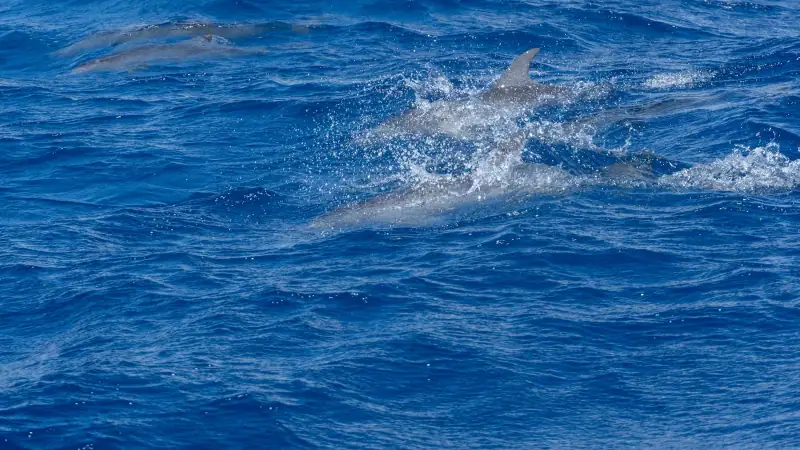
Swimming With Dolphins in the Azores: Prices, Booking and Tips for 2026
Swimming with dolphins in the Azores: which island to pick, which species, what season, how much it costs and how to book an ethical tour.
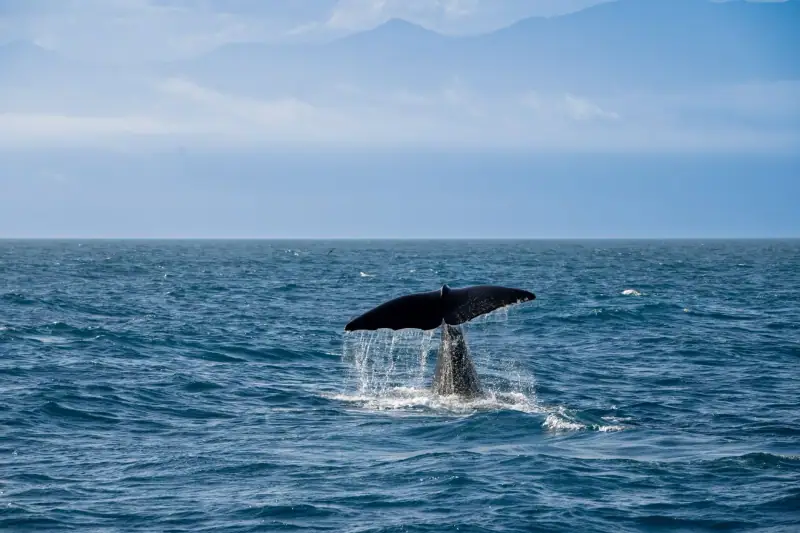
Whale Watching in the Azores: Complete 2026 Guide
Everything you need to know about whale watching in the Azores: best times, species, operators, prices and tips for a successful trip.
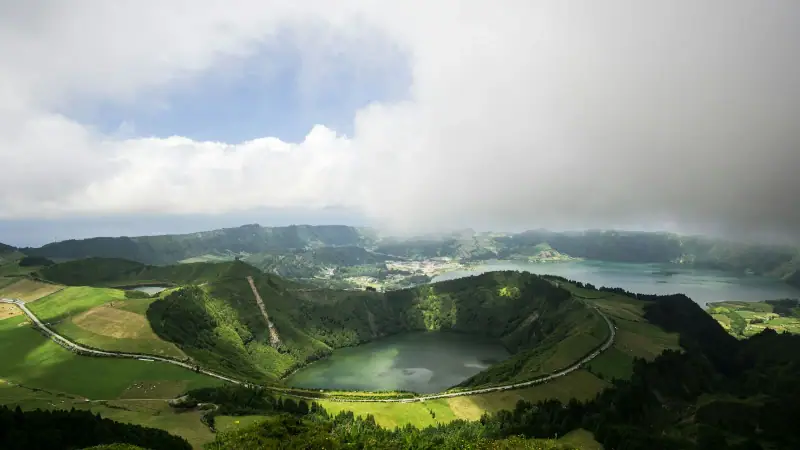
Azores Lakes and Volcanoes: The Main Natural Sites
The most beautiful volcanic lakes in the Azores. Sete Cidades, Fogo, Furnas, Algar do Carvão: the archipelago's natural wonders.
Ready-made
Azores itineraries
São Miguel Road Trip: Driving Around the Island
A complete guide to driving around São Miguel in the Azores: route, essential stops, road tips and lesser-known spots.
4 days
São Miguel in 4 Days Without a Car: A Realistic Itinerary by Bus and Organized Tour
Can you visit São Miguel without a rental car? A realistic 4-day itinerary with public buses, organized tours, schedules, prices and distances.
5 days
São Miguel in 5 days with kids: stops, miles and a realistic pace
5 days on São Miguel (Azores) with kids: day-by-day stops, distances and drive times, naps, swims, whales and pace pitfalls to avoid.
Can be adapted in the planner