Itineraries
3 Days on Pico in the Azores: Volcano, Vineyards and Whales
We may earn a commission when you book through links on this page, at no extra cost to you. We don't visit or try the places we cover: we summarize published sources. How we work
Day by day
- Day 1Madalena, Criação Velha vineyards, Gruta das Torres lava tube
- Day 2Full-day climb of Monte do Pico
- Day 3Museu dos Baleeiros and whale watching at Lajes do Pico
Where to sleep
- Madalena2 nights
Estimated budget
$130 – $210 per person (€120 – €200)
For 2 travelers sharing a double room, with mid-range lodging.
| Item | Per person |
|---|---|
| Lodging | $76 – $120 |
| Paid visits | $56 – $99 |
Not included: international flights, meals, local transport and insurance.
In short
- Day 1: Madalena, the UNESCO vineyards of Criação Velha and the Gruta das Torres lava tube. Day 2: climb Monte do Pico (2,351 m / 7,713 ft). Day 3: Lajes do Pico and whale watching.
- A car is essential on Pico; public transport is very limited. Book early for July and August.
- The climb takes a full day. Register with the Casa da Montanha and book an approved guide several days ahead; access can be restricted by weather.
- Whale watching runs 3 to 4 hours. Sperm whales are present year-round; other species migrate between April and October.
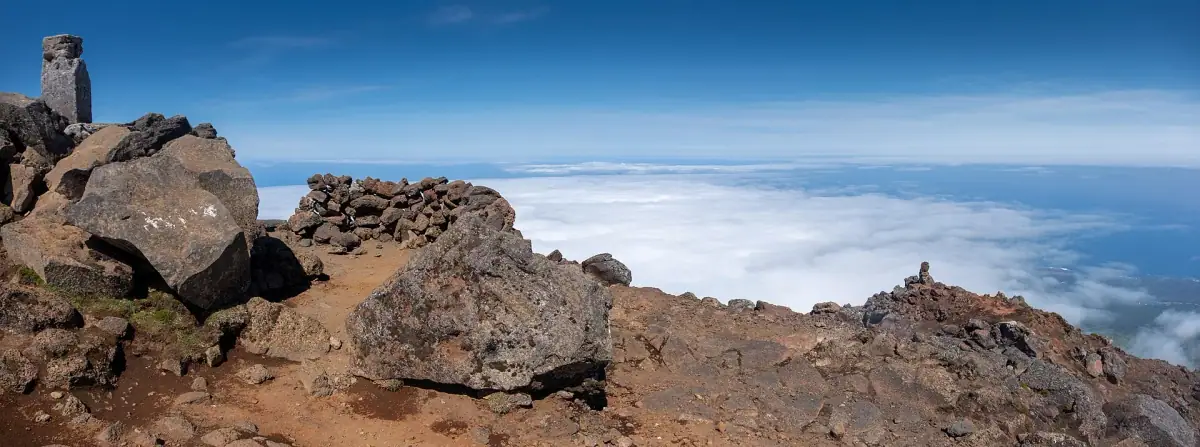
Pico is the most imposing island of the Azores archipelago: its volcano, the highest in Portugal at 2,351 m (7,713 ft), dominates the landscape and casts a giant shadow over centuries-old vineyards listed by UNESCO. In three days, you can take in the full experience: the climb above the clouds, a walk among enclosures of volcanic stone, and a boat trip to see the sperm whales that frequent these waters all year.
Here is a structured, realistic itinerary to get the most out of Pico in 72 hours.
Getting to Pico: your options
The port of Madalena is Pico’s main gateway. From Horta on the neighboring island of Faial, the Atlânticoline ferry reaches Madalena in about 30 minutes. It is the most frequent and most convenient connection. Crossings from São Jorge (Calheta) complete the sea options.
From São Miguel (Ponta Delgada), SATA Air Açores offers direct flights to Pico Airport (PIC) in under an hour. This is ideal if you include Pico in a wider tour of the archipelago.
Rent a car for your whole stay: on Pico, public transport covers the island only partially and schedules are poorly suited to exploring. Book ahead, especially in July and August.
Car rental on Pico
Compare offers and book before you arrive to secure your vehicle.
Where to stay on Pico
Madalena has most of the lodging and is the ideal logistical base for this route: it is close to the vineyards, the ferry port and the access to the volcano. Lajes do Pico also has a few guesthouses and hotels, well placed for whale-watching fans.
Guesthouse-style lodging (alojamento local) often offers better value than hotels. For the night before the volcano climb, choose a place that accepts very early morning departures.
Places to stay on Pico
Hotels, guesthouses and apartments at the best price.
Day 1: Madalena, the UNESCO vineyards and the lava tunnels
Morning: Madalena and the waterfront
Start your stay with a walk through Madalena, the island’s main town. The waterfront has a superb view of Faial, the neighboring island. On a clear day, the Cabeço Gordo caldera stands out on the horizon, less than 20 km (12 mi) away as the crow flies.
The town is compact and pleasant to explore on foot. Look for the two volcanic islets (Ilhéus da Madalena) rising in front of the port. Their silhouette of black arches is the town’s emblematic image.
Afternoon: the vineyards of Criação Velha, a UNESCO World Heritage Site
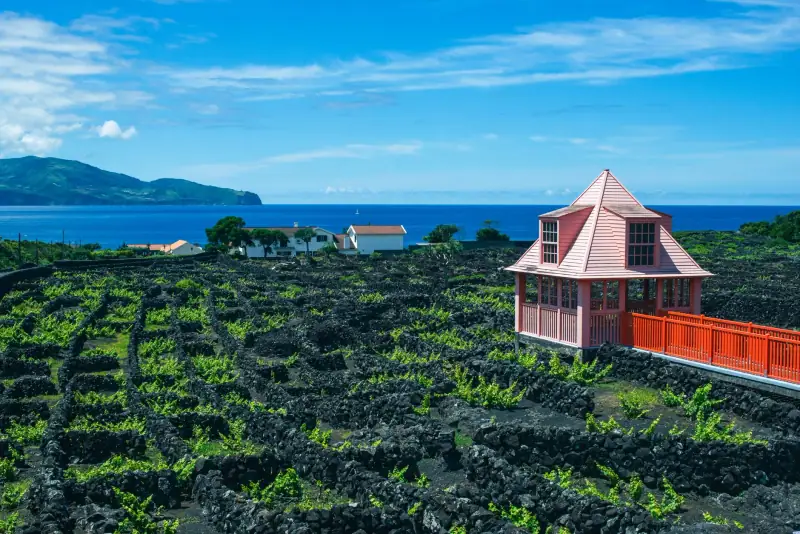
The afternoon is devoted to Portugal’s most unusual wine landscape. Criação Velha, a few kilometers south of Madalena along Pico’s west coast, has the island’s most emblematic vineyards, the ones that earned it a place on the UNESCO World Heritage list in 2004.
What strikes you first is the structure of the vineyards: currais (enclosures of black volcanic stone) built by hand, stone by stone, on solidified lava right at the water’s edge. These low walls are no more than 1 m (3 ft) high but protect the vines from the Atlantic wind and hold in the night’s heat. It is extreme viticulture, practiced since the 15th century in conditions at the limit of what is possible.
The leading grape is Verdelho, which makes a dry, slightly mineral white wine with notes of citrus and flint. To explore them in detail, see our guide to Pico wine in the Azores.
Late afternoon: Gruta das Torres
About 6 to 7 km (4 mi) south of Madalena, the Gruta das Torres is one of the longest and best-preserved lava tubes in the Azores, with 5,150 m (16,900 ft) of galleries, of which about 450 m (1,480 ft) are open to the public (source: Geoparque dos Açores).
The guided visit lasts about 1 h 30 and goes down into natural lava galleries where the temperature stays around 17 °C (63 °F) all year, so bring a warm layer even in summer. Rope-like lava formations, stalagmites and stalactites make this cave a geological experience unique in the archipelago.
Tip: check opening hours on the Pico Natural Park website before you go, as the site is closed on some weekdays outside the high season. According to the Pico Natural Park, descents into the cave have been suspended for safety reasons (no date given for reopening): confirm that they are possible again.
Day 2: Climbing Pico, the roof of Portugal
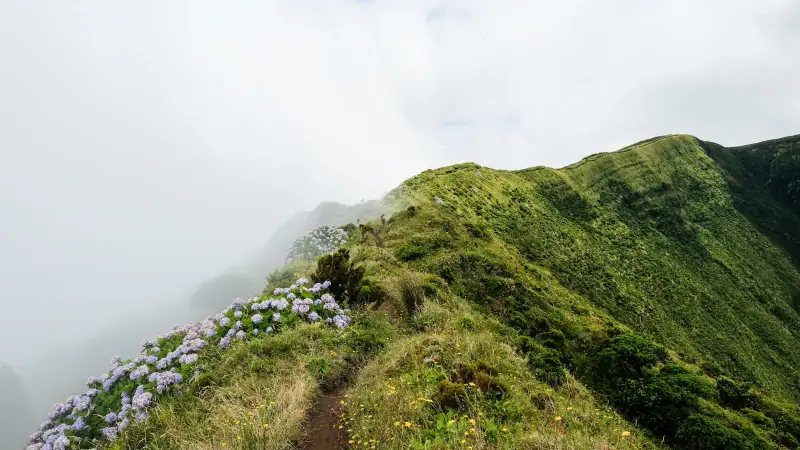
This is the heart of your stay on Pico. Climbing Monte do Pico (2,351 m / 7,713 ft) is the most intense and memorable experience in the Azores archipelago. Plan a full day.
The night before: prepare seriously
- Guide strongly recommended: no fixed altitude threshold makes a guide legally mandatory, but access restrictions may be imposed depending on weather conditions. Register with the Casa da Montanha (details on the official site montanhapico.azores.gov.pt) and book an approved guide with local agencies several days ahead. Spots are limited in high season.
- Gear: high-cut hiking boots (rough volcanic terrain), waterproof clothing (the weather can change abruptly), water (at least 2 liters / about 2 quarts), energy snacks.
- Start at dawn: guides generally recommend setting off between 5 and 7 am to reach the summit before the afternoon clouds.
The start: the Casa da Montanha
The trail begins at the Casa da Montanha, the hikers’ reception center at about 1,220 m (4,000 ft) of elevation. To get there, take the EN3-1 road that crosses the island from west to east and turns north onto a switchback road.
The climb has two distinct phases:
Phase 1, from the Casa da Montanha to 1,950 m (6,400 ft): the marked trail (PR1 PIC) first crosses heather and fern zones before giving way to increasingly sparse vegetation. The red, sulfur-yellow and black volcanic rocks reflect geothermal activity still present beneath the surface. This phase takes about 2 h to 2 h 30.
Phase 2, from 1,950 m (6,400 ft) to the summit (2,351 m / 7,713 ft): beyond the vegetation line, the terrain is purely volcanic: black scoria, basalt blocks and sulfur zones. A guide is strongly recommended for this exposed section. The final ridge up to the summit caldera is airy and demands attention and effort, for another 1 h to 1 h 30.
The summit: above the Azores
On a clear day, the view from the 500 m (1,640 ft) wide caldera is exceptional: all nine islands of the Azores archipelago can be visible at once, as well as the coasts of São Jorge and Faial. The inside of the caldera, with its lava walls and fumaroles, gives the impression of a living volcano barely dozing.
The descent generally takes 2 to 3 hours depending on your fitness and pace. Return to Madalena in the late afternoon.
Day 3: Lajes do Pico, whales and the whalers’ memory
The last day is devoted to Lajes do Pico, about 35 km (22 mi) east of Madalena along the southern coastal road, and to the unique bond between this island and the cetaceans.
Morning: the Museu dos Baleeiros
For more than two centuries, Lajes do Pico was the main whaling port of the Azores archipelago. Azoreans hunted sperm whales with oars and harpoons from small wooden boats, a practice that ended in 1987. The Museu dos Baleeiros (Whalers’ Museum) traces this history with period boats, harpoons, photographs and testimonies from fishermen.
It is one of the most striking cultural visits in the Azores: between the tribute to a hard tradition and the awareness of cetacean life, the visit leaves a deep impression.
Afternoon: whale watching
Lajes do Pico is one of the best departure points for whale watching in the Azores. The deep waters off Pico are among the richest passage zones in the North Atlantic, with sperm whales present year-round and many migratory species (fin whales, humpback whales, pilot whales) between April and October.
Outings generally last 3 to 4 hours. Most local operators use vigias (former lookout posts on land) to spot whales with binoculars before sending out the zodiacs, a method directly inherited from the whalers. For everything about this experience, see our complete guide to whale watching in the Azores.
Booking recommended: spots are limited and trips can be canceled in bad weather. Book the day before or two days ahead so you can adjust to the weather.
End of the day: back to Madalena
Take your time driving back to Madalena by the inland road (EN3-1) that crosses the middle of the island, offering a very different perspective from the morning’s coastal drive. Stop at the Pico Natural Park Interpretation Center in São Roque do Pico (about 21 to 23 km / 13 to 14 mi from Madalena) if you have time. It presents the island’s fauna, flora and geology in detail.
Practical tips for this route
Weather on Pico: The island is known for its unpredictable microclimate, especially at altitude. The summit can be in the clouds even when Madalena is sunny. Keep a spare day if the climb is your top priority. If the summit is clouded in two days in a row, ask local guides, who know the weather windows.
Fitness level for the climb: The climb is demanding but accessible to any hiker in good shape who is used to long ascents. The volcanic terrain calls for suitable shoes. Rubber traction devices are sometimes useful on certain smooth areas.
Combining with Faial: If you have 4 to 5 days, add a day on Faial (ferry from Madalena, 30 min) to explore the caldera and the Horta museum. The Faial-Pico-São Jorge triangle is also a classic Azores itinerary; read about it in our article on the Azores triangle.
Budget: Expect a budget similar to São Miguel. Car rental is the main expense. Entry fees for the sites (Gruta das Torres, Museu dos Baleeiros) are generally modest. The whale-watching trip is the most expensive excursion, but well worth it.
Local products to bring home: Pico Verdelho (white wine), Pico cheese (queijo do Pico, a lightly salted fresh cheese with a creamy texture, PDO since October 1996) and canned seafood are the island’s best food souvenirs.
Itinerary summary
| Day | Stops | Highlights |
|---|---|---|
| Day 1 | Madalena → Criação Velha → Gruta das Torres | UNESCO vineyards, lava tube |
| Day 2 | Climb Monte do Pico (2,351 m / 7,713 ft) | Full day, approved guide strongly recommended |
| Day 3 | Coastal road → Lajes do Pico → Back to Madalena | Whalers, cetacean watching |
Pico is not an island you visit on the surface. Its volcano, vineyards and whales take time, effort and curiosity. With three well-paced, well-organized days, you will leave with images that are hard to forget, and a strong urge to return.
Frequently asked questions
How many days do you need to see the essentials of Pico?
Three days is the minimum to combine the volcano climb, the UNESCO vineyards and whale watching. Four to five days let you explore more of the island and visit the lava caves at a more relaxed pace.
Is a guide mandatory to climb Pico?
A guide is not mandatory above a fixed altitude threshold. Rangers may impose access restrictions depending on weather or visibility. Booking an approved guide is strongly recommended; registration at the Casa da Montanha is required in any case (see the official site montanhapico.azores.gov.pt), especially in high season.
How do you get to Pico from Faial?
The Horta–Madalena ferry takes about 30 minutes and is run by Atlânticoline. From São Jorge, the trip to Calheta de Pico takes about 45 minutes. Inter-island flights from São Miguel also exist with SATA Air Açores.
Do you need to rent a car on Pico?
Yes, a car is essential on Pico. Public transport is very limited. Book ahead for July and August, as cars often sell out quickly.
What is the best time to visit Pico?
June to September offers the best weather. The volcano climb is recommended between June and October. Whale watching is possible year-round, with sperm whales present permanently in the waters around Pico.
Are Pico's vineyards a UNESCO site?
Yes, the Pico Island Vineyard Culture landscape has been a UNESCO World Heritage Site since 2004. These vineyards in currais (enclosures of volcanic stone) around Criação Velha are unique in the world.
More Azores guides
Keep reading
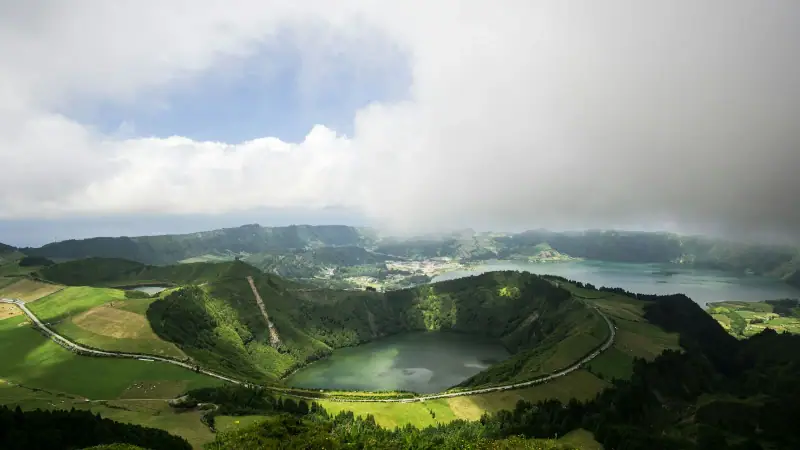
Azores Lakes and Volcanoes: The Main Natural Sites
The most beautiful volcanic lakes in the Azores. Sete Cidades, Fogo, Furnas, Algar do Carvão: the archipelago's natural wonders.
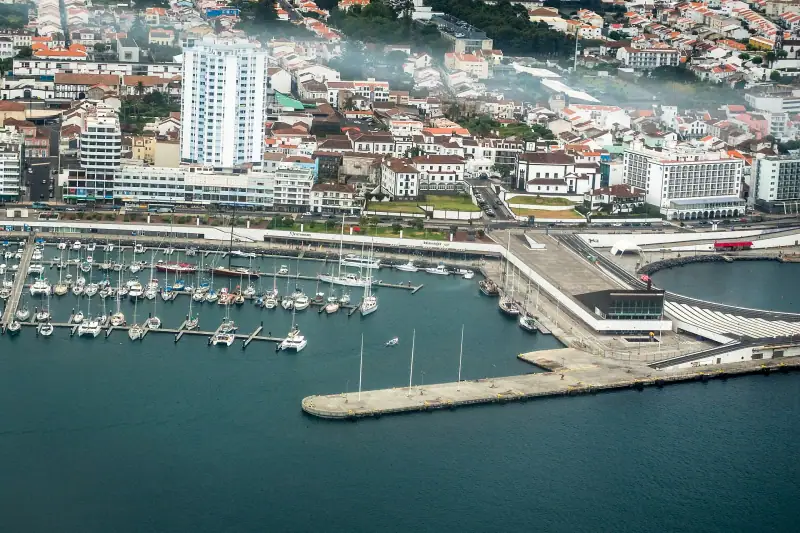
Where to Stay in São Miguel: Best Areas and Hotels
Where to stay on São Miguel in the Azores? A complete guide to the best areas of Ponta Delgada, rural stays and options for every budget.
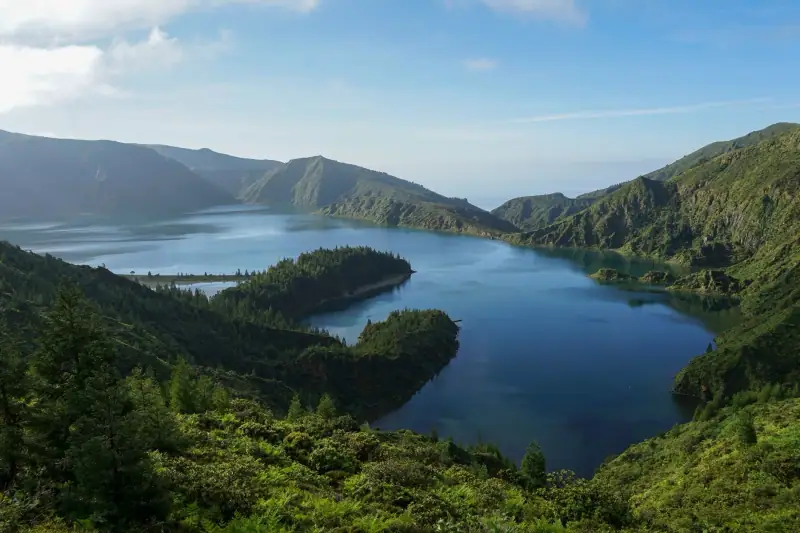
Best Time to Visit the Azores: Month by Month
When to go to the Azores? Weather, temperatures, crowds and prices month by month, to pick the best time for what you want to do.
Ready-made
Azores itineraries
São Miguel Road Trip: Driving Around the Island
A complete guide to driving around São Miguel in the Azores: route, essential stops, road tips and lesser-known spots.
4 days
São Miguel in 4 Days Without a Car: A Realistic Itinerary by Bus and Organized Tour
Can you visit São Miguel without a rental car? A realistic 4-day itinerary with public buses, organized tours, schedules, prices and distances.
5 days
São Miguel in 5 days with kids: stops, miles and a realistic pace
5 days on São Miguel (Azores) with kids: day-by-day stops, distances and drive times, naps, swims, whales and pace pitfalls to avoid.
Can be adapted in the planner