Things to do
Swimming With Dolphins in the Azores: Prices, Booking and Tips for 2026
We may earn a commission when you book through links on this page, at no extra cost to you. We don't visit or try the places we cover: we summarize published sources. How we work
In short
- Swimming with wild dolphins is legal and regulated in the Azores, with licensed operators only. Swimming with large whales is strictly forbidden.
- A 3-hour snorkeling tour costs about €85-120 per adult (about $99-140); São Miguel, Pico and Faial are the main bases.
- Best season is May to October, with water at 19-24 °C (66-75 °F). Winter tours are possible but often canceled for rough seas.
- You must be able to swim. Touching, feeding or chasing dolphins is banned, and minimum distances apply.
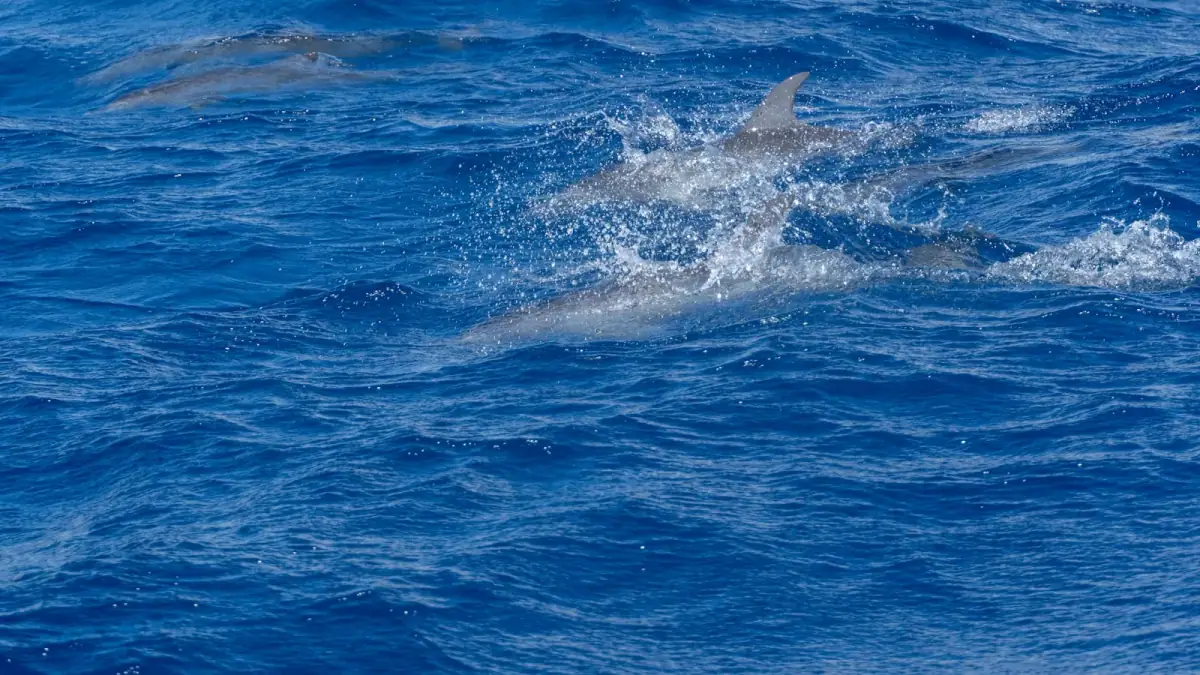
The Azores are among the few destinations in Europe where entering the water with wild dolphins is legal, regulated and respectful of the animals. This is not an artificial show in a tank: these are real wild dolphins in the Atlantic Ocean, who decide for themselves whether to approach.
Swimming with dolphins in the Azores also raises practical questions: which island to choose, which operator to book, when to go, how much it costs, and whether it is ethical. This guide answers all of them, with 2026 prices and tips for getting the most out of the experience.
Which dolphin species can you meet in the Azores?
Azorean waters are home to 28 to 29 species of cetaceans, including 5 species of dolphins with which swimming is legally allowed:
The common dolphin (Delphinus delphis) is the most frequent. It lives in large groups of several hundred, very playful, often at the bow of boats. You will almost certainly meet common dolphins on your trip.
The spotted dolphin (Stenella frontalis) is particularly curious and sociable. It readily interacts with swimmers when it does not feel threatened, and is often the species that comes closest during snorkeling sessions.
The bottlenose dolphin (Tursiops truncatus) is the best-known dolphin and a larger one (up to 3.80 m / 12.5 ft). It lives in small coastal groups and is less unpredictable than its smaller cousins.
The striped dolphin (Stenella coeruleoalba) and Risso’s dolphin (Grampus griseus) round out the picture. Risso’s dolphin is recognizable by its silvery-white body covered in scars, marks of its fights with the giant squid it feeds on.
Note: Swimming with large whales (sperm whales, blue whales, rorquals) is strictly forbidden under Azorean law. Only the 5 dolphin species listed above are covered by swim tours.
Which island should you choose for swimming with dolphins?
São Miguel: the widest choice of operators
São Miguel is the most populous and most visited island in the Azores. Departures are mainly from Ponta Delgada (the capital) and Vila Franca do Campo (southeast coast), 30 minutes away by road.
The waters between São Miguel and the islet of Vila Franca do Campo are particularly rich in common and spotted dolphins. It has the highest number of operators, which makes it easy to compare offers and find slots even in high season.
Best for: Anyone based on São Miguel, or if you want to combine it with other activities on the island (Furnas, Sete Cidades, hot springs).
Pico: the top island for intense encounters
The island of Pico, dominated by the highest peak in Portugal (2,351 m / 7,713 ft), is surrounded by exceptionally deep, rich waters. Departures are from Madalena (west coast) or Lajes do Pico (south coast).
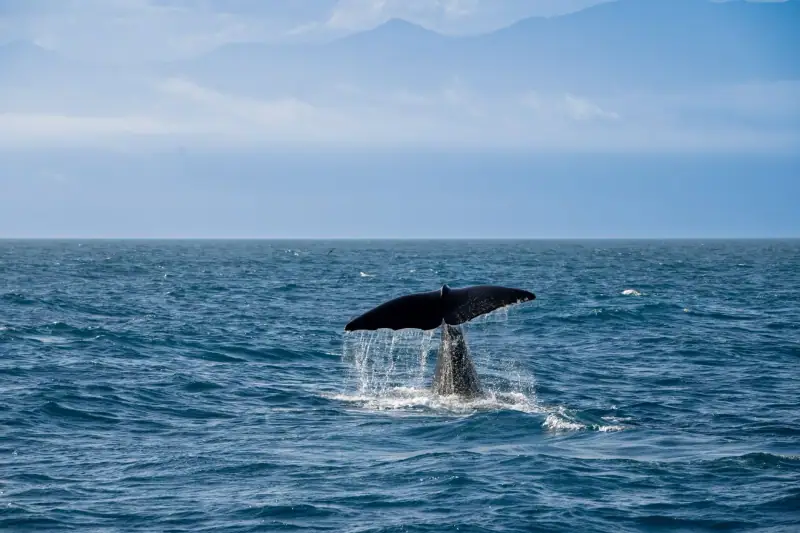
Pico is also known for watching sperm whales, from the boat only: swimming with them is forbidden.
Best for: Travelers who value the quality and intensity of encounters over logistical ease. Pico is reached from Faial by ferry (30 min) or from São Miguel by plane or ferry.
Faial: the central Azores triangle
Horta, the capital of Faial, is a great base for exploring the Faial-Pico-São Jorge triangle. Dolphin tours from Faial often follow the channel between Faial and Pico, one of the richest areas for cetaceans in the archipelago.
Best for: Perfect if you are visiting several islands of the central triangle. Faial, Pico and São Jorge are often part of the same itinerary.
Swim-with-dolphins tours in the Azores
Compare operators and book your tour online.
Best time to swim with dolphins in the Azores
Year-round: the common dolphin is present in Azorean waters all the time. Tours run 12 months a year, weather permitting.
High season (May to October): this is the best window. The sea is calmer, underwater visibility is better, and water temperature rises to 19-24 °C (66-75 °F), comfortable for swimming in a wetsuit. July and August are the peak: spotted and striped dolphins are especially active.
Low season (November to April): possible, but tours may be canceled for rough seas. Water temperature drops to 16-17 °C (61-63 °F). Fewer people, and some operators offer reduced rates.
If you are unsure when to travel, see our guide to the best time to go to the Azores to plan around your priorities.
Swim-with-dolphins tour prices in 2026
| Type of tour | Duration | Adult price | Child price |
|---|---|---|---|
| Dolphin snorkeling tour | 3 h | €85-120 (~$99-140) | €55-80 (~$64-93) |
| Dolphins + whales (boat watching) | 3-4 h | €65-90 (~$75-105) | €40-60 (~$46-70) |
| Premium tour (small group, biologist guide) | 4 h | €110-150 (~$130-175) | €70-100 (~$81-115) |
| Sperm whale watching by boat (Pico) | 3 h | €80-110 (~$93-130) | Not recommended |
What is usually included in the price: full snorkeling equipment (mask, snorkel, fins), wetsuit, flotation vest, certified guide, pre-trip briefing.
What is not included: transfer from your lodging (plan on a taxi or rental car), personal insurance, guide tip.
Cancellation policy: most reputable operators offer a full refund or a free new tour if no dolphins are seen. The success rate exceeds 90% from April to October.
How to book an ethical, safe tour
What makes a good operator
Official license: insist that the operator holds the license issued by the Regional Government of the Azores (check with the operator or the competent regional secretariat). Unlicensed operators work illegally and generally do not follow animal protection rules.
Lookouts (vigias): the best operators rely on a network of vigias, onshore observers stationed on high points of the islands, who spot dolphins offshore and guide boats by radio. It is a whaling tradition converted to ecotourism. This system greatly increases your chances of an encounter.
Limited numbers: Azorean regulations strictly limit the number of swimmers in the water at one time (check the exact figure with the operator). An operator who puts the whole boat in at once should make you wary.
Respect for distances: at least 15 meters (50 ft) from groups of adult dolphins, 30 meters (100 ft) if calves are present. If the guide asks you to keep your distance, it is because the dolphins are signaling they do not want interaction, and an ethical tour respects those signals.
Book ahead or on the spot?
In July and August, tours often sell out 3 to 5 days ahead on São Miguel. Book online through GetYourGuide, Viator or directly on operators’ websites. On Pico and Faial, you can often find places by showing up in the morning, except on high-season weekends.
In low season (November to April), booking the day before is plenty.
Book your dolphin tour
Real-time availability, free cancellation up to 24 hours before.
The ethical question: is swimming with wild dolphins responsible?
It is a legitimate question. Some Azorean operators, including Futurismo, one of the largest on São Miguel, have stopped promoting swim-with-dolphins tours in favor of pure observation trips, judging that even legal, regulated interactions can stress the animals.
The case for: in the Azores, dolphins approach boats freely on their own initiative; they are not forced. Local regulations are among the strictest in Europe. Interaction is short and can be stopped at any time. The activity funds the protection of Azorean cetaceans and supports the local economy.
The case against: even short, repeated interactions (several boats a day on the same groups) can alter dolphins’ resting and feeding behavior. Some groups in popular coastal areas are approached daily.
Our recommendation: if you want this experience, choose a certified operator, favor small-group tours (maximum 8 people on the boat), and accept that the dolphins have the final say. If their behavior signals withdrawal, stay on the boat. Watching dolphins from the deck, without getting in the water, is still an extraordinary experience.
To learn more about watching cetaceans from a boat in the Azores, read our guide to whale watching in the Azores.
Practical tips before you go
Personal gear: the wetsuit, mask and fins are included in the price. Bring your own water-resistant sunscreen (oxybenzone-free, as oxybenzone is banned in some marine areas), polarized sunglasses and a windbreaker for the trip back.
Seasickness: tours last 3 hours on the open sea. If you are prone to seasickness, take a preventive remedy (such as a patch) 1 hour before departure; ask a pharmacist. Stay on deck, eyes on the horizon.
Children: accepted from about 6 to 8 years old depending on the operator. Check the minimum weight and height required (some require a minimum of 20 kg / 44 lb for the wetsuit). A parent accompanies the child in the water.
Pregnancy: not recommended after the third month for tours in rough seas. Consult your doctor.
Swimming vs. diving: these tours are exclusively snorkeling (mask, snorkel, fins). Scuba diving with wild dolphins is not allowed in the Azores. If diving interests you, see our guide to diving in the Azores for the best spots.
Where to stay in the Azores
Find lodging near the departure ports for dolphin tours.
Summary
Swimming with dolphins in the Azores is one of the most intense experiences the archipelago offers, provided you choose a licensed operator, respect the distance rules and accept that the dolphins decide on the encounter themselves. The best period is May to October, the best islands are São Miguel, Pico and Faial, and prices run around €85-120 per adult (about $99-140) for a 3-hour tour.
If you are heading to the Azores and are unsure how to organize your stay, see our complete guide to the Azores to plan your itinerary island by island.
Frequently asked questions
Can you really swim with dolphins in the Azores?
Yes, it is legal and regulated in the Azores. Licensed operators run boat trips with snorkeling gear so you can enter the water when dolphins are present. Only certain dolphin species are included (notably common, spotted and bottlenose dolphins): check the list with the operator. Swimming with large whales is strictly forbidden.
How much does it cost to swim with dolphins in the Azores?
Expect €80 to €120 per person (about $93-140) for a 3-hour tour including snorkeling gear and a guide. Prices vary by island and operator. São Miguel and Pico offer the most competitive tours.
Which is the best island for swimming with dolphins in the Azores?
São Miguel (departures from Ponta Delgada and Vila Franca do Campo) offers the widest choice of operators. Pico (Madalena and Lajes do Pico) is known for its dolphin density and water quality. Faial (Horta) is also an excellent option in the central triangle.
What is the best time to swim with dolphins in the Azores?
May to October, peaking in July and August. Common and spotted dolphins are present year-round but more active at the surface in summer. The sea is calmer and warmer (19-24 °C / 66-75 °F), which makes the swim more comfortable.
Can you touch the dolphins on these tours?
No. Azorean regulations strictly forbid touching, feeding or chasing dolphins. Minimum distances from groups apply (larger when calves are present): follow your guide's instructions. Licensed operators enforce these rules strictly.
Do you need to know how to swim?
Yes. Basic swimming ability is enough, since you wear a wetsuit (which helps buoyancy) and a snorkel mask. Children from about 6 to 8 years old are generally accepted, depending on the operator.
More Azores guides
Keep reading

Climbing Mount Pico Without a Guide: Registration, Cost, Difficulty and Conditions
Climbing Montanha do Pico on your own: mandatory registration, gear, duration (7 to 9 h), when to hire a guide, season and mistakes to avoid.
Whale Watching in the Azores: Complete 2026 Guide
Everything you need to know about whale watching in the Azores: best times, species, operators, prices and tips for a successful trip.

Azores Lakes and Volcanoes: The Main Natural Sites
The most beautiful volcanic lakes in the Azores. Sete Cidades, Fogo, Furnas, Algar do Carvão: the archipelago's natural wonders.
Ready-made
Azores itineraries
São Miguel Road Trip: Driving Around the Island
A complete guide to driving around São Miguel in the Azores: route, essential stops, road tips and lesser-known spots.
4 days
São Miguel in 4 Days Without a Car: A Realistic Itinerary by Bus and Organized Tour
Can you visit São Miguel without a rental car? A realistic 4-day itinerary with public buses, organized tours, schedules, prices and distances.

5 days
São Miguel in 5 days with kids: stops, miles and a realistic pace
5 days on São Miguel (Azores) with kids: day-by-day stops, distances and drive times, naps, swims, whales and pace pitfalls to avoid.
Can be adapted in the planner