Where to stay
Where to Stay in Tavira and the Sotavento: Which Base to Choose
We may earn a commission when you book through links on this page, at no extra cost to you. We don't visit or try the places we cover: we summarize published sources. How we work
In short
- Tavira's historic center, on both sides of the Gilão River, is the best base for a first stay: restaurants, station and island boats are within walking distance.
- The sandy beaches are on the island, reached by boat. Most travelers stay on the mainland.
- Tavira, Faro and Olhão are linked by the Algarve train line, so a car-free stay is possible if you stay in town.
- Two to three nights are enough for the town, Tavira Island and a nearby village; book several months ahead for July and August.
In the east of the Algarve, the Sotavento shows a very different face from the west coast. Here there are no big ocher cliffs, but a lagoon, sandy barrier islands, white villages and towns that have kept a slow pace. Tavira is the flagship, and many travelers choose it as a base to explore the whole eastern part of the region. But Tavira is not the only option: Santa Luzia, Cabanas, Cacela Velha, Olhão or Faro each have their arguments. This guide details the main areas to stay in the Sotavento, depending on your budget, your way of getting around and the season. To compare this part of the coast with the west of the region, start with our guide where to stay in the Algarve.
The Sotavento in brief: what to expect
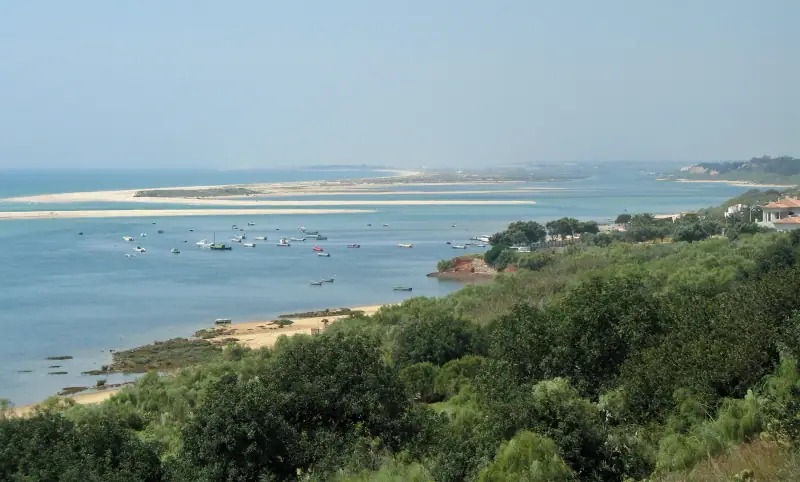
The word “Sotavento” refers to the eastern part of the Algarve, as opposed to the Barlavento in the west. The landscape is flatter, built around the Ria Formosa natural park, a protected lagoon lined with sand islands. The area’s most beautiful beaches are therefore not always at the end of the street: you often reach them by boat, or by a footbridge.
The atmosphere is also calmer than in the big seaside resorts. You come to stroll, eat fish, swim in water that is often gentler than on the west coast and enjoy a traditional architecture that is still very present. If you are looking for lively evenings until the small hours, other bases will suit you better; if you want a good night’s sleep, the Sotavento is a good choice.
Before booking, three simple questions will help:
- Are you traveling with or without a car? The train runs along the coast and links Faro, Olhão and Tavira, which makes a car-free stay perfectly possible if you stay in town.
- Do you want the beach at the foot of your accommodation? In that case, the coastal villages are more practical than the center of Tavira.
- How long is your stay? For one or two nights, the historic center is the obvious choice. For a week, an apartment with a kitchen or a house in the countryside becomes interesting.
The historic center of Tavira: the ideal base for a first stay
Tavira spreads on both sides of the Gilão River, crossed by an old pedestrian bridge, often called the “Roman bridge”. The historic center can be covered entirely on foot: cobbled lanes, shaded squares, churches, castle walls and many terraces. It is the most pleasant area for those discovering the town, and the one recommended in the vast majority of cases.
Staying here has several advantages. You can have dinner without getting back in the car, reach the station in a few minutes and walk to the landing stages that serve the island. Small hotels and charming guesthouses are set in old buildings, often with patios or rooftop terraces. Rooms can be modest in size: read the descriptions and photos carefully.
On the downside, narrow streets complicate parking. If you arrive by car, ask your host where to park the vehicle, as car access to some lanes is limited. On summer nights, the streets near the terraces stay lively quite late: a room on the courtyard side or on a side street is preferable if you are a light sleeper.
Our advice: accommodation near the river has the most charm, but look closely at the reviews that mention noise and air conditioning, which is essential in midsummer. To organize your days there, our article on Tavira and the Ria Formosa details what to see in two days.
Places to stay in Tavira
Compare guesthouses, hotels and apartments in the center of Tavira for your dates and budget.
Santa Luzia and the lagoon edges: fish, fishermen and boats
Santa Luzia is a fishing village a few kilometers west of the center of Tavira, on the edge of the Ria Formosa. It is best known for its octopus fishing tradition and for restaurants serving very fresh seafood. It has the feel of a small port: colorful boats, jetties, a walk along the water.
As a base, Santa Luzia suits those who want a peaceful, authentic stay, with a car or a bike. Accommodation there is scarcer and simpler than in the center of Tavira, often apartments or small residences. In return, you are right next to the boat departures to the barrier islands, which is handy if the beach is your priority.
Note: in low season, some shops close or reduce their hours. If you travel in winter, check that the restaurants and services you need are open before choosing an isolated village. Our guide to ordering fish and seafood in the Algarve will help you make the most of the local table.
Cabanas de Tavira and the east coast: the beach by the lagoon
East of Tavira, Cabanas is a seaside village facing the lagoon, with a relaxed atmosphere and many vacation rentals: apartments, residences and villas. You are on the edge of the Ria Formosa, facing a long strip of sand reached by crossing the water.
This area suits families and week-long stays: the pace is slow, cooking is easy to organize in an equipped apartment, and children enjoy the calm waters of the lagoon. It is aimed first at travelers with a car, although the village remains linked to Tavira by road and by local services whose schedules you should check.
Further east, you reach beaches and villages near the Spanish border. The coast there is wilder and less built up. Our selection of the most beautiful beaches in the Algarve gives ideas to vary your swims during your stay.
Cacela Velha and the countryside: absolute calm
Cacela Velha is a tiny white village perched above the lagoon, east of Tavira. It offers one of the most photographed views of the Sotavento: a church, a few houses, a fort and, below, the sea and the sandbanks. It can be visited in a short time, but some travelers choose to sleep there to enjoy the calm once the day visitors have left.
Choice there is limited: a few guesthouses and charming places, which book early in the season. If you prefer the countryside, many properties in the nearby inland area offer guest rooms and cottages with a pool, a few minutes’ drive from the coast. A car is then essential: without one, you will depend on taxis and infrequent transport.
This kind of stay is ideal for couples looking for peace and for those who like houses with character, but it means planning meals and trips. Also check the real distance to the beach and to shops, which listings sometimes present optimistically.
Olhão and Faro: practical, lively and well connected
Olhão is a fishing town with a more working-class character than Tavira. Its center is lively, its port active and its boats serve several islands of the Ria Formosa. It appeals to travelers who like authenticity, markets and a less touristy atmosphere. Its location, between Faro and Tavira on the train line, makes it a practical base for day trips across the Sotavento without a car.
Faro, for its part, has the region’s main airport. Its walled old town is pleasant to walk and offers hotels at every level. Many travelers spend a night there before an early flight or after a late arrival. For a longer stay, Faro works well as a stopover, but Tavira generally offers more charm and a more restful setting.
If you arrive in Faro from Lisbon or Porto, it can be wise to sleep a night there before going on to Tavira, especially if you land late. The distance between Faro and Tavira is about thirty kilometers (19 mi): the trip takes about half an hour to 45 minutes by train, bus or car.
Flights to the Algarve
Compare flights to Faro, the airport closest to Tavira and the Sotavento.
Which type of accommodation to choose in the Sotavento?
The region offers a fairly wide range of options, each with its strengths:
- Guesthouses and small boutique hotels: the most typical format in Tavira, often with breakfast and a terrace. Ideal for two to four nights.
- Apartments: very handy for families and week-long stays, especially in Cabanas, Santa Luzia or Tavira itself. Cooking lets you cut the food budget.
- Residences and hotels with a pool: comfortable and quiet, often a little set back from the center; a car is generally needed.
- Hostels: a budget option for solo travelers and small budgets, especially in Faro and Tavira.
- Villas and cottages in the countryside: perfect for groups or long stays, as long as you rent a vehicle.
- Campsites: they exist in the region, notably near the beaches. Always check opening dates, as they vary by site.
To estimate what each option means for your overall budget, see our article on the Algarve budget: the gaps between high and low season are significant.
Which season, which base?
The right choice also depends on the time of year, as detailed in our guide when to go to the Algarve.
In summer (July-August): this is the busiest and most expensive period. The center of Tavira is lively, but hot: air conditioning becomes an essential criterion. Accommodation near boat departures or beaches is in high demand; book early.
In spring and fall: this is often the best time to stay in the historic center. The weather is generally pleasant, the streets are calmer and rates are lower. It is also a good time to walk in the Ria Formosa without the crowds.
In winter: the town stays alive, with its residents and restaurants, but some seasonal businesses close, especially in coastal villages. It is better to stay in the center of Tavira, Faro or Olhão, and to check that the accommodation is heated, as not all are.
Getting around from your accommodation
The big advantage of the Sotavento is how easy it is to get around without a car. The Algarve train line serves Faro, Olhão and Tavira, which allows simple round trips. Boats complete the network by serving the barrier islands, with schedules that vary by season: always check the time of the last return.
A car remains valuable for exploring villages like Cacela Velha, stringing together several beaches or going inland. It also gives access to the west of the Algarve: if you want to see the cliffs and Benagil Cave, plan a full day, as the distance from Tavira is significant. Our article on the 7-day Algarve road trip shows how to link east and west without wearing yourself out. To rent a car, compare the offers by rental company.
Once settled, you will have plenty to choose from: a boat crossing to the islands, walks in the lagoon, discovering the village of Cacela Velha or tastings of local products. Guided excursions are handy if you do not want to drive.
Activities and excursions in Tavira
Boat trips in the Ria Formosa and guided tours around Tavira.
Tips for booking your accommodation
A few simple habits avoid most disappointments:
- Check the exact location on the map. A listing “in Tavira” can be several kilometers from the center, or even in another municipality.
- Look at recent reviews and filter for those that mention noise, cleanliness and air conditioning.
- Read the cancellation terms. A flexible rate is often worth the small price difference, especially if you book far ahead.
- Ask about parking if you come by car: in the old town, it is not always easy.
- Watch for taxes and extra fees (tourist tax, cleaning, deposit) that can be added to the displayed price.
- Consider travel insurance suited to your trip, and compare the coverage before you leave.
Finally, keep in mind that prices vary strongly from one week to the next: if your dates are flexible, compare several periods before booking.
In short: which base for which traveler?
- First stay, no car: the historic center of Tavira.
- Family with children: Cabanas or an apartment near the lagoon, with a car.
- Couple looking for calm: Cacela Velha or a guesthouse in the countryside.
- Authenticity lovers on a small budget: Olhão, well linked by train.
- Arriving or leaving by air: a night in Faro, then Tavira.
- Lovers of fish and local fishing: Santa Luzia.
Whichever base you choose, the Sotavento rewards travelers who take their time: a lagoon to explore, beaches reachable only by boat and villages that do not need to try too hard to charm.
Frequently asked questions
Where should you stay in Tavira for a first visit?
The historic center, on both sides of the Gilão River, is the best choice: restaurants, lanes, the station and boat departures to the island are within walking distance or a few minutes away. The sandy beaches, however, are on the island, reached by boat.
Do you need a car to stay in the Sotavento?
Not necessarily. Tavira, Faro and Olhão are linked by the Algarve train line, and the islands are reached by boat. A car becomes useful if you stay in the countryside, visit villages such as Cacela Velha at your own pace or string together several beaches in a day.
Tavira or Faro: where should you stay?
Tavira is calmer, more elegant and better suited to a stay of several nights. Faro is handy for a night before or after a flight, with a pleasant old town, but it mainly serves as a gateway to the rest of the region.
Is the Sotavento cheaper than the west of the Algarve?
Rates are often a little lower than in the big resorts of the west, especially outside July-August, but it depends a lot on the season and the type of accommodation. Always compare several dates before deciding.
When should you book accommodation in Tavira?
For July and August, book several months ahead, especially for the center. In spring and fall, availability is better and the climate is still pleasant for visiting the town and the Ria Formosa.
How many nights should you plan in Tavira?
Two to three nights are enough to discover the town, Tavira Island and a neighboring village. If you want to alternate beach, walks and boat trips in the lagoon, a week fills up easily.
Can you sleep directly on Tavira Island?
The island is a protected natural area with very little infrastructure: most travelers stay on the mainland and spend the day there by boat. Check the time of the last return boat there.
More Algarve guides
Keep reading
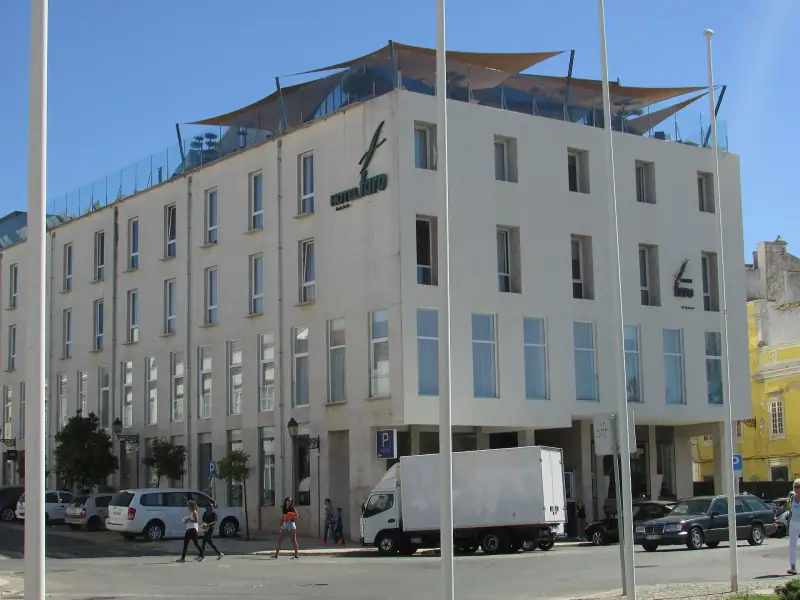
Sleeping Near Faro Airport: Options, Areas and Prices
Late arrival or dawn flight? Compare hotels near Faro Airport, the city center and Olhão: distances, transfers, budget and booking tips.
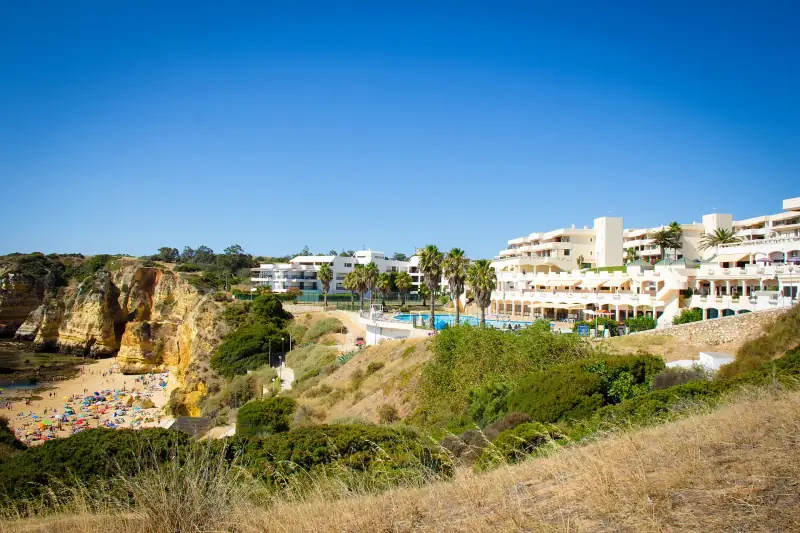
Where to Stay in Lagos: Which Area to Choose for Your Trip
Where to stay in Lagos, Algarve? Old town, marina, Meia Praia, Praia da Luz: areas compared, booking tips and mistakes to avoid.
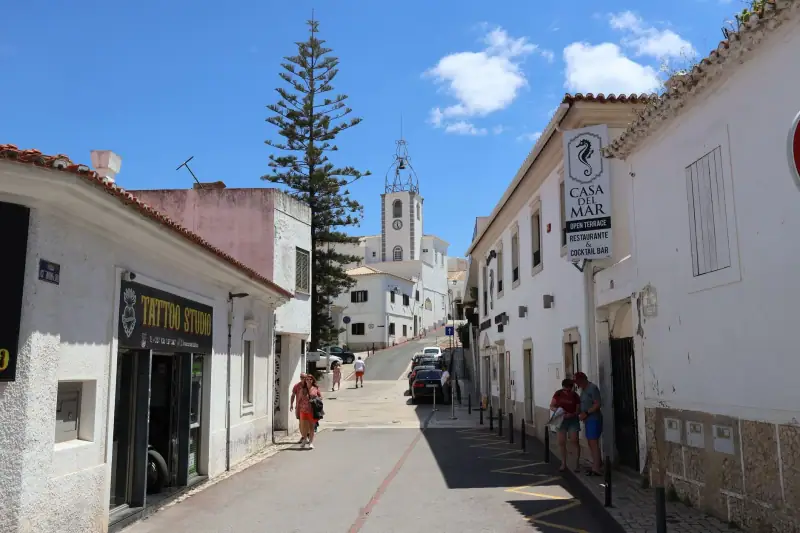
Where to Stay in the Algarve: Which Town to Choose for Your Trip
Where to stay in the Algarve? Lagos, Albufeira, Tavira, Faro, Carvoeiro or Sagres: bases compared by interests, budget and travel style.
Ready-made
Algarve itineraries
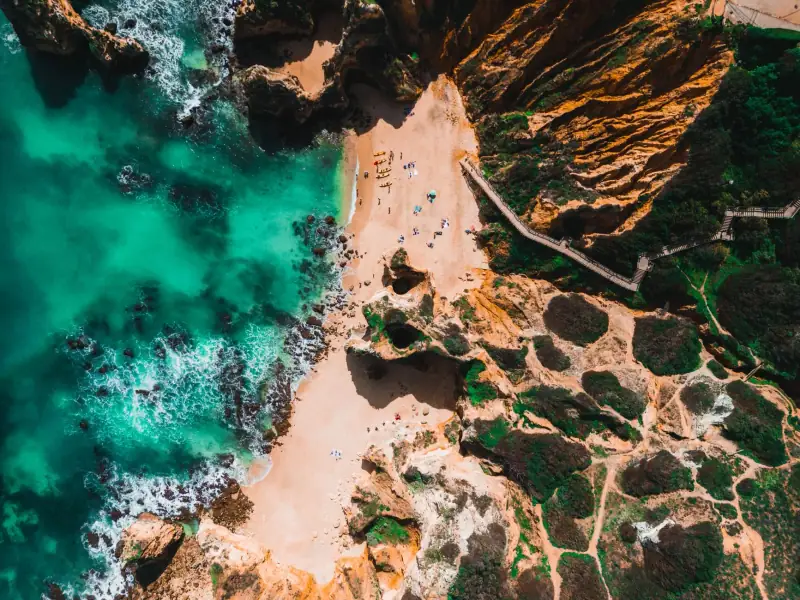
3 days
4 days
7 days
Algarve Road Trip: A 7-Day Itinerary from East to West
A 7-day Algarve road trip from Faro to Sagres: stops, distances, beaches, white villages and tips for driving and sleeping along the coast.