Where to stay
Where to Stay in Jambiani: The Best Places to Stay
We may earn a commission when you book through links on this page, at no extra cost to you. We don't visit or try the places we cover: we summarize published sources. How we work
In short
- Jambiani is a quiet, authentic fishing village on the east coast, with some of the lowest lodging prices on the island.
- Guesthouses run €15-40 (~$17-46) a night, charming bungalows €40-100 (~$45-115) and lodges €100-200 (~$115-230).
- Book 6 to 8 weeks ahead for boutique places in high season (June-August, December-January).
- Bring cash, since there are no reliable ATMs, and check the tide table: swimming is limited at low tide.
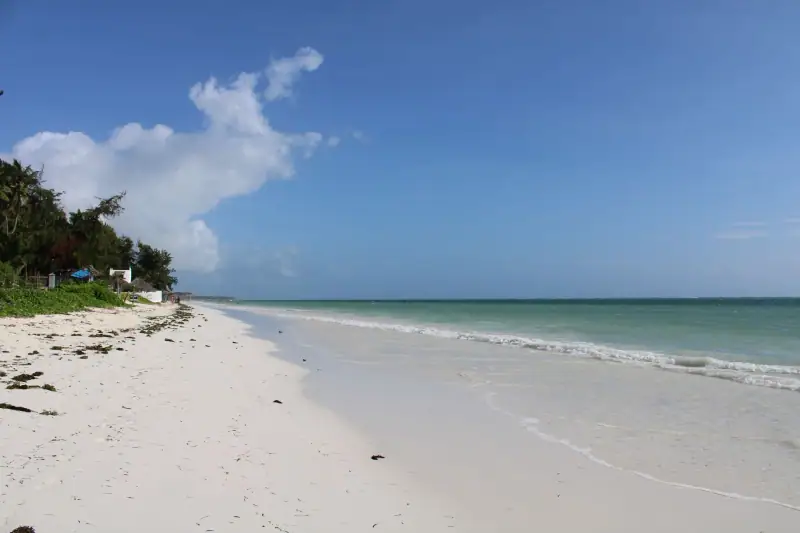
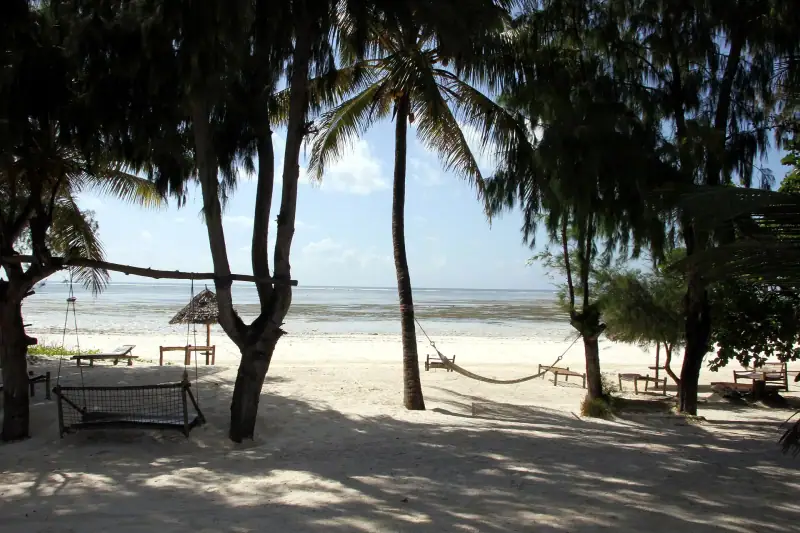
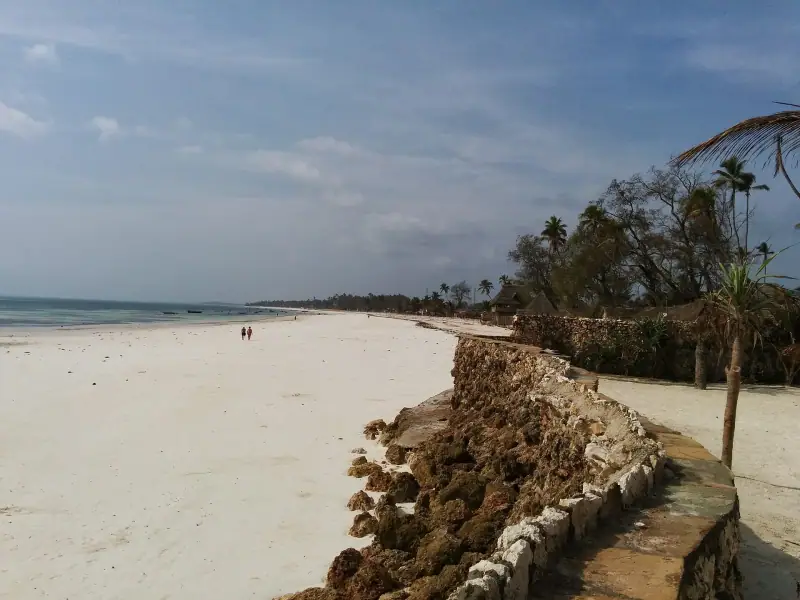
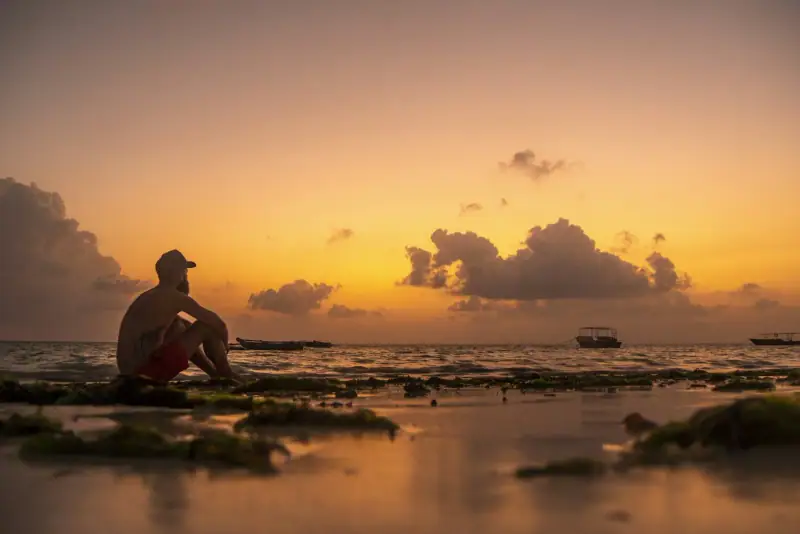
Jambiani is one of the most authentic villages on Zanzibar’s east coast. Set about 55 km (34 mi) southeast of Stone Town and roughly 10 km (6 mi) south of Paje, this fishing village has kept its traditional character despite a growing flow of travelers looking for an experience away from overcrowded destinations. Jambiani beach is one of the nicest on the island: a long strip of white sand lined with palm and coconut trees, with clear water that shifts from turquoise to deep blue with the tides.
Staying in Jambiani means choosing immersion over entertainment, sand and sea over lively terraces. The local community of fishermen and seaweed farmers coexists easily with visitors, which creates a living-village atmosphere you hardly find anymore in the island’s more developed tourist areas.
Why choose Jambiani to stay?
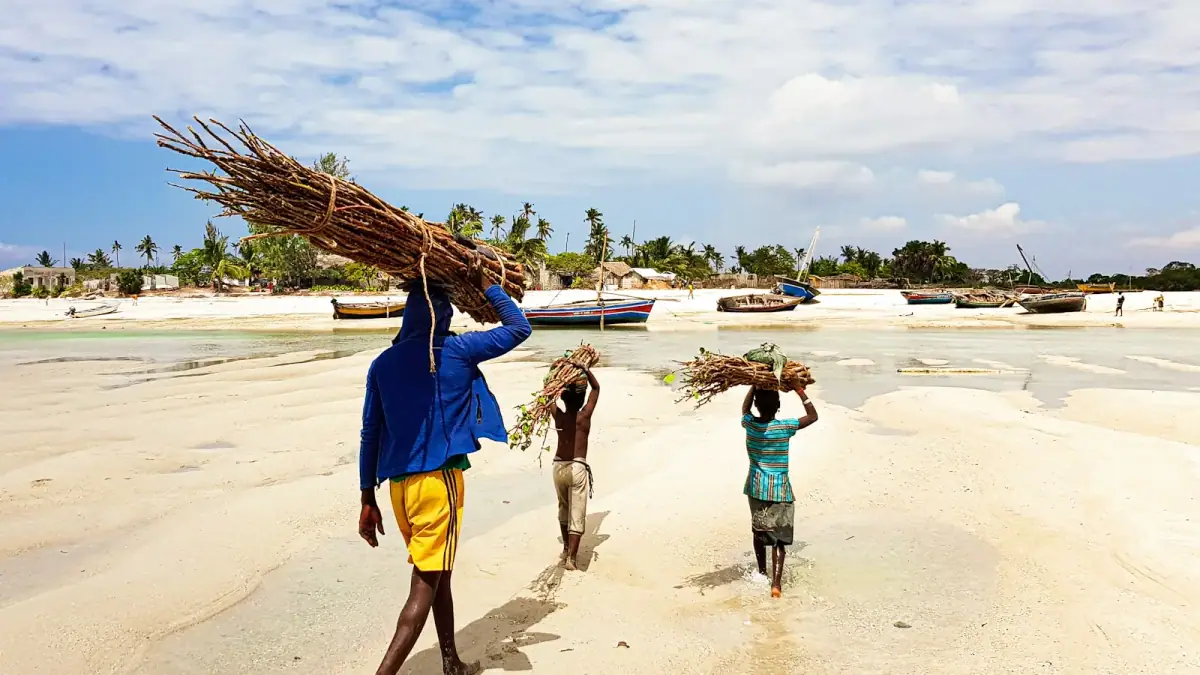
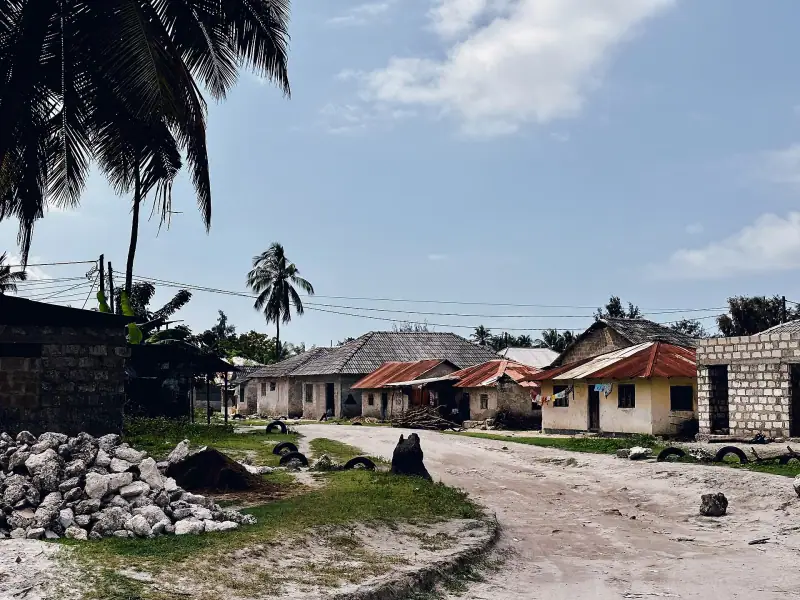
Preserved authenticity: Jambiani is one of the last big east coast villages where local life has not been absorbed by tourism. Women still farm seaweed at low tide, an ancestral technique and an important economic resource for the community. You will pass fishing boats pulled up on the sand, nets drying in the sun and street markets selling local produce.
A dream beach with fewer people: Jambiani beach stretches for several kilometers and stays much less crowded than Paje or Nungwi, even in high season. You can easily find a patch of sand to yourself.
More affordable prices: Jambiani generally offers the cheapest lodging on the east coast. Competition is less fierce than in Nungwi, and local family-run places offer remarkable value. For budget-minded travelers, it is one of the best choices in Zanzibar.
An ideal base for exploring the east coast: From Jambiani, you are about 10 km (6 mi) from Paje and its kitesurfing spots, within reach by road of the east coast snorkeling reefs, and less than 2 hours from Stone Town. It is a strategic position for visiting the whole eastern part of the island.
Serenity: Jambiani is known for its soothing atmosphere. No nightclubs, no noisy crowds. Nights are quiet, set to the sound of the waves and the call to prayer from the village mosque.
Hotels in Jambiani
Compare and book the best lodging in Jambiani, on Zanzibar's east coast.
What type of lodging in Jambiani?
Boutique lodges and resorts (€100-200 / about $115-230 a night)
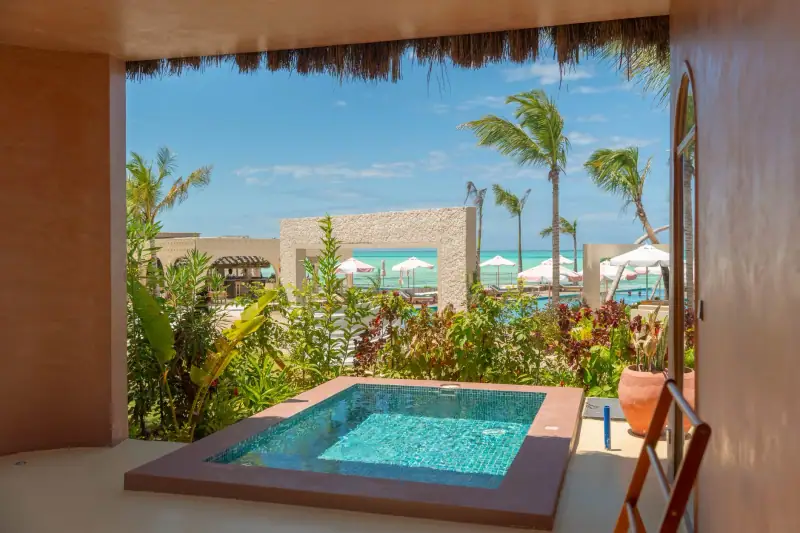
Jambiani has a limited but select number of high-end places, which rely on privacy and charm rather than size. These lodges favor local materials (coconut wood, makuti or woven palm thatch, cut coral) in an authentic Swahili style. You will generally find bungalows scattered in a tropical garden, a pool surrounded by lush vegetation, and a restaurant serving seafood caught that same morning.
What you get:
- Private bungalow with a terrace or veranda facing the sea or the garden
- Air conditioning and ceiling fan
- Restaurant and bar on site
- Direct beach access, often from the rooms themselves
- Personalized service and help organizing local excursions
- Pool, sometimes with an ocean view
Best for: Couples on a romantic trip, honeymooners, and travelers who want quality lodging without paying mass-market resort prices.
Guesthouses and charming bungalows (€40-100 / about $45-115 a night)
This is the most common and most emblematic category in Jambiani. These family-run places, often founded and managed by local owners or long-settled expats, offer simple but clean rooms or bungalows, carefully decorated. The welcome is generally warm and personal. You will get useful advice on the best activities, tide times and local addresses.
What you get:
- Double room or bungalow with a private bathroom
- Air conditioning or fan depending on the place
- Breakfast sometimes included
- Access to a shared terrace or a relaxation area facing the sea
- Friendly atmosphere and family welcome
Best for: Couples or solo travelers who want authenticity without giving up comfort. The best option for discovering Jambiani in an immersive way.
Budget local guesthouses (€15-40 / about $17-46 a night)
Jambiani has a dense network of small places run by Zanzibari families. These simple guesthouses offer basic but clean rooms, often with a fan and a shared bathroom. The experience is very authentic: you live at the village’s pace, sometimes eat with the family, and quickly make friends among the locals.
What you get:
- Simple room with a double bed or bunk beds
- Fan (air conditioning is rare in this range)
- Shared or private bathroom depending on the case
- Access to a kitchen, sometimes shared
- A unique cultural experience with total immersion
Best for: Backpackers, solo travelers on a tight budget, and anyone who wants an authentic Zanzibari experience.
Activities in Jambiani and the east coast
Snorkeling, diving, dhow trips and kitesurfing from Zanzibar's east coast.
Which part of Jambiani to stay in?
The village center
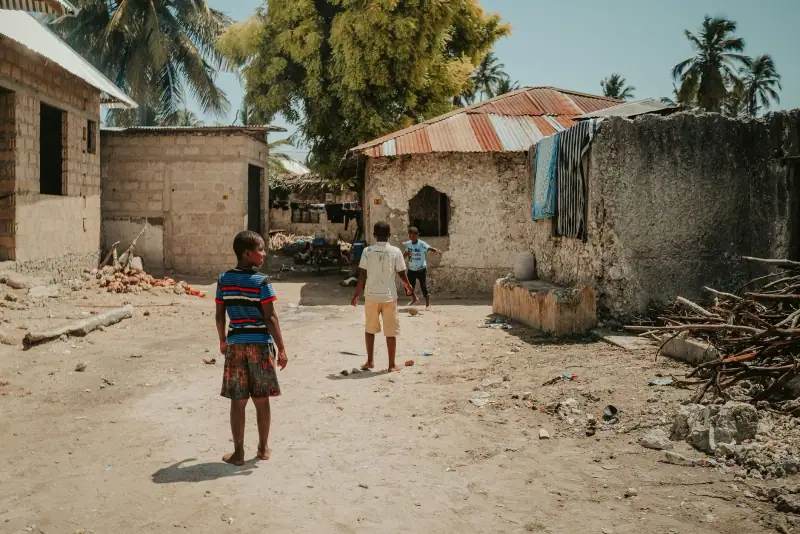
The village of Jambiani stretches about 2 km (1.2 mi) along the coast. The center has most of the lodging, the few local restaurants and the craft shops. This is where you find the morning market atmosphere, the fishing boats and the women harvesting seaweed at low tide.
Who it suits: All kinds of travelers, especially those who want to be in the middle of local life with amenities within walking distance.
The north of the village (toward Paje)
Heading north from the center, you follow the beach toward Paje. This area is slightly less lively than the village center, with a few places offering a direct ocean view. The beach is just as nice, but even quieter. The road to Paje is reachable by bike or scooter in under 30 minutes.
Who it suits: Travelers looking for total serenity while staying close to the village of Jambiani. See also our guide East coast of Zanzibar: Paje and Jambiani.
The south of the village (toward Makunduchi)
Heading south from the center of Jambiani, the density of lodging drops quickly. This stretch of coast is the wildest and least touristy. A few very exclusive places have set up here to offer a real end-of-the-world experience. Amenities are scarce in this area, so you need to be self-sufficient.
Who it suits: Travelers who want total isolation and do not need easy access to restaurants or organized activities.
When to book and how far ahead?
High season: June to August and December-January
High season in Jambiani covers the months of dry, sunny, windy weather, with the same trade winds that delight kitesurfers in nearby Paje. Even though Jambiani draws fewer people than Paje or Nungwi, the best places (boutique lodges, beachfront bungalows) are full several weeks ahead in peak season. Book 6 to 8 weeks ahead for boutique places, and 3 to 4 weeks ahead for local guesthouses.
High season temperatures are pleasant: 24 to 29 °C (75 to 84 °F) by day, with a cool breeze that makes the days very comfortable.
Shoulder season: September-October and February-March
Visitor numbers are moderate, prices are fair and the weather is generally good, with less wind. It is an excellent time to visit Jambiani: you enjoy the beach without the crowd and find availability more easily at the places you want. Book 3 to 4 weeks ahead.
Low season: November and April-May (rainy seasons)
The rains (short rains in November, long rains in April-May) cut tourist numbers in Jambiani. Lodging is often available at the last minute with reduced rates, sometimes 30 to 40% off. Note that some small places close temporarily during the long rainy season (April-May). Check availability before planning a trip during this period.
To find the best time to visit Zanzibar for your own wishes, see our guide to the best time to visit Zanzibar.
Car rental in Zanzibar
Explore the east coast at your own pace: compare rental offers from the airport.
Practical tips for choosing your lodging in Jambiani
Check the distance to the beach: Most places in Jambiani are within a 5-minute walk of the sea, but some on the edge of the village can be farther. Check this when you search.
Ask about Wi-Fi: Internet is generally slower and less reliable in Jambiani than in Nungwi or Paje. If you need a stable connection (remote work, video calls), ask the lodging before booking. Otherwise, a local SIM card with data (Tanzanian carriers such as Vodacom or Airtel) is a good fallback.
Bring enough cash: Jambiani has no reliable ATMs. Withdraw enough cash in Stone Town, at Zanzibar airport or in Paje before arriving. Most small shops, local excursions and even some places to stay accept cash only (Tanzanian shillings or US dollars).
Take the tides into account: Tides on Zanzibar’s east coast are especially pronounced. The sea pulls back very far at low tide, making swimming impossible at certain hours. Ask your lodging for a tide table as soon as you arrive and plan your water activities accordingly.
Dress respectfully: Jambiani is a mostly Muslim village. Away from the beach, it is good form to wear clothing that covers the shoulders and knees, for men and women alike. This sign of respect for the local culture will be much appreciated by residents.
Learn a few words of Swahili: A simple “Jambo” (hello) or “Asante sana” (thank you very much) opens every door in Jambiani. Locals are especially warm toward travelers who make the effort to learn a few local phrases.
Eating in Jambiani
The food scene in Jambiani is modest but authentic. You will not find Nungwi’s trendy restaurants, but you will find honest, tasty local cooking.
Beachfront restaurants: Most places to stay have a restaurant or terrace, often the only place to have dinner nearby. The menu revolves around seafood (grilled fish, octopus, fresh shrimp, including urojo with octopus curry, a local specialty) served with rice or chapati. These restaurants often serve breakfast with tropical fruit as well.
Mama’s food: In the village, women offer very cheap home-cooked meals: pilau (spiced rice), chicken biryani, sautéed vegetables. It is the cheapest option and often the most delicious for lunch. Look for the small tables set under trees or the stalls open to the street.
Evening street food: At nightfall, a few street vendors set up in the middle of the village with meat or fish skewers, maandazi (sweet doughnuts) and chai (masala tea). A great way to snack for very little money while chatting with locals.
To go deeper into Zanzibari food, see our article on food in Zanzibar.
What to do from Jambiani
Choosing Jambiani as a base gives you access to many activities, on the spot or a short distance away.
Diving and snorkeling: Zanzibar’s east coast has exceptionally rich coral reefs. Dhow trips leave regularly from Jambiani for snorkeling and diving spots where you can see sea turtles, leopard rays, dolphins and a multitude of colorful fish. See our guide to snorkeling in Zanzibar.
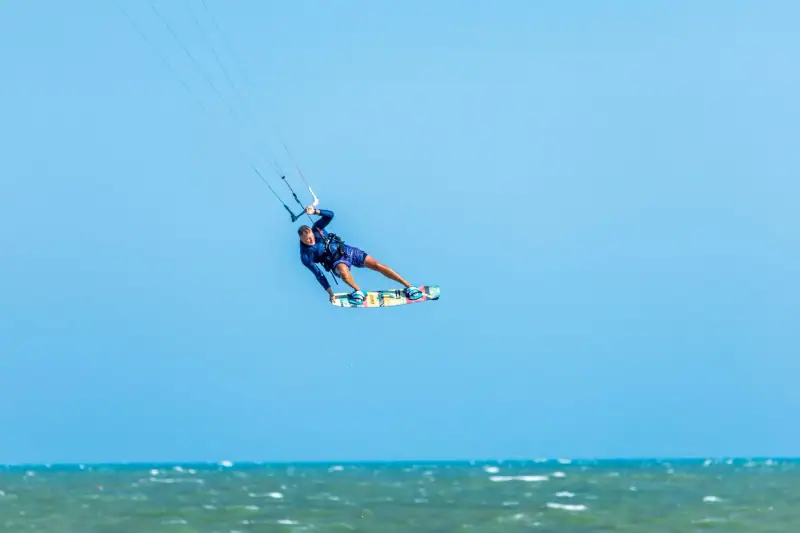
Kitesurfing in Paje: About 10 km (6 mi) north, Paje is the kitesurfing capital of Zanzibar. From Jambiani, it is easy to rent a scooter or take a bike to the Paje kitesurf schools for a day. Our guide to kitesurfing in Paje gives you all the details.
Seaweed farming: Jambiani is one of the archipelago’s main seaweed farming centers. Some places to stay or local guides offer visits with the village women who harvest and process the seaweed at low tide. A unique cultural experience that few tourists know about.
The excursion to Stone Town: Stone Town, a UNESCO World Heritage site, is about 55 km (34 mi) northwest of Jambiani. A day trip lets you visit the maze of alleys, the spice market and the House of Wonders, and learn about the island’s history. Your lodging can arrange a transfer. See our article on the must-sees in Stone Town.
Safari Blue: This popular day trip on a traditional dhow leaves from the village of Fumba, on the island’s southwest coast. From Jambiani (east coast), allow about 2 hours by road. Most operators offer hotel pickup from Jambiani very early in the morning. More details in our guide to Safari Blue in Zanzibar.
Visiting Michamvi: About 20 km (12 mi) north of Jambiani, Michamvi cape is one of the most spectacular spots on the east coast: the peninsula offers 180-degree ocean views and has some of the most photogenic lodges in Zanzibar. See our guide Visiting Michamvi.
Total budget for a stay in Jambiani
Jambiani is one of the cheapest destinations in Zanzibar. Here is an estimate of the daily budget by travel style.
Budget traveler (€35-65 / about $41-75 a day):
- Local guesthouse or simple room: €15-35 (~$17-41) a night
- Local meals (mama’s food, street food): €3-7 (~$3-8) a meal
- Basic activities (beach walks, snorkeling from shore): free
- Getting around by bike or on foot
Mid-range traveler (€80-150 / about $93-175 a day):
- Charming beachfront bungalow: €50-100 (~$58-115) a night
- Meal at the lodging’s restaurant (seafood): €10-18 (~$12-21) a meal
- Dhow snorkeling trip: €25-50 (~$29-58) per half day
- Scooter rental: €15-20 (~$17-23) a day
Comfort traveler (€150+ / about $175+ a day):
- Lodge or boutique resort: €100-200 (~$115-230) a night
- Seafood fine dining: €25-45 (~$29-52) a meal
- Organized excursions (Safari Blue, diving): €60-100 (~$70-115) per day
- Private transfers from Stone Town or the airport: $40-65 (USD) (about $65 at the fixed rate from the airport)
For a full view of the Zanzibar budget, see our article Zanzibar budget.
Jambiani or Paje: which to choose?
Between the two, Bwejuu offers a more open alternative: see where to stay in Bwejuu.
Jambiani and Paje are only 10 km (6 mi) apart on the east coast, but their atmosphere is very different.
| Criterion | Jambiani | Paje |
|---|---|---|
| Atmosphere | Calm, authentic | Lively, kitesurfing |
| Prices | Among the lowest | Moderate |
| Kitesurfing | Moderate | ⭐⭐⭐⭐⭐ excellent |
| Local life | ⭐⭐⭐⭐⭐ very present | ⭐⭐⭐ moderate |
| Nightlife | Very quiet | Moderate |
| Snorkeling | ⭐⭐⭐⭐ very good | ⭐⭐⭐⭐ very good |
| Facilities | Limited | More developed |
If you want to kitesurf intensively, Paje is better suited. If you want authentic immersion and serenity, Jambiani is your village. The two are easy to combine on a stay of more than 7 days.
Jambiani is an authentic coastal village that offers what people come to the island for: a beautiful beach, clear water, a lively local culture and a quiet that is hard to find elsewhere. Lodging here is among the cheapest in Zanzibar without losing its charm. Whether you are a couple, a solo traveler or a family looking for authenticity, Jambiani is likely to win you over within the first few hours.
Frequently asked questions
Is Jambiani a good base for staying in Zanzibar?
Yes, Jambiani is ideal if you want authenticity and quiet. The village is still lightly touristed, the beach is beautiful, and lodging is generally cheaper than in Nungwi or the big resort areas of the north. It is one of the destinations travelers like most if they want to experience Zanzibar away from the crowds.
How much does lodging cost in Jambiani?
Prices in Jambiani are generally lower than in Nungwi or the big resort areas. A local guesthouse or simple room costs €20-50 (about $23-58) a night, a boutique lodge or bungalow €50-120 (about $58-140), and high-end places rarely top €200 (about $230) a night. It is one of the most affordable areas of Zanzibar.
Can you swim in Jambiani at low tide?
At low tide the water pulls back several hundred meters, exposing sandy bottoms and seaweed beds. Swimming becomes difficult, but a walk on the beach is splendid. At high tide the sea returns and swimming is excellent. Always check the local tide times before planning beach activities.
How do you get to Jambiani from Stone Town?
Stone Town is about 55 km (34 mi) northwest of Jambiani. By private taxi, allow 1 to 1.5 hours depending on traffic, and $30-40 (USD). By daladala (local bus), the trip often takes 1.5 to 2.5 hours depending on stops, with a possible change in Paje, for $2-3 (USD). Your lodging can often arrange a transfer from the airport or Stone Town.
Is it better to stay in Jambiani or Paje?
Paje is livelier, with a strong kitesurfing community and more restaurants and bars. Jambiani is quieter, more authentic, and better suited to travelers who want cultural immersion and calm. The two villages are about 10 km (6 mi) apart on the east coast, and it is easy to visit one from the other.
Are there ATMs in Jambiani?
Jambiani is a small fishing village: banking services are very limited. It is strongly advised to withdraw cash in Stone Town, at the airport or in Paje before arriving. A few places to stay accept bank cards, but most small shops, restaurants and activities run on cash only.
More Zanzibar guides
Keep reading
Where to Stay in Bwejuu, Zanzibar: Village, Beach and East Coast Hotels
Bwejuu, between Paje and Michamvi: which lodging to pick, what it costs, which beach, and how to handle the tides, cash and transport without a car.
Where to Stay in Matemwe: The Best Lodging Near Mnemba Atoll
Where to stay in Matemwe, Zanzibar: dive lodges, charming bungalows, guesthouses. Areas, budget and tips for the northeast coast.
Where to Stay in Kendwa: Best Hotels and Tips
The best places to stay in Kendwa, Zanzibar: beachfront hotels, romantic resorts and tips for choosing by budget and type of stay.
Ready-made
Zanzibar itineraries
5 days
Zanzibar in 5 Days Without a Car: A Realistic Itinerary With Transport
Zanzibar in 5 days without a car: Stone Town, Nungwi and Paje with distances, travel times, taxi and daladala prices, and pitfalls to avoid.
10 days
Zanzibar Island Tour: Complete 10 to 14-Day Itinerary
Stone TownNungwi and KendwaMatemwePaje and JambianiStone Town
3 days
Zanzibar's East Coast: A Complete Guide to Paje and Jambiani
Paje, Jambiani, kitesurfing and Swahili villages: a guide to Zanzibar's east coast, with beaches, dramatic tides and authentic village life.