What to see
Visiting Ferghana: a complete guide to the Ferghana Valley
We may earn a commission when you book through links on this page, at no extra cost to you. We don't visit or try the places we cover: we summarize published sources. How we work
In short
- Plan at least 3 days: one in Ferghana, one in Margilan (silk and bazaars), one in Kokand (palace and mosques); Rishtan adds ceramics.
- From Tashkent, fly in about 1 hour (€30-60 / about $35-70), take the train in 5-6 hours (€12-20 / ~$14-23) or drive 3 h 30 via the Kamchik Pass.
- Margilan's Kumtepa Bazaar is held mainly on Sundays and Thursdays; the Yodgorlik factory sells silk directly.
- Daily budget is about €35-60 (~$41-70) per person, one of the cheapest destinations in Uzbekistan.
The Ferghana Valley is the garden of Uzbekistan. Hemmed in between the foothills of the Tian Shan and the Pamir and irrigated by the Syr Darya for millennia, this fertile plain has fed successive civilizations and produced some of the most refined crafts in Central Asia: brightly colored silks, ceramics with cobalt reflections, suzani embroideries of rare fineness. Yet the Ferghana Valley remains one of the country’s least-known destinations, overshadowed by the glory of Samarkand and Bukhara.
Its discretion is precisely what makes it a treasure. Here there are no hordes of tourists in front of the monuments. Bazaars remain authentic living spaces, craftsmen work outside formatted circuits, and the locals, known across Uzbekistan for their legendary hospitality, will spontaneously invite you for tea and a taste of garden fruit. The city of Ferghana itself, created by the Russians in the 19th century, is a comfortable base for exploring the whole valley.
This complete guide takes you through the highlights of Ferghana and the neighboring towns: Margilan and its fabulous silks, Kokand and its sumptuous palaces, Rishtan and its ceramics, not to mention the best dishes to try and the logistics for organizing your stay.
Ferghana: the Russian city in the heart of the valley
A pleasant city built in the European style
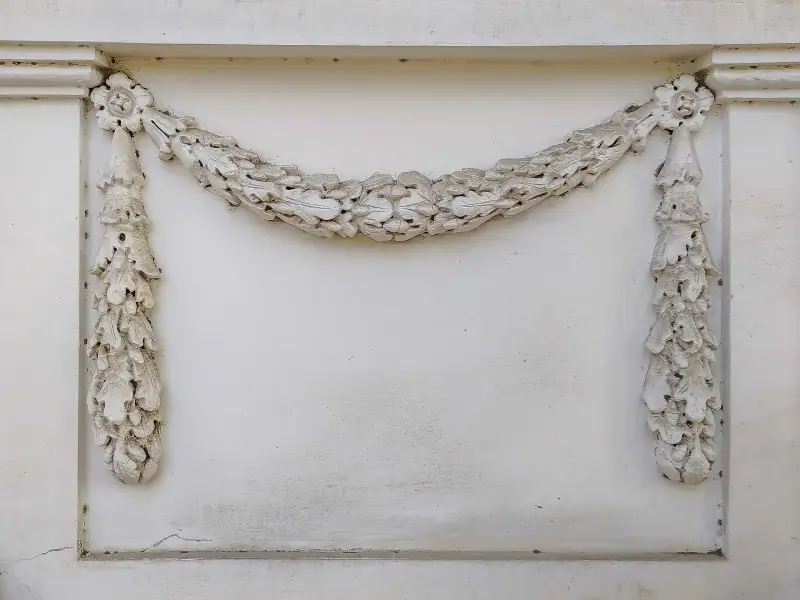
Founded in 1876 by Russian colonizers under the name Novo-Margilan, then renamed Ferghana in 1924, the city differs from all other Uzbek cities in its urban planning. Wide tree-lined avenues, shaded parks, houses with colonial facades and calm residential districts: Ferghana looks more like a Russian provincial town than a traditional Oriental city.
This architecture is far from a flaw. It gives Ferghana a particular charm, a relaxed and airy atmosphere you will not find in Tashkent or Samarkand. The central Ferghana park with its artificial lake, shaded paths and open-air cafés is the ideal spot to watch evening local life.
The Ferghana Regional Museum
The Ferghana Regional Museum (Kraevedchesky Muzey) is one of the most complete museums in provincial Uzbekistan. Its collections cover:
- Archaeology of the Ferghana Valley, with pieces dating from the Bronze Age to the Sogdian period
- Traditional costumes and textiles: sumptuous ceremonial robes in atlas silk, embroidered headdresses, ornate belts
- Fauna and flora of the valley (taxidermy specimens, botanical collections)
- Modern history of the region, including the Soviet period
It is an excellent starting point for understanding the region’s cultural richness before setting out to explore the neighboring towns.
Ferghana’s central bazaar
Even though the Margilan and Kokand bazaars are more spectacular, Ferghana’s central bazaar is worth a visit for its everyday atmosphere. The Dehqon Bazaar is particularly lively in the morning (7-11 am) and offers stalls overflowing with local produce: giant melons and watermelons in summer, pomegranates in fall, walnuts, raisins, dried peaches and apricots year-round.
Tip: Arrive early. Vendors set up their stalls at dawn and the best produce goes fast. Tuesday and Saturday are the busiest days.
Hotels in Ferghana
Book your lodging in Ferghana, the ideal base for exploring the whole valley.
Margilan: the world capital of silk
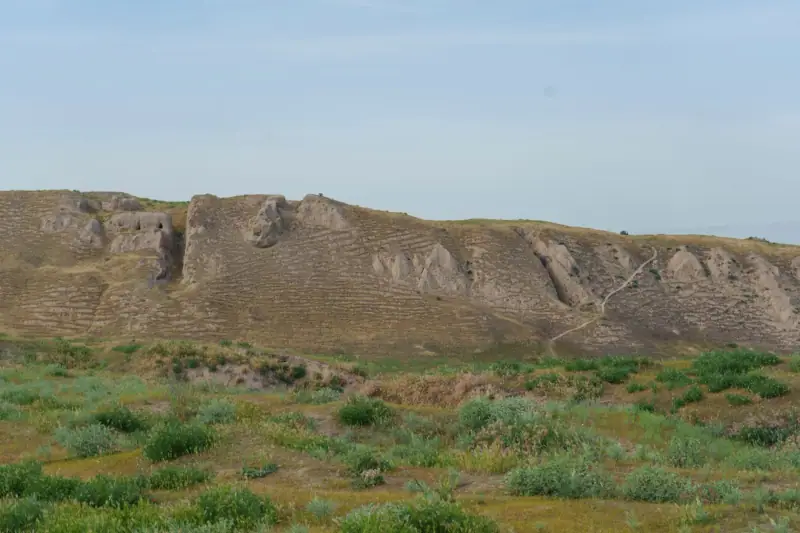
Only 12 km (7.5 mi) from Ferghana, Margilan is one of the oldest cities in Central Asia, with origins going back at least to the 1st century BCE. But its reputation rests on an age-old skill: silk production.
The Yodgorlik factory: weaving silk since antiquity
The Yodgorlik factory (“souvenir” in Uzbek) is one of the few craft silk manufactures still operating in Central Asia. Founded in 1972 on the basis of older traditions, it employs several hundred craftspeople who work at hand-operated looms in workshops open to visits.
The process is fascinating from start to finish:
- Raising silkworms: silkworm cocoons are scalded for reeling (each cocoon produces up to 1,500 meters / 4,900 ft of thread)
- Ikat dyeing: before weaving, the warp threads are tied and dyed several times to create atlas’s characteristic patterns, a technique requiring extreme precision
- Weaving: on foot-operated wooden looms, weavers create 50 cm (20 in) wide strips with bright geometric or floral patterns
- The shop: you can buy fabric by the length, ready-made clothing, scarves and accessories directly, at reasonable prices
Hours: generally during the day, but opening days vary by source, so check before coming. Entry is free for visits, but a local guide (€5-10 / ~$6-12) is advised to understand explanations in Uzbek or Russian.
Margilan’s Grand Bazaar
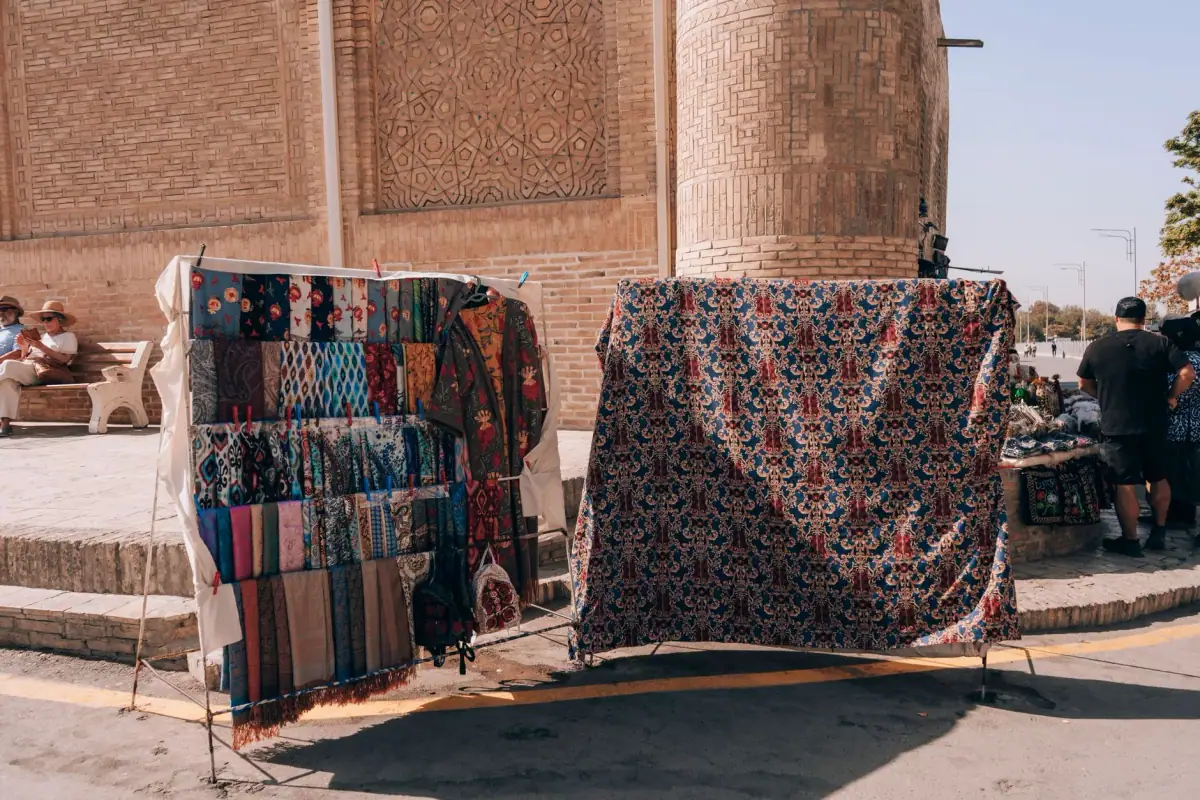
Margilan’s Kumtepa Bazaar is one of the largest and most authentic in all of Central Asia. It is held mainly on Sundays and Thursdays and draws merchants from across the valley and neighboring regions of Kyrgyzstan and Tajikistan.
You find everything: silks and velvets, spices in mountains, silver jewelry, Rishtan pottery, dried fruit, traditional musical instruments (dotar, dutar), hand-woven carpets, clothing and shoes. The atmosphere is electric, the colors explosive and the crowd unpredictable. Arrive early (8 am) for the best stalls.
Guided tours of the Ferghana Valley
Discover Margilan silk and the bazaars with a guide.
Kokand: the palaces of the khans
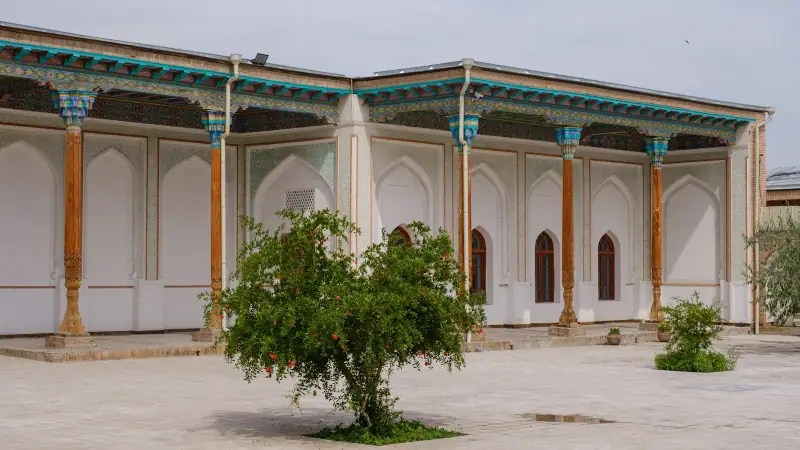
90 km (56 mi) west of Ferghana, Kokand was the capital of the powerful Kokand Khanate (1709-1876), one of the three khanates that shared Central Asia before the Russian conquest. At its peak in the 19th century, the khanate stretched into what are now Kazakhstan, Kyrgyzstan and Tajikistan.
Khudayar Khan Palace: the Uzbek Versailles
The Khudayar Khan Palace is Kokand’s major monument and one of the best-preserved palaces in Central Asia. Built between 1871 and 1873 for the last khan of Kokand, it originally had 113 rooms arranged around seven inner courtyards. Only a few wings have been restored, but they are enough to give an idea of the khanate’s opulence.
The main facade is particularly impressive: large arcades adorned with stucco stalactites, ceramic tiles with geometric and floral patterns, and painted columns form an ensemble of sophisticated elegance. Inside, painted ceilings, beveled mirrors and carved woodwork testify to a refined art of living.
The palace now houses a regional museum with collections on the khanate’s history, decorative arts and the Silk Road.
The Jami Mosque: Kokand’s great mosque
The Jami Mosque (Friday Mosque) is Kokand’s largest mosque, with a capacity of 10,000 worshippers. Built in the 19th century, it is topped by a 22-meter (72 ft) minaret and surrounded by a vast courtyard. The interior is sober and majestic, with fine carved wooden columns.
The Narbutabiy Madrasa
This 18th-century madrasa is one of Kokand’s oldest monuments. Its fired-brick entrance portal, decorated with geometric patterns, is especially beautiful. It was an important intellectual center, and Mukimi, one of the most famous classical Uzbek poets, is said to have studied there.
Rishtan: the valley’s blue ceramics

35 km (22 mi) from Ferghana, the town of Rishtan is known throughout Uzbekistan for its craft ceramics in characteristic blue and white tones. For more than a thousand years, Rishtan’s potters have used local clays and minerals to create pieces of a quality recognized as far as China and Persia along the Silk Road.
The traditional technique uses a white slip (a mix of clay and local feldspar) on which craftsmen paint freehand patterns with oxides of cobalt (blue), copper (green) and manganese (brown). The pieces are then wood-fired in domed kilns inherited from medieval practice.
Visiting the workshops: Several ceramists welcome visitors into their family workshops. The best known are the Yusupov family and the Alisher Nazirov workshop, where you can see all the stages of making and buy pieces directly at prices well below those of Tashkent shops. Plan €5-30 (~$6-35) for a plate or bowl, depending on size and fineness of decoration.
Food of the Ferghana Valley
The Ferghana Valley is considered Uzbekistan’s granary and pantry. The richness of irrigated farmland, the diversity of fruit and vegetables and culinary traditions centuries old make this region one of the country’s best food destinations.
The valley’s plov: a unique recipe
Plov, rice with carrots and lamb, is Uzbekistan’s national dish, but each region has its version. Ferghana plov stands out for its exclusive use of a local yellow carrot (Ferghana carrot), sweeter and more fragrant than the orange carrot. It is also richer and more flavorful than the Tashkent or Bukhara versions, cooked in a generous amount of cottonseed oil.
The best Ferghana plovs are eaten on Friday and Saturday mornings in the oshkhona (plov restaurants) that open from 7 am and close when the giant pots are empty, often before 11 am. It is a social ritual: men gather around a low table, tea in hand, to share the big communal dish.
The valley’s lagman and manti
The proximity of the Kyrgyz and Chinese borders can be felt in the local cooking. Lagman (hand-pulled noodles in a spiced broth of meat and vegetables) is even more present here than elsewhere in Uzbekistan, with variants scented with star anise and chili.
Manti (large steamed dumplings filled with lamb and onions or pumpkin) are a regional specialty. Served with sour cream (kaymak) or tomato sauce, they make a full meal for under €3 (~$3.50).
Fruit: an incredible abundance
The Ferghana Valley produces the best fruit in Uzbekistan. From May to October, markets overflow with fresh local produce:
- Cherries and apricots (May-June): fragrant, sun-filled, to eat right there
- Peaches and nectarines (July): local varieties are exceptional
- Figs and pomegranates (August-September): giant pomegranates of the local, very sweet variety
- Grapes (September-October): dozens of varieties with exceptional flavor
Tip: Buy your fruit directly from the producer or at the bazaar, never in supermarkets. Prices are very low and the quality is outstanding.
Chaykhana: traditional tea rooms
Tea culture is central to social life in the Ferghana Valley. Chaykhana (teahouses) are community spaces where people drink unsweetened green tea, play dominoes or backgammon and chat for hours. They are generally on low platforms covered with carpets, with cushions, overlooking a garden or a stream.
Entering a local chaykhana (not a tourist version) is one of the most authentic cultural experiences of the trip.
How to get to Ferghana
From Tashkent
By plane: Ferghana airport (FEG) receives daily flights from Tashkent, notably with Uzbekistan Airways (about 1 hour, €30-60 / ~$35-70). The airport is 8 km (5 mi) from the city center.
By train: Trains link Tashkent to Andijan (serving the valley) in about 5-6 hours. Fares: €12-20 (~$14-23); check schedules and book on the official Uzbek railways site. From Andijan station, a taxi or local bus takes you to Ferghana in 45 minutes (€1-3 / ~$1-3.50). The trip passes through the spectacular Kamchik tunnel, dug under the Alatau mountains.
By car: The Tashkent-Ferghana road via the Kamchik Pass is about 340 km (211 mi) and takes 3 h 30-4 hours. The pass, at 2,268 meters (7,441 ft) elevation, offers panoramas over the Tian Shan ranges. In winter, check the road condition before leaving.
From Samarkand
From Samarkand to Ferghana, allow 6-7 hours by road (320 km / 199 mi) via Jizzakh. There is no direct train. The most practical option is a shared taxi from Samarkand’s bus station (€20-30 / ~$23-35, 5-6 hours) or a private taxi (€50-80 / ~$58-93 for the whole vehicle). Flying via Tashkent is faster but more expensive.
Getting around the valley
The valley’s towns (Ferghana, Margilan, Kokand, Rishtan, Andijan) are linked by marshrutkas (minibuses) and shared taxis that leave when full. Fares are very low (€1-3 / ~$1-3.50 per trip). For more flexibility, hire a car with driver for the day (€20-40 / ~$23-46 depending on distance).
Car rental in Ferghana
Explore the Ferghana Valley at your own pace with a rental car.
Where to stay in Ferghana
Ferghana is the best base for exploring the whole valley. The city has a varied hotel offer, from small family hotels to modern properties with a pool.
Recommended hotels
Comfort category (€40-80 / ~$46-93 a night):
- Ziyorat Hotel: well located in the center, modern comfort, friendly staff
- Grand Ferghana Hotel: the city’s largest hotel, pool, restaurant, reliable Wi-Fi
Small budgets (€15-30 / ~$17-35 a night):
- Family guesthouses: many options in residential areas, breakfast included. Book through Booking.com or arrive looking for “guesthouse” or “mehmonkhona” signs
Recommendation: For authenticity, favor family guesthouses where breakfast is a real Uzbek meal (non bread, tea, fruit jam, cheese, eggs). Contact with the family adds a lot to the trip.
Lodging in Kokand
If you want to spend a night in Kokand to see the palace in the evening or early morning, several affordable guesthouses are available near the Khudayar Khan Palace. Plan €15-25 (~$17-29) a night.
Practical tips
Daily budget: Plan €35-60 (~$41-70) per person per day (guesthouse lodging €20-30 / ~$23-35, meals €5-10 / ~$6-12, local transport €3-5 / ~$3.50-6, monument entry €2-5 / ~$2.50-6). Ferghana is one of the cheapest destinations in Uzbekistan.
Currency: The Uzbek som (UZS). ATMs (Visa/Mastercard) are available in central Ferghana. Outside the city, cash is essential; withdraw enough before heading out on an excursion.
Connectivity: Local SIMs (UCell, Beeline) cost €2-5 (~$2.50-6) and offer excellent 4G coverage across the valley. Wi-Fi is available in most hotels. You can also check your carrier’s international plan or use a travel eSIM.
Language: Uzbek dominates in the Ferghana Valley, even more than in Tashkent. Russian is less spoken than elsewhere in the country. English is understood in hotels and tourist restaurants. A few words of Uzbek (rahmat = thank you, salom = hello, qancha = how much) always please.
Dress: The Ferghana Valley is a traditional and religious region. Women should cover their shoulders and knees, especially in markets and mosques. Very short shorts are discouraged for everyone.
Photography at the bazaar: Always ask permission before photographing people. A smile and a “ruxsat etasizmi?” (may I take a photo?) are generally well received.
The Ferghana Valley is the perfect counterpoint to the great Silk Road cities: where Samarkand dazzles, Ferghana enchants with its gentle way of life. The Silk Road does not end at the minarets of Samarkand. It continues in the looms of Margilan, in the kilns of Rishtan’s potters, in Friday-morning plov and in the bottomless teapots of Kokand’s chaykhanas.
To complete your circuit, see our Silk Road guide, our 7-day itinerary for Uzbekistan and our guide to Uzbek cuisine so you miss none of the local flavors.
Frequently asked questions
How do you get to Ferghana from Tashkent?
From Tashkent you have several options: by plane (1 hour, daily flights, notably Uzbekistan Airways, €30-60 / ~$35-70), by train to Andijan or Namangan (about 5-6 hours, €12-20 / ~$14-23; check schedules on the Uzbek railways site) then taxi to Ferghana, or by car via the Kamchik Pass (3 h 30, a spectacular road). The plane is most practical if you are in a hurry. The train is economical and comfortable. By car, the Kamchik Pass crossing offers magnificent mountain scenery.
How long does it take to visit the Ferghana Valley?
Plan at least 3 days to cover the essentials: one day in Ferghana, one in Margilan (silks and bazaars), one in Kokand (palace and mosques). Five days allow a more relaxed trip, with Rishtan for ceramics, Andijan and the local markets. The Ferghana Valley deserves a full week for fans of crafts, food and authentic Uzbek culture.
Is the Ferghana Valley safe for tourists?
The article describes the Ferghana Valley as safe for tourists, saying the violent incidents of the 1990s-2000s (linked to regional political tensions) belong to the past. The region is described as peaceful, welcoming and little visited by Western tourists, with locals known for their hospitality. As everywhere in Uzbekistan, keep your papers with you and avoid photographing official or military buildings without permission. For current conditions, check your government's official travel advice.
What is Margilan silk and where do you buy it?
Margilan is the cradle of Uzbek silk, producing fabrics for more than 2,000 years. The specialty is atlas (ikat), a fabric with wavy patterns created by a complex dyeing technique before weaving. You buy it directly at the Yodgorlik factory (the most accessible to tourists), at Margilan's Grand Bazaar or in the shops of the main street. Plan €20-80 (~$23-93) for a 5-meter (16 ft) length depending on quality. Check authenticity: real natural silk wrinkles when you grip it in your fist.
What is the best time to visit Ferghana?
Spring (April-May) is the best period: ideal temperatures (20 to 28 °C / 68 to 82 °F), markets colored by the first cherries, apricots and strawberries. Fall (September-October) is also excellent, with the grape harvest and seasonal fruit. Summer (June-August) is hot (35 to 42 °C / 95 to 108 °F) but bearable because the valley is green and irrigated. Winter is cold (0 to 5 °C / 32 to 41 °F at night) but the bazaars stay active and the snow-covered valley offers an unexpected winter scene.
Can you visit the Ferghana Valley from Tashkent as a day trip?
Technically possible with a round-trip flight (1 hour each way), but strongly discouraged. The Ferghana Valley reveals itself slowly: morning markets, meetings with craftsmen, family meals in a local chaykhana. A day trip will give you a frustrating taste. Plan at least 2 nights for a memorable experience. Ferghana's hotels are comfortable and affordable (€20-60 / ~$23-70 a night).
More Uzbekistan guides
Keep reading
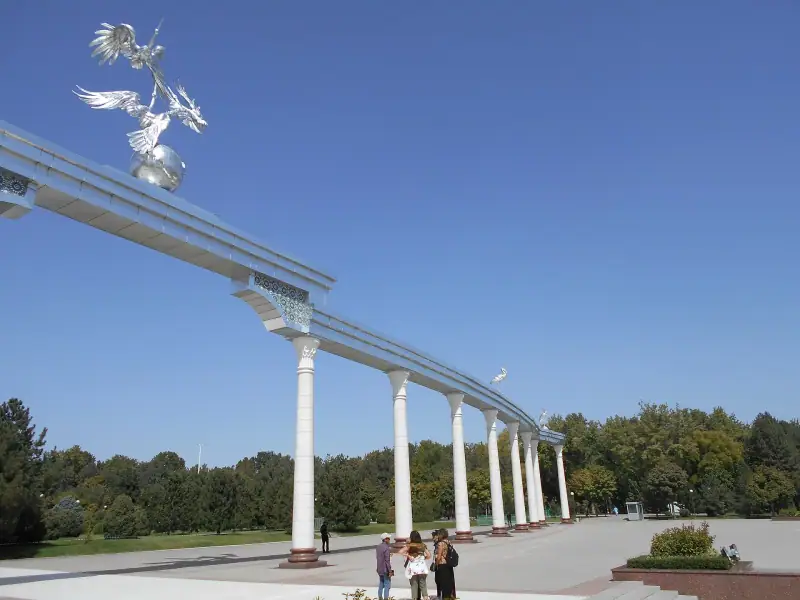
Tashkent top sights: what to see and do in Uzbekistan's capital
Tashkent's top sights: Chorsu Bazaar, Khast-Imam Mosque, museums, restaurants and neighborhoods in Central Asia's largest city.
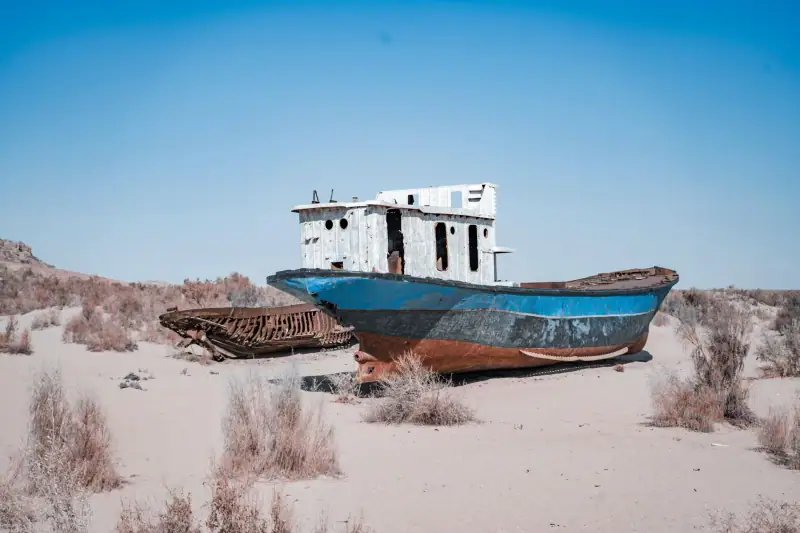
Visiting Karakalpakstan: a complete guide to Uzbekistan's forgotten region
Visiting Karakalpakstan: the Savitsky Museum, Khorezm fortresses, the Aral Sea. A complete guide to exploring this forgotten region of Uzbekistan.
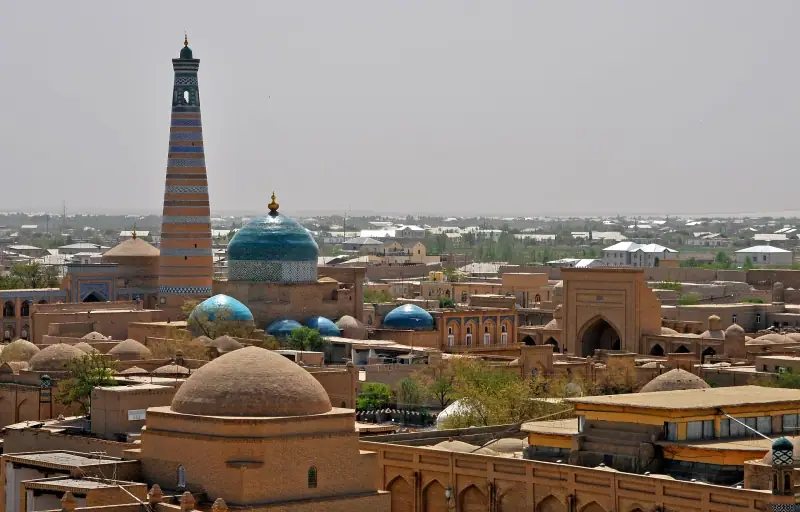
Visiting Khiva: a complete guide to the walled city of the Silk Road
Visiting Khiva: Itchan Kala, minarets, palaces, lodging and transport. A complete guide to exploring this pearl of the Uzbek Silk Road.
Ready-made
Uzbekistan itineraries
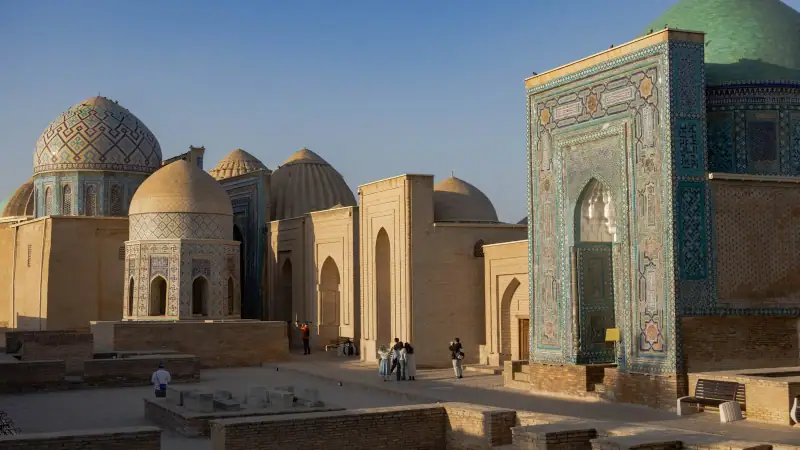
10 days
Uzbekistan in 10 days: a complete itinerary with the Ferghana Valley
TashkentFerghanaSamarkandBukharaKhiva
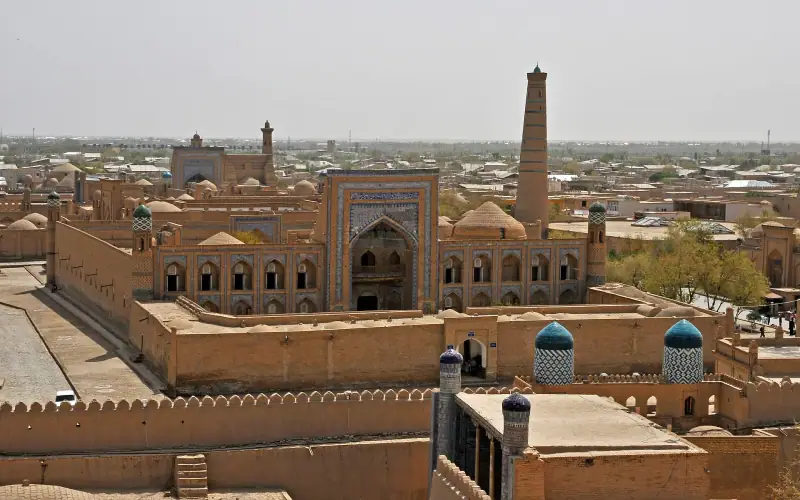
7 days
Uzbekistan in 7 days: the ideal Silk Road itinerary
TashkentSamarkandBukharaKhiva
9 days
Uzbekistan in 9 days with kids: stops and a family-friendly pace
TashkentSamarkandBukhara