What to see
Tashkent top sights: what to see and do in Uzbekistan's capital
We may earn a commission when you book through links on this page, at no extra cost to you. We don't visit or try the places we cover: we summarize published sources. How we work
In short
- One full day covers Tashkent's essentials; two days allow a relaxed pace with the old town and a few museums.
- Highlights are the Khast-Imam complex, Chorsu Bazaar (best between 8 and 10 am, cash only), the history museum and the Soviet-era metro.
- A metro ticket costs about 2,500 som (about $0.17) with electronic payment since October 1, 2026.
- Tashkent has few medieval sites after the 1966 earthquake, but offers the country's most diverse food scene and nightlife.
Tashkent is the largest city in Central Asia, with 3 million inhabitants. The modern capital of Uzbekistan, it was almost entirely rebuilt after the devastating 1966 earthquake and in the Soviet style of the 1970s-80s. It is not the medieval city a traveler arriving in Uzbekistan expects, but it is a fascinating metropolis that deserves at least a day of exploration.
The Khast-Imam complex
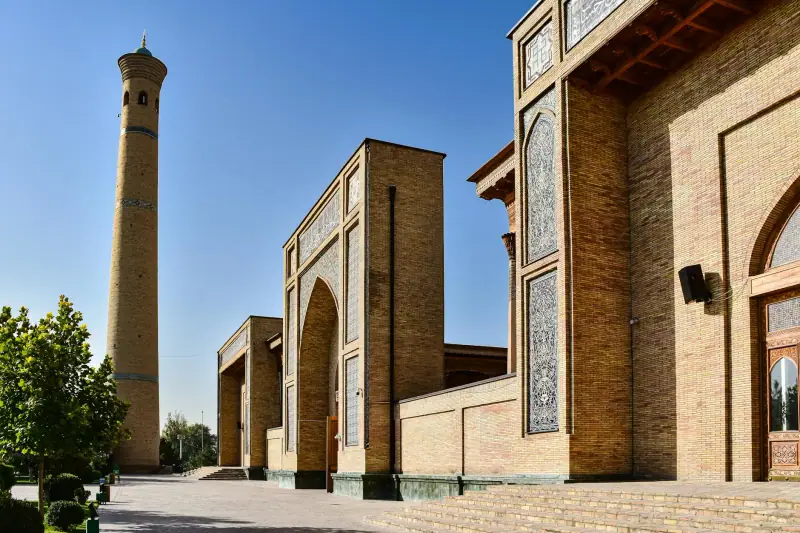
The Khast-Imam complex is the religious heart of Tashkent and one of the most important sites in Central Asia for Muslims. It brings together several mosques, madrasas and the Barak-Khan library on a single esplanade.
What to see:
- Khazrati Imam Mosque: Tashkent’s main great mosque, rebuilt in 2007, with its imposing white dome
- Barak-Khan Madrasa: a partly restored 16th-century madrasa
- The library: it holds the Uthman Quran, considered the oldest copy of the Quran in the world (7th century, time of the third caliph). This manuscript is one of the most sacred objects in Islam.
- Muyi Muborak Madrasa: holds a relic of the Prophet Muhammad
Practical information: Free entry to the courtyards. The library interior requires a request and a guide. Respectful dress is required.
Chorsu Bazaar
The Chorsu Bazaar is Tashkent’s most authentic experience. This immense market, under its characteristic turquoise dome visible from afar, is one of the most impressive bazaars in Central Asia.
What you will find there:
- Spices and herbs: saffron, cumin, sumac, dried herbs in colorful mounds
- Dried fruit and nuts: pistachios from Kyrgyzstan, almonds, raisins, dried apricots
- Grains and legumes: chickpeas, lentils, Ferghana rice
- Fresh produce: vegetables and fruit depending on the season
- Non bread: bakers work in front of you in their tandoors (clay ovens)
- Crafts: on the market’s upper level, souvenirs and crafts
- Clothing: traditional textiles, suzani, Uzbek dresses
Tip: Arrive in the morning between 8 and 10 am for maximum activity. Bring cash (vendors do not accept cards).
The top museums
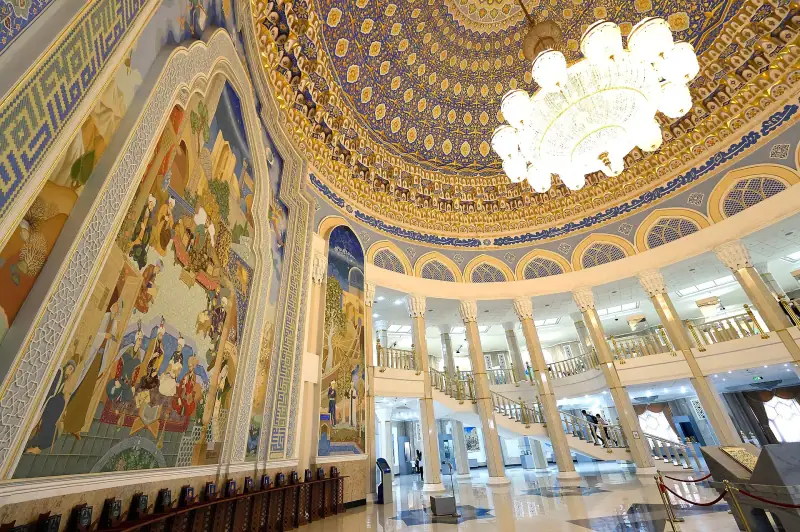
Museum of the History of Uzbekistan
The country’s most important museum covers 2.5 million years of history, from prehistory to today. Its collections are especially rich in:
- Sogdian and Silk Road objects
- Buddhist frescoes and sculptures from Termez
- Coins, jewelry and medieval armor
- Timurid and Shaybanid art
Practical information: Entry ~€3 (~$3.50). Allow 2-3 hours.
Museum of Applied Arts
A museum devoted to traditional Uzbek crafts in a beautiful 19th-century villa: suzani embroidery, ceramics, textiles, wood and ivory work. Ideal for understanding the crafts before buying them in the shops.
Practical information: Entry ~€2 (~$2.50). More pleasant than the history museum for non-specialists.
Museum of Fine Arts
Collections of Uzbek art from the 19th to the 20th century, including many paintings depicting bazaars and everyday Uzbek life in the Soviet era. Some works by 19th-century Russian Orientalist artists are remarkable.
The metro: an attraction in itself
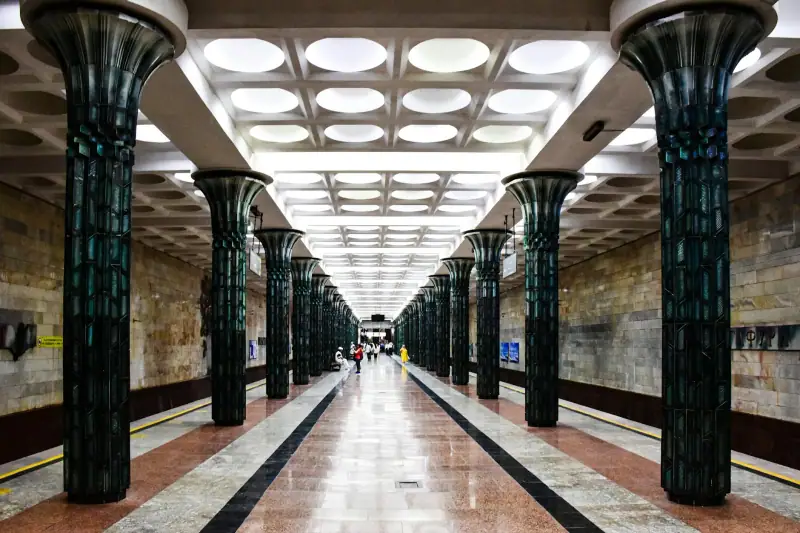
The Tashkent metro is one of the most beautiful in Central Asia. Built between 1977 and 1984, its stations are true architectural monuments, each decorated in a unique style.
Stations not to miss:
- Kosmonavtlar (Cosmonauts station): aluminum ceiling with space motifs, mosaics on the theme of the Soviet conquest of space
- Alisher Navoi: white marble columns adorned with medallions depicting characters from the great Uzbek poet
- Pahtakor (Cotton station): gilded bas-reliefs evoking cotton growing, Uzbekistan’s Soviet-era pride
A metro ticket costs about 2,500 som (about $0.17) with electronic payment, since October 1, 2026 (a little more in cash). Use the metro to get around the city: it is fast, clean and a cultural attraction at the same time.
Parks and green spaces
Tashkent is a surprisingly green city, with wide tree-lined avenues and many parks.
Alisher Navoi Park: the city’s largest park, with shaded paths, fountains and a zoo. Ideal for a morning walk.
Victory Park: a large memorial park with a World War II museum and an eternal flame. Impressive Soviet architecture.
The botanical garden: a collection of 4,500 plant species in a pleasant setting.
Eating in Tashkent
Tashkent has the most diverse food scene in Uzbekistan.
For traditional Uzbek cuisine:
- Restaurants around Chorsu Bazaar
- The old city district (Eskidjuva)
- Chaikhanas (teahouses) with their low tables and carpets
For international cuisine:
- Amir Temur Avenue: many Korean, Japanese and European restaurants
- Modern downtown: trendy cafés and restaurants frequented by expats
Must-try in Tashkent:
- Tashkent plov (different from Samarkand plov, lighter according to connoisseurs)
- Beef shashlik (different from the lamb more often found in the provinces)
- Lagman (Uzbek-Dungan noodle soup)
Going out in the evening in Tashkent
Tashkent is the only city in Uzbekistan with real nightlife. Bars, clubs and restaurants stay open late. The Yunusobod district is lively in the evening, especially on Fridays and Saturdays.
Alisher Navoi Theater: the Tashkent opera, a large building constructed in 1947 by Japanese prisoners. Dance, opera and classical music performances take place regularly.
Tashkent is Uzbekistan’s best city for travelers who want to understand the modern country, not just its medieval past. It also offers the best infrastructure (hotels, restaurants, transport) to organize the rest of your Silk Road trip. To continue, see our 7-day itinerary.
Frequently asked questions
How many days do you need to visit Tashkent?
One full day is enough to see Tashkent's essential sights. Two days are ideal to explore the city at a relaxed pace and include an outing in the old town and a few museums. Tashkent is generally not the main destination; it often serves as a gateway before the Silk Road cities.
Is Tashkent really worth the detour?
Yes, but differently from Samarkand or Bukhara. Tashkent has no spectacular medieval sites (they were destroyed in the 1966 earthquake and by Soviet renovations). It is, however, a large modern Central Asian city with excellent museums, an exceptional bazaar and a more diverse food scene than the rest of the country.
How do you get around Tashkent?
Tashkent has a modern, inexpensive metro (one of the city's great Soviet prides, with stations decorated in marble and mosaics). It is complemented by Yandex Go (formerly Yandex.Taxi) for quick trips. A metro ticket costs about 2,500 som (about $0.17) since October 1, 2026.
Are the Tashkent metro stations really remarkable?
Yes, the Tashkent metro is one of the most beautiful in Central Asia. Built in the Soviet era (1977), each station has a unique architecture: colored marbles, monumental chandeliers, mosaics depicting Uzbek history and arts. It is a cultural attraction in itself.
What are the best restaurants in Tashkent?
Tashkent offers the most diverse food in Uzbekistan. The traditional Uzbek restaurants of the Yunusobod district are excellent. Amir Temur's 'restaurant street' offers a wide selection. Korean, Russian and international cuisines are also available.
More Uzbekistan guides
Keep reading
Visiting Ferghana: a complete guide to the Ferghana Valley
Visiting Ferghana and the Ferghana Valley: Margilan, Kokand, silk, bazaars and food. A complete guide to this little-known jewel of Uzbekistan.
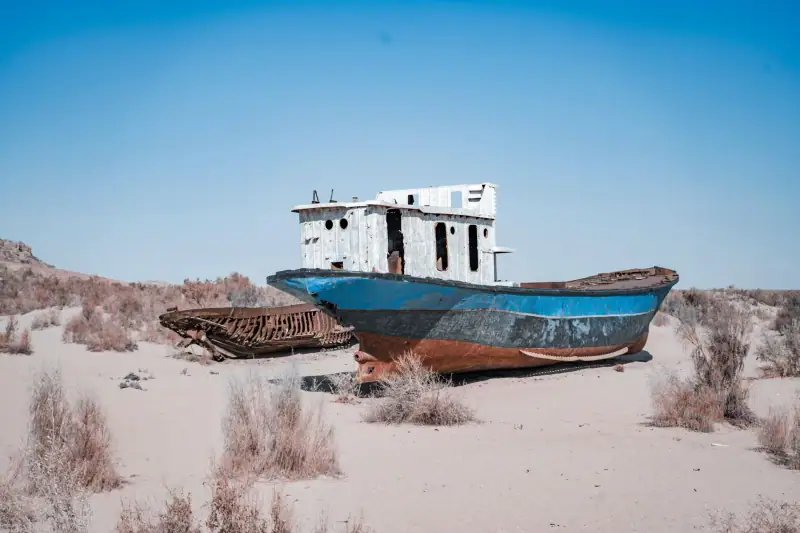
Visiting Karakalpakstan: a complete guide to Uzbekistan's forgotten region
Visiting Karakalpakstan: the Savitsky Museum, Khorezm fortresses, the Aral Sea. A complete guide to exploring this forgotten region of Uzbekistan.
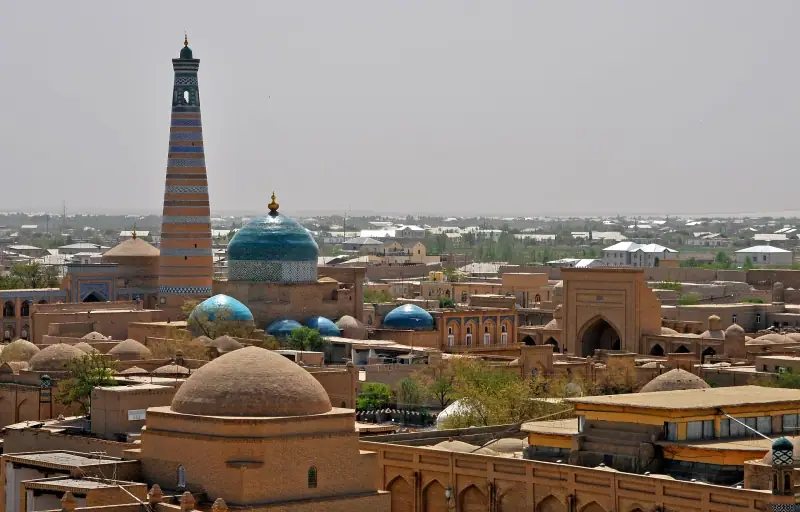
Visiting Khiva: a complete guide to the walled city of the Silk Road
Visiting Khiva: Itchan Kala, minarets, palaces, lodging and transport. A complete guide to exploring this pearl of the Uzbek Silk Road.
Ready-made
Uzbekistan itineraries
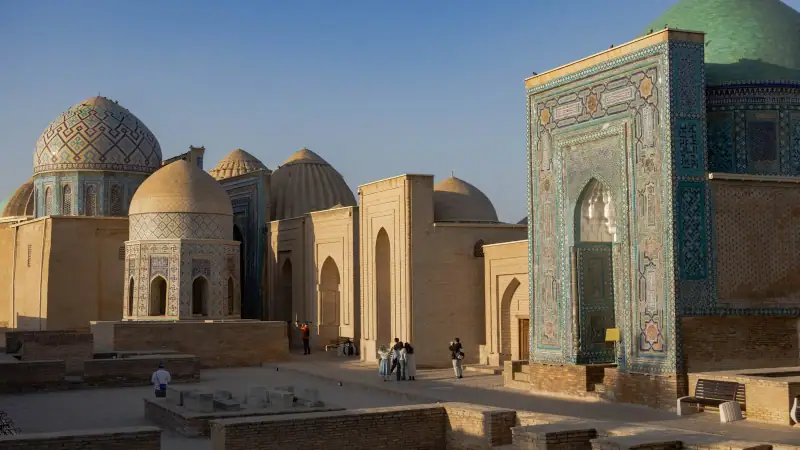
10 days
Uzbekistan in 10 days: a complete itinerary with the Ferghana Valley
TashkentFerghanaSamarkandBukharaKhiva
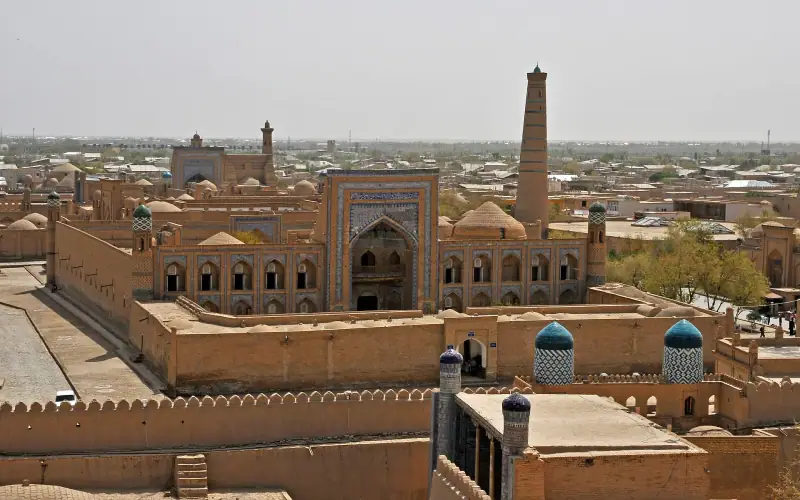
7 days
Uzbekistan in 7 days: the ideal Silk Road itinerary
TashkentSamarkandBukharaKhiva
9 days
Uzbekistan in 9 days with kids: stops and a family-friendly pace
TashkentSamarkandBukhara