Itineraries
Uzbekistan in 7 days: the ideal Silk Road itinerary
We may earn a commission when you book through links on this page, at no extra cost to you. We don't visit or try the places we cover: we summarize published sources. How we work
Day by day
- Day 1Arrive in Tashkent: Chorsu Bazaar, old town, history museum
- Day 2Afrosiyob train to Samarkand: Registan, Bibi-Khanym Mosque
- Day 3Shah-i-Zinda, Siyob Market, Gur-e-Amir, Ulugh Beg Observatory
- Day 4Train to Bukhara: Lyabi-Hauz, Kalon minaret, covered bazaars
- Day 5Ark, Samanid Mausoleum, Bolo-Hauz, Nadir Divan-Begi Madrasa
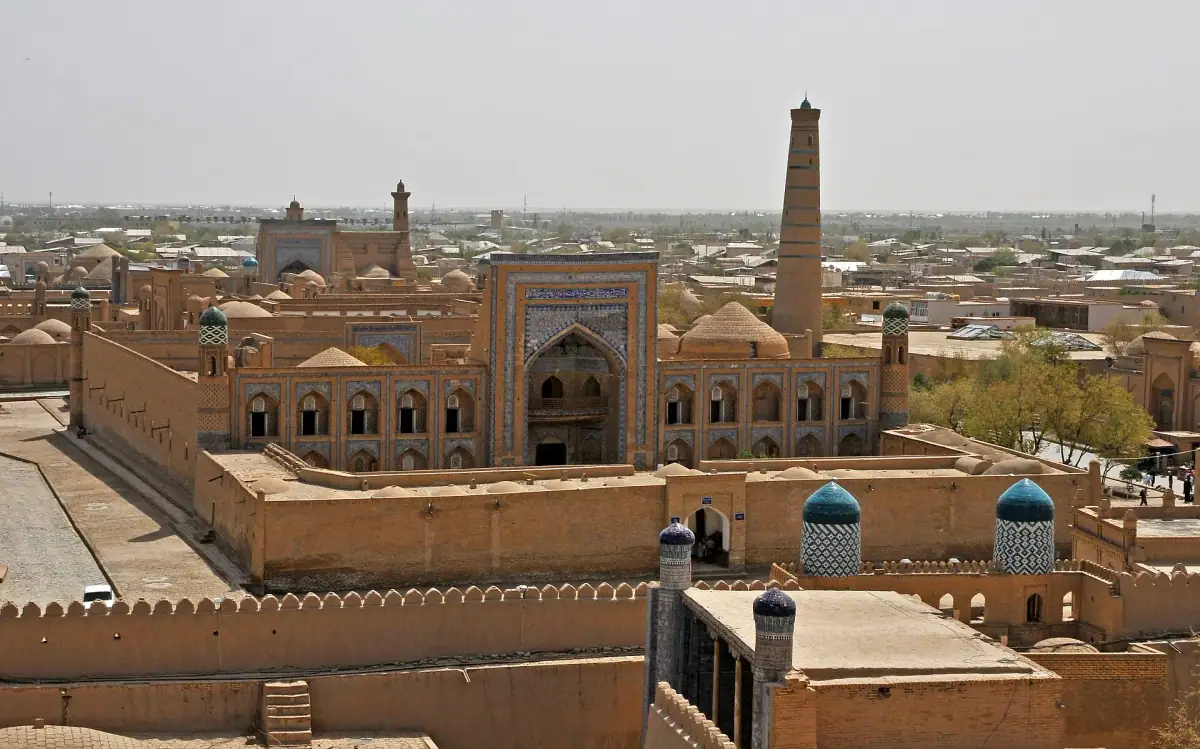
- Day 6Transfer to Khiva, Itchan Kala
- Day 7Khiva minarets and Tosh-Hovli, flight back to Tashkent
Where to sleep
- Tashkent1 night
- Samarkand2 nights
- Bukhara2 nights
- Khiva1 night
In short
- Seven days cover Tashkent (1 night), Samarkand (2), Bukhara (2) and Khiva (1), a sustained but workable program.
- The Afrosiyob high-speed train links Tashkent, Samarkand and Bukhara in 2 to 3 hours; for Khiva, fly, take a train from Bukhara or the fast train.
- Budget is €600-900 (about $700-1,045) per person excluding international flights; €400-550 (~$465-640) on a tight budget.
- Book trains ahead on e-ticket.railway.uz, ideally 2 to 3 weeks before, especially in April-May and September-October.
Seven days in Uzbekistan let you touch the essentials of the Silk Road: the golden mosques of Samarkand, the age-old lanes of Bukhara, the medieval walls of Khiva and the modern capital Tashkent. It is a fast-paced program that rewards every effort with unforgettable discoveries.
Here is an optimized itinerary, designed to maximize experiences and minimize downtime.
Day 1: Arrival in Tashkent
During the day
Your trip begins at Tashkent International Airport (TAS). After collecting your bags and changing money at the airport, take a taxi or Yandex to your lodging in the city center (about 15-20 minutes, €5-8 / ~$6-9).
Afternoon:
- Chorsu Bazaar: the largest and most colorful in Tashkent. Lose yourself among the stalls of spices, dried fruit, grains and crafts. Do not miss the turquoise-blue dome.
- Old town: stroll through the lanes of the old city, visit the Khast-Imam Mosque and the museum of Islamic manuscripts
- Museum of the History of Uzbekistan: to put your trip in context (2-3 hours)
Evening: Have dinner in a traditional restaurant in the city center. Order an Uzbek plov or shashlik. Go to bed early to recover from jet lag.
Lodging: Hotel in downtown Tashkent (€40-80 / ~$46-93)
Transport: Airport → hotel taxi (€5-8 / ~$6-9), taxi or metro for sightseeing (€1-3 / ~$1-3.50)
Day 2: Tashkent to Samarkand
Morning
Have breakfast at the hotel, then head to Tashkent station to take the Afrosiyob train (high-speed) to Samarkand. There are several departures a day (6 am-7 pm), and the trip takes 2 h 10. Book economy class (about €22-25 / ~$26-29 in 2026) or business class for more comfort (about €32 / ~$37); check current fares on the official site.
You arrive in Samarkand around 10-11 am depending on the departure.
Afternoon
Drop your bags at your guesthouse and set off right away for:
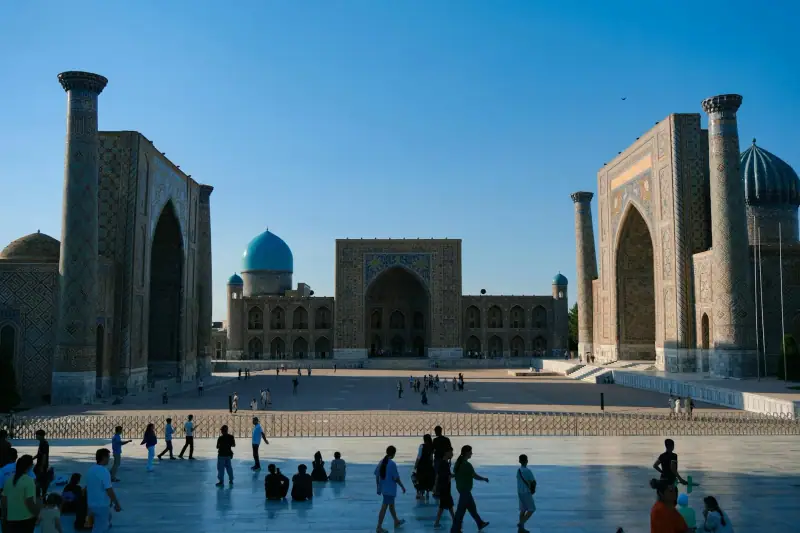
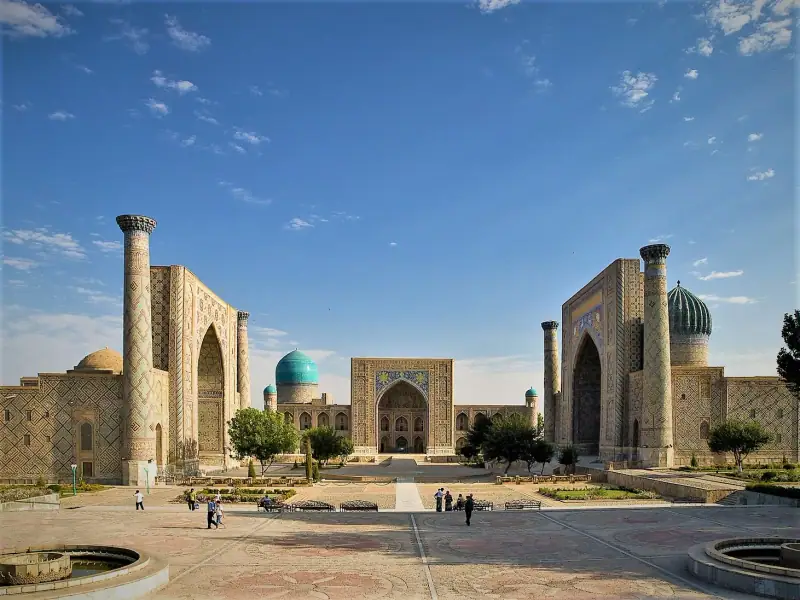
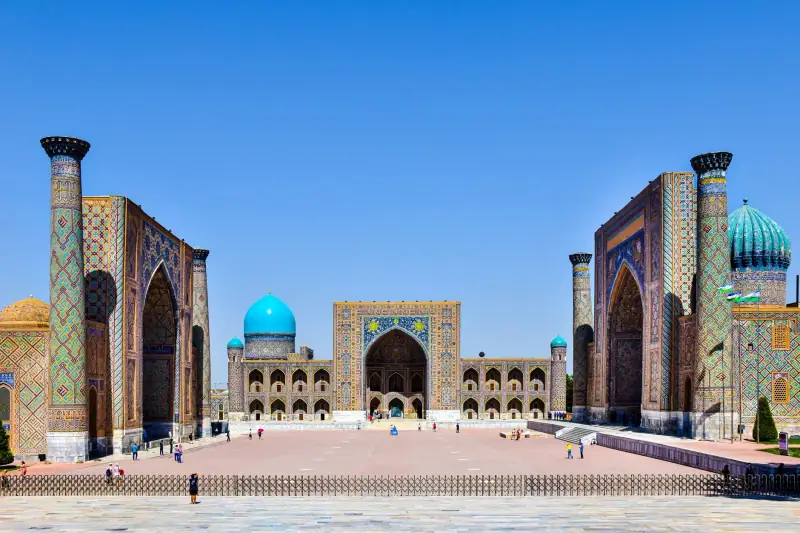
- The Registan: the city’s masterpiece. Allow at least 2-3 hours to explore the three madrasas (Ulugh Beg, Sher-Dor and Tilya-Kori). Entry costs about €8 (~$9).
- Bibi-Khanym Mosque: the gigantic medieval mosque, a 10-minute walk from the Registan
Evening
Return to the Registan at sunset (6-8 pm depending on the season) to watch the facades light up. It is the magical moment that travelers describe as the best memory of Uzbekistan.
Lodging: Guesthouse in Samarkand’s old town (€25-50 / ~$29-58) — see our recommendations
Day 3: Samarkand
A whole day devoted to Samarkand. Get up early to enjoy the dawn on the monuments.
Morning (7 am-12 pm)
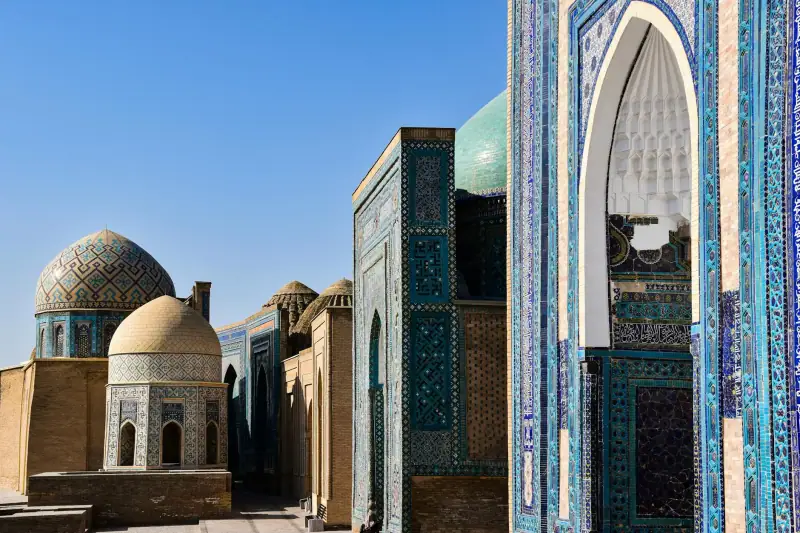
- Shah-i-Zinda: a necropolis of 40 mausoleums decorated with extraordinary turquoise tiles. Visit early in the morning before the groups (entry ~€4 / ~$5)
- Siyob Market: Samarkand’s big bazaar, lively in the morning. Try the hot samsa fresh from the oven.
Afternoon (2 pm-6 pm)
- Gur-e-Amir Mausoleum: Tamerlane’s tomb, a masterpiece of Timurid architecture (entry ~€4 / ~$5)
- Ulugh Beg Observatory: the remains of the prince-astronomer’s observatory (entry ~€3 / ~$3.50)
- Afrosiyab Museum: presents the excavations of the ancient city (optional, €2 / ~$2.50)
Evening
Have dinner in a restaurant in the historic quarter. Try dimlama (lamb and vegetable stew) or norin (noodles with horse meat). Finish with green tea in a chaikhana.
Lodging: Same guesthouse in Samarkand
Day 4: Samarkand to Bukhara
Morning
Take the Afrosiyob train from Samarkand to Bukhara (departure 8-10 am, 1 h 30). You arrive in Bukhara around 9:30-11:30 am.
Afternoon (in Bukhara)
Bukhara is more compact than Samarkand. The afternoon is enough to start exploring:
- Lyabi-Hauz: the central pool surrounded by centuries-old plane trees and 16th-century monuments. Put down your bags, have tea and watch life pick up.
- Kalon Mosque and Minaret: the minaret, about 46 m (151 ft), and the great mosque. A superb view from the neighboring terrace.
- Covered bazaars (Tim Abdullakhan, Taki-Sarrafon, Taki-Tilpak-Furushon): five domed 16th-century bazaars still in operation
Evening
Lyabi-Hauz comes alive in the evening. Have dinner at one of the terrace restaurants around the pool. Evenings are especially pleasant in spring and fall.
Lodging: Guesthouse or boutique hotel in Bukhara’s historic center — see our recommendations
Day 5: Bukhara
A full day to explore Bukhara in depth.
Morning
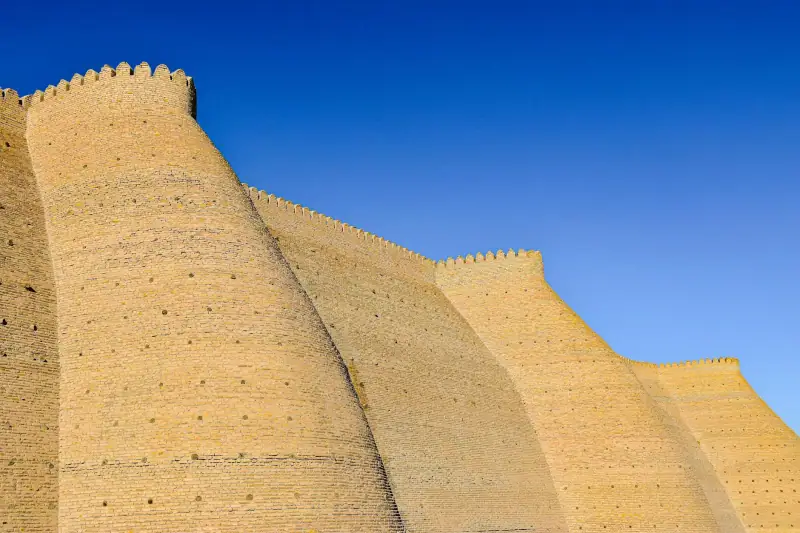
- Ark Citadel: the fortress of the emirs of Bukhara, inhabited for 2,500 years. The museum inside traces the city’s history.
- Samanid Mausoleum: the oldest intact Islamic building in Central Asia (10th century), in a leafy park
- Bolo-Hauz Mosque: the mosque with 20 carved wooden columns
Afternoon
- Nadir Divan-Begi Madrasa: one of Bukhara’s most beautiful madrasas, now occupied by craftsmen
- Kalon Minaret at night: come back around 8-9 pm to see the minaret lit up, a magical sight
Day 6: Bukhara to Khiva
Transfer Bukhara to Khiva
This is the most complex logistical leg of the itinerary. The options are:
Option 1 (recommended): flight
- Bukhara → Urgench by plane (1 h 30, €40-70 / ~$46-81) + taxi Urgench → Khiva (30 min, €5-8 / ~$6-9)
- Morning departures, arriving in Khiva around noon
Option 2: train
- Train Bukhara → Urgench/Khiva (about 6 hours on the daytime Sharq train, longer on the night train; check schedules and fares on the official site)
- Since May 2026, the fast Jaloliddin Manguberdi train (Tashkent-Khiva, about 7 h 30) also stops in Bukhara, but runs only on certain days
If you choose a night train, leave Bukhara on the evening of day 5 and sleep on the train.
Afternoon in Khiva
- Itchan Kala: the fortified inner city. Buy the combined ticket (€12-18 / ~$14-21) giving access to all the monuments.
- First wanderings: lose yourself in the lanes of this open-air museum
Evening
Khiva is small and intimate. In the evening, once the groups have gone, the medieval lanes take on a mysterious, magical atmosphere.
Lodging: Guesthouse inside the walls of Itchan Kala (€25-50 / ~$29-58)
Day 7: Khiva and departure
Morning
Enjoy your last morning in Khiva:
- Islam Khodja Minaret: climb to the top for a panoramic view over the whole city
- Tosh-Hovli Palace: the winter residence of the khans of Khiva, beautifully decorated
- Kalta Minor Minaret: the unfinished “short” minaret, famous for its blue and green ceramic tiles
Afternoon
Head to Urgench airport (30 min by taxi) for your flight back to Tashkent (1 h 30), then your onward international connection. Some travelers spend a last night in Tashkent if the return flight is the next morning.
Itinerary recap
| Day | City | Night |
|---|---|---|
| 1 | Arrival in Tashkent | Tashkent |
| 2 | Tashkent → Samarkand | Samarkand |
| 3 | Samarkand (full day) | Samarkand |
| 4 | Samarkand → Bukhara | Bukhara |
| 5 | Bukhara (full day) | Bukhara |
| 6 | Bukhara → Khiva | Khiva |
| 7 | Khiva → Departure | — |
Entry rules depend on your passport. Check the official travel advice of your government before you book: travel.state.gov (US), GOV.UK (UK), travel.gc.ca (Canada), Smartraveller (Australia) (checked November 2026).
For a longer stay that also takes in the Ferghana Valley and the Aral Sea, see our complete guide to Uzbekistan and our article on the Silk Road.
Frequently asked questions
Is it possible to visit Uzbekistan in 7 days?
Yes, 7 days let you see the four main cities (Tashkent, Samarkand, Bukhara, Khiva) at a good pace. It is a sustained but workable program. To enjoy it fully without rushing, 10 to 14 days are preferable. This itinerary optimizes travel times.
How do you travel between cities in 7 days?
The Afrosiyob high-speed train links Tashkent, Samarkand and Bukhara quickly (2-3 hours). For Khiva, allow for a flight, a train from Bukhara (day or night) or, since May 2026, the fast Jaloliddin Manguberdi train, which links Tashkent to Khiva in about 7 h 30 with stops in Samarkand and Bukhara (check the days it runs). Plan your train tickets ahead on e-ticket.railway.uz to secure the best seats.
What budget should you plan for a 7-day itinerary in Uzbekistan?
Plan €600-900 (about $700-1,045) per person all-inclusive (lodging, meals, local transport, entry fees), excluding international flights. On a tight budget, €400-550 (~$465-640) is enough. For comfort, plan €1,000-1,500 (~$1,160-1,740).
Can you do the 7-day itinerary solo?
Absolutely. Uzbekistan is described as a very safe destination that is easy to travel solo. Trains are comfortable and well organized, guesthouses welcome solo travelers and locals are very helpful. It is even called one of the best solo destinations in Asia.
Can you add the Aral Sea to a 7-day itinerary?
Hardly in 7 days. The Aral Sea (Moynaq) is 2-3 hours by bus or car from Nukus, which itself is reachable from Bukhara (flight or train). To add this stop, plan at least 10 days.
Do you need to book trains in advance?
Yes, especially in high season (April-May, September-October). Afrosiyob tickets go quickly. Book through the official site e-ticket.railway.uz as soon as your itinerary is set, ideally 2-3 weeks ahead.
More Uzbekistan guides
Keep reading
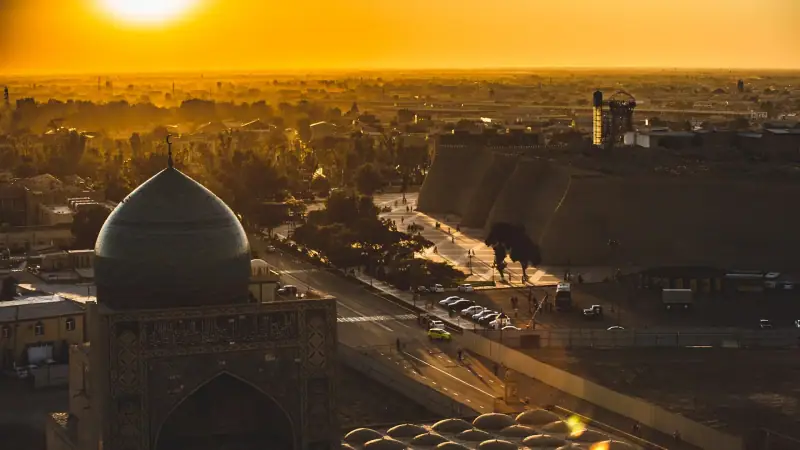
Things to do in Bukhara: the best activities and must-see visits
What to do in Bukhara? The Ark, Kalon minaret, covered bazaars, craft workshops, evenings in the old town. A complete guide to the best activities.
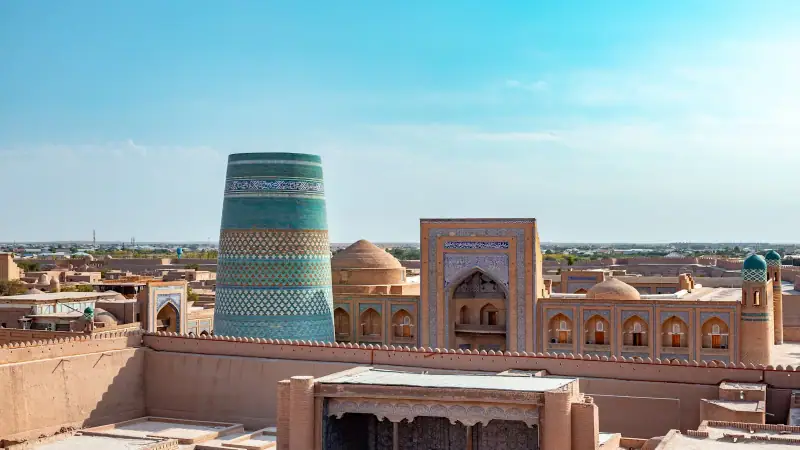
Things to do in Khiva: the best activities and must-see visits
What to do in Khiva? Minaret climb, craft workshops, desert fortresses, night walks... A complete guide to the activities not to miss in Khiva.

Arriving in Tashkent in the middle of the night: where to sleep, near the airport or downtown?
Flight landing at 2 am or 4 am in Tashkent? Hotel near the airport or in town, early check-in, night taxi and prices: a guide to choosing well.
Ready-made
Uzbekistan itineraries
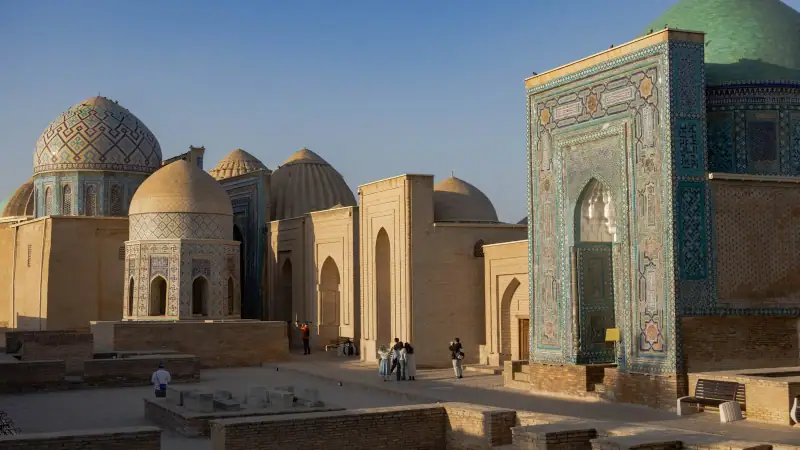
10 days
Uzbekistan in 10 days: a complete itinerary with the Ferghana Valley
TashkentFerghanaSamarkandBukharaKhiva
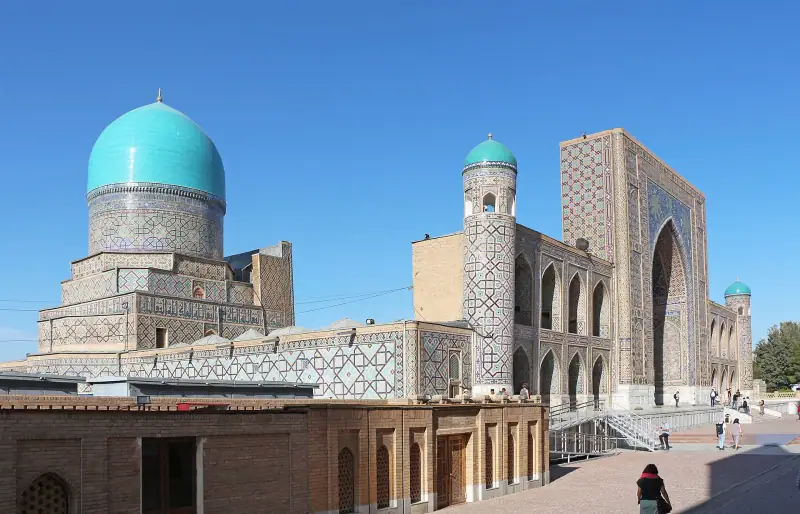
9 days
Uzbekistan in 9 days with kids: stops and a family-friendly pace
TashkentSamarkandBukhara
5 days
Uzbekistan in 5 days: Tashkent, Samarkand and Bukhara without Khiva, is it realistic?
TashkentSamarkandBukhara