Itineraries
Uzbekistan in 10 days: a complete itinerary with the Ferghana Valley
We may earn a commission when you book through links on this page, at no extra cost to you. We don't visit or try the places we cover: we summarize published sources. How we work
Day by day
- Day 1Arrive in Tashkent: Chorsu Bazaar, Khast-Imam, metro
- Day 2Train to Ferghana, quick trip to Margilan silk
- Day 3Kokand palace and mosque, Margilan silk factory
- Day 4Travel Ferghana to Samarkand, Registan at sunset
- Day 5Shah-i-Zinda, Registan, Bibi-Khanym, Gur-e-Amir
- Day 6Train to Bukhara: Lyabi-Hauz, covered bazaars, Kalon
- Day 7Ark citadel, Samanid Mausoleum, Bolo-Hauz, crafts
- Day 8Flight or night train to Khiva, Itchan Kala
- Day 9Khiva monuments: Islam Khodja, Tosh-Hovli, Kalta Minor
- Day 10Khiva to Urgench airport and departure
Where to sleep
- Tashkent1 night
- Ferghana2 nights
- Samarkand2 nights
- Bukhara2 nights
- Khiva2 nights
In short
- Ten days cover Tashkent (1 night), the Ferghana Valley (2), Samarkand (2), Bukhara (2) and Khiva (2), with trains and one flight.
- The Afrosiyob high-speed train links Tashkent to Samarkand in 2 h 10 and Samarkand to Bukhara in 1 h 30.
- Budget is about €900-1,400 (about $1,050-1,625) per person excluding international flights; €600-800 (~$700-930) on a tight budget.
- Book train tickets 7 to 14 days ahead and the Bukhara to Urgench flight as soon as your itinerary is set.
Ten days in Uzbekistan is the ideal format to get off the beaten track while still doing justice to the Silk Road. Compared with a 7-day stay, you have time to add the Ferghana Valley, a green haven tucked among the foothills of the Tian Shan and famous for its ikat silks and age-old culture, and to linger in front of Bukhara’s facades.
Here is a day-by-day itinerary for travelers who want to see Uzbekistan in depth, without feeling like they are trailing a group of hurried tourists.
Day 1: Arrival in Tashkent, first steps in the capital
International flights arrive at Islam Karimov International Airport (TAS). Change money at the airport (fair rates at official exchange offices), then take a taxi or the Yandex Go app to reach the city center (about 15-20 min, €5-8 / ~$6-9).
Afternoon: Resist the urge to lie down and use the afternoon to get your bearings.
- Chorsu Bazaar: the capital’s largest covered market, recognizable by its turquoise-blue dome. Spices, dried fruit, non (tandir) bread fresh from the oven. Uzbekistan smells good from day one.
- Khast-Imam old quarter: Tashkent’s religious square, with the great mosque and the museum of Islamic manuscripts, home to the Tashkent Quran (traditionally attributed to the 7th century, scientifically dated to the 8th-9th century).
- Tashkent metro: if you have energy, ride two or three stations to admire the Soviet frescoes and mosaics. Every station is unique.
Evening: Have dinner in a restaurant in the old town. Order an Uzbek plov (rice with lamb and carrots) or manti (steamed dumplings). Go to bed early.
Lodging: Hotel in the center (€40-80 / ~$46-93) — see the options in Tashkent
Day 1 budget: Taxi ~€7 (~$8), entry fees ~€5 (~$6), meals ~€8-12 (~$9-14)
Day 2: Tashkent to Ferghana, heading for the silk valley
Get up early to take the train to Ferghana. The trip from Tashkent takes about 5.5 to 6 hours depending on the train, crossing the Kamchik Pass through the new railway tunnel opened in 2016 (an engineering feat). Plan a departure between 7 am and 9 am to arrive late in the morning.
Tip: Buy your tickets on e-ticket.uzrailways.com at least 5 to 7 days ahead. Trains to Ferghana are often full in high season.
Afternoon in Ferghana: The city itself is fairly modern (rebuilt by the Russians in the 19th century), but the valley around it is one of the most productive in Central Asia.
- Walk through the city center: find your hotel, change money if needed, have tea at the central bazaar
- Quick trip to Margilan (20 min by taxi, ~€2 / ~$2): visit a traditional ikat silk factory. You will see weavers at work on hand looms, and the colors and patterns are striking.
Lodging: Hotel or guesthouse in Ferghana (€20-45 / ~$23-52) — see our recommendations
Day 2 budget: Train ~€10-15 (~$12-17), taxis ~€5 (~$6), meals ~€10 (~$12)
Day 3: Ferghana Valley, Kokand, Margilan and living crafts
A full day exploring the valley, hiring a taxi for the day from Ferghana (about €25-35 / ~$29-41 for the day).
Morning: Kokand
About 85 km (53 mi) west of Ferghana (1 h 30 by road), Kokand was the capital of a powerful khanate in the 19th century.
- Khudayar Khan Palace: the palace of the khans of Kokand, partly restored, is one of the finest civil buildings in Central Asia. Its 114 rooms (some sources say 119), carved columns and turquoise tiles make it an essential visit.
- Kokand Jami Mosque: the great Friday mosque, with its rows of carved wooden columns.
Afternoon: Margilan and ikat silks
Head back to Margilan (10 km / 6 mi from Ferghana) to visit the silk workshops in more detail.
- Yodgorlik Silk Factory: an official factory offering guided tours. Watch each stage, from mulberry leaf to cocoon, from reeling to weaving. The shop sells shawls and fabrics at prices well below tourist markets.
- Margilan Bazaar: on Saturday and Sunday the bazaar overflows with silks, spices and regional products. Even on weekdays it is worth the detour.
Evening: Back to Ferghana. Have dinner in a local restaurant and order a dimlama (lamb and vegetable stew) or shashlik grilled over a wood fire.
Day 3 budget: Taxi for the day ~€30 (~$35), entry fees ~€5 (~$6), meals ~€10 (~$12)
Day 4: Ferghana to Samarkand, back on the Silk Road

Early morning: take the Ferghana to Tashkent train, then connect to Tashkent to Samarkand (or a direct train depending on availability). Allow about 7 to 8 hours of total travel. Alternative: flight Ferghana to Tashkent (45 min, €30-60 / ~$35-70), then train Tashkent to Samarkand (2 h 10), about 4 hours in total, a more comfortable option.
Arrive in Samarkand in the afternoon. Settle into your guesthouse in the old town.
Late afternoon:
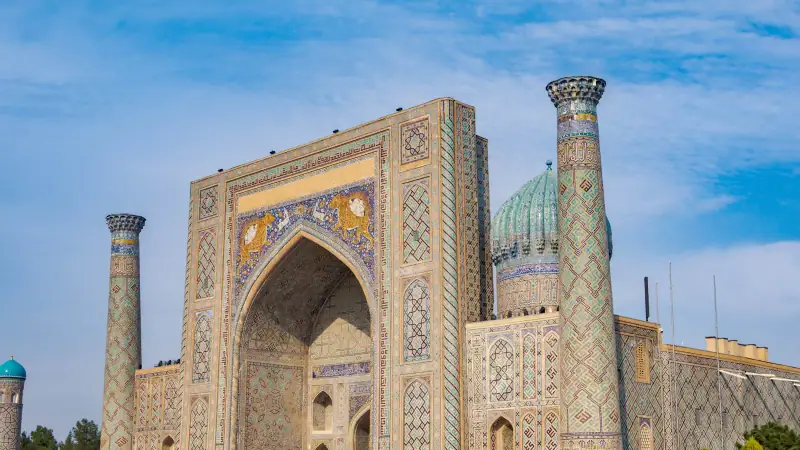
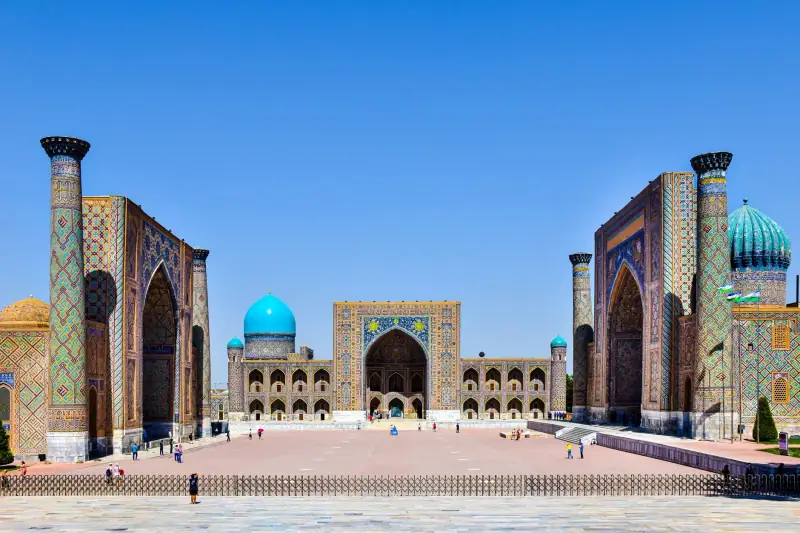
- The Registan at sunset: the three madrasas bathed in golden light are one of the most powerful images of the trip. Just stroll in front of the facade for this first evening.
- Siyob Bazaar: the market’s last activity in the late afternoon, with bread, fruit and hot samsa.
Lodging: Guesthouse in Samarkand’s old town (€25-55 / ~$29-64) — see our recommendations
Day 4 budget: Transport ~€25-40 (~$29-46), meals ~€10 (~$12)
Day 5: Samarkand, the Timurid masterpieces
A whole day devoted to Samarkand. Get up before 8 am to enjoy the monuments without the tour-group crowds.
Morning (7:30 am-12:30 pm):
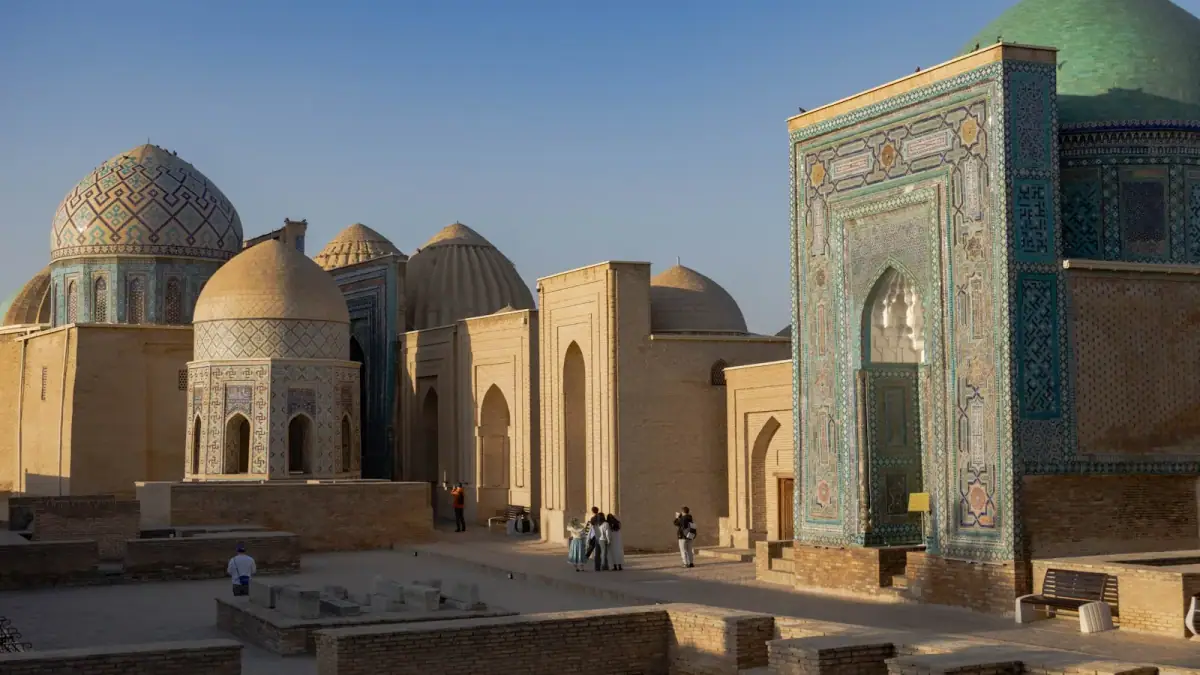
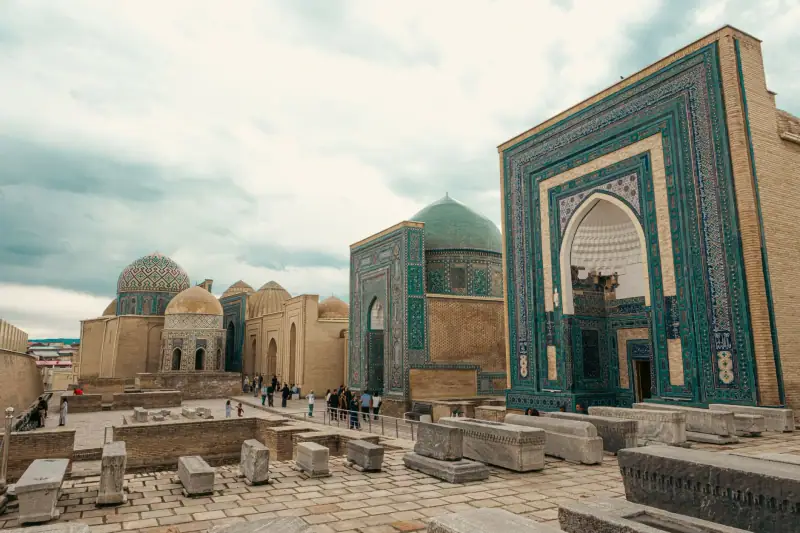
- Shah-i-Zinda: the necropolis with 40 mausoleums decorated with turquoise, cobalt and gold tiles. Entry about €4 (~$5). Visit early: the colors are sublime in morning light.
- Siyob Market: recharge with samsa and green tea in the middle of the busy market.
Afternoon (2 pm-6:30 pm):
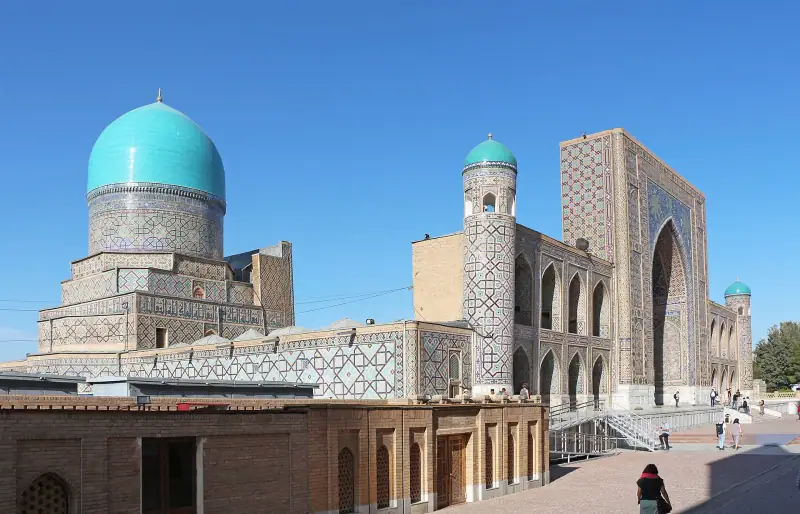
- The Registan: step inside the three madrasas (Ulugh Beg, Sher-Dor, Tilya-Kori) to explore the courtyards and the student cells now turned into craft shops. Allow at least 2.5 hours. Entry ~€8 (~$9).
- Bibi-Khanym Mosque: the gigantic rebuilt medieval mosque, a 10-minute walk away.
- Gur-e-Amir Mausoleum: the tomb of Tamerlane, finely decorated with gilding and lapis lazuli.
Evening: Return to the Registan at 8 pm for the sound and light show (in season; check times with the local tourist office). Have dinner in a restaurant in the old town.
Day 5 budget: Entry fees ~€18 (~$21), meals ~€12 (~$14), taxis ~€5 (~$6)
Activities and guided tours in Samarkand
Guided visits of the Registan, Shah-i-Zinda and Timurid monuments.
Day 6: Samarkand to Bukhara, the other Silk Road capital
Take the morning Afrosiyob train from Samarkand (departures around 7:30-9 am, 1 h 30, ~€6 / ~$7). Arrive in Bukhara around 9-11 am.
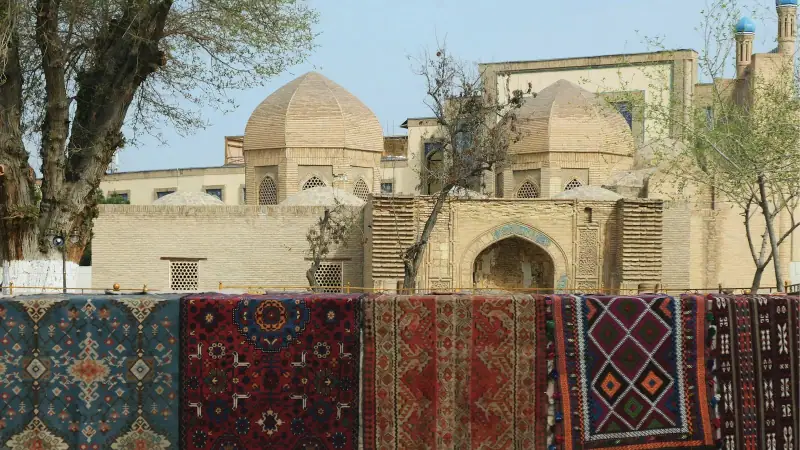
Bukhara is more compact and intimate than Samarkand. Its entire old town is a UNESCO World Heritage site.
Afternoon:
- Lyabi-Hauz: the central pond with its centuries-old plane trees is the living heart of Bukhara. Sit on a terrace, order tea and watch locals chat in the shade.
- Covered bazaars: five domed 16th-century bazaars follow one another between Lyabi-Hauz and the Kalon Mosque: Taki-Sarrafon (money changers), Taki-Zargaron (jewelers), Tim Abdullakhan (silks).
- Kalon Mosque and Kalon Minaret: the minaret, about 46 m (151 ft), one of the tallest in Central Asia, which Genghis Khan is said to have spared out of admiration.
Evening: Stroll through the old town’s lanes once the day-trippers have left. The 16th-century adobe facades take on a golden ocher tint in the low light.
Lodging: Boutique hotel or guesthouse in Bukhara’s historic center (€30-70 / ~$35-81) — see our recommendations
Day 6 budget: Train ~€6 (~$7), entry fees ~€4 (~$5), meals ~€10-12 (~$12-14)
Day 7: Bukhara, citadels, mausoleums and crafts
A full day in Bukhara to explore its treasures in depth.
Morning:
- Ark Citadel: the fortress of the emirs of Bukhara, continuously inhabited for more than 2,000 years. The museum inside traces the history of the emirate, its rulers and its ceremonies. Allow 1 h 30-2 h. Entry ~€3 (~$3.50).
- Samanid Mausoleum: a few minutes’ walk away, in a tree-filled park, this brick cube is the oldest intact Islamic monument in Central Asia (10th century). Its genius lies in how light plays through the bricks at different hours.
- Bolo-Hauz Mosque: twenty carved wooden columns support the porch of this mosque facing the citadel, a masterpiece of delicacy.
Afternoon:
- Nadir Divan-Begi Madrasa: around Lyabi-Hauz square, this madrasa now houses craftsmen’s workshops (miniatures, ceramics, embroidery). Buy here rather than at tourist kiosks.
- Chashma-Ayub: Job’s Well, north of the old town, with its water museum, quiet and often little visited.
- Kalon Minaret lit up at night: come back around 9 pm to see the lit minaret reflected in the nearby pool.
Day 7 budget: Entry fees ~€10 (~$12), meals ~€12 (~$14), crafts purchases (variable)
Day 8: Bukhara to Khiva, the museum city
This is the most complicated transition logistically. Two options:
Option 1, flight (recommended): Flight Bukhara to Urgench (about 1 h, €40-70 / ~$46-81 depending on season) plus taxi Urgench to Khiva (30 min, €5-8 / ~$6-9). Leave in the morning to reach Khiva around noon. Uzbekistan Airways and Qanot Sharq operate this route.
Option 2, night train: Take the night train Bukhara to Urgench (6-7 h, ~€8-15 / ~$9-17) from Bukhara station on the evening of day 7. You arrive in Urgench early in the morning and take a taxi to Khiva.
Afternoon in Khiva:
- Itchan Kala: buy the combined ticket (about €12-18 / ~$14-21) at the entrance. It gives access to nearly all the monuments inside.
- First wanderings: let yourself get lost in the lanes of this fully fortified city. Unlike Bukhara and Samarkand, Khiva is entirely preserved as an open-air museum.
Evening: The tour groups leave around 6 pm. Enjoy the mysterious atmosphere of the lantern-lit lanes. Have dinner in a guesthouse inside the walls.
Lodging: Guesthouse inside Itchan Kala (€25-50 / ~$29-58) — see our recommendations
Day 8 budget: Transport ~€45-70 (~$52-81), meals ~€10 (~$12)
Hotels in Khiva
Guesthouses and boutique hotels in the heart of Itchan Kala.
Day 9: Khiva, exploring the city of the khans
A full day in Khiva. The city is small (you can walk around it in 2 hours), but every monument deserves time.
Morning (8 am-12:30 pm):
- Islam Khodja Minaret: the tallest in Khiva (57 m / 187 ft). Climb the 175 steps for a 360° panoramic view over the turquoise roofs and the Kyzylkum desert. Go early in the morning, before the heat.
- Pahlavon Mahmud Mausoleum: Khiva’s patron saint. The mausoleum with cobalt-blue ceramic tiles is one of the most beautiful places in the city. Free entry for worshippers.
- Tosh-Hovli Palace: the khan’s winter residence, with finely decorated inner courtyards and harems with turquoise tiles. Allow 1 h 30.
Afternoon (2 pm-6 pm):
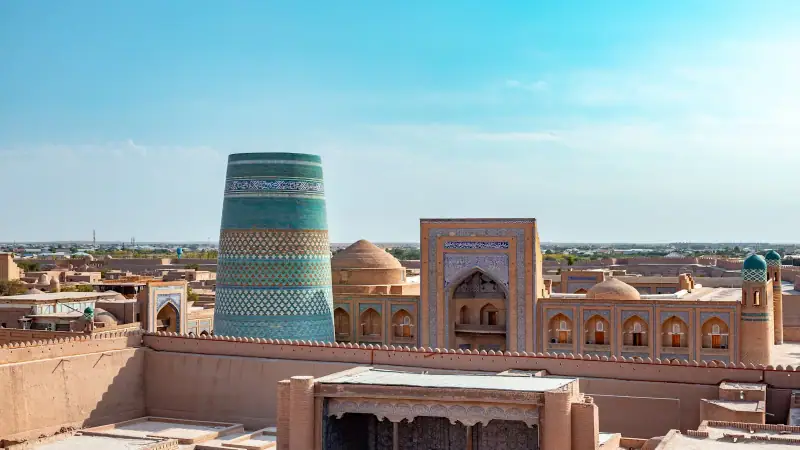
- Kalta Minor Minaret: the “short” minaret with blue and green ceramic tiles, left unfinished when the khan who commissioned it died. Unmistakable.
- Khorezm History Museum (in the Kunya-Ark palace): the history of the region from its origins to the Soviet era.
- Craft bazaars: the shopping streets of Itchan Kala are full of suzani embroidery, chapans (traditional coats) and ceramics, generally of higher quality than in Samarkand.
Evening: Last evening in Khiva. Climb onto the Itchan Kala ramparts at sunset for a superb view of the golden city.
Day 9 budget: Entry fees ~€12 (~$14), meals ~€10 (~$12), purchases (variable)
Day 10: Khiva and departure
Morning: Depending on your flight time from Urgench, you may still have time to wander the lanes early in the morning, when the city is still quiet and bathed in golden morning light.
Take a taxi from Khiva to Urgench airport (30 min, €5-8 / ~$6-9). Flights to Tashkent (1 h 30), then an international connection. If your return flight leaves the next morning from Tashkent, you can choose to spend your last night in Tashkent, which is handy for early flights.
A few last-minute purchases at Urgench airport or, if you connect in Tashkent, in the airport shops.
10-day itinerary recap
| Day | Stop | Night |
|---|---|---|
| 1 | Arrival in Tashkent | Tashkent |
| 2 | Tashkent → Ferghana | Ferghana |
| 3 | Ferghana Valley (Kokand, Margilan) | Ferghana |
| 4 | Ferghana → Samarkand | Samarkand |
| 5 | Samarkand (full day) | Samarkand |
| 6 | Samarkand → Bukhara | Bukhara |
| 7 | Bukhara (full day) | Bukhara |
| 8 | Bukhara → Khiva | Khiva |
| 9 | Khiva (full day) | Khiva |
| 10 | Khiva → Departure | — |
Estimated budget for 10 days in Uzbekistan
| Item | Tight budget | Comfort budget |
|---|---|---|
| Lodging (9 nights) | €150-200 (~$175-230) | €350-500 (~$405-580) |
| Meals (3 a day) | €100-130 (~$116-150) | €200-280 (~$230-325) |
| Local transport | €80-120 (~$93-140) | €150-200 (~$175-230) |
| Entry fees and visits | €50-70 (~$58-81) | €80-100 (~$93-116) |
| Shopping and extras | €50-100 (~$58-116) | €150-300 (~$175-350) |
| Total (excluding flights) | €430-620 (~$500-720) | €930-1,380 (~$1,080-1,600) |
Practical tips for making the itinerary work
Bookings to make early:
- Train tickets: at least 7 to 14 days ahead on e-ticket.uzrailways.com
- Flight Bukhara to Urgench: book as soon as your itinerary is set (the route has limited service)
- Accommodation in high season (April-May, September-October): 2 weeks ahead
Transport between stops:
- Tashkent → Ferghana: train (~6 h) or plane (~45 min)
- Ferghana → Samarkand: train with a connection in Tashkent (~7 h) or flight Ferghana-Tashkent plus train Tashkent-Samarkand (~4 h)
- Samarkand → Bukhara: Afrosiyob high-speed train (~1 h 30)
- Bukhara → Khiva: flight (~1 h 30) or night train (~7 h)
Money: Uzbekistan still runs largely on cash. Exchange cash on arrival in Tashkent (good rates at official banks). ATMs accept Visa cards but are sometimes out of service. See our full guide to money in Uzbekistan.
Entry rules: Entry rules depend on your passport. Check the official travel advice of your government before you book: travel.state.gov (US), GOV.UK (UK), travel.gc.ca (Canada), Smartraveller (Australia) (checked November 2026). Any stay of more than 72 hours must be registered with the authorities, which hotels do. Find out about the formalities before you leave in our Uzbekistan visa guide.
To go further, toward the Aral Sea or Karakalpakstan, see our complete guide to Uzbekistan and our article on trains in Uzbekistan.
Frequently asked questions
Is 10 days enough to visit Uzbekistan?
Yes, 10 days let you see the four main Silk Road cities (Tashkent, Samarkand, Bukhara, Khiva) plus the Ferghana Valley, often skipped on short circuits. It is a pleasant pace with two nights in each main stop.
What is the difference between the 7-day and 10-day itineraries in Uzbekistan?
The 10-day itinerary adds the Ferghana Valley (Ferghana, Kokand, Margilan) compared with the 7-day version. You also get an extra day in Bukhara and a more comfortable tempo for sightseeing without rushing.
How do you travel between stops in 10 days?
The Afrosiyob high-speed train links Tashkent to Samarkand (2 h 10) and Samarkand to Bukhara (1 h 30). For Ferghana from Tashkent, allow 5 to 6 hours by train or 1 hour by plane. For Khiva, take a flight from Bukhara (1 h 30) or a night train. Book tickets on e-ticket.uzrailways.com.
What is the best season for a 10-day trip to Uzbekistan?
April-May and September-October are ideal: mild temperatures (20 to 30 °C / 68 to 86 °F) and superb light for photos. In July-August it is very hot (38 to 42 °C / 100 to 108 °F) in the stone cities. In winter (December to February), some sites partly close and temperatures can drop below freezing.
What budget should you plan for 10 days in Uzbekistan?
Plan €900-1,400 (about $1,050-1,625) per person excluding the international flight (lodging, meals, local transport, entry fees). On a tight budget with guesthouses and local restaurants, €600-800 (~$700-930) is enough. For comfort with boutique hotels and quality restaurants, plan €1,500-2,000 (~$1,740-2,320).
Do you need to rent a car for this itinerary?
No, trains and taxis are enough for the whole itinerary. A car with driver is useful for exploring the countryside around Ferghana (Rishtan, Chust) or for desert excursions from Bukhara. Book through your guesthouse.
Can you add the Aral Sea to a 10-day itinerary?
Hardly, if you keep all the stops. To include the Aral Sea (an excursion from Nukus), plan 12 to 14 days. You can swap the Ferghana Valley for this addition depending on your priorities: wild nature and ecological history rather than silks and crafts.
More Uzbekistan guides
Keep reading
Things to do in Bukhara: the best activities and must-see visits
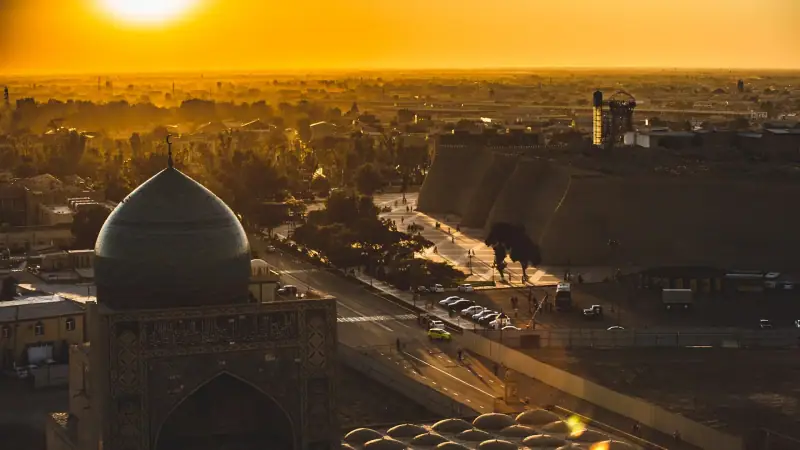
What to do in Bukhara? The Ark, Kalon minaret, covered bazaars, craft workshops, evenings in the old town. A complete guide to the best activities.
Things to do in Khiva: the best activities and must-see visits
What to do in Khiva? Minaret climb, craft workshops, desert fortresses, night walks... A complete guide to the activities not to miss in Khiva.
Arriving in Tashkent in the middle of the night: where to sleep, near the airport or downtown?
Flight landing at 2 am or 4 am in Tashkent? Hotel near the airport or in town, early check-in, night taxi and prices: a guide to choosing well.
Ready-made
Uzbekistan itineraries
7 days
Uzbekistan in 7 days: the ideal Silk Road itinerary
TashkentSamarkandBukharaKhiva
9 days
Uzbekistan in 9 days with kids: stops and a family-friendly pace
TashkentSamarkandBukhara
5 days
Uzbekistan in 5 days: Tashkent, Samarkand and Bukhara without Khiva, is it realistic?
TashkentSamarkandBukhara