Things to do
Diving and Snorkeling in Thailand: Where to Dive, When and With Whom
We may earn a commission when you book through links on this page, at no extra cost to you. We don't visit or try the places we cover: we summarize published sources. How we work
In short
- Thailand has two diving seasons: the Andaman Sea (Phuket, Krabi, Koh Lanta, Similan) roughly November to April, the Gulf of Thailand (Koh Tao, Koh Phangan, Koh Samui) roughly February to September.
- Koh Tao is the best-known place for a first certification; the Open Water course generally takes about three to four days.
- The Similan Islands marine park closes during the monsoon and generally reopens in mid-October until about mid-May; confirm dates with your dive center.
- Snorkeling needs no certification; choose a dive center on safety and group size, not on the lowest price.
With its two coasts, warm water all year and a large choice of dive centers, Thailand is one of the most accessible places in Asia to discover the underwater world. From beginners taking a first certification to experienced divers dreaming of big pelagics, everyone finds a playground. Non-divers are not left out: snorkeling is possible almost everywhere, often a few yards from the beach.
This guide helps you choose the right destination for your level, the season and your budget, and avoid common mistakes. To complete your trip preparation, also see our article on choosing your island in Thailand.
Two coasts, two seasons: understanding the calendar
The first thing to remember is that Thailand is not dived in the same place all year. The country is bordered on the west by the Andaman Sea and on the east by the Gulf of Thailand, and their rain patterns are not synchronized.
- Andaman Sea (Phuket, Krabi, Koh Lanta, Phi Phi, Similan Islands): the most favorable period runs roughly from November to April. During the monsoon, the sea is rougher, visibility drops and some sites are closed or inaccessible.
- Gulf of Thailand (Koh Tao, Koh Phangan, Koh Samui): conditions are generally good from about February to September. At the end of the year, winds and swell make outings less comfortable, even though schools stay open.
This alternation is an asset: by changing coast, you can almost always find a corner where the sea is workable. To refine your overall calendar, see our guide when to go to Thailand.
Keep in mind that visibility varies a lot from one day to the next, even in good season. Water richer in plankton is less transparent, but it also attracts larger animals: it is a trade-off, not necessarily a bad sign.
Koh Tao: the certification capital
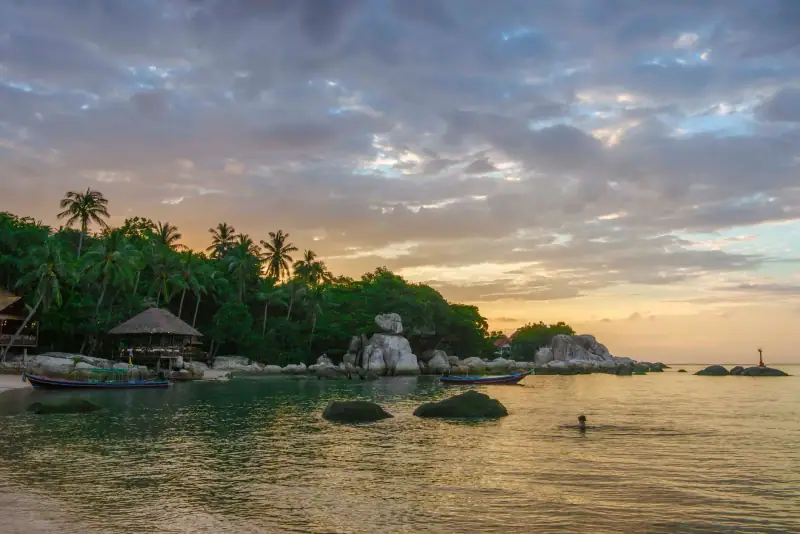
Koh Tao is a small island in the Gulf of Thailand, known worldwide for its dive schools. It issues a very large number of certifications each year, which is explained by several factors: warm water, shallow and sheltered sites, competition that pushes prices down and an atmosphere geared to diving from morning to night.
Sites close to the coast suit beginners well, with shallow reefs and colorful fish. Sites farther out, such as certain pinnacles, attract more experienced divers. Encounters with large animals, including the whale shark, are possible there depending on the season, with no guarantee: be cautious about any promise of assured sightings.
A few points to check before signing up:
- Group size. A small number per instructor is safer and more pleasant, especially for a first certification.
- Equipment. It should be clean, serviced and your size. Do not hesitate to ask to see it.
- The agency. PADI, SSI and other organizations issue internationally recognized certifications. What matters is the quality of the instructor, not the logo.
- Safety conditions. A good center has emergency oxygen, a clear emergency plan and a detailed briefing.
Lodging in Koh Tao
Compare hotels and bungalows by dates and budget.
Getting your Open Water certification: what to expect
The Open Water certification is the first level that lets you dive independently with a buddy, down to a limited depth. It generally takes about three to four days and combines three elements: theory, exercises in confined or shallow water, then several dives at sea.
For a no-commitment first contact, an intro dive lets you descend a few meters with an instructor, without certification. It is a good way to check that you like the experience before investing in a full course.
A few useful tips:
- Do the theory before leaving. Several organizations offer online learning. You will save time there and enjoy more of your vacation days.
- Check medical conditions. A health questionnaire is required. If you have any concern, ask your doctor or a travel clinic before the trip, and see the official travel health pages (CDC in the US, TravelHealthPro in the UK).
- Do not mix diving and partying. Alcohol and dehydration increase risks. Good centers insist on this.
- Never dive in a hurry. If you do not feel ready for a step, say so: a serious instructor will take the time needed.
If you already have a level, bring your certification card and your logbook: they will be requested when you book.
The Similan Islands and Richelieu Rock: open-sea diving
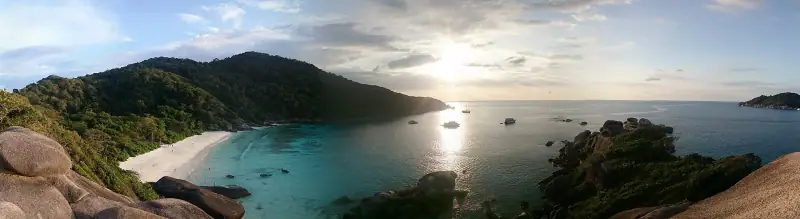
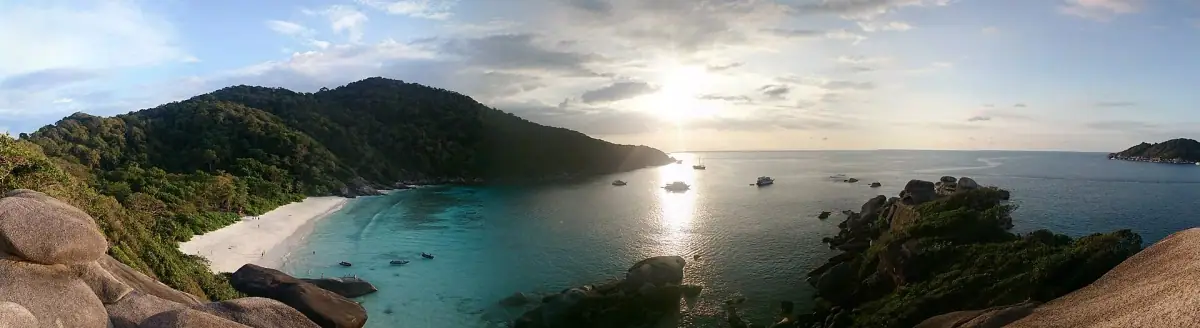
The Similan Islands, northwest of Phuket, are one of the most prestigious diving destinations in the country. The national marine park offers granite seabeds, drop-offs, coral gardens and, depending on the site, pelagic life. Visibility is often excellent in good season.
The opening period is limited: the park closes during the monsoon and reopens around mid-October until about mid-May. Exact dates change from year to year, so confirm them before building your itinerary.
Two formats exist. Multi-day cruises (liveaboards) let you link distant sites, including Richelieu Rock, renowned for encounters with large animals including, with luck, the whale shark. Day trips from Phuket or the Khao Lak coast are cheaper but more tiring: you have to allow for the trip by minibus and then by boat.
These sites suit divers who already have some experience, since currents can be marked. Snorkelers can also find their reward there, provided they choose an excursion suited to their level.
Phuket, Phi Phi, Krabi and Koh Lanta: variety of sites in the Andaman Sea
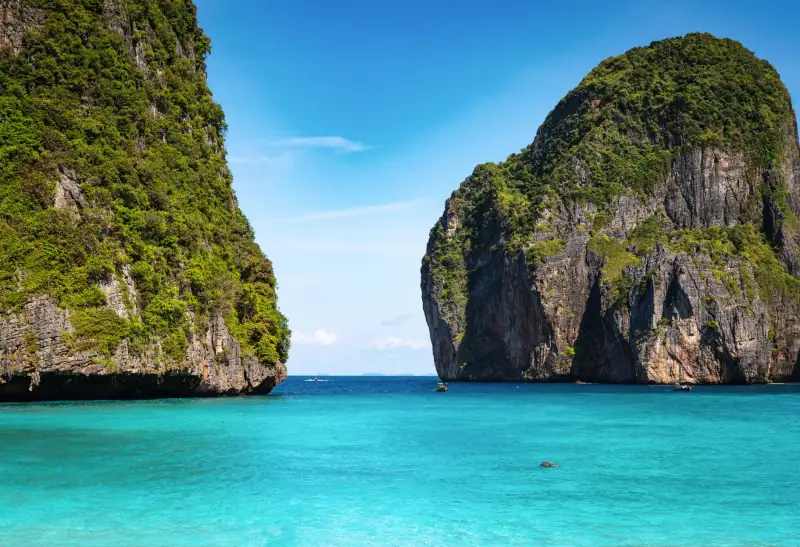
Farther south, the Andaman Sea offers very diverse sites, within reach of several well-equipped tourist bases.
- Phuket serves as a starting point to nearby islands and reefs, with dives accessible to beginners and experienced divers alike.
- The Phi Phi islands attract with their cliffs plunging into the sea, their reefs and their clear water. They are very busy: favor the first departures of the day.
- Koh Lanta is the base for trips to sites farther out, known for their large pinnacles, including Hin Daeng and Hin Muang, famous for their colorful walls and pelagic life. These sites are rather reserved for experienced divers because of the currents.
- Krabi suits boat trips mixing beach and snorkeling, as we detail in our article what to do in Krabi.
Diving and snorkeling in Thailand
Compare intro dives, boat trips and snorkeling excursions.
Snorkeling: seeing the fish without certification
Snorkeling requires neither certification nor great physical condition. All you need is a mask, a snorkel and, if possible, fins. Many islands have reefs accessible directly from the beach, and boat excursions almost always include the equipment.
To enjoy it fully:
- Choose the right time. Early in the morning, the water is often calmer and sites less busy.
- Test your mask. A leaking mask spoils the outing. If you have a personal mask suited to your face, bring it; otherwise, try it before leaving.
- Protect your skin. Sunburn on the back is frequent. A UV-protective suit or a T-shirt is more effective than cream and less polluting.
- Watch the currents. Even near the shore, a current can carry you away. Always spot a landmark on shore or the boat.
Equipment is detailed in our article on useful accessories for Thailand.
Respecting the reefs and marine life
Thai reefs are under heavy tourist pressure. A few simple gestures limit the impact:
- Do not touch or walk on corals, even those that look dead: they are fragile and take years to regenerate.
- Do not feed fish and do not chase turtles, sharks or rays.
- Choose a sunscreen without chemical filters harmful to reefs, or better, cover up.
- Avoid picking up shells, starfish or corals: taking them home can also cause customs problems.
- Prefer operators that use mooring buoys rather than dropping anchor on the coral.
Some areas of the region have also been closed temporarily to allow the environment to regenerate. It is an encouraging sign, and a good reminder that access rules change: find out before leaving.
Flights to Bangkok, Phuket or Koh Samui
Compare flights by dates to reach the coast of your choice.
Safety, health and insurance
Diving is a safe activity when properly supervised, but it requires following precise rules.
Before diving. If you have a medical concern, ask your doctor or a travel clinic. Rest the day before, hydrate and avoid alcohol. Ear or sinus problems can make the descent painful: never force it.
After diving. Respect a waiting period before flying, and follow the guidance of your dive center and your certification agency. Leave a comfortable margin, so avoid diving the day before your return flight.
In case of an accident. Decompression accidents are rare but serious. Knowing where the nearest hyperbaric chamber is is part of a good center’s briefing. The main dive areas have one nearby, but evacuations can be very costly.
Insurance. Check that your policy explicitly covers diving and, where relevant, the depth of your outings. Our article on entry requirements for Thailand also recalls the essential points before leaving. Entry rules depend on your passport. Check the official travel advice of your government before you book: travel.state.gov (US), GOV.UK (UK), travel.gc.ca (Canada), Smartraveller (Australia) (checked November 2026).
Budget: how much to plan for diving
Rates vary with the season, the type of outing and the area. A few general benchmarks:
- Snorkeling on an excursion: the cheapest option, often combined with a lunch and a stop on a beach.
- Intro dive: a moderate expense for a first supervised experience.
- Open Water certification: a budget on the order of a few hundred euros (several hundred dollars) for a full course.
- Recreational dives for certified divers: the price per dive drops when you buy a package of several outings.
- Similan cruises: clearly pricier, since they include lodging on board, meals and several days at sea.
Always ask what is included: equipment, national park entrance fees, meals, transfers. A very low offer may hide extras or compromises on safety. For an overview of your spending, see our budget for Thailand.
How to organize your diving stay
Here is a simple outline to combine diving and discovering the country:
- If you leave from November to April: concentrate on the Andaman Sea. Spend a few days in Krabi or Koh Lanta, add Phi Phi, and if you are certified, a trip to Similan or Hin Daeng.
- If you leave from February to September: favor Koh Tao, possibly combined with Koh Phangan or Koh Samui.
- For a first certification: book it at the start of the stay, so you can then use your skills at other sites.
- Keep a margin: a rest day between the last dive and the flight, another to absorb possible weather delays.
To fit these stops into a wider trip with Bangkok and the north of the country, take inspiration from our two-week itinerary in Thailand.
Hotels in Koh Lanta and Krabi
A good base for Hin Daeng and the neighboring islands.
Common mistakes to avoid
- Choosing a center only on price. Safety and quality of supervision are worth more than a few euros saved.
- Booking without checking the season. Sites may be closed or the sea unworkable.
- Underestimating the sun. On a boat, glare is strong, even in hazy weather.
- Forgetting the interval before the flight. It is the most classic mistake of the last days of a trip.
- Trusting promises of guaranteed encounters. Wild animals cannot be ordered: that is what gives the experience its value.
Summary
For a first certification, Koh Tao remains a safe bet. For more ambitious diving, the Andaman Sea and the Similan park, in season, are hard to beat. For the simple pleasure of watching fish, almost all islands offer a good snorkeling spot. The key is to choose the right coast at the right time, a serious dive center, and never compromise on safety.
Frequently asked questions
Where to dive in Thailand as a beginner?
Koh Tao, in the Gulf of Thailand, is the best-known destination for a first certification: sheltered sites, generally calm water and a very large number of schools. Phuket, Krabi and Koh Lanta also offer intro dives and Open Water courses.
What is the best time to dive in Thailand?
There are two coasts, so two seasons. In the Andaman Sea (Phuket, Krabi, Koh Lanta, Similan), the most favorable period runs roughly from November to April. In the Gulf (Koh Tao, Koh Phangan, Koh Samui), conditions are generally good from about February to September, with a rougher sea at the end of the year.
Are the Similan Islands open all year?
No. The national marine park is closed during the monsoon and generally reopens in mid-October until about mid-May. The exact dates are set each year by the park administration: check them with your dive center before booking.
Do you need to know how to swim to snorkel?
You need at least to be comfortable in the water. On boat excursions, flotation vests are generally provided and recommended for less experienced swimmers. Tell the crew your level and stay close to the boat.
Can you dive before flying?
There is a safety interval to respect before flying, and it is longer after repeated dives. Follow the guidance of your dive center and your certification agency, and leave a comfortable margin before your return flight.
Does standard travel insurance cover diving?
Not always. Many policies exclude diving or limit it to a given depth. Read your policy's exclusions and, if needed, take out a specific cover including assistance in case of a decompression accident.
What budget should you plan for an Open Water certification?
Rates vary with the season, the school and the agency (PADI, SSI, etc.). Expect to pay a few hundred euros (several hundred dollars) for a course of several days, equipment included. Always compare what is included: manual, certification, lodging.
More Thailand guides
Keep reading
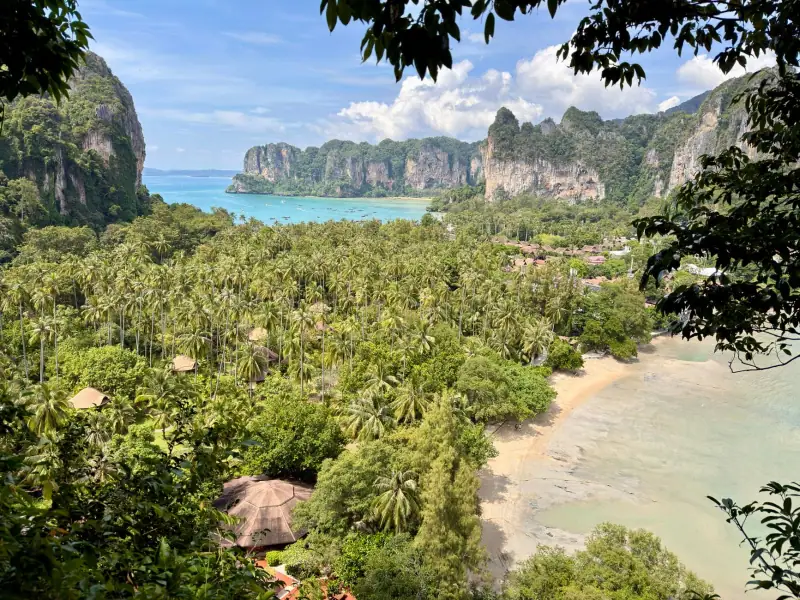
Things to Do in Krabi: Beaches, Islands, Caves and Kayaking in 4 Days
What to do in Krabi? Railay, Ao Nang, the four-islands tour, Tiger Cave Temple and mangrove kayaking: a guide to plan your Andaman Sea stay.

Things to Do in Chiang Mai: Temples, Markets, Food and Nature in 4 Days
What to do in Chiang Mai? Old city, Doi Suthep, markets, cooking classes, elephant sanctuaries and Doi Inthanon: a guide to plan your stay.

Railay or Ao Nang: Where to Stay in Krabi for Your Trip?
Railay or Ao Nang to stay in Krabi? Compare access, calm, beaches, meals, luggage and budget, with Tonsai, East Railay and Noppharat Thara as alternatives.
Ready-made
Thailand itineraries

14 days
Thailand Itinerary for 2 Weeks: From the Historic North to the Beaches
A 14-day itinerary in Thailand: Bangkok, Ayutthaya, Sukhothai, Chiang Mai, Chiang Rai, then the beaches of Krabi. Stops, transport and tips.
10 days
Thailand in 10 Days Without a Car: Bangkok, Chiang Mai and Krabi, a Realistic Itinerary
BangkokChiang MaiKrabi

3 days
3 Days in Bangkok: A Day-by-Day Itinerary for First-Time Visitors
What to do in 3 days in Bangkok? Grand Palace, Wat Pho, Wat Arun, Chinatown, Chatuchak and markets: a day-by-day plan with transport and tips.