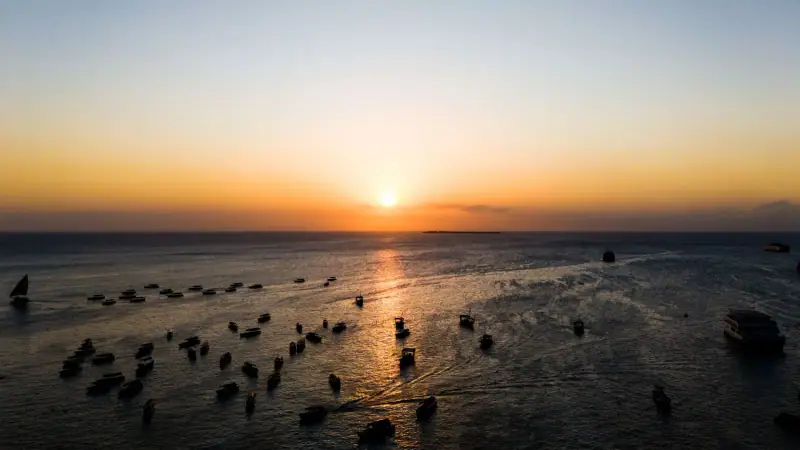
9 days
Tanzania and Zanzibar in 9 days: a short safari and the island
ArushaTarangire, Lake Manyara and the Ngorongoro CraterStone Town (Zanzibar)Kendwa or Nungwi (north of Zanzibar)
Safari first, then the island
Northern Tanzania and Zanzibar fit well in one trip: a guided 4x4 safari, then a short flight to the beach. This page helps you size it for 9 to 12 days or more.
We may earn a commission when you book through links on this page, at no extra cost to you. We don't visit or try the places we cover: we summarize published sources. How we work
Itineraries
Ready-made routes across several regions, with real drive times, the ferries and where to sleep.
9 days
ArushaTarangire, Lake Manyara and the Ngorongoro CraterStone Town (Zanzibar)Kendwa or Nungwi (north of Zanzibar)
12 days
ArushaNorthern safari circuit (Tarangire, Serengeti, Ngorongoro)Stone Town (Zanzibar)Paje or Jambiani (east coast of Zanzibar)
Northern Tanzania and Zanzibar are a classic pairing because they complement each other. The safari is early starts, long days in a vehicle and wildlife at close range. Zanzibar is slow: coral-stone lanes in Stone Town, then sand and sea. Our Tanzania travel guide calls the island the most common beach extension after a safari, and the two halves share a calendar, since the dry months suit both.
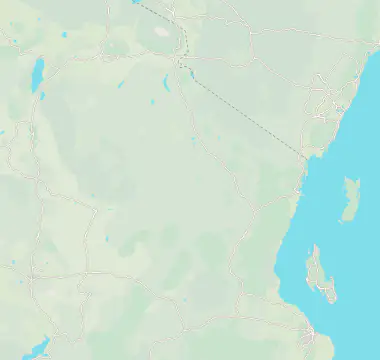
This is not a road trip by rental car. On safari you travel in a 4x4 with a pop-up roof and a driver-guide supplied by an operator, who also handles the formalities at the park gates. Zanzibar is an island reached by plane, and short taxi rides cover the transfers there. The trip runs on a single line: land at Kilimanjaro, base yourself in Arusha, do the parks, fly to Zanzibar, fly home.
What works: the classic northern circuit of Tarangire, Lake Manyara and Ngorongoro Crater, with or without the Serengeti, followed by one or two Zanzibar bases. What to skip: trying to fit Kilimanjaro, a long Serengeti stay and a full island tour into 10 days. Dar es Salaam and the south are not covered here: our guides describe Dar es Salaam mainly as a place passed through.
9 days. One night in Arusha, a 4-day circuit (Tarangire, Lake Manyara, Ngorongoro) with nights near Manyara and in Karatu, two nights in Stone Town, and two on the north coast at Kendwa. This is the plan in Tanzania and Zanzibar in 9 days. The guides put two to four hours on the road between stages, so the safari days are the long ones.
12 days. One night in Arusha, six days on the northern circuit including the Serengeti, two nights in Stone Town and two on the east coast at Paje or Jambiani. See Tanzania and Zanzibar in 12 days. The longest days are the drive from Ngorongoro across the Serengeti and the way back to Arusha.
About 2 weeks. Use the 12-day plan and add a night in the Serengeti, which our park guide suggests if you want to follow the herds, or a third night on the east coast. For a 7-day Zanzibar stay on its own, see the 7-day Zanzibar itinerary.
3 weeks. Our guides do not set a 3-week plan. The Tanzania travel guide says that with more time you can add an extra night in the Serengeti or combine the safari with a Kilimanjaro climb or with Zanzibar. For the climb, see Kilimanjaro routes, duration and preparation.
To go shorter, drop the Serengeti and use the 4-day safari, then give the days to the beach.
Northern Tanzania. The main dry season, about June to October, has the best viewing conditions: lower grass, animals close to water, tracks in good shape, and Tarangire’s elephants at their best. River crossings in the northern Serengeti most often fall between July and October. It is also the high season, with the highest lodge rates in July and August, and the best lodging fills several months ahead. January and February are an underrated alternative: green landscapes, calving in the southern Serengeti, and often more moderate rates outside the year-end holidays. The long rains run about March to May, and the short rains about November to December. Around Arusha, Karatu and the crater, nights can be cool, even cold, in June and July.
Zanzibar. The long dry season, June to October, is rated the best time. December to March is a second good window, hotter and more humid, with steady winds for kitesurfing at Paje. April and May bring torrential rain, and many hotels and restaurants close, so avoid them. November is a short rainy month with lower prices. July and August are packed in Nungwi and Stone Town, and December is very expensive because of the holidays.
For one trip covering both, June to October is the easy answer. January and February are the other option. See when to visit Tanzania and the best time to visit Zanzibar.
Tanzania. Our safari budget guide gives no price list, because quotes can vary by a factor of three for programs that look identical. Park fees and the vehicle are a fixed base. Lodging, length and season explain most of the gap. The Serengeti weighs most on the budget, and the descent into Ngorongoro Crater is charged separately per vehicle, so a shared departure splits the cost. Tarangire and Lake Manyara are the more affordable parks, and a 4-to-5-day circuit with Ngorongoro costs noticeably less than a Serengeti-centered program. Ask for a recent, detailed quote and check what it includes, including park fees. Tips for the driver-guide and camp team are customary.
Zanzibar. These figures come from our guides and itineraries:
Our guides quote taxis in US dollars, so those figures stay in dollars in the next section.
Guided safari vehicles. A 4x4 with a pop-up roof and a driver-guide is the norm, shared or private. Operators usually supply it, and entrance fees are generally included in operator packages: check before comparing offers. Departures are early, because the best viewing is in the morning and late afternoon. Our guides say renting a car without a driver for the parks is uncommon and not advised for beginners.
Small planes. Bush planes reach the Serengeti from the Arusha region and save a day on the tracks. They cost more than the road and limit baggage weight. Domestic flights also link the Arusha region and Zanzibar. No guide gives flight times, so ask your operator or the airline, and keep a generous margin if the safari ends with a drive back to Arusha.
Ferries. The Tanzania guide mentions ferries from Dar es Salaam to Zanzibar. Days and times change, so check them with the companies before booking.
On Zanzibar. The airport is about 6 to 7 km (4 mi) from Stone Town, 15 to 25 minutes by taxi. Stone Town to Paje is about 50 km (31 mi): 50 minutes to 1 hour 15 and $25 to $35 by taxi. Stone Town to Kendwa is 1 to 1.5 hours and $35 to $45. A daladala (shared minibus) to the east coast costs about $1 to $2 but takes 1 hour 30 to 2 hours. Agree the taxi price before you get in. Plan the longer figure for the trip back to the airport from the east coast.
Two international airports serve most visitors. Kilimanjaro International Airport (JRO), between Arusha and Moshi, is the gateway for the northern circuit. Dar es Salaam Airport serves the coast and the south. Zanzibar’s airport also receives international flights and domestic connections. Our guides say there are generally no direct flights from Europe: expect a connection, with a total journey that typically exceeds half a day, and compare fares several months ahead for high season.
The simplest plan is open-jaw: land at JRO and leave from Zanzibar (ZNZ). Book the domestic flight to Zanzibar separately or through your operator.
For jet lag, plan the first night close to the airport. Arusha is about 45 to 50 km (28 to 31 mi) from JRO, close to an hour by road, and sits at about 1,400 m (4,590 ft). If your flight lands between 10 pm and 3 am, our guide to sleeping near Kilimanjaro airport compares a night by the airport with going on to town. With a free day, Arusha has more restaurants and services, and it is where you meet your operator and withdraw shillings before the parks. See where to stay in Arusha and Moshi.
Entry rules depend on your passport. Check your own government’s official travel advice before you book: travel.state.gov (US), GOV.UK (UK), travel.gc.ca (Canada) or Smartraveller (Australia). For health information, use the official travel health pages of your government.
2 regions
Each region has its own guides, itineraries and, often, its own planner.
Safaris & Kilimanjaro · Tanzania
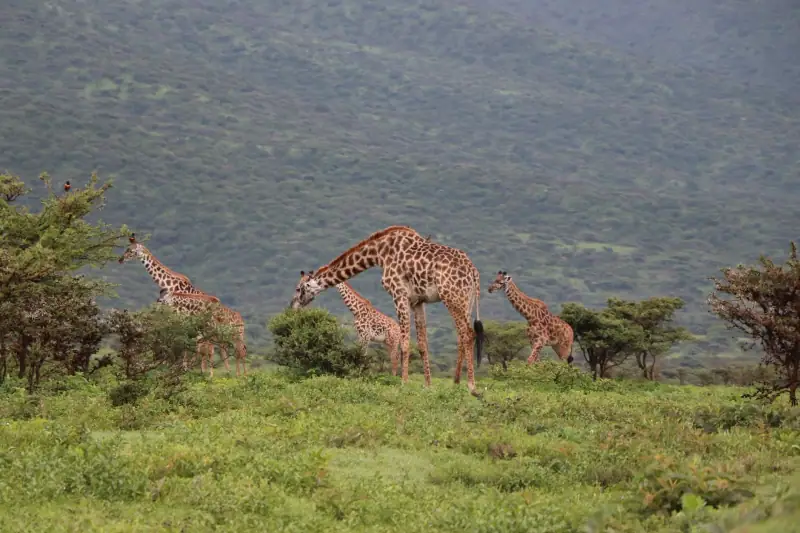
The Serengeti, the Ngorongoro Crater and Tarangire, Kilimanjaro and the beaches of the coast.
18 guides3 itineraries
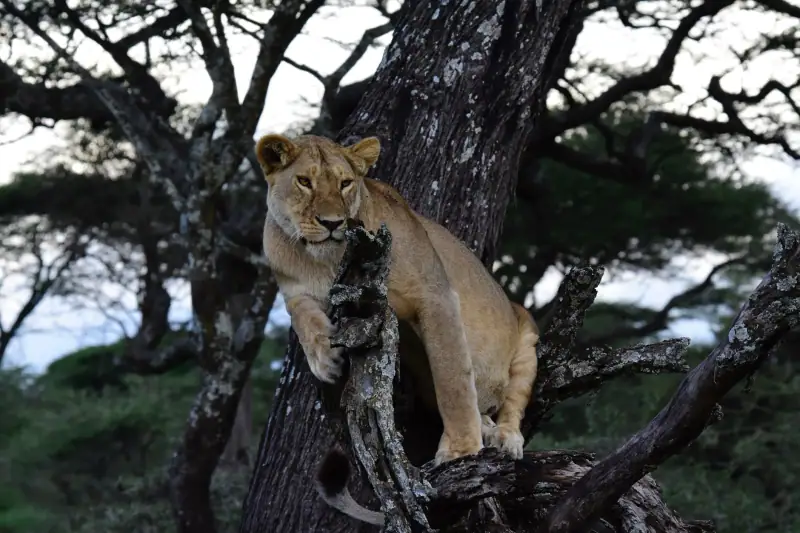
The safari half: Arusha as the base, then Tarangire, Lake Manyara, Ngorongoro Crater and the Serengeti with a driver-guide in a 4x4.
Indian Ocean · Tanzania
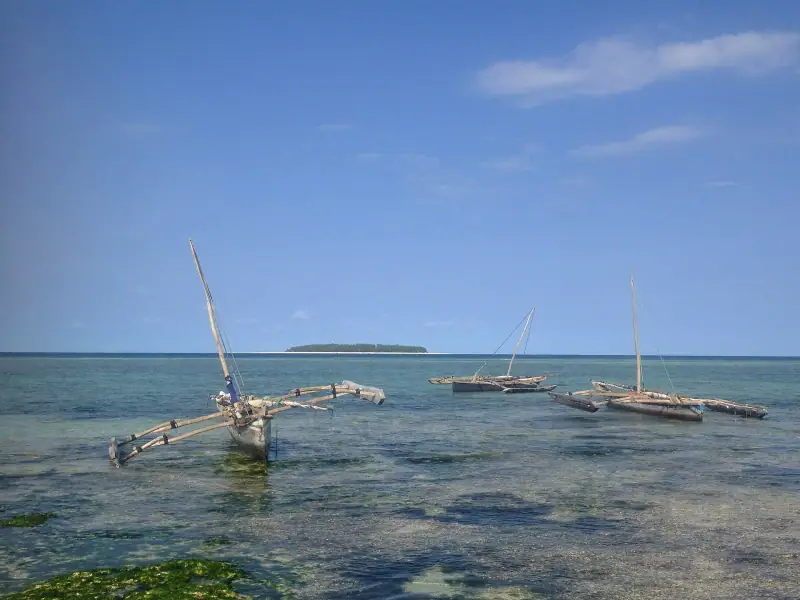
Stone Town's alleys, then the beaches of the north and the east coast, a short drive apart. Pemba is a flight away.
20 guides5 itinerariesTrip planner
The beach half: Stone Town's old lanes, then the east coast at Paje and Jambiani or the north coast at Kendwa and Nungwi.
Yes, as a short version of both. Our 9-day plan has a 4-day circuit through Tarangire, Lake Manyara and Ngorongoro, then two nights in Stone Town and two at Kendwa. It leaves out the Serengeti.
No. Safaris are done in a 4x4 with a driver-guide, and the guides do not advise renting a car without a driver for the parks. On Zanzibar, taxis cover the transfers.
By domestic flight from the Arusha region. Our guides give no flight time or schedule, so ask your operator or the airline. Small planes apply stricter baggage rules than large aircraft.
June to October is the main dry season in the northern parks and the long dry season on Zanzibar. January and February are a good alternative, though Zanzibar is hot and humid then. April and May bring the heaviest rains.
Kilimanjaro International Airport (JRO) serves the northern safari circuit, and Zanzibar's Abeid Amani Karume Airport (ZNZ) is the natural exit. Booking JRO in and ZNZ out as an open-jaw ticket avoids doubling back.
It is the park that weighs most on the budget and needs a longer stay. Our guides suggest at least two nights there, and three or four if you want to follow the herds.