What to see
Visiting Hualien: a complete guide to the gateway to Taroko
We may earn a commission when you book through links on this page, at no extra cost to you. We don't visit or try the places we cover: we summarize published sources. How we work
In short
- Allow at least 3 days: one for Taroko Gorge, one for the city and Qixingtan Beach, one for an excursion (Xiuguluan River rafting or Liyu Lake).
- From Taipei, the Puyuma or Taroko Express train takes about 2 hours for NT$340 to 440 (about US$10 to 14).
- Several Taroko sites and trails are closed after earthquakes and landslides; Route 8 is open to vehicles only at certain hours. Check the park's official site before you go.
- Best seasons are March to May and September to November; typhoons from July to August can close Taroko without notice.
Hualien is one of the most fascinating cities in Taiwan, and yet one of the least known to travelers who stick to Taipei. Set between the Pacific Ocean to the east and the peaks of the Central Range to the west, this east-coast city is the gateway to Taroko Gorge and the living heart of Amis indigenous culture. Here is everything you need to know to visit Hualien well.
Why visit Hualien?
Hualien has a unique geographic position in Taiwan: it is one of the few cities in the world where you can go from a Pacific beach to peaks above 3,000 meters (9,840 ft) in under an hour. This duality between sea and mountains, combined with a rich local culture and a distinctive food scene, makes it much more than a logistical stop on the way to Taroko.
What sets Hualien apart from other destinations in Taiwan:
- Proximity to Taroko National Park: Asia’s most spectacular marble canyon is less than 20 kilometers (12 mi) from downtown
- Amis indigenous culture: Hualien is one of the cities where the presence of Taiwan’s indigenous peoples is most visible and best celebrated
- An exceptional natural setting: the east coast offers landscapes of cliffs plunging into the Pacific that are unique in Taiwan
- A relaxed pace of life: much calmer than Taipei, Hualien keeps a small provincial-town atmosphere despite its tourist appeal
- A variety of activities: from mountain-river rafting to coastal cycling and hikes in cedar forests
Taroko Gorge: the main attraction
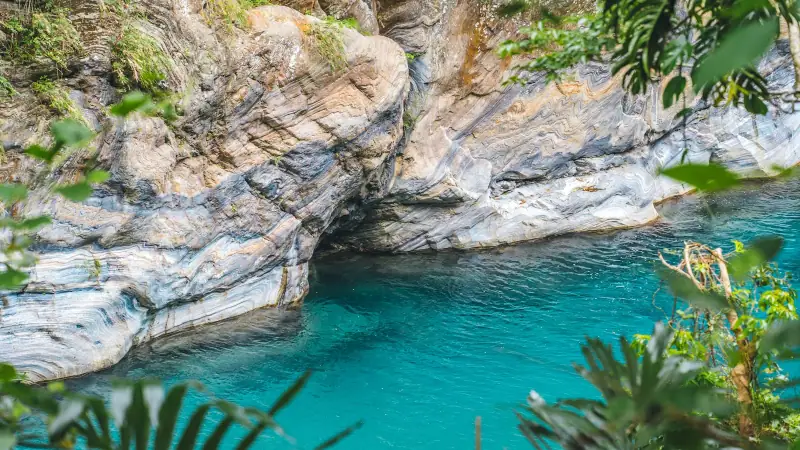
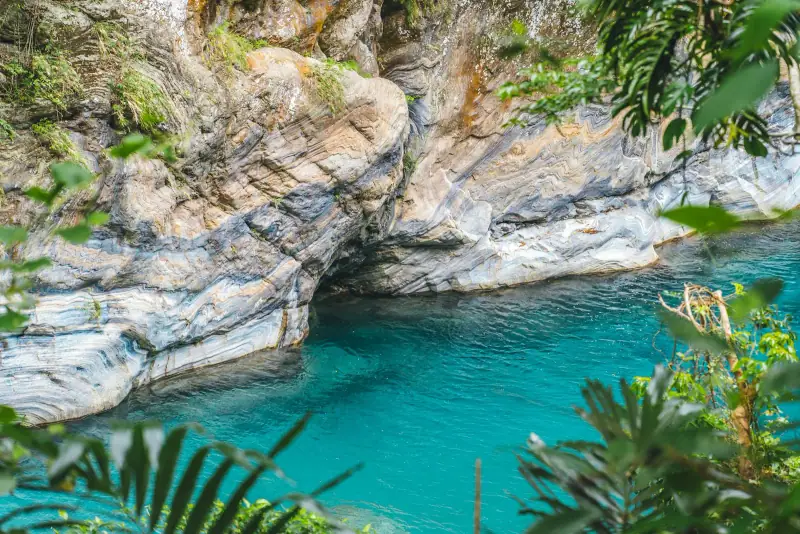
It is impossible to talk about Hualien without mentioning Taroko Gorge. About 19 kilometers (12 mi) north of downtown, via the north coast (Route 9) to Xincheng and then Route 8 inland, the entrance to Taroko National Park, the Xincheng arch, is 20 to 30 minutes from the station. This canyon, cut by the Liwu River through marble and crystalline schist, is recognized as one of the most beautiful natural sites in Asia.
The canyon’s highlights (note: as of the most recent information available, August 2026, several of these sites are closed to the public after earthquakes and landslides; some can only be seen from the road or the entrance, and Route 8 is open to vehicles only at certain hours. Check the status on the park’s official website before you go):
- Swallow Grotto (Yanzikou): the most photographed section of the canyon, where swallows nest in the vertical walls above the road
- Tunnel of Nine Turns (Jiuqudong): a pedestrian tunnel winding between marble walls, closed to cars and ideal for sensing the scale of the canyon
- Eternal Spring Shrine (Changchun Temple): a shrine built in tribute to the workers who died building the Taroko road, reached by a suspension bridge over the river
- Shakadang Trail: a trail along the turquoise Shakadang River, between fig forests and white marble boulders. Note: this trail has been closed since the April 2024 earthquake and remains so for now; check its status with the park administration before any visit
Our detailed guide to Taroko Gorge gives you all the practical details on hours, access and the hikes available in the park.
Guided tours in Taroko and Hualien
Gorge excursions, guided hikes and nature activities from Hualien.
Qixingtan Beach

About 7 to 10 kilometers (4 to 6 mi) northeast of downtown, Qixingtan (or Chisingtan) is one of the most spectacular beaches in Taiwan. It is not a fine-sand beach, as the shore is covered with black pebbles and small rocks, but the view of the green mountains falling straight into the Pacific is striking.
Early in the morning, before the tour groups arrive, Qixingtan is an almost mystical place: morning mist, the sound of pebbles under the waves, the silhouettes of fishermen on the horizon. It is also one of the best places to watch the sunrise in Taiwan, with the Pacific Ocean directly to the east.
The coastal path running north along the beach leads to a wilder, less crowded area, with coves between the rocks. Bamboo shelters and a few drink stands are there during high season.
Getting there from Hualien: about 15 minutes by taxi or scooter. You can also ride there by bike on the cycle path that runs along Hualien’s north coast.
Dongdamen Night Market

The Dongdamen Night Market (East Gate Market) is the living heart of Hualien’s nightlife. This covered, organized market gathers dozens of stalls around a central square that is lively every evening until about 11 pm.
Unlike Taipei’s night markets, which can feel very touristy, Dongdamen keeps a pleasant authenticity: most customers are locals. People come with family or friends to snack, drink bubble tea and enjoy the cool of the evening.
Specialties to try:
- Fresh fish sashimi: the Pacific coast ensures remarkably fresh fish
- Chive wontons: a local specialty made to order in front of you
- Spiced grilled sausages: a classic of all Taiwanese night markets, often served here with fresh garlic paste
- Stinky tofu (fermented tofu): for the culinary adventurers
- Taro balls (yuanxiao) in hot soy milk: perfect for cool fall evenings
For a deeper look at Taiwanese food, read our guide to Taiwan’s food scene.
Rafting on the Xiuguluan River
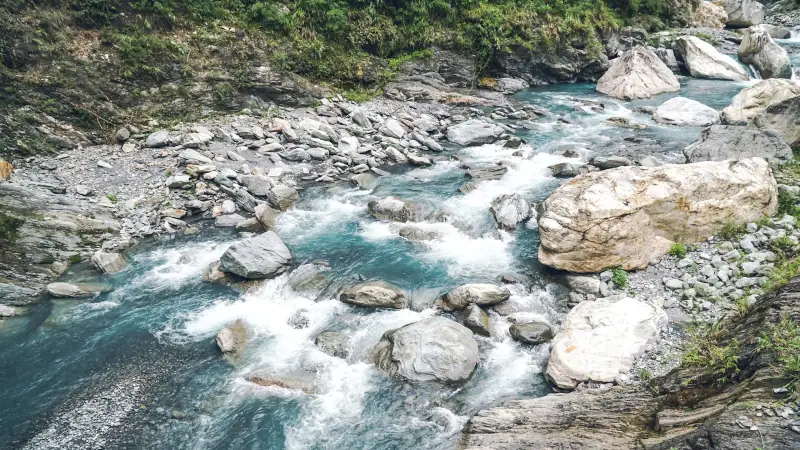
About 62 to 64 kilometers (39 to 40 mi) south of Hualien (around 1 hour by road), the Xiuguluan River offers one of the best-known rafting runs in Taiwan. The nearly 24-kilometer (15 mi) course between Ruisui and the Changhong Bridge at Dagangkou follows a river hemmed in by cliffs and subtropical forest, with class II to IV rapids.
The run usually takes 3 to 4 hours. Operators based in Hualien offer packages that include round-trip transport from the city, equipment and an accompanying guide. According to the official operators of the East Coast National Scenic Area, high season for rafting runs from May to October; outside this period, the water level may be too low or the weather unfavorable.
It is an activity particularly suited to families: the rapids are exciting without being dangerous for beginners, and the natural setting of the Xiuguluan valley is splendid.
Car or scooter rental in Hualien
Explore the east coast at your own pace from Hualien to Ruisui and beyond.
Amis indigenous culture
Hualien is one of the regions of Taiwan where indigenous peoples, notably the Amis (also called Pangcah), have kept a strong and living cultural presence. The Amis are Taiwan’s largest indigenous group, concentrated mainly in the Hualien plain and along the east coast.
Several ways to approach this culture:
The Ilisin festival: the Amis harvest festival (Ilisin) takes place every year between July and August. It is the most important celebration in the Amis calendar: circle songs, traditional costumes, ritual dances and communal sharing of food. Some villages welcome respectful outside visitors.
Cultural villages: several villages around Hualien offer demonstrations of traditional Amis skills: weaving, wood carving, preparation of ancestral dishes and reed-flute music.
Amis cuisine: distinct from Han Taiwanese cooking, it uses wild mountain plants, tubers, game and river fish. Some restaurants and markets in Hualien offer menus that include indigenous ingredients and techniques.
For hikers, several trails in the forests around Hualien cross territories historically inhabited by the Amis and Truku peoples. See our guide to hiking in Taiwan for details on accessible routes.
Liyu Lake (Carp Lake)
About 15 to 20 kilometers (9 to 12 mi) southwest of Hualien (20 to 30 minutes by car), Liyu Lake (Carp Lake) is the largest freshwater lake in eastern Taiwan. Surrounded by wooded hills and rice paddies, this quiet body of water offers a pleasant contrast to the already impressive Taroko itinerary.
A cycle path of about 4 to 5 kilometers (2.5 to 3 mi) goes all the way around the lake, ideal for a morning by bike. Paddle boats and kayaks are available for rent at the lakeside. The site is very popular with Taiwanese families on weekends but stays quiet on weekdays.
Liyu Lake is also known for carp fishing (hence its name), and a few lakeside eateries serve fresh fish caught on the spot.
Getting around Hualien
From Taipei: the express train (Puyuma or Taroko Express) is the recommended means of transport. It links Taipei and Hualien in about 2 hours with a high level of comfort. Book ahead on the TRA website (tip.railway.gov.tw) or at TRA stations; tickets go fast in high season and on weekends. Flying from the domestic Songshan Airport is a quick option (50 min), but airport logistics make it a less practical choice.
Within Hualien: downtown Hualien is compact and easy to explore on foot or by bike. For the outlying sites (Taroko, Qixingtan, Liyu), there are several options:
- Scooter rental: the solution favored by independent travelers. Many agencies around the station. A valid license covering scooters is required, so check what your license needs before you travel. Allow about NT$400 to 600 (about US$13 to 20) a day.
- Car rental: practical for groups or families, especially for Taroko and excursions toward Ruisui. Rental agencies are well represented at the station and at the airport.
- Tourist shuttles: semi-private or shared shuttles run Taroko circuits from the station, with stops at the park’s main points.
- Taxi: taxis are available and inexpensive. Negotiate a half-day or full-day rate for Taroko; it is common practice and reasonably priced.
Where to stay in Hualien
Hualien has a range of accommodation from hostel dorms to seaside boutique hotels. Our complete guide Where to stay in Hualien details the best areas and properties for your budget.
In short:
- Downtown (around the station): ideal for travelers without a vehicle, with easy access to Taroko shuttles and the Dongdamen night market
- Seaside / Qixingtan: quieter, suited to travelers with a car or scooter, with views of the Pacific Ocean
- Taroko village (Tianxiang): stay inside the park for full immersion and reach the trails at dawn before the tourist buses (comparison in our guide staying in Tianxiang or Hualien)
Indicative budget:
- Hostel dorm: NT$400 to 700 (about US$13 to 23)
- Budget double room: NT$1,200 to 2,000 (about US$39 to 65)
- 3-4 star comfort hotel: NT$2,500 to 5,000 (about US$81 to 162)
Where to stay in Hualien
Hotels, B&B and hostels near the station, the seaside and Taroko.
Budget for visiting Hualien
Hualien is slightly cheaper than Taipei, but activities around Taroko (guides, transport, rafting equipment) can push up the daily budget. The table below gives indicative ranges:
| Item | Tight budget | Comfort |
|---|---|---|
| Accommodation | NT$500-800/night | NT$2,500-5,000/night |
| Meals (3/day) | NT$200-300 | NT$500-1,000 |
| Local transport (scooter) | NT$400-600/day | NT$800-1,500/day (car) |
| Activities | NT$200-500/day | NT$800-2,000/day |
| Daily total | ~NT$1,500 (~US$49) | ~NT$5,000 (~US$160) |
For a full picture of your travel budget, see our article on the travel budget for Taiwan.
Practical information
Language: Mandarin is the main language. In the tourist areas around Taroko, many people speak functional English. Outside tourist areas, bring a translation app.
Connectivity: local SIM cards available at the airport or in Hualien’s many 7-Eleven stores offer excellent 4G/5G coverage in town. In Taroko Gorge, reception can be patchy in tunnels and enclosed areas. Check your carrier’s international plan or use a travel eSIM.
Money: Hualien has fewer ATMs than Taipei. Bring cash (NT$) before exploring remote areas. Hotels and big chains accept cards, but night markets and small businesses often run on cash.
Earthquakes: Taiwan is a very active seismic zone. Before any hike in Taroko, check trail conditions with the park administration; sections may be closed after landslides or earthquakes. If the ground shakes while you are in the gorge, move away from the walls immediately.
Best time to go: spring (March to May) and fall (September to November). Summer typhoons (July to August) can close Taroko for several days in a row. For the full calendar, see our guide to the best time to visit Taiwan.
Getting to Taroko: the park entrance (the Taroko arch, at Xincheng) is about 20 to 22 km (12 to 14 mi) north/northwest of Hualien station, reached along the north coast and then via Route 8 inland. Qingshui Cliff is a separate coastal site, on the Suhua Highway north of Hualien. Tourist shuttles generally leave in the morning. If you rent a scooter, leave early to avoid the crowds in the tunnels and the traffic on the main road.
Suggested 3-day itinerary in Hualien
Day 1: Arrival and discovering the city: settle into your accommodation, stroll through downtown in the late afternoon, watch the sunset at Qixingtan Beach (view of the mountains above the sea), and have dinner at the Dongdamen night market.
Day 2: Taroko Gorge: early start (before 8 am to avoid the crowds and get the best light). Tunnel of Nine Turns, Swallow Grotto and Eternal Spring Shrine (depending on whether they are open: they are currently closed or visible only from the road), otherwise the park’s reopened trails and sites. Check Route 8 passage times and trail status (Shakadang is closed). Picnic in the park, return in the late afternoon.
Day 3: River and nature: choose according to your taste. Option A (quiet nature): excursion to Liyu Lake (bike or kayak), coastal walk in the afternoon, back to Hualien for the Dongdamen market. Option B (adventure): a full day of rafting on the Xiuguluan River from Ruisui (book in advance; the run takes 3 to 4 hours, not counting round-trip transport from Hualien).
To fit Hualien into a wider tour of the island, our 7-day Taiwan itinerary gives you ideas for combinations with Taipei, Tainan and the central regions.
Hualien is one of those destinations that regularly surprises travelers: you come for Taroko and leave wanting to return for the rest. The confluence of the Pacific Ocean, marble mountains and indigenous culture makes it a city with an identity of its own, not reducible to its role as gateway to the canyon. Take the time to settle in for a few days.
Frequently asked questions
How many days do you need to visit Hualien?
Allow at least 3 days: one for Taroko Gorge, one for the city and Qixingtan Beach, and a third for an excursion (rafting on the Xiuguluan River or Liyu Lake). With 4 to 5 days you can explore the surroundings more deeply at a comfortable pace.
How do you get to Hualien from Taipei?
The train is the most practical way: the Puyuma Express or Taroko Express links Taipei and Hualien in about 2 hours for NT$340 to 440 (about US$10 to 14) depending on the train type. Flying (50 minutes from Songshan Airport) is possible but less convenient door to door. Going by car or bus is possible, but the road crosses the central mountains and takes about 4 hours.
Do you need a permit to enter Taroko National Park?
Some areas of the park (mountain trails such as Dali-Datong) require a hiking permit obtained in advance through the park's website. The classic gorge sites (Swallow Grotto, Tunnel of Nine Turns, Eternal Spring Shrine, Shakadang and Zhuilu trails) are closed or heavily restricted since the earthquakes and landslides: check their status with the park administration before you come, as the situation changes.
Can you visit Hualien without a car?
Yes, with a few constraints. The city itself is easy to get around on foot or by taxi. For Taroko, tourist shuttles leave from Hualien station. For more freedom, scooter rental is very common and inexpensive, around NT$400 to 600 (about US$13 to 20) a day; check what license you need before you travel.
Is Hualien dangerous because of earthquakes?
Taiwan is an active seismic zone and Hualien is the city most exposed on the island, notably at a junction of tectonic plates. Earthquakes happen regularly, sometimes significant ones. Buildings follow the strictest earthquake standards in Asia. If an earthquake strikes, follow local instructions and avoid Taroko Gorge (rockfall risk). Check the alerts of Taiwan's Central Weather Administration (CWA) before hiking.
What is the best season to visit Hualien?
The most pleasant periods are March to May (spring) and September to November (fall). Summers (June to August) are hot and humid, with typhoon risks that can close Taroko without notice. Winter (December to February) is mild and quiet, great for Taroko but less so for the beach.
What is the Dongdamen night market?
The Dongdamen Night Market (East Gate Market) is Hualien's most famous night market. Open every evening, it offers local specialties such as fresh fish sashimi, wontons, homemade bubble tea and grilled food. It is a central gathering place where locals and tourists meet in the evening.
More Taiwan guides
Keep reading

Visiting Kaohsiung: a complete guide to the southern metropolis
Everything to visit Kaohsiung: Pier-2, Lotus Pond, Cijin, night markets, transport and practical tips for southern Taiwan's gem.

Taipei must-sees: the 15 sights not to miss
Taipei's top sights: Taipei 101, Longshan Temple, the National Palace Museum, night markets and trendy districts. A full sightseeing guide.
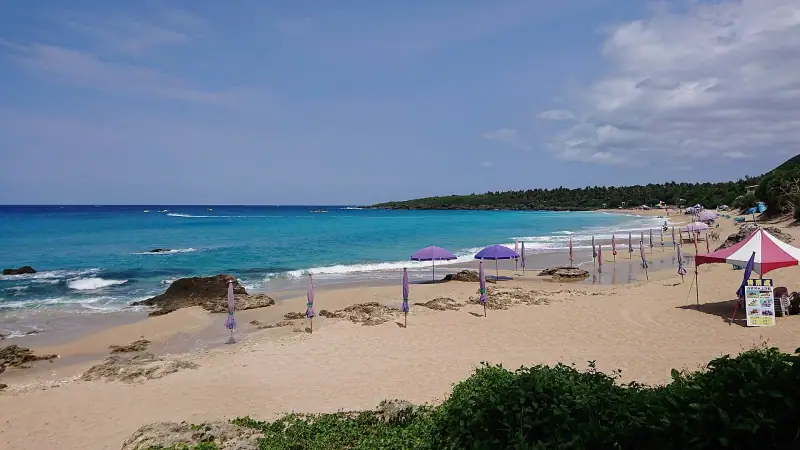
Visiting Kenting: a complete guide to Taiwan's beach paradise
Visiting Kenting: beaches, national park, Eluanbi Cape, Hengchun and night markets. A complete guide to the southern tip of Taiwan.
Ready-made
Taiwan itineraries
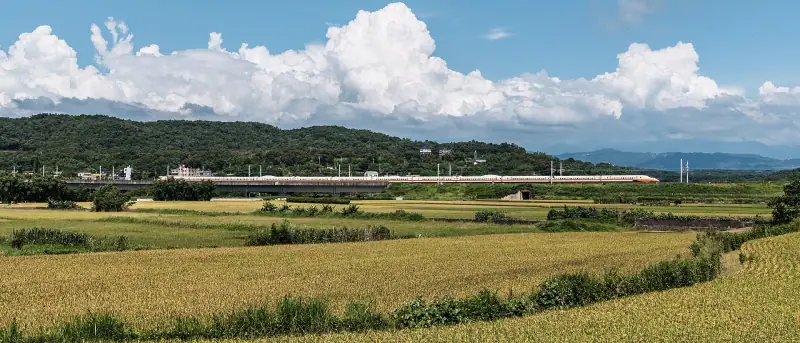
10 days
Taiwan in 10 days without a car: train and HSR itinerary, stops and travel times
TaipeiSun Moon LakeTainanKaohsiungKentingHualien
5 days
Eastern Taiwan road trip: the Pacific coast and Taroko Gorge
A complete guide to a road trip in eastern Taiwan: Taroko Gorge, Hualien, the Rift Valley, Highway 11 and Taitung in 5 to 7 days.

7 days
Taiwan in 7 days: the perfect itinerary for a first trip
TaipeiHualienSun Moon LakeTainan