What to see
Visiting Kenting: a complete guide to Taiwan's beach paradise
We may earn a commission when you book through links on this page, at no extra cost to you. We don't visit or try the places we cover: we summarize published sources. How we work
In short
- The Kenting Express bus from Zuoying station in Kaohsiung takes about 2 h 30 to 3 h for NT$400 to 420 (about US$13 to 14); by car it is about 109 km (68 mi).
- Two to three days cover the beaches, Eluanbi Cape, Maobitou and Hengchun; allow 4 to 5 days for diving, surfing or hiking.
- October to April is the most pleasant season; typhoon season runs from June to October.
- A scooter is the favored way to get around the peninsula; rent one for about NT$300 to 500 (about US$9 to 16) a day.
At the southern tip of Taiwan, where the waters of the Taiwan Strait meet those of the South China Sea and the Pacific, Kenting is a destination apart on the island. With its tropical national park, white-sand beaches, coral reefs and a pedestrian street that comes alive in the evening, Kenting offers a seaside experience unique in East Asia, less than 2 hours from Kaohsiung. This complete guide helps you plan your stay in Kenting, from the iconic Eluanbi Cape to the best beaches, by way of the historic town of Hengchun.
Why visit Kenting?
Founded in 1984, Kenting National Park (墾丁國家公園) was the first national park established in Taiwan. It occupies the Hengchun Peninsula at the southern end of the island and protects an exceptional landscape mixing coral reefs, tropical forests, rocky coasts and broad sandy beaches. It is also one of the few places in Taiwan where you can swim in warm water over a colorful seabed.
Here is what makes Kenting a must-see on a southern Taiwan itinerary:
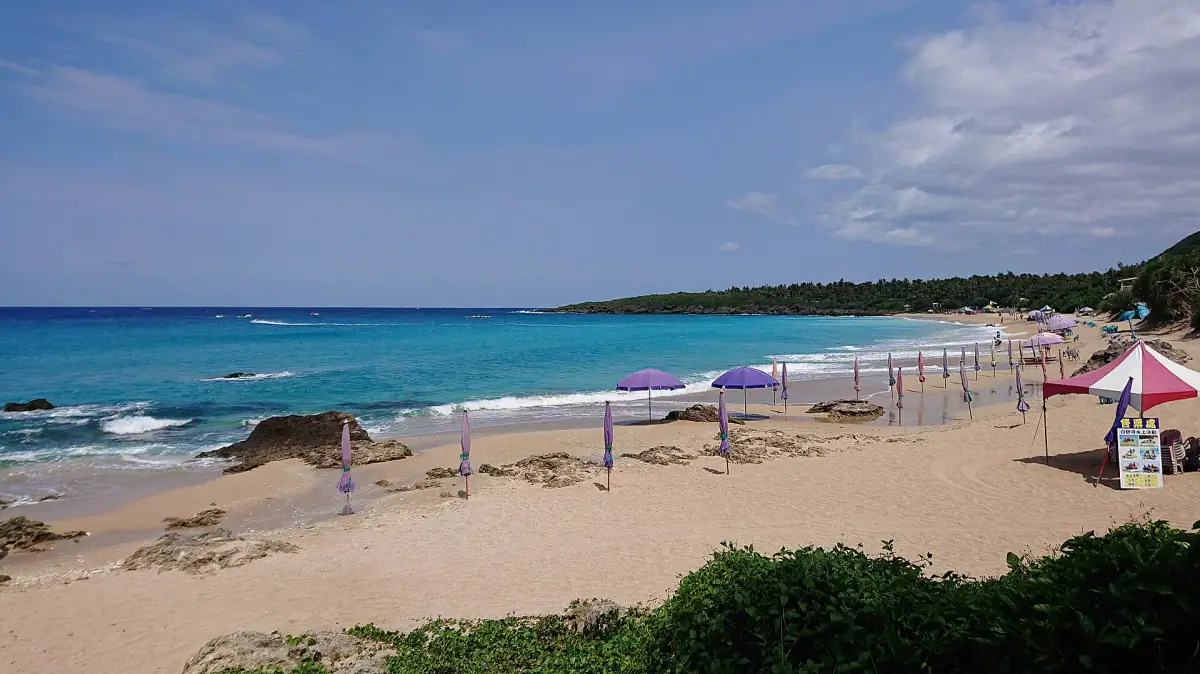
- The beaches: Nanwan, Big Bay (Dawan) and Baisha are among the most beautiful accessible beaches on the island
- Marine biodiversity: the coral reefs shelter rich underwater life, accessible by snorkeling and diving
- Eluanbi Cape: Taiwan’s southernmost lighthouse, a symbol of the island’s far southern end
- Hengchun: the walled town keeps its four Qing-period gates intact, which is rare in Taiwan
- The atmosphere: Kenting has the soul of a laid-back seaside resort, a mix of surf culture and Taiwanese night markets
- Wildlife: migratory birds, butterflies and, depending on the season, manta rays; the national park is also a remarkable natural area
If you are planning a full tour of the island, our complete guide to Taiwan gives you an overall framework for fitting Kenting into your itinerary.
Kenting’s beaches: which to choose?
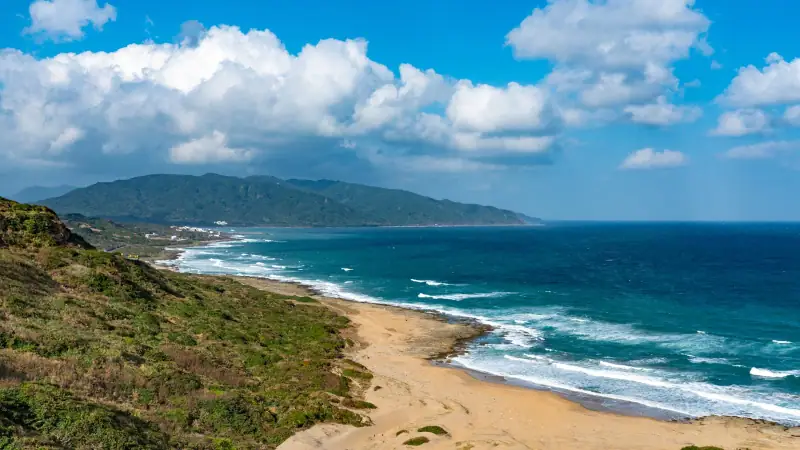
Big Bay (Dawan / 大灣): the main beach
The Great Bay, called Dawan or Big Bay, is Kenting’s busiest beach and often the first one people visit. Its curved stretch of fine sand, relatively calm waters and the many water-activity providers (jet ski, banana boat, paddleboard, kayak) make it the liveliest beach in the area. It is ideal for families and travelers looking for convenience and activity.
The beach is public and reachable on foot from most hotels in central Kenting.
Nanwan (南灣): the water-sports spot
A few kilometers west/northwest of the center, Nanwan beach is Kenting’s water-sports hub. Snorkeling, scuba diving, surfing, bodyboarding and kitesurfing are all practiced there. The beach is smaller than Big Bay but the seabed is more interesting: the coral reefs start fairly close to shore, making it an ideal spot for a first snorkeling lesson.
Many equipment-rental and diving-introduction centers are located around Nanwan and the neighboring port of Houbihu.
Activities in Kenting
Diving, snorkeling, surfing and national park excursions: book your activities in advance.
Baisha (白沙): the white-sand beach
Baisha, which literally means “white sand,” lives up to its name. This beach, quieter and less crowded than Dawan, is appreciated for the quality of its fine sand and the clarity of its water. It suits peaceful swimming and walking better than motorized water sports. An ideal setting for spending half a day away from the weekend crowds.
The east coast and the wild beaches
The east coast of the Hengchun Peninsula, exposed to Pacific winds, has wilder, less developed beaches. The Jialeshuei coastline is famous for its coastal rock formations sculpted by erosion and its powerful winds, which make it a prime kitesurfing spot. These beaches are less suited to swimming because of waves and currents, but spectacular to walk.
Eluanbi Cape: the end of the island
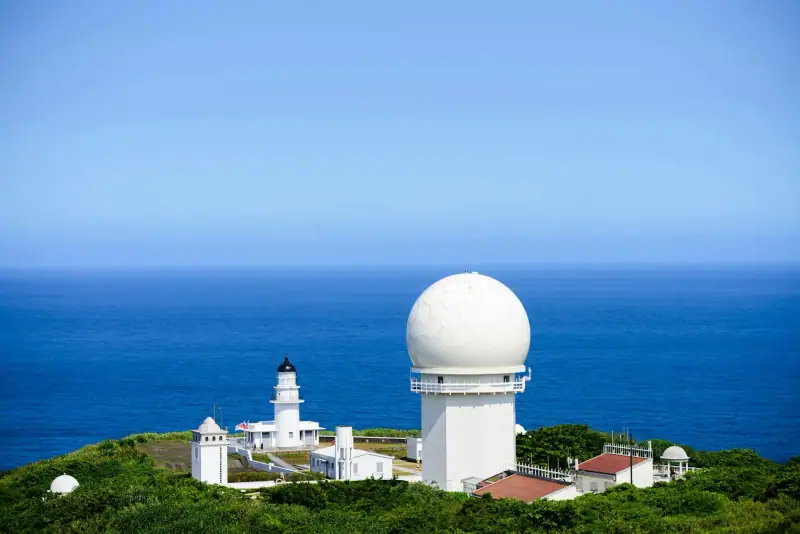
Eluanbi Cape (鵝鑾鼻) is the southernmost point of Taiwan. The site is marked by its listed white lighthouse, opened in 1883 during the Qing period. Nicknamed “東亞之光” (The Light of East Asia), it is one of the most powerful in the region with a range of 27.2 nautical miles (about 50 km / 31 mi), and once guided ships through the waters of the Bashi Channel, reputed to be dangerous.
The park around the lighthouse is pleasant to explore: coastal trails cross tropical shoreline vegetation with views of the two seas. In clear weather, you can sometimes see the small islands of the region.
Practical: Eluanbi is reached by scooter or car from central Kenting (about 8 to 10 km / 5 to 6 mi south). An entrance fee of about NT$60 is generally charged. The visit takes 1 to 2 hours.
Maobitou: the cat rock
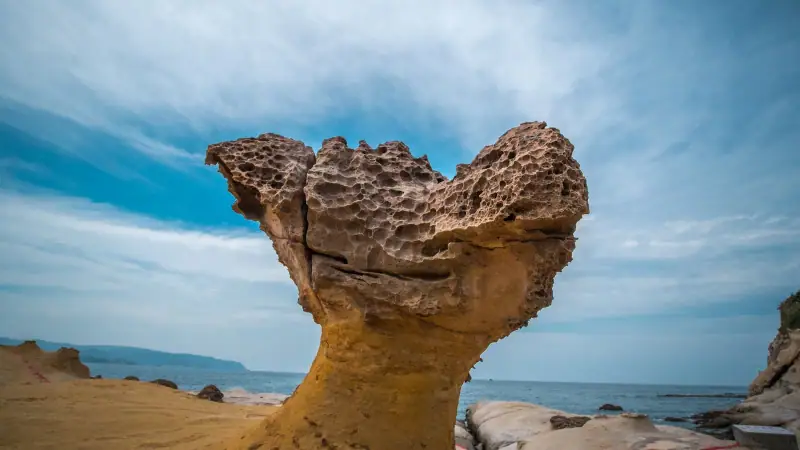
West of Eluanbi, the site of Maobitou (貓鼻頭, “cat’s head”) is a rocky headland whose silhouette suggests a lying cat. The site offers a remarkable view of the South China Sea and of coral formations lifted by tectonic movements. A marked walking route follows the coral cliffs for about 800 meters (2,625 ft).
Located on the southwest coast of the Hengchun Peninsula, Maobitou offers a spectacular view over the South China Sea. It is one of the most photographed places in southern Taiwan.
Where to stay in Kenting
Seaside hotels, resorts, guesthouses and B&B in the national park.
Kenting National Park: beyond the beaches
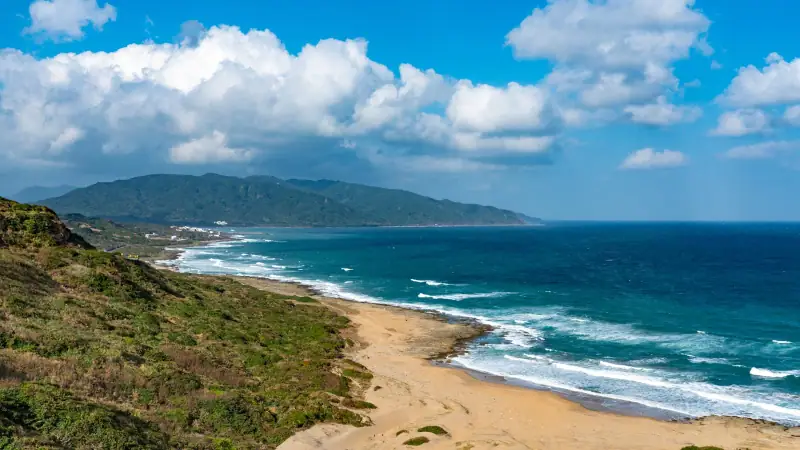
Kenting National Park is much more than a seaside. It covers about 33,000 hectares (about 81,500 acres, land and sea combined) and protects very varied ecosystems: semi-deciduous tropical forest, mangroves, mountain grasslands, coral reefs and seabeds.
Kenting’s tropical forest
The park’s protected forest area (Kenting Forest Recreation Area) shelters a canopy of giant strangler figs, palms, banyans and lush vegetation typical of the humid subtropics. Marked trails let you explore the forest interior, noticeably cooler than the beaches in summer. It is also a renowned spot for watching butterflies (hundreds of species recorded) and birds.
The raptor migration
Every autumn (October to November), thousands of migrating raptors fly over the Hengchun Peninsula on their way south: gray-faced buzzards and Chinese sparrowhawks, sometimes joined by crested honey buzzards. This migration, known to Asian birders, attracts many raptor-watching enthusiasts. The summit of Mount Sheding (社頂) in the park offers the best vantage point.
The underwater coral reefs
The park’s marine protected area includes some of the best-preserved coral reefs in Taiwan. More than 200 species of coral and hundreds of species of fish have been recorded in these waters. Some reefs are accessible by snorkeling from shore; others require a boat trip. For everything on diving, see our guide to diving in Taiwan.
Hengchun: the walled town
About ten kilometers (6 mi) north of Kenting’s resort strip, the town of Hengchun (恆春, “eternal spring”) is often overlooked by travelers in a hurry. Yet it is an essential cultural stop.
Founded in the late 19th century during the Qing period, Hengchun is one of the few towns in Taiwan to have kept its ramparts and its four original gates: North Gate, South Gate, East Gate and West Gate. These gray-brick gates, flanked by corner towers, still frame the town’s historic core.
The old town inside the walls, with its lively alleys and active temples, offers a striking contrast to the seaside bustle of Kenting town. A few local craft shops, traditional street-food stands and guesthouses in restored buildings round out the experience.
Hengchun is also known for its traditional folk songs (恆春民謠), performed with the yueqin (a local lute), a tradition recognized as intangible cultural heritage of Pingtung County since 2008.
Kenting Street: the resort’s nightlife
Kenting Street (墾丁大街), about 600 meters (2,000 ft) long, is the main artery of the tourist town of Kenting. It comes alive every evening as a succession of street-food stands, swimsuit and souvenir shops, cocktail bars and small restaurants.
Local specialties to try on Kenting Street:
- Iced papaya milk: fresh papaya blended with cold milk, refreshing after a day at the beach
- Grilled seafood skewers: squid, shrimp and octopus cooked on a griddle in front of you
- Fried fermented tofu (chou dofu): a powerful smell for an addictive taste
- Oyster omelets (蚵仔煎): an emblematic specialty of southern Taiwan
The atmosphere on Kenting Street is deliberately laid-back, mixing vacationing families, surfers and young Taiwanese on weekends. It recalls Southeast Asia’s beach streets a little, with a Taiwanese touch in the food and music.
Car rental for Kenting
Renting a car in Kaohsiung lets you explore the peninsula at your own pace without relying on buses.
Spring Scream: Kenting’s music festival
Every year around the Qingming period (early April), Kenting hosts Spring Scream, one of the biggest rock and indie music festivals in Taiwan. Since its creation in 1995, the festival has drawn tens of thousands of festivalgoers and runs several simultaneous stages over several days.
If you are traveling in early April, check the festival dates: accommodation fills up quickly and prices rise considerably during this event. Book several weeks ahead.
Getting around Kenting
The Hengchun Peninsula is fairly large and the distances between sites often exceed what is reasonably walkable. Here are the mobility options:
Scooter: the preferred means of transport in Kenting. Several agencies rent scooters by the day around Kenting Street and in Hengchun (allow NT$300 to 500 a day, about US$9 to 16). A valid license covering scooters is required, so check what your license needs before you travel. This option gives total freedom to explore Eluanbi, Maobitou, the beaches and Hengchun at your own pace.
Car: ideal for families or groups. Rental agencies are available in Kaohsiung (from the airport) and in Hengchun. Watch out for parking in Kenting town on weekends: it can be difficult and paid.
Electric bike: a few renters offer electric bikes in Kenting town. Handy for short distances (nearby beaches, Hengchun), but not enough to reach Eluanbi (8 to 10 km / 5 to 6 mi south) or more distant sites.
Local bus: public shuttles run between Hengchun and the main sites. Frequency is limited on weekdays and more regular on weekends and during holidays. Check timetables at the local tourist office.
Taxi: available in Kenting town and Hengchun. Using a taxi for a half day of sightseeing (Eluanbi + Maobitou) is a practical option if you do not rent a scooter.
Where to stay in Kenting
Kenting has a very wide range of accommodation, from big hotel chains to small family guesthouses.
Kenting town (the seaside resort): the liveliest location, with restaurants, bars and Kenting Street on foot. Ideal for immersing yourself in the resort atmosphere. Prices are higher, especially on weekends.
Nanwan: calmer than Kenting town, Nanwan offers accommodation with beach views and direct access to snorkeling spots. A few mid-range hotels and guesthouses.
Hengchun: for a more authentic experience and more affordable prices. The old town is quiet in the evening, with a few good local-food addresses. About 10 km (6 mi) from the beach, getting around by scooter is almost mandatory.
Indicative budget:
- Hostel dorm: NT$400-700/night (about US$13-22)
- Guesthouse / B&B double room: NT$1,200-2,500 (about US$39-81)
- Mid-range hotel: NT$2,500-5,000 (about US$81-160)
- High-end resort: NT$5,000-12,000 (about US$160-385)
Prices rise sharply on weekends (Friday-Saturday) and during Taiwanese school holidays. Always book ahead for July-August weekends and for Spring Scream.
Budget for a stay in Kenting
| Item | Tight budget | Comfort |
|---|---|---|
| Accommodation | NT$400-700/night | NT$2,500-5,000/night |
| Meals (3/day) | NT$200-350 | NT$500-1,200 |
| Transport (scooter) | NT$300-500/day | — |
| Activities | NT$300-800/day | NT$800-2,500/day |
| Daily total | ~NT$1,200 (~US$38) | ~NT$5,000 (~US$160) |
To plan your overall budget, our complete article on the travel budget for Taiwan gives you all the price ranges for the whole island.
Suggested 3-day itinerary in Kenting
Day 1: Arrival and main beaches
Afternoon: arrive in Hengchun or Kenting from Kaohsiung. Settle in, have a lunch of fresh seafood. First swim at Big Bay (Dawan) in the late afternoon.
Evening: stroll and dinner on Kenting Street. Iced papaya juice and squid skewers.
Day 2: The national park and the capes
Morning: early start by scooter for Maobitou. Walk the coastal trail (1 hour). On the way, stop at Baisha Beach for a swim in the calm waters.
Afternoon: Eluanbi Cape: visit the lighthouse, coastal trails and the view of the two seas (1 h 30). Return by the east coast road to enjoy the rocky scenery.
Evening: dinner in Hengchun, in the old town inside the walls. Less touristy and more authentic than Kenting town.
Day 3: Snorkeling and tropical forest
Morning: snorkeling session at Nanwan or Houbihu. Rent equipment there (about NT$200-300) or join an organized excursion.
Afternoon: walk in the national park’s protected forest area (Kenting Forest Recreation Area). Look for giant banyans and, depending on the season, migrating butterflies.
Evening: a last pass along Kenting Street, souvenir shopping, and departure for Kaohsiung or Tainan.
Flights to Taiwan
Compare flights to Kaohsiung or Taipei, a good starting point for Kenting.
Excursions from Kenting
Kaohsiung (about 109 km / 68 mi north): the big metropolis of southern Taiwan, with the Pier-2 art district, the Lotus Pond temples and Cijin Island. About 2 h 30 to 3 hours by bus from Kenting, it is the natural base for visiting the peninsula. See our Kaohsiung guide to organize a combined trip.
Tainan (about 2 h 30 north): Taiwan’s historic capital, with its temples, Dutch ruins and renowned food.
Little Liuqiu Island (Xiaoliuqiu): a small coral island off the southwest coast, reached by ferry from the port of Donggang (45 to 60 minutes north of Hengchun). Known for the sea turtles you can watch while snorkeling, this car-free island is a little-known gem. Our guide Xiaoliuqiu from Kaohsiung details access and a typical day.
Practical information for visiting Kenting
Language: English is less widespread than in Taipei, but the main tourist areas (Kenting Street, hotels) have bilingual signage. Scooter rental agencies generally speak basic English.
Connectivity: Taiwanese SIM cards with unlimited data are available at Kaohsiung airport and in 7-Eleven stores. Wi-Fi is available in almost all accommodation. Alternatively, check your carrier’s international plan or use a travel eSIM.
Money: there are ATMs in Hengchun and a few in Kenting town. Small stands and scooter rentals often run on cash.
Sea safety: always respect the safety flags on beaches. Some east-coast beaches have strong currents. Never dive alone and check the weather conditions before any outing at sea.
Typhoons: typhoon season runs from June to October. Kenting National Park is regularly affected. Watch weather alerts and be ready to adapt your plans.
Best time: for the optimal calendar for your trip to Taiwan, see our guide to the best time to visit Taiwan.
Kenting is the well-earned reward at the end of a tour around Taiwan: the island shows its sunniest, most relaxed and most maritime face there. After Taipei’s temples, Taroko Gorge and Tainan’s historic alleys, Kenting’s beaches offer a seaside counterpoint that reconciles you with the idea that Taiwan is not only a cultural destination but also a tropical island of great natural beauty. To start your exploration of the island from the beginning, our complete guide to Taiwan gives you all the keys.
Frequently asked questions
How do you get to Kenting from Kaohsiung?
The Kenting Express bus links Zuoying bus station (Kaohsiung) to Kenting in about 2 h 30 to 3 hours for around NT$400 to 420 (about US$13 to 14). There are frequent departures on weekends. By car or rented scooter from Kaohsiung, allow about 1 h 30 to 2 hours depending on traffic (about 109 km / 68 mi). Private shuttles from Kaohsiung airport are also available.
How many days do you need to visit Kenting?
Two to three days let you see the essentials: the main beaches, Eluanbi Cape, Maobitou and Hengchun. If you dive or surf, or want to explore the national park on foot, allow 4 to 5 days. Kenting is often combined with Kaohsiung and Tainan in a tour of southern Taiwan.
What is the best time to visit Kenting?
October to April has the most pleasant weather: clear skies, temperatures of 22 to 28 °C (72 to 82 °F) and a calm sea on the west coast. Avoid July-August (big crowds, high heat, typhoon risk) and the northeast monsoon winds (December to March on the east side), which make some beaches unsuitable for swimming. Spring (March-April) is ideal.
Can you dive in Kenting?
Yes, Kenting is one of the best diving spots in Taiwan, with well-preserved coral reefs and remarkable marine biodiversity. There are many dive and snorkeling centers around Nanwan and Houbihu beach. Visibility is generally good from October to June. Our complete guide to diving in Taiwan details the best sites.
Is there an entrance fee for Kenting National Park?
Access to the natural areas of Kenting National Park is generally free, but some specific sites such as Eluanbi Cape (with the lighthouse) charge about NT$60 (about US$2) per person. Public beaches such as Nanwan are free. Check individual site fees before your visit.
Is Kenting accessible all year?
Yes, Kenting operates year-round. Accommodation and restaurants stay open even in the off-season. However, some water activities are less practical in summer (possible typhoons) and in winter on the Pacific side (strong winds). Kenting town is especially lively on weekends and during Taiwanese holidays.
What is Kenting Street?
Kenting Street (Kending Da Street / 墾丁大街) is the busy main street of Kenting town, about 600 meters (2,000 ft) long, lined with street-food stands, souvenir shops, bars and restaurants. It comes alive in the evening and is the center of the resort's nightlife. It is the place to eat local and feel Kenting's seaside atmosphere.
More Taiwan guides
Keep reading
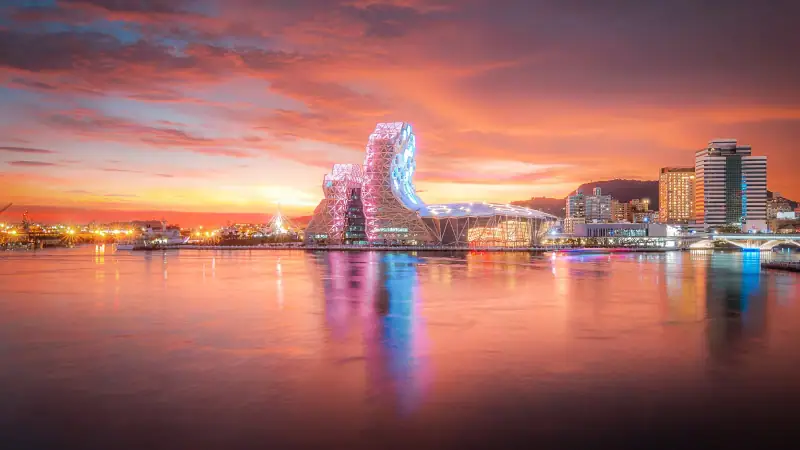
Visiting Kaohsiung: a complete guide to the southern metropolis
Everything to visit Kaohsiung: Pier-2, Lotus Pond, Cijin, night markets, transport and practical tips for southern Taiwan's gem.
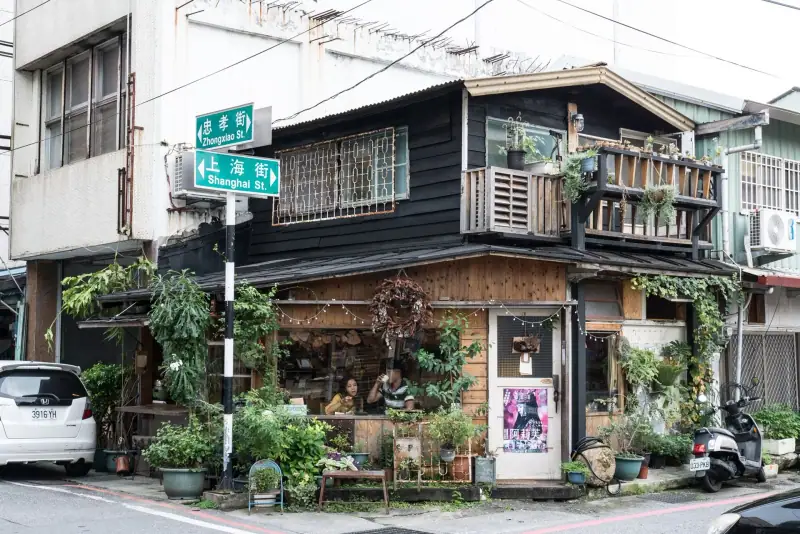
Visiting Hualien: a complete guide to the gateway to Taroko
Everything you need to visit Hualien: Taroko, Qixingtan Beach, Dongdamen night market, rafting, Amis culture and practical tips for eastern Taiwan.
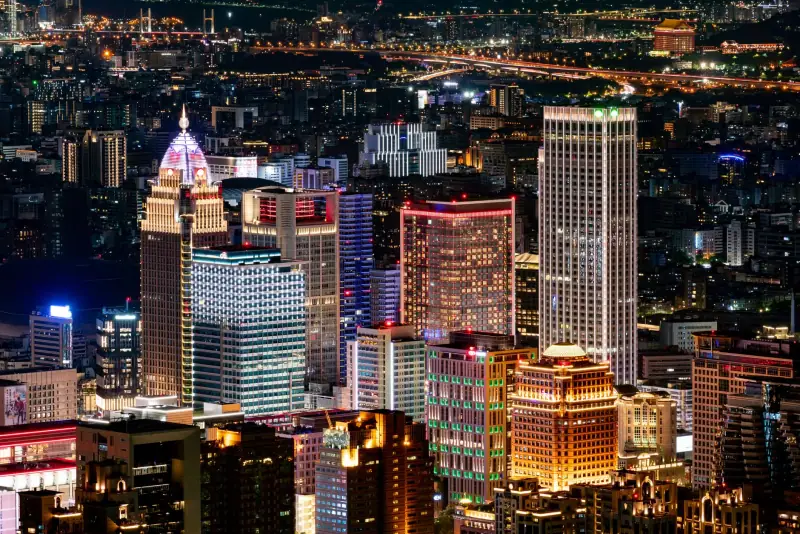
Taipei must-sees: the 15 sights not to miss
Taipei's top sights: Taipei 101, Longshan Temple, the National Palace Museum, night markets and trendy districts. A full sightseeing guide.
Ready-made
Taiwan itineraries
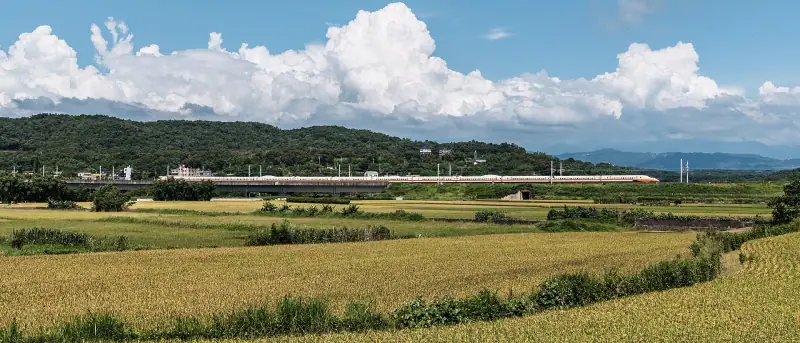
10 days
Taiwan in 10 days without a car: train and HSR itinerary, stops and travel times
TaipeiSun Moon LakeTainanKaohsiungKentingHualien
5 days
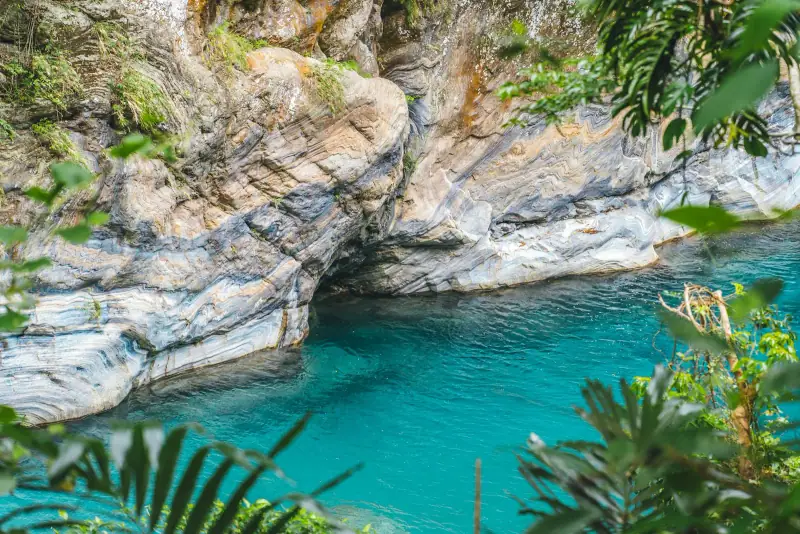
Eastern Taiwan road trip: the Pacific coast and Taroko Gorge
A complete guide to a road trip in eastern Taiwan: Taroko Gorge, Hualien, the Rift Valley, Highway 11 and Taitung in 5 to 7 days.
7 days
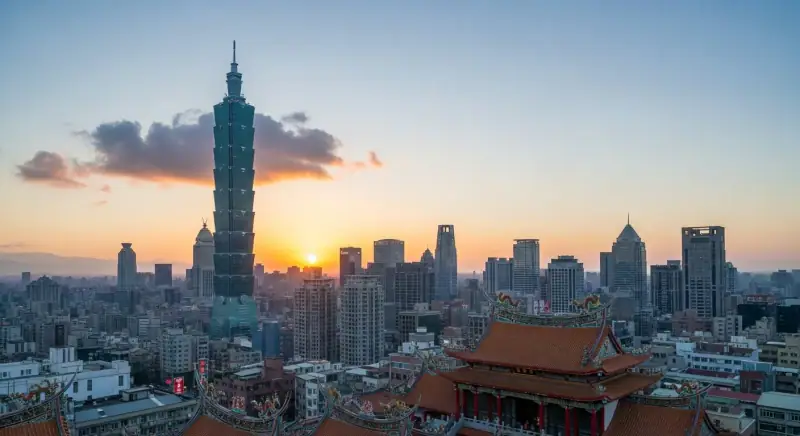
Taiwan in 7 days: the perfect itinerary for a first trip
TaipeiHualienSun Moon LakeTainan