Things to do
Taroko Gorge: the complete guide to the national park
We may earn a commission when you book through links on this page, at no extra cost to you. We don't visit or try the places we cover: we summarize published sources. How we work
In short
- One day is enough for the sites currently accessible; since the April 2024 earthquake, most famous trails (Swallow Grotto, Nine Turns, Shakadang, Baiyang, Zhuilu) are closed.
- The gorge road is open to vehicles only at a few time slots a day; check taroko.gov.tw before you go.
- From Hualien, a public bus takes about 35 to 45 minutes to the visitor center; a taxi costs NT$400 to 600 one way.
- Best season is September to May; arrive before 9 am, bring at least 2 liters of water per person and wear helmets where required.
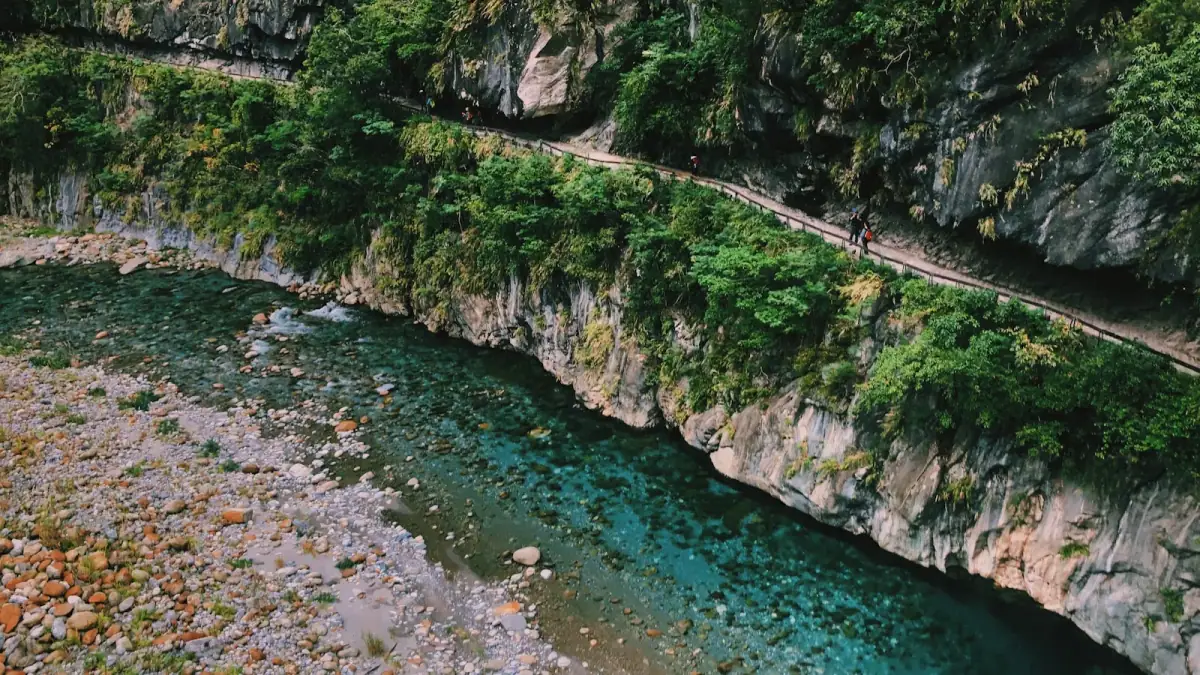
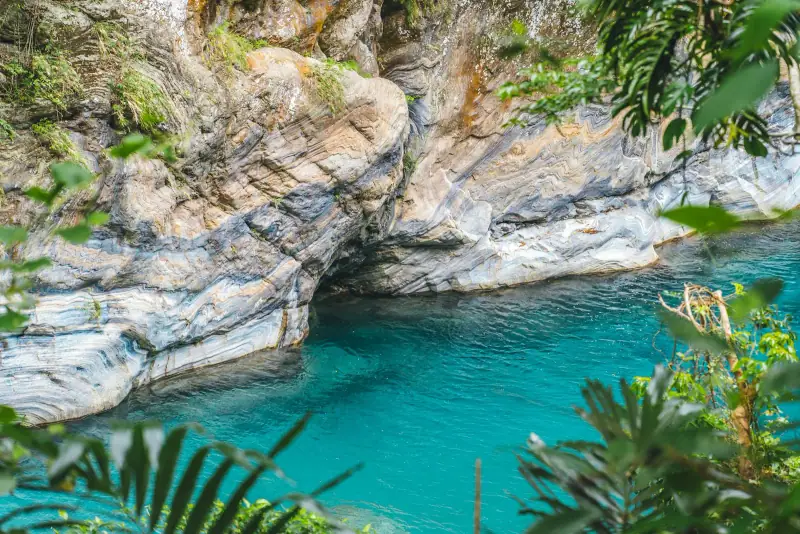
Taroko National Park (太魯閣國家公園) is without question Taiwan’s most impressive natural site. These gorges, carved into marble by the Liwu River over millions of years, form a breathtaking landscape of white and blue cliffs. It is the most visited site in Taiwan, and you understand why within the first kilometers in the gorge.
Important (October 2026): since the April 2024 earthquake and the typhoons that followed, most of the trails described below are closed (Swallow Grotto, Tunnel of Nine Turns, Shakadang, Baiyang, Zhuilu). The gorge road is open to vehicles only at a few time slots a day. Check the park’s official website (taroko.gov.tw) before you go: openings change regularly.
About Taroko National Park
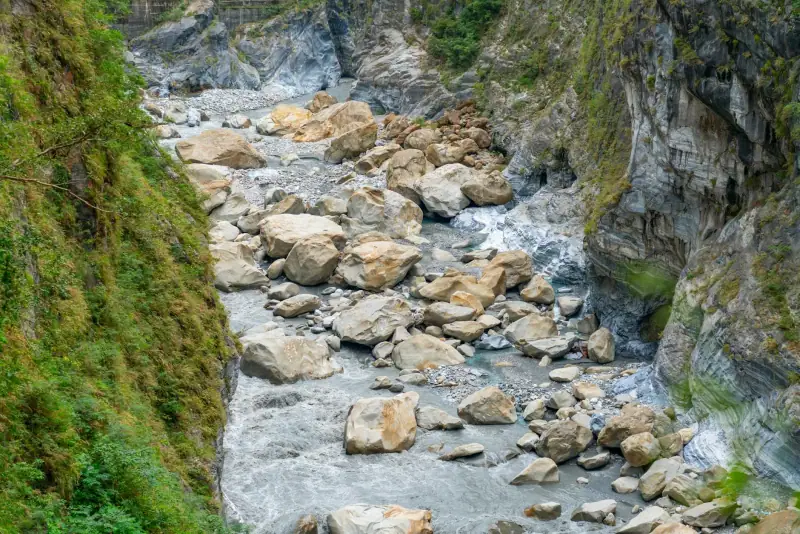
Taroko National Park covers 920 km² (355 sq mi) in Hualien District, in eastern Taiwan. Founded in 1986, it is crossed by Provincial Highway 8 (the Central Cross-Island Highway), which follows the Liwu River for 19 km (12 mi) before climbing into the central mountains up to 3,742 meters (12,277 ft) of altitude.
The park takes its name from the indigenous Truku (Taroko) people who lived in these valleys before colonization. Their culture and traditions live on in some villages of the park.
What you will see:
- Marble cliffs up to 1,000 meters (3,280 ft) high
- The Liwu River, with turquoise water, which sculpted these gorges
- Tunnels cut into the marble by Taiwanese workers in the 1950s
- Lush subtropical vegetation: giant ferns, bamboo, conifer forests at altitude
- Exceptional butterflies (Taiwan is one of the countries with the greatest butterfly diversity in the world)
The park’s highlights
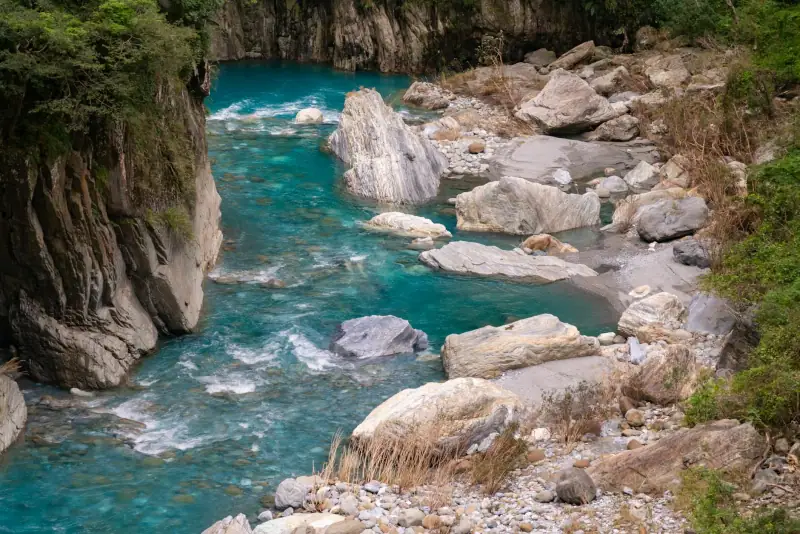
Swallow Grotto (燕子口)
Swallow Grotto is often the first big revelation of the park. The road follows the river with the marble walls a few meters from you. Thousands of swallows nest in the cavities of the rock in spring.
- Access: on the main road, signposted
- Time: 20-30 minutes to enjoy the view
- Status: trail closed since the 2024 earthquake; the site can be seen from the road (check the current status with the park)
Tunnel of Nine Turns (九曲洞, Jiuqudong)
One of the most impressive stretches of the park: a former tunnel now turned into a 700-meter (2,300 ft) pedestrian trail, cut into the white marble. The trail’s bends reveal new perspectives on the gorge at every turn.
- Access: pedestrian trail, parking at the entrance (trail closed since the 2024 earthquake; check for a possible reopening)
- Time: 1 hour round trip
- Highlight: a dizzying view of the Liwu River from the tunnel windows
Shakadang Trail (砂卡礑步道)
This 4.4 km (2.7 mi, one way) trail follows the Shakadang River with its intense blue-green water. The easy hike lets you appreciate nature without the crowds of the main road.
- Access: trailhead at the Taroko Bridge, 500 m (1,640 ft) after the park entrance (trail closed in 2026; only the bridge remains accessible)
- Time: 3-4 hours round trip to the final waterfall (when not closed)
- Difficulty: easy, flat and well-kept path
Baiyang Waterfall (白楊步道)
The Baiyang Waterfall hike is the park’s most spectacular for intermediate walkers. The 2.1 km (1.3 mi, one way) trail passes through seven natural tunnels cut into the rock before ending at a waterfall plunging into a turquoise pool. In the second-to-last tunnel, water flows straight from the ceiling in a cascade, a unique experience.
- Access: from the Tianxiang parking lot (15 km / 9 mi from the park entrance); trail closed in 2026, status uncertain
- Time: 3-4 hours round trip
- Difficulty: moderate, a few passages in the dark (a flashlight is recommended)
- Gear: waterproof clothing is a must for the waterfalls in the tunnels
Zhuilu Trail (錐麓古道)
For experienced hikers, the Zhuilu trail is Taroko’s ultimate experience. This old Truku path runs along vertical cliffs 500 meters (1,640 ft) above the Liwu River.
- Access: trail closed since the damage of the 2024 earthquake, with no reopening date announced. Before its closure, a free permit was required (online application several days ahead)
- Time: full day (6-8 hours round trip)
- Difficulty: hard, exposed trail, dizzying passages
- Safety: helmet mandatory, do not attempt in rain
Organizing your Taroko visit
To choose between a night in the park and a stay in town, read our guide staying in Tianxiang or Hualien.
Getting there from Hualien
Public bus (recommended): buses (lines 1133 and 310 depending on the company) link Hualien to the park’s visitor center, at the entrance to the gorge. Trip: about 35-45 minutes. Timetables and fares change: check them with Hualien Bus and UBus.
Taxi: NT$400-600 (about US$13-20) one way from central Hualien. Day taxis cost NT$2,000-3,500 (about US$65-115) with several stops included.
Scooter: rental in Hualien: NT$300-500 (about US$9-16) a day. Check what license you need. The road is well paved but some stretches are narrow, and traffic in the gorge (car, scooter, bike) is allowed only at certain times of the day: check them on the park’s website.
Rental car: ideal for families or groups. Parking is available at all major sites. Some mountain trails require an SUV.
Getting there from Taipei
Option 1: TRA train Taipei-Hualien (about 2 to 2 h 30, NT$440 to 580 depending on the train), then bus/taxi to Taroko. The most economical solution.
Option 2: guided excursion from Taipei (early departure 7 am, back 8 pm). More practical but a very full day. Price: NT$2,500-4,000 per person with transport and guide included.
Accommodation in Hualien
Stay near Taroko to start at dawn.
Safety tips
Rockfalls. Taroko Park sits in an active seismic zone. Rockfalls are real, especially after rain, typhoons or earthquakes. Wear your helmet in the indicated areas (provided at trail entrance posts).
Weather. Avoid the park during typhoon alerts (trails close automatically). After heavy rain, wait a few hours before entering the gorge.
Water. Bring at least 2 liters (about half a gallon) of water per person for a half day of hiking. Fountains are rare in the park.
Phone. Mobile coverage is limited in some tunnels and deep valleys. Download the park map offline. Check your carrier’s international plan or use a travel eSIM before you go.
Visiting hours. Arrive before 9 am to avoid the tourist buses. The main sites get crowded between 10 am and 2 pm, especially on weekends.
Taroko Gorge is an experience few other sites in the world can match. The grandeur of the marble cliffs, the clarity of the Liwu River and the silence of the trails at daybreak make up a natural picture of striking beauty. Depending on the state of the trails when you visit, plan one to two days there.
Frequently asked questions
How long do you need to visit Taroko Gorge?
One day is enough to see the sites that are accessible today (the gorge road, viewpoints, Liufang Bridge, Tianxiang). Since the 2024 earthquake, most of the famous trails (Swallow Grotto, Tunnel of Nine Turns, Shakadang, Baiyang, Zhuilu) are closed: check their status on the park's official website before planning more time.
Do you need a permit to hike in Taroko?
Before the earthquake, the Zhuilu trail (ranked among the most dangerous in Taiwan) and the alpine trails required a free permit. Today Zhuilu and most of the gorge's major trails are closed: check the park's official website (taroko.gov.tw) and hike.taiwan.gov.tw before you go.
Is Taroko dangerous? Is there a risk of falling rocks?
Rockfalls occur in the gorge, especially after rain or earthquakes. Helmets are mandatory in certain sections (provided by the park). Stay on marked trails and avoid the park in bad weather or typhoon alerts.
How do you get to Taroko from Taipei without a car?
Take the TRA train Taipei-Hualien (about 2 to 2 h 30), then a public bus from Hualien station to the park's visitor center (check timetables with the bus companies). Guided excursions from Taipei with transport included also exist.
What is the best season to visit Taroko?
September to May is the best period. Avoid June-August (typhoons can close trails, strong heat in the gorge). Spring and fall offer ideal conditions: cooler temperatures, good light, little rain.
More Taiwan guides
Keep reading
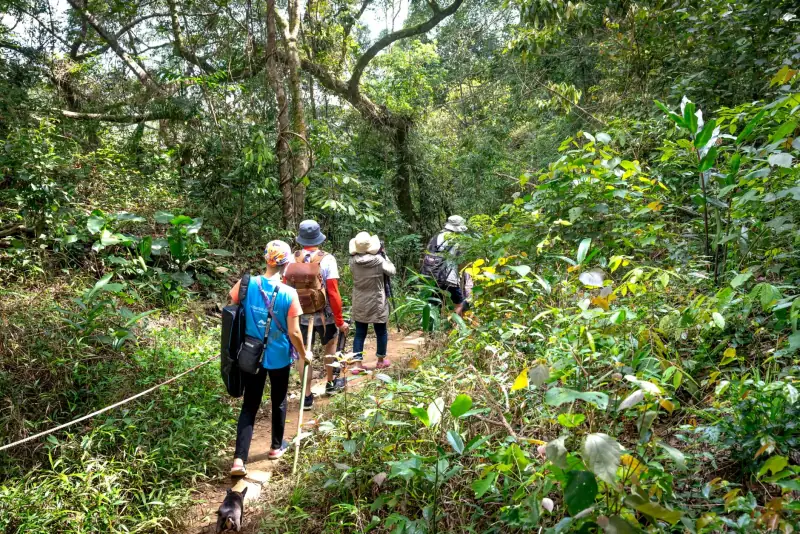
Hiking in Taiwan: the island's best trails
The best hikes in Taiwan: from Taroko to Alishan by way of Yangmingshan and Yushan. A complete guide for all levels with practical information.

Releasing a sky lantern at Pingxi and Shifen: prices, booking and getting there from Taipei
Sky lanterns at Shifen and Pingxi: do you need to book, what it costs, the rules and how to get there from Taipei by train, without a tour.

Visiting Kaohsiung: a complete guide to the southern metropolis
Everything to visit Kaohsiung: Pier-2, Lotus Pond, Cijin, night markets, transport and practical tips for southern Taiwan's gem.
Ready-made
Taiwan itineraries
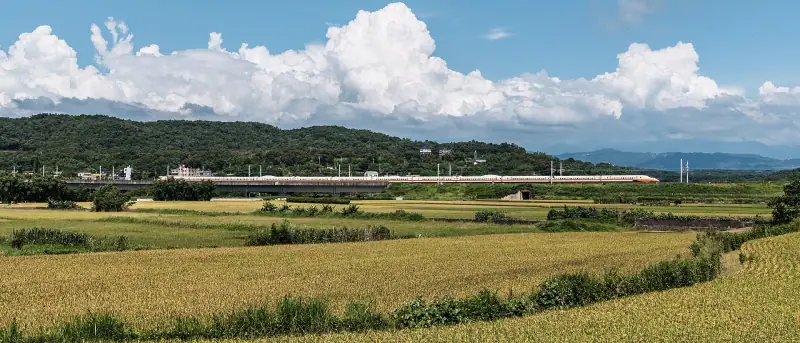
10 days
Taiwan in 10 days without a car: train and HSR itinerary, stops and travel times
TaipeiSun Moon LakeTainanKaohsiungKentingHualien
5 days
Eastern Taiwan road trip: the Pacific coast and Taroko Gorge
A complete guide to a road trip in eastern Taiwan: Taroko Gorge, Hualien, the Rift Valley, Highway 11 and Taitung in 5 to 7 days.

7 days
Taiwan in 7 days: the perfect itinerary for a first trip
TaipeiHualienSun Moon LakeTainan