Plan your trip
Hiking the West Highland Way without a tour company: budget, stages and lodging
We may earn a commission when you book through links on this page, at no extra cost to you. We don't visit or try the places we cover: we summarize published sources. How we work
In short
- The West Highland Way is 154 km (96 mi) from Milngavie to Fort William, usually done in 7 or 8 days at 18-25 km (11-16 mi) a day.
- Doing it on your own costs about £400-900 for 7-8 days, versus about £900-1,300 for an all-inclusive tour package.
- Book lodging 2-3 months ahead in peak season. Wild camping is free and legal except at East Loch Lomond, where a permit is required March 1 to September 30.
- Independent luggage transfer (Sherpa Van, AMS Scotland, Travel-Lite) costs about £65 for the whole route.
The West Highland Way (154 km / 96 mi between Milngavie, near Glasgow, and Fort William) is the most iconic hiking trail in Scotland. Many travelers come across tour company offers at £800-1,200 all-inclusive and wonder whether the route is really doable on your own, without going through a tour operator. The answer is yes. It is even the most common way to do it, including by Scottish and English walkers.
This practical guide answers the concrete questions: how much it costs, how to organize the stages, where to sleep, how to handle your luggage, and which pitfalls to avoid so you don’t end up without a bed at night.
The route: from Milngavie to Fort William
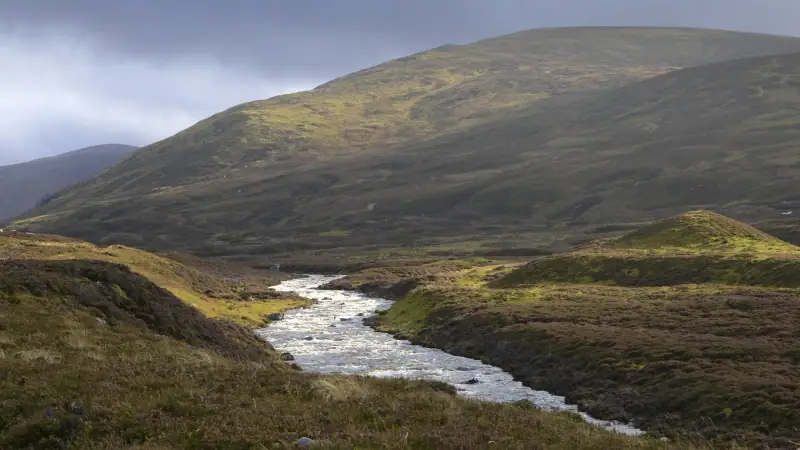
The West Highland Way is one of Scotland’s official “Great Trails”, opened in 1980 and marked along its whole length by a hexagonal sign showing a thistle. You can’t get lost: the trail is continuous and needs no GPS to navigate, although an offline app is still reassuring in bad weather.
The classic stages (7-day split):
- Milngavie → Drymen (19 km / 12 mi)
- Drymen → Rowardennan, along Loch Lomond (23 km / 14 mi)
- Rowardennan → Inverarnan (22 km / 14 mi)
- Inverarnan → Tyndrum (19 km / 12 mi)
- Tyndrum → Kingshouse, via Rannoch Moor (32 km / 20 mi, the longest stage)
- Kingshouse → Kinlochleven, via the Devil’s Staircase (14 km / 9 mi, but with the steepest climb of the route)
- Kinlochleven → Fort William (24 km / 15 mi)
Some walkers split stage 5 in two to catch their breath before the Devil’s Staircase, which makes an 8-day route that is easier on the legs.
Real budget to do it without a tour company
The budget depends almost entirely on your choice of lodging. Here is a realistic range for 7-8 days, excluding the flight or train to Scotland:
| Item | Budget (camping/hostel) | Comfort (B&B) |
|---|---|---|
| Lodging | £15-30/night | £60-90/night |
| Food | £20-25/day | £30-40/day |
| Luggage transfer (optional) | £60-70 for the whole route | £60-70 for the whole route |
| Transport there and back (Glasgow-Milngavie, Fort William-Glasgow) | £20-30 | £20-30 |
| Total for 7-8 days | ~£400-500 | ~£800-900 |
For comparison, a tour package with luggage transfer included, pre-booked lodging and sometimes a guide generally starts around £900-1,300 per person. Going independent can cut the bill by half or even two-thirds, at the cost of a bit more organization up front.
Compare lodging along the route
B&Bs, hostels and small hotels in Drymen, Tyndrum, Kinlochleven...
Where to sleep: hostels, B&Bs, camping
Hostels and bunkhouses
This is the cheapest and most sociable option. You’ll find hostels or bunkhouses at nearly every stage (Drymen, Rowardennan, Inverarnan, Tyndrum, Kinlochleven). Expect to pay £20-35 for a dorm bed. Book early: some have only 10-20 beds.
B&Bs
The most common type of lodging on the route, often run by locals used to walkers (hearty breakfast, drying of soaked clothes, sometimes luggage transfer included). Expect to pay £60-90 for a double room. It is also the option that fills up fastest in high season.
Wild camping
Thanks to Scotland’s right of access (Land Reform Act 2003), light wild camping is allowed on most of the route, as long as you camp discreetly, away from houses, and take everything out with you. Watch out for one important exception: on the shores of East Loch Lomond (in the Trossachs National Park), a camping management zone requires a mandatory paid permit from March 1 to September 30, to be booked online ahead of time with the national park. Outside this zone, camping remains free and legal if you follow the access code (Scottish Outdoor Access Code).
Hiking and camping gear
Waterproof jackets, sleeping bags, hiking boots suited to the Highlands.
Getting your luggage moved without a full tour package
This is the point that stops the most independent walkers: carrying a 12-15 kg (26-33 lb) pack over 150 km (93 mi), seven days in a row, discourages many people, especially on the 32 km (20 mi) stage across Rannoch Moor.
The good news: you don’t need an all-inclusive tour package to solve this. A la carte luggage transfer companies operate specifically on the West Highland Way, independent of any imposed lodging or itinerary:
- Sherpa Van: about £65 for the whole route (1 bag, max 20 kg / 44 lb), with a surcharge for stops at Inversnaid
- AMS Scotland and Travel-Lite: equivalent services, similar rates
You choose your lodging, your dates and your pace; the service simply picks up your bag each morning and drops it at the next stop. It is the hybrid solution most used by walkers who want to stay free without breaking their backs.
If you prefer to carry your own pack, plan on a backpack of 40-50 liters at most, and test it beforehand on a multi-day hike.
Getting to Milngavie and leaving from Fort William
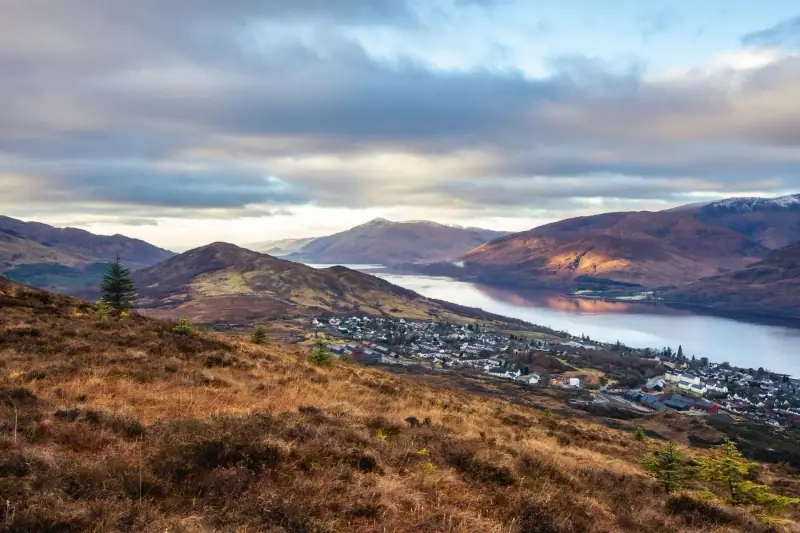
Getting there: Milngavie is not a destination in itself, but a suburban terminus reached in 25-30 minutes by train from Glasgow Queen Street station, for a few pounds. No reservation is needed, and trains are frequent.
Getting back: Fort William has a train station and a bus station with direct connections to Glasgow (allow 3 h 45 to 4 h by train) and Edinburgh. For a dramatic way home, the Caledonian Sleeper links Fort William to London overnight. If you extend your stay in the area, our guide to visiting Fort William covers the highlights once the trail is done; Ben Nevis, Glenfinnan and Glencoe are close by.
When to go and what gear to bring
The official trail season runs from late March to mid-October, when the hostels and B&Bs along the route are open and luggage transfer services are running. May, June and September offer the best compromise between weather and crowds; July and August are the busiest and most expensive months for lodging.
Essential gear:
- Waterproof hiking boots, already broken in (no new shoes)
- Waterproof, breathable jacket: rain can come any day, even in summer
- Light gaiters for the muddy sections near Rannoch Moor
- Midge repellent from May to September, especially fierce in the evening in damp areas
- Paper map or offline app (the waymarking is excellent, but fog can reduce visibility on the ridges)
For an overview of other Highland trails if you want to follow up with another hike, see our guide to hikes in the Highlands.
Summary
- Plan on £400 to £900 for 7-8 days on your own, versus £900-1,300 for an all-inclusive tour package
- Book your lodging 2-3 months ahead in high season; it is the real limiting factor, not the walking itself
- Wild camping is free and legal, except in the East Loch Lomond management zone (permit required March to September)
- Independent luggage transfer services (Sherpa Van, AMS Scotland) let you stay free without carrying your pack, for about £65 for the whole route
- Milngavie is easy to reach by train from Glasgow, and Fort William has good connections back
The West Highland Way is not a technical trek reserved for seasoned hikers: it is above all a question of organization. Once the lodging and luggage transfer are sorted, the rest, walking each day between lochs and mountains, is the easiest part of the trip. To plan the overall budget of your stay in Scotland beyond the trail, our Scotland budget guide is a useful complement to this page.
Frequently asked questions
How much does the West Highland Way cost on your own, without a tour company?
Expect to spend £400 to £900 for 7-8 days solo, depending on the type of lodging (camping, hostels or B&Bs) and whether you use a luggage transfer service. That is 2 to 4 times cheaper than an all-inclusive package from a tour company, which starts around £800-1,200.
How many days does the West Highland Way take?
The official route is 154 km (96 miles) between Milngavie and Fort William. Most walkers finish in 7 or 8 days, at 18-25 km (11-16 mi) a day. The fastest do it in 5-6 days, while those who prefer a slower pace take 9-10 days.
Can you camp for free on the West Highland Way?
Yes, on most of the route, thanks to Scotland's right of access (Land Reform Act). Exception: the East Loch Lomond camping management zone (in the Trossachs National Park), where a paid permit is required from March 1 to September 30, to be booked on the national park website.
Do you need to book lodging in advance on the West Highland Way?
Yes, absolutely in high season (May to September). Hostels and B&Bs along the route are few and fill up weeks or even months ahead. Book at least 2-3 months ahead if you go in July-August.
How do you transport your luggage without a full tour package?
Independent luggage transfer services (Sherpa Van, AMS Scotland, Travel-Lite) are available a la carte: they take your bag in the morning and drop it at the next stop, without imposing an itinerary or lodging. Expect to pay about £60-70 for the whole route, much cheaper than a tour package.
What fitness level does the West Highland Way require?
The trail is accessible to a hiker in good physical shape without particular technical experience: it is a waymarked path with no climbing sections. The difficulty comes mostly from the cumulative length of the stages and the climb of the Devil's Staircase, not technicality.
How do you get to the start in Milngavie and leave from Fort William?
Milngavie is 30 minutes by train from Glasgow Queen Street (frequent, a few pounds). From Fort William at the end, direct trains and buses connect to Glasgow and Edinburgh several times a day, or you can take the overnight Caledonian Sleeper to London.
More Scotland guides
Keep reading
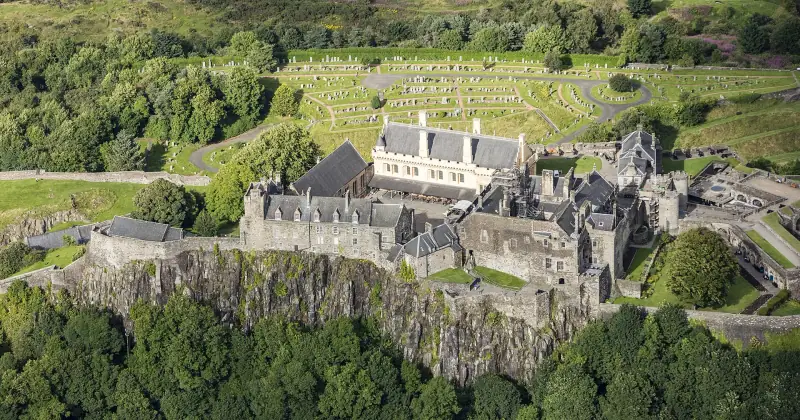
Scotland travel budget: how much to plan for your trip
Estimate your Scotland travel budget: accommodation, transport, meals, activities. Tips to travel for less without sacrificing the experience.
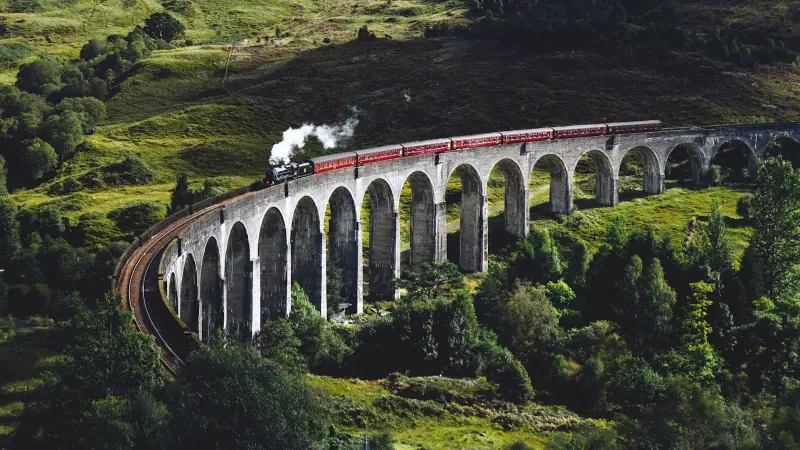
Visiting Scotland Without a Car: Train, Bus and Ferry, the Complete 2026 Guide
Can you visit Scotland without a car? ScotRail, Citylink, CalMac: routes, passes, prices and itineraries to explore the Highlands by public transport.
Best time to visit Scotland: a month-by-month guide
What is the best time to go to Scotland? Climate, events, prices and tips for each season, broken down month by month.
Ready-made
Scotland itineraries

7 days
Scotland in 7 days: the perfect one-week itinerary
EdinburghFort WilliamInvernessPortree
14 days
Scotland road trip: the complete 2-week guide
Plan a 14-day Scotland road trip: full itinerary from the Lowlands to the far north, with logistics, places to stay and sights.
6 days
Scotland road trip in October: 6-day itinerary, roads and daylight hours
PitlochryInvernessPortreeFort William