Plan your trip
Visiting Scotland Without a Car: Train, Bus and Ferry, the Complete 2026 Guide
We may earn a commission when you book through links on this page, at no extra cost to you. We don't visit or try the places we cover: we summarize published sources. How we work
In short
- ScotRail trains, Scottish Citylink buses and CalMac ferries reach most major sights; only remote lochs and villages off the main routes stay hard to reach without a vehicle.
- Edinburgh to Inverness takes about 3 hr 30 min by train, from around £18 booked about 10 weeks ahead to £50 or more on the day.
- The Spirit of Scotland Travel Pass costs about £149 to £209; since April 25, 2023 it no longer covers CalMac ferries.
- Book trains 8 to 12 weeks ahead, and CalMac ferries early for July and August.
You don’t need to rent a car to discover Scotland. Many travelers think the Highlands are out of reach without a vehicle, and that is wrong. The ScotRail rail network, long-distance buses and CalMac ferries can reach nearly all the emblematic sights, often on journeys that are more spectacular than driving. Here is how to organize a trip to Scotland entirely by public transport, with the lines, prices and tips to avoid unpleasant surprises.
Why visiting Scotland without a car is a real option
Contrary to a common assumption, Scotland has one of the best-organized public transport networks in northern Europe for such a rural country. Three reasons make it a serious option, not just a budget plan B:
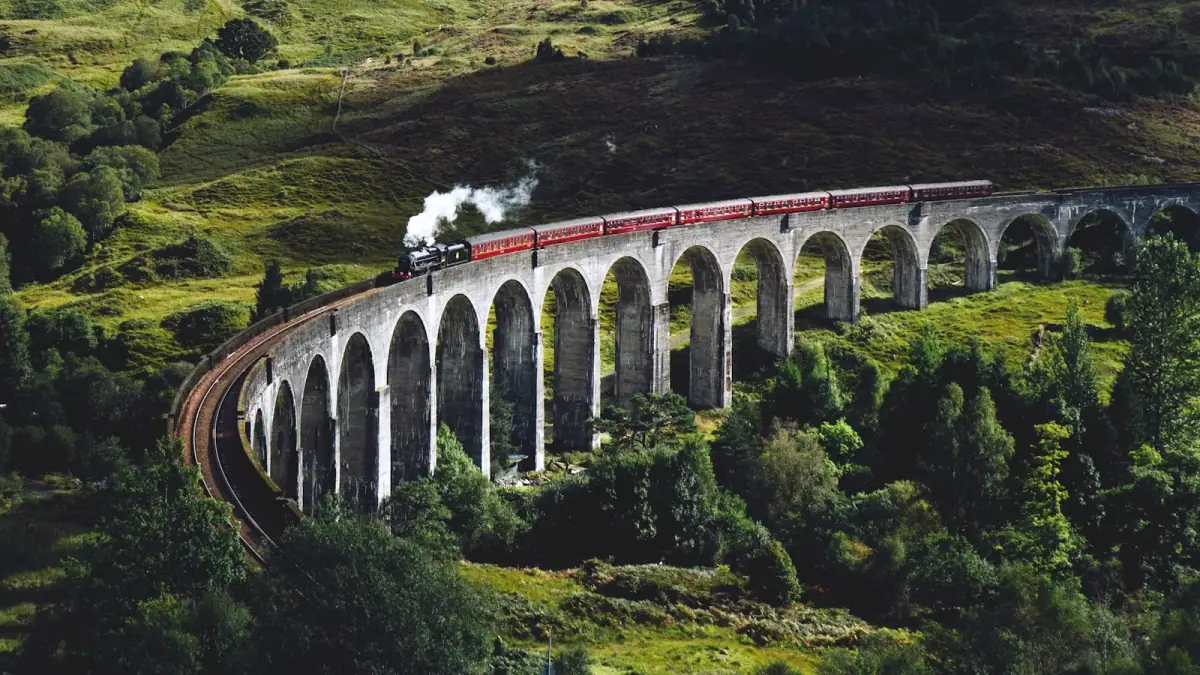
- The journeys are attractions in themselves. The West Highland Line (Glasgow to Fort William to Mallaig) ranks among the most beautiful railway lines in the world, with the Glenfinnan viaduct made famous by Harry Potter.
- No stress of driving on the left. For travelers who are not comfortable driving on the left on the Highlands’ narrow single-track roads, the train or bus avoids the difficulty completely. See our guide to car rental and driving on the left if you are still torn between the two options.
- A more predictable budget. No gas, no parking (often paid and scarce in Edinburgh or on Skye in summer), and no extra insurance.
The main limit: remote lochs, some isolated castles and viewpoints out in the wild are still easier by car. A mix of train and bus for the backbone of the trip, plus a few organized minibus excursions for the remote areas, is often the best compromise.
Compare flights to Scotland
Find the best price to reach Edinburgh or Glasgow, ideal starting points for a trip by train and bus.
Arriving without flying. From London, Euston station is the departure point of the Caledonian Sleeper, the night train to Edinburgh, Glasgow, Aberdeen, Inverness and Fort William. You sleep in a private room and wake up in Scotland, ready to continue with ScotRail.
London to Scotland night train: Caledonian Sleeper
Departs from London Euston for Edinburgh, Glasgow, Aberdeen, Inverness and Fort William, in a private room or a seat. English-language site: schedules and fares are on the booking page.
ScotRail: the Scottish rail network
ScotRail operates nearly the whole Scottish rail network. The lines useful to travelers are:
The essential lines
| Line | Typical trip | Duration | Why go |
|---|---|---|---|
| Edinburgh to Glasgow | Waverley to Queen Street | 50 min | Most frequent link, a train every 15 min |
| Edinburgh to Inverness | Waverley to Inverness | 3 hr 30 min | Crosses the Cairngorms National Park |
| Glasgow to Fort William to Mallaig | West Highland Line | 5 hr 30 min (end to end) | Glenfinnan viaduct, lochs, Ben Nevis |
| Inverness to Kyle of Lochalsh | Kyle Line | 2 hr 30 min | Access to Skye by the road bridge, Highland views |
| Glasgow to Oban | Queen Street to Oban | 3 hr | Port for ferries to the Hebrides |
Prices vary enormously with how early you book: an Edinburgh to Inverness ticket can cost £18 booked 10 weeks ahead versus £50 or more bought on the day. Tickets are sold on the official ScotRail website or through the Trainline app.
The Spirit of Scotland Travel Pass
For a trip of more than a week with several long journeys, the Spirit of Scotland Travel Pass often pays off: it gives unlimited access to ScotRail trains and some Scottish Citylink buses (Argyll, Skye, Borders, Northern Highlands), plus 20% off Northlink ferries to Orkney and Shetland, on a plan of 4 days out of 8, or 8 days out of 15. Note: since April 25, 2023, CalMac ferries are no longer covered by the pass and must be booked separately on calmac.co.uk. Allow about £149 for the short plan and £209 for the long one (2026 prices, check before buying). It becomes worthwhile once your trip includes Skye, Oban and Inverness in the same stay.
Long-distance buses: Citylink, Megabus, Stagecoach
Where the train doesn’t go, buses take over.
- Scottish Citylink is the main company between the big cities and tourist areas: Edinburgh, Glasgow, Inverness, Fort William, Oban, Portree (Skye), St Andrews. The buses are comfortable, with onboard wifi on most routes.
- Megabus no longer exists in Scotland under that name: its routes were taken over under the Citylink brand. Check the lead-in fares on citylink.co.uk, sometimes lower when booking early on the main routes.
- Stagecoach runs regional and local routes, essential for reaching small villages the train doesn’t serve (around Fort William, Oban or in the northern Highlands).
- Shiel Buses and other small local companies cover very specific routes (for example Fort William to Glenfinnan to Mallaig, as a complement to the train), useful in case of a strike or a full train.
Note that outside the tourist routes, frequencies drop fast. A village like Applecross or Torridon may have only one bus a day, or none on Sunday. Always check the return times before going on an excursion, or you risk being stuck overnight.
Small-group excursions in the Highlands
To cover the remote lochs and villages poorly served by regular buses, without renting a car.
CalMac ferries to the islands
Caledonian MacBrayne (CalMac) is the company serving nearly all the inhabited Scottish islands: Skye, Mull, Islay, Arran, the Outer Hebrides (Lewis, Harris, Uist).
For Skye, the crossing most used by travelers without a car is Mallaig to Armadale (about 30 minutes), which combines perfectly with the train to Mallaig on the West Highland Line. Once on the island, see our dedicated guide to the Isle of Skye to organize the rest of your stay on local buses.
For Mull, the Oban to Craignure crossing takes only about 45 minutes. For the Outer Hebrides, crossings from Oban are longer (3 hours to 5 hr 20 min depending on the destination: Barra or Uist) and less frequent off-season. Coll, for its part, lies northwest of Mull and, like Mull, Islay or Skye, belongs to the Inner Hebrides, and is reached from Oban in a little under 3 hours. Book ahead in July and August: CalMac ferries sell out several days before departure at the summer peaks, especially for passengers with a vehicle but sometimes for foot passengers too on the shortest routes.
Book a well-located place to stay
Choose a hotel close to a train station or bus stop to simplify your connections in the Highlands.
Three realistic car-free itineraries
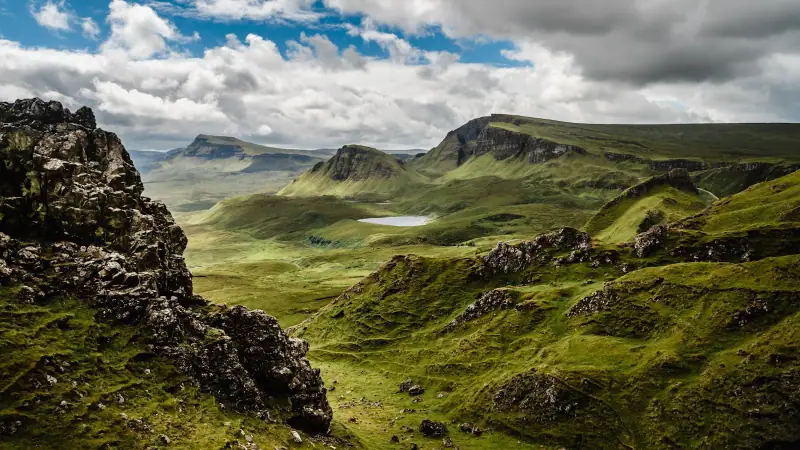
7-day itinerary: Edinburgh, Highlands, Skye, Glasgow
- Days 1-2: Edinburgh (on foot and by bike, the city can be seen entirely without transport)
- Day 3: train Edinburgh to Inverness (3 hr 30 min), night in Inverness
- Day 4: Citylink 919 bus Inverness to Fort William along Loch Ness (about 2 hr 11 min), already a scenic ride along the loch
- Day 5: train Fort William to Mallaig (West Highland Line), then ferry Mallaig to Armadale, night in Portree
- Day 6: exploring Skye by Stagecoach bus (Old Man of Storr and the Quiraing reachable with some walking from the stops)
- Day 7: return by Citylink bus Portree to Glasgow (about 6 hours, very scenic)
10-day itinerary with the islands
Add to the itinerary above an Oban and Mull loop by CalMac ferry (2 days) before heading to Glasgow, to discover one of the Inner Hebrides without excessive logistics.
Short 4-day itinerary (long weekend)
Edinburgh, Glasgow, Fort William, Edinburgh by train, with a day trip to Glencoe on an organized bus tour (such as Rabbie’s or Timberbush Tours) from Fort William or Glasgow: these small-group excursions are a good alternative for covering areas poorly served by regular lines.
Average budget for a public transport trip
For an 8-day trip such as Edinburgh, Inverness, Skye, Glasgow, allow about £120 to £180 of transport per person when booking ahead (train + bus + ferry). A car rental with gas and insurance over the same period often costs more, except for short trips shared between two people. The full breakdown of spending (lodging, meals, activities) is in our Scotland budget guide.
Also think about mobile data to follow schedules in real time and book from the ScotRail and Citylink apps: our guide to SIM cards and eSIMs in Scotland covers the best options for staying connected, including in the limited-coverage areas of the Highlands.
Practical tips for traveling without a car
- Book trains 8 to 12 weeks ahead for the best fares, especially on the West Highland Line in summer.
- Download timetables for offline use before heading into the Highlands: network coverage there is patchy.
- Build in a one-day buffer between two remote stops: a missed connection can cost an unplanned extra night.
- Pack light: train, bus and ferry connections often mean carrying your bags several hundred meters, notably in Mallaig between the station and the ferry.
- Use organized excursions as a complement, not a replacement: they efficiently cover remote lochs and viewpoints unreachable by regular transport, as mentioned for the hikes in the Highlands, which sometimes need a drop-off outside the usual bus stops.
If part of your itinerary still needs more flexibility, for example to combine several remote hikes in a single day, a short 2 to 3 day car rental in the middle of a public transport trip remains a common hybrid option and is often cheaper than renting for the whole stay.
Short-term car rental for remote areas
Compare prices for a short rental to complement your train and bus trip.
Frequently asked questions
Can you really visit the Highlands without a car?
Yes, as long as you accept a slower pace. ScotRail lines (notably the West Highland Line) and Scottish Citylink buses serve Fort William, Inverness, Oban, Skye and most major sights. Only very remote lochs and villages away from the main routes stay hard to reach without a vehicle.
How much is a train trip between Edinburgh and Inverness?
Allow £30 to £55 one way at full fare, often under £20 when booked several weeks ahead on the ScotRail website. The trip takes about 3 hr 30 min from Edinburgh Waverley.
What is the Spirit of Scotland Travel Pass?
It is an unlimited ScotRail pass valid for 4 days out of 8 or 8 days out of 15, usable on nearly all Scottish trains and some Citylink buses (Argyll, Skye, Borders, Northern Highlands), with 20% off Northlink ferries to Orkney and Shetland. Note: since April 2023, CalMac ferries are no longer included and must be bought separately on calmac.co.uk. It costs about £149 to £209 depending on the length and pays off from 3 to 4 long trips.
How do you get to the Isle of Skye without a car?
The simplest way is to take the ScotRail train to Mallaig (the famous line over the Glenfinnan viaduct), then the CalMac ferry from Mallaig to Armadale (about 30 minutes). Once on the island, local Stagecoach buses link Armadale, Broadford and Portree.
Do Citylink buses serve all of Scotland?
They cover the big cities and tourist routes well (Edinburgh, Glasgow, Inverness, Fort William, Oban, Skye, St Andrews), but remote Highland villages depend on small local companies (Stagecoach, Shiel Buses), sometimes with only 1 or 2 buses a day.
Do you need to book trains and buses far ahead in Scotland?
For the best prices, yes: ideally book 8 to 12 weeks before departure on ScotRail and Citylink. In high season (June to August), seats on the West Highland Line and CalMac ferries to Skye or the Hebrides go fast.
More Scotland guides
Keep reading
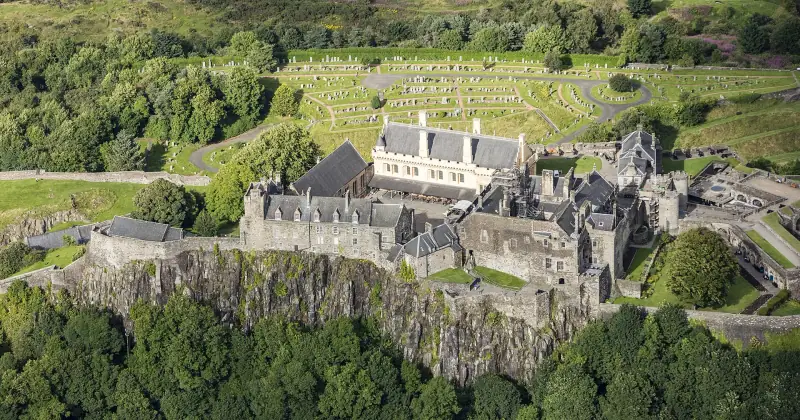
Scotland travel budget: how much to plan for your trip
Estimate your Scotland travel budget: accommodation, transport, meals, activities. Tips to travel for less without sacrificing the experience.
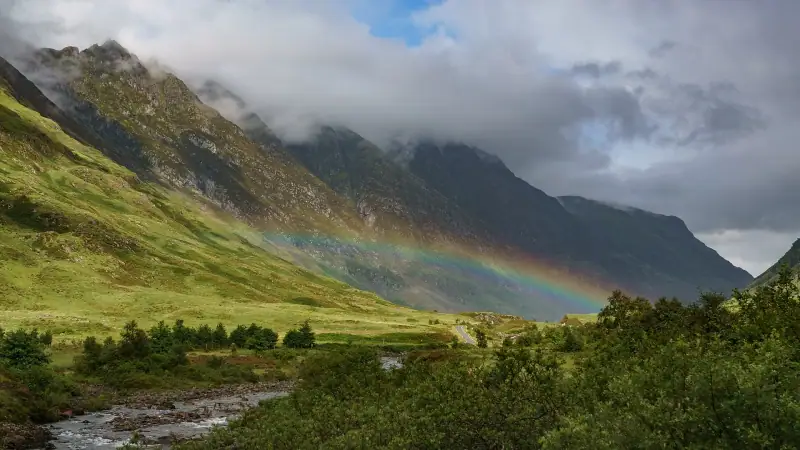
Best time to visit Scotland: a month-by-month guide
What is the best time to go to Scotland? Climate, events, prices and tips for each season, broken down month by month.
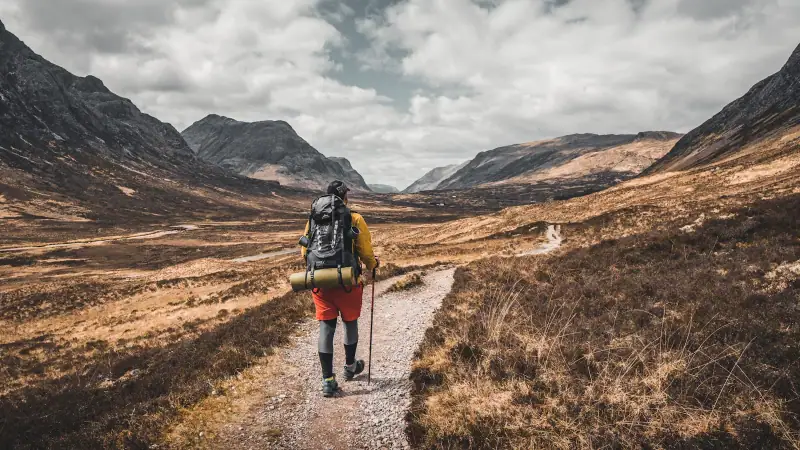
Hiking the West Highland Way without a tour company: budget, stages and lodging
Hike the West Highland Way in Scotland without a tour company: 7-8 day itinerary, real budget, lodging, luggage transfer and practical tips.
Ready-made
Scotland itineraries

7 days
Scotland in 7 days: the perfect one-week itinerary
EdinburghFort WilliamInvernessPortree
14 days
Scotland road trip: the complete 2-week guide
Plan a 14-day Scotland road trip: full itinerary from the Lowlands to the far north, with logistics, places to stay and sights.
6 days
Scotland road trip in October: 6-day itinerary, roads and daylight hours
PitlochryInvernessPortreeFort William