What to see
Visiting Inverness: A Complete Guide to the Highlands' Capital
We may earn a commission when you book through links on this page, at no extra cost to you. We don't visit or try the places we cover: we summarize published sources. How we work
In short
- One to two days cover Inverness itself; allow 3 to 4 days to add Loch Ness, Urquhart Castle, Culloden and the Black Isle.
- Inverness is the best base for the Highlands, and renting a car is strongly recommended.
- From Edinburgh, the train takes about 3 hr 15 min to 3 hr 45 min; driving the A9 takes about 2 hr 45 min to 3 hr 15 min.
- Inverness costs less than Edinburgh, and the town center can be visited for free.
Inverness is the administrative capital of the Scottish Highlands and the northernmost city in the United Kingdom. Built where the River Ness meets the Moray Firth, it has held a strategic position in the heart of northern Scotland for more than a thousand years. Long treated as a simple transit point to Loch Ness or the western islands, Inverness now deserves real attention: its historic center, its red sandstone castle, its wooded riverbanks and its Victorian cathedral make it a stop in its own right, and an ideal base for exploring the wildest parts of the Highlands.
Getting your bearings in Inverness
Inverness is a human-scale city of about 50,000 people, and its center is easy to explore on foot. The River Ness runs through the city from south to north before reaching the Moray Firth, splitting the historic core into two banks linked by several bridges.
East bank (city center): Most of the shops, restaurants and tourist sights are here. Inverness Castle overlooks the city from its hill, and the Victorian Market fills a handsome covered building dating from 1891 (rebuilt after the fire of 1889). The train station and bus terminal are also on this bank.
West bank: Quieter and more residential, it runs past Inverness Cathedral and leads to Bught Park and the wooded riverbanks to the south. Walks along the Ness are especially pleasant in spring and fall.
Around the city: Most of the bigger excursions (Loch Ness, Culloden, the Black Isle) need a vehicle or an organized tour. The local bus network serves the nearby area, but a rental car gives you much more freedom.
Inverness Castle: the symbol of the city
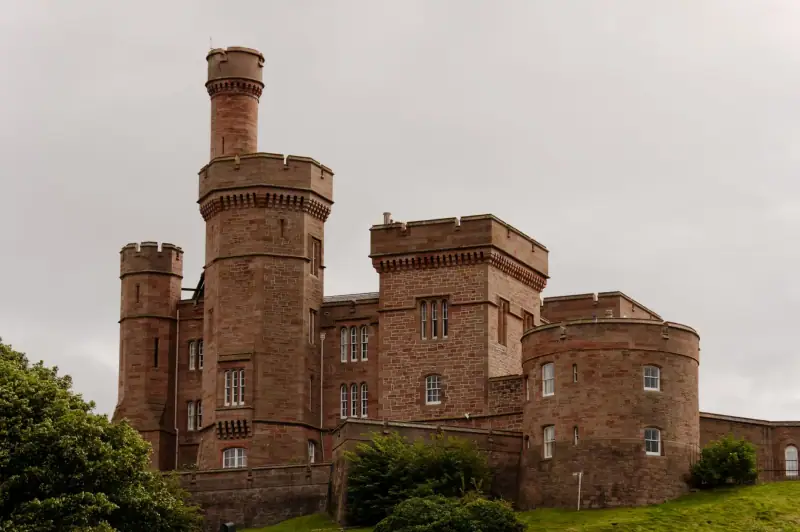
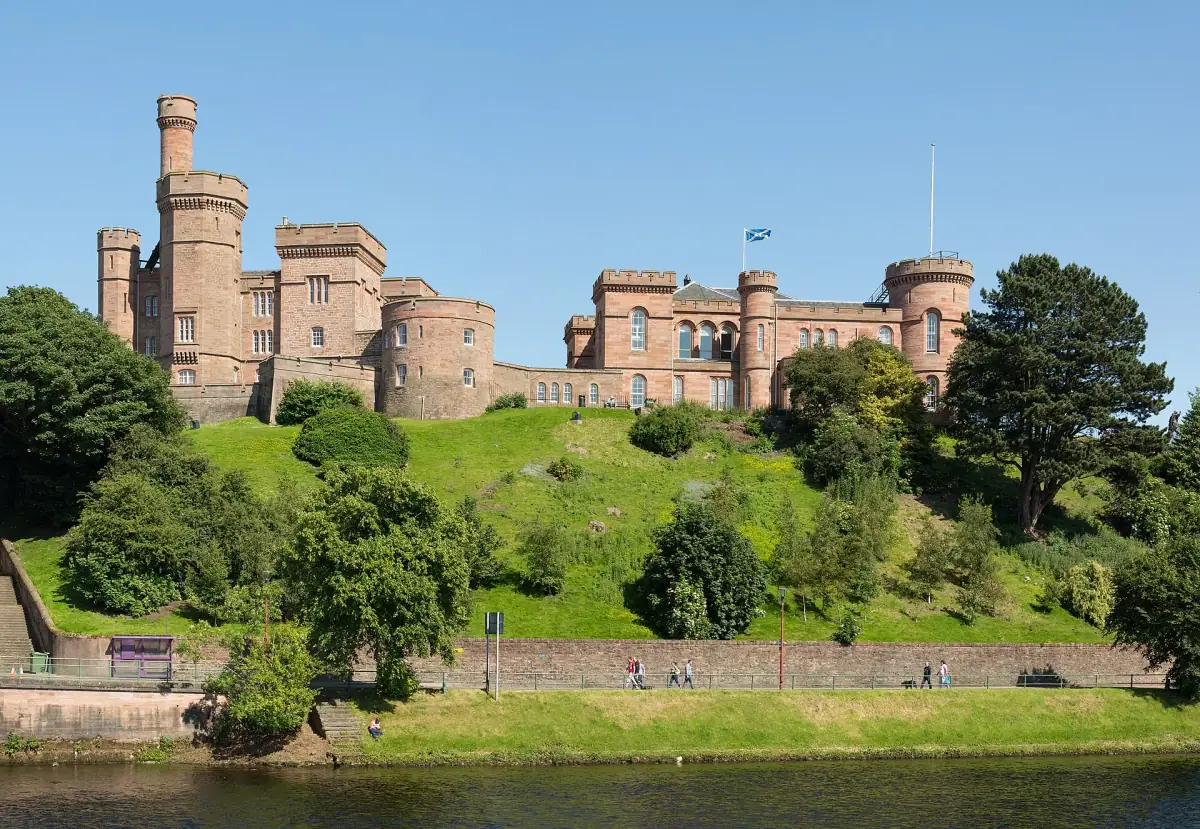
Inverness Castle is the visual emblem of the city. Perched on a pink sandstone promontory above the River Ness, its distinctive silhouette is visible from the bridges and riverbanks. What you see today is a Victorian Gothic Revival building from the 19th century, not a medieval castle, although the site has held fortifications since the time of Macbeth in the 11th century.
The main building, used for a long time as a courthouse, has been turned into a tourist attraction: the Inverness Castle Experience, officially opened in early 2026. You need a ticket (book online); check hours and prices on the official website, as they vary by season.
Even if you don’t go inside, the outdoor terrace and the grounds around the castle are open to everyone and offer one of the best views of the city and the river. Look for the statue of Flora MacDonald, the Highland heroine who helped Bonnie Prince Charlie escape after the defeat at Culloden. She gazes proudly north.
Hotels in Inverness
From a characterful bed & breakfast to a riverside hotel, find your base in the capital of the Highlands.
Inverness Cathedral: Gothic Revival elegance on the banks of the Ness
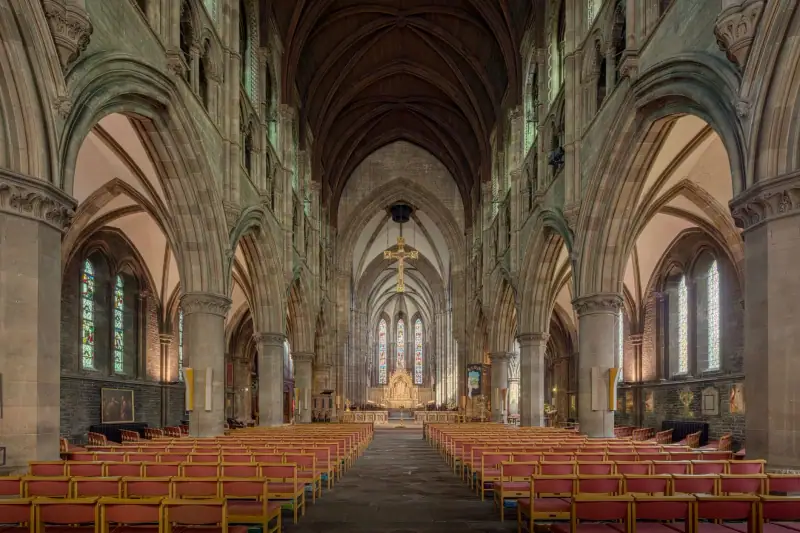
Inverness Cathedral (Cathedral Church of St Andrew) is one of the most peaceful buildings in the city. Built between 1866 and 1869 to plans by the architect Alexander Ross, it is considered the first cathedral built in Great Britain after the Protestant Reformation of the 16th century. Its elegant Gothic Revival style, with two slightly asymmetrical towers in gray-pink sandstone, reflects beautifully in the waters of the Ness.
The interior is plain and restful, typical of Scottish Protestantism. Look for the colorful stained glass, the carved marble font and, very rarely, a set of seven musician angels, an iconographic curiosity unique in the United Kingdom for a Scottish Episcopal cathedral.
The cathedral is generally open to visitors without a reservation, and entry is free. A walk along the River Ness starts naturally from the forecourt: heading south along the west bank, you will find tree-lined banks, benches by the water and a string of green river islands, the Ness Islands.
The Ness Islands: a green escape in the middle of the city
A few minutes’ walk south of the center, the Ness Islands are a chain of river islands linked by small Victorian suspension bridges. This free nature park is the favorite walking spot of Inverness residents, and a discovery that hurried visitors often miss.
The islands are covered with old trees, rhododendrons and ferns that create a temperate-forest atmosphere even in the middle of the city. The sound of the river is constant, red squirrels (Scotland’s native species) sometimes venture out, and the light filtering through the leaves in summer is especially beautiful.
The full walk from the Greig Street bridge to the Ness Islands and back follows both banks of the river and takes about an hour to an hour and a half, depending on your pace. It is one of the most pleasant things Inverness has to offer, in any weather.
The Victorian Market: a covered market from the Victorian era
In the middle of Inverness’s shopping district, the Victorian Market is a covered market under a cast-iron and glass roof dating from 1891 (rebuilt after a fire in 1889; the original dated from 1870). With its maze of alleys, independent shops and authentic atmosphere, it makes a pleasant contrast with the chain stores of the surrounding streets.
You will find secondhand booksellers, tartan and tweed shops, craftspeople, outdoor gear stores and a few good spots for coffee or a quick lunch. It is a good place to browse and to shelter from showers (frequent in Scotland, even in summer). It can be entered freely from several shopping streets in the center.
Tours from Inverness
Loch Ness, Culloden, Skye: guided minibus tours so you don't miss anything around the area.
Culloden Battlefield: the most moving battlefield in Scotland
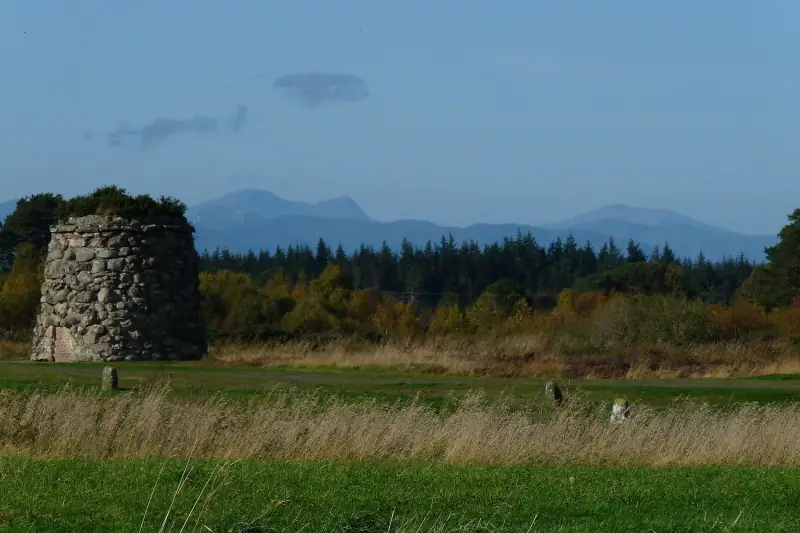
About 8 to 9 km (5 mi) east of Inverness, the Culloden battlefield is the most emotionally charged historic site in the Highlands. It was here, on April 16, 1746, that the Jacobite troops of Prince Charles Edward Stuart, Bonnie Prince Charlie, were crushed in less than an hour by the government forces of the Duke of Cumberland. The defeat ended the Jacobite movement and marked the deliberate destruction of the Highland clan culture.
The Culloden Visitor Centre (run by the National Trust for Scotland) offers an immersive presentation of the battle, with reconstructions, artifacts and moving accounts from both sides of the conflict. Outside, the battlefield is kept almost as it was: stone cairns mark the clan positions, flags show the front lines, and a hush hangs over the place even on a sunny day.
Practical tip: Plan at least 2 hours there. The Visitor Centre entrance fee is well worth it, but if your budget is tight, the walk across the battlefield itself is free. Check current prices on the National Trust for Scotland website before your visit.
The Clava Cairns: Bronze Age burial cairns
A few kilometers from Culloden, the Clava Cairns are among the best preserved and most accessible prehistoric sites in Scotland. These three burial cairns, about 4,000 years old (around 2000 BC), sit in a wood of beech and yew trees, ringed by rows of standing stones.
The site, managed by Historic Environment Scotland, is open to everyone year round and is free. Its mysterious atmosphere, especially in the morning or outside peak hours, makes it one of the most surprising places around Inverness. The Clava Cairns also inspired some scenes of the Outlander series.
Loch Ness: the legendary neighbor
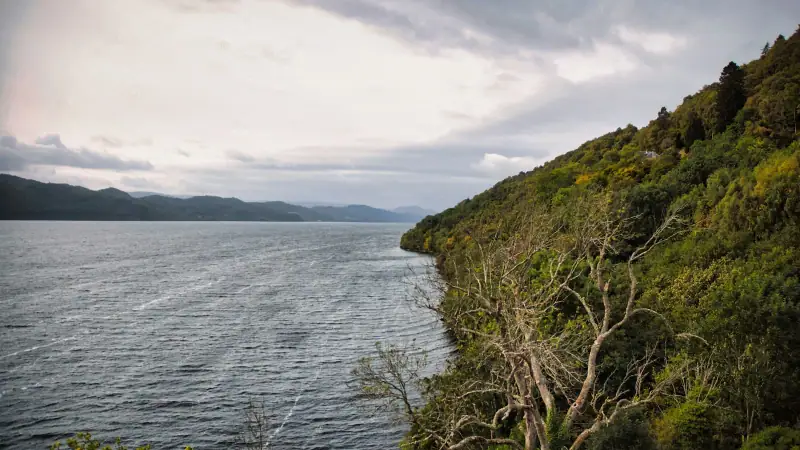
You can’t talk about Inverness without mentioning Loch Ness. This narrow, deep lake stretches about 37 km (23 mi) from the southern edge of Inverness to Fort Augustus. At 230 m (755 ft) deep, it holds more fresh water than all the lakes of Wales and England combined.
From Inverness, two roads run along the loch:
- The west shore (A82) is the most spectacular and follows the water’s edge directly. Urquhart Castle (about 30 km / 19 mi from Inverness) and the village of Drumnadrochit, home to the two Loch Ness Exhibitions, are on this side. Urquhart Castle, a ruin since the 17th century (deliberately blown up in 1692 to keep the Jacobites from reoccupying it), offers one of the finest views of the loch. There is an entry fee, and the site is managed by Historic Environment Scotland.
- The east shore (B862 or B852) is quieter, with small villages and open views of the loch. It is a good way to avoid the tourist crowds.
Loch Ness cruises leave from the Dochgarroch jetty (near Inverness) and from Drumnadrochit, generally from April to October. They let you take in the loch from the water and get close to Urquhart Castle.
If you want to explore the Isle of Skye from Inverness, allow about 3 hours’ drive to Portree via the A87. Our guide to the Isle of Skye has all the information you need.
Car rental in Inverness
Essential for exploring the Highlands at your own pace: Loch Ness, Skye, the Cairngorms, Torridon.
Food and pubs in Inverness
Inverness has a growing food scene, built on outstanding Highland produce: moorland lamb, wild salmon and trout from the Ness, game, malt whisky. Restaurants in the center serve a mix of contemporary Scottish cooking alongside the usual curry houses and fish and chips.
Highland whisky: The area around Inverness is ringed by well-known distilleries. The Glen Ord distillery (about 14 km / 9 mi west of Inverness, near Muir of Ord at the edge of the Black Isle) offers tours and tastings. Farther south, the Speyside distillery trail (50 to 60 km / 30 to 37 mi east) has the largest concentration of distilleries in Scotland, a detour malt lovers won’t want to miss.
Pubs: Along Bridge Street and Church Street, several traditional pubs host Scottish folk music sessions on weekends. The atmosphere is warm, and the people of Inverness are known for being especially welcoming to travelers.
The Farmers’ Market is held regularly in the town center, generally on weekends depending on the season, so check dates online. It is a chance to buy local products: cheeses, cured meats, venison preserves or smoked salmon.
A sample plan for visiting Inverness
Day 1: The town center and the river
- Morning: Inverness Castle and the view over the city from the terrace
- Mid-morning: Inverness Cathedral, walk along the west bank of the Ness
- Lunch: town center, Victorian Market
- Afternoon: walk to the Ness Islands (1 hr 30 min), Old High Church
- Evening: dinner in the center, folk music session in a Bridge Street pub
Day 2: The historic surroundings
- Morning: Culloden Battlefield Visitor Centre (2 hours minimum)
- Lunch: picnic or coffee in the village of Culloden
- Afternoon: Clava Cairns (30 min), then the Loch Ness road (west shore, A82) to Urquhart Castle
- Late afternoon: return to Inverness along the east shore (B852) for a different view of the loch
Day 3 (optional): Excursion to Skye or the Cairngorms
- If you have a car, the Isle of Skye is within reach of Inverness (about 3 hours’ drive to Portree). See our Scotland road trip guide to plan your Highlands route.
How to get to Inverness
By air: Inverness Airport (INV) is served mostly from elsewhere in the UK (London, Birmingham, etc.). Check flight comparison sites for current options.
Via Edinburgh or Glasgow: The most common approach is to land in Edinburgh (EDI) or Glasgow (GLA), then continue to Inverness by train or car. This also lets you include the two big cities in a wider itinerary.
By train from Edinburgh: The ScotRail train from Edinburgh Waverley to Inverness takes about 3 hr 15 min to 3 hr 45 min depending on the service. Departures are regular throughout the day. The line is beautiful: it crosses the Cairngorms and offers spectacular views of the moors and Highland valleys.
By train from Glasgow: From Glasgow Queen Street, the train to Inverness takes one of the most scenic lines in the United Kingdom, via Stirling, Perth and Pitlochry. Allow about 3 hr to 3 hr 20 min.
By car from Edinburgh: The fastest route is the A9, one of Scotland’s main arteries, through Perth and the Cairngorms. Allow about 2 hr 45 min to 3 hr 15 min depending on traffic. The A9 is known for strictly enforced speed limits, with automatic speed cameras along much of the route.
Inverness is also an ideal starting point for a Highlands road trip. See our article on hiking in the Highlands and our guide to where to stay in the Highlands to finish your planning.
Bonus: seeing the northern lights from Inverness
Less well known than the Scandinavian destinations, northern Scotland is nonetheless one of the best places in western Europe to see the northern lights. At a latitude of about 57°N, Inverness offers a real chance of seeing them between September and March under clear skies and with enough solar activity.
The best spots nearby are open moorland away from artificial light: the road toward Culloden, the east shore of Loch Ness, or simply the parks on the edge of the city. Aurora forecast apps (such as Space Weather Live or My Aurora Forecast) let you follow the Kp index in real time.
Frequently asked questions
How many days do you need to visit Inverness?
One to two days are enough to see the center of Inverness. Allow 3 to 4 days if you want to add excursions nearby: Loch Ness and Urquhart Castle, the Culloden battlefield, the Black Isle or Glen Affric.
Is Inverness a good base for exploring the Highlands?
Yes, it is the best base you could ask for. The city is well placed for Loch Ness, Culloden, the Isle of Skye (about 3 hours' drive to Portree), the Cairngorms, Torridon and even John o' Groats. Renting a car is strongly recommended.
How do you get to Inverness from Edinburgh?
By train, the trip from Edinburgh Waverley to Inverness takes about 3 hr 15 min to 3 hr 45 min depending on the ScotRail service, with regular departures. By car from Edinburgh, allow about 2 hr 45 min to 3 hr 15 min via the A9, depending on traffic and road conditions.
Can you see the Loch Ness Monster from Inverness?
Loch Ness begins about 10 km (6 mi) southwest of Inverness, easy to reach by car or bus. Boat trips on the loch leave from the village of Drumnadrochit, about 25 km (16 mi) from Inverness. As for Nessie, it has never been formally sighted, but that takes nothing away from the charm of the loch.
When is the best time to visit Inverness?
Summer (June to August) has the longest days and the best weather, but also the most tourists. Spring (May) and fall (September to October) are ideal: fewer crowds, striking scenery and lower lodging prices. In winter, there is a real chance of seeing the northern lights under clear skies.
Is Inverness expensive?
Inverness is less expensive than Edinburgh. Lodging is generally cheaper, especially off-season. The major sights around Inverness (Culloden Battlefield, Urquhart Castle) charge an entrance fee, but the town center itself can be visited for free.
More Scotland guides
Keep reading
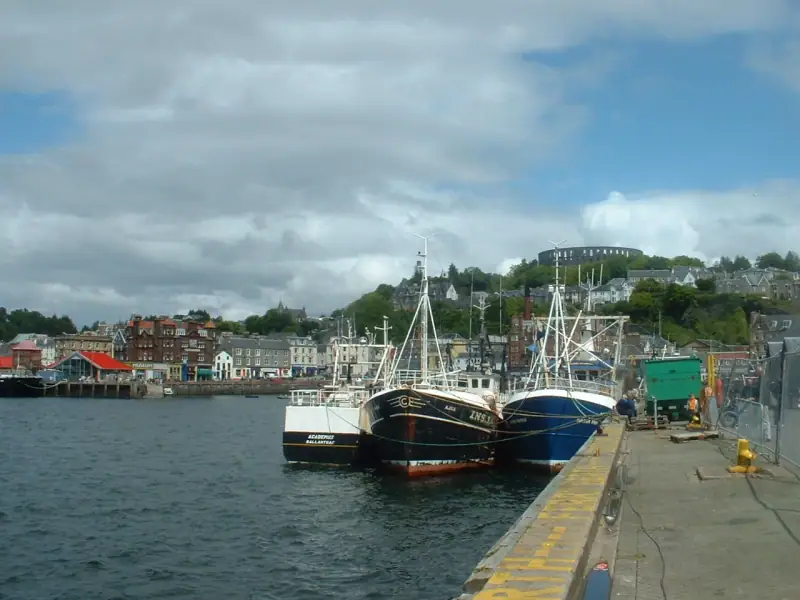
Visiting Oban: A Complete Guide to the Gateway to the Isles
What to see and do in Oban: McCaig's Tower, the distillery, ferries to the Hebrides, Mull and Iona. A complete guide to plan your stay in Scotland.
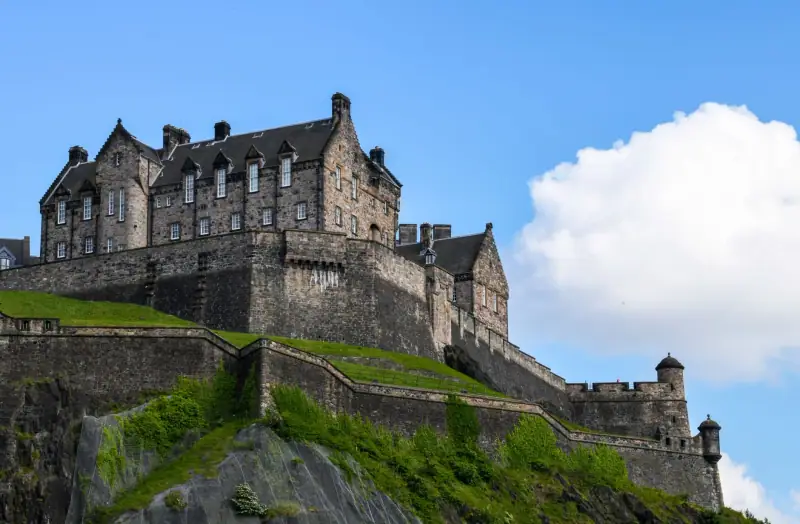
Edinburgh top sights: what to see and do in the capital
Edinburgh's top sights: the castle, Royal Mile, Arthur's Seat, free museums, Old Town and New Town. A complete guide so you miss nothing.
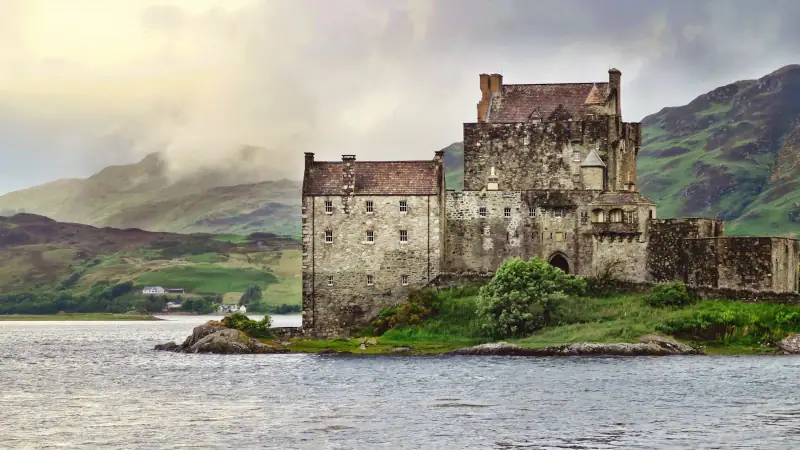
Visiting Fort William: a complete guide to Scotland's outdoor capital
What to see and do in Fort William: Ben Nevis, Jacobite Steam Train, Glenfinnan, Glencoe. A complete guide to plan your Highlands trip.
Ready-made
Scotland itineraries
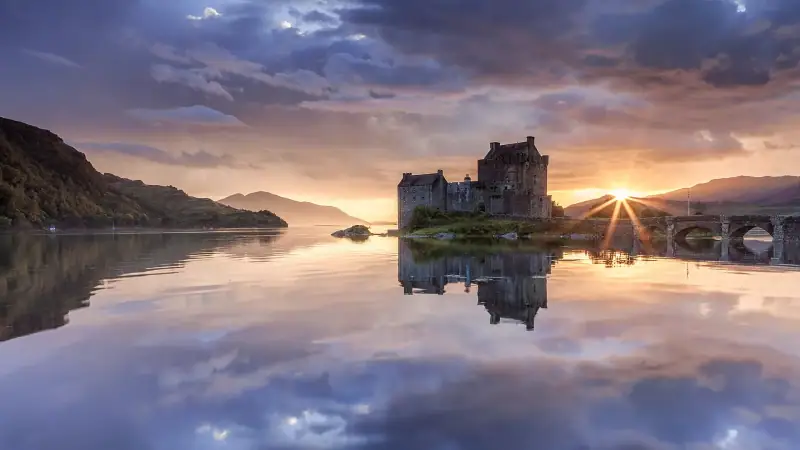
7 days
Scotland in 7 days: the perfect one-week itinerary
EdinburghFort WilliamInvernessPortree
14 days
Scotland road trip: the complete 2-week guide
Plan a 14-day Scotland road trip: full itinerary from the Lowlands to the far north, with logistics, places to stay and sights.
6 days
Scotland road trip in October: 6-day itinerary, roads and daylight hours
PitlochryInvernessPortreeFort William