Where to stay
Where to stay near Gavarnie: the village, Gèdre or Luz, and which type of accommodation?
We may earn a commission when you book through links on this page, at no extra cost to you. We don't visit or try the places we cover: we summarize published sources. How we work
In short
- You do not have to sleep in Gavarnie village to see the cirque, but staying there puts you on the trail before the day's tour buses arrive.
- Gèdre, a few kilometers below, is a quieter and often cheaper compromise; Luz-Saint-Sauveur, about half an hour away, has the most choice and services.
- Supply is limited and the season short: book several months ahead for July and August, and check opening dates off-season.
- Lourdes suits a one-night stop, not a hiking base: the round trip eats up much of the day.
You have decided to see the Cirque de Gavarnie, and here is the real question: where to sleep? On the map, everything seems close. In reality, the valley is narrow, the road ends at the village, the supply of beds is limited and the choice of base completely changes your stay: waking up in front of the cliffs, or thirty minutes of driving before you even lace up your shoes.
This guide compares the areas (the village of Gavarnie, Gèdre, Luz-Saint-Sauveur and beyond) and then the types of accommodation: hotel, guesthouse, gîte, campsite, mountain hut. For an overview of the range, see the general guide to where to stay in the Pyrenees; this one zooms in on the cirque area.
Understanding the geography: a dead-end valley
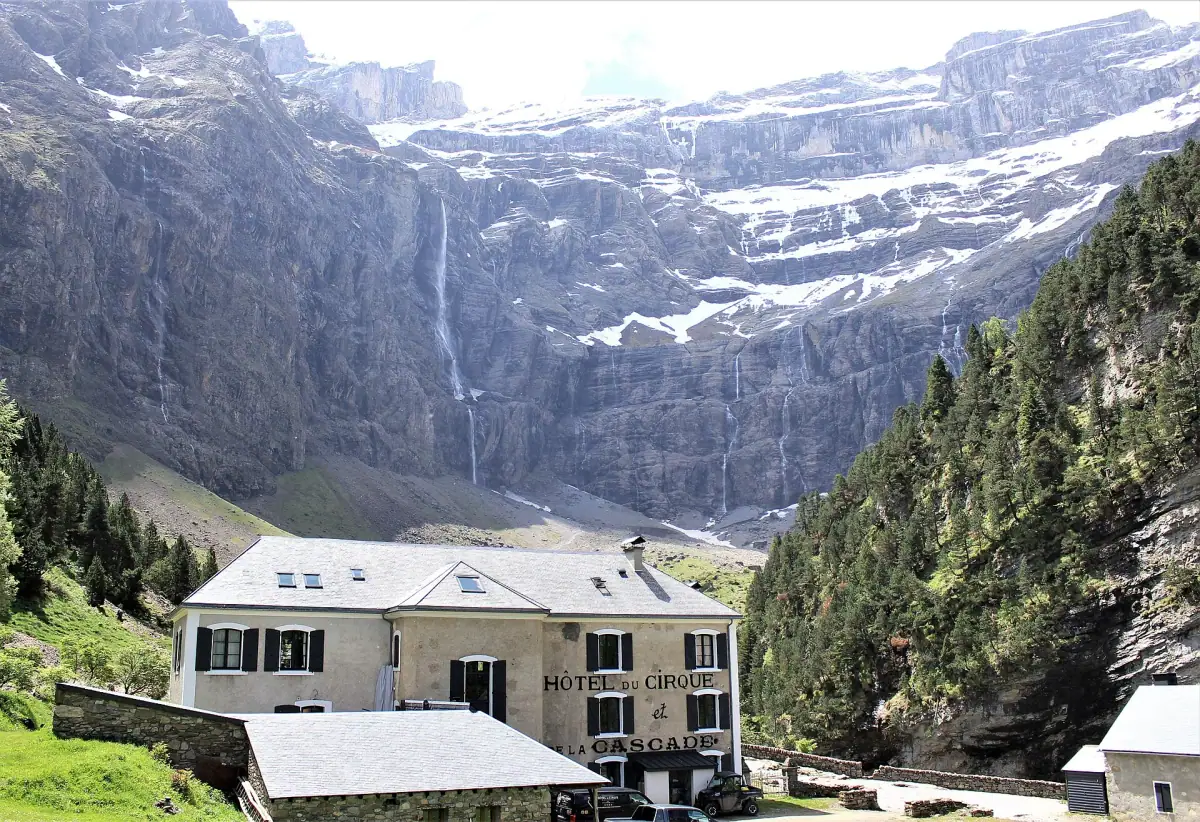
The village of Gavarnie sits at about 1,350 m (4,430 ft) of altitude, at the very end of the Gavarnie valley. The road runs up from Luz-Saint-Sauveur, passes through Gèdre, then stops: beyond, there are only trails. This layout has three concrete consequences.
- There is only one road axis. All the day’s visitors go up by the same road, which creates crowds in mid-morning in summer.
- The supply of beds is concentrated in a few villages. Gavarnie, Gèdre, Luz-Saint-Sauveur and Saint-Sauveur form the core of the offer; beyond, you shift to Cauterets or Lourdes.
- You feel the altitude. The village is cooler than the valley, even in midsummer: a warm jacket in the evening is essential.
To place each stop and the cirque itself, the article visiting Gavarnie: what to see and do gives the detail of the sites, trails and recommended times.
Sleeping in the village of Gavarnie: at the foot of the cirque
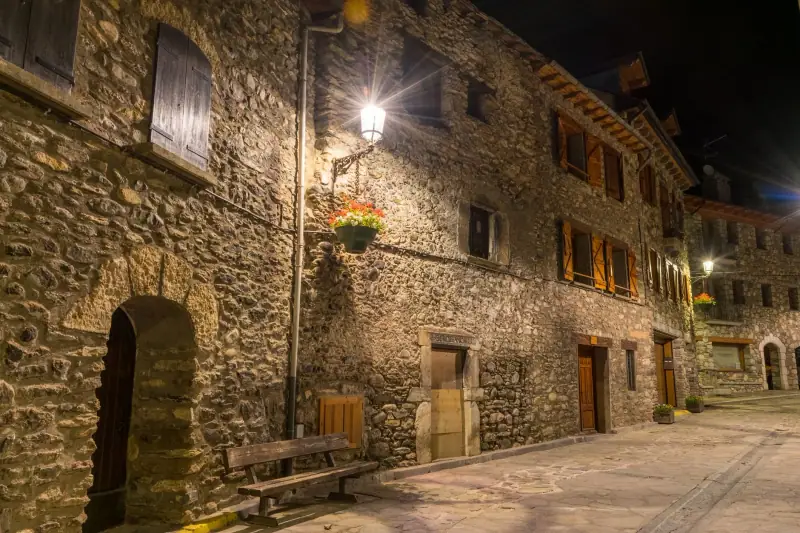
This is the most obvious option, and the most memorable. The village has a modest but sufficient offer: small hotels, guesthouses, gîtes and seasonal rentals. You will find no big chain or large complex.
Strengths
- Start on foot. You leave from the village with no car or shuttle. In summer, this guarantees you are on the trail before the day visitors arrive.
- The evening and morning atmosphere. When the buses have left, the village returns to a high-mountain rhythm. The light on the cliffs late in the day is a bonus.
- Less driving. You avoid the valley road when it is busy.
Limits
- Little choice. Only a few dozen rooms: everything goes fast in summer and on sunny weekends.
- Higher rates than elsewhere in the valley in high season.
- Few shops: do your grocery shopping before heading up if you stay in a gîte, as the village’s food offer is geared to passing tourists.
- Many places close off-season. Always check opening.
Who is it for? Early-morning hikers, photographers, couples on a getaway and anyone who wants to enjoy the cirque in peace. One or two nights are generally enough.
Sleeping in Gavarnie
Compare hotels, guesthouses and gîtes at the foot of the cirque, with free cancellation when offered.
Gèdre: the valley’s good compromise
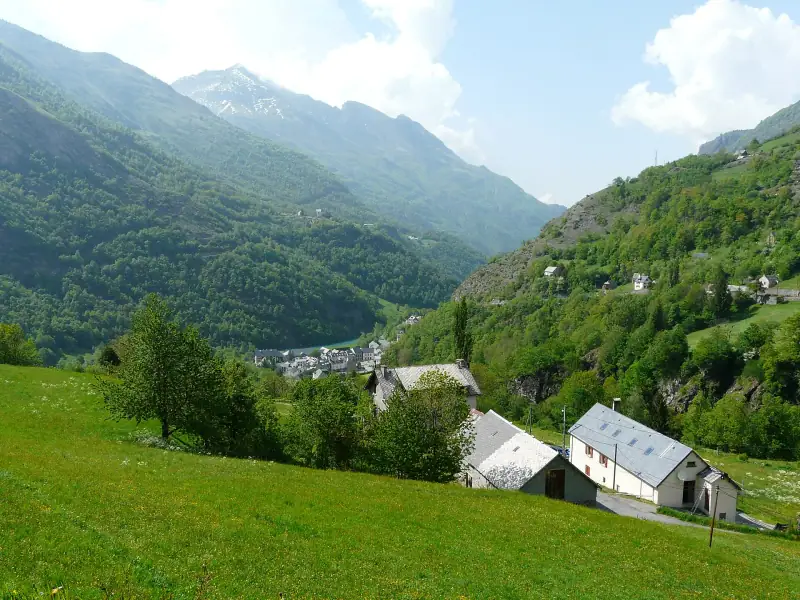
Gèdre is an upper-valley village just below Gavarnie, only a few kilometers away. It is often the option experienced travelers choose, for several reasons.
- A central base. From Gèdre you quickly reach Gavarnie, but also the other cirques of the valley, notably Troumouse and Estaubé, which are part of the listed site.
- More quiet and often gentler prices than in the village of Gavarnie, with the atmosphere of a genuine mountain village.
- A relaxed pace: less tourist traffic, quiet evenings.
The flip side: you have to take the car (or a shuttle when it runs) to reach the trailhead, and a parking space in Gavarnie village can be hard to find in peak season. Plan to arrive early.
Who is it for? Stays of three to five nights centered on the upper valley, families who want more spacious lodging, travelers who like quiet.
Lodgings in this area are often gîtes, guesthouses and apartments, more rarely hotels. If you are looking for a gîte, check the exact distance to the village and whether a parking space is included.
Luz-Saint-Sauveur and Saint-Sauveur: more choice and services
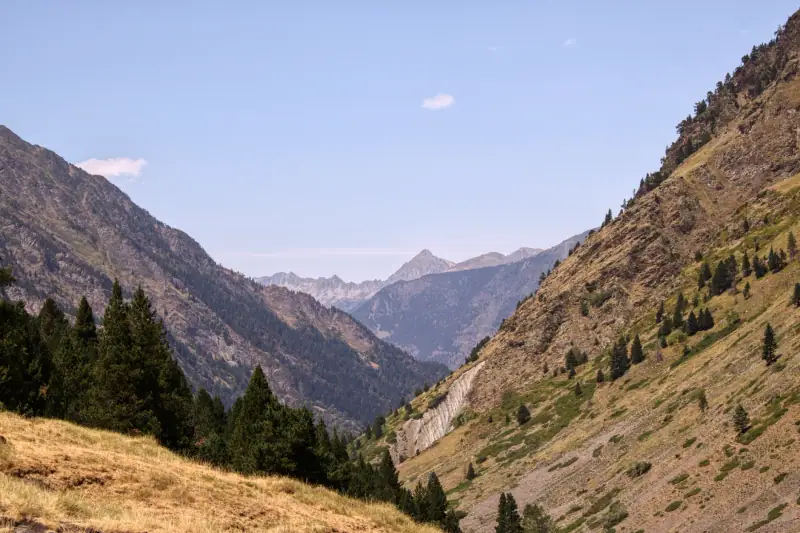
Lower in the valley, Luz-Saint-Sauveur is the region’s main base. The town offers a full range: hotels, guesthouses, residences, campsites, restaurants, shops, a pharmacy and services. It is a little under half an hour by road from Gavarnie, which remains reasonable for a day outing.
Strengths
- The most choice and the best value in the area, notably for families and groups.
- A strategic position: you are close to both Gavarnie and the Col du Tourmalet, within reach of Cauterets and the Pont d’Espagne.
- Proper shops and restaurants open much longer in the year.
Limits
- The daily drive: head up early to avoid the line of vehicles.
- Less of a change of scene than sleeping at the foot of the cliffs.
The guide to visiting Luz-Saint-Sauveur helps you enjoy the town if you make it your base.
Who is it for? A week-long stay that combines several sites, a controlled budget, or a group with varied expectations.
Cauterets and Lourdes: possible alternatives, with reservations
Two other towns often come up in searches.
- Cauterets is a well-equipped spa town and mountain resort. It is farther from Gavarnie and suits you better if you plan to spend more time around the Pont d’Espagne and the lakes. You will find the detail in the guide Cauterets or Luz-Saint-Sauveur: where to stay without a car.
- Lourdes has a very large capacity and often gentle prices, but the distance makes daily round trips tiring. Keep it for a one-night stop, especially if you arrive by train.
Which type of accommodation to choose?
Once the area is chosen, the format remains. Here are the main families, with their advantages and pitfalls.
The hotel: simple and no surprises
Upper-valley hotels are often small and family-run, with simple comfort. You gain flexibility (breakfast, welcome, sometimes evening meals) and easy booking. Note: the number of rooms is limited, hence the value of booking early. Check the cancellation terms.
The guesthouse: a local welcome
It is often the best way to discover life in the valley. Hosts know the trails, the weather and useful schedules. Breakfast is generally hearty and some offer a host’s table by reservation. Ask about arrival times, as many houses have no permanent reception.
The gîte and the rental: independence
Ideal for a family or a small group, and for stays of several nights. You cook, you set your own pace, and the cost per person drops sharply. Check the equipment, the heating (evenings are cool) and the distance to shops. Some rentals impose a minimum length in high season.
The campsite: the budget option
Camping remains very popular in the valley, with pitches for tents, caravans and sometimes chalets or mobile homes. Campsites are generally open in season, from spring to autumn. Altitude makes nights cool: bring a suitable sleeping bag. For the rules on bivouacking and wild camping, see the article on sleeping in huts, campsites or bivouacs.
The mountain hut: for seasoned walkers
Mountain huts offer dormitory accommodation, often with half board, reached on foot after several hours of walking. They are reserved for equipped and prepared hikers. Do not go without checking opening, the weather and reservations. Conditions can change quickly at altitude.
Guided hikes in the Pyrenees
Guided outings in the Gavarnie region to discover the cirque with a guide.
How to choose according to your profile
Rather than listing addresses, here is a simple decision grid.
| Your profile | Best base | Why |
|---|---|---|
| Early-morning hiker | Village of Gavarnie | Start on foot, before the crowds |
| Stay of 3 to 5 nights | Gèdre | Quiet, central, often more affordable |
| Family or group | Luz-Saint-Sauveur | More choice, services and shops |
| Tight budget | Campsite or gîte in the valley | Lower cost per person |
| A single stopover night | Gavarnie or Luz | Depending on your schedule |
| Without a car | Gavarnie or Luz | Less dependence on bus schedules |
Two combined options work particularly well: one or two nights in Gavarnie for the cirque, then the rest of the stay in Luz-Saint-Sauveur or Gèdre to explore the surroundings.
When to book and when to come
Most of the activity runs from late spring to early autumn. In July and August, demand often exceeds supply: book several months ahead, especially for the village of Gavarnie. In June and September, days remain pleasant and crowds drop, which makes booking easier and the atmosphere more peaceful. To choose your period, see the article when to go to the Pyrenees.
Off-season, several places close, and snow can limit access to the trails. If you come then, confirm opening directly with the host.
Budget: what to expect
Rates vary greatly with the season, the type of lodging and the size of the group. A few general guidelines, without claiming fixed prices:
- The village of Gavarnie is generally the most expensive in high season.
- Gèdre and the valley offer better value.
- Luz-Saint-Sauveur offers the widest range of rates.
- Camping and gîtes remain the cheapest options for groups.
To fit accommodation into a full budget (meals, transport, activities), see the guide to the budget for a trip to the Pyrenees.
Accommodation in Luz-Saint-Sauveur
Hotels, guesthouses and apartments for a flexible base half an hour from Gavarnie.
Mistakes to avoid before booking
Booking without checking parking. In the village, spaces are limited in season. A lodging with a dedicated space saves you time and patience.
Underestimating travel time. Half an hour of valley driving seems short, but in peak season the climb to Gavarnie can be slower. Leave early.
Forgetting altitude and weather. In the evening, the temperature drops fast. Bring warm layers even in summer, and check the forecast before each outing.
Not planning meals. Off-season, some restaurants close early or not at all. If you stay in a gîte, do some grocery shopping before heading up.
Counting on everything being open. Many places operate in season only. Contact the host and confirm arrival times.
Booking without free cancellation. Mountain weather can change your plans. A flexible rate is a welcome comfort.
Getting around from your lodging
A car remains the most flexible solution: it lets you reach the different cirques and come back at the time that suits you. Without a car, favor the village of Gavarnie or Luz-Saint-Sauveur and check regional bus schedules. All the modes of transport are detailed in the article getting around the Pyrenees by car, train and bus.
If your plan is hiking, consider rounding out your stay with the selection of the best hikes in the Pyrenees.
Recommendation
- You want the cirque at your door: one or two nights in Gavarnie, booking early.
- You are staying several days in the upper valley: Gèdre, for the quiet and the value.
- You want to choose easily, compare and vary your outings: Luz-Saint-Sauveur.
- You are traveling on a tight budget: a campsite or gîte in the valley.
- You are arriving by train: one night in Lourdes, then the valley.
Whatever your base, book with free cancellation, check parking and keep some slack in your schedule. The Cirque de Gavarnie deserves to be seen without rushing: a good choice of lodging makes all the difference.
Frequently asked questions
Do you have to sleep in Gavarnie to visit the cirque?
No, it is not mandatory: you can stay in Gèdre or Luz-Saint-Sauveur and head up in the morning. Sleeping in the village does have a genuine advantage, though: you are on the trail before the tour buses arrive and you enjoy the evening calm.
What is the best village to sleep in near Gavarnie?
It depends on your plans. Gavarnie to be as close as possible to the cirque, Gèdre for a quiet and affordable compromise, Luz-Saint-Sauveur for more choice, shops and services. For a stay of several days with other outings, Luz is the most flexible base.
When should you book accommodation in Gavarnie?
Supply is limited and the season short. For July and August, book several months ahead; for fine-weather weekends in June and September, at least a few weeks. Preferably choose a free-cancellation rate.
Is any accommodation open in Gavarnie in winter?
Supply is much smaller off-season: many places close in autumn and spring. If you come in winter or between seasons, check opening before booking and have a plan B in Gèdre or Luz-Saint-Sauveur.
Can you camp near Gavarnie?
Yes, campsites exist in the area, in the commune of Gavarnie-Gèdre and in the Luz valley, generally open in season. Bivouacking, however, is regulated by the Pyrenees National Park: find out the rules before pitching a tent outside a campsite.
Is lodging with parking essential?
It is a comfort if you come by car, especially in the village where public parking is paid in high season. When booking, check that the lodging has a space or a nearby parking lot.
Can you stay in Lourdes to visit Gavarnie?
It is possible, as Lourdes has many moderately priced rooms, but the round trip is long and you lose a good part of the day. Lourdes works for a one-night stop, not as a hiking base.
More Pyrenees guides
Keep reading
Where to stay in Bagnères-de-Luchon: neighborhoods, nearby villages and types of accommodation
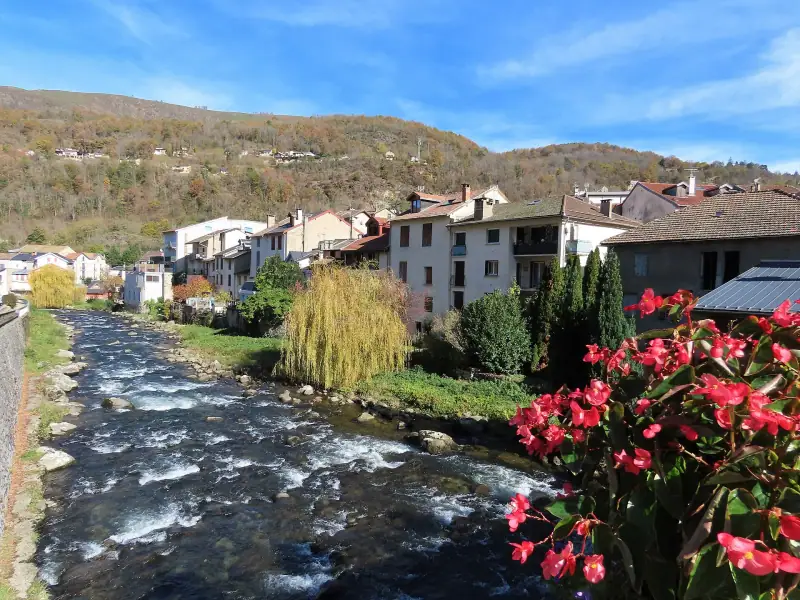
Where to stay in Bagnères-de-Luchon? Spa center, Saint-Mamet, Montauban, Lys valley, Superbagnères: areas, hotels, gîtes, campsites and tips compared.
Where to stay in Ax-les-Thermes: neighborhoods and types of accommodation
Where to stay in Ax-les-Thermes? Spa center, station, Bonascre at the foot of the slopes, nearby hamlets: areas, hotels, rentals and campsites compared.
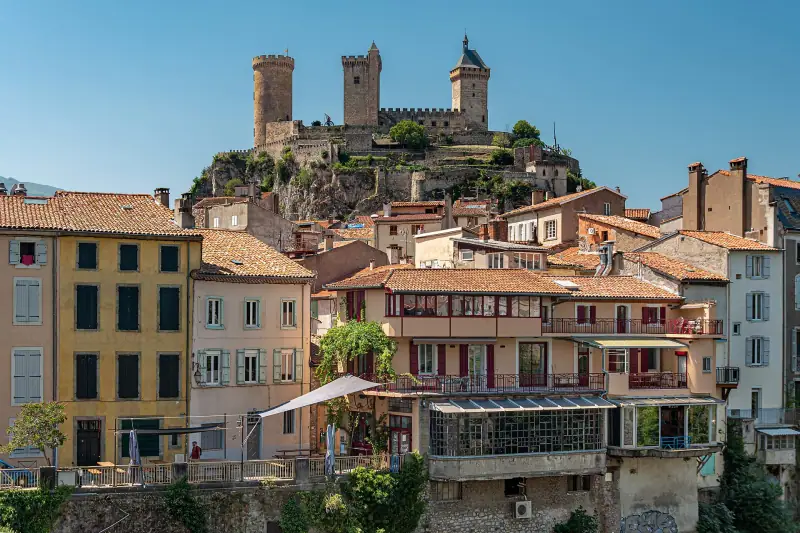
Where to stay in Foix: neighborhoods, surroundings and types of accommodation
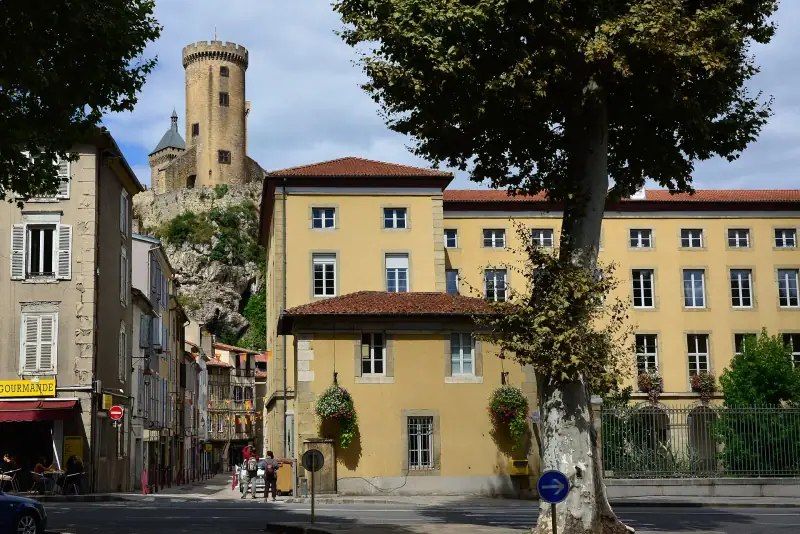
Where to stay in Foix? Historic center, station area, outskirts, Lac de Labarre and nearby villages: areas, hotels, gîtes and campsites compared.
Ready-made
Pyrenees itineraries
7 days
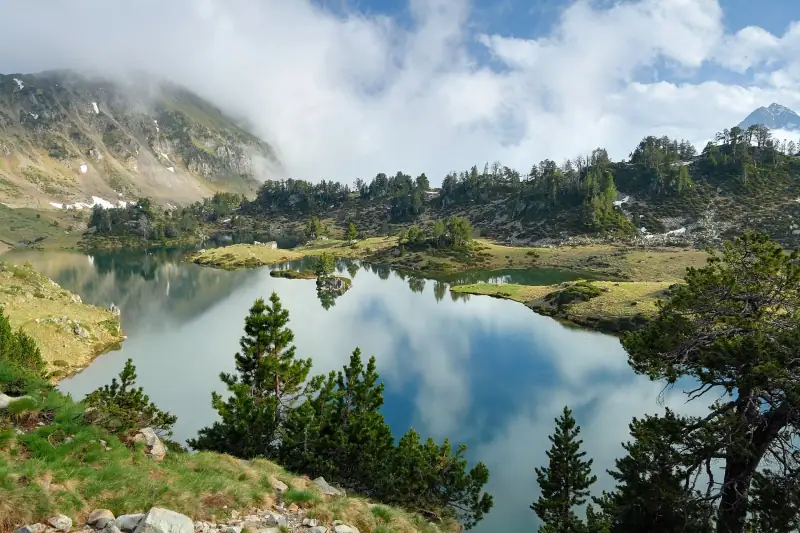
Hautes-Pyrénées and Ariège in one week by car: is the itinerary doable?
CauteretsBagnères-de-LuchonFoix
Can be adapted in the planner
5 days
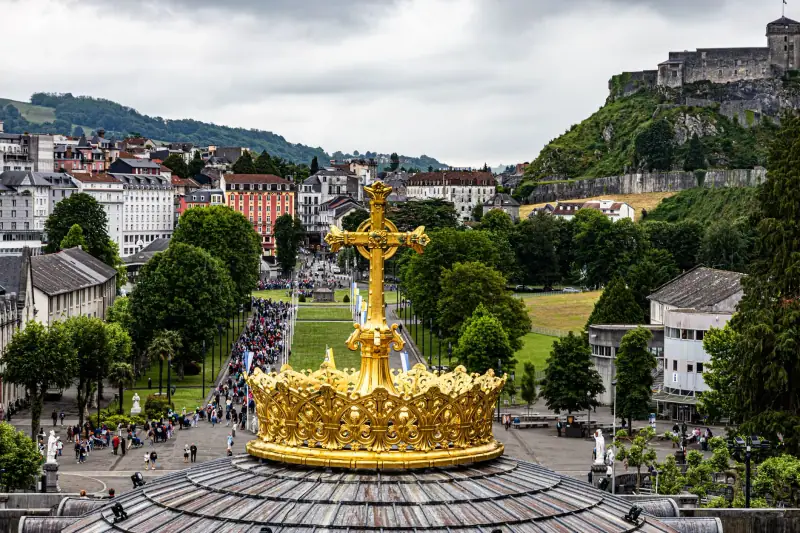
5 days in the Hautes-Pyrénées: an itinerary through Lourdes, Cauterets and Gavarnie
CauteretsLuz-Saint-Sauveur
Can be adapted in the planner
4 days
4-day road trip in Ariège and the Cerdagne: Foix, Montségur, Ax-les-Thermes, Font-Romeu
FoixAx-les-ThermesFont-Romeu
Can be adapted in the planner