What to see
Visiting Cebu: Complete Guide to the Pearl of the Visayas
We may earn a commission when you book through links on this page, at no extra cost to you. We don't visit or try the places we cover: we summarize published sources. How we work
In short
- Plan at least 4 to 5 days: Cebu City (1-2 days), Oslob and Kawasan Falls (1 day), Mactan or Moalboal beaches (1-2 days).
- Manila to Cebu is a 1 h 15 to 1 h 30 flight, from €15 to €80 (about $17-93). Mactan-Cebu Airport (CEB) is 30 minutes from the center.
- The dry season runs November to May; the Sinulog festival is held on the 3rd Sunday of January.
- Oslob whale shark swimming costs 1,000 PHP (about €14 / $16) and is controversial; Kawasan canyoning is 2,100 PHP (about €29 / $34).
Cebu is much more than a stopover on the way to Bohol or Palawan. This island province in the central Visayas is the first city founded by the Spanish in the Philippines, a busy economic hub, and a starting point for some of the archipelago’s best nature experiences: swimming with whale sharks in Oslob, canyoning at Kawasan Falls, watching sardine bait balls in Moalboal, or simply lounging on the beaches of Mactan. This complete guide explains how to get the most out of Cebu, from the historic lanes of the center to the coral reefs offshore.
How to get to Cebu
Mactan-Cebu International Airport (CEB) is on Mactan island, which is linked to Cebu by three bridges (Sergio Osmeña Jr. Bridge, Marcelo Fernan Bridge, and the Cebu-Cordova Link Expressway since 2022). It is the second busiest airport in the Philippines after Manila.
From Manila
Dozens of direct flights connect Manila to Cebu every day. The main airlines are Cebu Pacific, Philippine Airlines and AirAsia. Flight time is 1 h 15 to 1 h 30. Fares range from €15 to €80 (about $17-93) depending on how far ahead you book. Buy two to three weeks in advance for the best prices.
From the airport, an official taxi to the center of Cebu City costs 350-500 PHP (€6-9, about $7-10) for about 30-45 minutes. The Grab app is often cheaper (250-350 PHP).
From other islands in the Philippines
Many ferry companies connect Cebu to Tagbilaran (Bohol, 2 h), Dumaguete (about 6 h via OceanJet with a stop in Tagbilaran, or 6 h+ on a regular ferry), Cagayan de Oro (8 h), Iloilo (12 h) and Manila (about 22 h on the 2GO overnight ferry, with infrequent sailings: check schedules). The main port is Pier 1 in central Cebu City.
From abroad
Cebu is served by AirAsia from Kuala Lumpur, Singapore and Osaka; by Cathay Pacific from Hong Kong; and by Korean Air and Jin Air from Seoul. These direct connections make it possible to arrive without transiting through Manila.
Cebu City: the cradle of colonial Philippines
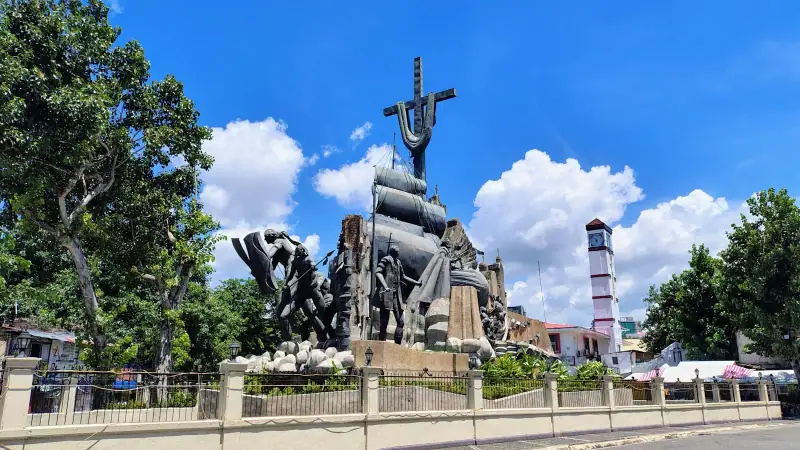
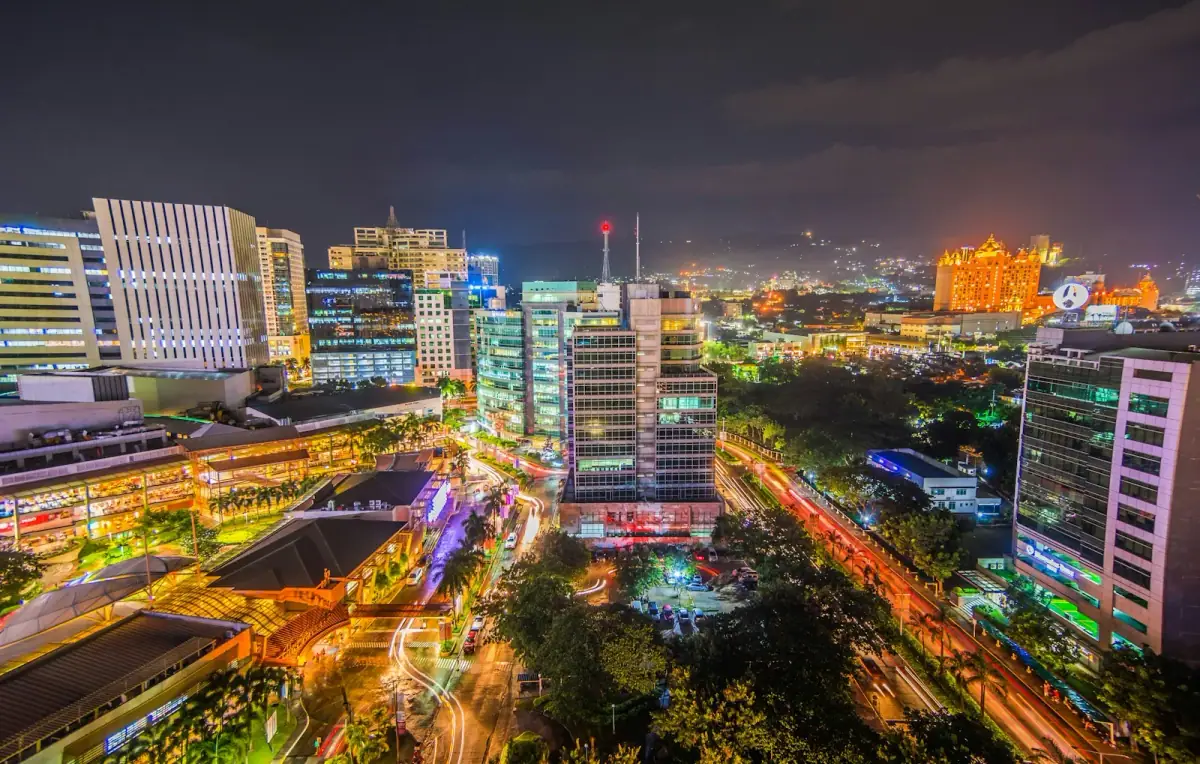
Cebu City is the oldest Spanish-founded city in the Philippines (1565) and remains the economic capital of the Visayas today. The historic center holds most of the cultural sights.
Magellan’s Cross
Magellan’s Cross is Cebu’s symbol par excellence. According to tradition, the explorer Ferdinand Magellan planted it in 1521 during the baptism of Rajah Humabon and his wife. The original cross is now encased inside a hollow tindalo wood cross, displayed in a small octagonal pavilion at the corner of Magellan Street and Magallanes Street.
The pavilion’s ceiling is decorated with a naive, colorful mural depicting the conversion of the Cebuanos. Entry is free, but candle sellers will offer you religious offerings. Close by are city hall and the Basilica Minore del Santo Niño.
Basilica del Santo Niño
The Basilica Minore del Santo Niño is the oldest Roman Catholic church in the Philippines. The current church, built in 1740, houses the statue of the Santo Niño de Cebu (the Child Jesus) given by Magellan to Rajah Humabon at the 1521 baptism. The statue is considered the most venerated Catholic relic in the country.
Hundreds of Filipinos pray at the basilica every day. Masses are held in Cebuano, Tagalog, English and Spanish. Entry is free and open to all; dress appropriately (shoulders and knees covered).
Cebu City historical tour
Magellan's Cross, the Basilica, Fort San Pedro and Casa Gorordo in a guided half day.
Fort San Pedro
A few minutes’ walk from the basilica, Fort San Pedro is the oldest and smallest Spanish fortification in the Philippines. Built in 1565 by Miguel López de Legazpi, it has served in turn as a military fortress, a prison and a botanical garden. Entry costs 30 PHP (€0.50, about $0.60). The view of Cebu harbor from the ramparts is lovely, especially in late afternoon.
Casa Gorordo Museum
Casa Gorordo is the restored home of a wealthy 19th-century Cebuano family. It gives a look at the daily life of the colonial elite, with period furniture, photographs and a typical kitchen. A guided visit lasts about 45 minutes. Admission: 100 PHP (€1.70, about $2). Closed Mondays.
Carbon Market
Carbon Market is Cebu’s largest public market and one of the liveliest in the Philippines. Tropical fruit, fish, vegetables, clothing, flowers: everything is sold in total bustle. It is a good place to watch the daily life of Cebuanos and taste real street food. Go in the morning for the best atmosphere.
Oslob: swimming with whale sharks
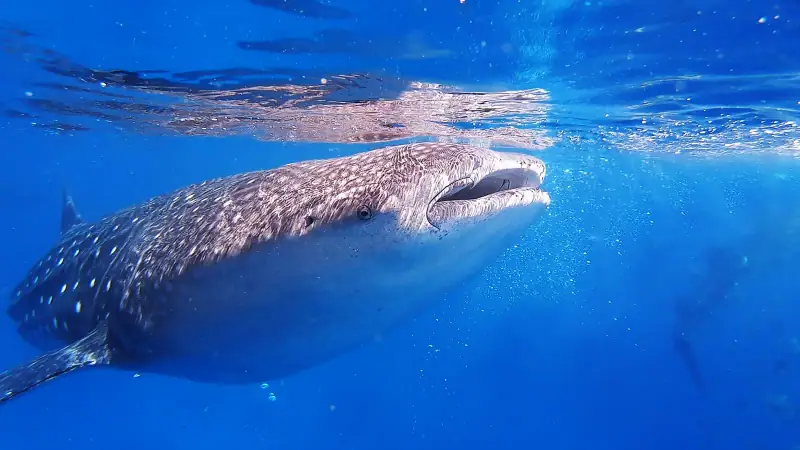
About 110-120 km (68-75 mi) south of Cebu City (3 to 3.5 hours by road depending on transport), the village of Oslob is famous worldwide for swimming with whale sharks (Rhincodon typus). Every morning, local fishermen feed dozens of these harmless giants (up to 18 to 20 meters / 59 to 66 ft, with a record of 18.8 m / 62 ft) to keep them close to the coast.
What you need to know before going:
- Swimming is organized from 6 am to noon every day
- Foreigner fee: 1,000 PHP (€14, about $16), includes kayak and life jacket
- Strict rules: no chemical sunscreen, no touching the animals, a minimum distance of 4 m (13 ft) maintained by the guides
- The activity is controversial: some marine conservation NGOs consider that artificial feeding disrupts natural migratory behavior. It is up to you to weigh this.
Most travelers combine Oslob with Kawasan Falls on the same day (see below). Organized tours from Cebu City (departure 3-4 am) offer this combo for 1,500-2,000 PHP (€25-35, about $29-41) per person, transport included.
Oslob + Kawasan Falls tour
The essential day from Cebu: whale sharks at sunrise and canyoning in turquoise waterfalls.
Kawasan Falls and Badian canyoning
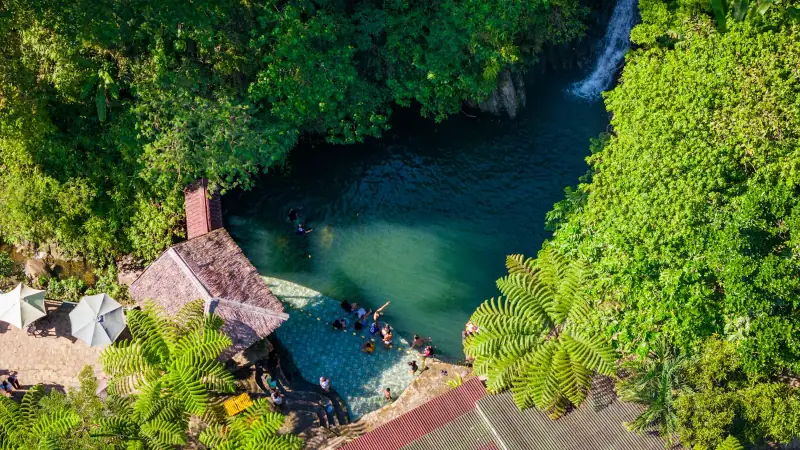
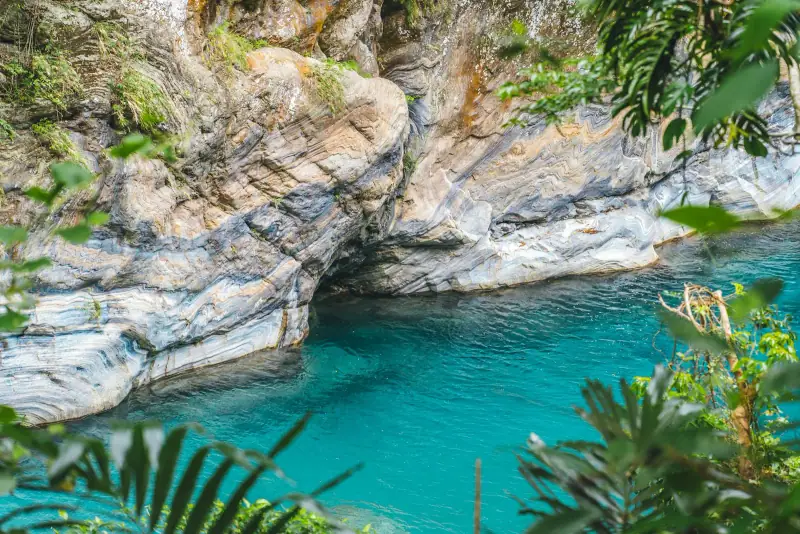
Kawasan Falls, near Badian in southern Cebu, are among the most beautiful waterfalls in the Philippines. Three turquoise pools follow one another in a lush jungle setting, fed by underground springs that keep the water cool all year.
Trekking to the falls
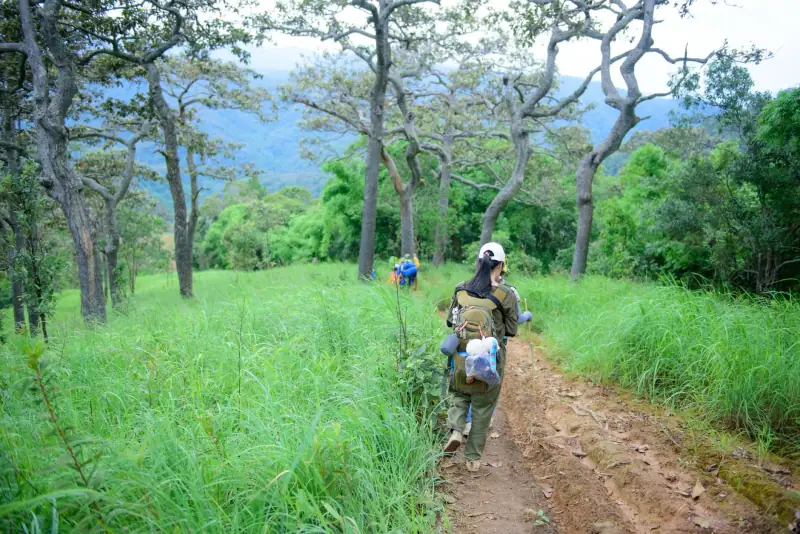
From the Matutinao parking lot, a 45-minute walk along a river (including ford crossings) leads to the first pool, the most photographed. Bangka rides let you go up the river for 50 PHP. Site entry costs 200 PHP (€3.50, about $4).
Canyoning (the real experience)
Since 2015, Kawasan canyoning has become Cebu’s signature activity. You descend rapids and waterfalls by combining wading, jumps (from 4 to 10 m / 13 to 33 ft) and natural slides in the Matutinao River canyon.
- Duration: 4 to 6 hours depending on your pace and fitness
- Price: 2,100 PHP (about €29 / $34) per person, wetsuit, helmet and life jacket provided
- Level: no experience needed, but you must be able to swim
- Season: open all year, the river is higher in the rainy season
Book your canyoning directly at the local office at the site entrance or through a tour from Cebu City.
Moalboal: sardines and world-class diving
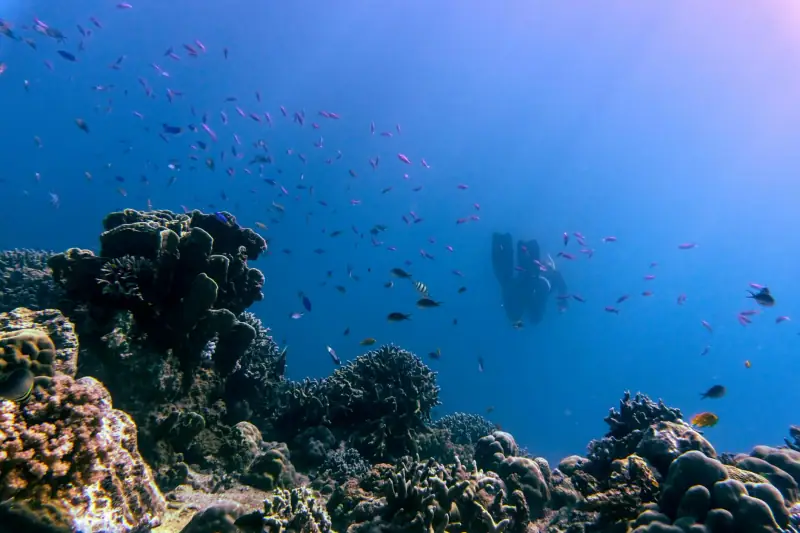
Moalboal is a small coastal town 90 km (56 mi) southwest of Cebu City, known worldwide for a unique natural phenomenon: a shoal of one to two million sardines that moves just below the surface, a few meters from Panagsama Beach.
The sardine shoal
The shoal swirls in hypnotic formations, in perfect sync, imitating the defensive behavior of a single organism. Tuna and dolphins regularly hunt them, creating spectacular underwater ballets. You can see this snorkeling from the beach, no boat needed. Allow 150-250 PHP (€2.50-4, about $3-5) to rent equipment.
Diving in Moalboal
Moalboal is also one of the best dive destinations in Cebu:
| Site | Type | Level | Highlights |
|---|---|---|---|
| Sardine Run | Shore dive | Beginner | Sardine shoal + tuna |
| Pescador Island | Reef + wall | Open Water | Turtles, sleeping sharks |
| Turtle Bay | Shore dive | Beginner | Sea turtles guaranteed |
| Cathedral Cave | Cave | Advanced | Light filtering through the caves |
Dive shops at Panagsama Beach offer dives from 800-1,200 PHP (€14-20, about $16-23) for two dives.
For all the advice on diving in the Philippines, see our complete guide to diving in the Philippines.
Hotels and resorts in Moalboal
Stay overnight to enjoy the sardine shoal at dawn, before the day-tripper groups arrive.
Mactan Island: beaches, resorts and water sports
Mactan Island, linked to Cebu City by three bridges, has most of the province’s luxury hotels and developed beaches. The international airport is also here.
Mactan’s beaches
Mactan’s natural beaches are less spectacular than those of Palawan or Boracay, but high-end resorts have turned them into turnkey beach destinations with infinity pools, water sports and spas.
Maribago and Buyong are the most developed areas, with resorts such as the Shangri-La Mactan, the Crimson and Plantation Bay. These properties allow non-guests onto the beach for a minimum spend.
For travelers on a tighter budget, Tambuli Beach and the waterfront of Lapu-Lapu City offer accessible public alternatives.
The Lapu-Lapu monument
On Mactan stands the Lapu-Lapu Monument, honoring the tribal chief who defeated and killed Ferdinand Magellan at the Battle of Mactan in 1521. This imposing monument is a reminder that Cebu was also the scene of the first Filipino resistance to European colonization.
Water sports and island hopping from Mactan
From Mactan, you can reach nearby islands by bangka: Olango Island (a migratory bird sanctuary with coral reefs), Caohagan Island (an unspoiled white sand beach) or Nalusuan Island (snorkeling in a marine reserve).
Suggested itinerary: Cebu in 5 days
Day 1: Arrival and historic Cebu City
- Morning: arrive, settle in
- Afternoon: Magellan’s Cross, Basilica del Santo Niño, Fort San Pedro
- Evening: dinner at Carbon Market or Sugbo Mercado (a modern food hall)
Day 2: Oslob and Kawasan Falls
- 3:30 am: depart by van
- 6-8 am: swim with whale sharks in Oslob
- 10 am-2 pm: canyoning at Kawasan Falls
- 6 pm: back to Cebu City (exhausted but happy)
Day 3: Moalboal, sardines and diving
- 6 am: depart by bus for Moalboal (2-3 h)
- 10 am-noon: snorkeling at the sardine shoal and Turtle Bay
- Afternoon: dive with a local dive shop
- Night: stay in Moalboal to avoid the round trip
Day 4: Bohol by ferry (day trip)
- 8 am: ferry from Cebu City to Tagbilaran (2 h)
- Full day: Chocolate Hills, tarsiers, Loboc River. See our complete guide to Bohol
- 7 pm: ferry back to Cebu City
Day 5: Mactan Island and shopping
- Morning: Mactan beach or water sports
- Afternoon: shopping at Ayala Center Cebu (a renovated mall)
- Evening: flight home or continue your Philippine itinerary
Budget for visiting Cebu
| Item | Tight budget | Comfort budget |
|---|---|---|
| Lodging / night | €15-30 (~$17-35), guesthouse | €60-150 (~$70-175), resort |
| Meals / day | €10-18 (~$12-21) | €25-50 (~$29-58) |
| Local transport / day | €5-10 (~$6-12) | €20-40 (~$23-46) |
| Oslob + Kawasan tour | €30-40 (~$35-46) | €50-70 (~$58-81), private guide |
| Diving (2 dives) | €20-30 (~$23-35) | €40-60 (~$46-70) |
| Total / day | €60-98 (~$70-114) | €155-320 (~$180-370) |
Cebu is more affordable than Manila for lodging in the city, but activities (Oslob, canyoning) have their own fixed entry fees.
Food in Cebu: street food and local specialties
Cebu is known throughout the archipelago for its lechón (spit-roasted suckling pig). The Cebu version is stuffed with aromatic herbs (lemongrass, onions, bay leaf) and is said to be better than Manila’s.
Restaurants and places to try:
- Rico’s Lechon (several locations in the city): the Cebuano lechón specialist, a line guaranteed on weekends
- Zubuchon: lechón in individual portions, created in 2011 using the recipe Bourdain had discovered while filming No Reservations in 2008 (episode aired February 2009), although he never ate at Zubuchon himself
- Sugbo Mercado (IT Park, Thursday to Sunday): a modern food hall with 30+ stalls of local and international street food
- Carbon Market: tropical fruit, fried fish and batchoy (pork noodle soup) at market prices
To go further, see our guide to food in the Philippines.
Getting around Cebu
Jeepney: the cheapest transport (13-20 PHP) on the main routes. Look for the destination written on the side or ask the driver. Lively, colorful, sometimes packed.
Grab: the app is very reliable in Cebu City. Fares are steadier than traditional taxis, and you can pay in cash or by card.
Bus: V-Hire (van) and Ceres (green coach) buses connect Cebu City to southern destinations (Moalboal, Oslob) from the South Bus Terminal in Bulacao. Moalboal: 60-80 PHP (2 h 30), Oslob: 120-150 PHP (3 h 30).
Scooter rental: possible in Cebu City (400-600 PHP/day) and in Moalboal (300-450 PHP/day). Traffic in the city is dense; use this mode for destinations outside Cebu City.
Van charter: for trips to the south (Oslob, Kawasan, Moalboal), a van charter for 6-8 people costs 2,500-3,500 PHP (€42-60, about $49-70) per day. Economical for a group, practical for families.
Where to stay in Cebu: recommendations by area
Detailed recommendations by budget and neighborhood are in our complete guide on where to stay in Cebu.
In brief:
- Centro (historic center): ideal for culture lovers, mid-range hotels
- IT Park / Lahug: modern district, restaurants, nightlife, well-equipped hotels
- Mactan Island: beach resorts, perfect for beach-and-pool stays
- Moalboal: simple but comfortable guesthouses for divers
Find your place to stay in Cebu
Compare guesthouses, hotels and resorts in every Cebu neighborhood for your budget.
Practical tips before you go
Entry requirements: rules depend on your passport, so check the official government site before you book. Complete the electronic arrival registration required before the flight (eTravel). Make sure you have a return or onward ticket, which is required at boarding.
Money: ATMs are plentiful in the center, malls and at the airport. Banco de Oro (BDO) and BPI accept foreign Visa and Mastercard cards. Bring cash for jeepneys, markets and small guesthouses.
Local SIM: buy a Globe or Smart SIM at the airport or at any Mercury Drug pharmacy. A 30-day plan with 10 GB of data costs about 299-399 PHP (€5-7, about $6-8). Coverage is good in tourist areas.
Health: Cebu City hospitals (Chong Hua Hospital, Vicente Sotto Memorial Medical Center) offer good-quality care. Bring mosquito repellent for rural areas, high-protection sunscreen and water purification tablets for hikes.
Weather: Cebu City is very hot and humid all year (28-34 °C / 82-93 °F). The dry season (November to May) is more bearable. Pack light clothing, a hat and carry water at all times.
Electricity: the Philippines uses 220 V, with type A (two flat pins) and B outlets. Most hotels have adapters on request.
Cebu is the most versatile gateway to the Philippines: it combines colonial history, authentic street food, world-class diving and spectacular nature within 4 hours by road. To plan your whole Philippine trip, see our complete guide to the Philippines and our article on the best beaches in the Philippines.
Frequently asked questions
How many days do you need to visit Cebu?
Plan at least 4 to 5 days to combine Cebu City (1-2 days), a trip to Oslob and Kawasan Falls (1 day), and the beaches of Mactan or Moalboal (1-2 days). If you add Bohol by ferry, allow 7 to 10 days in total to enjoy the region fully.
How do you get to Cebu from Manila?
Dozens of direct Manila-Cebu flights are offered every day by Philippine Airlines, Cebu Pacific and AirAsia. The flight takes 1 h 15 to 1 h 30. Prices range from €15 to €80 (about $17-93) depending on the airline and how far ahead you book. Mactan-Cebu International Airport (CEB) is on Mactan island, a 30-minute drive from the center of Cebu City.
Can you swim with whale sharks in Oslob from Cebu?
Yes, Oslob is a 3.5-hour drive south of Cebu City. Organized tours leave very early every morning (departure 3-4 am) from Cebu City to reach Oslob before the crowds. Whale shark swimming runs from 6 am to noon. The official fee is 1,000 PHP (about €14 / $16) for foreigners. Be aware that the activity is controversial because of its impact on the animals.
What is the best time to visit Cebu?
The dry season from November to May is ideal, with a tourist peak during the Sinulog festival in January (3rd Sunday). December to March offers the best weather for beaches and diving. The rainy season (June to October) sees a few typhoons, but prices drop sharply and sites are less crowded.
Is Cebu safe for tourists?
Cebu City is generally safe for visitors. The Lahug district, IT Park and the historic center are well frequented. As in any big city, avoid flashing valuables in crowded markets, do not go out alone at night in poorly lit alleys, and use official taxis or Grab rather than unknown motorbikes.
What is the Sinulog festival in Cebu?
Sinulog is the biggest religious and cultural festival in the Philippines, held every year on the 3rd Sunday of January in honor of the Child Jesus (Santo Niño). The giant parade through the streets of Cebu City draws millions of participants, with dancers in traditional costumes, live music and fireworks. It is an unforgettable experience, but book very far in advance.
How do you get around Cebu without a car?
Jeepneys cover most main roads for 13-20 PHP per trip. Tricycles are available for short distances (30-80 PHP). Grab (the Uber equivalent) is reliable and widely used in Cebu City, with fares agreed in advance. To explore the south of the island (Oslob, Kawasan), rent a motorbike or opt for a van charter.
More Philippines guides
Keep reading
Sagada without a car: how to get there from Manila, Baguio or Banaue
Reach Sagada by bus or jeepney from Manila, Baguio or Banaue, then see it all on foot: routes, travel times, registration, guides and pitfalls.
Visiting Boracay: Complete Guide to the Philippines' Best Beach
Visiting Boracay: White Beach, Puka Beach, kitesurfing, diving, where to stay and budget. A complete 2026 guide to making the most of the island.
Manila top sights: what to see on a layover or stay
What to do and see in Manila? Intramuros, Binondo, BGC, museums and food: the capital's top sights for 1 to 3 days in the Philippines.
Ready-made
Philippines itineraries
10 days
The Philippines in 10 days with kids: stops, pace and travel times
Cebu (Mactan)Bohol (Panglao)Boracay
12 days
The Philippines in 12 days without a scooter or car: a realistic itinerary
ManilaEl NidoCoronManila
10 days
Cebu, Bohol and Siargao: 10 Days in the Visayas
Cebu CityPanglaoGeneral Luna