What to see
Manila top sights: what to see on a layover or stay
We may earn a commission when you book through links on this page, at no extra cost to you. We don't visit or try the places we cover: we summarize published sources. How we work
In short
- Plan 1 day for Intramuros and Binondo, 2 days to add Rizal Park, the national museums and BGC, and 3 days for a fuller visit.
- Intramuros (founded 1571), Binondo (the 1594 Chinatown) and BGC (modern district) offer very different experiences.
- The three national museums near Rizal Park are free; Fort Santiago costs 75 PHP for adults.
- The best time is November to March (24-28 °C / 75-82 °F, little rain); use Grab to get around and avoid rush hour.
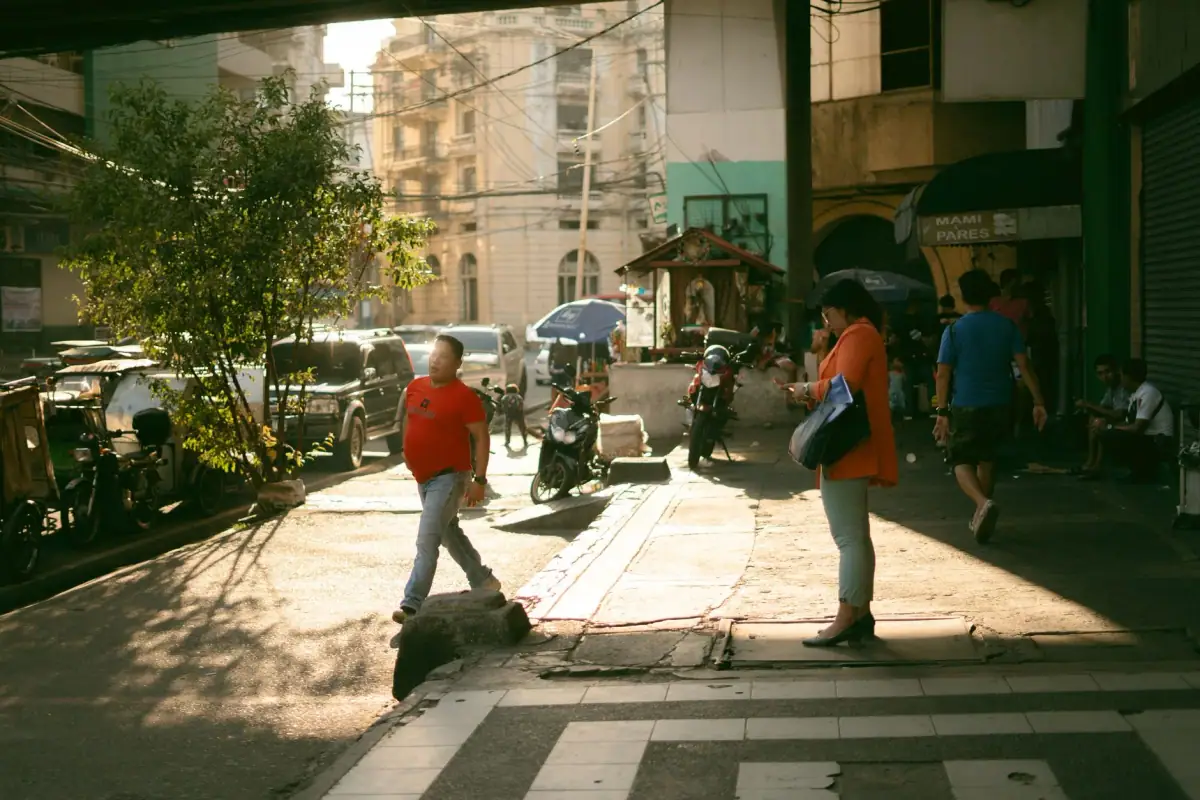
Manila is one of the most misunderstood cities in Southeast Asia. The capital of the Philippines does not have the obvious beauty of Bangkok or the colonial charm of Singapore. It is a chaotic megacity of 12 million people with legendary traffic, sharply contrasting neighborhoods and intense urban energy. But behind the apparent chaos is a fascinating city, with a rich colonial history, the oldest Chinatown in Asia, world-class museums and a thriving food scene.
Intramuros: the city within the city
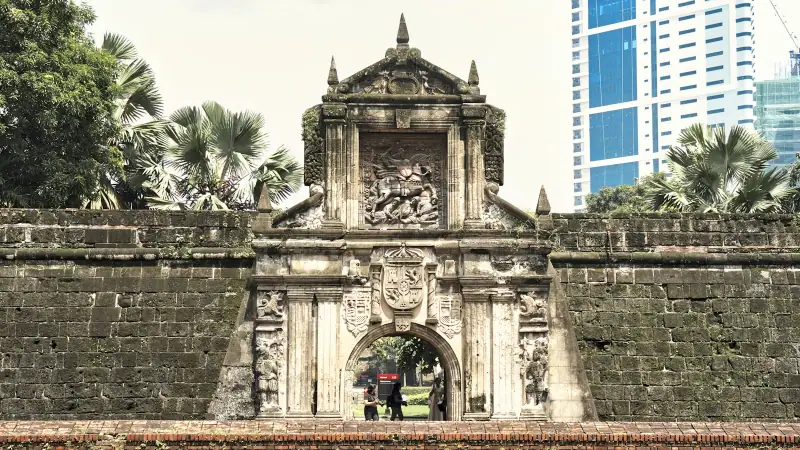
Intramuros (literally “within the walls”) is the fortified city built by the Spanish starting in 1571. Surrounded by high stone walls, it was once the heart of Spanish colonial power. Today it is a historic district unique in Asia, where horse-drawn carriages share the streets with tourists and ruins stand beside restored buildings.
Fort Santiago
Fort Santiago is the highlight of Intramuros. This fortress, built in 1593, has a dark history: it served as a prison for José Rizal, the Philippine national hero, before his execution in 1896. The fort’s museum traces the colonial history of the Philippines with fascinating artifacts and period documents.
Rizal’s Cell (reconstructed) and the marble footprints leading to the place of execution are particularly moving. The fort also has beautiful gardens and the partially preserved ruins of the ramparts.
Hours: vary by source (check with the Intramuros Administration before you go) Admission: 75 PHP (adult)
Manila Cathedral
Manila Cathedral, officially the Minor Basilica of the Immaculate Conception, is one of the most important cathedrals in Asia. Built and rebuilt several times since 1571 (destroyed by earthquakes, fires and World War II), the current version dates from 1958. Its interior is beautifully decorated.
San Agustin Church
San Agustin is the only church in Manila to have survived the destruction of World War II. Built in 1607, it is a UNESCO World Heritage site. The two facade towers, the trompe-l’oeil paintings inside and the adjoining museum make this a rare find.
Baluarte de San Diego
The ramparts of Intramuros are partly accessible on foot and by bike. The view from the bastions over the Pasig River, Manila Bay and Rizal Park is magnificent at sunset.
Exploring Intramuros by horse-drawn carriage
Tartanillas (horse-drawn carriages) are the traditional transport in Intramuros. A 30-minute tour costs 350-500 PHP and lets you cover the historic lanes with a driver who comments on the history of the buildings.
Binondo: the world’s oldest Chinatown
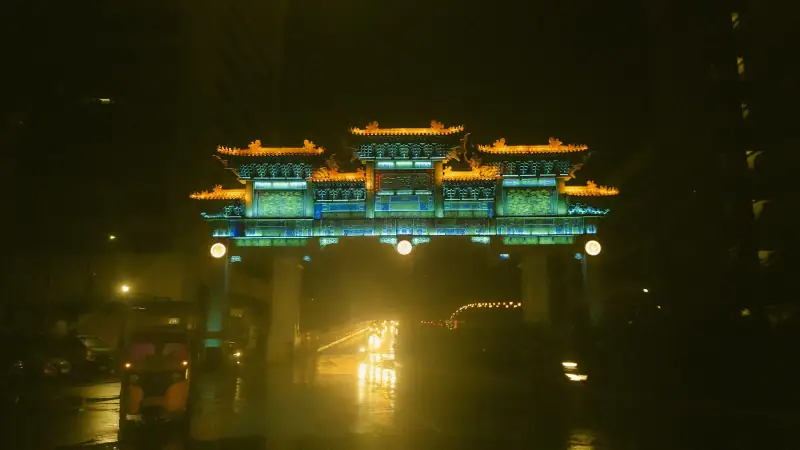
Binondo is the oldest Chinatown in the world, founded in 1594 by the Spanish to group together Chinese migrants who had converted to Christianity. Today, this lively district of old Manila is a fascinating blend of Chinese-Filipino cultures.
Binondo street food
Binondo is a paradise for Filipino-Chinese street food. Try these:
- Siopao (steamed bun filled with meat or shrimp): 25-40 PHP
- Buchi (fried rice ball filled with red bean paste): 15 PHP each
- Hopia (Chinese pastries filled with mung bean): a Binondo specialty
- Kikiam (fried fish sausage dipped in a sweet-and-sour sauce): iconic street food
- Puto bumbong (purple rice cake steamed in bamboo): served with grated coconut
Escolta Street and the Art Deco buildings
Escolta Street was once the Champs-Élysées of Manila. The street has lost some of its splendor but keeps a few fine 1930s Art Deco buildings and a nostalgic atmosphere. Revitalization projects are starting to bring cafés and galleries back.
Quiapo Church and Masjid Al-Dahab
A few blocks from Binondo, Quiapo Church houses the Black Nazarene, a dark-skinned statue of Jesus venerated by millions of devotees. The January 9 procession (Feast of the Black Nazarene) draws more than 3 million people, one of the most extraordinary religious gatherings in the world.
Rizal Park and the national museums
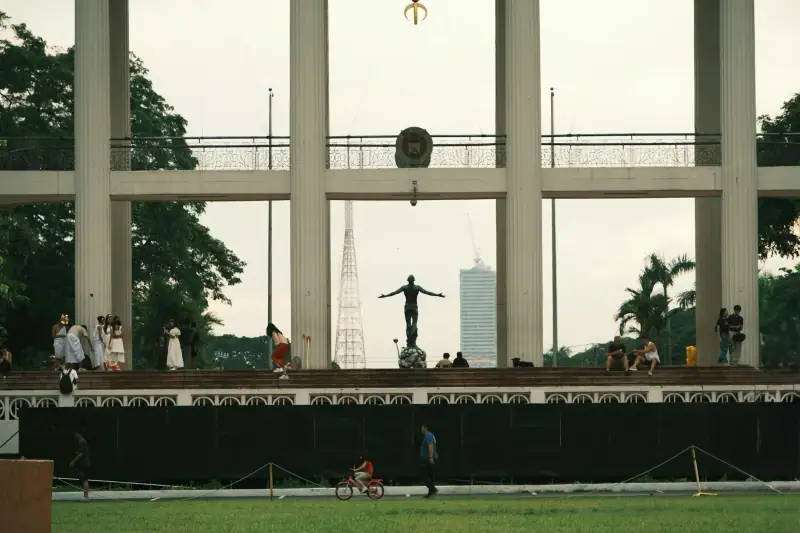
Rizal Park (Luneta Park)
Rizal Park is Manila’s historic park, facing the bay. This is where José Rizal was executed on December 30, 1896, and where the national flag is raised with great ceremony each morning. The park is popular with Manila families for weekend strolls.
The National Museum of the Philippines
The national museum complex has several buildings around Rizal Park:
- National Museum of Natural History: an architectural masterpiece with a spectacular central atrium. Exhibition on the biodiversity and geology of the Philippines.
- National Museum of Fine Arts: Philippine art from the 19th century to today, with Juan Luna’s famous canvas (Spoliarium, 1884).
- National Museum of Anthropology: culture and traditions of the archipelago’s peoples.
Admission: Free for all three museums, an exceptional bargain.
BGC: modern Manila
Bonifacio Global City (BGC) is Manila’s newest business and leisure district. Built on the former US military camp Fort Bonifacio, BGC is a city within the city, with wide avenues, skyscrapers, luxury malls and nightlife.
What is worth a detour in BGC:
- Murals and street art: BGC is famous for its walls painted by local and international artists. Stroll the streets to discover spectacular works.
- Weekend pop-up markets: on Saturday and Sunday, several markets are held around BGC with local crafts, trendy street food and live music.
- Bonifacio High Street: the main pedestrian promenade, with shops, restaurants and bars open late at night.
- The Mind Museum: an interactive science museum, excellent for families (325 PHP for adults).
Hotels in Manila
Makati, BGC, Intramuros: the best addresses for your budget.
Manila Bay: the most famous sunset
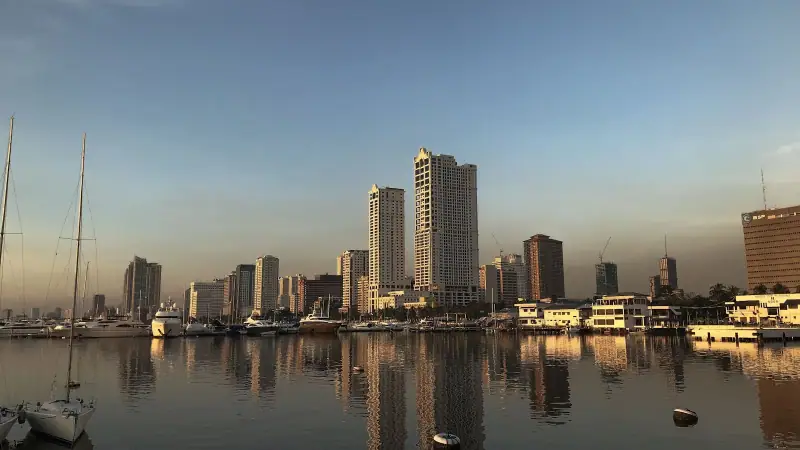
The sunset over Manila Bay (Manila Bay Sunset) is a tradition rooted in Philippine culture. From Roxas Boulevard or Luneta Park, watching the sun sink into the sea between the silhouettes of boats and skyscrapers is a magical moment that Manila residents themselves enjoy every evening.
Practical tips for Manila
Avoid traffic jams. Manila has some of the densest traffic in the world. A 15 km (9 mi) trip can take 1 to 2 hours at rush hour. Plan your trips early in the morning (before 8 am) or late in the evening (after 8 pm).
Use Grab. The Grab app (equivalent to Uber) is essential in Manila. Drivers know the city well and the price is set in advance. Much more practical than taxis without meters.
Drink bottled water. Tap water is not drinkable in Manila. Bottled water (10-25 PHP) is available everywhere.
Dress modestly when visiting Intramuros (especially the churches). Knees and shoulders must be covered to enter places of worship.
For Manila’s food scene, see the guide to restaurants in Manila and the article on street food in the Philippines.
Frequently asked questions
Is Manila worth a visit as a destination?
Manila is often used as a transit point but deserves 1 to 2 days if you like cities, history and food. Intramuros (Spanish colonial city), Binondo (Chinatown) and BGC (trendy modern district) offer very different, authentic experiences.
Is it safe to walk around Manila?
The tourist neighborhoods (Intramuros, BGC, Makati, Ermita) are safe during the day with the usual precautions. Avoid certain working-class neighborhoods at night and non-tourist areas. Manila has a sometimes exaggerated reputation: millions of tourists visit it without incident every year.
How do I get around Manila?
Grab (the Philippine equivalent of Uber) is the most practical way. Jeepneys are impractical for tourists with luggage. The elevated rail (LRT/MRT) serves some corridors but not the main tourist neighborhoods. In a taxi, insist on the meter or use an official taxi with a meter.
How long do I need to visit Manila?
1 day to see Intramuros and Binondo in transit. 2 days to add Rizal Park, the national museums and BGC. 3 days for a full immersion including the markets, Manila Bay and lesser-known neighborhoods. Manila is not a destination to savor in a few hours.
When is the best time to visit Manila?
November to March is the best period: cool, dry weather (24-28 °C / 75-82 °F) and little rain. July to October is typhoon season, to avoid if possible. December is very festive (the Philippines is the country that starts Christmas earliest in the world).
More Philippines guides
Keep reading
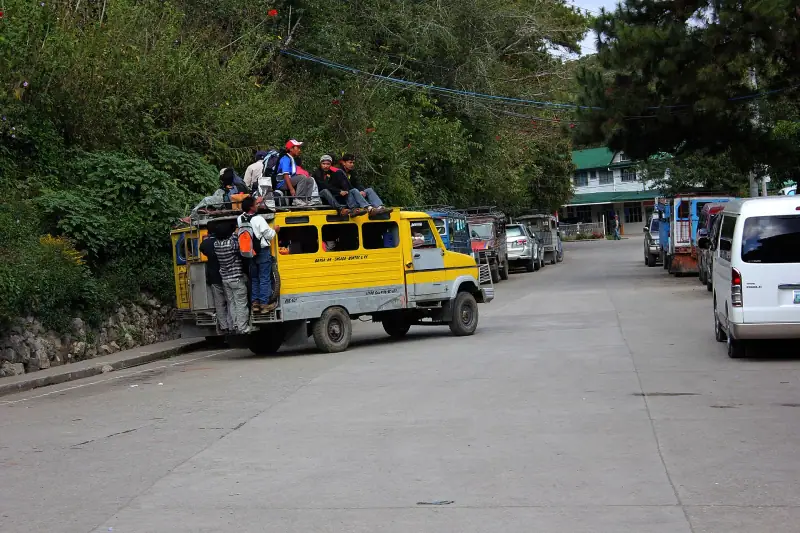
Sagada without a car: how to get there from Manila, Baguio or Banaue
Reach Sagada by bus or jeepney from Manila, Baguio or Banaue, then see it all on foot: routes, travel times, registration, guides and pitfalls.
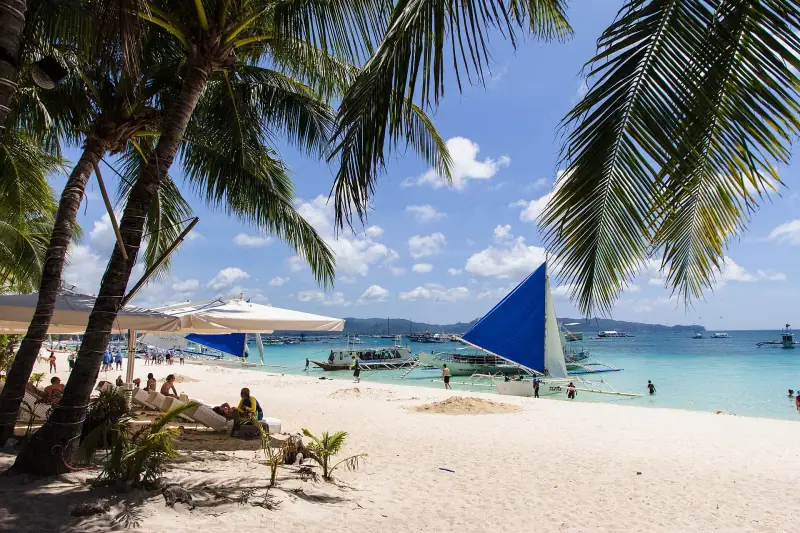
Visiting Boracay: Complete Guide to the Philippines' Best Beach
Visiting Boracay: White Beach, Puka Beach, kitesurfing, diving, where to stay and budget. A complete 2026 guide to making the most of the island.
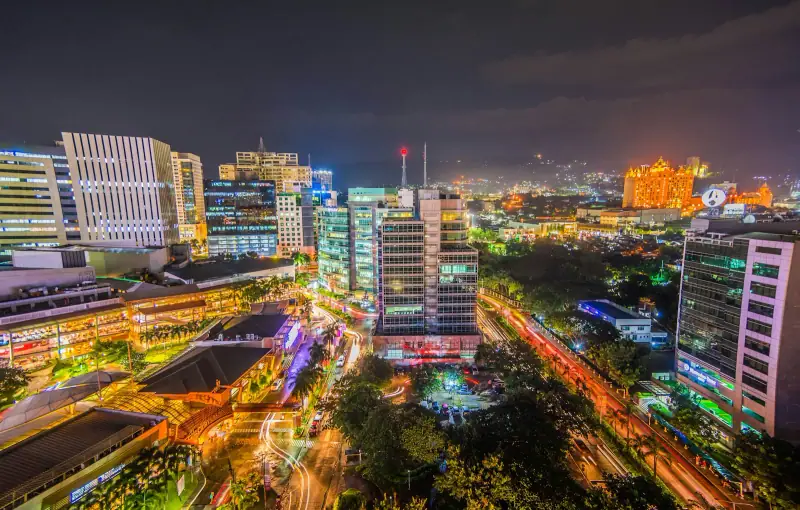
Visiting Cebu: Complete Guide to the Pearl of the Visayas
Visiting Cebu: Magellan's Cross, Oslob, Kawasan Falls, Mactan, Moalboal, beaches and street food. Budget, transport and a day-by-day itinerary.
Ready-made
Philippines itineraries
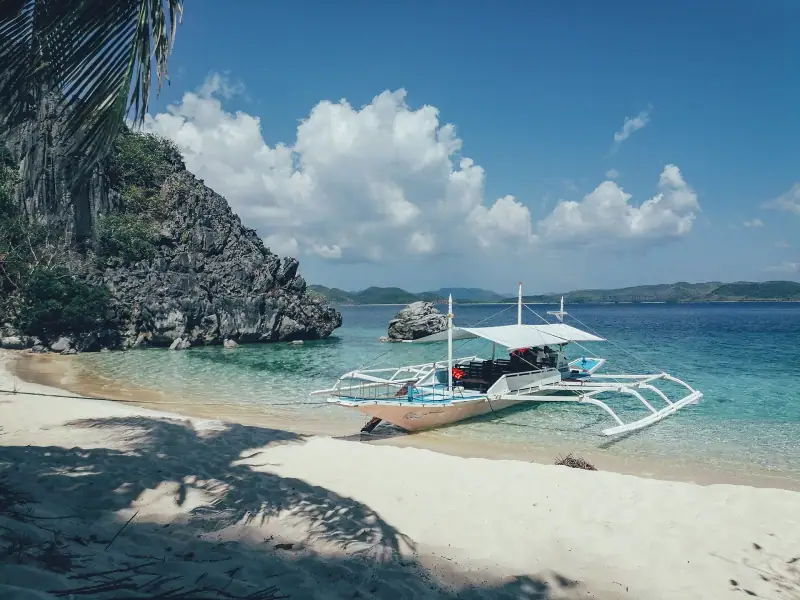
10 days
The Philippines in 10 days with kids: stops, pace and travel times
Cebu (Mactan)Bohol (Panglao)Boracay

12 days
The Philippines in 12 days without a scooter or car: a realistic itinerary
ManilaEl NidoCoronManila
10 days
Cebu, Bohol and Siargao: 10 Days in the Visayas
Cebu CityPanglaoGeneral Luna