What to see
Visiting Madang: a complete guide to the pearl of the north coast
We may earn a commission when you book through links on this page, at no extra cost to you. We don't visit or try the places we cover: we summarize published sources. How we work
In short
- Madang is one of the best dive destinations in PNG and Asia-Pacific, with 1942 wartime wrecks at 10 to 35 m (33 to 115 ft) and healthy reefs; visibility is often 20 to 30 m (66 to 98 ft) in the dry season.
- Air Niugini flies Port Moresby to Madang (MAG) in about 1 h 10 to 1 h 30; the Ramu Highway from Lae is about 300 to 335 km (186 to 208 mi), 5 to 7 hours.
- Three to five days give a good look at the town and surroundings; divers do best with a full week.
- Madang is generally considered one of the safest, friendliest towns in PNG for foreign travelers.
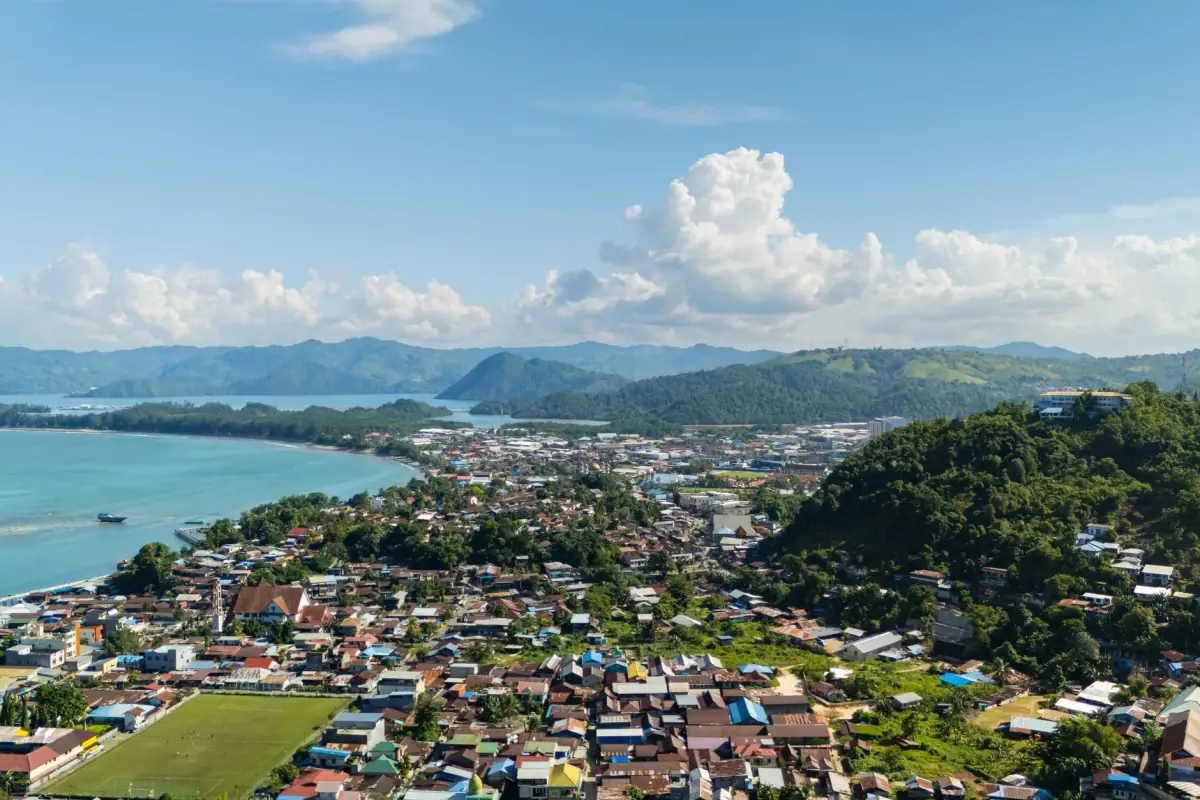
Madang has long been nicknamed “the prettiest town in the Pacific”. The phrase can seem excessive until you find yourself at the edge of its inner lagoon, facing a horizon of palm trees, forest-covered islets and turquoise water streaked with corals. Capital of Madang province, on the north coast of Papua New Guinea, this modest port town has its own way of slowing time. It is not the frenzy of Port Moresby, nor the cultural intensity of the Highlands: it is something softer, slower, more maritime. And beneath the surface of its lagoon lie treasures that divers from around the world come looking for: World War II wrecks that the sea has long since adopted as its own.
Madang and its bay: an exceptional geography
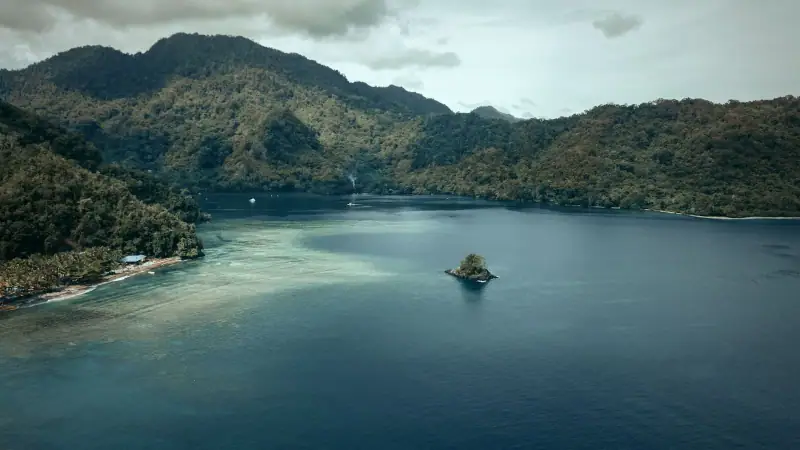
Madang occupies an indented peninsula framed by two natural bays that give it an incomparable setting. The inner harbor, sheltered from Pacific swells, is dotted with small islands and wooded islets that can be reached by small boat or by swimming from the town’s shores. This layout makes it one of the safest and most picturesque anchorages on PNG’s north coast.
Location and access
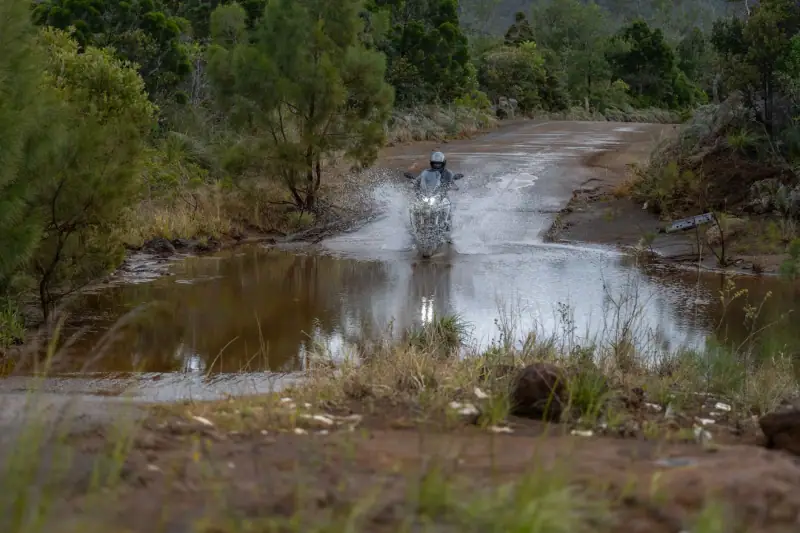
Madang lies about 490 km (304 mi) north-northwest of Port Moresby as the crow flies. The most practical access is by air from Port Moresby or Lae. Madang airport is a few kilometers from the town center. A road link exists via the Ramu Highway from Lae, about 300 to 335 km (186 to 208 mi) of road, part of which crosses the fertile Ramu River valley before reaching the coast. This 5-to-7-hour trip offers remarkable panoramas but requires a suitable vehicle and close attention to road conditions.
The town itself is compact and easy to get around on foot or by PMV (public motor vehicle, shared minibus). The waterfront, the central market, the main administrations and most lodgings are concentrated on the main peninsula.
A port open to the Pacific
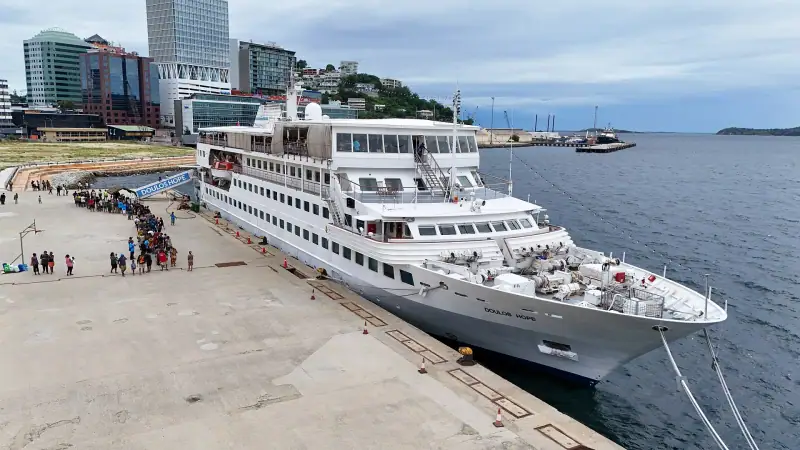
Madang harbor is one of the busiest on PNG’s north coast. Cargo-ferries sometimes link Madang to Wewak, Lae and other coastal ports (check with shipping companies that the service still runs). For travelers with time, a sea crossing is a lively way to discover maritime PNG, although schedules are irregular and comfort varies by vessel.
Flights to Madang
Compare plane tickets from Port Moresby or Lae to Madang and book at the best fare.
Diving in Madang: legendary wrecks and reefs
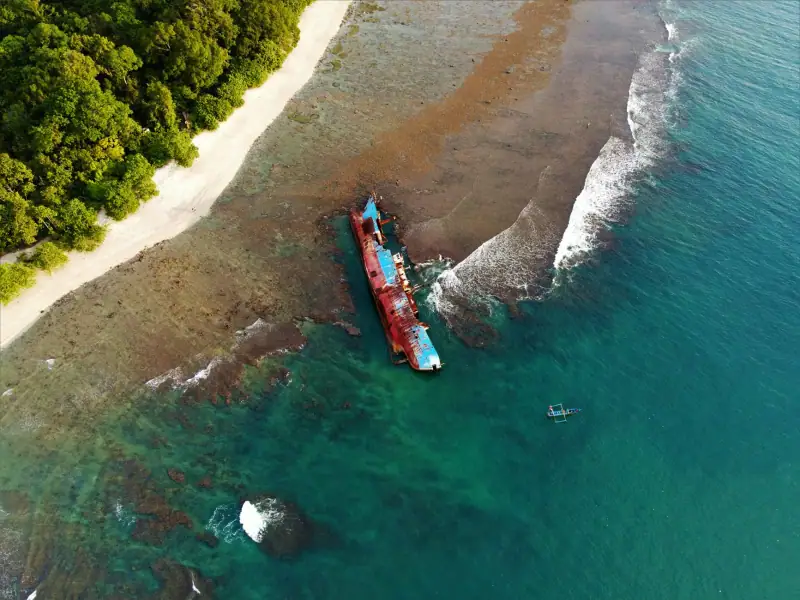
Madang’s worldwide reputation rests above all on its seabed. Madang Bay is home to one of the richest concentrations of dive sites in Asia-Pacific, mixing historic World War II wrecks and coral reefs of exceptional vitality.
The 1942 wrecks
During World War II (the Japanese occupied Madang from March 1942 before being driven out in April 1944), several ships and aircraft were sunk in and around Madang Bay. Now turned into artificial reefs, these sites shelter extraordinary marine life: schools of soldierfish, giant groupers, barracuda, leopard moray eels and stingrays share space with rusted structures covered in soft corals and multicolored sponges.
The most accessible wrecks lie at depths between 10 and 35 meters (33 to 115 ft), which makes them practicable for experienced divers as well as intermediate divers accompanied by a guide. Some shallow sites (under 12 m / 39 ft) can even be explored by experienced snorkelers.
The bay’s reefs
Beyond the wrecks, Madang Bay is lined with fringing reefs and soft coral gardens of remarkable richness. Underwater visibility regularly reaches 20 to 30 meters (66 to 98 ft) in the dry season. Species diversity is astonishing: rare nudibranchs, mimic octopuses, blue-ringed octopuses (to be watched from a distance), mandarin fish and, depending on the season, manta rays that come to feed in the bay’s current channels.
Dive centers operating from Madang generally offer day trips (two dives in the morning), night sessions on the wrecks and certification courses for beginners. Most provide complete equipment, which is useful if you travel light.
For a full overview of PNG dive sites, see the article on diving in Papua New Guinea.
Diving and snorkeling excursions in Madang
Explore the wrecks and reefs of Madang Bay with certified instructors and full equipment.
What to do in Madang out of the water
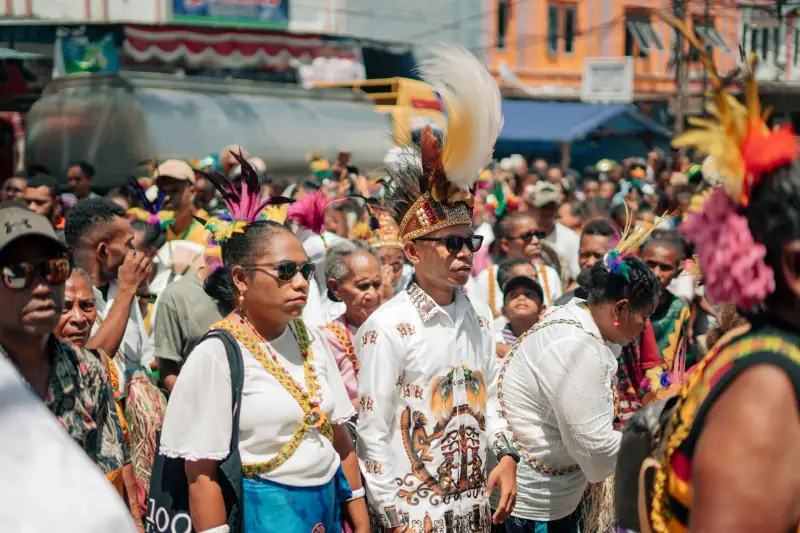
Madang’s richness is not limited to its seabed. On the surface, the town and its region offer a range of cultural and natural experiences worth several days of exploring.
Madang Market
Madang’s central market is one of the liveliest on PNG’s north coast. Set near the waterfront, it gathers every morning producers from surrounding villages, who come to sell their harvest: vegetables and tubers from village gardens, tropical fruit (mangoes, papayas, bananas of every variety, jackfruit), freshly caught fish on the wet stalls, betel nuts (buai) omnipresent in Papua New Guinean society, and local crafts: bags woven from pandanus fiber, wood carvings and shell ornaments.
The market is busiest on weekday mornings. It is a lively place to observe the linguistic and cultural mix of the region: in Madang you find people from the bay islands, villagers from the coastal plain, Highlanders who have come to trade and fishermen from coastal communities.
The bay islands
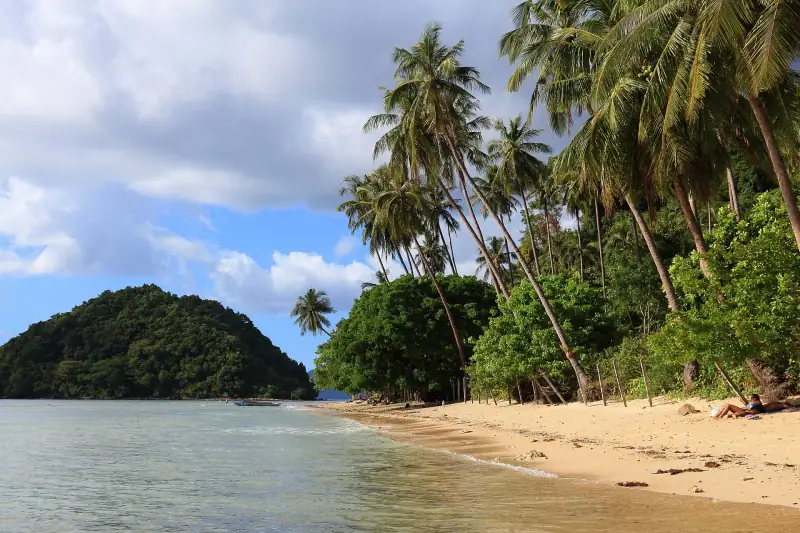
Madang Bay is dotted with small wooded islets reachable by small boat or light motorized craft from the shore. These islands, some inhabited by small fishing communities, offer fine-sand beaches, snorkeling reefs reachable on foot from the shore and absolute tranquility.
Some Madang lodgings offer organized excursions to these islands, including a picnic, kayaking and an introduction to snorkeling. A day on one of these islands is an ideal way to decompress after dive sessions.
Coastal villages and local culture
The Madang region is populated by a multitude of ethnic groups speaking distinct languages, notably the Ngaing, Bongu, Bilbil and Sek communities. These coastal communities have developed over centuries a maritime and trading culture very different from the peoples of the Highlands.
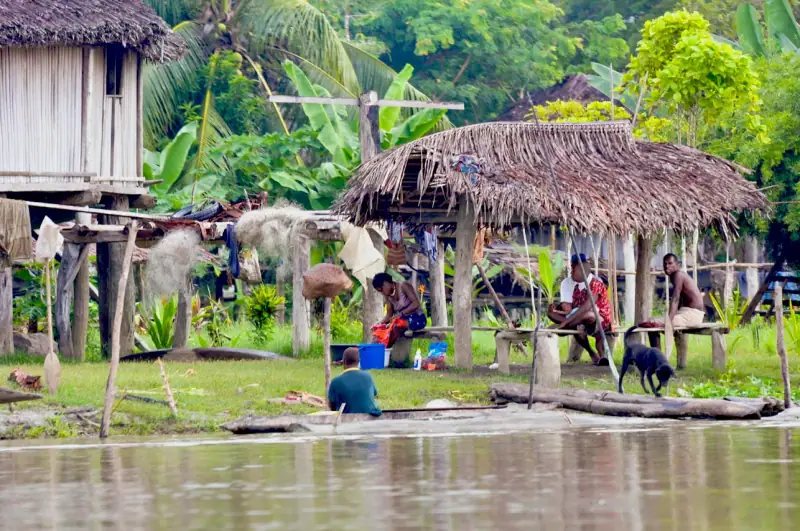
Village visits can be arranged from Madang with a local guide, particularly in the region’s traditional potter communities (some villages of the bay are known for producing decorated ceramics). These visits allow you to watch craft demonstrations, talk with residents in Pidgin (PNG’s lingua franca) and understand the social organization of these coastal communities.
The historic center and the waterfront
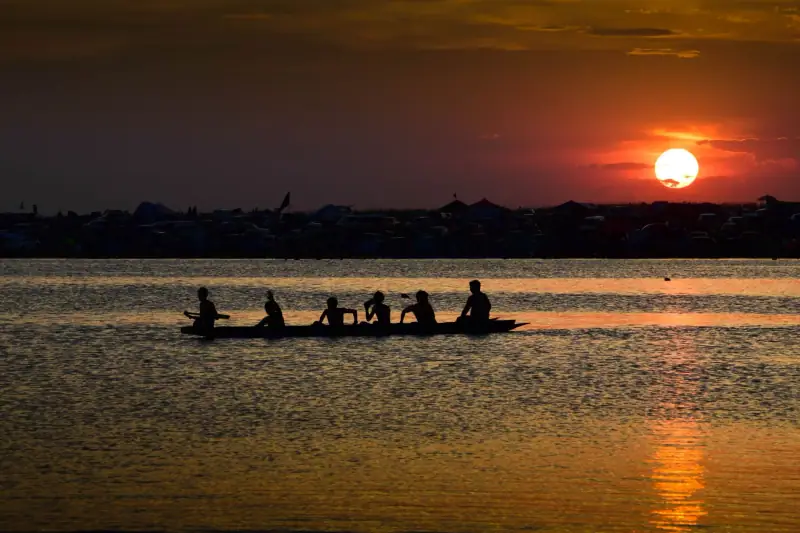
Madang played an important role in the colonial history of German New Guinea (present-day coastal PNG was a German colony from 1884 to 1914), then in World War II history. A few colonial-era buildings remain in town, witnesses of a hybrid German-tropical architecture. The waterfront, lined with big flame trees and coconut palms, invites a stroll at sunset.
Madang’s small local museum offers (check its opening and hours there) collections on colonial history, the province’s Melanesian culture and World War II events in the region. History lovers will find valuable context before diving on the wrecks.
Car rental in Madang
Freely explore the peninsula and coastal villages of Madang province at your own pace.
Madang, gateway to the Sepik

Madang province is also one of the natural stops for travelers who want to explore the Sepik River region, one of Oceania’s longest rivers and one of PNG’s most fascinating cultural destinations.
The Sepik and its cultures
The Sepik River rises in PNG’s central mountains and crosses swampy plains and primary forests for more than 1,100 km (684 mi) before emptying into the Bismarck Sea about 100 km (62 mi) east of Wewak. Its banks are home to dozens of ethnic groups whose artistic output (wood carvings, ceremonial masks, carved canoes) is among the most renowned in the world in the field of Oceanic art.
From Madang, excursions to the lower Sepik are possible by approaching the Wewak area by air or boat, then going up the river by motorized canoe to the most distant villages. These expeditions demand solid logistics (guide, canoe, homestay or forest camp) but are among the most intense trips possible in Oceania.
For less adventurous travelers, Sepik artisans regularly come down to sell their work at Madang market, a chance to acquire carvings and artifacts directly.
Itinerary: 5 days in Madang and its bay
Day 1: arrival and discovering the town
Land in Madang. Settle into your lodging. Stroll along the waterfront in late morning to take the town’s pulse. Visit the central market in early afternoon. Sunset from the lagoon’s edge.
Day 2: wreck diving
A full day of diving (two dives) on the bay’s wrecks. Discover the historic 1942 sites and their associated marine life. Free afternoon to rest or explore the craft shops downtown.
Day 3: reefs and snorkeling on the islands
Boat excursion to one of the bay’s islands. Snorkeling on the fringing reef. Picnic on the beach. Afternoon: visit a coastal village with a local guide (potters or fishermen depending on availability).
Day 4: rural exploration, the Ramu Valley
A day trip inland, into the Ramu plain. Landscapes of sugarcane and oil palm plantations, roadside villages, a glimpse of the province’s agricultural diversity. Return at the end of the day.
Day 5: night dive and departure
For divers: a night outing on a wreck or reef (night marine life is radically different: octopuses, lobsters, whitetip sharks, prowling nurse sharks). Return flight the next morning to Port Moresby or Lae.
For wider context on planning a PNG circuit, see the complete guide to Papua New Guinea.
Practical information
How to get to Madang
By air: the fastest and safest option. Air Niugini operates regular flights from Port Moresby (direct flight of about 1 h 10 to 1 h 30). Connections from Lae and Mount Hagen are also available depending on schedules. PNG Air also operates this route; check schedules with the airlines. Book well ahead, especially in high season (July to September).
By road from Lae: the Ramu Highway links Lae to Madang, first crossing the Highlands foothills then the fertile Ramu valley. The distance is about 300 to 335 km (186 to 208 mi). PMVs make this trip daily, but road conditions can vary considerably after rain. A 4x4 vehicle is recommended if you drive yourself.
By boat from Lae or Wewak: cargo-ferries link these ports to Madang on a weekly or twice-weekly basis. Schedules are irregular, so ask the local companies directly.
Lodging
Madang offers a range of lodging from seaside guesthouses to lodges with built-in services (restaurant, dive center, excursions). Most places are concentrated on the main peninsula, near the waterfront.
Budget options offer simple, decent rooms from 100 to 200 PGK a night (indicative rates, check with the properties). Mid-range properties with air conditioning and dining run between 350 and 700 PGK. Higher-comfort lodges with built-in dive centers can exceed 900 PGK a night, often justified by the quality of equipment and direct bay access.
For a detailed comparison of lodging options, see the article Where to stay in Madang.
Hotels in Madang
Compare available lodging in Madang and book at the best price with free cancellation.
Indicative budget
| Item | Average budget per day |
|---|---|
| Lodging (double room) | 150-700 PGK |
| Meals (local restaurants) | 40-130 PGK |
| Local transport (PMV/taxi) | 20-60 PGK |
| Dive outing (two dives) | 250-450 PGK (indicative) |
| Island or village excursion | 100-300 PGK |
| Local guide (day) | 150-300 PGK |
Expect 600 to 1,500 PGK a day depending on your travel style, excluding domestic flights. For more detail on finances in PNG, see the article on the budget for visiting Papua New Guinea.
Health and precautions
Health: ask your doctor or a travel clinic what applies to your trip (including malaria and vaccines) well before departure, and see the official travel health pages (CDC in the US, TravelHealthPro in the UK).
Diving: check that your travel insurance covers diving accidents and the hyperbaric chamber. The only hyperbaric chamber in Papua New Guinea is in Port Moresby, and its status has been the subject of a dispute: check its availability, because an evacuation to Australia may be necessary, so plan DAN-type insurance (Divers Alert Network).
Safety
Madang is broadly safe for travelers, with a more relaxed atmosphere than Port Moresby. A few precautions remain necessary:
- Avoid walking alone after dark
- Do not wear visible valuables (jewelry, cameras)
- Ask your lodging about areas to avoid
- On rural excursions, always tell your hotel your route and planned return time
Currency and communications
The local currency is the Papua New Guinean kina (PGK). ATMs exist in Madang but can run out of cash or be out of service (check with your lodging or your bank), so bring cash for guides, PMVs and markets. Mid-range and upper-range lodgings generally accept bank cards. Mobile network coverage is decent in town, more limited in the province’s rural areas. Check your carrier’s international plan or consider a travel eSIM.
Madang is one of those destinations that is hard to describe. You feel it: the smell of the ocean mixed with that of the market, the low evening light on the lagoon, the rustle of canoes returning to port at dusk. For the diver, it is a sanctuary few other places in the world can match. For the curious traveler, it is an open door to a maritime Melanesia that is both welcoming and preserved. And for all those who want to understand PNG beyond Port Moresby, Madang is often the revelation that makes you want to stay longer and come back farther.
To discover the Highlands and contrast them with the north coast, read the article on Highlands vs north coast of PNG.
Frequently asked questions
How do you get to Madang from Port Moresby?
Air Niugini operates regular flights between Port Moresby (POM) and Madang airport (MAG). The flight takes about 1 h 10 to 1 h 30. PNG Air also operates this route; frequencies and schedules change, so check with the airlines. You can also reach Madang from Lae via the Ramu Highway (about 300 to 335 km / 186 to 208 mi, or 5 to 7 hours by road depending on road conditions).
Is Madang a good diving destination?
Madang is one of the best dive destinations in Papua New Guinea and in all of Asia-Pacific. The area concentrates several World War II wrecks (Japanese ships and aircraft sunk in 1942) as well as coral reefs in excellent condition, soft coral gardens and exceptional marine life (manta rays, turtles, nurse sharks, rare nudibranchs).
What is the best time to visit Madang?
The dry season (May to October) is ideal for diving and land excursions: calm sea, good underwater visibility (often 20 to 30 m / 66 to 98 ft), temperatures of 26 to 31 °C (79 to 88 °F). The rainy season (November to April) brings frequent afternoon showers but remains workable; lodging prices are often lower and the vegetation is lush.
Is Madang safe for tourists?
Madang is generally considered one of the safest and most welcoming towns in PNG for foreign travelers. Its small-port atmosphere, soothing natural setting and the recognized kindness of its people make it a popular stop. The usual precautions apply: avoid isolated areas at night, do not wear visible valuables, and ask your lodging before any excursion.
Do you need a guide to visit the villages around Madang?
For excursions to villages in the area (Bilbil, Sek, Megiar and other coastal communities), a local guide is strongly recommended. A guide eases the welcome from communities, communication in Pidgin or local languages, and ensures your visit respects customary protocols. Your lodging can put you in touch with experienced guides.
How many days should you plan for Madang?
Three to five days allow a satisfying look at Madang and its immediate surroundings. Allow two extra days if you want to explore the islands of the bay or take an excursion toward the Sepik River. For divers, a full week remains the ideal length to cover all the wreck and reef sites.
More Papua New Guinea guides
Keep reading
Visiting Port Moresby: a complete guide to Papua New Guinea's capital
Complete guide to Port Moresby: Hanuabada village, national museum, Nature Park, Kokoda, neighborhoods and safety tips for PNG's capital.
Port Moresby: the must-see sights of PNG's capital
What to see and do in Port Moresby? National museum, cultural village, national park and local markets: the best visits in Papua New Guinea's capital.
Visiting the north coast of Papua New Guinea: Madang, Wewak and the Sepik
Complete guide to PNG's north coast: diving in Madang, Sepik culture from Wewak, World War II wrecks and river villages. Practical tips.
Ready-made
Papua New Guinea itineraries
7 days
Papua New Guinea in 7 days: the ideal first-trip itinerary
Port MoresbyGorokaMount HagenPort Moresby

5 days
10 days
Papua New Guinea in 10 days: Highlands, Madang and the Sepik
Port MoresbyGorokaMadangWewak and the Sepik