What to see
Visiting Port Moresby: a complete guide to Papua New Guinea's capital
We may earn a commission when you book through links on this page, at no extra cost to you. We don't visit or try the places we cover: we summarize published sources. How we work
In short
- Plan 2 to 3 days in Port Moresby, one more for Bomana or Owers' Corner; the dry season (May to November) is best.
- Main sights: Hanuabada stilt village (with a local guide), the National Museum and Art Gallery, the Nature Park, Bomana War Cemetery and the Kokoda Track start.
- Get around by hotel-recommended taxi or car with driver; do not walk after dark, and avoid swimming at Ela Beach, where official travel advice reports contaminated water.
- Jacksons International Airport (POM) is about 8 to 10 km (5 to 6 mi) from the CBD, 20 to 40 minutes by road; use an accredited taxi or hotel transfer.
Port Moresby is a city that disconcerts. Capital of a country that has fascinated adventurers for decades, it is neither a buzzing Asian megacity nor a peaceful tropical town. It is something rawer and more complex: a port with the air of a city under permanent construction, where CBD skyscrapers sit beside stilt villages, and where the humid Pacific heat mixes with traffic jams on Ela Beach Road. For most travelers going to Papua New Guinea, Port Moresby is the main gateway. Well prepared, this stopover can become a stage in its own right.
Port Moresby in brief: the essentials before you go
Port Moresby is the capital and largest city of Papua New Guinea, on the island’s south coast, in a drier region than the rest of the country. You arrive through Jacksons International Airport (POM), generally stay two to three days, and leave for the Highlands, the north coast or New Britain.
| Question | Quick answer |
|---|---|
| Where is Port Moresby? | South coast of Papua New Guinea, around Fairfax Harbour |
| How much time to plan? | 2 to 3 days, one more for Bomana or Owers’ Corner |
| When to go? | Dry season, May to November |
| Currency | Papua New Guinean kina (PGK) |
| Swimming at Ela Beach? | Not advised: official travel advice reports regularly contaminated water |
| Getting around | Hotel-recommended taxi or car with driver, not on foot at night |
What to see in Port Moresby in one day or during a layover
If you have only a few hours between two flights, stay in the CBD and Waigani. In the morning, visit the National Museum and Art Gallery, which gives a good view of the country’s cultures in two or three hours. In the afternoon, choose between the Port Moresby Nature Park, for birds of paradise and tree kangaroos, and an end-of-day walk on the Ela Beach waterfront, without swimming.
With a full day, add Hanuabada village with a local guide, or leave early for Bomana cemetery. For nature around the capital, the guide to Varirata National Park details a day excursion. If you need to sleep near the airport, read the guide to a Port Moresby layover, and for a shorter overview of the sights, Port Moresby’s must-sees.
Two points to keep in mind: official government travel advice reports a risk of water cuts in the capital and a rise in malaria and dengue cases.
Port Moresby owes its name to British captain John Moresby, who explored the bay in 1873 and named it in honor of his admiral father. The area has been inhabited for centuries by the Motu people, whose descendants still live in Hanuabada village, built over the waters of the bay. The city became the seat of the Territory of Papua New Guinea under Australian administration, then the country’s capital at independence in 1975.
A strategic role in World War II
Port Moresby played a crucial role in the Pacific war. Between 1942 and 1944, the city was one of Japan’s main objectives in the Southwest Pacific. The Battle of the Coral Sea (May 1942) and the Kokoda campaign (July to November 1942) prevented its fall. The Australian and Papuan soldiers who held the line on the Kokoda Track are today heroic figures in both countries. Bomana War Cemetery, on the city’s outskirts, bears witness to these battles.
A fast-growing metropolis
With a population of about 400,000 in the urban area, Port Moresby is PNG’s largest city and concentrates much of the country’s economic, administrative and diplomatic activity. The city spreads over several hills around Fairfax Harbour, with very distinct neighborhoods: the CBD (Central Business District) on the waterfront, Boroko for shops and services, Waigani for government institutions, and many informal residential neighborhoods on the outskirts.
Port Moresby’s must-sees
Hanuabada village
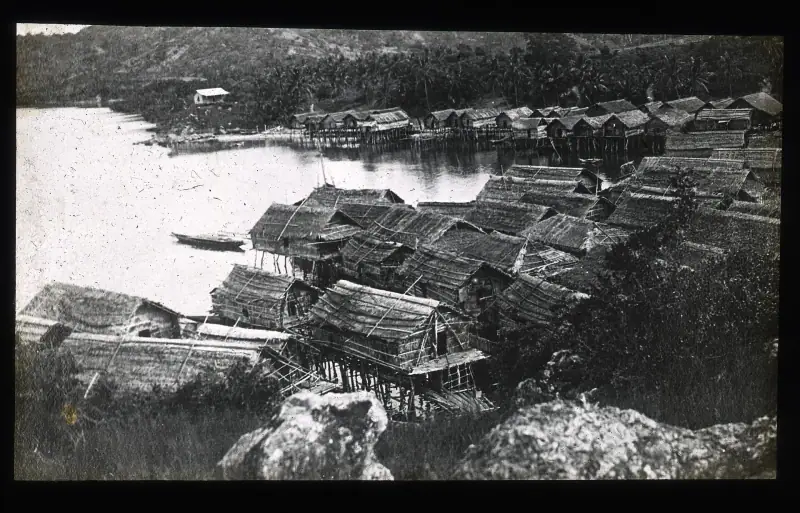
Hanuabada is probably Port Moresby’s most symbolic place. This village of the Motu people, built on stilts over the bay waters, is one of the few indigenous villages directly accessible from the center of a Pacific capital. Wooden houses with corrugated-iron roofs line walkways spanning the bay’s shallow waters.
Hanuabada means “big village” in the Motu language. The site has been continuously inhabited for centuries, even if building materials have evolved. The village is home to several thousand residents who maintain their traditions, notably pottery making and fishing from lagatoi sailing canoes.
Practical tips: visit by day, preferably in the morning. A local guide is strongly recommended to ease communication and respect customs. Some residents offer guided visits that include an explanation of Motu culture and craft making. Ask your hotel to put you in touch with a reputable guide.
Guided visits in Port Moresby
Discover Hanuabada, the national museum and historic sites with an experienced English-speaking guide.
The National Museum and Art Gallery
The National Museum and Art Gallery of Papua New Guinea, in the Waigani district, is the country’s most complete museum. It holds an exceptional collection illustrating PNG’s incredible cultural diversity: more than 800 language groups, artistic traditions very different from one region to another, a singular natural history.
What you will find:
- Sepik ceremonial masks, carved from driftwood and decorated with shells, considered among the finest in Melanesia
- Canoes decorated with colorful geometric patterns, some several meters long
- Traditional musical instruments: slit drums, bone whistles, bamboo panpipes
- A natural history section with specimens of PNG’s unique fauna, including stuffed birds of paradise
- A contemporary Papua New Guinean art gallery that testifies to the country’s creative vitality
The museum is particularly useful for travelers arriving in Port Moresby before exploring other regions: it gives an overview of the cultures of the Highlands, the Sepik, New Britain and the coasts, and helps you better understand what you will meet on the ground.
The Port Moresby Nature Park
The Port Moresby Nature Park (formerly known as Port Moresby Zoo) is an animal sanctuary devoted exclusively to Papua New Guinea’s native wildlife. It is one of the few places in the world where you can see in captivity species that are extremely hard to spot in the wild.
Species to watch:
- Birds of paradise: several species are present in spacious aviaries, including the magnificent bird of paradise and the ribbon-tailed bird of paradise
- Bennett’s cassowaries: these giant flightless birds, with their blue-orange bony casque, are among the most impressive species in the Pacific
- Tree kangaroos: dendrolagus, species unique to PNG and northern Australia, are among the park’s most popular
- Reptiles: monitor lizards, pythons and other giant lizards of PNG’s fauna
The park is well maintained and offers an immersive experience in recreated natural environments. It is an excellent stop, especially for families or for travelers who will not get to visit primary-forest regions.
Ela Beach and the waterfront
Ela Beach is Port Moresby’s reference urban beach, on the edge of the CBD, reachable on foot from the main downtown hotels. The beach stretches several hundred meters along a sheltered bay, with palm trees and lawns bordering it on the land side.
This is where Port Moresby residents gather at the end of the day and on weekends. The waterfront promenade is lively, with fruit and coconut sellers, and a relaxed atmosphere that contrasts with the bustle of the commercial districts.
Ela Beach in practice:
- Stroll early in the morning or late in the afternoon to avoid the midday heat
- On weekends, the mood is more festive, with families and groups of young people
- Several places along the waterfront offer refreshments
- Keep an eye on your belongings, as in any popular public area
The Parliament of Papua New Guinea
The PNG Parliament building, in Waigani, is one of the most successful examples of contemporary architecture in the Pacific. Inaugurated in 1984, it was designed to integrate the traditional artistic motifs of the country’s different regions into a resolutely modern structure.
The exterior facade is decorated with carvings and motifs inspired by the arts of the Sepik, the Highlands and the islands. The interior holds large murals by Papua New Guinean artists telling the country’s history and traditions. Tours of the building are possible on some working days, provided Parliament is not in session. Ask your lodging or a local agency for current arrangements.
Bomana War Cemetery
About twenty kilometers (12 mi) north of Port Moresby’s CBD, Bomana War Cemetery is the largest Commonwealth military cemetery in the Pacific. It holds more than 3,800 graves, the great majority of Australian soldiers who fell in the New Guinea campaign between 1942 and 1945.
The site’s upkeep, handled by the Commonwealth War Graves Commission, is impeccable. Rows of white headstones on a carefully mown lawn create a particularly moving atmosphere of remembrance under the Pacific sun. For Australian or New Zealand travelers, Bomana is often the most poignant moment of the stay in Port Moresby.
Access: from the CBD, taxis or rental vehicles reach the cemetery in 30 to 45 minutes depending on traffic. It is best to arrange a vehicle for the round trip, because public transport is impractical on this route.
Good to know: the cemetery is open every day. Entry is free. Dress appropriately for the solemn nature of the place. Explanatory booklets on the history of the New Guinea campaign are available there or can be downloaded from the Commonwealth War Graves Commission website.
To learn more about the Kokoda Trek, see the dedicated article Kokoda Trek: preparing for PNG’s legendary trail.
Setting off for the Kokoda Track
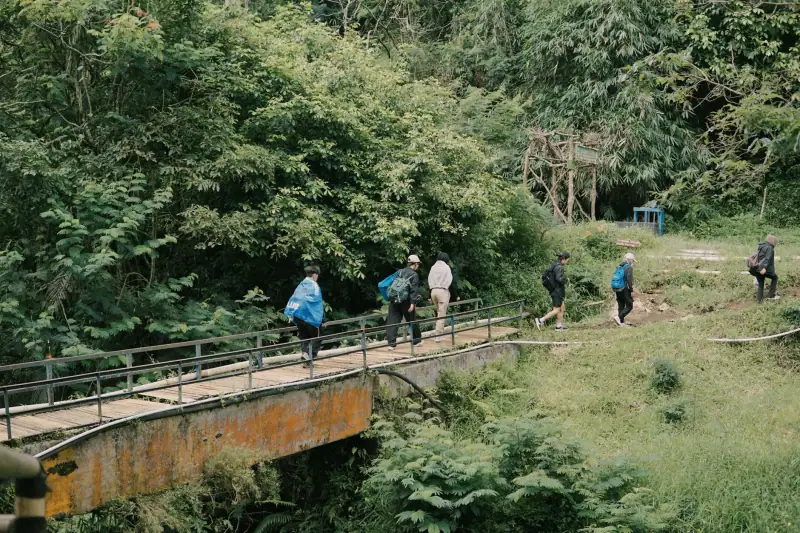
For many travelers, Port Moresby is above all the departure city for the Kokoda Track, one of the Pacific’s best-known and most demanding walking routes. This 96 km (60 mi) trek crosses the Owen Stanley Range, linking Owers’ Corner village (south side, about 50 km / 31 mi east of Port Moresby) to Kokoda in Oro Province, north of the range.
The track is famous for its historic importance (this is where Australian soldiers and Papuan carriers stopped the Japanese advance in 1942 in extreme conditions) but also for its physically exhausting character. Dense vegetation, crushing humidity, steep climbs and descents and river crossings make it one of the hardest hikes in Oceania.
What to prepare in Port Moresby:
- Obtain permits from the Kokoda Track Authority (KTA), available from the KTA or through a licensed operator, preferably before departure (check current terms and fees with the KTA)
- Hire a guide and porters (required); your hotel or a local agency can put you in touch with reliable teams
- Check your gear: waterproof hiking shoes, rain gear, water purification, a basic first-aid kit
- Allow 8 to 12 days for the full trek
Car rental in Port Moresby
Explore the capital's surroundings at your own pace: Bomana cemetery, Owers' Corner, Varirata National Park.
Port Moresby neighborhoods to know
Boroko: the commercial district
Boroko is Port Moresby’s main shopping district. It has supermarkets, banks, travel agencies and a concentration of restaurants with varied cuisines. This neighborhood has most of the practical services you may need: pharmacies, trekking gear shops, local phone operators.
Also note: Koki Market, in the neighborhood of the same name near Ela Beach (and not in Boroko), is one of the city’s liveliest fish markets. Fishermen sell their morning catch very early, for a photogenic and authentic atmosphere.
Waigani: the institutional center
Waigani is Port Moresby’s government district, home to Parliament, ministries, embassies and several cultural institutions including the national museum. The atmosphere is calmer and more secure than in the CBD or Boroko. It is also where several modern shopping centers and business hotels are located.
The CBD and Ela Beach Road
The downtown proper, with its office towers and international hotels, is the neighborhood most frequented by travelers. The main street, Ela Beach Road, runs along the waterfront and links hotels to restaurants, craft shops and transport. This is the neighborhood where you will probably spend the most time during your stay.
Suggested itinerary: 3 days in Port Moresby
Day 1: arrival and cultural immersion Land at Jacksons International Airport. Settle into the hotel. Midday, visit the National Museum and Art Gallery (2 to 3 hours) for an introduction to PNG’s cultural diversity. Late afternoon, walk on Ela Beach. First taste of local cuisine in the evening at a CBD restaurant.
Day 2: village and nature Morning: guided visit of Hanuabada village, leaving early to see the village at its natural rhythm. Lunch in the Boroko district. Afternoon: Port Moresby Nature Park to watch birds of paradise and tree kangaroos. Evening, craft market or back to the waterfront.
Day 3: history and surroundings Early departure for Bomana War Cemetery (best appreciated in the morning, in the relative cool). If you plan the Kokoda Trek, visit the Owers’ Corner starting point at the same time. Return late in the afternoon. Visit Parliament if a tour is available. Dinner and preparing to leave for the next stage of your PNG trip.
For longer itineraries in PNG, see the guide Papua New Guinea in 7 days.
Practical information
Getting there: Jacksons International Airport
Jacksons International Airport (IATA code: POM) is Papua New Guinea’s main air hub. It is served by Air Niugini (the national airline, with links to Singapore and Hong Kong) and by Qantas from Australia, as well as other regional airlines. Most routes involve at least one connection (Brisbane, Sydney, Singapore or Hong Kong).
From the airport, the safest way to reach your hotel is an accredited taxi or the transfer arranged by your lodging. Non-accredited taxis are to be avoided. The distance from the airport to the CBD is about 8 to 10 km (5 to 6 mi), reachable in 20 to 40 minutes depending on traffic.
Hotels in Port Moresby
Compare available lodging in Port Moresby for every budget, from small lodges to large international hotels.
Lodging
Port Moresby offers a relatively wide range of lodging for PNG, from budget guesthouses to international hotels. Most quality options are in the CBD, Boroko and Waigani. Booking ahead is strongly advised, as business and diplomatic demand is steady all year.
For detailed advice on choosing a neighborhood and properties for your budget, see the guide Where to stay in Port Moresby.
Indicative budget
| Item | Average budget per day |
|---|---|
| Lodging (double room) | 300-800 PGK |
| Meals (mid-range restaurants) | 80-200 PGK |
| Local transport (taxi) | 50-150 PGK |
| Museum and site entries | 20-60 PGK |
| Half-day guided visit | 150-400 PGK |
| Port Moresby Nature Park | rate to check with the park |
Expect 700 to 1,500 PGK a day depending on your travel style, excluding flights. For a full estimate of your PNG trip budget, see the article Budget for visiting Papua New Guinea.
Safety in Port Moresby
Port Moresby has a difficult reputation and it would be dishonest to downplay it. The city regularly ranks among metropolises with a high crime rate. Even so, thousands of travelers pass through each year without incident by following simple precautions:
- Transport: use only taxis recommended by your hotel or rental vehicles with a driver. Avoid PMVs (local buses) unless accompanied by a local resident.
- Night: do not walk after sunset, even in tourist neighborhoods.
- Valuables: do not wear watches, jewelry or cameras visibly in the street. Keep passports and important documents in the hotel safe.
- Cash: avoid withdrawing large sums from street ATMs. Use machines in shopping centers or hotel lobbies.
- Travel advice: check your government’s up-to-date recommendations before leaving: travel.state.gov (US), GOV.UK (UK), travel.gc.ca (Canada), Smartraveller (Australia) (checked November 2026).
Currency and payment
The local currency is the Papua New Guinean kina (PGK). ATMs are found in shopping centers, hotels and some banks in the CBD and Boroko. International hotels and mid-range and upscale restaurants accept Visa and Mastercard. For taxis, local guides and small shops, cash is required.
Internet and phone
The main mobile operators are Digicel, bmobile (Telikom) and Vodafone PNG. Local prepaid SIMs can be bought at the airport or in shopping centers. 3G/4G coverage is acceptable in the CBD and main neighborhoods. Wi-Fi is available in most mid-range and upper-range hotels. You can also check your carrier’s international plan or use a travel eSIM.
Port Moresby is not a destination that is easy to love at first sight. It lacks the immediate charm associated with Pacific tropical cities. But that is precisely where its interest lies: this city is authentic, raw, changing fast, and it offers a unique window on a country like no other. The village of Hanuabada perched on its stilts, the Melanesian collections of the national museum, the rows of white stones at Bomana in the morning sun: these images stay with you. Above all, Port Moresby is the threshold of adventure. What awaits afterward (the Highlands, the north coast, Rabaul) lives up to everything the rare visitors who go there have said for decades.
To prepare your whole trip, read the complete guide to Papua New Guinea.
Sources
- Official travel advice for Papua New Guinea: travel.state.gov (US), GOV.UK (UK), travel.gc.ca (Canada), Smartraveller (Australia) (checked November 2026)
Frequently asked questions
Is Port Moresby dangerous for tourists?
Port Moresby has a reputation as a difficult city, and some areas such as informal markets or outlying neighborhoods do call for caution. Most tourists who follow basic recommendations (getting around by hotel-recommended taxi, avoiding walking alone at night, not displaying valuables) have an incident-free stay. Tourist areas (CBD, Waigani, Ela Beach) are relatively safe by day. Check your government's official travel advice before leaving.
How do you get to Port Moresby?
The most common connections go through Brisbane or Sydney with Air Niugini or Qantas, then a connection to Jacksons International Airport (POM). Air Niugini also links Port Moresby to Singapore and Hong Kong, which allows routes via Asia.
How many days should you plan to visit Port Moresby?
Two to three days are enough to cover Port Moresby's main sights: Hanuabada village, the national museum, the Port Moresby Nature Park and Ela Beach. If you plan to visit Bomana cemetery or the start of the Kokoda Track, allow an extra day. Most travelers pass through Port Moresby as an entry point before heading to the Highlands or the north coast.
What is the best season to visit Port Moresby?
Port Moresby has a drier climate than the rest of PNG. The dry season (May to November) is ideal, with temperatures around 28 to 32 °C (82 to 90 °F) and little rain. The wet season (December to April) does not prevent a visit, but some roads to outlying sites can become hard to reach. January and February are the rainiest months.
Can you reach the start of the Kokoda Track from Port Moresby?
Yes. The south-side start of the Kokoda Track (Owers' Corner) is about 50 km (31 mi) northeast of Port Moresby. PMVs (local buses) or taxis get you there in 1 h 30 to 2 h depending on the road. The great majority of trekkers arrange their departure through a local agency that handles transport, porters and permits. Setting off without a guide is strongly discouraged.
What is there to see at the Port Moresby national museum?
The National Museum and Art Gallery of Papua New Guinea holds one of the Pacific's most important Melanesian collections: ceremonial masks, decorated canoes, traditional musical instruments, war shields, tambu shell and mother-of-pearl jewelry. A room is devoted to the country's natural history (fauna, flora, volcanic geology). Entry is generally modest and the museum remains the best place to understand PNG's cultural diversity before exploring the rest of the country.
What is Hanuabada village?
Hanuabada is a traditional Motu village built on stilts over Port Moresby bay. It is one of the only indigenous communities easily accessible from the city center. Residents live by their traditions, though connected to the urban fabric of Port Moresby. A visit with a local guide is advised to respect customs and better understand Motu culture. The village is visible from the CBD, a short distance by boat or along the coast road.
What can you do in Port Moresby in one day?
In the morning, the National Museum and Art Gallery in Waigani; in the afternoon, the Port Moresby Nature Park or Hanuabada village with a local guide, then a walk on Ela Beach at the end of the day. Get around by taxi recommended by your hotel.
Can you swim at Ela Beach in Port Moresby?
It is not advised. Official government travel advice reports that sea water at Ela Beach is regularly contaminated. The beach is fine for a walk, not for swimming.
More Papua New Guinea guides
Keep reading
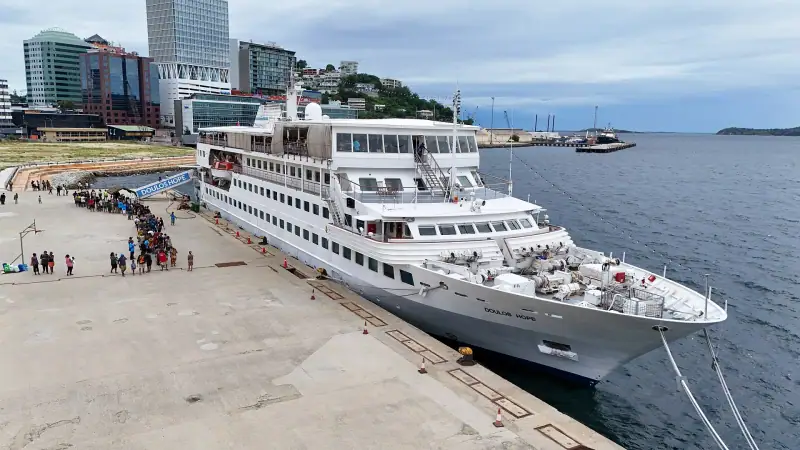
Port Moresby: the must-see sights of PNG's capital
What to see and do in Port Moresby? National museum, cultural village, national park and local markets: the best visits in Papua New Guinea's capital.
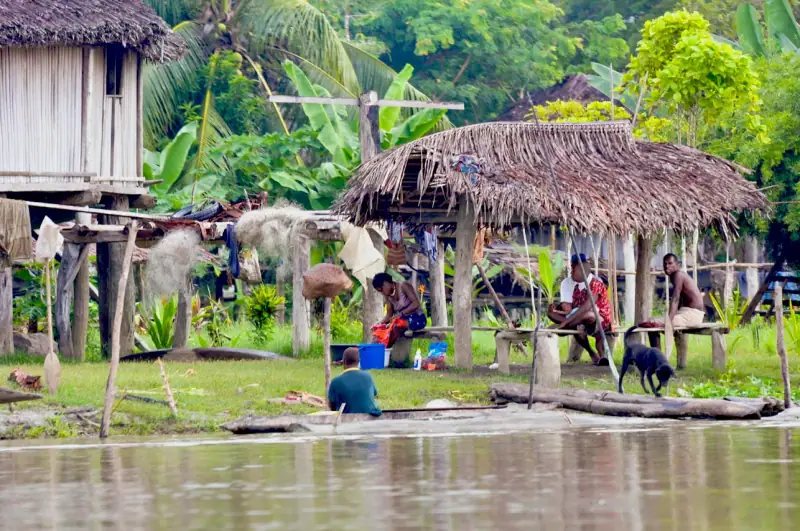
Visiting the north coast of Papua New Guinea: Madang, Wewak and the Sepik
Complete guide to PNG's north coast: diving in Madang, Sepik culture from Wewak, World War II wrecks and river villages. Practical tips.
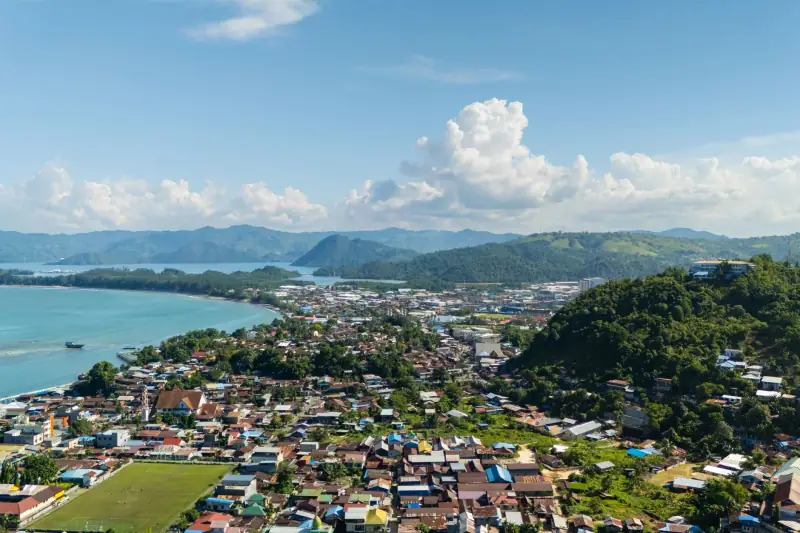
Visiting Madang: a complete guide to the pearl of the north coast
All about Madang in Papua New Guinea: wreck diving, market, Sepik culture, lodging and practical tips to plan your visit.
Ready-made
Papua New Guinea itineraries
7 days
Papua New Guinea in 7 days: the ideal first-trip itinerary
Port MoresbyGorokaMount HagenPort Moresby

5 days
10 days
Papua New Guinea in 10 days: Highlands, Madang and the Sepik
Port MoresbyGorokaMadangWewak and the Sepik