What to see
Visiting Goroka: a complete guide to the Highlands capital
We may earn a commission when you book through links on this page, at no extra cost to you. We don't visit or try the places we cover: we summarize published sources. How we work
In short
- Goroka sits at about 1,600 m (5,250 ft) in the Eastern Highlands, with a mild climate of roughly 15 to 26 °C (59 to 79 °F) all year.
- The Goroka Show is held on September 18-20 in 2026 (around Independence Day) and lasts about three days; lodging and flights fill up from May.
- Air Niugini and PNG Air fly Port Moresby to Goroka in about 1 h 10 to 1 h 20; the road from Lae is about 285 km (177 mi) and 5 to 6 hours.
- Three to four days cover Goroka well: Asaro Valley Mudmen, coffee cooperatives, cloud-forest birdwatching and the market.
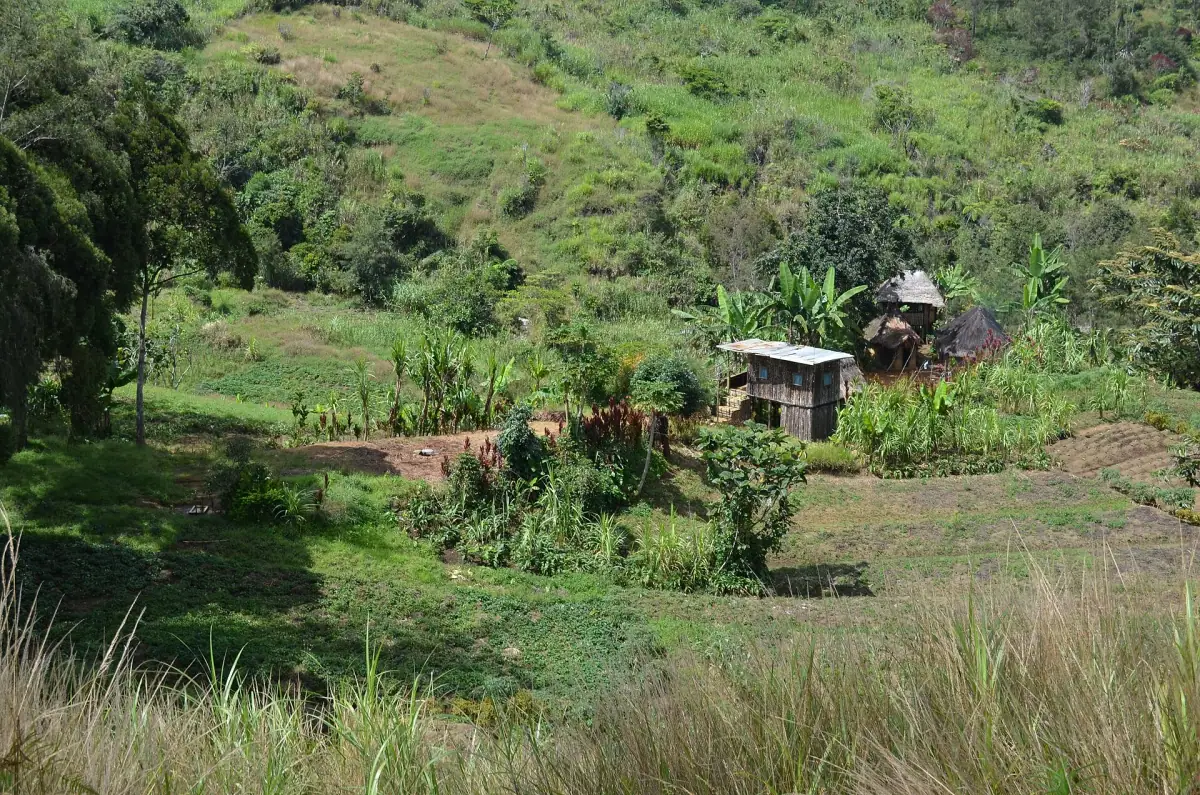
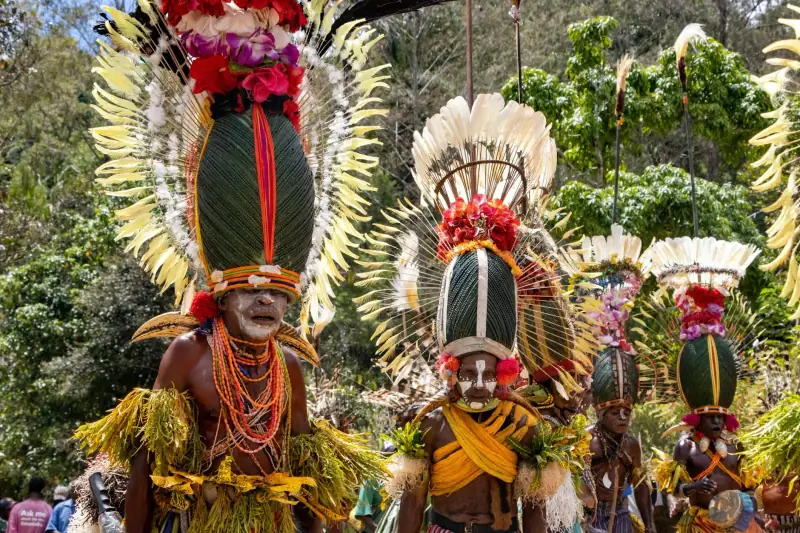
Perched at about 1,600 meters (5,250 ft) in the Eastern Highlands, Goroka is a town that surprises you. No skyscrapers, no oppressive crowds: just a green mountain town, surrounded by misty valleys and villages with carefully tended vegetable gardens. Capital of Eastern Highlands province, Goroka is above all a gateway to one of the most culturally rich regions on the planet, a territory where hundreds of distinct tribal groups coexist while keeping their languages, finery and ancestral ceremonies. For the traveler who ventures here, Goroka is an invitation to slow down, observe and discover an authentic Melanesia, far from the beaten track.
Goroka and the Eastern Highlands: an introduction
Geography and setting
Goroka lies in Papua New Guinea’s central range, in a valley at about 1,600 m (5,250 ft). This position gives it a climate remarkably temperate for the tropics: days are sunny and mild (around 22 to 25 °C / 72 to 77 °F) and nights cool (sometimes under 15 °C / 59 °F). The town is surrounded by cultivated hills, cloud forests and clear rivers that feed the surrounding village communities.
Eastern Highlands province is densely populated by PNG standards. Dozens of distinct ethnic groups live there, each with its own language (PNG has more than 850 recognized languages), its own songs, its own ceremonial costumes. This cultural density is what makes the region so extraordinary for the curious traveler.
A bit of history
The Highlands region was only “discovered” by Australian explorers in 1930-1935, during aerial and overland expeditions led by Michael Leahy and other pioneers. They found developed farming societies, complex trade networks and a dense population, entirely isolated from the outside world for millennia. This late contact with the outside explains why Highlands cultural traditions have remained so alive to this day.
Goroka itself gained importance in the Australian colonial era as the administrative center of the Eastern Highlands. Since 1968 the town has hosted the Papua New Guinea Institute of Medical Research (PNGIMR), which has established itself as a world reference center for the study of tropical diseases, notably malaria. This scientific dimension gives Goroka a particular character compared with other Highlands towns.
Flights to Goroka
Compare plane ticket prices from Port Moresby or Lae to Goroka and book at the best fare.
The Goroka Show: PNG’s most spectacular cultural celebration
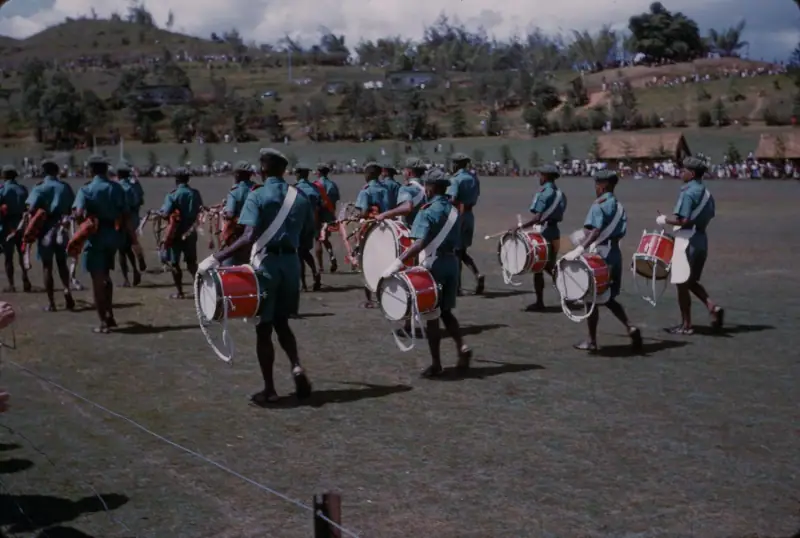
If you can do only one thing in Goroka, make it coincide with the Goroka Show. Held every year in mid-September around Independence Day (September 18-20 in 2026), this festival brings together hundreds of tribal groups from across the Highlands arc, and sometimes from coastal regions, for a three-day celebration of unmatched visual intensity.
What you will see
The spectacle is first of all visual. Warriors with bodies painted red, black, white and yellow, adorned with bird-of-paradise feathers, boar tusks and shells. Women dancers whose feather headdresses can exceed a meter (3.3 ft) in height. Drum and flute performances whose rhythms echo for hours across the valley. Each group competes in the care it puts into preparing its costumes and dances; the collective pride of the clan is at stake.
The main groups you are likely to meet at the Goroka Show:
- The Mudmen (Asaro): one of the most photographed groups in PNG. These warriors from the Asaro Valley cover their bodies with white mud and wear dried-mud masks with ghostly features. According to legend, their ancestors once terrorized enemies by rising from a river covered in mud.
- The Huli Wigmen: from the Tari Basin in Hela province (capital: Tari), created in 2012, the Huli wear monumental wigs made of their own hair and decorated with yellow and red flowers. Their outfit also includes red and yellow face paint.
- The Kalam: a people of the eastern highlands, known for highly structured group dances and foliage costumes.
- The Wahgi: a Western Highlands group known for lyrebird-style feather costumes and guttural songs.
Practical tips for the Goroka Show
Tickets and access: entry is paid (a few dozen PGK depending on the area). The best places (arenas close to the performances) are often reserved for organized groups. Ask your lodging about tickets as soon as you arrive.
Booking: Goroka lodging is full months ahead for the Show period. If you have not booked your room before July, options will be very limited. Some travelers stay in Kainantu (about 90 km / 56 mi away), which is less crowded.
Photography: tribal groups like being photographed, but it is customary to ask permission before taking out your camera. Some performers accept a symbolic tip. Avoid flash during the dances.
Heat and crowds: the show generally starts mid-morning. Arrive early for the best positions and bring a hat, sunscreen and water.
Cultural excursions in the Highlands
Village visits, meetings with tribes and cultural guides for the PNG Highlands.
What to do in and around Goroka
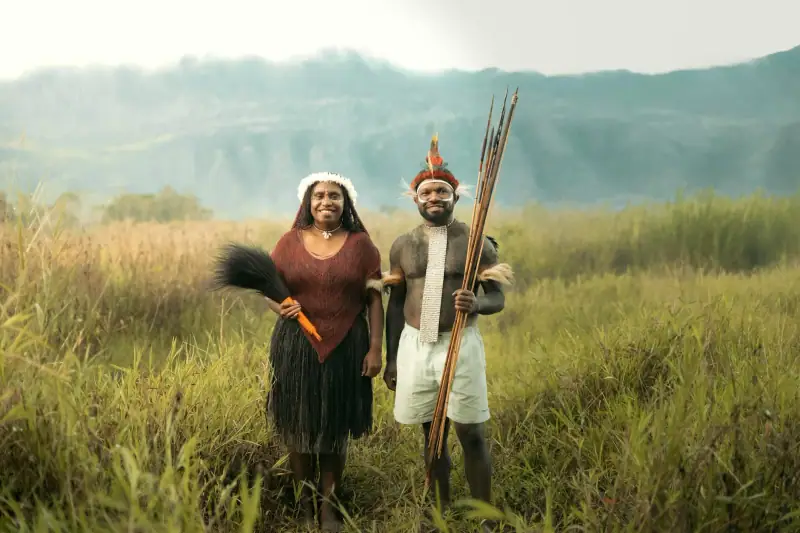
Outside the Show, Goroka offers several remarkable experiences that justify the detour on their own.
The Asaro Valley and the Mudmen
About 20 km (12 mi) northwest of Goroka, the Asaro Valley is the home territory of the famous Mudmen. Meetings with this community can be arranged from Goroka with a local guide. The Asaro offer demonstrations of their traditional ceremonies (applying the white mud, making the masks, ritual dances) in an authentic setting very different from the Show’s stage.
These visits must be made with a guide or an intermediary recognized by the community. Paying your hosts is normal practice and welcome.
The coffee plantations of the Eastern Highlands
Eastern Highlands province is one of the cradles of Papua New Guinea coffee, a high-altitude arabica whose reputation has kept growing on international markets. PNG coffee stands out for moderate acidity, fruity notes and a natural smoothness tied to rich volcanic soils.
Visits to farming cooperatives can be arranged from Goroka, particularly around the road leading toward Kainantu and the highlands. You will see the complete process: hand-picking ripe coffee cherries, pulping, fermentation, drying on racks and manual sorting. A tasting of freshly roasted coffee is often offered at the end of the visit.
Cloud forest and birdwatching
The high-altitude forests around Goroka are among the richest in Asia-Pacific in bird biodiversity. Several species of birds of paradise are recorded, notably the magnificent bird of paradise (Diphyllodes magnificus) and the king bird of paradise (Cicinnurus regius), as well as multicolored parrots, imperial pigeons and many endemic species.
For birding enthusiasts, guides specializing in birdwatching operate from Goroka. Cloud-forest outings are generally very early in the morning, when bird activity is at its peak. Trails can be steep and slippery in the rainy season; trekking shoes are essential.
Find all the tips in the article on birdwatching in Papua New Guinea.
Goroka Market
Goroka’s central market is one of the liveliest in the Highlands. You find fresh vegetables grown in village gardens (sweet potato, yam, taro, beans, plantain bananas), green or lightly roasted coffee, local medicinal herbs and artisans selling bags of woven fiber, feather ornaments and shell jewelry.
The market is especially lively on weekday mornings. It is an ideal place to watch daily life among Highlands people and taste local flavors.
Trekking around Goroka
The Eastern Highlands region offers hiking for all levels. The Goroka area allows day walks through villages, terraced vegetable gardens and secondary forests. Multi-day treks toward the wilder highland areas are possible with a guide and a community permit.
The landscapes are typical of the Highlands: dome-shaped hills covered in kunai (tall grass), ravines cut by turbulent rivers and, on the summits, patches of cloud forest where mosses and orchids carpet the trunks.
For more information on hiking in PNG, see the article on the Kokoda Trek.
Car rental in Goroka
Freely explore the Asaro Valley and Eastern Highlands villages at your own pace.
Suggested itinerary: 4 days in Goroka and the Eastern Highlands
Day 1: arrival and immersion in town
Land at Goroka airport. Settle into your lodging. Discover the central market in late morning. Free afternoon to explore the town center on foot. Dinner with a valley view at a local restaurant.
Day 2: Asaro Valley and the Mudmen
Morning departure for the Asaro Valley (about 20 km / 12 mi northwest of Goroka). Meet the Asaro community and see a demonstration of Mudmen costumes and dances. Lunch in the village if an invitation is offered. Return in early afternoon. Visit the coffee market at the end of the day.
Day 3: cloud forest and birding
Very early start (before dawn) with a birding guide for the cloud forest. Watch birds of paradise and endemic species at sunrise. Return around 10 am. Afternoon: visit a coffee cooperative and tasting. Evening: prepare for the next day.
Day 4: rural exploration
A day of trekking through the villages around Goroka, with a stop at a community garden to observe traditional Highlands farming practices. Return late in the afternoon. Return flight to Port Moresby in the evening or the next morning.
To fit your Highlands stay into a broader PNG circuit, see the complete guide to Papua New Guinea and the article on Highlands versus coast.
Practical information
How to get to Goroka
By air: the most practical option. Air Niugini operates regular flights between Port Moresby (POM) and Goroka (GKA). The flight takes about 1 h 10 to 1 h 20. PNG Air also operates this route depending on the season. Goroka airport is a few kilometers from the town center.
By road from Lae: the Highlands Highway links Lae to Goroka over about 285 km (177 mi). The trip generally takes 5 to 7 hours depending on road conditions. PMVs (public motor vehicles, shared minibuses) make this trip. The road crosses spectacular landscapes but can be damaged after rain and carries security risks on some stretches. Ask your lodging before taking this route.
Lodging
Goroka offers a choice of lodging from budget guesthouses to mid-range comfort lodges. Most places are concentrated in the town center and its immediate surroundings. During the Goroka Show, capacity is overwhelmed, so book several months ahead.
Budget options offer simple, clean rooms from 100 to 150 PGK a night. Mid-range properties run between 300 and 600 PGK. Some higher-comfort lodges with built-in dining can exceed 800 PGK a night.
Hotels in Goroka
Compare available lodging in Goroka and book at the best price with free cancellation.
Indicative budget
| Item | Average budget per day |
|---|---|
| Lodging (double room) | 150-600 PGK |
| Meals (local restaurants) | 40-120 PGK |
| Local transport (taxi/PMV) | 20-80 PGK |
| Cultural guide (day) | 150-300 PGK |
| Asaro Valley excursion | 100-250 PGK |
| Goroka Show entry (depending on area) | 30-80 PGK |
Expect 500 to 1,300 PGK a day depending on your travel style, excluding domestic flights.
For an overview of the travel budget in PNG, see the article Budget for visiting Papua New Guinea.
Health and precautions
Health: ask your doctor or a travel clinic what applies to your trip (including malaria and vaccines), and see the official travel health pages (CDC in the US, TravelHealthPro in the UK).
Safety
Goroka is generally considered safe for travelers compared with Port Moresby, but the usual precautions still apply:
- Avoid walking alone at night
- Leave valuables in the hotel safe
- Use vehicles recommended by your lodging
- On rural excursions, always tell your hotel your route
Currency and communications
The currency is the Papua New Guinean kina (PGK). ATMs exist in Goroka but can run out of cash. Bring enough cash for rural excursions and local guides. Some hotels accept bank cards. Mobile network coverage is decent in town, more uncertain in rural areas. Check your carrier’s international plan or consider a travel eSIM.
Goroka is not a destination for travelers in a hurry. It is for those who want to understand, who accept slowing down, sitting on a market bench and listening to the kundu, the drum of the Highlands. It is for those who want to see what millennia of isolation have preserved: an unmatched cultural richness, a radically different relationship to the world, and a Melanesian hospitality that exceeds all expectations. Goroka is the place in Papua New Guinea that will make you want to come back.
To discover another side of the Highlands, read the guide to the tribes of Papua New Guinea.
Frequently asked questions
How do you get to Goroka from Port Moresby?
Air Niugini and PNG Air operate direct flights between Port Moresby and Goroka airport (about 1 h 10 to 1 h 20). You can also reach Goroka from Lae via the Highlands Highway (about 5 to 6 hours over roughly 285 km / 177 mi). Flying is by far the most convenient, given the variable state of the road.
When is the Goroka Show?
The Goroka Show is held every year in mid-September, around Independence Day (September 18-20 in 2026). The event generally lasts three days and brings together hundreds of tribal groups from across the Highlands. Book lodging and flights well ahead, as all places go from May.
Is Goroka safe for tourists?
Goroka is considered one of the safest towns in Papua New Guinea for travelers. The elevation (about 1,600 m / 5,250 ft) gives it a cooler, calmer atmosphere than Port Moresby. The usual precautions apply: avoid solo trips at night, do not wear visible valuables and use vehicles recommended by your lodging.
What is the weather like in Goroka?
Thanks to its elevation of about 1,600 m (5,250 ft), Goroka enjoys a pleasant mild climate with temperatures generally between 15 and 26 °C (59 and 79 °F) all year. Nights can be cool. The dry season (May to October) is ideal for trekking and excursions. The rainy season (November to April) can make some rural tracks hard to reach.
Can you visit coffee plantations around Goroka?
Yes, the Eastern Highlands region is one of PNG's main coffee areas. Highlands coffee is known for its complex aromas and natural smoothness. Plantation visits are possible by arranging a transfer from Goroka with a local guide. Some farming cooperatives offer visits to see the production process, from picking to roasting.
How many days should you plan to visit Goroka?
Three to four days are enough for a good look at Goroka and its surroundings. Add two days if you are counting on the Goroka Show. A full week in the Highlands, including the Mount Hagen area, allows a deeper immersion in the highlands' Melanesian culture.
More Papua New Guinea guides
Keep reading
Visiting Port Moresby: a complete guide to Papua New Guinea's capital
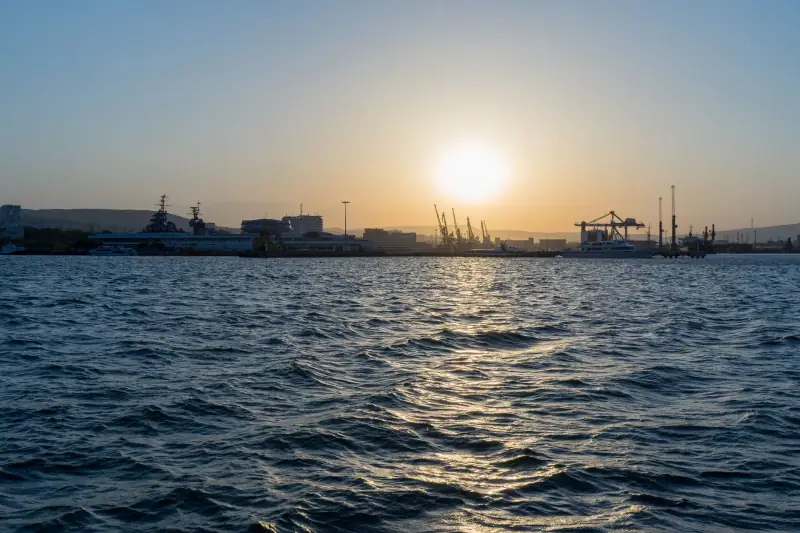
Complete guide to Port Moresby: Hanuabada village, national museum, Nature Park, Kokoda, neighborhoods and safety tips for PNG's capital.

Port Moresby: the must-see sights of PNG's capital
What to see and do in Port Moresby? National museum, cultural village, national park and local markets: the best visits in Papua New Guinea's capital.
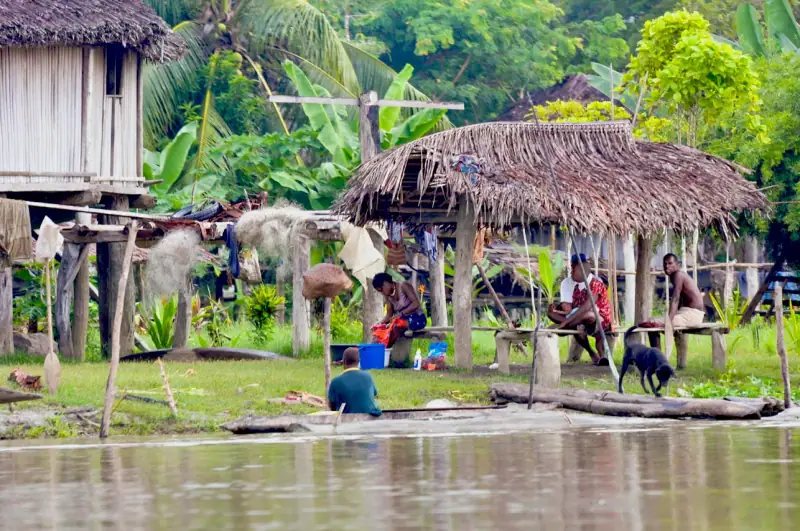
Visiting the north coast of Papua New Guinea: Madang, Wewak and the Sepik
Complete guide to PNG's north coast: diving in Madang, Sepik culture from Wewak, World War II wrecks and river villages. Practical tips.
Ready-made
Papua New Guinea itineraries
7 days
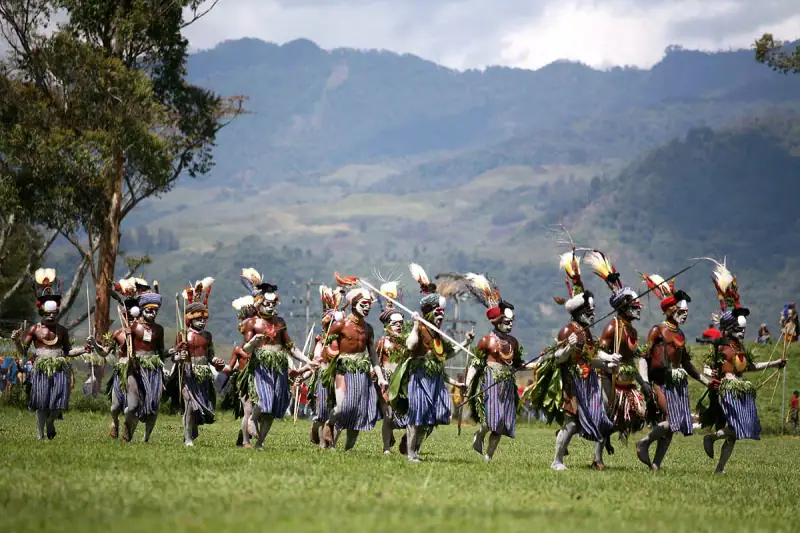
Papua New Guinea in 7 days: the ideal first-trip itinerary
Port MoresbyGorokaMount HagenPort Moresby

5 days
10 days
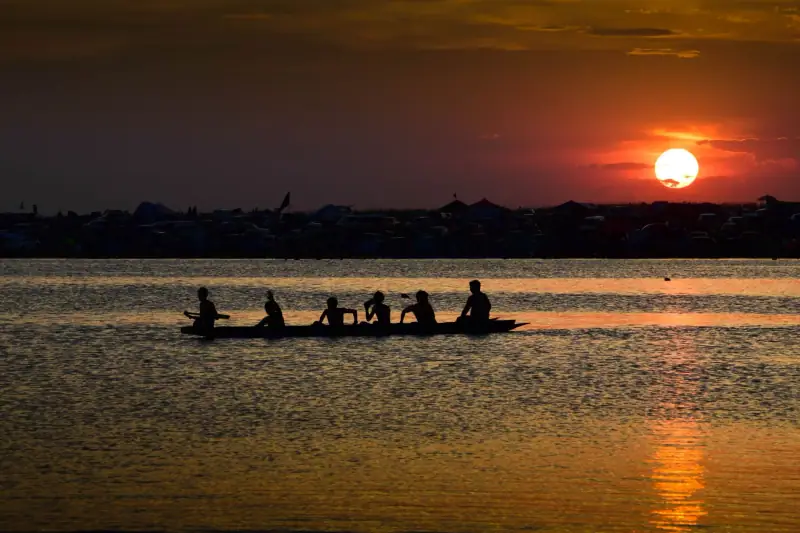
Papua New Guinea in 10 days: Highlands, Madang and the Sepik
Port MoresbyGorokaMadangWewak and the Sepik