Things to do
Climbing Mount Wilhelm in Papua New Guinea without an international agency: guide prices and duration
We may earn a commission when you book through links on this page, at no extra cost to you. We don't visit or try the places we cover: we summarize published sources. How we work
In short
- Mount Wilhelm (4,509 m / 14,793 ft) can be organized directly at Betty's Lodge in Keglsugl village; no law requires an international package, unlike the Kokoda Trek.
- Organizing locally costs about 400 to 700 PGK per person for guide, dorm lodging and meals over 3 to 4 days, excluding transport from Mount Hagen.
- An international all-inclusive package typically runs about €1,500 to €2,500 (about $1,740 to $2,900), three to four times the local cost.
- The best window is June to September; the base camp is above 3,600 m (11,810 ft) and no high-altitude medical facility exists there.
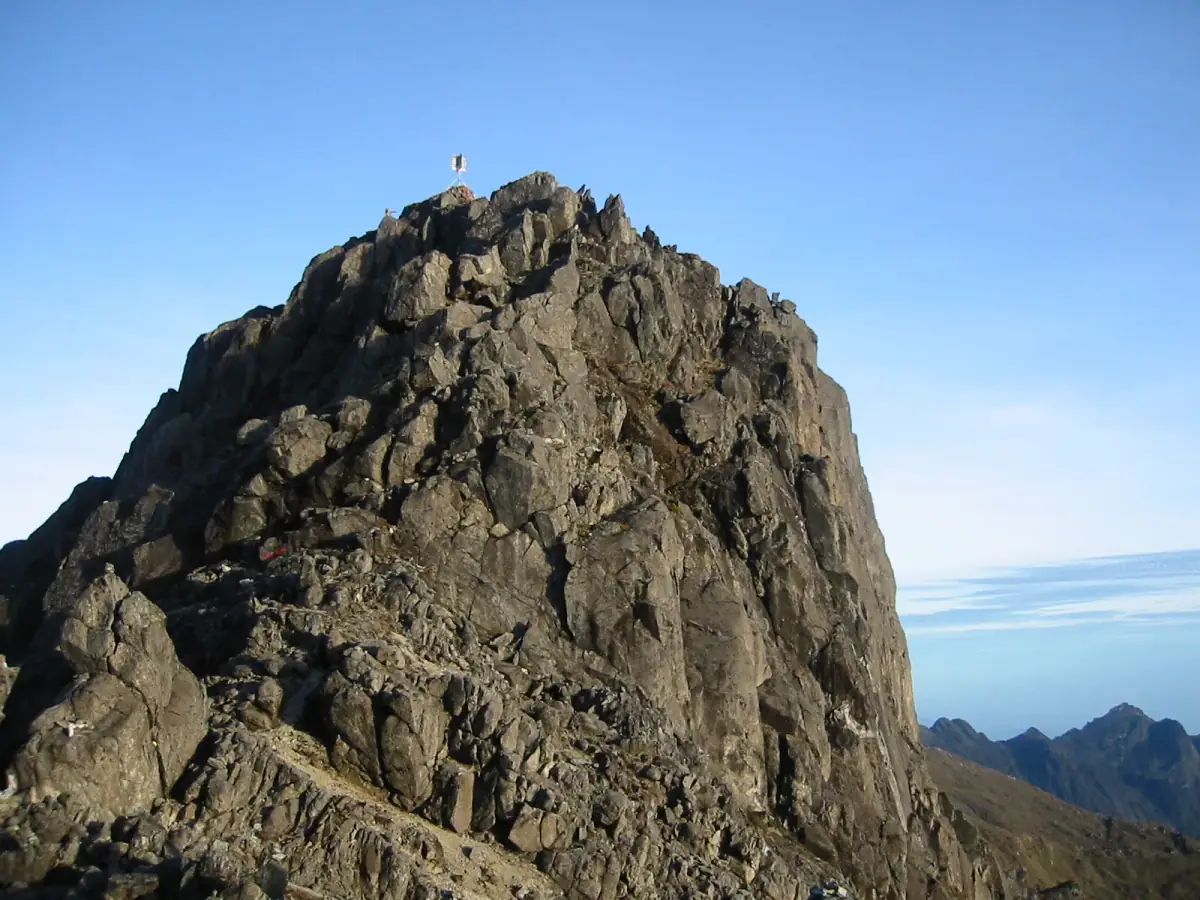
The Kokoda Trek is not Papua New Guinea’s only great climb, and it is not the only one that intrigues independent travelers. Mount Wilhelm, the country’s highest peak at 4,509 meters (14,793 ft), can be climbed in 3 to 4 days from the Highlands, and above all without going through a certified operator imposed by law. Here is how to organize this climb yourself, what it really costs once you are there, and what to know before you go.
Mount Wilhelm, a peak apart in Papua New Guinea
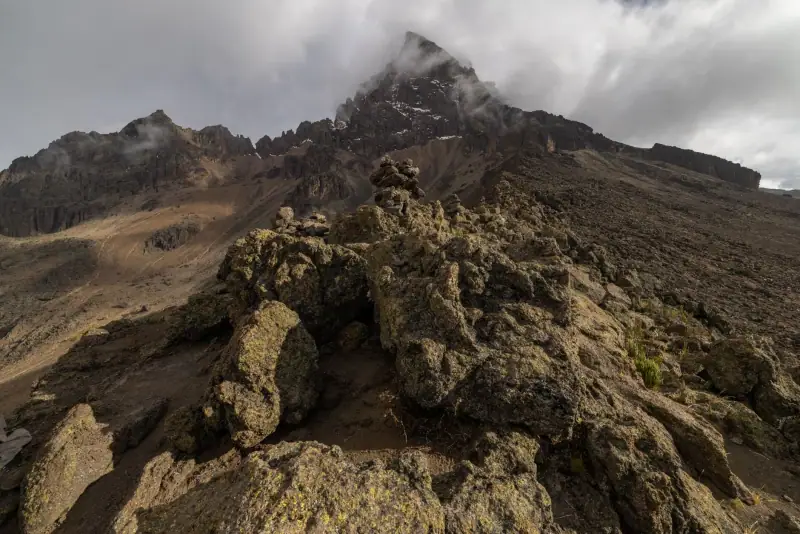
Located in the Bismarck Range, where the provinces of Chimbu (Simbu), Jiwaka and Madang meet, Mount Wilhelm dominates the Highlands at 4,509 meters (14,793 ft). It is the high point of Papua New Guinea and, by extension, one of the highest summits in Oceania outside Indonesia. The climb crosses several vegetation zones in a few hours: humid tropical forest, alpine meadow, the twin glacial lakes (Piunde and Aunde), then a mineral, windy landscape up to the summit.
Unlike the Kokoda, whose trail is inseparable from the memory of World War II and supervised by the Kokoda Track Authority, Mount Wilhelm remains a more private climb, favored by hikers who want a real altitude challenge without the logistical weight of an all-inclusive package. If you are torn between the two, the Highlands vs coast in Papua New Guinea comparison will help you place Mount Wilhelm in your overall itinerary.
Do you really need an international agency?
This is the question that comes up most often before setting out: no, no law requires booking an international package to climb Mount Wilhelm. The starting point, Keglsugl village, has a reference lodging, Betty’s Lodge, which serves as the logistics base camp for nearly every climb, whether organized in advance or improvised on arrival.
In practice, two options are open to you:
- Local organization at Betty’s Lodge: you arrive, book your dorm bed or room, and the lodge puts you in touch with a guide and, if needed, a porter for the next day or the day after. This is the cheapest and most flexible option.
- The international package: booked from abroad, with transfers, domestic flights and a guide included in a single price. More comfortable if you are short on time on site, but clearly more expensive.
A local guide remains essential in both cases, not for a legal reason as on the Kokoda, but because the final night climb, over rocky, poorly marked terrain and often in fog, is very hard to do without someone who knows the trail.
Good travel insurance covering medical evacuation is also essential: above 4,000 meters, with no medical facility nearby, it is non-negotiable.
What it really costs without an agency
Here are the orders of magnitude seen for direct organization at Betty’s Lodge, excluding transport and international flights:
| Expense | Approximate price |
|---|---|
| Dorm night at Betty’s Lodge (with meals) | 60 to 100 PGK |
| Night in a “tourist” room at Betty’s Lodge | 150 to 250 PGK |
| Local guide for the climb (2 days) | 150 to 300 PGK |
| Porter (optional) | 100 to 200 PGK |
| Base camp fees / community contribution | ~80 PGK per night |
| Estimated total in Keglsugl (excluding transport) | 400 to 700 PGK per person |
To this you add the Mount Hagen–Keglsugl 4x4 trip (plan on sharing it with others to cut the bill, as detailed in the guide to renting a car in Papua New Guinea), plus the domestic flight Port Moresby–Mount Hagen. To place this budget in your overall trip, see the complete PNG budget guide: once organized locally, Mount Wilhelm remains one of the country’s most affordable experiences given its intensity.
For comparison, an all-inclusive international package with domestic flights, private transfers and a dedicated guide is generally negotiated at around €1,500 to €2,500 (about $1,740 to $2,900), three to four times the cost of local organization, for a very similar result on the ground.
Getting to Keglsugl from Mount Hagen
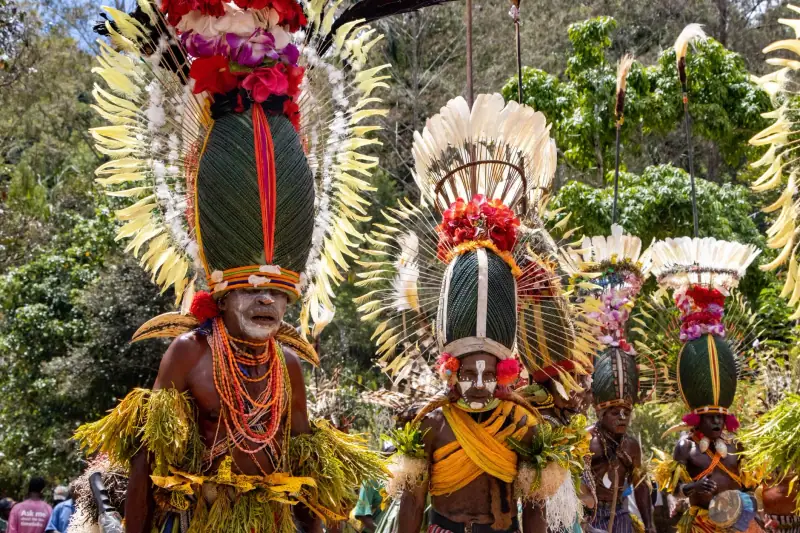
No flight serves Keglsugl directly: everything goes through Mount Hagen, itself linked to Port Moresby by domestic flight. Keep in mind that these regional links are reputed to be unreliable (a point detailed in the guide to domestic flights in Papua New Guinea), and book the first flight of the day if possible to keep a margin in case of delays.
From Mount Hagen, allow 5 to 6 hours on a 4x4 track to Keglsugl and Betty’s Lodge. The road climbs gradually through the Highlands, crosses several cultivated valleys, and degrades sharply on the last stretch. A vehicle rented with a local driver, as discussed in the article on car rental in PNG, remains the safest solution: Betty’s Lodge can generally arrange this transfer directly if you contact them before arriving in Mount Hagen.
Route and duration, day by day
The classic course of a 3-to-4-day climb looks like this:
- Day 1: arrival in Keglsugl, settle in at Betty’s Lodge (about 2,800 m / 9,190 ft), briefing with the guide, rest to adjust slightly to the altitude.
- Day 2: climb to base camp, around 3,600 meters (11,810 ft), in 3 to 4 hours of walking through forest then alpine meadow, passing near lakes Piunde and Aunde. A very short night at base camp.
- Day 3: departure around 1 am or 2 am to reach the summit at sunrise, the most spectacular moment, and the one most often clouded over after 8 am. Descent back to Keglsugl the same day, long and punishing on the knees.
- Day 4 (optional): buffer day in case of bad weather or fatigue, or direct return to Mount Hagen.
Circuits organized by international agencies often spread this program over 5 days, with an extra recovery night at Betty’s Lodge before departure, a welcome comfort if you do not yet know your resistance to altitude.
Physical preparation and altitude
Mount Wilhelm does not require technical mountaineering skills, but two factors make it more demanding than it looks: altitude and the condensed format of the final climb.
- Altitude: the base camp is already above 3,600 meters (11,810 ft), and the summit exceeds 4,500 meters (14,760 ft). Ask your doctor or a travel clinic what applies to your trip, and see the official travel health pages (CDC in the US, TravelHealthPro in the UK). No high-altitude medical facility exists there.
- Condensed format: unlike a classic high-altitude trek spread over one to two weeks with gradual acclimatization, the Mount Wilhelm climb takes only a few days. Good general fitness (several months of cardio and hill walking) partly offsets the lack of long acclimatization.
- Night departure: walking several hours in the dark, in the cold and on uneven rocky terrain, takes a reliable headlamp and good energy reserves; think about your travel accessories kit before leaving.
Best time to climb
The most favorable window is June to September, during the Highlands dry season: less muddy trails, a higher probability of a clear sky at the summit for sunrise, and generally safer walking conditions. To place this period in the country’s overall calendar, the guide to the best time to visit Papua New Guinea details the nuances region by region.
Outside this window, frequent rain in the Highlands makes the final climb slippery and considerably reduces the chances of seeing anything once at the top, a factor not to be neglected if the summit sunrise is your main motivation.
Bottom line
Climbing Mount Wilhelm without an international agency is entirely possible: Betty’s Lodge, in Keglsugl, serves as a logistics base camp and lets you arrange guide, lodging and meals directly in Keglsugl, for a budget of 400 to 700 PGK per person over 3 to 4 days, far from the €1,500 to €2,500 (about $1,740 to $2,900) of an all-inclusive international package. The trade-off is a more artisanal organization: a 4x4 trip to negotiate from Mount Hagen, unreliable domestic flights to plan around, and serious physical preparation for the altitude and the night departure.
If this climb fits into a broader circuit including the Highlands, complete your preparation with the budget guide for Papua New Guinea and the Highlands vs coast comparison to balance your itinerary between altitude and coast.
Frequently asked questions
Do you have to go through an international agency to climb Mount Wilhelm?
No. Unlike the Kokoda Trek, which requires an operator certified by the Kokoda Track Authority, Mount Wilhelm can be organized directly there, at Betty's Lodge in Keglsugl village. You find local guides and porters there without booking a package in advance from abroad. An international agency remains useful if you want to handle everything before leaving, but it is not mandatory.
How much does climbing Mount Wilhelm cost without an international agency?
Organizing everything at Betty's Lodge, expect to pay about 400 to 700 PGK per person for guide, dorm lodging and meals over 3 to 4 days, excluding transport from Mount Hagen. With an international agency including transfers and flights, the budget easily climbs to €1,500 (about $1,740) or more. Local organization is therefore clearly cheaper for an independent traveler.
How many days does it take to climb Mount Wilhelm?
Allow 3 to 4 days for the full round trip from Keglsugl: a half-day approach to base camp, a very short night before a departure around 1 am or 2 am to reach the summit at sunrise, then the descent. Organized 5-day circuits add a safety margin and an extra recovery night.
Is altitude sickness a risk on Mount Wilhelm?
At 4,509 meters (14,793 ft), altitude is a real factor, and the base camp is already above 3,600 meters (11,810 ft). No medical facility is available there, so good insurance with evacuation remains essential. Ask your doctor or a travel clinic what applies to you, and see the official travel health pages (CDC in the US, TravelHealthPro in the UK).
What is the best time to climb Mount Wilhelm?
The Highlands dry season, June to September, offers the best conditions: less muddy trails and a better chance of a clear sky at the summit for sunrise. Outside this window, frequent rain makes the climb slippery and sharply reduces summit visibility.
How do you get to Keglsugl, the starting point of the climb?
First reach Mount Hagen, usually by domestic flight from Port Moresby, then continue by road to Keglsugl and Betty's Lodge, about 5 to 6 hours on a 4x4 track. This trip can be arranged directly from Betty's Lodge or with a local driver recommended by your lodging in Mount Hagen.
More Papua New Guinea guides
Keep reading
Diving in Papua New Guinea: the best sites
PNG diving guide: Madang, Kimbe Bay, Tufi, Milne Bay and Rabaul. The best spots, wrecks and reefs in Papua New Guinea for divers of all levels.

Birdwatching in Papua New Guinea: birds of paradise and endemic species
Watching birds of paradise in PNG: best sites, seasons and tips for birdwatching endemic species in Papua New Guinea.
Papua New Guinea travel budget: how much to plan for
How much does a trip to PNG cost? Lodging, transport and activities: a complete budget guide to travel Papua New Guinea without surprises.
Ready-made
Papua New Guinea itineraries
7 days
Papua New Guinea in 7 days: the ideal first-trip itinerary
Port MoresbyGorokaMount HagenPort Moresby

5 days

10 days
Papua New Guinea in 10 days: Highlands, Madang and the Sepik
Port MoresbyGorokaMadangWewak and the Sepik