What to see
Visiting Oslo: Complete Guide to Norway's Capital
We may earn a commission when you book through links on this page, at no extra cost to you. We don't visit or try the places we cover: we summarize published sources. How we work
In short
- Two days cover the big sights (Opera House, Munch Museum, Vigeland Park); three days add Bygdøy, Grünerløkka and a boat trip on the Oslofjord.
- Oslo is among Europe's most expensive capitals: a restaurant main course runs 250-400 NOK, but parks, the waterfront and the Opera House roof are free.
- The Oslo Pass costs about 495 NOK (24 h), 745 NOK (48 h) or 945 NOK (72 h) and covers public transit and 30+ museums.
- The best months are May to August (59-77 °F), with Christmas markets and skiing at Holmenkollen in December.
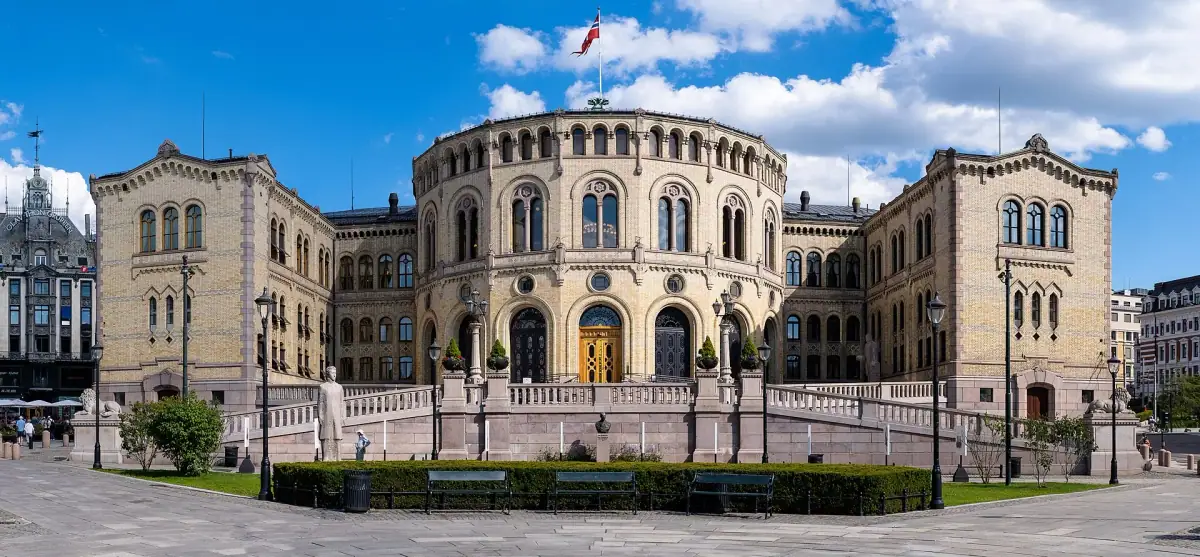
Oslo is the capital of a country of only 5.4 million people, and it surprises almost everyone at first sight. You expect a cold, austere city and find an open, green, architecturally bold metropolis brimming with culture. With its 700,000 residents, Oslo is one of Europe’s most livable capitals, and one of the most expensive, which does not stop travelers from putting it at the top of their Nordic lists every year.
The Oslofjord reaches deep inland, surrounding the city with calm waters dotted with wooded islands. To the north, forests stretch as far as the eye can see: the Oslomarka, directly reachable by metro from downtown. This unique mix of cutting-edge urban planning and preserved nature gives Oslo its distinctive character.
This complete guide gives you what you need to plan a successful stay in Oslo, whether you have 2 days or a week.
Oslo at a glance
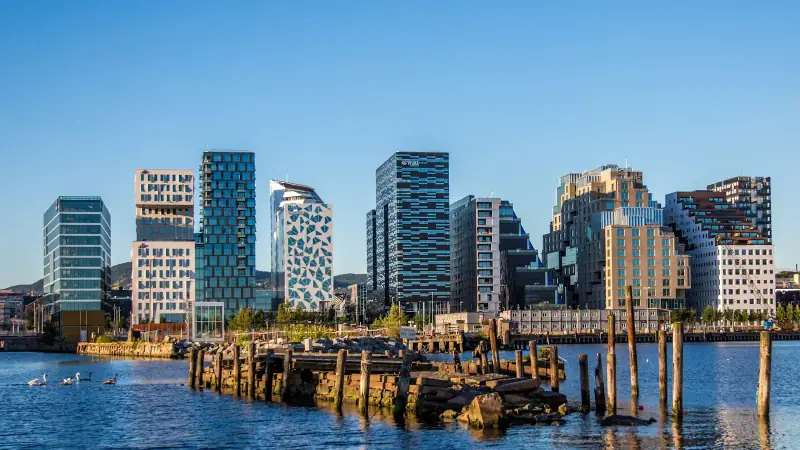
Oslo sits at the northern tip of the Oslofjord and stretches about 25 km (16 mi) from north to south. The city is divided into several distinct areas:
- The historic center and harbor (Sentrum): around City Hall Square (Rådhusplassen), Aker Brygge and the Opera House
- Bygdøy: the peninsula of maritime museums, west of the center
- Frogner / Vigeland: an upscale residential neighborhood with the famous sculpture park
- Grünerløkka: the trendy, vintage and creative neighborhood to the east
- Holmenkollen: the wooded heights to the north, with the famous ski jump
- The Oslofjord islands: Hovedøya, Langøyene, Gressholmen, reachable by ferry from downtown
This geography makes Oslo very pleasant to explore: everything is compact and well served by public transport, and distances between neighborhoods are reasonable.
A young, ambitious capital
Oslo has a long history. It was founded by Harald Hardrada around 1048 (the first traces of human settlement in the region date to around the year 1000). But the city you see today is largely a 20th- and 21st-century construction. The fire of 1624, which destroyed almost everything, forced King Christian IV to rebuild the city entirely, and it was renamed Christiania. It was not until 1925 that the city took back its original name, Oslo.
The great architectural turn of the 2000s and 2010s transformed the waterfront (Bjørvika) into a spectacular cultural district, dominated by the Opera House, the Munch Museum (opened in 2021) and the Deichman Library. Today Oslo is one of the European cities where contemporary architecture is the most ambitious and the best executed.
Hotels in Oslo
From design hotels downtown to trendy hostels in Grünerløkka, compare the best places to stay in Oslo.
Downtown highlights
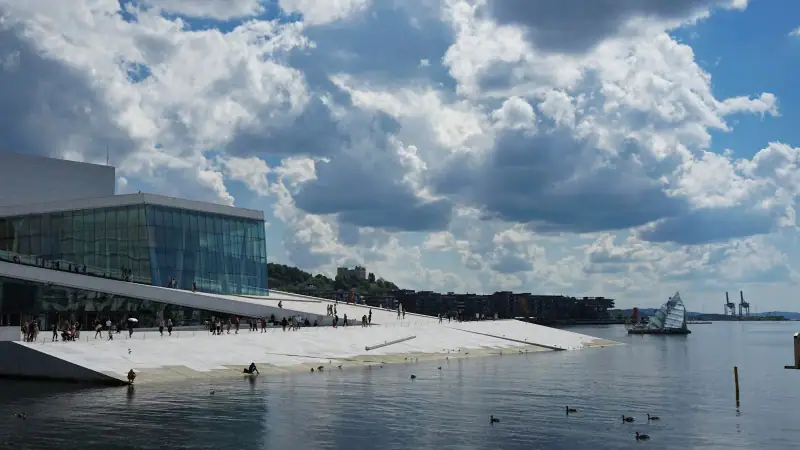
The Oslo Opera House (Operahuset)
The Oslo Opera House, opened in 2008 and designed by the architecture firm Snøhetta, is the most iconic building of the modern capital. Its tilted white silhouette seems to rise straight out of the water of the Oslofjord, and its Carrara marble roof is open to the public on foot, free, 24 hours a day. The view of the fjord and the Oslo skyline from the top is one of the best in the city.
Inside you can attend opera, ballet or concerts. Tickets for the big productions should be booked several weeks ahead. The main hall, with its 16 m (52 ft) wide stage and exceptional acoustics, is among the best in Northern Europe.
Tip: Even if you do not attend a show, the foyer (free before performances) is worth a look for its oak and granite interior.
The Munch Museum (Munchmuseet)
The new Munch Museum, opened in 2021 in the Bjørvika district, is one of the most talked-about buildings in Oslo: a slightly tilted 13-story tower clad in perforated aluminum panels. Whether or not you like the architecture, the collection is beyond dispute: 28,000 works by Edvard Munch, including several versions of the famous The Scream (Skrik), unsettling self-portraits and thematic cycles such as The Frieze of Life.
Munch bequeathed his entire body of work to the city of Oslo when he died in 1944. Today this is the largest museum devoted to a single artist in the world.
Admission: check the adult price on the museum’s website (expect more than 160 NOK). Open every day, including Monday. Free panoramic view from the top floor.
The Viking Ship Museum (Vikingskiphuset): closed until 2027
On the Bygdøy peninsula, about 15 minutes from downtown by bus or ferry, the former Viking Ship Museum holds three remarkably preserved 9th-century longships, including the Oseberg ship and the Gokstad ship. These vessels, taken from burial mounds along with all their grave goods (sleds, tapestries, utensils), are among the oldest and best-preserved objects in Northern Europe.
Note: The museum is currently closed. It is being rebuilt as the Museum of the Viking Age, with reopening announced for 2027. In the meantime, a selection of Viking-era objects is on display at the Historical Museum (Historisk museum) downtown. Check progress at vikingtidsmuseet.no.
Tip: When it reopens, combine the visit with the Fram Museum (polar exploration) and the Kon-Tiki Museum, all three on the Bygdøy peninsula a few minutes’ walk from one another.
Guided tours of Oslo
Bike tour, walking tour of the old center, Oslofjord cruise: discover Oslo with a local guide.
Vigeland Park: monumental open-air sculpture
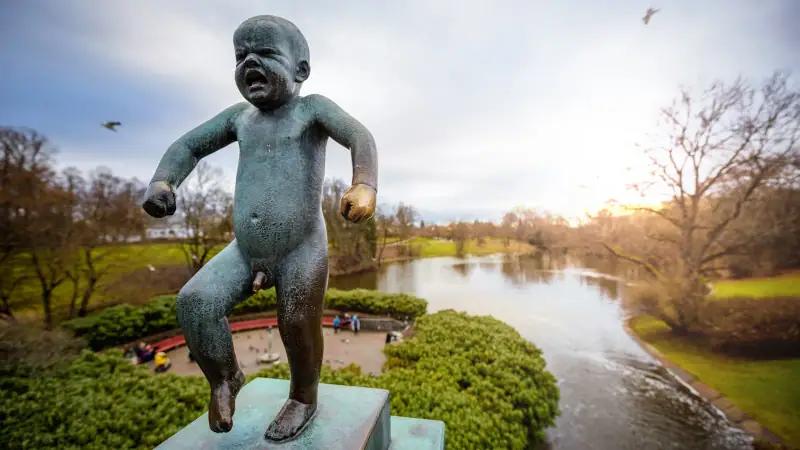
Vigeland Park (Vigelandsparken), in the Frogner district, is one of the most original attractions in all of Scandinavia. Across 32 hectares (79 acres), more than 200 granite, bronze and wrought-iron sculptures by Gustav Vigeland celebrate the cycle of human life (birth, love, old age, death) with an intensity that is often overwhelming.
The Monolith (Monolitten), a 17 m (56 ft) granite column carved from a single block, represents 121 human figures intertwined in an upward reach. It dominates the park from a circular platform reached by a symbolic climb.
Entry to the park is completely free, and it is open 24 hours a day. In summer it becomes a living space: locals come to picnic, run, bike or simply relax on the lawn. In winter under snow, the atmosphere is uniquely beautiful.
Tip: To enjoy the park without crowds, come early in the morning (before 10 am in summer) or in the evening. The golden light of late afternoon is ideal for photography.
To learn more about the museums and cultural sites to visit, see our guide to Oslo’s top sights.
Grünerløkka: Oslo’s alternative heart
The Grünerløkka district, east of the center, is the alternative and creative soul of Oslo. What was an industrial working-class neighborhood in the 19th century has been, since the 1990s, the stronghold of the capital’s hip young crowd: thrift stores, independent cafés, artists’ studios, craft breweries and local-produce markets are packed into a web of narrow streets and red-brick buildings.
What to do in Grünerløkka
- Birkelunden Park: the neighborhood’s central park, with a bandstand and lively outdoor cafés in summer
- The Olaf Ryes Plass market: a weekend market of designers and local producers
- Mathallen Oslo: the neighborhood food hall, with dozens of stalls offering Norwegian specialties, international food trucks and artisan cheeses
- The thrift stores of Markveien: Grünerløkka’s main street is lined with second-hand shops and Scandinavian concept stores
Grünerløkka is also the best place to have dinner without breaking the bank (by Oslo standards): the neighborhood’s Thai and Italian restaurants, burger joints and pizzerias serve dishes for 200-300 NOK, far from downtown prices.
Holmenkollen: the temple of skiing

Only 30 minutes by metro from downtown (line T1 to Holmenkollen station), the wooded hill of Holmenkollen is the sanctuary of Norwegian winter sport. The Holmenkollen ski jump, rebuilt for the 2011 Nordic World Ski Championships, is visible from almost the whole city and symbolizes the national passion for skiing.
The Ski Museum (Skimuseet)
Located at the base of the ski jump, the Ski Museum is the oldest in the world devoted to the sport (founded in 1923). It traces 4,000 years of ski history, from the first primitive pairs found in peat bogs to modern competition gear, including Fridtjof Nansen’s feat of crossing Greenland on skis in 1888.
The ski jump elevator takes you to the top (64 m / 210 ft jump height) for a dizzying view over Oslo and the Oslofjord. An invigorating experience, and slightly terrifying.
Museum + ski jump lift admission: about 180 NOK. Check seasonal hours on the official website.
The forests of the Oslomarka
Around Holmenkollen lie the vast forests of the Oslomarka: 1,700 km² (656 sq mi) of preserved nature reachable directly from the metro. In summer, hundreds of kilometers of hiking trails run through birch and spruce to lakes where locals swim. In winter, more than 2,600 km (1,615 mi) of cross-country ski trails are groomed every week.
It is one of Oslo’s most distinctive traits worldwide: a European capital where you can put on cross-country skis right outside the metro.
Getting to Oslo
Compare flights to Oslo Gardermoen for your trip to Norway, and look at excursions once you arrive.
The Oslofjord islands
One of the most unexpected experiences in Oslo is hopping on a simple ferry from the Aker Brygge pier to reach the Oslofjord islands in 10 to 20 minutes. These small wooded islands, a few hundred meters from downtown buildings, are the locals’ green lungs.
- Hovedøya: the closest island, with the ruins of a 12th-century Cistercian monastery, cliffs and a pebble beach. Perfect for a picnic with a view of the Oslo skyline.
- Langøyene: the largest beach on the Oslofjord, popular in summer, with both nudist and clothed areas. Swimming is possible from June to August.
- Gressholmen: a rural atmosphere, seabirds, no cars, a total disconnect 15 minutes from Oslo.
The Oslofjord ferries (Ruter) are included in the standard public transport fare, including the Oslo Pass. A round trip to the islands therefore costs the same as a metro ticket.
To plan your week, see our guide Norway in 7 days, which includes a stop in Oslo.
Food in Oslo
Oslo has undergone a culinary revolution over the last fifteen years. The city now has several Michelin-starred restaurants and a food scene built on local ingredients of exceptional quality: Lofoten cod, wild salmon, mountain lamb, Arctic berries and mushrooms from the Oslomarka forests.
What to taste
- Fiskesuppe (fish soup): creamy, rich in root vegetables and seafood. The Oslo version often includes salmon and shrimp
- Kjøttkaker: Norwegian meatballs, cousins of Swedish köttbullar, served with brown gravy, potatoes and lingonberry jam
- Smørbrød: open-faced sandwiches on dark bread, topped with salmon, pickled herring, shrimp or scrambled eggs. A traditional lunch
- Brunost (brown cheese): Norway’s caramelized cheese, both sweet and salty, a breakfast staple. Disconcerting on the first try, addictive afterward
Meal budget in Oslo
| Type of meal | Price range |
|---|---|
| Supermarket (picnic groceries) | 100-150 NOK |
| Café / bakeri (light lunch) | 130-200 NOK |
| Mid-range restaurant | 250-400 NOK per dish |
| Fine dining | 600-2,000 NOK per person |
Practical tip: Shopping at the supermarket (Rema 1000, Coop, Kiwi) for breakfasts and lunches is the most effective way to cut your budget. Norwegian supermarkets carry a wide range of quality products: cheeses, cured meats, smoked fish, fruit and vegetables.
Getting around Oslo
Oslo has a particularly efficient public transport network (run by Ruter), combining the metro (T-bane, 6 lines), trams (6 lines), buses and ferries to the islands.
Ticket prices:
- Standard ticket (all zones): about 42 NOK
- 24-hour pass: about 120 NOK
- 7-day pass: about 330 NOK
The Flytoget (airport train): Connects Oslo Gardermoen Airport to downtown (Nationaltheatret or Oslo S station) in about 20 minutes. Price: about 230 NOK. A cheaper alternative is the Vy/NSB trains (~110-150 NOK, about 30-40 minutes).
By bike: Oslo has a bike-share system (Bysykkel) with hundreds of stations downtown. Ideal for exploring the waterfront, Vigeland and Grünerløkka. Day subscriptions are very affordable through the app.
By car: Avoid it downtown, where parking is scarce and expensive. Visitors who want to explore the surrounding fjords (Hardangerfjord, Sognefjord) can rent a car by the day.
Car rental in Oslo
Head out to explore the fjords from Oslo: compare offers for a vehicle from the airport or downtown.
Budget: how much does a stay in Oslo cost?
Oslo is consistently ranked among the five most expensive capitals in the world. Here are realistic ranges for 2026:
| Item | Tight budget | Comfort budget |
|---|---|---|
| Lodging (per night) | €90-140 (~$105-160), hostel / Airbnb | €160-280 (~$185-325), 3-4 star hotel |
| Meals (per day) | €35-50 (~$41-58), supermarket + 1 restaurant | €80-150 (~$93-175), restaurants |
| Transport (per day) | €10-15 (~$12-17), Ruter pass | €15-20 (~$17-23), Oslo Pass |
| Museums and activities | €0-30 (~$0-35), free parks | €40-80 (~$46-93), museums + tours |
| Total per day | €135-235 (~$157-273) | €295-550 (~$342-638) |
Tips to cut your budget:
- Vigeland Park, the Aker Brygge waterfront, the Opera House roof and the Oslofjord islands (with a standard Ruter ticket) are free or included in the transit pass
- The Oslo Pass pays off if you visit 2 to 3 paid museums a day
- Travel off-season (March-April or October-November) for lodging up to 40% cheaper
- Last-minute (standby) opera or theater tickets sometimes let you attend performances at a reduced price
Practical information
How to get to Oslo
By air: Oslo Gardermoen Airport (OSL) is the largest in Norway, about 50 km (31 mi) north of downtown.
By train from Sweden: A train links Stockholm to Oslo in about 6 hours (SJ/Vy). From Copenhagen, allow 7 to 8 hours.
By cruise: Oslo is a classic stop on Scandinavian cruises. Large ships dock at Akershusstranda, a 10-minute walk from the center.
When to visit Oslo
- May-August: The best period. Temperatures of 15 to 25 °C (59 to 77 °F), long bright evenings, outdoor cafés and festivals (Oslo Jazz Festival in August, Øya Festival in late July/early August). July and August are the busiest months.
- December: The Christmas atmosphere is especially good around City Hall and in the Nationaltheatret markets. Cross-country skiing from late November in the Oslomarka forests.
- March-April: Early spring, limited crowds, lower prices. Days lengthen quickly.
- November: The least pleasant month: gray skies, rain, little light. Avoid except for skiing.
For Norway’s seasons in general, our guide to the best time to visit Norway gives you the overall picture.
Language and customs
English is spoken almost universally in Oslo, even in small shops. Norwegians are known for being reserved in public spaces but genuinely warm once you start a conversation. Norwegian culture values equality, punctuality and respect for nature.
A few useful words:
- Takk: thank you
- Hei: hello / hi
- Unnskyld: excuse me
- Ja / Nei: yes / no
Safety
Oslo is one of the safest capitals in Europe. Violent crime against tourists is extremely rare. The usual precautions (watch for pickpockets in busy tourist areas, especially around the central station) still apply.
In short: why visit Oslo?
Oslo is a capital like no other. Where other big European cities play on their historic heritage or frenetic energy, Oslo wins you over with its exceptional quality of life, its close relationship with nature, its bold contemporary architecture and the richness of its museums.
Too often reduced to a stopover on the way to Bergen or the Lofoten Islands, it deserves a stay of its own, at least three days to take in its energy. The Opera House at sunrise, a Sunday morning at the Grünerløkka market, an evening hike in the Oslomarka at 9 pm with two more hours of daylight ahead: that is what makes Oslo unique.
Before you go, see our comparison Oslo vs Bergen to decide which city deserves more time on your Norway itinerary.
Frequently asked questions
How many days do you need to visit Oslo?
Two days are enough for the big sights (Opera House, Munch Museum, Vigeland Park). Three days let you explore Bygdøy and Grünerløkka and take a boat trip on the Oslofjord. Allow 4 to 5 days if you want to add Holmenkollen, the Oslofjord islands and the Majorstuen or Frogner neighborhoods.
How do you get to Oslo?
Oslo Gardermoen Airport (OSL) is the main gateway. The Flytoget (airport express train) connects Gardermoen to downtown in about 20 minutes.
Is Oslo really as expensive as people say?
Oslo is among the most expensive capitals in Europe. A meal in a decent restaurant costs 250-400 NOK (€22-36 / $26-42). The good news: parks, the waterfront and many walks are completely free, and supermarkets can cut your food budget sharply.
Which tourist pass should you buy in Oslo?
The Oslo Pass (24 h about 495 NOK, 48 h about 745 NOK, 72 h about 945 NOK) covers public transport and admission to more than 30 museums and attractions. It pays off if you visit 2 to 3 museums a day and use the metro and trams.
What is the best time to visit Oslo?
May to August: mild weather (59-77 °F), long days, lively outdoor cafés and the chance to sail on the Oslofjord. December: Christmas market, a fairy-tale atmosphere and winter sports at Holmenkollen. Avoid November to March if you dislike cold and gray skies, unless you are there to ski.
Is Oslo good for families with children?
Absolutely. The Fram Museum (polar exploration), Vigeland Park (monumental sculptures), boat rides to the Oslofjord islands and the Holmenkollen hill with its ski museum are especially well suited to families.
Do you need to rent a car in Oslo?
No, not within the city. The public transit network (metro, trams, buses, ferries) is excellent and covers every tourist attraction. A car is useful only if you plan to branch out toward the fjords or Bergen.
More Norway guides
Keep reading
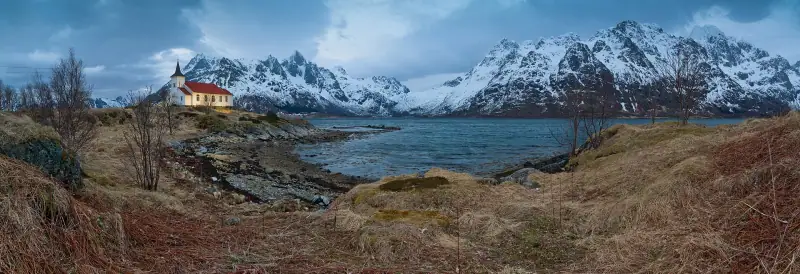
Visiting the Lofoten Islands: Complete Guide to Norway's Archipelago
Everything you need to visit the Lofoten Islands: fishing villages, hikes, northern lights, food and practical tips. 2026 guide.
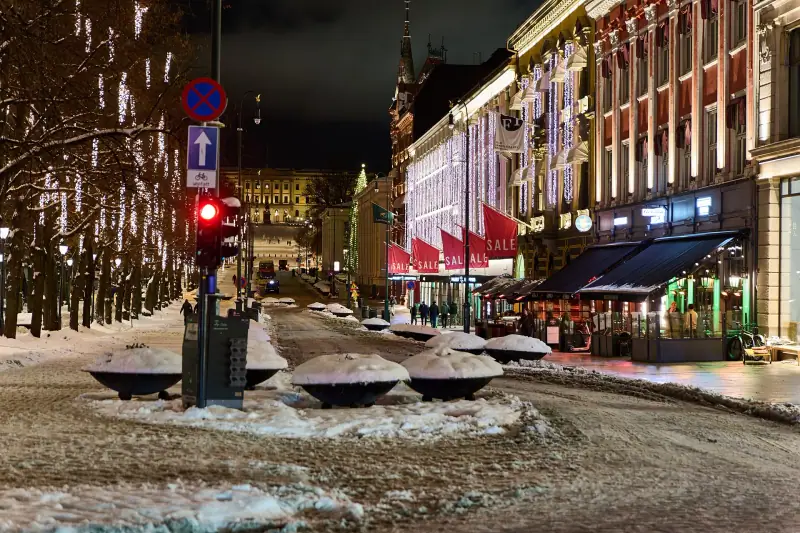
Oslo's Top Sights: 15 Things to Do
Oslo's top sights: Munch Museum, Opera House, Vigeland Park, Aker Brygge. A practical guide to visiting Norway's capital in 2, 3 or 5 days.
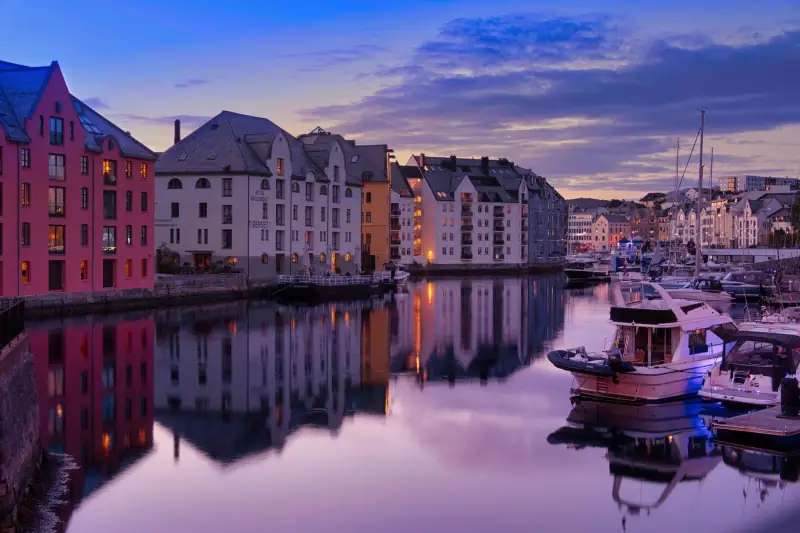
Visiting Ålesund: A Complete Guide to Norway's Art Nouveau City
Ålesund: Art Nouveau architecture, Sunnmøre fjords, Atlanterhavsparken, Geirangerfjord. A complete guide to planning your stay in western Norway.
Ready-made
Norway itineraries
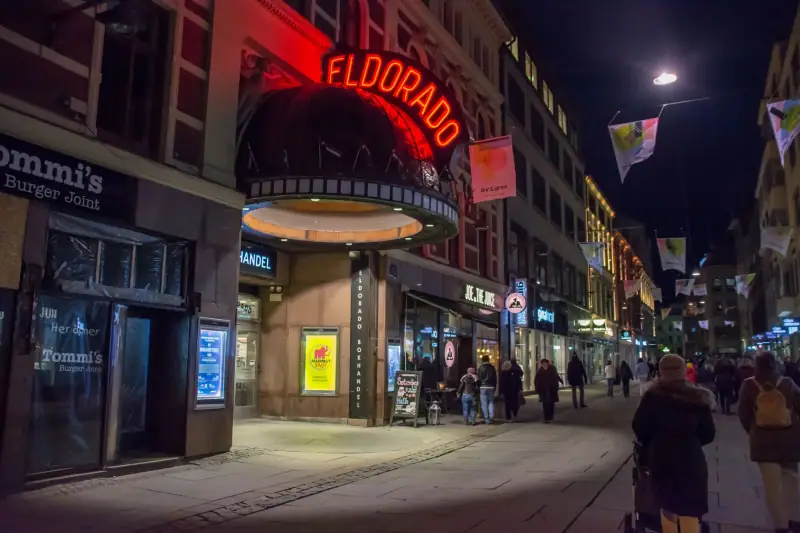
7 days
Norway in 7 Days: Complete Itinerary for Oslo, Bergen and the Fjords
OsloBergen
Can be adapted in the planner
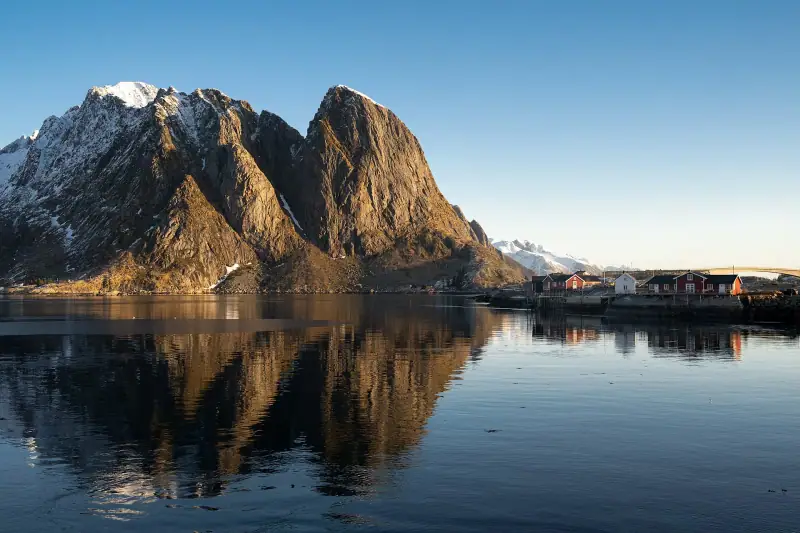
Road Trip Through the Norwegian Fjords: Itinerary and Tips
Complete guide to a fjords road trip in Norway: scenic routes, Geirangerfjord, Nærøyfjord, stops and practical driving tips.
7 days
Lofoten and Tromsø in one week: doable or too ambitious?
Combining Lofoten and Tromsø in 7 days: real distances, travel times, a day-by-day plan and alternatives if the pace is too tight.