What to see
Visiting Ulaanbaatar: a complete guide to the Mongolian capital
We may earn a commission when you book through links on this page, at no extra cost to you. We don't visit or try the places we cover: we summarize published sources. How we work
In short
- Two to three days cover the main sights: Sukhbaatar Square, Gandan Monastery, the national museum and Zaisan Hill; add a day for Terelj or the Genghis Khan statue.
- Gandan's prayer ceremonies run most mornings, generally between 9 and 11 am; the Megjid Janraisig statue is 26.5 m (87 ft) tall.
- Narantuul Market is open Wednesday to Monday (closed Tuesday), usually 9 am to 6 pm; watch for pickpockets.
- Use an official taxi app (InDriver, Yandex Go) or have your lodging call a taxi; avoid hailing taxis on the street.
Ulaanbaatar, Ulaan Baatar in Mongolian, literally “Red Hero”, is a city like no other in the world. Capital of a vast country with only 3.3 million people (half of whom live in this one city), Ulaanbaatar concentrates the paradoxes of modern Mongolia: glass skyscrapers and ger districts smoking in winter, a living Buddhist monastery and decrepit Soviet blocks, contemporary art galleries and an open-air market where cashmere and engine parts pile up. Before heading off to meet the steppes, the Gobi or Lake Khövsgöl, the capital deserves two or three days. This guide explores it from top to bottom.
Sukhbaatar Square (Chinggis Khan Square)
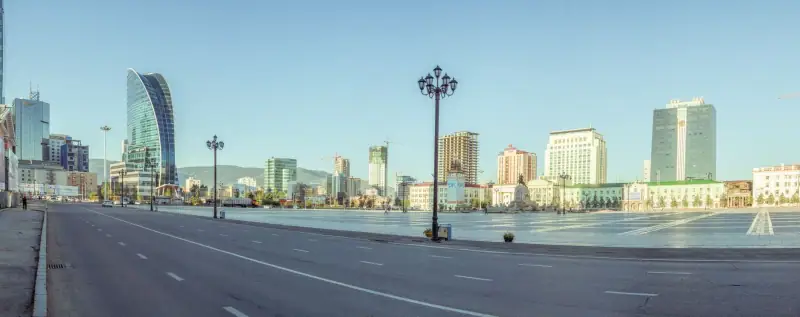
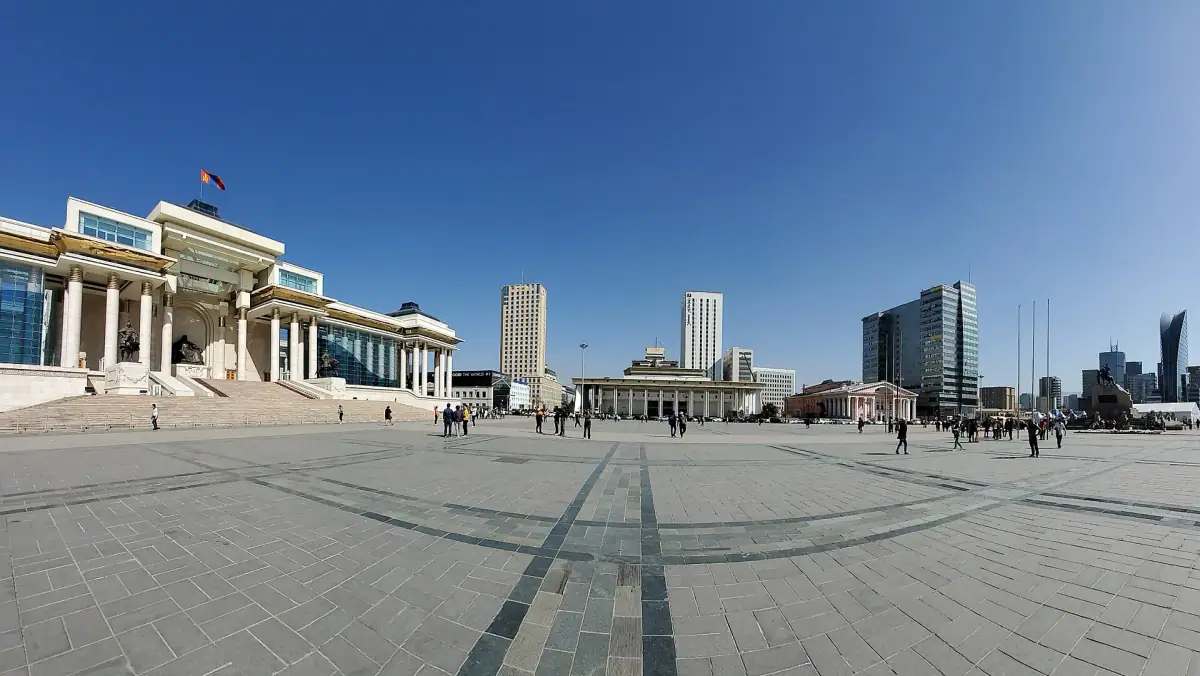
The central square of Ulaanbaatar is officially named Sukhbaatar Square, after the hero of the 1921 people’s revolution. It was renamed Chinggis Khan Square in 2013, but the change was reversed in 2016 after the Mongolian People’s Party victory, restoring its historic name. This is the political and symbolic heart of the country.
On the north side of the square stands the Government Palace (Mongolian Parliament), whose central facade is dominated by an imposing statue of Genghis Khan seated on a throne, unveiled in 2006 for the 800th anniversary of the Mongolian state. Two statues flank the entrance: Ögedei Khan on the left, Kublai Khan on the right, both shown seated on thrones, not on horseback. The whole forms a monumental composition that is especially impressive at dusk.
In the middle of the square, an equestrian statue of Damdin Sukhbaatar, hero of the 1921 revolution and founder of the Mongolian People’s Army, recalls the country’s revolutionary history. The square is lively in every season: skaters and families take it over in summer, while winter lights make it a fairy-tale setting.
Around the square are several emblematic buildings: the National Opera and Ballet Theater, the National Museum of Mongolia and several large hotels. It is the ideal starting point for exploring the city on foot.
Guided tours of Ulaanbaatar
Discover the Mongolian capital with a passionate local guide.
Gandan Monastery (Gandantegchinlen Khiid)
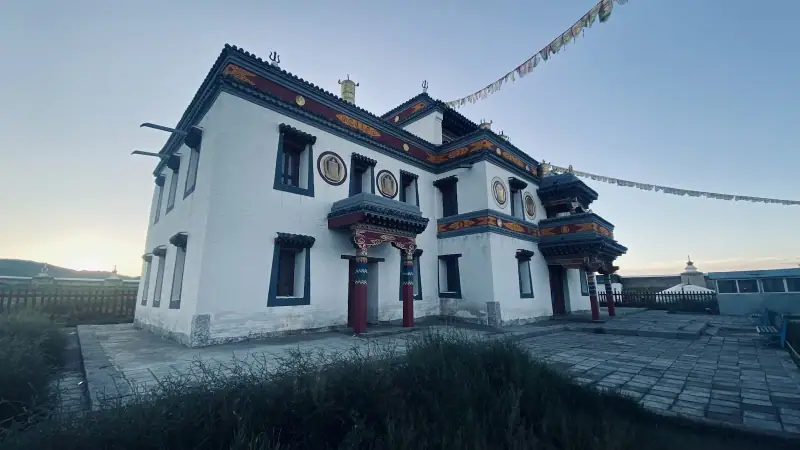
A few minutes’ walk from the city center, Gandan Monastery, full name Gandantegchinlen Khiid, “Great Place of Complete Joy”, is the largest active Buddhist monastery in Mongolia and one of the few to have survived the Stalinist purges of the 1930s. Today several hundred monks live and practice there daily.
The Megjid Janraisig statue
The highlight of the monastery is undoubtedly the colossal statue of Megjid Janraisig (Avalokiteshvara in Sanskrit), the Buddha of Compassion. At 26.5 m (87 ft) tall, it stands in a dedicated temple built to house it. The original, in gold, commissioned and financed by the Bogd Khan government (notably by Prime Minister Chin Wan Khanddorj) in 1911, was melted down by the Soviets in 1937 to make cannonballs, according to popular tradition. The current version, richly gilded and inlaid with semi-precious stones, was unveiled in 1996. Entering the temple where it stands and raising your head toward its serene face, 26 m up, is a striking experience.
Temples and monastic life
The Gandan complex includes several temples from different periods. Each morning (generally between 9 and 11 am), prayer ceremonies (puja) take place in the temples, punctuated by drums, ritual trumpets and the monks’ recitations. Attending these ceremonies, standing in the half-light among worshippers turning prayer wheels, is among the most memorable experiences in Ulaanbaatar.
The monastery campus also houses a library of sacred texts, a printing house for Tibetan sutras and a Buddhist philosophical college (datsan). Dozens of prayer wheels line the paths: worshippers spin them clockwise while reciting mantras.
Practical tips: free entry to the monastery grounds. A modest entry fee (~3,000 to 5,000 MNT) is asked to visit the Megjid Janraisig temple. Follow the rules: walk clockwise around the temples, do not enter feet first, and ask permission before photographing monks.
Museums of Ulaanbaatar
The National Museum of Mongolia
A short walk from Sukhbaatar Square, the National Museum of Mongolia traces the country’s history from prehistory to today. The collections include:
- Traditional costumes of the different Mongolian and Tuvan ethnic groups, remarkably rich and ethnographically precise
- Weapons and military equipment from the Mongol Empire era (13th-14th century)
- A full-size reconstructed traditional yurt
- Objects of nomadic life: saddles, harnesses, cooking and shamanic utensils
- A section on the Soviet era (1924-1990), often glossed over in local museums but well documented here
The English explanatory panels vary in quality from room to room. Allow two to three hours for a thorough visit.
The Chinggis Khan Museum
Opened in October 2022 (official ceremony on October 11), the Chinggis Khan Museum (also known as the National Museum in its new building) is Ulaanbaatar’s new cultural pride. Devoted to the life of Temüjin, the future Genghis Khan, and the empire he founded, it presents reconstructions, artifacts, interactive maps and spectacular displays tracing the epic of the steppe conquerors. A museum particularly well suited to families.
The Bogd Khan Winter Palace
South of the city, the Bogd Khan Winter Palace (Bogd Khaan Ordon Muzei) is one of Ulaanbaatar’s most beautiful curiosities. It was the winter residence of the 8th Jebtsundamba Khutuktu (Bogd Khan), the spiritual and temporal head of Buddhist Mongolia between 1911 and 1924. The palace miraculously survived the Soviet purges, probably because the Moscow authorities wanted to turn it into an atheist museum for propaganda use.
The collections include the Bogd Khan’s personal clothing and ceremonial costumes (including coats embroidered with baroque splendor), stuffed animal offerings from Asian dignitaries (including an elephant and a rhinoceros) and valuable Buddhist thangkas and liturgical objects. The park around the temples is pleasant for a stroll.
Hotels in central Ulaanbaatar
Find your ideal lodging near Sukhbaatar Square.
Zaisan Hill: a panorama over the city
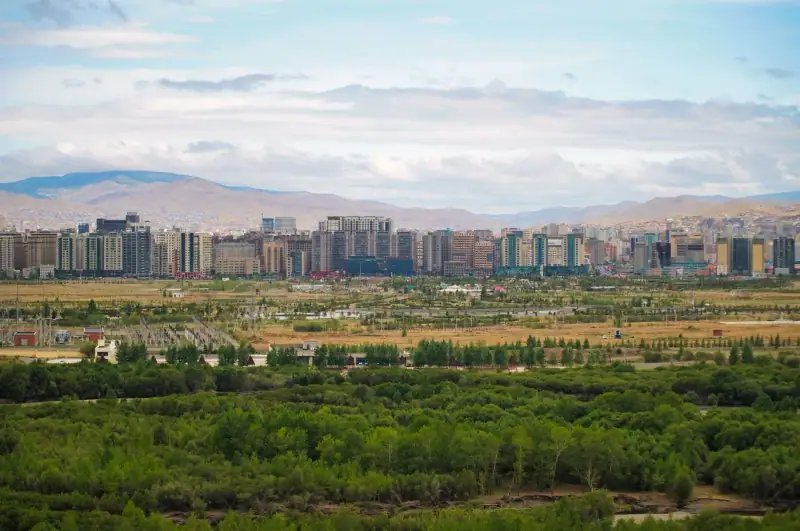
A few kilometers south of the center, Zaisan Hill is Ulaanbaatar’s emblematic hill. At the top (reached on foot by a staircase of about 600 steps, or by taxi to the foot of the climb) stands the Zaisan Memorial: an imposing circular Soviet monument, unveiled in the 1970s to commemorate Soviet-Mongolian military cooperation during World War II. The circular mosaic frieze shows Soviet and Mongolian soldiers side by side, a large-scale work of totalitarian art, now an essential historical curiosity.
But it is above all for the panorama that the climb is worth the effort: in clear weather, the whole Ulaanbaatar valley spreads out at your feet, from the immensity of the ger districts to the skyscrapers of the center and the snowy ridges of the Bogd Khan Uul mountains. In the evening, the sunset from Zaisan is one of the most photographed sights in the capital.
Tip: you can drive up to an intermediate parking lot. From there, it is about 10 to 15 minutes’ walk on a dusty path in summer, icy in winter.
Narantuul Market (Black Market)
Narantuul Market (nicknamed the “Black Market” by travelers since the Soviet era, although the term is no longer pejorative) is Ulaanbaatar’s great commercial hall. This open-air market on the east side of the city is where Mongolians from across the province come to stock up: clothes, shoes, electronics, spare parts, saddles, yurt equipment, sporting goods, food… everything is sold in bulk, in cheerful disorder.
For the traveler, it is an unforgettable dive into daily Mongolian life. You find in particular:
- Cashmere items at prices well below the tourist shops of the center
- Traditional clothing (deel) in every color
- Camping and hiking gear at affordable prices
- Authentic souvenirs: felt blankets, carved wooden objects, jewelry sets
Warning: Narantuul is crowded and pickpockets are active. Leave your wallet and passport at the hotel and keep your bag in front of you. The market is open Wednesday to Monday (closed Tuesday), generally 9 am to 6 pm.
Excursions from Ulaanbaatar
Terelj National Park (55 to 80 km / 34 to 50 mi)
Gorkhi-Terelj National Park is the most popular nature excursion from Ulaanbaatar. About 55 km (34 mi) east of the capital (1.5 hours by car), the park offers spectacular rock formations, a river, yurt camps and horseback riding. Turtle Rock (a turtle-shaped rock) and the Aryabal Buddhist temple perched in the rocks are the most visited sites. A night in a yurt extends the experience.
See the complete Terelj guide to organize your getaway.
The Genghis Khan statue at Tsonjin Boldog (54 km / 34 mi)
An hour’s drive east of Ulaanbaatar, the equestrian statue of Genghis Khan at Tsonjin Boldog is one of the largest equestrian statues in the world. About 40 m (131 ft) high (statue alone), set on a 10 m (33 ft) base, or 50 m (164 ft) in total, entirely in stainless steel, it gleams in the steppe sun. Inside the base, a museum traces the life of Genghis Khan. An elevator goes up to the horse’s mane, from where the view over the steppe is spectacular.
Car rental in Ulaanbaatar
A vehicle to explore Terelj and the region at your own pace.
Food and restaurants in Ulaanbaatar
Ulaanbaatar is a surprising city for food. Alongside the essentials of Mongolian cuisine, the capital has an increasingly rich international food scene.
Mongolian dishes to try
- Buuz: steamed dumplings filled with mutton or beef. The specialty of Tsagaan Sar (Mongolian lunar New Year) but available all year in traditional restaurants
- Tsuivan: stir-fried noodles with meat and vegetables, a hearty, comforting dish
- Khorkhog: lamb cooked with fire-heated stones, a specialty for special occasions and yurt camps
- Airag: slightly alcoholic fermented mare’s milk, the national drink, to try at least once
- Suutei tsai: salted milk tea, served in every house and yurt as soon as you arrive
Ulaanbaatar has dozens of Korean, Japanese, Indian, Italian and even French restaurants in the central district. See the guide to Mongolian food to go deeper.
Where to eat: recommended areas
The Peace Avenue area (the main artery) and adjacent streets hold the great majority of Ulaanbaatar’s restaurants, cafés and brasseries. The State Department Store shopping center (near Sukhbaatar Square) also houses a food court and restaurants on the upper floors. For the trendiest addresses, the area around Shangri-La Mall (north of the center) offers a selection of international restaurants.
Getting to Ulaanbaatar
By air (Chinggis Khaan International Airport)
Chinggis Khaan International Airport (IATA: ULN), opened in 2021, is south of Ulaanbaatar, about 60 km (37 mi) from the center (45 to 60 minutes by taxi or shuttle). It replaces the old Buyant-Ukhaa airport, now closed to commercial flights.
Check the schedules of the airlines serving ULN when you plan your flights.
By the Trans-Siberian / Trans-Mongolian railway
The Trans-Mongolian (a branch of the Trans-Siberian) links Moscow to Beijing via Ulaanbaatar. The Moscow to Ulaanbaatar trip takes about four and a half days. From Beijing, allow about 30 hours. Before planning a route through Russia, check your government’s travel advice. It is one of the great railway adventures of the world, especially appreciated by travelers who want to reach Mongolia at their own pace.
When to visit Ulaanbaatar
Summer (June-August): high season
The ideal period for most travelers. Pleasant temperatures (20 to 30 °C / 68 to 86 °F by day), long days, festivals and intense cultural life. The Naadam festival (July 11 to 13) takes place largely in Ulaanbaatar, with wrestling competitions at the national stadium, horse races at Khui Doloon Khudag (25 km / 16 mi from the center) and archery tournaments. See the guide to the Naadam festival to learn all about it.
Spring and autumn (May, September): ideal
Fewer tourists, lower rates, exceptional photographic light (September). Spring can be windy and dusty (dust storms in April and May). Autumn is often more stable and the colors of the vegetation on the surrounding hills are remarkable.
Winter (November-March): for adventurers
Ulaanbaatar is one of the coldest capitals in the world (temperatures regularly drop to -25 °C (-13 °F) or even -35 °C (-31 °F)). Winter smog (from the coal stoves of the ger districts) is a major environmental problem. Still, winter has its fans: the city is quiet, the museums empty, and the atmosphere of smoking yurts in the snow is unforgettable.
Read the guide to the best time to visit Mongolia to plan as well as possible.
Practical tips for your stay
Currency: the Mongolian tögrög (MNT) is the national currency. ATMs are plentiful in central Ulaanbaatar. Large hotels and restaurants in the center accept Visa and Mastercard. Outside the center, prefer cash.
Lodging: from grand luxury (international chains) to backpacker guesthouses, Ulaanbaatar offers every range. For a first stay, the central district (around Sukhbaatar Square or on Peace Avenue) is ideally located. See the guide to lodging in Ulaanbaatar for a detailed comparison.
Altitude: Ulaanbaatar is at about 1,350 m (4,430 ft). Ask your doctor or a travel clinic about altitude and vaccinations, and see the official travel health pages (CDC in the US, TravelHealthPro in the UK).
Internet: 4G is excellent throughout the city center. A local SIM card (Mobicom, Unitel or Skytel) costs a few euros at the airport or in the many phone shops in the center. Alternatively, check your carrier’s international plan or use a travel eSIM.
Health and insurance: travel insurance covering repatriation is advisable, as local hospitals are limited for complex care.
Budget: Ulaanbaatar is more expensive than the rest of Mongolia but remains affordable compared with Central Asian capitals. See the Mongolia budget guide for a detailed estimate.
Ulaanbaatar is not a simple stopover: it is a city of fascinating contrasts, between vodka and sutras, yurts and SUVs, Genghis Khan and K-pop. Give it the time it deserves. And when you have absorbed its rhythm, the endless steppe awaits, and the complete Mongolia guide is there to guide you to it.
Frequently asked questions
How many days do you need to visit Ulaanbaatar?
Two to three days are enough for the main sites: Sukhbaatar Square, Gandan Monastery, the national museum and Zaisan Hill. Allow an extra day for an excursion to Terelj or the Genghis Khan statue at Tsonjin Boldog.
Is Ulaanbaatar a dangerous city?
Ulaanbaatar is generally safe for tourists. The usual precautions apply: avoid walking alone at night in poorly lit alleys, keep an eye on your belongings in crowded markets (notably Narantuul) and beware of unofficial taxi scams.
What language is spoken in Ulaanbaatar?
The official language is Mongolian. In hotels, tourist restaurants and travel agencies, English is often understood. Outside these areas, a guide or a translation app is useful.
How do you get around Ulaanbaatar?
The city has a bus and trolleybus network that is not very practical for tourists. Taxis are plentiful: use an official taxi app (such as InDriver or Yandex Go) or ask your lodging to call one. Avoid hailing a taxi on the street to limit the risk of overcharging.
How do you get to Ulaanbaatar?
The main international airport is Chinggis Khaan International Airport (ULN), about 60 km (37 mi) south of the center, 45 to 60 minutes by taxi or shuttle. The Trans-Mongolian railway also reaches the city: Moscow to Ulaanbaatar takes about 4.5 days and Beijing about 30 hours.
Can you visit Ulaanbaatar without speaking Russian or Mongolian?
Yes, absolutely. In the tourist sector (rated hotels, central restaurants, museums), English is more than enough. To explore residential neighborhoods or bargain at Narantuul Market, a translation app or a local guide is recommended.
More Mongolia guides
Keep reading
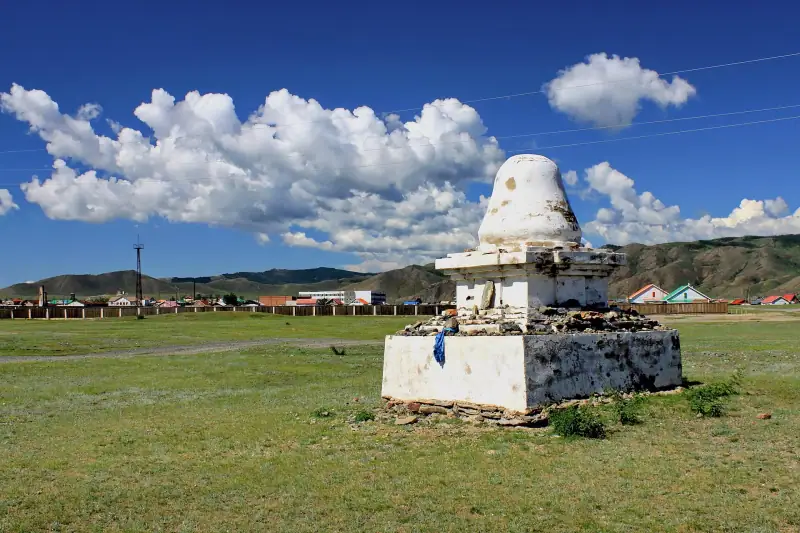
Visiting Karakorum: a complete guide to the ancient Mongol capital
Karakorum, heart of the 13th-century Mongol Empire: ruins, Erdene Zuu Monastery, the Orkhon Valley and practical tips for a memorable stay.
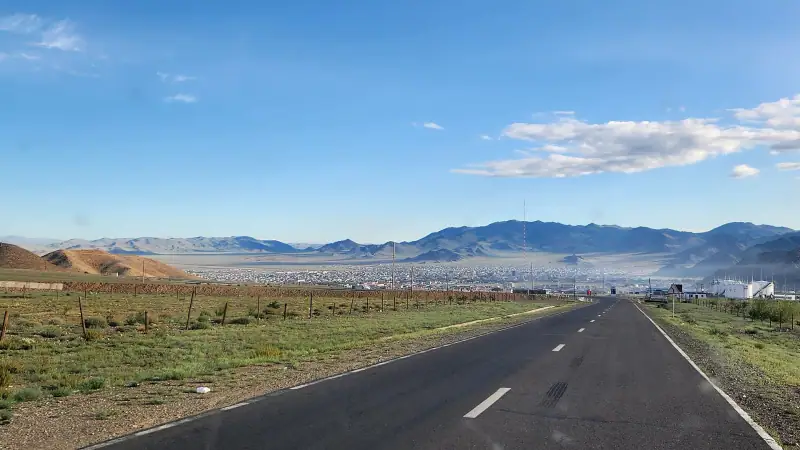
Visiting Ölgii: a complete guide to Mongolia's Kazakh capital
Ölgii, capital of Bayan-Ölgii: eagle hunting, the Golden Eagle Festival, Tavan Bogd, Kazakh culture. A practical guide to western Mongolia.
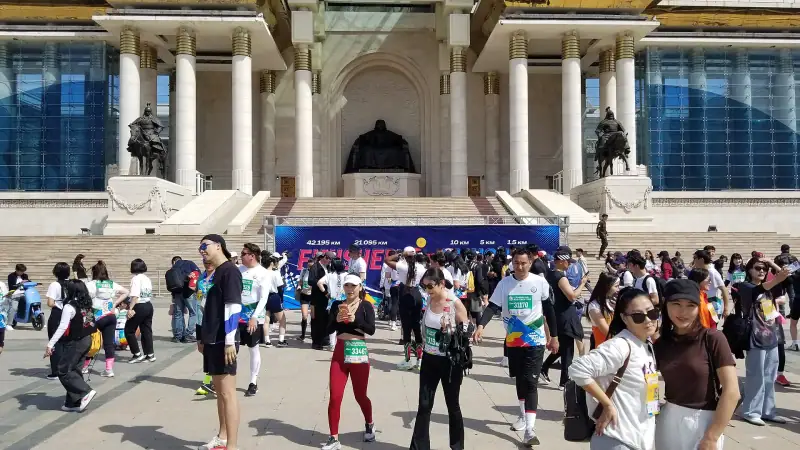
Ulaanbaatar: the top sights of the Mongolian capital
The must-see sights and activities in Ulaanbaatar: Gandan Monastery, museums, Genghis Khan statue, Narantuul Market and neighborhoods to explore.
Ready-made
Mongolia itineraries
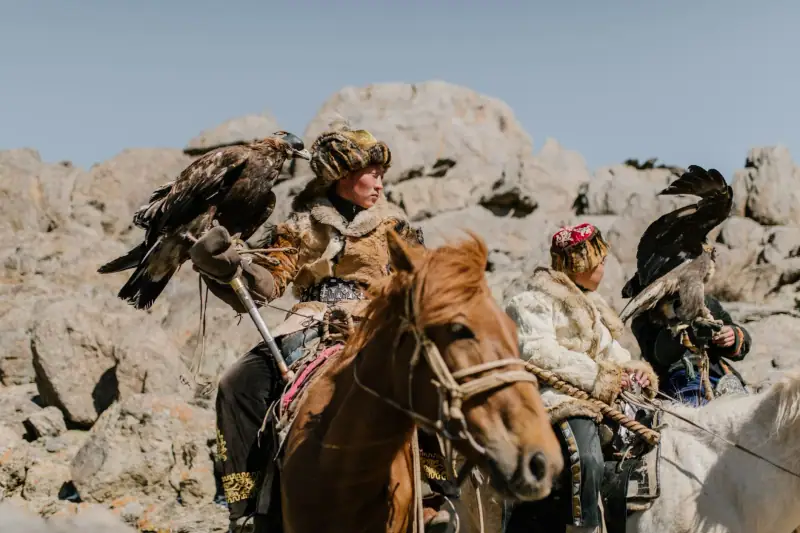
10 days
Western Mongolia in 10 days: Ölgii, the Altai and Kazakh culture
Western Mongolia in 10 days: Ölgii, the Kazakh Altai, eagle hunters, Tavan Bogd National Park. Full itinerary, budget and tips.
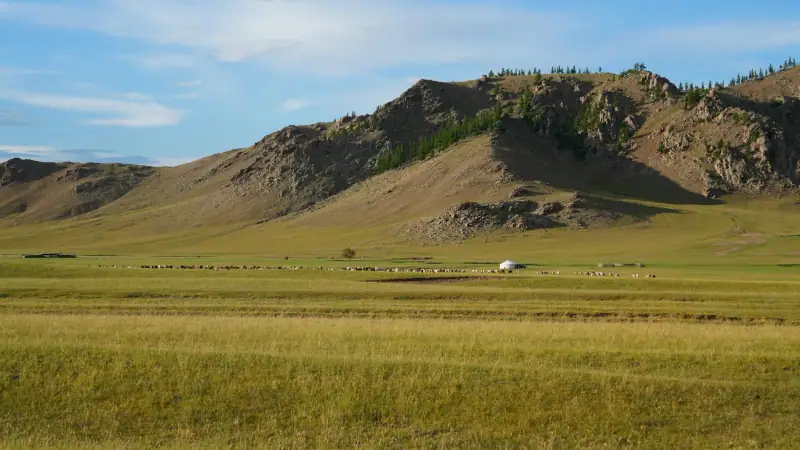
7 days
Mongolia in 7 days: a full itinerary around Ulaanbaatar
UlaanbaatarTereljKarakorumUlaanbaatar
14 days
Mongolia road trip: the grand tour in 14 to 21 days
Plan a Mongolia road trip: a 14 and 21-day itinerary through Ulaanbaatar, the Gobi, the steppe, Khövsgöl and the Altai, with logistics and budget.