What to see
Visiting Ölgii: a complete guide to Mongolia's Kazakh capital
We may earn a commission when you book through links on this page, at no extra cost to you. We don't visit or try the places we cover: we summarize published sources. How we work
In short
- Ölgii, at 1,710 m (5,610 ft), is the capital of Bayan-Ölgii; over 90% of residents are Kazakh and the town is known worldwide for eagle hunting.
- The Golden Eagle Festival is held in early October (first or second weekend); foreigners pay about 20 to 30 USD for entry.
- Most travelers fly from Ulaanbaatar (about 1 h 15 to 2 h, roughly 150 to 250 USD one way); by road it is about 1,600 to 1,800 km (990 to 1,120 mi) and 2 to 3 days.
- Tavan Bogd National Park, about 180 km (112 mi) away, is a border zone: a permit is required and must be arranged through an accredited operator.
At the end of the world, where Mongolia almost touches Kazakhstan and Russia, a town defies every stereotype of the land of the steppes. Ölgii, sometimes spelled Ulgii, is not an ordinary Mongolian town. Its markets smell of Central Asian spices, its mosques call to prayer five times a day, and its residents speak Kazakh well before Mongolian. Capital of Bayan-Ölgii province, the town is the beating heart of a nomadic Kazakh culture that survived the Soviet century, closed borders and geographic isolation. This is where the last berkutchi live, horseback hunters who raise golden eagles from childhood to make them hunting partners. This is where the Mongolian Altai mountains reach their peak, with five icy summits above 4,000 m (13,120 ft). And this is where, every autumn, one of Asia’s most breathtaking spectacles takes place: the Golden Eagle Festival. Ölgii is not on everyone’s route. That is exactly why you should go.
Eagle hunting: the living heart of a thousand-year-old tradition
The berkutchi: centuries of handed-down knowledge
The practice of eagle hunting in the steppes of Central Asia goes back at least 2,500 years, according to historical sources and Central Asian archaeological records. In Bayan-Ölgii, this tradition has been maintained without interruption through invasions, revolutions and redrawn borders. The berkutchi (from Kazakh bürkit, the golden eagle) are not mere hunters: they are the guardians of a way of life.
The female golden eagle (Aquila chrysaetos) is captured either in its nest at about 2 months old (a young eaglet that cannot yet fly), or in late autumn after its first months when it can already fly. For about 8 to 10 years, it lives on its master’s fist, sleeps in his yurt in winter, shares his meat meals, and hunts at his side for fox, wolf and hare on the snowy slopes of the Altai. At the end of its hunting career, the eagle is released into the wild to live another 20 to 30 years in freedom, a gesture of deep respect for this wild bird that fed the family.
Visiting a berkutchi family
Most berkutchi families live in yurts or houses on the outskirts of Ölgii and in the surrounding valleys. Through a local agency, you can arrange a one-day visit, or even a 2- to 3-day stay with a family. The experience generally includes:
- Watching the eagle’s daily training (lure throwing, recall to the fist)
- Trying to hold an eagle on a gloved fist (the bird can weigh 5 to 6 kg / 11 to 13 lb)
- Watching the making of the traditional Kazakh hat and hunting gear
- Sharing a meal in the yurt (beshbarmak, camel milk tea)
Plan on 80 to 150 USD per person for a day with a family, transport from Ölgii included. An experience that stays with you for a lifetime.
Tours and experiences with Ölgii's eagle hunters
Book a visit with a berkutchi family or a nomadic stay in the valleys of the Kazakh Altai.
The Golden Eagle Festival: the October gathering
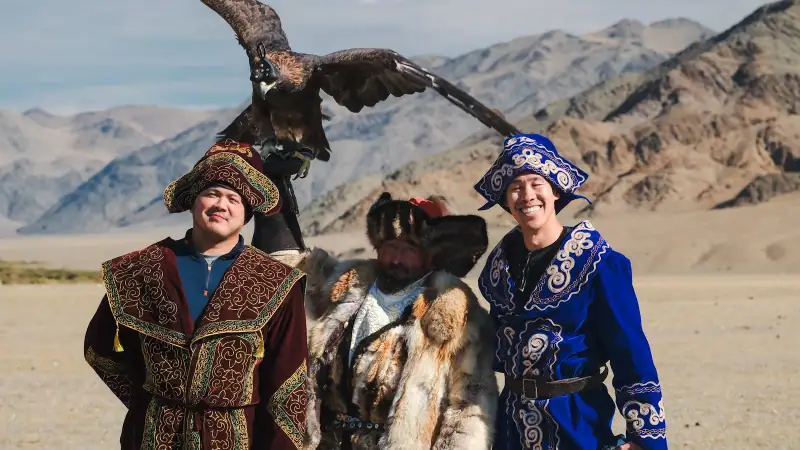
Every year, on the first or second weekend of October, the plain east of Ölgii turns into a natural arena for one of the most photographed events in the world: the Golden Eagle Festival (in Kazakh: Bürkitshi Sayisi). About 70 to 100 Kazakh hunters converge on horseback from across the province, dressed in traditional costume (fur hat, embroidered robe, leather boots), each carrying a golden eagle on a gloved fist.
The program of events
The eagle release is the flagship event: the hunter places his eagle at the top of a rocky ridge, rides down to the plain on his horse, then calls his bird at a gallop. The eagle must swoop down and land on the fist of the rider at full speed. Judges score the speed of descent, the accuracy and the elegance of the movement.
Other events complete the program:
- Tenge ilu: picking up a coin at a gallop from the saddle
- Kyz kuar: traditional mounted chase between men and women
- Camel and yak races
- Demonstrations of horseback polo (kok-boru)
Practical information: the festival runs two days. Entry costs about 20 to 30 USD for foreigners. Seats (stands) are booked through local agencies. Arrive early (7 to 8 am) to get a good spot and photograph the eagle hunters in the morning light.
Tavan Bogd: the five sacred peaks
About 180 km (112 mi) from Ölgii, Tavan Bogd National Park is one of Mongolia’s great adventures. The name literally means “five saints” in Mongolian, a reference to the five icy peaks that crown the massif. The highest point, Khuiten Peak (4,374 m / 14,350 ft), is the roof of Mongolia and sits on the Mongolia-China border. Nearby, Tavan Bogd Peak (~4,100 m / 13,450 ft) marks the Mongolia-Russia-China tripoint.
The Potanin Glacier
The Potanin Glacier, 14 km (8.7 mi) long, is the largest glacier in Mongolia. It is reached from base camp on foot (3 to 4 hours from Lake Khoton). The hike over the moraine and up to the glacier tongue offers striking views of the ice walls and rock spires of the Tavan Bogd summits. A local mountain guide is required to approach the glacier.
Lakes Khoton and Khurgan
On the road to Tavan Bogd, the twin lakes Khoton and Khurgan stretch through a valley of unreal colors: turquoise water, green banks, reflections of the snowy Altai. These high-altitude lakes shelter rich wildlife: sea eagles, otters, herds of wild yaks on the shores. Several yurt camps set up here in summer to host hikers.
Climbing Khuiten Peak
For experienced mountaineers (AD grade), the ascent of Khuiten Peak (4,374 m / 14,350 ft) is feasible in 5 to 7 days minimum, or 10 to 13 days for the recommended standard expedition. The normal route goes via the Potanin Glacier and snowy ridges with a few high-mountain climbing passages. A specialist agency in Ölgii can organize the full expedition (guides, equipment, permits). Plan on 800 to 1,500 USD per person for an all-inclusive 7- to 10-day trip.
Border-zone permit: Tavan Bogd is a border zone. A border-zone permit is free but must be obtained through an accredited tour operator, with a minimum lead time of 30 days before your visit. National park entry fees (about 10,000 MNT) are added and payable at the park entrance. Your agency or guesthouse in Ölgii can help obtain it.
Accommodation in Ölgii and the Altai
Kazakh guesthouses in town or yurt camps beside the Tavan Bogd lakes: find your base.
Ölgii, the Kazakh town at the end of the world
The town itself
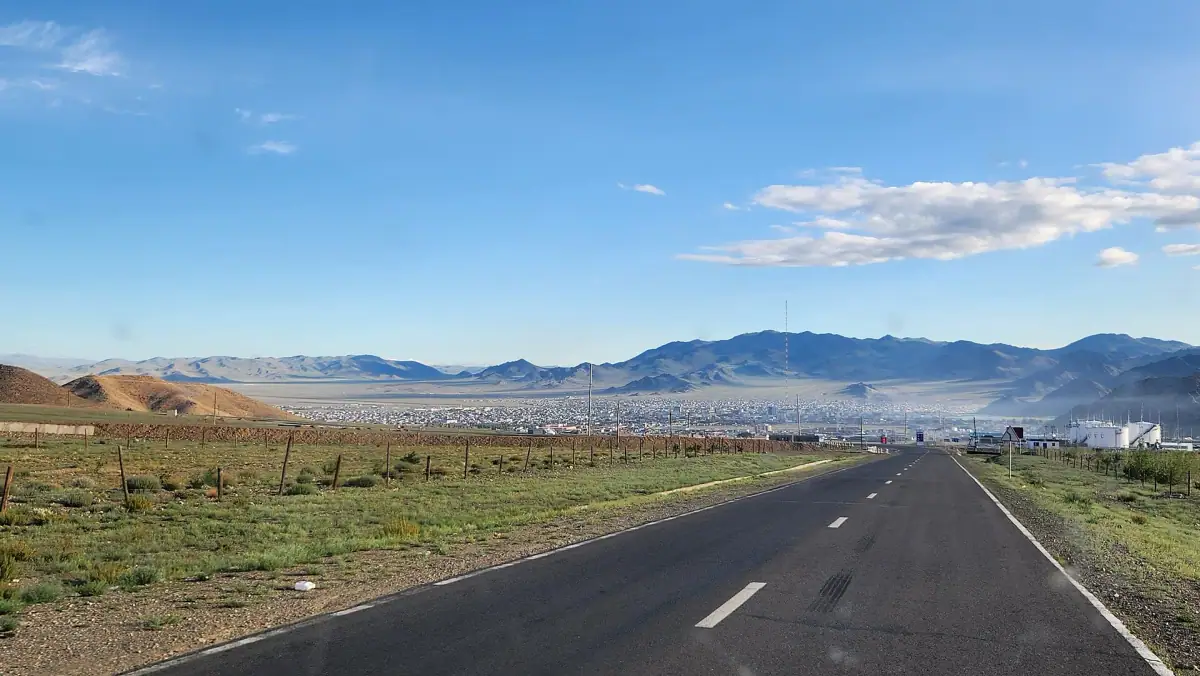
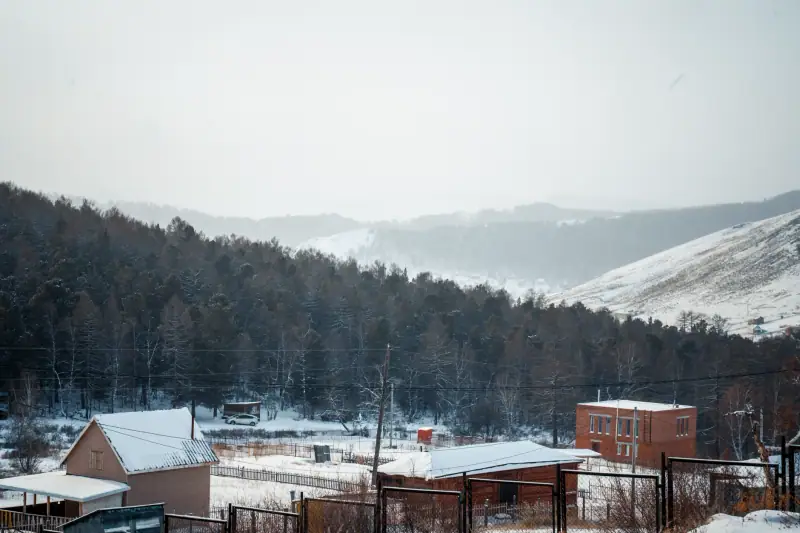
Ölgii is a town of about 50,000 inhabitants, functional and authentic rather than picturesque. Its architecture mixes decrepit Soviet blocks, low Kazakh houses and a few recent buildings. But the soul of the town is revealed in its markets, mosques and craft workshops.
The central market of Ölgii is a highlight: meat stalls (mutton, camel, yak) sit beside sellers of spices, Kazakh rugs, fur hats and chased silver jewelry. This is where you best sense the cultural difference with the rest of Mongolia: conversations are in Kazakh, women wear colorful scarves, men wear embroidered skullcaps.
The Abu-Bakr Siddiq Central Mosque (built in 1992 with funds from the United Arab Emirates) is the symbol of the community’s Muslim religious identity. It can hold several hundred worshippers and is open to respectful visitors outside prayer times.
Kazakh craft workshops
Kazakh crafts from Bayan-Ölgii are renowned across Mongolia. Several workshops and women’s cooperatives offer:
- Kazakh rugs and kilims (shirdak) in colorful felt, decorated with traditional geometric patterns
- Kazakh embroideries (suzane) on fabric, used to decorate yurts
- Silver jewelry with semi-precious stones (turquoise, coral, garnet)
- Traditional costumes and eagle-hunting accessories (gloves, fox-fur hats)
The Altai Art gallery-shop (near the central square) is a good address for buying directly from local artisans.
Getting to Ölgii
By air from Ulaanbaatar (recommended)
The distance between Ulaanbaatar and Ölgii by road is about 1,600 to 1,800 km (990 to 1,120 miles), only 1,305 km (811 mi) as the crow flies: an odyssey of 2 to 3 days on tracks. Flying is the obvious solution for the great majority of travelers.
- MIAT Mongolian Airlines and Hunnu Air operate ULN → ULG flights, with frequency and schedules varying by season (check with the airlines)
- Flight time: about 1 hour 15 to 2 hours depending on the flight
- Price: 150 to 250 USD one way in economy (book ahead in high season)
- Ölgii airport is about 3 km (1.9 mi) from the town center (10 to 15 minutes by taxi)
Tip: in July and August and during the October festival, flights fill up several weeks ahead. Book as soon as possible, ideally on the MIAT website or through a Mongolian travel agency.
By car from Khovd or Ulaangom
If you come from Khovd (the neighboring town about 216 km / 134 mi to the southeast by road), the track crosses arid landscapes of the Mongolian Altai. Allow 8 to 10 hours by 4x4. This option mainly makes sense for travelers doing a grand circuit of western Mongolia.
4x4 rental for the Mongolian Altai
An off-road vehicle is essential to explore Tavan Bogd and the valleys of Bayan-Ölgii.
Where to sleep in Ölgii
Ölgii’s lodging options are modest but sufficient as a base for excursions:
Guesthouses and small hotels
- Guesthouse Travellers: the backpackers’ favorite, run by an English-speaking Kazakh family. Dorms (15 to 20 USD) and private rooms (30 to 50 USD), Kazakh breakfast included. The host can arrange guides and excursions.
- Ulgii Hotel: in the town center, the most comfortable hotel in town. Rooms with private bathroom and TV, about 50 to 80 USD a night. Good value for the region.
- Nomads Guesthouse: authentic family atmosphere, Kazakh owners, traditional meals on request. 20 to 35 USD per person.
Yurt camps in the region
Outside town, several operators set up yurt camps in summer (June to September) in the Altai valleys, notably near Lakes Khoton and Khurgan:
- Package of night + meals + hiking access: 40 to 80 USD per person
- Some camps include Kazakh music evenings with traditional songs (dombyra)
For more options, see the Mongolia guide.
Eating in Ölgii: Kazakh cuisine
The food of Ölgii is distinct from traditional Mongolian cuisine, an open window onto Central Asian cooking:
Beshbarmak (“five fingers”): the Kazakh national dish. Wide homemade noodles topped with pieces of boiled mutton or beef, served with chyk (onion sauce). It is traditionally eaten with the fingers, hence the name. It is the festive dish offered to honored guests.
Samsa: flaky pastries filled with lamb and onions, baked in a clay oven (tandoor). Samsa vendors are everywhere in the alleys of the central market.
Kazy and Shuzhuk: dried or smoked horse meat sausages, Kazakh specialties served in slices with homemade flatbread (nan). Rich, tasty and filling, essential before a long hike.
Kumiss and Shubat: kumiss is fermented mare’s milk, slightly alcoholic and sparkling. Shubat is its camel milk equivalent, creamier and less acidic. These traditional drinks are offered in every yurt, and it is impolite to refuse.
For an introduction to Mongolian cuisine more generally, read the guide to Mongolian food.
When to visit Ölgii
Summer (June to August): trekking and nature
The summer months are ideal for trekking in Tavan Bogd National Park and hiking in the Altai valleys. Daytime temperatures reach 18 to 25 °C (64 to 77 °F) in Ölgii (but nights stay cool, 5 to 10 °C / 41 to 50 °F). Lakes Khoton and Khurgan are at their best, the steppes green up, and Kazakh nomadic families move their herds to the high pastures.
July coincides with the national Naadam holidays (July 11 to 13), celebrated throughout Mongolia including in Ölgii, with horse racing, wrestling and archery. The Kazakhs of Bayan-Ölgii take part in these festivities in their own way, adding elements of their own culture.
Autumn (September-October): the Eagle Festival
October is Ölgii’s peak season. The Golden Eagle Festival (usually the 1st or 2nd weekend of October) is the unmissable event. The Altai takes on its autumn colors (golds, oranges, ochers), the first snows dust the peaks, and the low autumn light creates extraordinary photographic conditions. The eagle-hunting season officially begins in October.
September is calmer (before the festival) but the landscapes are already magnificent and daytime temperatures are still mild.
Winter (November-March): for adventurers
Winter in Bayan-Ölgii is brutal: temperatures drop to around -10 °C to -28 °C (14 °F to -18 °F) in January and February, with occasional lower minimums in the enclosed valleys. But winter is also the traditional eagle-hunting season: the berkutchi go out in the snow to hunt fox and wolf. For well-equipped travelers, a winter stay with a hunting family is one of the most authentic experiences available in Mongolia. Few agencies offer this kind of immersion.
To plan the best time for your trip, see the guide to the seasons in Mongolia.
Practical tips for visiting Ölgii
Money: Ölgii has a few ATMs (Khan Bank, Golomt Bank) in the town center, reliable but sometimes out of order. Bring enough tögrög (MNT) from Ulaanbaatar, especially if you plan excursions to remote areas without a bank. US dollars are sometimes accepted by local agencies.
Language: Kazakh is the main language in Ölgii. Mongolian is spoken but not always fluently. English is understood in tourist guesthouses. A Kazakh translation app can be useful in daily exchanges.
Islam and cultural codes: the Kazakh community of Ölgii consists of practicing Muslims. In mosques, respect the dress code (shoulders and knees covered, shoes removed). With Kazakh families, always accept the food and drink offered; refusing is considered impolite. Never photograph without asking permission.
Altitude and trekking: Ölgii is at 1,710 m (5,610 ft); the Potanin Glacier base camp (Tavan Bogd) sits at about 3,100 to 3,400 m (10,170 to 11,155 ft) and the summits exceed 4,000 m (13,120 ft). Ask your doctor or a travel clinic about altitude before you go, and see the official travel health pages (CDC in the US, TravelHealthPro in the UK). Bring warm gear even in summer: night temperatures can drop below 0 °C (32 °F) in the Tavan Bogd valleys in August.
Local guide: a local Kazakh guide and driver is strongly recommended for any excursion outside Ölgii. Beyond unfamiliar tracks, your guide will be your interpreter, your cultural intermediary and your safety. The agencies Altai Expeditions, Nomadic Expeditions and several local operators offer full services from Ölgii. Plan on 80 to 120 USD per day for a driver-guide with vehicle.
Connectivity: mobile coverage is decent in Ölgii. In the Tavan Bogd valleys it is nonexistent. Download Maps.me with the region’s offline maps before leaving. Check your carrier’s international plan or use a travel eSIM.
Border-zone permit: to enter Tavan Bogd Park (a tri-country border zone), a permit is mandatory. You can get it at the Ölgii prefecture (allow 1 to 2 days) or through your local travel agency (the simplest solution).
Entry rules depend on your passport. Check the official travel advice of your government before you book: travel.state.gov (US), GOV.UK (UK), travel.gc.ca (Canada), Smartraveller (Australia) (checked November 2026).
Flights to Ulaanbaatar and Ölgii
Compare the best deals on flights to Mongolia and plan your connection to Ölgii.
Ölgii is not a detour but a destination in its own right. Few places in the world still have a tradition three millennia old alive in daily life, where families raise golden eagles in their yurts and take them hunting in the snows of the Altai. This miracle of cultural continuity makes Ölgii one of the most striking experiences Mongolia offers. Those who venture there do not visit an ethnographic museum: they step into a life. To fit Ölgii into a grand circuit across the country, see the Mongolia road trip guide.
Frequently asked questions
Where is Ölgii in Mongolia?
Ölgii (or Ulgii) is the capital of Bayan-Ölgii province, in the far west of Mongolia. It lies about 1,600 to 1,800 km (990 to 1,120 mi) by road west of Ulaanbaatar (1,305 km / 811 mi as the crow flies), near the borders with Russia, China and Kazakhstan. The town is nestled in a valley at 1,710 m (5,610 ft), surrounded by the foothills of the Mongolian Altai.
Why visit Ölgii?
Ölgii is the heart of Kazakh culture in Mongolia: over 90% of the population is of Kazakh origin, and the town is known worldwide for the tradition of eagle hunting (berkutchi). It is also the gateway to Tavan Bogd National Park, with its five snow-capped peaks and the highest point in Mongolia (Khuiten Peak, 4,374 m / 14,350 ft).
What is the Ölgii Eagle Festival?
The Golden Eagle Festival is held every year in October in Ölgii. Hundreds of Kazakh hunters on horseback, with their golden eagles, compete in lure-release, speed and precision events. It is one of the most spectacular cultural events in Central Asia.
How do you get to Ölgii from Ulaanbaatar?
The most practical way is by air: MIAT Mongolian Airlines and Hunnu Air fly from Chinggis Khaan Airport (ULN) to Ölgii Airport (ULG), with frequency and schedules varying by season (check with the airlines), taking about 1 hour 15 minutes to 2 hours. By bus or van from Ulaanbaatar, allow 2 to 3 days on the road (about 1,700 km / 1,056 mi of tracks). The private car trip from Ölgii to Khovd takes about 8 to 10 hours.
What is the best time to visit Ölgii?
July and August are ideal for hiking in the Altai and visiting Tavan Bogd (daytime temperatures 15 to 22 °C / 59 to 72 °F). October is the peak period for the Eagle Festival and for watching traditional hunting. Winter (November to March) is harsh (-10 °C to -28 °C / 14 °F to -18 °F in January) but offers snowy landscapes and the chance to see winter eagle hunting.
Do you need a special permit for Bayan-Ölgii?
Entry rules depend on your passport. Check the official travel advice of your government before you book: travel.state.gov (US), GOV.UK (UK), travel.gc.ca (Canada), Smartraveller (Australia) (checked November 2026). Bayan-Ölgii itself needs no special visa, but some border areas in Tavan Bogd National Park may require a border-zone permit (available from local authorities or through a travel agency in Ölgii).
Do the berkutchi (eagle hunters) welcome visitors?
Yes, many eagle-hunting families welcome visitors in their yurts, especially during the autumn months. Through a local travel agency in Ölgii, you can arrange a one-day visit or a stay with a berkutchi family to watch eagle training. These visits offer authentic contact with nomadic Kazakh culture.
More Mongolia guides
Keep reading
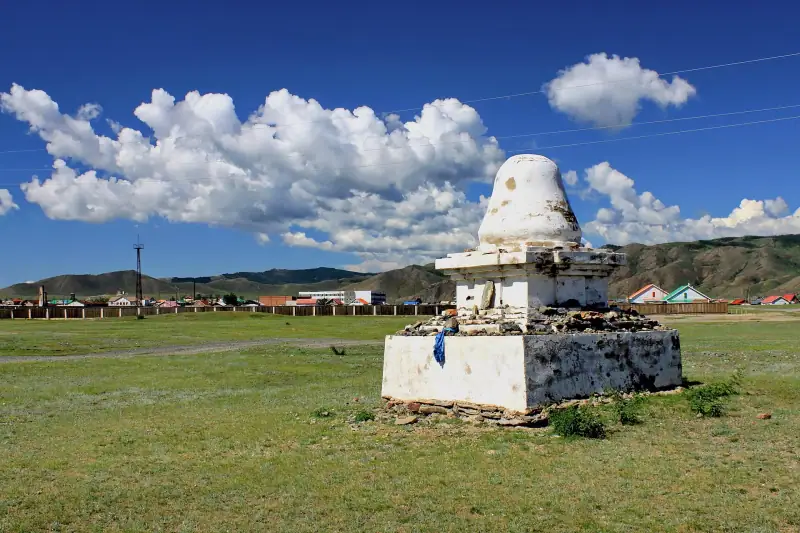
Visiting Karakorum: a complete guide to the ancient Mongol capital
Karakorum, heart of the 13th-century Mongol Empire: ruins, Erdene Zuu Monastery, the Orkhon Valley and practical tips for a memorable stay.
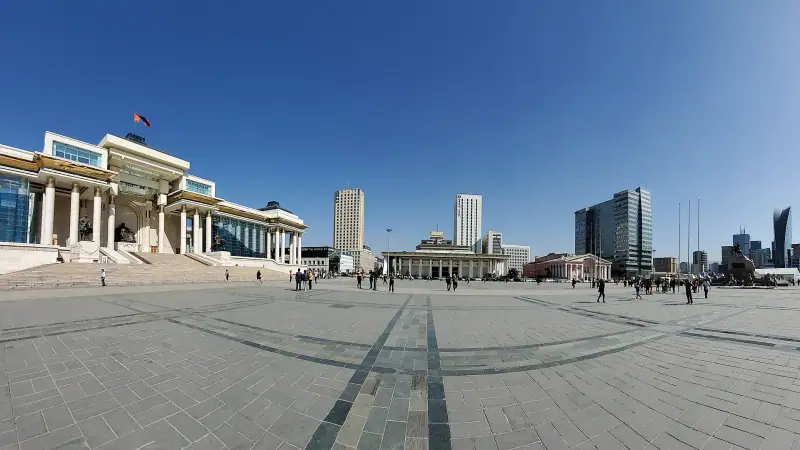
Visiting Ulaanbaatar: a complete guide to the Mongolian capital
What to do in Ulaanbaatar? Sukhbaatar Square, Gandan Monastery, museums, Narantuul Market and day trips. Complete guide to the Mongolian capital.
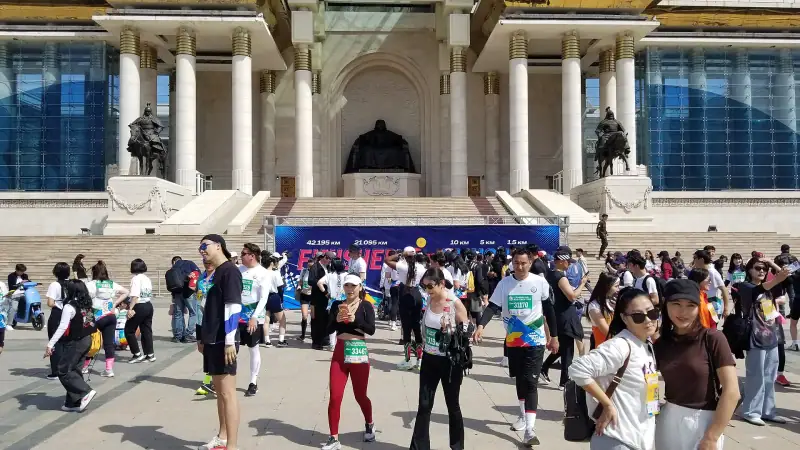
Ulaanbaatar: the top sights of the Mongolian capital
The must-see sights and activities in Ulaanbaatar: Gandan Monastery, museums, Genghis Khan statue, Narantuul Market and neighborhoods to explore.
Ready-made
Mongolia itineraries
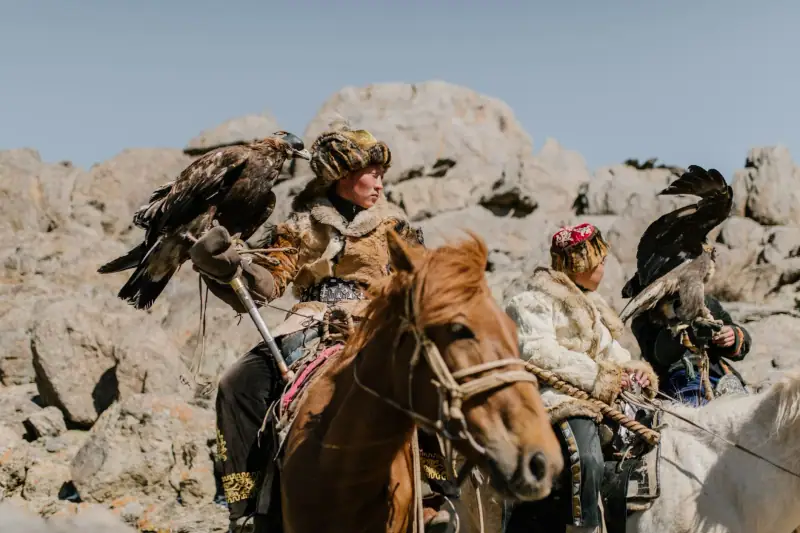
10 days
Western Mongolia in 10 days: Ölgii, the Altai and Kazakh culture
Western Mongolia in 10 days: Ölgii, the Kazakh Altai, eagle hunters, Tavan Bogd National Park. Full itinerary, budget and tips.
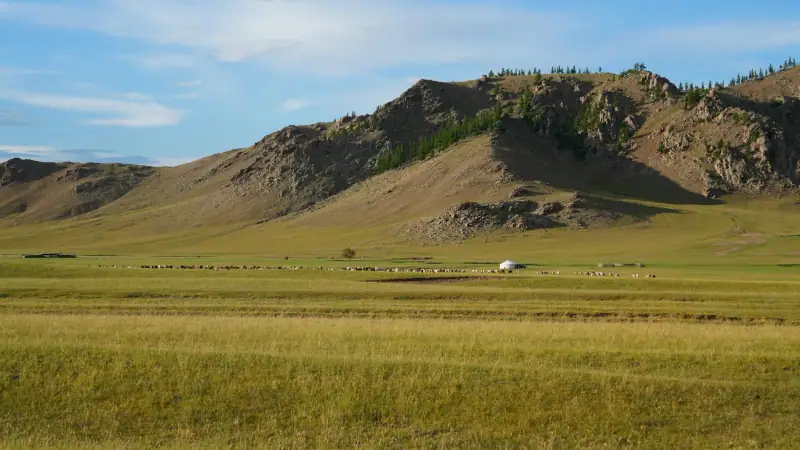
7 days
Mongolia in 7 days: a full itinerary around Ulaanbaatar
UlaanbaatarTereljKarakorumUlaanbaatar
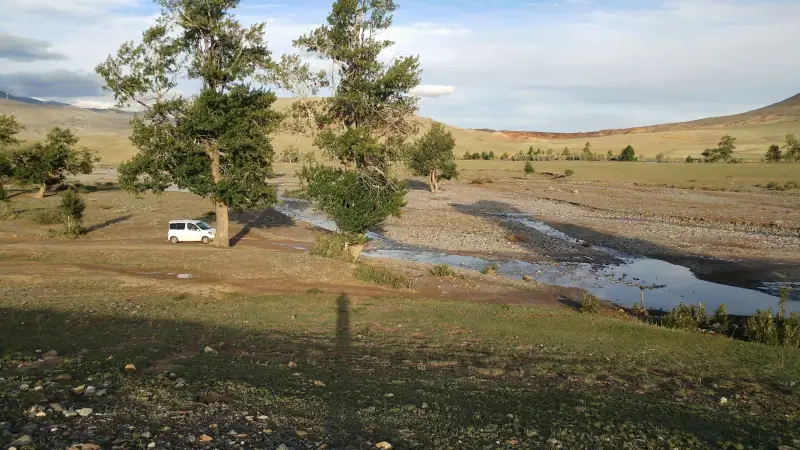
14 days
Mongolia road trip: the grand tour in 14 to 21 days
Plan a Mongolia road trip: a 14 and 21-day itinerary through Ulaanbaatar, the Gobi, the steppe, Khövsgöl and the Altai, with logistics and budget.