Itineraries
Western Mongolia in 10 days: Ölgii, the Altai and Kazakh culture
We may earn a commission when you book through links on this page, at no extra cost to you. We don't visit or try the places we cover: we summarize published sources. How we work
Day by day
- Days 1-2Ölgii: market, Kazakh culture, eagle hunter family
- Days 3-44x4 south, Lake Tolbo, yurt camp, Altai steppes
- Day 5Arrive at Lakes Khoton and Khurgan
- Day 6Hike toward the Tavan Bogd glaciers
- Day 7Free day on the shores of Lake Khurgan
- Days 8-9Return to Ölgii through Altai valleys
- Day 10Departure from Ölgii
In short
- Ten days cover Ölgii (days 1-2), the Altai steppes and Lake Tolbo (days 3-4), Tavan Bogd National Park (days 5-7) and the return to Ölgii (days 8-10).
- Flying from Ulaanbaatar takes about 1 h 15 to 1 h 20; by road it is roughly 1,600 to 1,800 km (990 to 1,120 mi) of tracks over 4 to 5 days.
- Budget on the ground: about €1,000 to €1,800 per person (~$1,160 to $2,090), excluding international flights; the 4x4 with driver-guide is the main cost.
- A local driver-guide is strongly recommended; a park permit and a border-zone permit are required for Tavan Bogd.
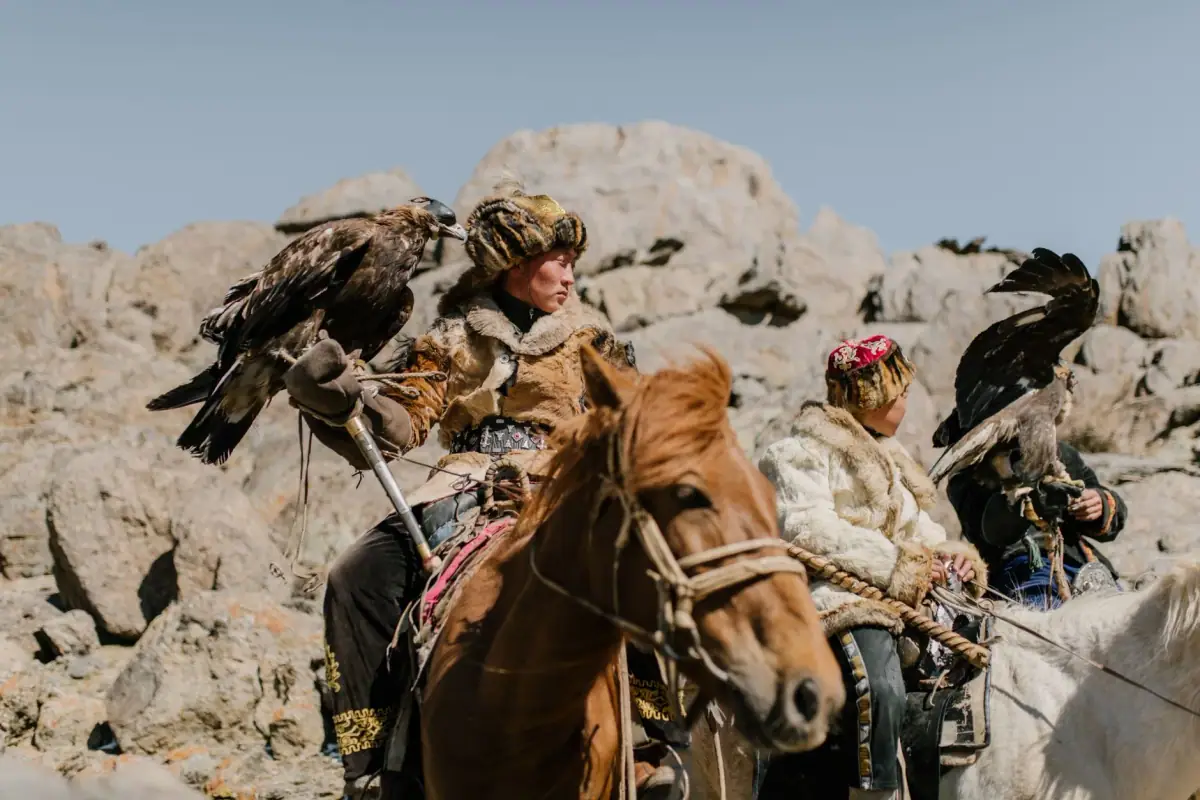
Western Mongolia is perhaps the least known destination in the country, and yet the most striking. Here, the steppe gives way to the snow-capped peaks of the Altai, and Mongolian culture yields to Kazakh tradition: yurts decorated with embroidered patterns, golden eagles on the fists of horsemen, mosques at the heart of villages. In 10 days, this circuit takes you from the town of Ölgii to the glaciers of Tavan Bogd National Park, via turquoise lakes, mountain passes and nomad camps. A journey apart, far from the beaten path.
How to organize your trip to western Mongolia
Getting to Ölgii
Ölgii (also spelled Ulgii) is the capital of Bayan-Ölgii province, in the far west of Mongolia. The town nestles in a valley at about 1,710 m (5,610 ft), surrounded by mountains that exceed 3,000 m (9,840 ft).
By air: this is the recommended option. Regular flights link Ulaanbaatar in about 1 h 15 to 1 h 20. Book several weeks ahead in high season (July and August), as seats go fast. Ölgii airport is small but functional.
By road: about 1,600 to 1,800 km (990 to 1,120 mi) from Ulaanbaatar on sometimes difficult tracks. This trip fits into a long road trip of 2 to 3 weeks; see the article on a Mongolia road trip of 14 to 21 days for details.
Organizing once you are there
Ölgii has a few local agencies offering driver-guides for the Altai. Book before you arrive: in July and August, guides are often taken. Your guide will arrange nights in yurt camps or homestays, rowboat crossings on the lakes, and eagle hunting demonstrations.
Days 1-2: Discovering Ölgii and Kazakh culture
Arriving and settling in
Land in Ölgii in late morning. Settle into your lodging: the town has a few guesthouses and small hotels run by Kazakh families, offering a first immersion in local culture. Free afternoon to recover from the flight and stroll around the town center.
Ölgii’s central market
The central market is the ideal place to take the pulse of local life. You find Kazakh crafts, such as embroidered felt rugs (syrmaq), traditional headwear and ornate saddles, as well as typical fermented dairy products like kumiss (fermented mare’s milk) or dried cheese (aaruul).
Immersion in Kazakh culture
Bayan-Ölgii province is a Kazakh enclave: Kazakh is spoken, mosques punctuate the day, and traditions are radically different from the rest of Mongolia. Use the second day to visit the provincial museum, which traces the history of the Kazakhs of Mongolia, and to walk through the outlying neighborhoods where families still live in Kazakh yurts (different from Mongolian yurts in their patterns and interior decoration).
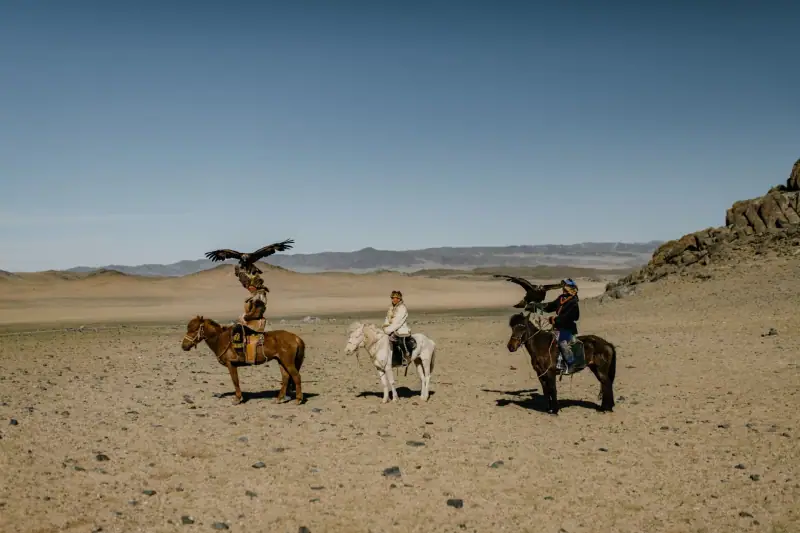
Day 2: your guide takes you to meet a berkutchi (eagle hunter) family on the edge of town. The demonstration lasts about two hours: the eagle is released from a promontory and recalled to the fist of the mounted rider. A rare and moving experience.
To prepare your visit to the town, read the guide to visiting Ölgii.
Days 3-4: Toward Lake Tolbo and the Altai steppes
Setting off by 4x4 to the south
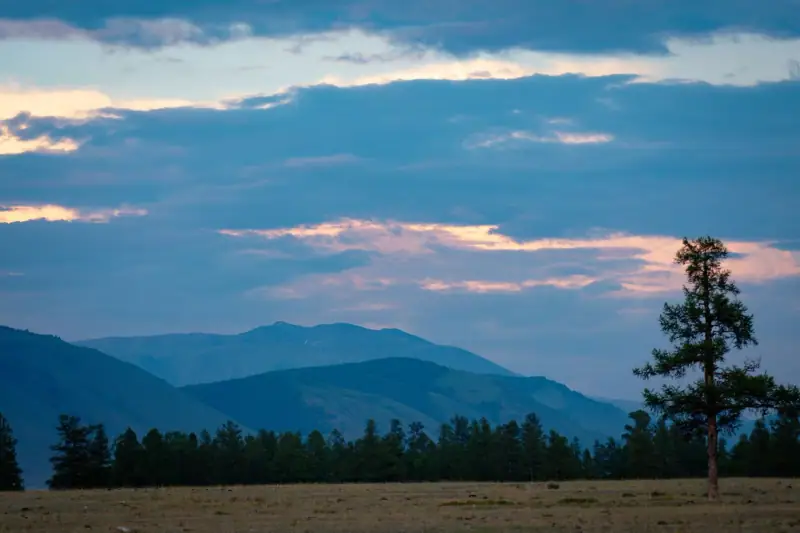
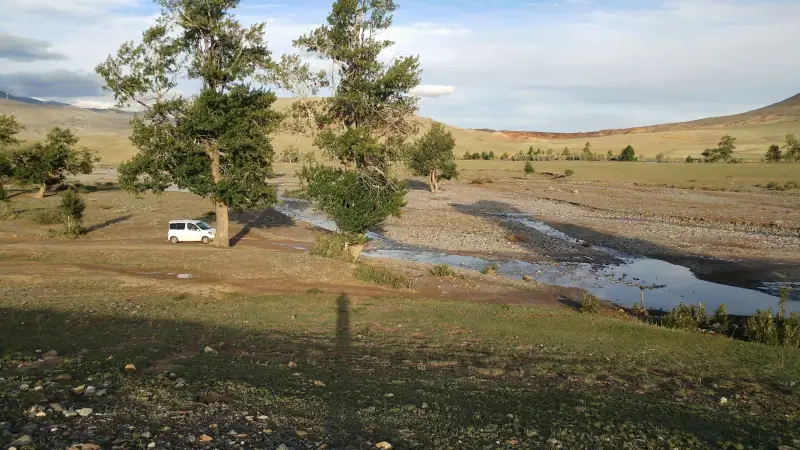
On the morning of day 3, set off in a Toyota Land Cruiser heading south. The road (partly paved, then track) crosses fast-changing landscapes: the arid hills around Ölgii give way to wider valleys where herds of yaks and Kazakh horses graze.
Lake Tolbo
About 50 km (31 mi) south of Ölgii, on the main road to Khovd, Lake Tolbo is a large high-altitude lake with steel-blue reflections, framed by snowy ridges even in summer. You can stop for a picnic or a short walk on the shores. Nomadic families camping on its banks often welcome visitors with curiosity and kindness.
Yurt camps in the Altai
Authentic nights in Kazakh yurts in the mountains of western Mongolia.
Night in a yurt camp
In late afternoon, settle into a yurt camp near the track. A night in a Kazakh yurt, with its colorful hangings and floors covered in embroidered rugs, is an experience in itself. Dinner is prepared by the host family: mutton soup, Kazakh bread fried in oil (baursak, leavened dough fritters), and goat milk tea.
Day 4: continue along the track toward the southwest, toward the first valleys of the Altai massif. High steppe landscapes dotted with cairns (ovoo), with the glacial summits of the Tavan Bogd massif starting to appear in the distance.
To better understand the geography of this region, see the article on western Mongolia and the Altai.
Days 5-7: Tavan Bogd National Park
Tavan Bogd: the roof of Mongolia
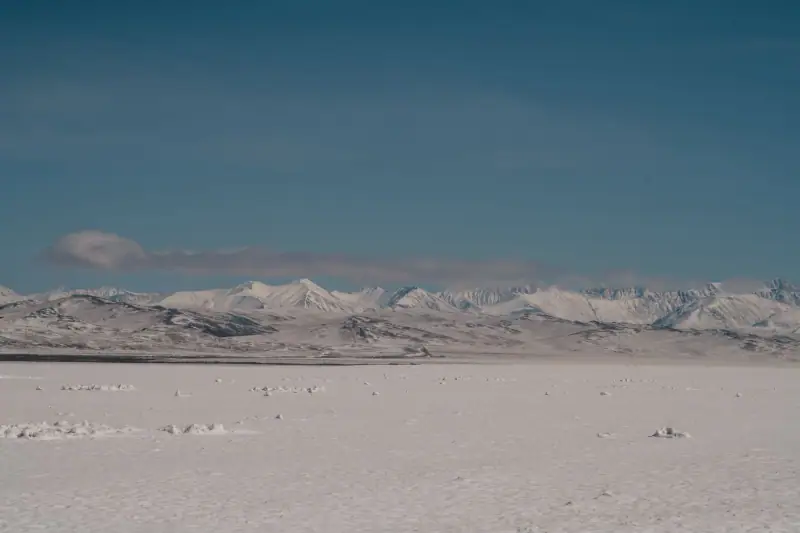
Tavan Bogd means “Five Saints” in Mongolian, the five peaks that form the highest point of the country. The tallest, Khuiten Peak, rises to 4,374 m (14,350 ft) and marks the Mongolia-Russia-China tripoint. The national park covers a beautiful mountain area, with permanent glaciers, mountain lakes and valleys inhabited by Kazakh nomads.
Access: from Ölgii, it takes about 5 to 7 hours of track to reach the Lake Khoton area, the park’s main gateway (about 180 km / 112 mi depending on the track taken). A park permit is mandatory, as is a border-zone permit to be requested in advance through an approved agency; your guide handles it (check the procedures with the park administration).
Day 5: Arriving at Lakes Khoton and Khurgan
Lakes Khoton and Khurgan are linked by a channel and form an exceptionally beautiful lake system, framed by larch forests and snowy ridges. Depending on the season and water level, a pontoon bridge lets 4x4s cross from one lake to the other. A rowboat crossing with a local is often offered as an option (about 15 to 20 minutes, a few euros; ask locally) for a more contemplative approach. The water is remarkably clear and cold.
Night: yurt camp on the shores of Lake Khoton.
Day 6: Hike toward the Tavan Bogd glaciers
Leave early on horseback or on foot toward the high valley leading to the glaciers. The climb (about 4 to 5 hours round trip from the camp) offers increasingly grand views of the Tavan Bogd summits. You can clearly make out the ice cap of Khuiten Peak and, in clear weather, the ridges of the border with Russia and China.
Note: the hike involves a significant elevation gain and an altitude that can exceed 3,000 m (9,840 ft). Bring warm clothing and a rain jacket.
Wildlife: the region is home to marmots, ibex (Altai mountain goats), and sometimes golden eagles in flight. The lake shores are visited by bar-headed geese.
Day 7: Free day on the shores of Lake Khurgan
A well-earned rest day. Walk or ride along the shores of Lake Khurgan, go trout fishing with a local family (equipment lent), or simply contemplate the scenery. If you have rented horses, a 2- to 3-hour ride in the alpine meadows is a magical moment.
Days 8-9: Back to Ölgii through the Altai valleys
Crossing the inner valleys
The return trip takes a different route, passing through less-visited valleys where Kazakh nomad families live. It is a chance to stop at a camp (with your guide’s agreement) to share tea or watch mares being milked.
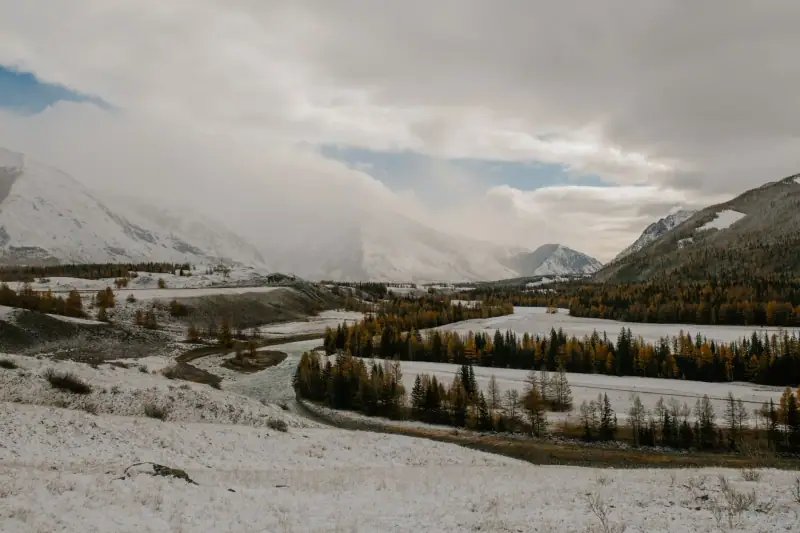
The landscapes of this day are among the most varied of the circuit: larch forests descending to the valley floors, meadows dotted with wildflowers in June and July, and mountain passes with 360° panoramas.
Horseback excursions in the Altai
Explore the valleys and passes of the Kazakh Altai on a Mongolian horse.
Arriving in Ölgii: last Kazakh evening
Back in Ölgii in late afternoon on day 9. Last evening in town: dinner in a local restaurant in the center to try the Kazakh specialties you have not yet tasted, such as beshbarmak (a large dish of meat and noodles) and samsa (meat-filled pastries), and shopping for handmade souvenirs at the market.
Day 10: Departure from Ölgii
Free morning depending on your flight time. If you leave in the afternoon, there is time for a last visit to the market or a walk on the heights of Ölgii, which offer a fine panorama of the town and the Khovd River valley. Return flight to Ulaanbaatar (or leave by 4x4 if you are continuing a road trip).
Budget for 10 days in western Mongolia
| Item | Budget | Comfortable |
|---|---|---|
| Flights Ulaanbaatar ↔ Ölgii | €100-150 (~$115-175) | €150-200 (~$175-230) |
| Accommodation (yurts + guesthouse) | €20-35/day (~$23-41) | €40-60/day (~$46-70) |
| 4x4 + driver-guide (shared by 3-4) | €25-35/day (~$29-41) | €35-45/day (~$41-52) |
| Meals (full board at camps) | €8-15/day (~$9-17) | €15-25/day (~$17-29) |
| Entry fees, park permits, activities | €5-10/day (~$6-12) | €15-25/day (~$17-29) |
| Total per day in the country | €58-95 (~$67-110) | €105-155 (~$120-180) |
Tavan Bogd park permit: on the order of 10,000 to 15,000 tögrög per person (about €3 to €4, ~$3-5); the exact amount should be checked with the park administration, payable at the park entrance or in Ölgii through your guide.
Tip: share the 4x4 among 3 or 4 travelers to divide the cost of the driver-guide. If you travel alone, ask your guesthouse whether other travelers are looking to share a circuit; this is common in high season.
For more details, see the guide to the Mongolia budget.
When to go
| Period | Conditions | Ideal for |
|---|---|---|
| June to July | Maximum greenery, flowering meadows, mild temperatures | Hiking, trekking, nature stays |
| August | Warmest temperatures, dry tracks | Road trip, horseback excursions |
| Early October | Golden foliage, Golden Eagle Festival (1st weekend) | Kazakh culture, photography |
| November to May | Snowed-in passes, difficult access | Not recommended |
For details on weather and periods to avoid, see the article on the best time to visit Mongolia.
Practical tips for the Kazakh Altai
Language and communication
Ölgii and its region are Kazakh-speaking. Signs are in Cyrillic (Mongolian alphabet) but Kazakh is the spoken language. A few words of Kazakh or a translation app will work wonders with residents. Your guide generally speaks Mongolian, Kazakh and a little English.
Money and payments
Ölgii has a few ATMs (tögrög) and exchange offices. Bring enough cash for the whole circuit: in yurt camps and rural areas, no card payment is possible.
Respecting Kazakh traditions
Most of the population is Muslim. Dress modestly to visit mosques or enter a Kazakh yurt. Always accept the tea or food offered; refusing can be seen as impolite. Always ask permission before photographing people.
Altitude and health
Tavan Bogd Park climbs to 3,000 m (9,840 ft) and more. Ölgii is at 1,710 m (5,610 ft). Ask your doctor or a travel clinic about altitude before you go, and see the official travel health pages (CDC in the US, TravelHealthPro in the UK).
The essentials in brief
Western Mongolia is a journey to another world, within a country that is already disorienting. Ten days are enough to grasp its soul: the eagles of the Kazakh hunters, the glacial lakes of Tavan Bogd, the Altai valleys where time seems to have stopped. This circuit demands serious organization (a local guide is essential, reservations in advance in season), but it rewards with landscapes and encounters that few travelers have yet experienced.
To go further, explore the complete guide to western Mongolia and the Altai or find out how to fit this region into a long road trip in Mongolia.
Frequently asked questions
How do you get to Ölgii from Ulaanbaatar?
Flying is the most practical option: regular flights link Ulaanbaatar to Ölgii in about 1 h 15 to 1 h 20, operated notably by MIAT Mongolian Airlines and Hunnu Air (frequencies vary by season: check schedules with the airlines). By road, the trip is about 1,600 to 1,800 km (990 to 1,120 mi) of tracks over 4 to 5 days, an option reserved for seasoned road-trippers who already have a long circuit planned.
What is the best time to visit western Mongolia?
June to September for green landscapes and mountain treks. Early October for the Golden Eagle Festival in Ölgii (generally the first weekend), when Kazakh hunters show off their golden eagles. Avoid November to April: passes are often snowed in and inaccessible.
Do you need a guide to visit Tavan Bogd National Park?
Yes, strongly recommended. The park is vast and lightly marked, and the tracks to Lake Khoton or the glaciers require knowledge of the terrain. A local driver-guide based in Ölgii is essential to arrange nights in yurt camps and boat crossings on the lakes.
Can you see an eagle hunting demonstration outside the festival?
Yes. Many Kazakh families in the Ölgii region welcome visitors year-round for private demonstrations. Your guide can arrange a visit to a berkutchi (eagle hunter). Allow about half a day and give notice so the family can prepare the eagle.
What budget should you plan for 10 days in western Mongolia?
Plan on €1,000 to €1,800 per person in the country (about $1,160 to $2,090), excluding international flights, depending on comfort level. The main cost is the 4x4 with driver-guide (€80 to €120 per day, about $93 to $140), to be split among the group. Family yurts and camps cost €15 to €40 per night on full board (about $17 to $46).
Is the population of western Mongolia really Kazakh?
Yes. Bayan-Ölgii province, whose capital is Ölgii, is more than 90% ethnic Kazakh. Kazakh is mainly spoken, mosques are present, and the culture (food, music, crafts) differs notably from the rest of Mongolia. It is one of the fascinating features of this region.
More Mongolia guides
Keep reading
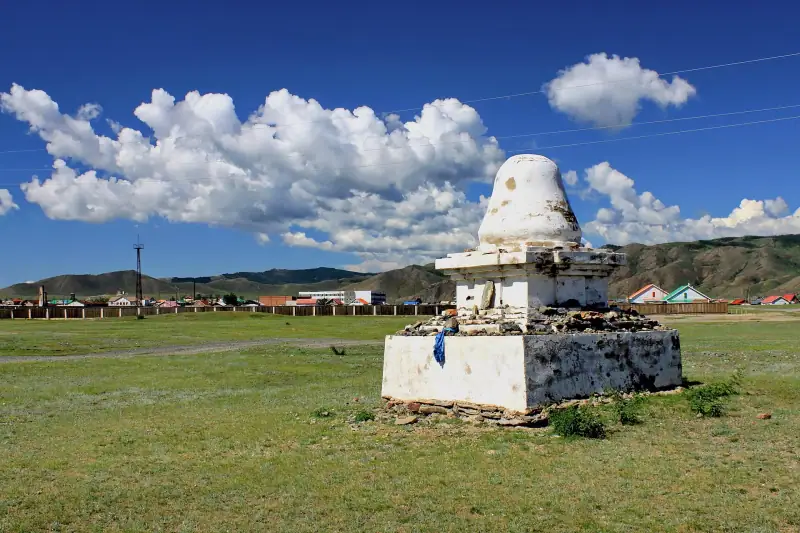
Visiting Karakorum: a complete guide to the ancient Mongol capital
Karakorum, heart of the 13th-century Mongol Empire: ruins, Erdene Zuu Monastery, the Orkhon Valley and practical tips for a memorable stay.
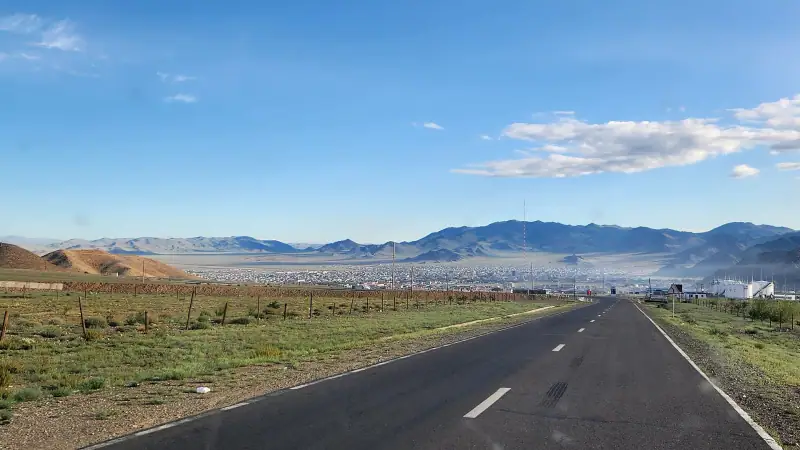
Visiting Ölgii: a complete guide to Mongolia's Kazakh capital
Ölgii, capital of Bayan-Ölgii: eagle hunting, the Golden Eagle Festival, Tavan Bogd, Kazakh culture. A practical guide to western Mongolia.
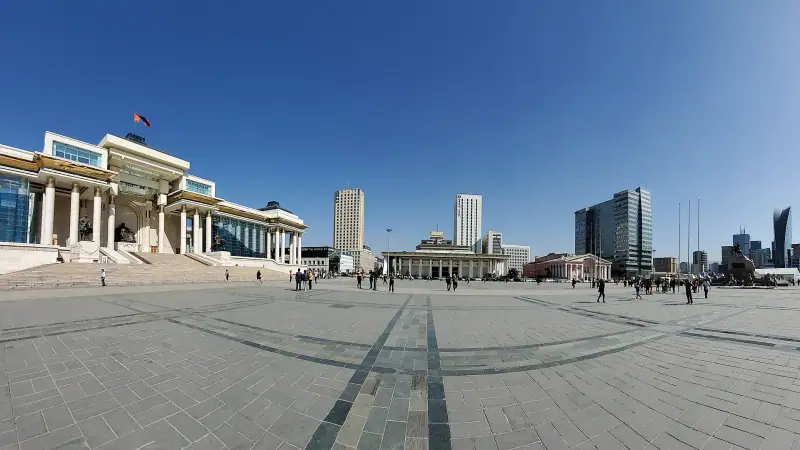
Visiting Ulaanbaatar: a complete guide to the Mongolian capital
What to do in Ulaanbaatar? Sukhbaatar Square, Gandan Monastery, museums, Narantuul Market and day trips. Complete guide to the Mongolian capital.
Ready-made
Mongolia itineraries
7 days
Mongolia in 7 days: a full itinerary around Ulaanbaatar
UlaanbaatarTereljKarakorumUlaanbaatar
14 days
Mongolia road trip: the grand tour in 14 to 21 days
Plan a Mongolia road trip: a 14 and 21-day itinerary through Ulaanbaatar, the Gobi, the steppe, Khövsgöl and the Altai, with logistics and budget.