Things to do
The Eagle Festival in Mongolia: a complete guide to attending the Berkutchi
We may earn a commission when you book through links on this page, at no extra cost to you. We don't visit or try the places we cover: we summarize published sources. How we work
In short
- The Golden Eagle Festival is usually held in early October over two days near Ölgii in Bayan-Ölgii province; exact dates vary slightly each year.
- Fly from Ulaanbaatar (MIAT or Hunnu Air, about 2 hours) and book flights and lodging 2 to 3 months ahead, ideally more; places are limited.
- Expect -5 °C (23 °F) at night to +10 °C (50 °F) by day; bring a warm coat, thermal layers and a telephoto lens (200-400 mm).
- Indicative budget for 5 days (festival plus exploring): about €265 to €635 (~$305 to $735), excluding long-distance flights.
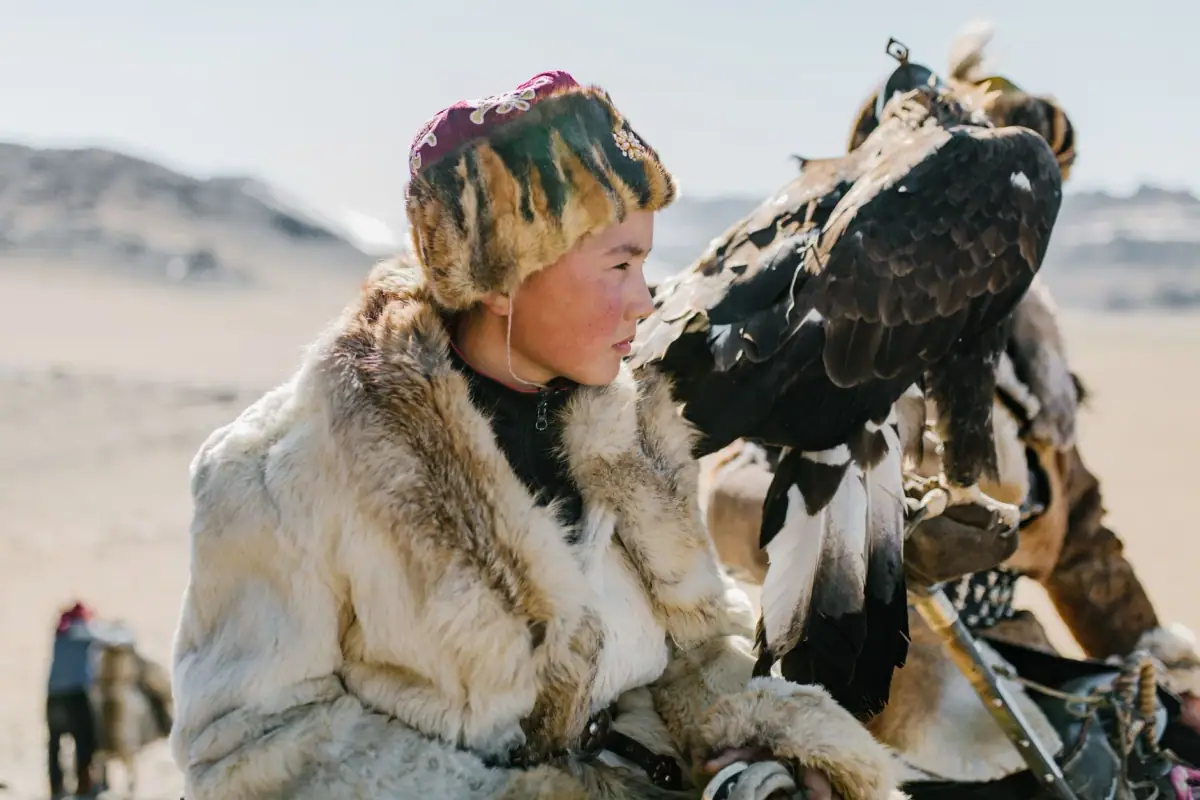
In the mountains of the Mongolian Altai, under an October sky streaked with violet clouds, a Kazakh rider bursts onto the steppe at a gallop. On his gloved fist sits a golden eagle weighing several kilos, wings half spread, eyes fixed on the rocky slope below. It is one of the most striking sights in Central Asia: the Eagle Festival in Mongolia, or Golden Eagle Festival, in Ölgii. Every year, eagle hunters called berkutchi converge on this remote corner of far-west Mongolia to perpetuate a tradition several centuries old, now also inscribed, under falconry, on UNESCO’s Intangible Cultural Heritage of Humanity list.
This guide explains everything you need to know to attend this exceptional festival: how to get there, when to plan it, what you see, and how to enjoy it fully.
What is the Eagle Festival?
The Golden Eagle Festival is an annual eagle hunting competition held in Bayan-Ölgii province, in the far west of Mongolia, inhabited mostly by the Kazakh ethnic minority. This is the community that has kept alive for generations the art of the Berkutchi, golden eagle falconry, whose origins go back more than a thousand years in the steppes of Central Asia.
The festival was formalized in its current tourist form in the 1990s, on the initiative of local communities and Kazakh cultural associations wishing to preserve and promote the practice at a time when nomadism is receding in the face of settlement. Since then, it has become one of the most photographed ethnographic events in the world, drawing hundreds of international visitors every year and fifty to a hundred participating berkutchi (the number varies by year).
The practice of the berkutchi
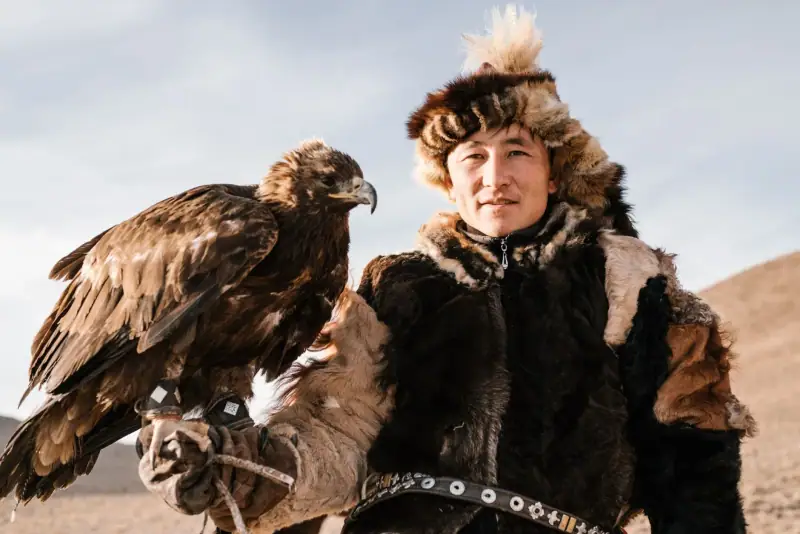
Kazakh eagle hunting uses exclusively female golden eagles (Aquila chrysaetos), larger and more powerful than males. A berkutchi captures his eagle young, an eaglet under a year old, to raise and train it for several years. This relationship between man and bird is an alliance of trust built through patience.
The eagle is trained to hunt on command, mainly red fox and hare on the Altai heights. Traditional hunting is done in winter, on horseback, at an altitude of more than 2,000 m (6,560 ft), in temperatures that can drop to -30 °C (-22 °F) or lower. After several years of service, usually five to ten, the eagle is released into the wild, in keeping with Kazakh tradition.
Guided tours for the Eagle Festival
Specialized circuits including transport, lodging and access to the competitions.
When and where is the festival held?
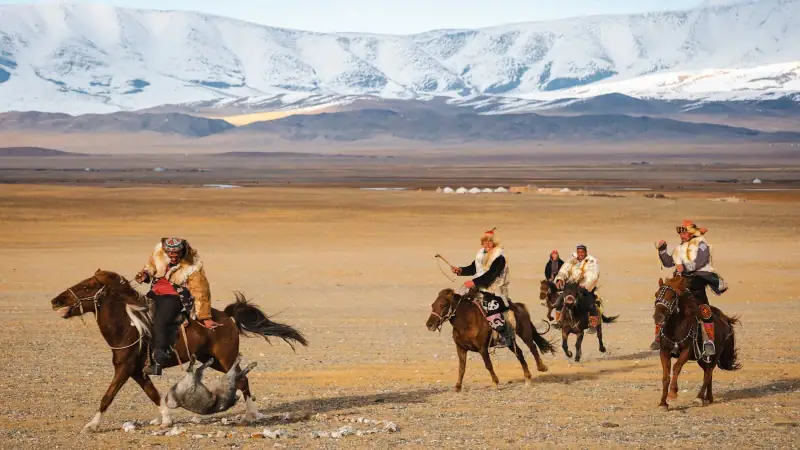
The Eagle Festival is traditionally held in early October, over two days, on the steppe and hills around the town of Ölgii, capital of Bayan-Ölgii province. The exact site varies by year, but it is generally about twenty kilometers (12 mi) from town, in a natural bowl ringed by Altai mountains, a breathtaking natural setting that amplifies the majesty of the eagles in flight.
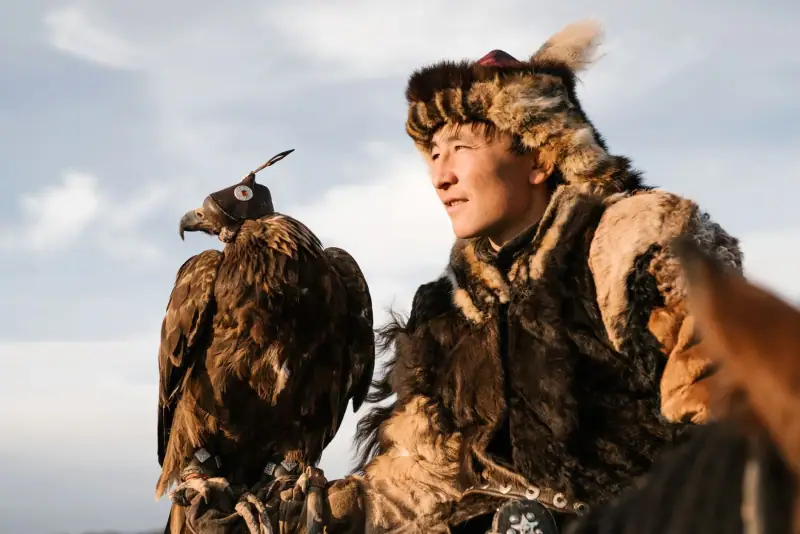
Why October? This month marks the end of the Altai summer and the start of the cold. The eagles are in top form before the winter hunting season, and the berkutchi’s ceremonial finery (heavy fox or wolf fur coats, ornate headdresses, embroidered saddles) suits the cool temperatures (-5 to +10 °C / 23 to 50 °F by day depending on altitude and weather).
Variable dates: the exact dates change slightly each year. For the edition you are interested in, check with specialist Mongolian travel agencies or Mongolian tourism information sites several months ahead.
Another edition: the spring festival
A lesser-known edition is held in March or April, in a village near Ölgii, on a smaller scale and with fewer tourists. If the October crowd puts you off, this edition offers a more intimate experience, provided you accept even lower temperatures.
The two-day program
The festival follows a fairly similar program from year to year, organized around several competitive events.
Day 1: parade and first events
The day opens with a parade in traditional costume, where the berkutchi and their families ride past the stands, eagles on fist. It is the ideal moment to photograph Kazakh costumes in detail: colorful embroidery, fox-skin hats, ornate boots.
The first events begin in the afternoon:
- Chykyruu: the berkutchi rides up a hill holding his eagle. An assistant releases the eagle from the top, and it must land on its master’s glove below at a gallop. The event judges the bird’s speed and accuracy.
- Zhulge saluu: the eagle must catch an artificial prey (a piece of fur dragged behind a horse). Judges score attack speed and the power of the grab.
Day 2: elite events and prize-giving
The best performances of the first day are rewarded and the most spectacular competitions take place:
- Taskaur: a speed test where the eagle swoops from the heights onto a target. In a dive, the golden eagle can reach about 320 km/h (200 mph), a thrilling moment even for seasoned spectators.
- Costume and presentation: a jury evaluates the rider’s traditional dress, the condition and beauty of the equipment, and the eagle’s docility.
- Prize-giving: winners receive cups, trophies and prizes in kind. The closing ceremony is an occasion for traditional Kazakh dances and songs.
On the sidelines of the official events, you can watch informal demonstrations, games of Kok-boru (a traditional Central Asian sport similar to buzkashi, played with a goat carcass, very popular in the Bayan-Ölgii region) and craft stalls selling items of Kazakh culture.
Flights Ulaanbaatar → Ölgii
Book early: festival flights are full several weeks ahead.
The berkutchi: guardians of a thousand-year-old tradition
The word berkutchi comes from Kazakh berkut, meaning golden eagle. A berkutchi is not simply a bird trainer: he is a master falconer who has spent years building a unique relationship with his animal.
Passing it down through generations
The tradition passes from father to son (and, more and more, from father to daughter, as several young women berkutchi now take part in competitions). A boy starts his apprenticeship around age 10 to 12, watching his father, before receiving his own eaglet to train. The relationship with the bird is central: the berkutchi sometimes sleeps near his eagle in the first weeks to accustom it to his presence and smell.
The glove and the equipment
The berkutchi’s equipment includes several essential items:
- The thick leather glove (sometimes reinforced with metal) that protects the rider’s arm. An adult female golden eagle can weigh between 5 and 7 kg (11 to 15 lb), with talons able to exert a pressure of several hundred kilograms per square centimeter.
- The hood (leather cap) that covers the eagle’s head to calm it between events.
- The leash (leather tether) attached to the eagle’s leg.
- The T-bar or portable perch hung from the saddle, on which the eagle can rest during rides.
The eagles: partners, not slaves
An essential point to understand: for Kazakh berkutchi, the eagle is not property but a temporary partner. Tradition holds that the bird is returned to nature after several years of partnership, generally in spring, in a release ritual. This cycle of capture, training, partnership and release is at the heart of the Kazakh nomadic philosophy that respects the freedom of wild creatures.
Getting to the festival from Ulaanbaatar
Ölgii is the town farthest from the Mongolian capital, about 1,800 to 2,000 km (1,120 to 1,240 mi) west by road, in a corner of Mongolia that shares a border with Russia and China.
By air (strongly recommended)
The fastest and most practical solution. Mongolian carriers such as MIAT or Hunnu Air operate direct flights between Ulaanbaatar (Chinggis Khaan Airport) and Ölgii, with a flight time of about 2 hours. Flight frequency rises slightly during the festival period, but seats go very fast.
Book your plane tickets at least 2 to 3 months before the festival, ideally earlier if you travel in a group. Ticket prices rise considerably in the weeks before the event.
By long-distance bus
Intercity buses link Ulaanbaatar to Ölgii, but the trip takes 2 to 3 days on roads that are often dusty or muddy depending on the weather. It is an option for long-haul travelers wanting to cross Mongolia, but not recommended if you come specifically for the festival with a tight schedule.
On an organized tour
The great majority of foreign travelers who come for the festival do so on an organized tour including plane tickets, lodging, local transport and access to the competitions. It is the simplest and often cheapest solution, and it spares you logistical headaches in a region where independent tourist resources remain limited.
The article Western Mongolia itinerary: Altai and Ölgii gives you all the leads for organizing your stay in this region.
Accommodation in Ölgii
Hotels, guesthouses and yurts during the festival: book early, places are scarce.
Where to sleep in Ölgii during the festival
Lodging is the main headache of the festival. Ölgii is a modest town, and the local hotel stock is very limited. During the festival period, it fills up in a few days.
Hotels and guesthouses in town
Ölgii has a few standard-category hotels and many guesthouses run by Kazakh families. Comfort is simple but sufficient: rooms with beds, hot water (not always guaranteed) and Kazakh meals prepared by the hosts. This is often the best way to immerse yourself in local culture.
Indicative prices: allow 30,000 to 80,000 MNT (~€8-22, about $9 to $26) per night for a double room, breakfast sometimes included.
Yurt camps near the festival site
Some organizers set up temporary yurt camps near the festival site for the two days of the event. Sleeping in a yurt a few minutes from the festival is a memorable experience, but be sure to book ahead through an agency, as these places go first.
Homestays
Kazakh families around Ölgii have a hospitality tradition similar to that of Mongolians. It is sometimes possible to stay with a nomadic family a few kilometers from the festival site. This is usually arranged through a local guide or a Mongolian agency.
For more details on lodging options, see the article Where to stay in Ölgii and Bayan-Ölgii province.
Practical tips to prepare your visit
Dressing for October at altitude
Ölgii is at more than 1,700 m (5,577 ft) altitude. In October, temperatures typically range from -5 °C (23 °F) at night to +10 °C (50 °F) by day, with a cold wind coming down from the Altai ridges. Rain and snow are not rare.
Recommended gear:
- Warm coat or hiking down jacket (down to -10 °C / 14 °F)
- Thermal underwear
- Warm gloves and beanie
- Waterproof shoes with thick soles (the ground at the site can be muddy or frosty)
- Sunscreen: altitude and October sun can surprise you
Cameras and optics
The festival is a photographers’ event. Eagles in flight are fast, so to capture the best images bring a telephoto lens (200-400 mm minimum), a tripod or monopod, and extra batteries (cold drains batteries quickly).
Money and payments
Ölgii has a few ATMs, but do not count on them with certainty during the festival (queues, breakdowns). Bring enough tögrög from Ulaanbaatar to cover your whole stay: entry fees, lodging, meals, souvenirs and tips.
Respecting Kazakh culture
A few rules of etiquette to know:
- Never photograph a berkutchi or his eagle without asking permission.
- If a family invites you for tea in their yurt, accept; refusing is considered impolite.
- Never try to touch an eagle without its master’s express agreement.
- During ceremonies and events, avoid blocking participants’ line of sight with your camera (respect for the audience is important).
Combining the festival with discovering the Mongolian Altai
The Eagle Festival is the ideal occasion to explore the Mongolian Altai, one of the wildest and least visited regions of Mongolia. Plan at least 4 to 5 extra days before or after the festival to enjoy the territory.
Around Ölgii
Bayan-Ölgii province is crossed by the highest summits in Mongolia. Mount Tavan Bogd (“Five Saints”), the highest point in the country at about 4,374 m (14,350 ft), is a few hours’ drive from Ölgii. Multi-day treks to the massif’s glaciers start from border villages.
The mountain lakes of the region, some of which remain practically invisible on tourist maps, offer landscapes of absolute serenity.
Eastward: the Altai steppe
Driving east from Ölgii on the Altai tracks, you cross the western steppe and the valleys of the Khovd River. This territory is perfect for lovers of horse trekking, wild camping and encounters with Kazakh and Tuvan nomadic families who still practice transhumance.
The guide to the western Mongolia and Altai region gives a full panorama of everything this region has to offer.
Planning the season
Since the Eagle Festival falls in early October, expect to be in Mongolia outside high season. If you want to combine the festival with a visit to other regions (Terelj, Gobi, Khövsgöl), be aware that October weather can make some steppe roads tricky. Read the guide to the best time to visit Mongolia to refine your planning.
4x4 rental for the Mongolian Altai
Essential for exploring the tracks of Bayan-Ölgii independently.
The festival in practice: budget and organization
Indicative budget for 5 days (festival plus exploring)
| Item | Indicative range |
|---|---|
| Ulaanbaatar – Ölgii round-trip flight | €150 – €300 (~$175 – $350) |
| Accommodation (4 nights) | €40 – €120 (~$46 – $140) |
| Meals | €20 – €50 (~$23 – $58) |
| Festival entry | €5 – €15 (~$6 – $17) |
| Local transport and excursions | €50 – €150 (~$58 – $175) |
| Estimated total | €265 – €635 (~$305 – $735) |
These ranges are indicative and vary with the booking period, the type of lodging and the degree of organization (tour vs independent).
Reservations: plan as far ahead as possible
Travelers who come for the Eagle Festival often make the mistake of booking too late. Recommendations:
- 6 months before: book Ulaanbaatar – Ölgii flights and lodging or a tour.
- 3 months before: confirm local transport details if you travel independently.
- Once there: bring tögrög in cash, a flask of hot water for long days outdoors, and plenty of spare camera batteries.
Attending the Eagle Festival in Mongolia means touching something you thought was reserved for history books: a living tradition, know-how passed down in the cold of the steppes, a communion between man and bird that has not changed in centuries. Ölgii is not the easiest destination to reach, but those who make the effort to come in October return with photos and memories they will keep for life. To prepare your whole trip, see the guide to the town of Ölgii and the complete western Mongolia itinerary.
Frequently asked questions
When is the Eagle Festival in Mongolia?
The Golden Eagle Festival is generally held in early October, over two days, near Ölgii in Bayan-Ölgii province, in the far west of Mongolia. The exact dates vary slightly from year to year: check with specialist agencies or the Mongolian tourism office to confirm the dates of the edition you are interested in.
What is a berkutchi?
A berkutchi is an eagle hunter in the Kazakh tradition. He raises and trains a female golden eagle (Aquila chrysaetos) for several years before using it to hunt foxes and hares on the Altai highlands. The relationship between the berkutchi and his bird is an alliance of trust, passed down from generation to generation.
How do you get to Ölgii for the festival?
Ölgii is reachable by air from Ulaanbaatar (MIAT and Hunnu Air flights, about 2 hours). It is also possible to get there by bus from the capital or from the Russian city of Barnaul, but these trips take several days. For the festival, book your flights and lodging several months ahead, as places are limited.
Can you hold an eagle yourself at the festival?
Some berkutchi agree, outside the official competitions, to let visitors pose with their eagle for a symbolic tip (generally a few thousand tögrög). This moment is unforgettable but must remain respectful: never try to touch an eagle without its master's express agreement, and always follow his instructions for safety.
Is the Eagle Festival suitable for children?
Yes, the festival is family-friendly and children are welcome. However, bring very warm clothing for the whole family: in October in Ölgii, temperatures can drop to -5 °C (23 °F) or lower, especially at altitude. The long waits between events can be exhausting for the youngest.
Are there other Eagle Festivals in Mongolia?
Yes. In addition to the main Ölgii festival, there is a spring edition in Bayan-Ölgii province (often in March), held on a smaller scale. Informal berkutchi competitions are also held at local festivals. The October edition remains the most publicized and best organized for foreign tourists.
More Mongolia guides
Keep reading
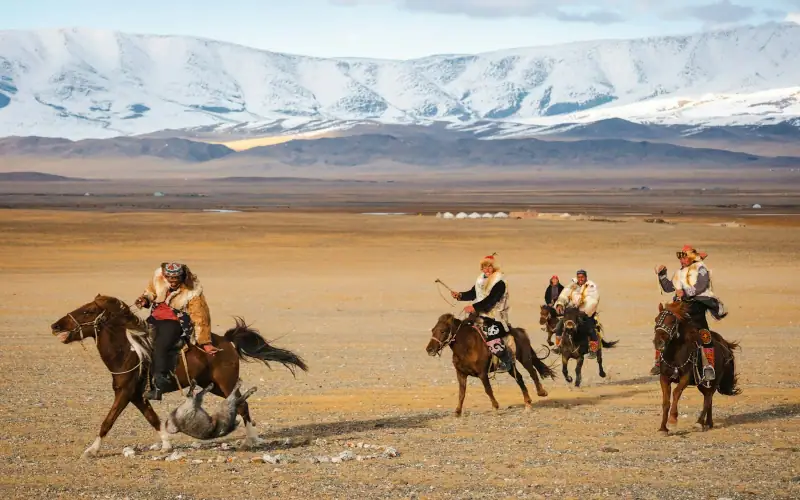
Horse riding in Mongolia: everything about riding on the steppe
Riding in Mongolia: how to ride Mongolian horses, riding circuits, required levels and tips for an unforgettable experience on the steppe.
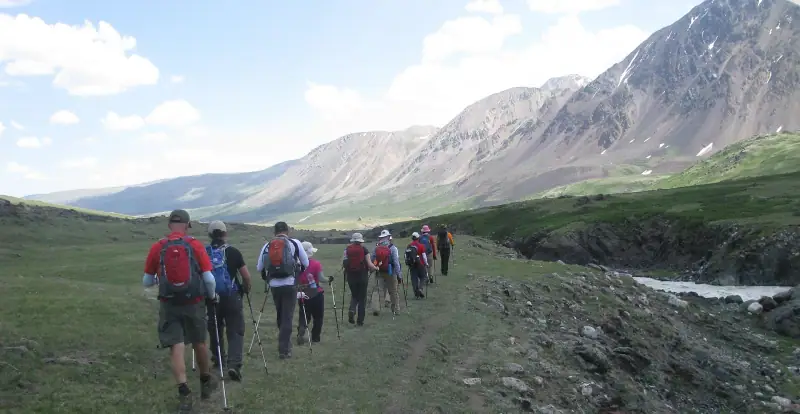
Hiking in Mongolia: the best treks and trails
The best hikes in Mongolia: Terelj, Khövsgöl, the Altai and the Gobi. Levels, durations, gear and tips for hiking the wide open spaces.
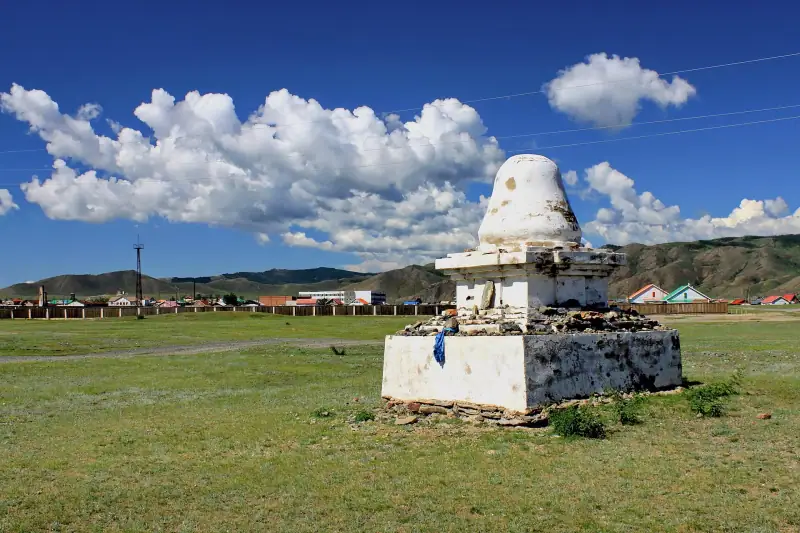
Visiting Karakorum: a complete guide to the ancient Mongol capital
Karakorum, heart of the 13th-century Mongol Empire: ruins, Erdene Zuu Monastery, the Orkhon Valley and practical tips for a memorable stay.
Ready-made
Mongolia itineraries
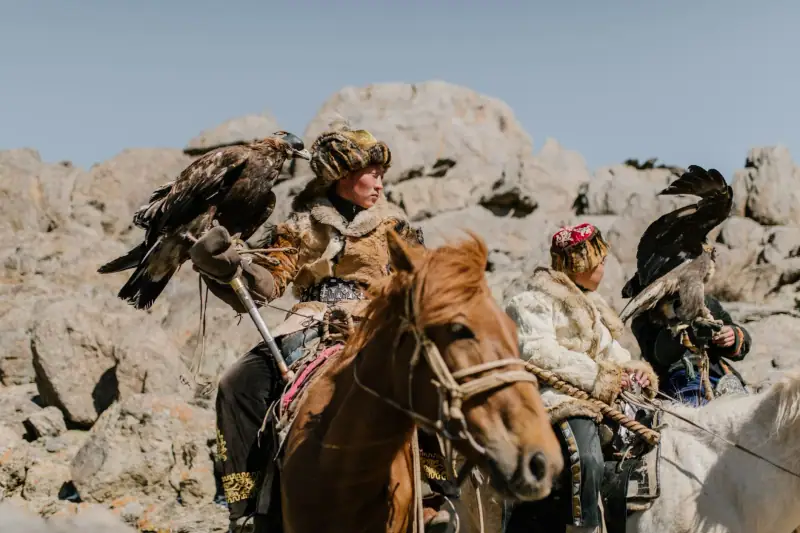
10 days
Western Mongolia in 10 days: Ölgii, the Altai and Kazakh culture
Western Mongolia in 10 days: Ölgii, the Kazakh Altai, eagle hunters, Tavan Bogd National Park. Full itinerary, budget and tips.
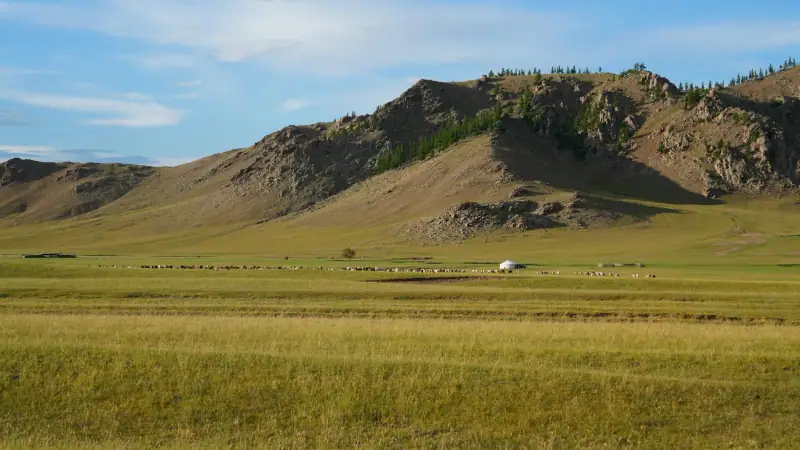
7 days
Mongolia in 7 days: a full itinerary around Ulaanbaatar
UlaanbaatarTereljKarakorumUlaanbaatar
14 days
Mongolia road trip: the grand tour in 14 to 21 days
Plan a Mongolia road trip: a 14 and 21-day itinerary through Ulaanbaatar, the Gobi, the steppe, Khövsgöl and the Altai, with logistics and budget.