What to see
Visiting Pakse: Complete Guide to the Gateway to Southern Laos
We may earn a commission when you book through links on this page, at no extra cost to you. We don't visit or try the places we cover: we summarize published sources. How we work
In short
- Pakse itself takes half a day; allow 4 to 6 days at minimum to include Wat Phou, the Bolaven Plateau and the 4,000 Islands.
- Wat Phou, a UNESCO-listed Khmer site about 45 km (28 mi) south, costs 50,000 kip including the museum.
- A semi-automatic motorbike rents for 80,000 to 130,000 kip a day; the suggested Bolaven loop is about 200 km (124 mi) over 2 days.
- Vientiane to Pakse takes about 1 hour by Lao Airlines or about 10 hours by overnight VIP bus (400,000 to 500,000 kip).
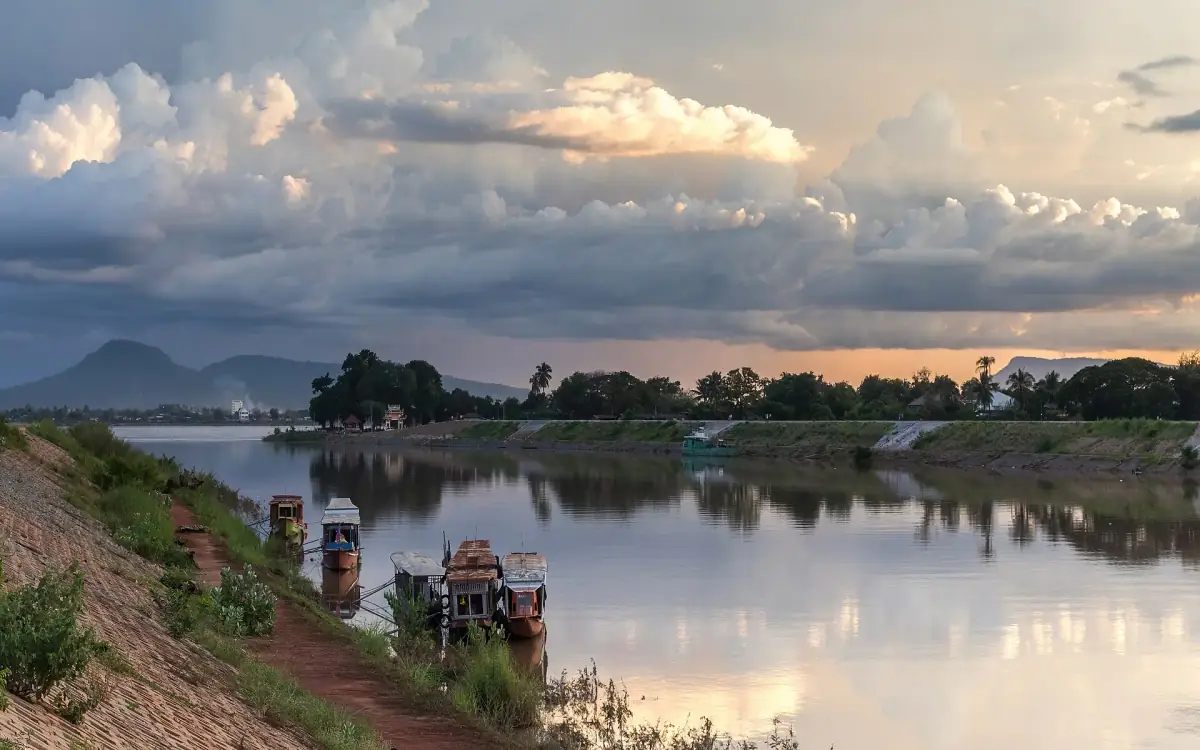
Pakse is the capital of Champasak province and the main town of southern Laos. Nestled at the confluence of the Mekong and the Se Don river, 670 km (416 mi) south of Vientiane, it is the natural gateway to three of the country’s most remarkable destinations: the UNESCO-listed Khmer temple of Wat Phou, the Bolaven farming plateau with its waterfalls and coffee plantations, and the legendary 4,000 Islands at the Cambodian border.
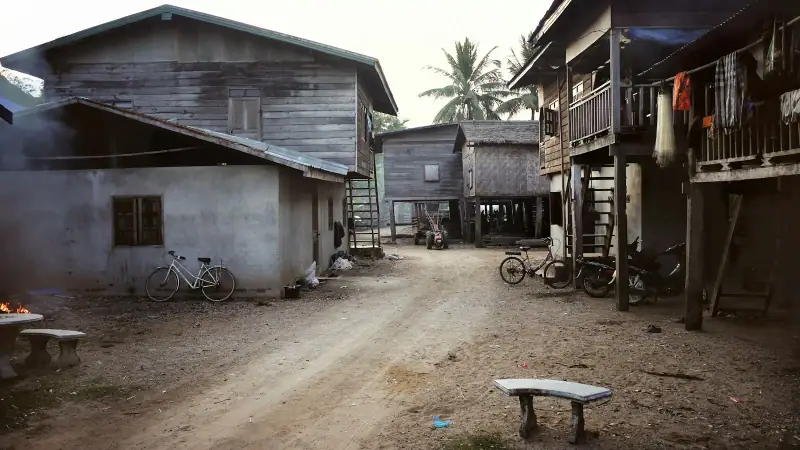
Unlike Luang Prabang or Vang Vieng, Pakse is not a postcard town. It is a lively provincial trading city, with its covered markets, avenues that come alive at dawn, guesthouses wedged between bookshops and tuk-tuks that haggle over every ride. What makes it endearing is precisely its authenticity: Pakse lives for its residents first, and travelers second. And from here you can set out to explore a southern Laos that remains one of the least visited parts of Southeast Asia.
Wat Phou: the Khmer jewel of the Mekong
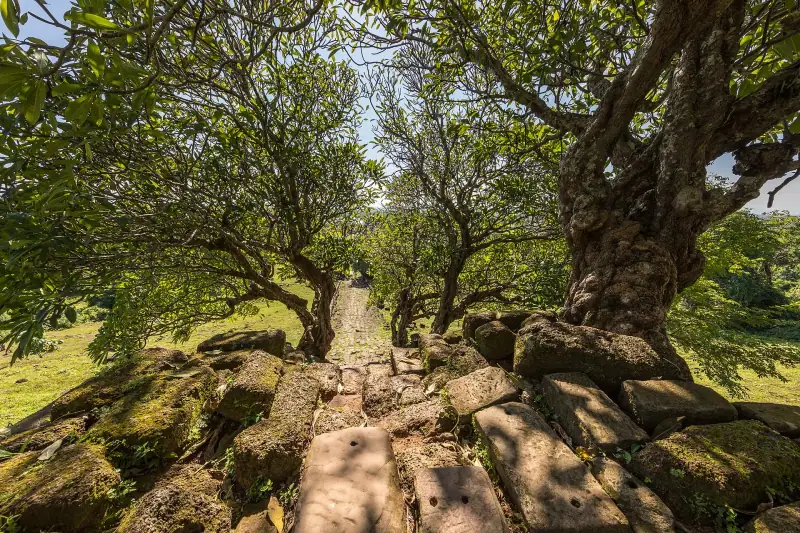
About 45 km (28 mi) south of Pakse, along a road that follows the Mekong, stands one of the most beautiful and least known Khmer complexes in the world. Wat Phou, literally “mountain temple”, is a Hindu sanctuary built between the 6th and 13th centuries, backed against the slopes of Mount Phou Kao, whose summit evokes a lingam, the symbol of Shiva in Hindu cosmology. The complex has been on the UNESCO World Heritage list since 2001.
Unlike Angkor Wat, which millions of tourists overrun each year, Wat Phou keeps an almost solitary atmosphere of discovery. Organized groups come mostly in the morning; arriving in the mid-afternoon you can explore the upper terraces in extraordinary calm, with only the macaques for company, scampering across the paths.
The architectural complex includes two symmetrical pavilions on the shores of the sacred basin, two great processional avenues lined with stone nagas (sacred serpents), terraces climbing to the main sanctuary clinging to the cliff, and a Khmer hydraulic system still partly visible. The upper sanctuary houses a reclining Buddha, a sign that the Hindu Khmers later gave way to Lao Buddhist practice.
Practical information:
- Entry: 50,000 kip (with the museum)
- Open daily, from about 8 am to 5 pm
- To reach Champasak from Pakse: local bus or tuk-tuk to the Ban Muang landing (2 km / 1.2 mi south of Pakse), then a ferry crossing. The road to the temples is then a few kilometers from Champasak town
- Best time: late afternoon for sunset over the Mekong from the terraces
Excursions from Pakse
Guided visits of Wat Phou, the Bolaven Plateau and the 4,000 Islands with a guide.
The Bolaven Plateau: coffee, waterfalls and cool air
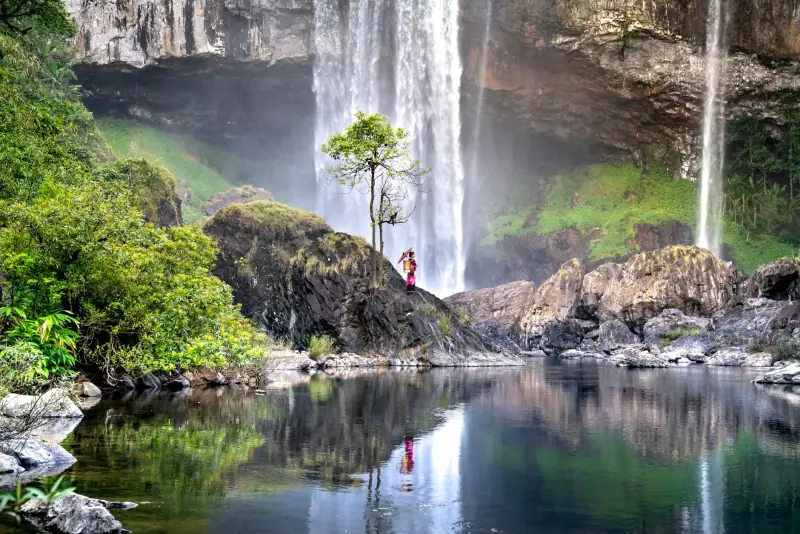
About fifty kilometers (31 mi) east of Pakse, the Bolaven Plateau rises between about 1,000 and 1,350 m (3,280 to 4,430 ft) above sea level, a welcome breath of fresh air after the heat of the Mekong. Nearly all Lao coffee grows here, and Bolaven arabica is among the most renowned origin coffees in Southeast Asia, prized by Japanese and European roasters since the 2000s.
The plateau is home to minority communities, mainly Alak, Katu and Nge, whose villages are scattered among the coffee, tea and cardamom plantations. The morning markets at Paksong (the plateau’s central town) let you meet them and buy coffee or spices directly from producers, at prices far below those in Luang Prabang’s shops.
The waterfalls are the plateau’s other great attraction. Several spectacular falls follow one another along the plateau’s edge, where rivers plunge from the rim into the plains below:
Tad Fane: one of the most impressive waterfalls in Laos, two parallel streams plunging about 120 m (394 ft) into a wooded gorge. The view from the lookout is striking. A zip line spans the gorge between the two falls, a dizzying experience for thrill seekers.
Tad Yuang: more accessible and less visited than Tad Fane, this wide, low waterfall drops into a natural pool where you can swim. The setting, with its tree ferns and lianas, is particularly photogenic.
Tad Lo: in the north of the plateau, this gentler waterfall comes with the option of a trek to Alak and Katu villages. Domestic elephants live in the area; elephant rides are offered by local operators, although the practice raises ethical questions which each visitor has to judge personally.
Recommended motorbike circuit (2 days): Pakse → Paksong (50 km / 31 mi, paved main road) → Tad Fane → Tad Yuang → night in Paksong → Tad Lo → return through the minority villages → Pakse. Allow about 200 km (124 mi) in total, part of it on secondary roads passable on a semi-automatic motorbike.
Motorbike rental in Pakse
Essential for exploring the Bolaven Plateau at your own pace. Book ahead in high season.
The 4,000 Islands: the quiet end of the world
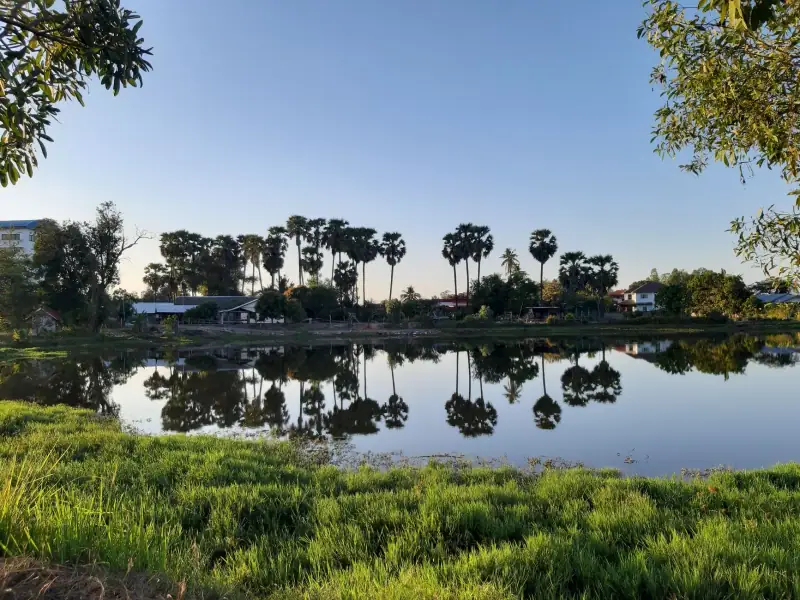
If Pakse is the gateway to the south, Si Phan Don, the “4,000 Islands”, is its hidden treasure. The Ban Nakasong landing, the end of Route 13 from Pakse (about 127 to 145 km / 79 to 90 mi, or 2 to 2.5 hours on the road), gives access to the two most visited islands: Don Det and Don Khon.
Here the Mekong widens over several kilometers and scatters into an archipelago of islets, islands and sandbanks, up to 4,000 depending on the rainy season. Life flows at a pace that even the rest of Laos, famed for its slowness, seems frantic by comparison. Children fish with lines at the water’s edge, hammocks sway in front of guesthouses, roosters crow at all hours and dogs doze on the wooden bridges.
Don Det is the island most developed for tourism, with a concentration of guesthouses, restaurants and bike rentals. Don Khon, linked to Don Det by a colonial bridge, is greener and calmer. At the southern tip of Don Khon, the Li Phi rapids (Tad Somphamit) are a succession of white cascades on the Mekong that you can watch from walkways or kayaks. The official border post with Cambodia is a few kilometers farther south, at Don Kralor / Voen Kham.
Irrawaddy dolphins have disappeared from the Lao section of the Mekong: the last known individual in this area died in February 2022. This attraction, long associated with the surroundings of Ban Hang Khone, no longer exists.
The detailed article on the 4,000 Islands gives all the practical information to plan your stay.
Getting around Pakse and the surroundings
The town of Pakse is small; its center can be crossed on foot in under an hour. For excursions, the options are as follows:
Tuk-tuk and songthaew: the local solution for short trips in town (10,000 to 30,000 kip) and for reaching the central market or the bus terminal. Always negotiate before getting in.
Motorbike rental: 80,000 to 130,000 kip a day for an automatic or semi-automatic. Essential for the Bolaven Plateau. Several agencies on the main street (Route 13) offer rentals.
Local travel agencies: for those who prefer an organized tour, many agencies offer 1- or 2-day packages covering Wat Phou + Bolavens, or Wat Phou + 4,000 Islands, with transport and guide included. Prices vary with group size.
Bicycle: central Pakse is flat, and along the Mekong a bike ride at sunrise is pleasant. Rental costs 20,000 to 30,000 kip a day at guesthouses.
Where to stay in Pakse
Pakse has a range of decent lodging, though less choice than Luang Prabang or Vientiane. Most guesthouses are concentrated around the central market (Dala Market) and on the parallel streets between Roads 13 and 38.
Tight budget (40,000 to 100,000 kip): simple rooms in a family guesthouse, a fan or shared air conditioning, a shared or private bathroom depending on the place. Ideal for travelers in transit who only need a clean bed.
Mid-range (100,000 to 300,000 kip): guesthouses with air conditioning, TV, hot water and sometimes a pool. Several decent places are in a quiet area 10 minutes on foot from the center.
Comfort (300,000 to 600,000 kip): Pakse’s few charming hotels have spacious rooms, a pool and a restaurant. Some have a view of the Mekong-Se Don confluence from the upper floors.
The guide to cheap hotels in Laos presents options for all budget categories.
Hotels in Pakse
Compare guesthouses and hotels with free cancellation and best price guaranteed.
Eating in Pakse
Pakse’s cooking reflects the food of southern Laos, closer to that of northeastern Thailand (Isan) than to the milder flavors of northern Laos. The markets are the best place to start exploring.
Dala morning market: Pakse’s central market comes alive from 5 am with stalls of noodles, sticky rice and khao tom (rice soup). This is where residents eat breakfast before work. The market also sells products from the Bolaven Plateau: green coffee, tea, cardamom, dried mushrooms and local spices at prices far below the tourist shops.
Specialties to try:
- Khao niao: sticky rice, the base of every Lao meal, served in a small woven basket
- Ping pa: Mekong fish grilled on a skewer with fresh herbs and fish sauce
- Mok pa: steamed fish wrapped in a banana leaf with lemongrass, galangal and dill, a southern specialty
- Or lam: a thick stew of local vegetables, meat and spices, less common in Pakse than in Luang Prabang but found in traditional restaurants
- Bolaven coffee: a strong Lao espresso with sweetened condensed milk, to be drunk in a cafe in the center
The guide to Lao food details all the regional specialties to try during your trip.
How to get to Pakse
By air: Pakse has an international airport (IATA code: PKZ) with regular flights to Vientiane operated by Lao Airlines. Direct flights from Bangkok Suvarnabhumi have stopped (last known Lao Airlines link in October 2024): check current connections, generally via Vientiane. The trip from Vientiane takes about 1 hour. The airport is about ten minutes from the center by tuk-tuk.
By bus from Vientiane: overnight VIP bus from Vientiane’s Southern terminal, about 10 hours for a price of about 400,000 to 500,000 kip (official Southern Bus Station fares in 2026, to confirm with the company). The air-conditioned buses are modern and the reclining seats let you sleep. It usually leaves in the evening (6 to 8 pm), arriving early in the morning in Pakse.
From Thailand: from Ubon Ratchathani (Thailand), a bus to Chong Mek then a border crossing on foot, then a bus or minibus to Pakse (about 40 km / 25 mi). This route is used by many travelers doing the Thailand → Laos → Cambodia loop.
From Cambodia: going up from Stung Treng by Cambodian Route 13 to Don Kralor, crossing the border at Don Det (or by boat from Voen Kham), then continuing to Pakse by bus or minibus.
Budget in Pakse
Pakse is generally cheaper than Vientiane or Luang Prabang for lodging and food. Excursions to Wat Phou, the Bolavens or the 4,000 Islands are the main expense.
| Item | Tight budget | Comfort |
|---|---|---|
| Accommodation | 50,000-100,000 kip | 150,000-400,000 kip |
| Meals | 15,000-35,000 kip/meal | 40,000-90,000 kip |
| Local transport | 20,000-50,000 kip | 80,000-150,000 kip |
| Excursions | 50,000-150,000 kip/day | 250,000-600,000 kip |
| Daily total | $14-23 | $35-70 |
Entry to Wat Phou (50,000 kip) and motorbike rental for the Bolavens (80,000 to 130,000 kip) are occasional extras. The Laos budget guide gives updated ranges for the whole country.
Pakse at a glance
| Info | Detail |
|---|---|
| Province | Champasak |
| Elevation | 97 m (318 ft) |
| River | Mekong / Se Don confluence |
| Distance from Vientiane | about 670 km (416 mi) |
| Airport | Pakse International (PKZ) |
| Currency | Lao kip; Thai baht often accepted |
| Connection | Wi-Fi in hotels, 4G in the town center |
| Border | Cambodia via Don Det (~130 km / 81 mi to the south) |
Pakse, starting point for an unmatched south
Southern Laos is a paradox: it is perhaps the country’s region richest in contrasts (Khmer temples, coffee highlands, a river archipelago, French colonial heritage), yet it remains largely under the radar of classic tourist circuits, concentrated on the Vientiane-Vang Vieng-Luang Prabang axis.
Pakse is the key to this region. From this crossroads town you can go down to Cambodia by the Mekong, climb to the cool of the Bolavens, go back in time to the Khmers at Champasak, or simply sit on the riverbank at sunset with a local coffee in your hand and watch the boats glide in the golden light.
It is a Laos without filters, without staging: the destination for travelers who have already done the classic northern circuit and now want to understand what the country hides behind its usual postcards.
To fit Pakse into your complete itinerary, see the Laos circuit, which offers several routes including the south.
Frequently asked questions
How many days should you plan in Pakse?
Pakse itself takes half a day. To explore the surroundings (Wat Phou, the Bolaven Plateau and the 4,000 Islands), plan 4 to 6 days at minimum. A quick weekend trip lets you see Wat Phou and one day on the Bolavens, but it is tight.
How do you get to Pakse from Vientiane?
Two main options: plane (Lao Airlines, a flight of about 1 hour from Wattay; check times on the airline's site) or the overnight VIP bus (about 10 hours, expect to pay 400,000 to 500,000 kip according to the official Southern Bus Station fares in 2026). The bus usually leaves in the evening from Vientiane's Southern terminal and arrives early in the morning. There are also options from Bangkok via Ubon Ratchathani (Thailand), crossing the border at Chong Mek (Thai side) / Vang Tao (Lao side).
Do you need to rent a motorbike to explore the Bolaven Plateau?
It is strongly advised. The Bolaven Plateau is vast and the waterfalls are scattered over dozens of kilometers. A semi-automatic motorbike can be rented in Pakse for 80,000 to 130,000 kip a day and gives total freedom. Agencies also offer organized one- or two-day tours if you prefer not to drive. The main road to Paksong is paved and in good condition.
Is Wat Phou really worth the detour?
Yes, absolutely. Wat Phou is one of the best-preserved Khmer complexes outside Cambodia and has been on the UNESCO World Heritage list since 2001. The setting, backed against Phou Kao mountain on the banks of the Mekong, is striking. Unlike Angkor, crowds are modest. Sunset from the upper terraces over the river is one of the finest views in Laos.
Can you visit the 4,000 Islands from Pakse as a day trip?
Technically yes, but it is not recommended. The road from Pakse to the Ban Nakasong landing is about 127 to 145 km (79 to 90 mi), or 2 to 2.5 hours on the road. The round trip leaves little time there to enjoy the easygoing life of the islands, which is precisely the main point. Plan at least one night on Don Det or Don Khon.
When should you visit Pakse and southern Laos?
The dry season (November to April) is the best time. In November-February temperatures are pleasant (25 to 30 °C / 77 to 86 °F) and the sky clear. March-April are hotter (up to 38 to 40 °C / 100 to 104 °F) but dry. The rainy season (May to October) makes the Bolaven Plateau even greener and the waterfalls swollen, but some tracks become slippery and Mekong crossings less certain.
Can you go from Laos to Cambodia from Pakse?
Yes. The Voen Kham / Don Kralor border post (via Don Det) lets you reach northern Cambodia on foot or by boat, then continue to Stung Treng and Phnom Penh. It is a popular crossing on the route between Laos and Cambodia. Entry rules and visas for Cambodia depend on your passport: check the official travel advice of your government before you go (travel.state.gov for the US, gov.uk/foreign-travel-advice for the UK, travel.gc.ca for Canada, smartraveller.gov.au for Australia; checked November 2026).
More Laos guides
Keep reading
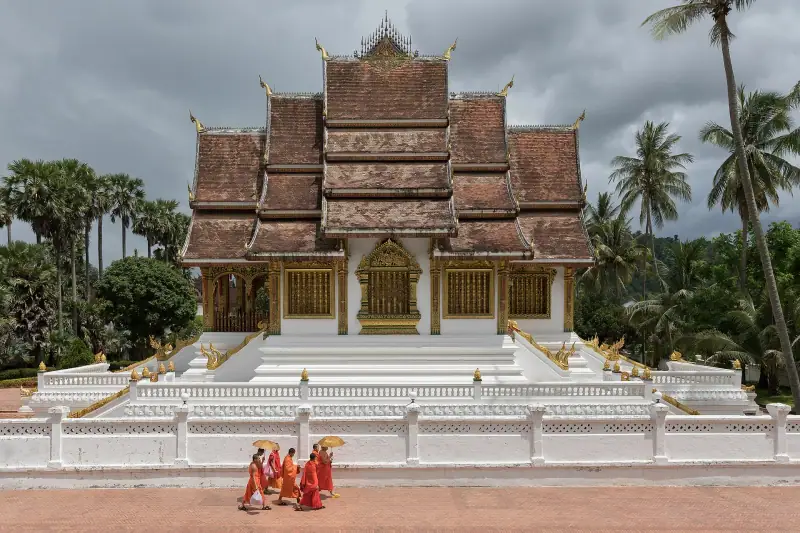
Luang Prabang: The 15 Must-Sees of Laos's Royal Town
What to see in Luang Prabang? The 15 top sights and activities of Laos's spiritual capital: temples, waterfalls, tak bat and markets.
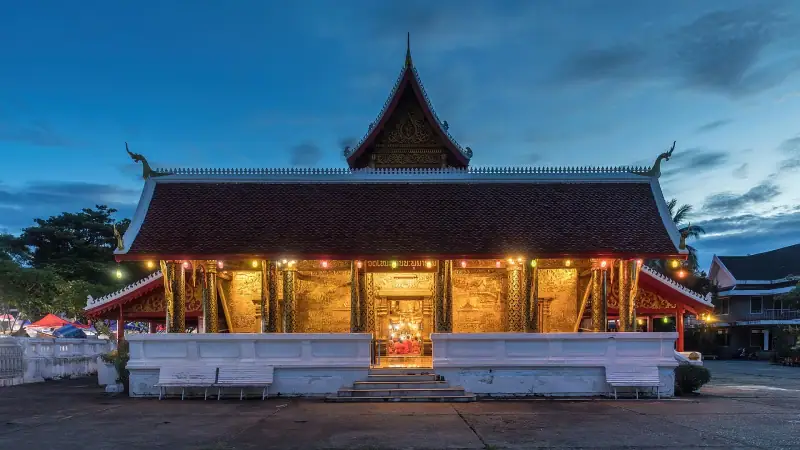
Visiting Luang Prabang: Complete Guide to Laos's Former Royal Capital
Complete guide to Luang Prabang: temples, tak bat, Kuang Si falls, Pak Ou, night market. Lodging, transport, budget and practical tips.
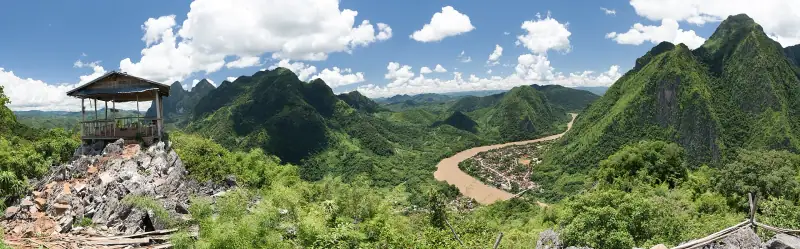
Visiting Nong Khiaw: Complete Guide to Northern Laos's Gem
Complete guide to Nong Khiaw: karst cliffs, Nam Ou, caves, village treks, Muang Ngoi. Lodging, transport and practical tips.
Ready-made
Laos itineraries
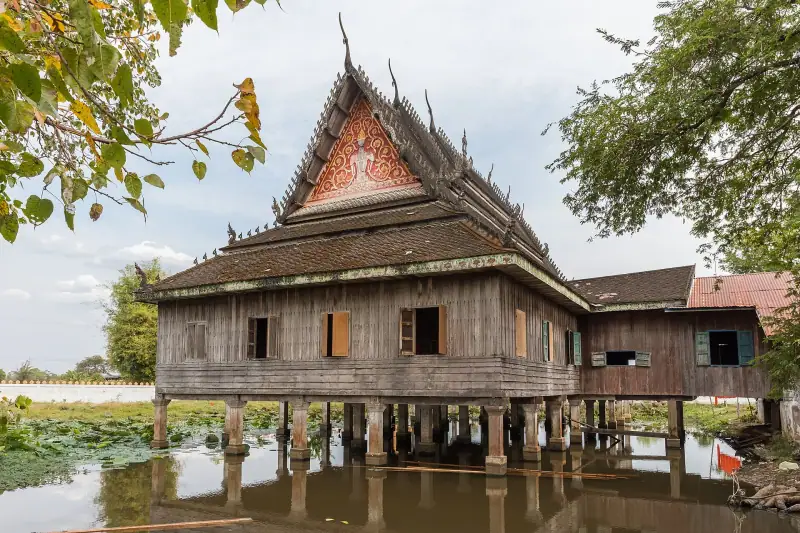
7 days
Laos in 7 Days: A Complete Itinerary for an Unforgettable Week
VientianeVang ViengLuang Prabang
Can be adapted in the planner
3 days
The Thakhek Loop: Complete Guide to Laos's Motorbike Circuit
Kong LorLak Sao
10 days
Laos in 10 Days Without a Car: A Realistic Train and Bus Itinerary
VientianeVang ViengLuang PrabangNong Khiaw