What to see
Luang Prabang: The 15 Must-Sees of Laos's Royal Town
We may earn a commission when you book through links on this page, at no extra cost to you. We don't visit or try the places we cover: we summarize published sources. How we work
In short
- Plan at least 3 days for the essentials (tak bat, Wat Xieng Thong, Mount Phousi, night market, Kuang Si falls), ideally 4 to 5 days.
- The tak bat starts around 5:30 am: watch from the sidewalk, in silence, without flash and dressed modestly.
- Mount Phousi has 329 steps (15 to 20 minutes); climb 30 to 45 minutes before sunset. Entry is 60,000 kip.
- Kuang Si falls are 30 km (19 mi) from town; arrive at the 8 am opening to find the pools quiet.
Luang Prabang is the most visited town in Laos, and perhaps the most endearing in Southeast Asia. This former royal capital, UNESCO-listed, packs into the few square kilometers of its old town an extraordinary density of golden temples, French colonial houses, flowering gardens and daily Buddhist life. Here are the 15 experiences that will make your stay unforgettable.
1. The tak bat: offerings to monks at sunrise
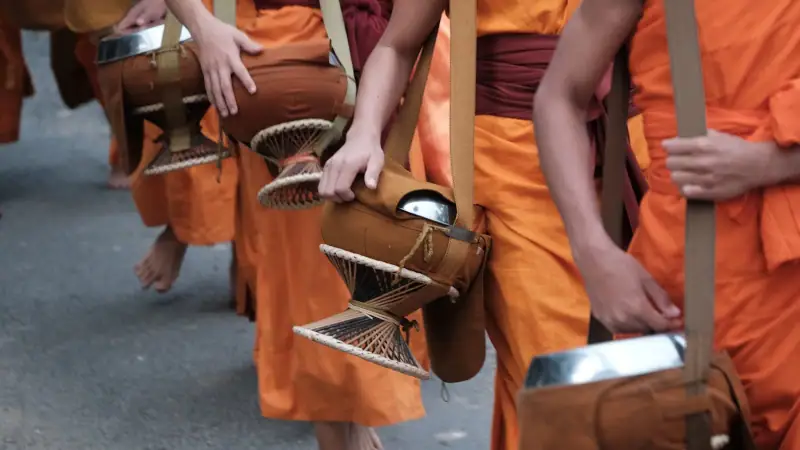
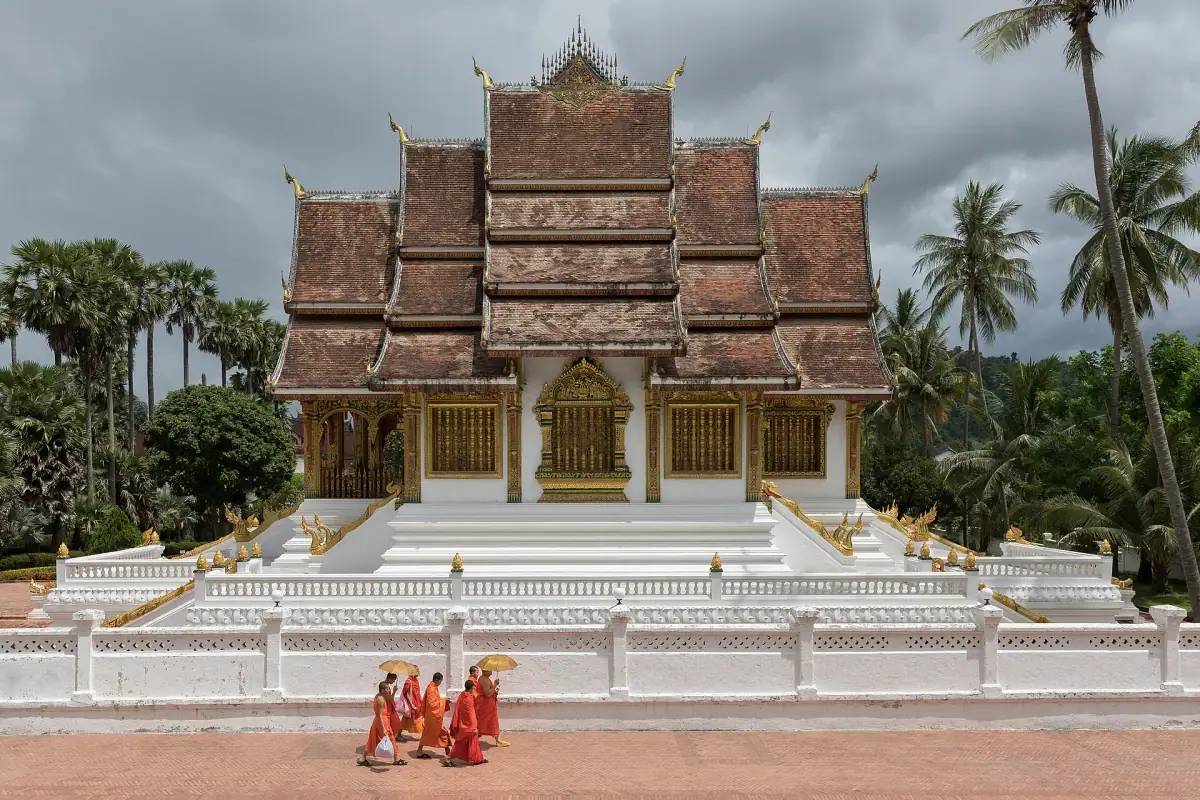
The tak bat ceremony is the most sacred and most beautiful moment of the day in Luang Prabang. Every morning from 5:30 am, dozens of monks in saffron robes file silently through the streets of the old town to receive offerings of sticky rice from the faithful.
How to take part respectfully:
- Get up before 5:30 am (the ceremony begins at dawn)
- Sit or stand on the sidewalk, well back from the procession
- Stay completely silent, no camera flash
- Dress modestly
If you want to make an offering yourself, buy sticky rice and an offering from a local seller, rather than from tourist vendors selling artificial “offering kits”.
2. Wat Xieng Thong: the most beautiful temple in Laos
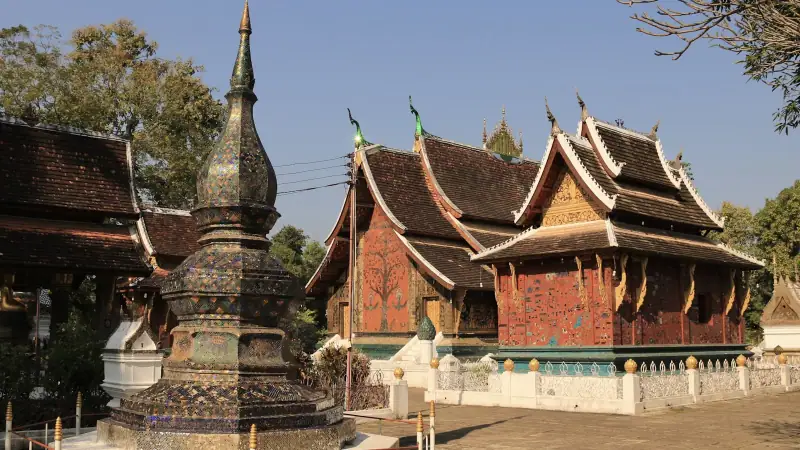
The Monastery of the Golden City is the masterpiece of Lao architecture. Its cascading roofs that almost sweep the ground, its mosaics depicting the “tree of life” and its ornate chapels make it the most photographed temple in the country.
Go in at 6 am to find the space almost deserted. The morning light on the gilding and mosaics is hard to beat. Take time to sit in the courtyard and watch the monks go about their daily activities.
Entry: 60,000 kip. Shoulders and knees must be covered.
3. Mount Phousi: panoramic sunset
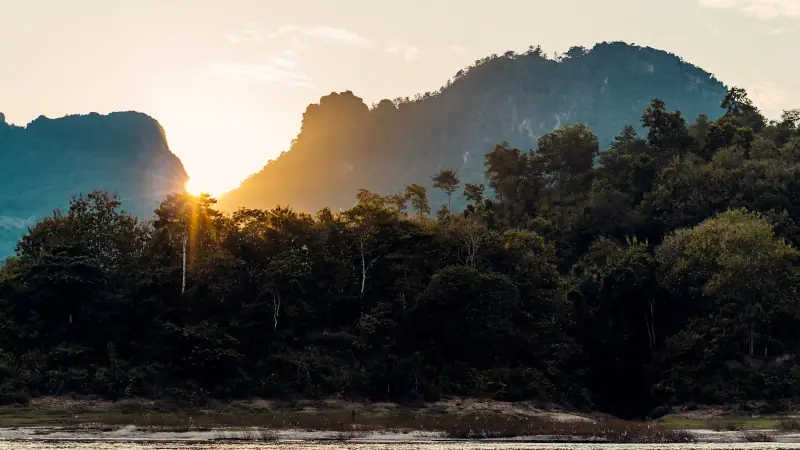
Mount Phousi is the sacred hill that overlooks the old town. 329 steps lead to the top in 15 to 20 minutes. The view from the top is one of the finest in Laos: the Luang Prabang peninsula, the bends of the Mekong, the wooded hills and the orange and gold temple roofs.
Sunset from Phousi is the town’s essential experience. Climb 30 to 45 minutes before sunset (check the sunset time for the season) and be ready to find the summit busy, but the view justifies the crowd.
Entry: 60,000 kip. Two entrances are possible (Wat Pa Houak side or Wat Tham Phousi side).
4. Kuang Si falls: turquoise swimming
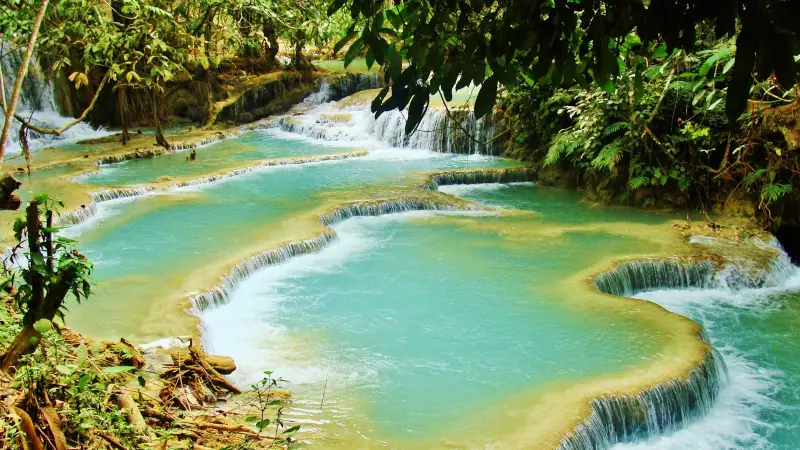
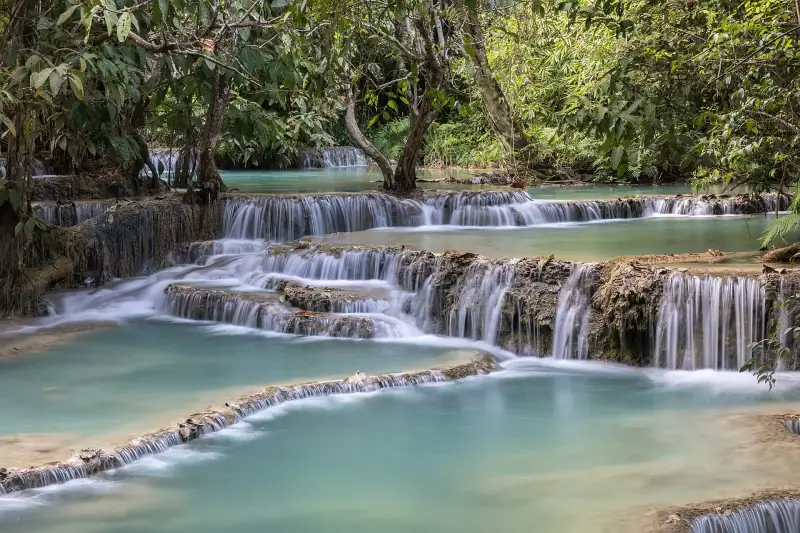
The most popular day trip from Luang Prabang. The Kuang Si falls unroll their tiers of turquoise water in the tropical forest 30 km (19 mi) from town. Swimming in the natural pools is the most refreshing activity in Laos.
Arrive early (8 am at opening) to enjoy empty pools and the morning light in the forest. Do not forget to visit the Sun Bear Rescue Center at the entrance. The complete guide to the Kuang Si falls covers everything.
5. The night market
The main street, Sisavangvong, turns into a craft market every evening. Dozens of artisans (often women from ethnic minorities who have come down from the mountain villages) sell their creations: Lao silks, woven bamboo mats, carvings, silver jewelry, embroidered bags.
Prices are negotiable, but be respectful: these artisans live from their work. Come around 6 pm when the lights come on and the atmosphere builds.
Worth a try: the vegetarian buffets at some night market stalls, at $1 to $2 a plate (about €1 to 2).
6. The Royal Palace (National Museum)
The former palace of the Lan Xang kings, built in the early 20th century, is now a museum tracing the history of the Lao kingdom. The reception rooms hold treasures: royal objects, silk textiles, wall frescoes and the precious Phra Bang statue (the golden Buddha, symbol of the town).
Entry: 200,000 kip. Closed on Tuesday. You can visit without a guide, though a local guide’s explanations add a lot.
7. Wat Mai: the gold bas-relief facade
Next to the Royal Palace, Wat Mai has one of the most beautiful facades in Luang Prabang: five panels of gold bas-reliefs depicting scenes from the Buddha’s last life. The bright colors (red background, golden figures) show rare artistic mastery.
8. Temples you stumble on along the streets
Luang Prabang has more than 30 active temples in its old town alone. Beyond the must-sees, stroll the streets and step into the temples you pass. Some are little visited but magnificent (Wat Aham, Wat Visounnarath, Wat Long Khoun), offering a genuinely meditative experience far from the crowds.
Charming hotels in Luang Prabang
Boutique hotels and guesthouses in the old town.
9. The Pak Ou caves by boat on the Mekong
Go up the Mekong by boat from Luang Prabang to the sacred Pak Ou caves (2 hours each way). These two caves shelter thousands of Buddha statues left by pilgrims over the centuries. The boat trip is itself a fine immersion in river life.
10. The morning market
Luang Prabang’s morning market is held in the streets around the central mosque. Fruit, vegetables, fish, herbs, fried insects, dried fish, spices… It is the town’s most authentic food market, used by locals from 5 am.
It is ideal for watching everyday Lao life, buying fresh fruit for breakfast and trying a few street specialties (stuffed baguettes, khao nom kok and so on).
11. The potters’ village of Ban Chan
Fifteen minutes by tuk-tuk from the center, the village of Ban Chan has specialized in pottery for generations. It makes the large clay jars in which Lao families store rice and rice liquor. The artisans work in the open air and welcome visitors warmly.
12. A Mekong cafe at sunset
On the Mekong banks, at the end of the main street, several cafes and restaurants have built decks suspended over the river. Sunset hour (4 to 6 pm depending on the season) is magical: orange light on the Mekong, buffalo crossing the sandbanks below, fishermen’s boats…
13. The art galleries
Luang Prabang has developed a remarkable contemporary art scene. Several galleries show Lao artists: oil paintings of local life, Buddhism-inspired art, documentary photography. The Ock Pop Tok gallery, specializing in traditional textiles, is worth a visit.
14. A Lao cooking class
Several restaurants and cooking schools offer morning classes: a market visit for the ingredients, then a cooking workshop (3 to 4 hours) to prepare emblematic dishes (laap, or lam, tam mak houng). Take the recipes home in your luggage. See the guide to Lao food.
15. Luang Prabang’s quiet nightlife
The town enforces a bar curfew at 11 pm. Nightlife is therefore different from an Asian capital: lantern and candle atmosphere on outdoor decks, live Lao music in a few bars in the center, conversations among travelers from around the world. A charm all its own.
Organizing your 3 to 4 days in Luang Prabang
Day 1: arrival, tak bat at 5:30 am, Wat Xieng Thong in the morning, Mount Phousi at sunset, night market in the evening.
Day 2: free morning (Royal Palace, Wat Mai, morning market), afternoon: excursion to the Kuang Si falls (a full day; leave at 8 am to be back for dinner).
Day 3: boat on the Mekong to the Pak Ou caves (9 am to 3 pm), afternoon: strolling the streets and galleries, dinner in a refined Lao restaurant.
Day 4 (if you have time): excursion to Nong Khiaw (4 hours by road), the village of Ban Chan, or a cooking class.
Luang Prabang is not so much visited as lived. Let the town’s rhythm impose itself on you, get up early, walk with no set destination, enter the temples that draw you, and accept getting lost in its lanes. That is how the town reveals its secrets.
Frequently asked questions
How long do you need to visit Luang Prabang?
At least 3 days for the essentials: tak bat, Wat Xieng Thong, Mount Phousi, the night market and the Kuang Si falls. Ideally 4 to 5 days to explore at your own pace and add the Pak Ou caves and an excursion to Nong Khiaw.
Is Luang Prabang a UNESCO site?
Yes, Luang Prabang's old quarter has been on the UNESCO World Heritage list since 1995, recognized for its exceptional blend of traditional Lao urban architecture and European colonial buildings.
Is the tak bat ceremony still authentic?
The ceremony remains authentic in its religious aspects, but the influx of tourists since the 2000s has sometimes turned it into a show. To experience an authentic tak bat, get up before 5:30 am, watch from the sidewalk without getting in the way, and do not use a flash.
Can you visit Luang Prabang without a guide?
Yes, most sights are easy to visit on your own. A guide is useful for excursions outside town (ethnic villages, remote caves) and to deepen your understanding of the Buddhist temples.
What is the best viewpoint over Luang Prabang?
Mount Phousi (329 steps) offers the most famous view of the town at sunset. The Mekong banks at golden hour are magnificent. The suspension bridge over the Nam Khan also gives a fine perspective on the old town.
More Laos guides
Keep reading
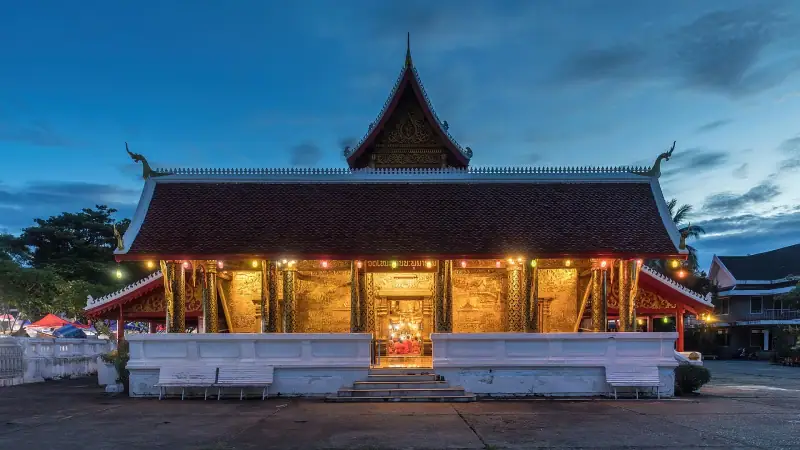
Visiting Luang Prabang: Complete Guide to Laos's Former Royal Capital
Complete guide to Luang Prabang: temples, tak bat, Kuang Si falls, Pak Ou, night market. Lodging, transport, budget and practical tips.
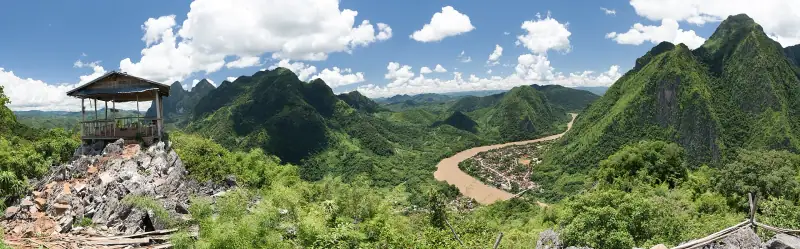
Visiting Nong Khiaw: Complete Guide to Northern Laos's Gem
Complete guide to Nong Khiaw: karst cliffs, Nam Ou, caves, village treks, Muang Ngoi. Lodging, transport and practical tips.
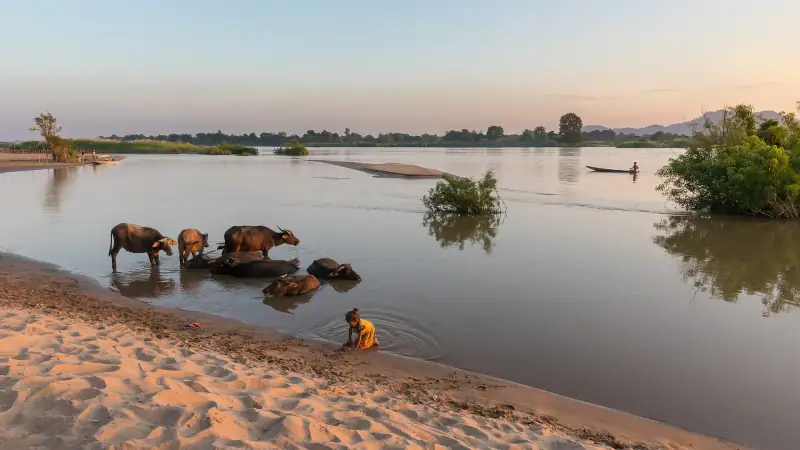
Visiting the 4,000 Islands (Si Phan Don): Complete Guide to Southern Laos
Complete guide to the 4,000 Islands (Si Phan Don): Don Det, Don Khon, Irrawaddy dolphins, Khon Phapheng falls, lodging and practical tips.
Ready-made
Laos itineraries
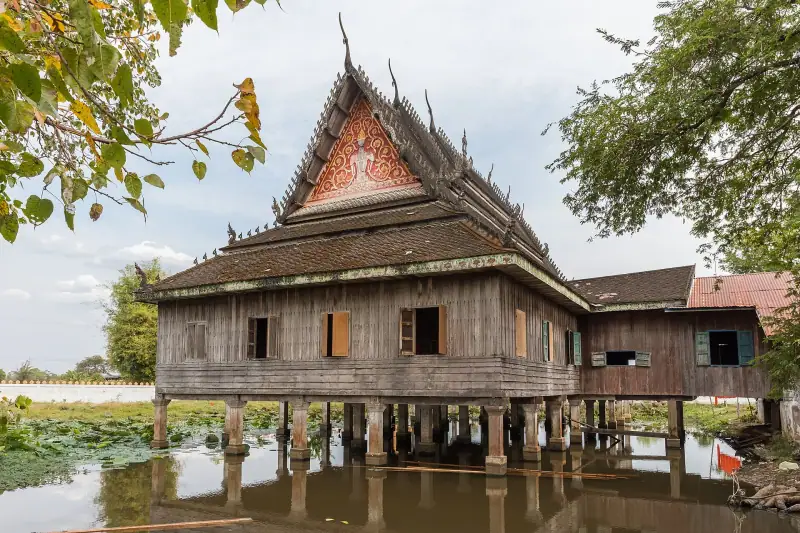
7 days
Laos in 7 Days: A Complete Itinerary for an Unforgettable Week
VientianeVang ViengLuang Prabang
Can be adapted in the planner
3 days
The Thakhek Loop: Complete Guide to Laos's Motorbike Circuit
Kong LorLak Sao
10 days
Laos in 10 Days Without a Car: A Realistic Train and Bus Itinerary
VientianeVang ViengLuang PrabangNong Khiaw