What to see
Gedi ruins near Watamu: prices, hours and a half-day visit
We may earn a commission when you book through links on this page, at no extra cost to you. We don't visit or try the places we cover: we summarize published sources. How we work
In short
- The ruins take 1 h 30 to 2 h to visit, or a half day including the trip from Watamu (10 km / 6 mi) or Malindi (16 km / 10 mi).
- The site is run by the National Museums of Kenya; the entry fee depends on visitor status and should be confirmed with the museum.
- Go early in the morning, keep bags closed because of the monkeys and never feed them; sturdy closed shoes are advised on the uneven ground.
- Gedi is about 90 km (56 mi) north-east of Mombasa: feasible in a day, but better with a night nearby, for example in Watamu.
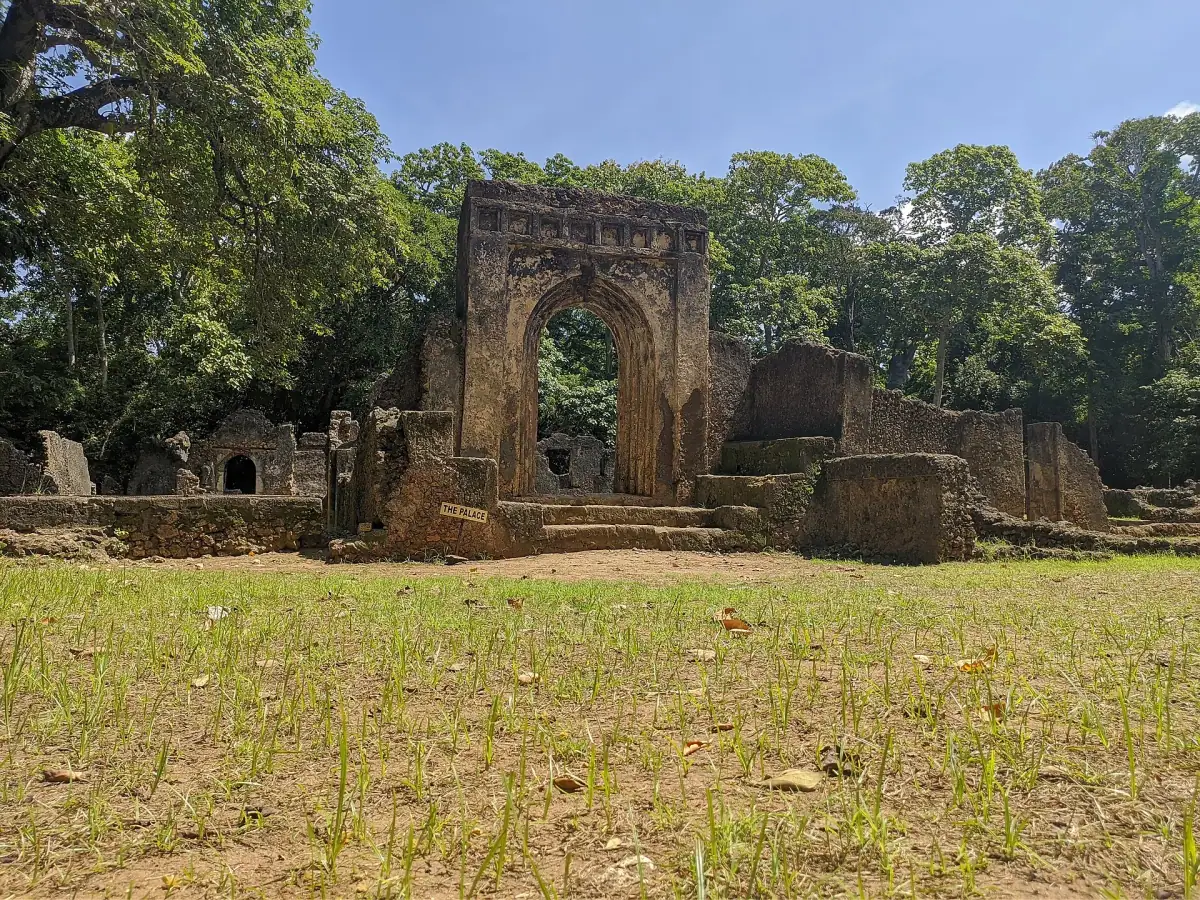
Gedi (also spelled Gede) is a Swahili town abandoned in the 17th century, swallowed by the coastal forest between Watamu and Malindi. You walk between coral stone walls, a palace, a great mosque and pillar tombs, often without meeting many people. Since 2024, the site has been on the UNESCO World Heritage list.
In short: the Gedi ruins take 1 h 30 to 2 h to visit, or a half day with the trip from Watamu or Malindi. The site is run by the National Museums of Kenya: the entry fee varies with the visitor’s status and is confirmed with the museum. Come early, keep your bags closed because of the monkeys, and bring repellent.
Gedi in two minutes: what you visit
The national museum describes Gedi as the ruins of a Swahili town whose origins go back to the 12th century. It was rebuilt with new ramparts in the 15th and 16th centuries, and reached its peak in the 15th. The last families left in the first half of the 17th century; the causes put forward range from a raid in 1589 to a falling water table, or the shift of power, and of the Portuguese, to Mombasa in 1593.
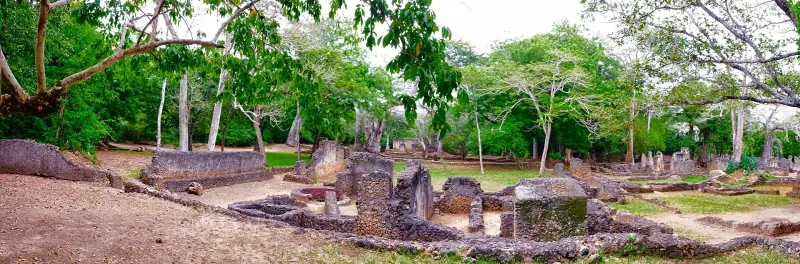
The site covers 45 acres (about 18 hectares) of forest, according to the museum. You mainly see:
- The palace, a vast complex of courtyards and rooms;
- The great mosque and several smaller mosques;
- Stone houses, some with an inner courtyard;
- Pillar tombs, typical of Swahili funerary architecture.
All of it is built of coral stone and earth mortar, with wood. The Kenyan UNESCO commission also stresses the ingenuity of the town’s water management. For the culinary and cultural context of this same coast, our guide to Swahili cooking in Mombasa, Diani and Lamu usefully extends the visit.
Gedi or Fort Jesus: which to visit with a half day?
Both tell the story of the Swahili coast, but not from the same era. Gedi is an abandoned, silent town in the forest: you come for the atmosphere and the archaeology. Fort Jesus, in Mombasa, is a 16th-century Portuguese fortress in the old town. If you are staying in Watamu or Malindi, Gedi is within reach; if you are in Mombasa or Diani, the fort makes more sense. The two stops combine poorly in the same day, given the distance (about 90 km / 56 mi separate Gedi from Mombasa).
Watamu, Malindi or Mombasa: where to go from?
From Watamu
This is the most practical starting point: Gedi is about ten kilometers (6 mi) away. A taxi or private driver generally takes you there in about twenty minutes. Watamu hotels often offer a transfer, and excursions combine Gedi with the marine park or the Arabuko Sokoke forest.
Sleeping in Watamu
Compare coastal lodging to make Gedi a half-day outing.
From Malindi
The museum places Gedi 16 km (10 mi) south of Malindi, on the Mombasa road. This is the shortest option: a taxi is enough, and you can ask the driver to wait for you during the visit.
From Mombasa or Diani
Gedi is about 90 km (56 mi) north-east of Mombasa. It is feasible in a day, but the trip is long: better to sleep a night nearby, for example in Watamu. If you are in Diani, see rather our Diani Beach guide for closer outings.
Prices, hours and booking: what is really known
The site is run by the National Museums of Kenya. The museum’s official page does not detail hours or rates: it points to an “Our New Rates 2026” schedule and gives the curator’s contact ([email protected], 042-32065). Tourist sites announce daytime opening and very variable, sometimes outdated rates, which are not copied here.
Concrete tips:
- Write to the curator or ask for the rate at the entrance before paying.
- Bring cash in Kenyan shillings for entry, the guide and tips; cards are not always accepted at small sites.
- Arrive early in the morning for the cool air and to enjoy the ruins without a group.
- Agree on the guide’s length and price before starting.
What to see first, by time available
If you have one hour
Go to the palace and the great mosque, then walk through the houses and the pillar tombs. This is the heart of the site and gives a good idea of the town.
If you have two hours
Add the tour of the ramparts and the paths under the forest. Take time to look at the wells and water management systems, which explain both Gedi’s wealth and, according to the museum, one of the possible causes of its abandonment.
If you are traveling as a family
Children like the vaulted passages, the courtyards and the monkeys. Stay alert to low walls and openings: there are no guardrails everywhere. Remind them not to feed the animals.
Excursions around Watamu
Guided visits and boat trips from the north coast: compare the available offers.
Monkeys, forest and ground: practical tips
Monkeys live on the site and are used to bags. Keep your belongings closed, do not show food and never feed them. The forest is a sacred place for the local community, which celebrates traditional rites there: stay discreet and respectful, and ask before photographing a person.
Wear closed shoes, as the ground is uneven and covered with roots. Bring water, a hat and light clothing that covers the shoulders. Under the trees, mosquitoes are active late in the day, so bring a repellent.
When to go
You can visit Gedi all year, but the long rains of April and May make trails muddy and the humidity heavy. Our article on when to go to Kenya details the coast’s seasons. Whatever the season, the first hour of the day remains the most pleasant.
The ruins are in the shade of the forest, which makes the visit bearable even in hot weather, but humidity stays high all year on this part of the coast. If you are staying in Watamu, schedule Gedi for a morning, then keep the afternoon for the beach or the marine park. In case of rain, bring a light waterproof jacket and shoes with grip, because stones and roots become slippery.
Quick table
| Question | Short answer |
|---|---|
| Visit length | 1 h 30 to 2 h |
| Distance from Malindi | 16 km (10 mi) south (museum) |
| Distance from Mombasa | about 90 km (56 mi) north-east |
| Status | UNESCO-listed site (2024), run by the National Museums of Kenya |
| Rate | To confirm with the museum (2026 schedule) |
| To avoid | Feeding the monkeys, open bag |
Sources
Frequently asked questions
How long does it take to visit the Gedi ruins?
Allow an hour and a half to two hours to see the palace, the great mosque, the houses and the tombs. With the trip from Watamu or Malindi, the visit fits very well in a half day.
How much does entry to Gedi cost?
The rate depends on your status (non-resident, resident, citizen) and changes. The museum's official page points to its "Our New Rates 2026" schedule without giving the detail: confirm the amount with the curator ([email protected]) or at the entrance rather than rely on an old figure.
Is Gedi really UNESCO-listed?
Yes. The "Historic Town and Archaeological Site of Gede" was inscribed at the 46th session of the World Heritage Committee, in New Delhi, in 2024. It is Kenya's eighth site on the list.
Can you visit Gedi without a car?
It is possible, but less simple than with a driver. The site is on the Malindi-Mombasa road: matatus serve it, and a taxi or private driver from Watamu or Malindi avoids connections and lets you combine other stops.
Are the monkeys at Gedi dangerous?
They are not aggressive by nature, but they are used to visitors and may grab an open bag or a food bag. Do not feed them, keep your bags closed and avoid taking out food in the ruins.
Do you need a guide to visit Gedi?
It is not mandatory, but it is useful: the ruins are poorly signposted for those who do not know Swahili history, and a guide explains the use of the rooms, wells and pillar tombs. Agree on the price before starting.
What is the best time of day to go?
Early in the morning, when it is still cool and the light is beautiful under the trees. The ruins are in the shade of the forest, but the coast's humidity makes midday heavy.
More Kenya guides
Keep reading
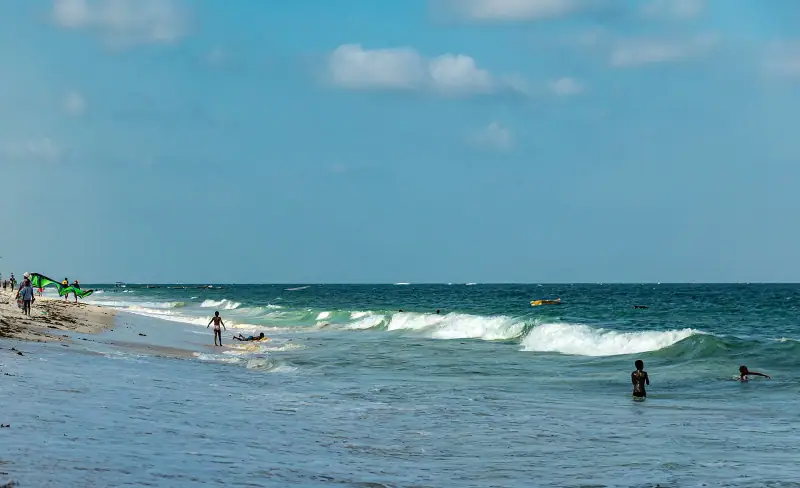
Diani Beach: guide to Kenya's finest beach
Diani Beach in Kenya: access, best time, beaches, colobus monkeys, snorkeling, kitesurfing and excursions for a beach stay after safari.

Amboseli: guide to the national park, elephants and Kilimanjaro
Visiting Amboseli in Kenya: elephants facing Kilimanjaro, best time, length of stay, where to stay and tips to prepare your safari.
Complete guide to visiting Kenya: regions, safari, beaches and budget
Visiting Kenya: regions, cities, highlights, when to go, transport, lodging and budget. The pillar guide to plan a successful trip from A to Z.
Ready-made
Kenya itineraries
7 days
Kenya in 7 days: Naivasha, Nakuru and the Masai Mara without rushing
NairobiNaivashaMasai MaraNairobi
10 days
Kenya in 10 days: Nairobi, Amboseli, Masai Mara and Diani Beach
A day-by-day 10-day Kenya itinerary: Nairobi, Amboseli facing Kilimanjaro, a Masai Mara safari, then relaxing on Diani Beach. Budget and tips.