Food & drink
Balinese Food: Dishes, Markets and Cooking Classes in Ubud
We may earn a commission when you book through links on this page, at no extra cost to you. We don't visit or try the places we cover: we summarize published sources. How we work
In short
- Base genep, a fresh spice paste pounded in a mortar, is the foundation of most Balinese dishes; look for babi guling, bebek betutu, lawar and sate lilit.
- Bali is mostly Hindu, so pork is common (babi guling, lawar, sate); betutu duck or chicken and vegetarian options are good alternatives.
- A cooking class in Ubud works best early in the stay: choose a small group, a market visit and recent reviews, and mention allergies when booking.
- Drink bottled or filtered water, choose dishes cooked to order and served hot, and favor warungs full of local customers.
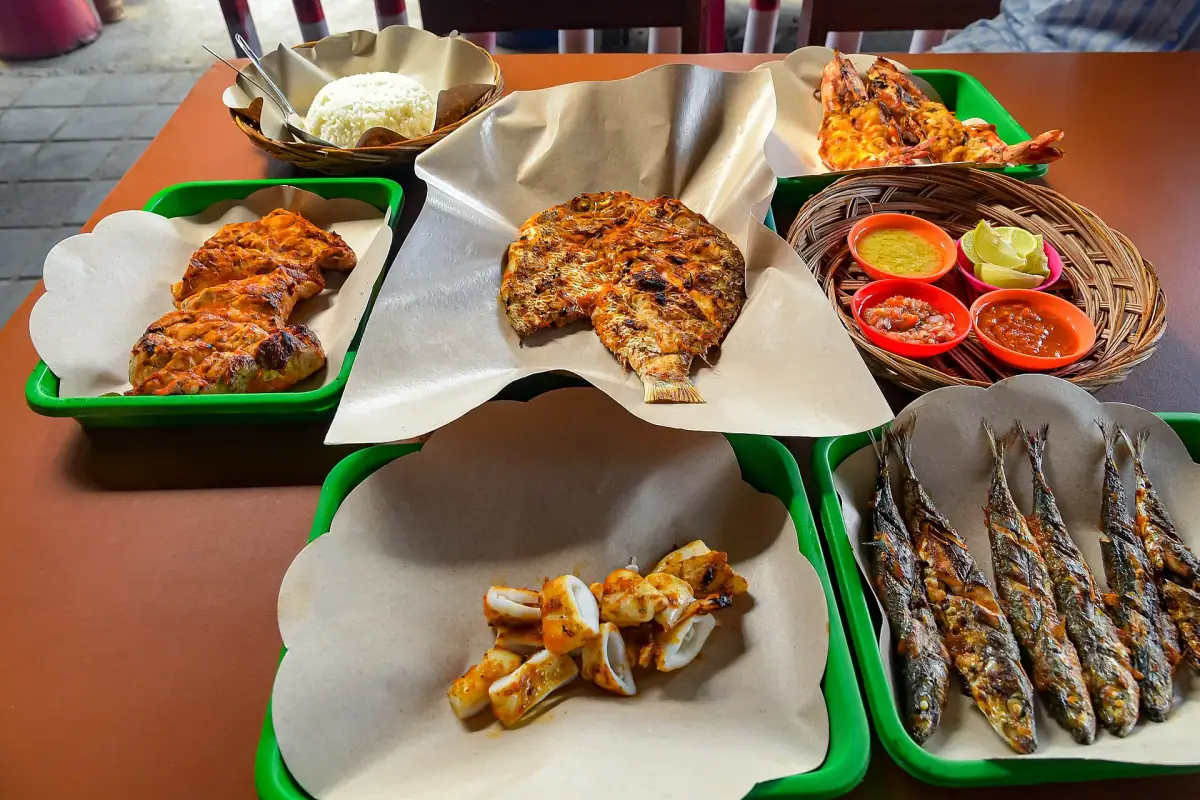
In Bali, people do not eat just to feed themselves: they cook for the gods, for the ancestors and for the neighbors. The island’s most famous dishes, such as roast suckling pig or duck cooked for hours in leaves, are first of all ceremonial dishes, prepared collectively by whole families. Restaurants and warungs offer only an everyday version.
Here is what you need to understand this cuisine before sitting down to eat: the basic ingredients, the dishes to know, how to taste them at the market, then how to choose a cooking class in Ubud. For an overview of the whole archipelago, first see our article on what to eat in Indonesia.
Base genep, the heart of Balinese cooking
If you remember only one word, it should be base genep. This fresh spice paste, pounded in a mortar, is the foundation of most Balinese dishes. It generally contains garlic, shallots, chili, ginger, galangal, turmeric, lemongrass, nutmeg and pepper, sometimes fermented shrimp paste. Each cook has her own proportions, and the result is fragrant, fresh and spicy all at once.
Around this base revolve other very present ingredients:
- Rice, grown in irrigated fields under the collective subak system, which UNESCO has listed as a World Heritage cultural landscape. Rice is served at every meal.
- Coconut, grated, pressed into milk or grilled, which gives softness to sauces and condiments.
- Banana leaves, used as cooking wrappers for fish, duck or cakes.
- Tempeh and tofu, the main everyday plant proteins.
- Herbs: kaffir lime leaf, salam leaf, basil, papaya and cassava leaves.
These elements explain why Balinese cuisine is so different from that of Java, which is sweeter, or Sumatra, richer in spicy coconut milk. Here, a dish is often a combination of small preparations: a little meat, a vegetable, a condiment, a salad, rice.
The essential dishes of Bali
Here are the specialties to look for, with what you need to know to order them well.
Babi guling
Babi guling is suckling pig stuffed with base genep, leaves and roots, then slowly spit-roasted over embers. It is served on a plate with rice, crispy skin, pieces of meat, vegetables and lawar. It is a festive specialty, but many stalls sell it during the day, often until the pig runs out. If you want to eat it, it is better to show up at lunchtime than in the late afternoon.
Bebek betutu and ayam betutu
Bebek betutu is a duck wrapped in leaves and cooked for a very long time in a spice marinade. Ayam betutu, its chicken version, is easier to find. In many restaurants, this dish must be ordered in advance, precisely because of the cooking time. The result is tender and very fragrant.
Lawar
Lawar is a mix of vegetables (green beans, jackfruit or papaya leaves), grated coconut, spices and, depending on the version, minced meat or blood. Fully plant-based variants exist, and it serves as a condiment on a plate of babi guling or nasi campur. If blood bothers you, ask for the version “without” or the vegetable one.
Sate lilit
Unlike Javanese satay, where the meat is threaded onto the skewer, sate lilit is a paste of fish or minced meat, mixed with grated coconut and spices, that is wrapped around a lemongrass stalk or a stick before grilling. The scent of heated lemongrass makes it one of Bali’s most distinctive dishes.
Nasi campur, tipat and other classics
- Nasi campur: a plate of rice with several side dishes. In a warung, you choose what you like from the displayed preparations.
- Tipat: compressed rice cake, often served with peanut sauce.
- Gado-gado and pecel: warm vegetable salads with sauce, ideal if you want a meatless dish.
- Jaja Bali: small cakes made of glutinous rice, coconut and palm sugar, also prepared for offerings.
These dishes are easy to taste during a stay in Ubud. If you are looking for where to stay to eat on foot, our guide to where to stay in Bali compares the island’s areas.
Accommodation in Ubud
Staying in Ubud means markets, warungs and cooking classes nearby: compare hotels and villas by dates and budget.
Markets and warungs: tasting without breaking the bank
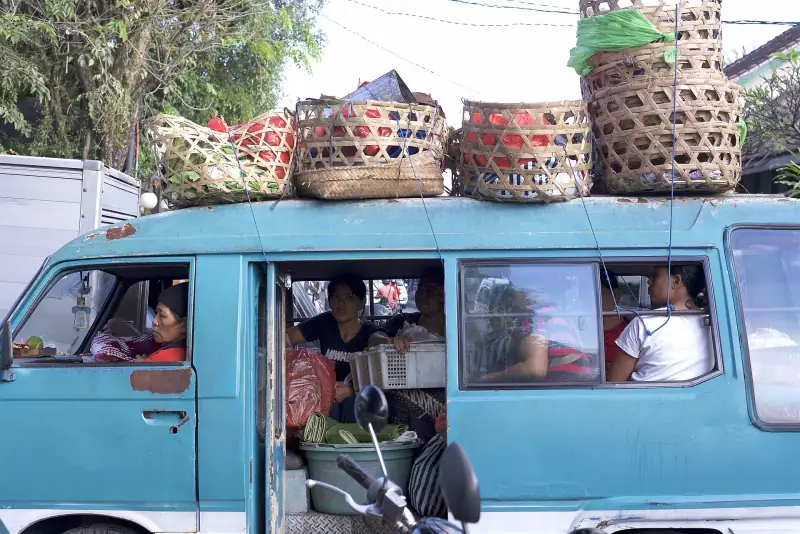
Traditional markets are the best place to understand what goes on the plate. From dawn, the stalls fill with chilies, roots, flowers for offerings, tropical fruit and fish. In Ubud, the central market combines a craft side for visitors, busier during the day, and a local market side, where residents shop early in the morning. If you want to see ordinary life, get up early: as the morning goes on, the mood shifts toward souvenir selling.
A few tips to make the most of it:
- Come early, before the heat, when produce is freshest and the vendors are available.
- Taste the rice and coconut cakes sold in small leaf packets: they cost very little and let you try several textures.
- Ask before photographing vendors; a smile and a word of Indonesian are generally enough.
- Bargain with a smile on crafts, but not on small food prices, where the rate is already low.
- Keep small change: large notes make small purchases awkward.
The warung, the small family eatery, is the other pillar of a food trip. You often eat on benches or at simple tables, in front of a buffet of preparations. Point at what you want, the rice comes alongside, and you are told the price at the end. To put these prices in context in a full trip, our article on the budget in Indonesia details the spending categories.
To eat vegetarian, look for warungs that display tempeh, tofu and stir-fried vegetables. Say “tanpa daging” (without meat) and check that broths or shrimp paste do not slip into the sauce.
Market visit and food tour in Ubud
With a local guide, you taste several specialties and understand what you are eating: compare packages and reviews.
Cooking classes in Ubud: how to choose well
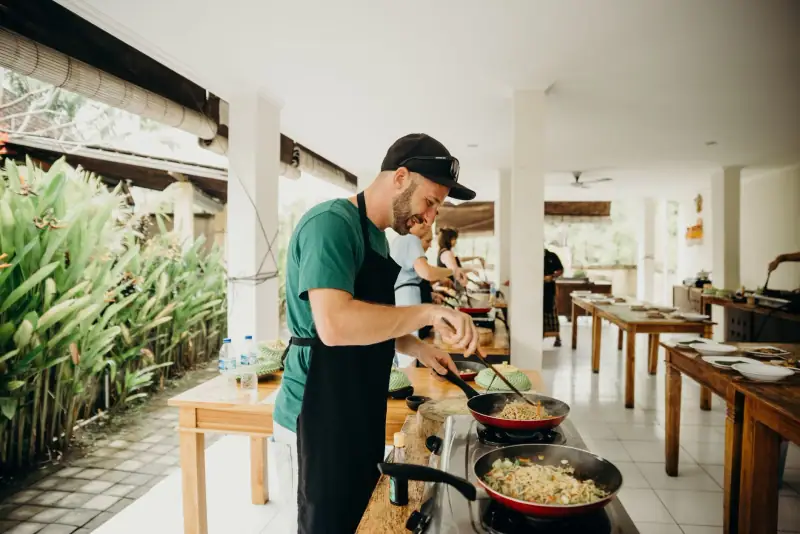
Ubud is the cultural capital of Bali and one of the cities in Southeast Asia where cooking classes have developed the most. There are plenty of options, which makes comparison easier, but also raises the risk of choosing at random. Here is what separates a good package from an average one.
What a typical class includes
Most packages follow the same pattern, with variations:
- A market visit, sometimes with an explanation of spices and ingredients.
- Preparing the base genep with mortar and pestle, often the most memorable part.
- Cooking several dishes: a starter, a main course, a side, a dessert or a drink.
- A shared meal of everything you prepared.
- A recipe booklet, sometimes in English, sometimes sent after the class.
Some classes take place in a family home kitchen, others in an equipped room, others in a rice-field setting. The setting affects the atmosphere more than the learning.
Criteria for comparing
- Group size: a small group lets you actually cook rather than watch. Look for mentions of a small group in the description.
- The program: market included or not, number of dishes, vegetarian menu available.
- Length: half a day is enough for a taste, a full day lets you go further into techniques.
- Transfer: some providers pick participants up at the hotel, which saves negotiating a taxi.
- Recent reviews: read those from the last few months, they better reflect current quality.
- Cancellation terms: free cancellation up to the day before is reassuring, especially in case of weather or a stomach upset.
When to schedule it
A cooking class is ideally placed at the start of a stay in Ubud: you learn the names of the dishes, the spices and the techniques, then recognize them in warungs over the following days. It also fits a rainy day, which is useful in the wet season. To know when the weather suits, see our article on when to go to Indonesia.
Balinese cooking classes in Ubud
Market, base genep, several dishes prepared then tasted: compare cooking classes, their schedules and their reviews.
Balinese drinks: coffee, jamu and local spirits
Bali’s drinks menu also holds discoveries, with a few precautions.
- Coffee: Bali produces coffee, notably in the island’s highlands. Served the local way, kopi tubruk is drunk with the grounds at the bottom of the glass.
- Kopi luwak: this coffee made from civet droppings is widely sold to tourists, but it is controversial, because many animals are kept in cages to produce it. Many travelers prefer to skip it.
- Jamu and loloh: traditional drinks made with herbs, turmeric, ginger or leaves. They are reputed to be good for health, but the taste is strong. Try them in small sips.
- Fresh juices and coconut water: refreshing. Ask for no ice if you have doubts about the water used.
- Brem and tuak: brem is a fermented rice wine, tuak a drink made from palm sap. They are tied to ceremonies.
- Arak: a local distilled spirit. Caution is in order: serious poisonings have been caused by poor-quality homemade preparations. Prefer local beer or reputable bars, and refuse dubious cheap mixes.
Food and ceremonies: offerings and festival days
In Bali, food has a sacred dimension. Every morning, families place small baskets of palm leaves, the canang sari, with rice, flowers and sometimes a little food. These offerings are found in front of houses, shops and temples. It is important not to step on them: simply go around them.
The big festivals concentrate food preparation. The Balinese calendar follows a 210-day cycle, and festivals such as Galungan gather families around collectively prepared dishes, including babi guling and lawar. If your stay coincides with one, you will see men preparing the meat and women the offerings. Stay discreet, do not disturb ceremonies and follow the instructions of the locals. When an invitation is extended, dress respectfully: sarong and sash to enter temples.
This cultural side gives meaning to a cooking class: you learn not only recipes, but also how they fit into the island’s daily life.
Eating without getting sick
The famous “Bali belly,” a common stomach upset among travelers, does not hit everyone, but it is better to prevent it:
- Drink bottled or filtered water, including for brushing your teeth if you have a sensitive stomach.
- Choose dishes cooked to order and served hot.
- Watch the crowd: a warung full of local customers is generally a good sign.
- Go easy on the chili: sambal is served on the side, so you control the dose.
- Wash your hands or use hand sanitizer before eating.
- Ask your doctor or a travel clinic what to bring and what to do if you fall ill, and see the official travel health pages (CDC in the US, TravelHealthPro in the UK).
A local medical consultation can be expensive in case of a serious problem: travel insurance with good coverage of medical costs and repatriation is a useful precaution for a stay in the archipelago. Entry rules depend on your passport. Check the official travel advice of your government before you book: travel.state.gov (US), GOV.UK (UK), travel.gc.ca (Canada), Smartraveller (Australia) (checked November 2026). More in our article on entry formalities for Indonesia.
Taste Indonesia with a guide
Food tours, cooking classes and tastings bookable online, with free cancellation on most activities.
Key takeaways
- Base genep, the fresh spice paste, is the key to Balinese cooking.
- Taste babi guling, bebek betutu, lawar and sate lilit, and look for alternatives if you do not eat pork.
- Visit a market early in the morning and eat in warungs frequented by locals.
- A cooking class in Ubud is the best introduction: choose a small group, a market included and recent reviews.
- Avoid kopi luwak from caged farms and be wary of homemade arak.
- Respect offerings, do not step on them, and follow instructions during ceremonies.
Frequently asked questions
What is the difference between Balinese and Indonesian cuisine?
Bali is mostly Hindu, while the rest of Indonesia is mostly Muslim. Pork is therefore commonly eaten (babi guling, lawar, satay), which is rare elsewhere. Balinese cooking also relies on a blend of fresh spices, the base genep, and on dishes cooked for ceremonies.
What is base genep?
It is the basic spice paste of Balinese cooking. It generally combines shallots, garlic, chili, ginger, galangal, turmeric, lemongrass and spices pounded in a mortar. Recipes vary from family to family, and it is often the first thing you learn in a cooking class.
Do you need to book a cooking class in Ubud in advance?
In high season, booking a few days ahead avoids finding the class full at the time you want. In the off season, there is often last-minute availability. Booking online also lets you compare packages and reviews, and take advantage of the cancellation terms shown.
Is a cooking class suitable for vegetarians?
Yes. Many packages offer a vegetarian or vegan menu, with tempeh, tofu, stir-fried vegetables and curries. Mention it when booking, along with any allergies (peanut, shrimp, fish), which are common in local recipes.
Can you eat babi guling if you do not eat pork?
No, it is by definition suckling pig. Bebek betutu (duck) or ayam betutu (chicken) are good alternatives, as are fish sate lilit and nasi campur with vegetarian sides.
Is tap water safe to drink in Bali?
No, drink bottled or filtered water. Reputable cooking classes use treated water to wash vegetables, but if you have a sensitive stomach, avoid raw vegetables and ice of unknown origin.
What budget should you plan for eating in Bali?
A meal in a warung generally costs a fraction of the price of a tourist restaurant, and cooking classes fall in a mid-range for a day activity. Prices vary by season and package: compare before booking.
More Indonesia guides
Keep reading

Nusa Penida in One Day from Bali: Boat, Scooter or Organized Tour?
Nusa Penida in one day from Bali: fast boat from Sanur, scooter or driver, west or east circuit, schedules, prices and mistakes to avoid.

Where to Stay in Bali: Ubud, Seminyak, Canggu or Uluwatu, Which Area to Choose?
Ubud, Seminyak, Canggu, Sanur, Uluwatu: a comparison of where to stay in Bali for culture, beaches, surf or family trips, with tips for choosing well.

Munduk, Bali: Waterfalls, Lakes and Mountain Coffee, Is It Worth the Detour?
Munduk, a mountain village in northern Bali: waterfalls, twin lakes, drive time from Ubud, ideal length of stay, budget and tips for getting there.
Ready-made
Indonesia itineraries

10 days
10 Days in Bali: Ubud, the North, the East and the South Coast Day by Day
Bali in 10 days: a detailed itinerary through Ubud, the rice terraces, the north, the east coast, Nusa Penida and the south. Stops, drive times and tips.

6 days
Yogyakarta to Bali Without a Car: Bromo, Ijen and the Ferry in 6 Days
Yogyakarta, Bromo, Ijen then Bali by train, minibus and ferry: stages, distances, realistic travel times and pitfalls to avoid on this car-free route.

8 days
Flores Itinerary: From Labuan Bajo to Kelimutu Volcano in 8 Days
Flores in 8 days: Labuan Bajo, Komodo, spiderweb rice fields, Ruteng, Bajawa, Ende and the Kelimutu lakes. Stops, drive times, pace and tips.