Itineraries
Hamburg in 2 days: harbor, Speicherstadt and the Elbphilharmonie
We may earn a commission when you book through links on this page, at no extra cost to you. We don't visit or try the places we cover: we summarize published sources. How we work
Day by day
- Day 1Speicherstadt, HafenCity, Elbphilharmonie, harbor boat, Sankt Pauli
- Day 2Town hall, Alster lake, parks, museums and shopping
Weather through the year on this route
| Jan | Feb | Mar | Apr | May | Jun | Jul | Aug | Sep | Oct | Nov | Dec | |
|---|---|---|---|---|---|---|---|---|---|---|---|---|
| High °F (°C) | 362 | 394 | 479 | 5614 | 6418 | 7122 | 7524 | 7524 | 6619 | 5714 | 457 | 373 |
| Low °F (°C) | 25-4 | 26-3 | 310 | 373 | 468 | 5211 | 5513 | 5513 | 489 | 415 | 331 | 28-2 |
| Rain in (mm) | 2.460 | 2.050 | 2.665 | 2.255 | 3.795 | 4.0105 | 4.3110 | 3.9100 | 2.975 | 2.770 | 2.565 | 2.665 |
Normals 1991–2020 at Munich and Rothenburg ob der Tauber: averages over 30 years, not a forecast. Source: NASA POWER (MERRA-2), grid of about 50 km. Figures computed by us in November 2026.
In short
- Day 1 is for the harbor and its brick districts (Speicherstadt, HafenCity, Elbphilharmonie, Landungsbrücken, Sankt Pauli); day 2 for the center, the town hall and the Alster lake.
- Hamburg works very well without a car: U-Bahn, S-Bahn, buses and harbor ferries are part of the transit network, and a day ticket is generally enough.
- Book your Miniatur Wunderland slot ahead, especially on weekends and school holidays; check the Elbphilharmonie Plaza access conditions on the official website.
- A third day lets you add museums, a park or a trip to Lübeck, about forty minutes by train; Berlin is about two hours away by fast train.
Germany’s second city, Hamburg owes its character to water. The Elbe, the Alster and a network of canals draw a landscape of bridges, brick warehouses and lively quays. This former Hanseatic city is still one of Europe’s leading ports, which gives it the air of a big city open to the world, less formal than Munich, less alternative than Berlin.
This two-day program follows a simple logic: the first day is devoted to the harbor and its brick districts, the second to the center, the lake and the nightlife. Everything is reached by public transport or on foot. To continue your trip to the capital, see our Berlin itinerary, and to plan your meals, our guide to German food specialties.
Before you go: planning and lodging
Hamburg is very easy to visit without a car. The U-Bahn, S-Bahn and buses cover all the sights mentioned here, and the harbor line boats are part of the transit network. A day ticket is generally enough; compare it with tourist cards if you plan to enter several museums.
For where to stay, the most practical choice is the center, between the main station and the Alster, or the HafenCity, close to the harbor and the Speicherstadt. Sankt Pauli appeals to fans of nightlife, but nights there are noisier, especially on weekends. Book early if you come during a big event, a trade fair or in high season.
Where to stay in Hamburg: compare lodging in the center, the HafenCity and around the station for your dates, and check the distance to the nearest U-Bahn station.
Day 1 morning: the Speicherstadt and the HafenCity
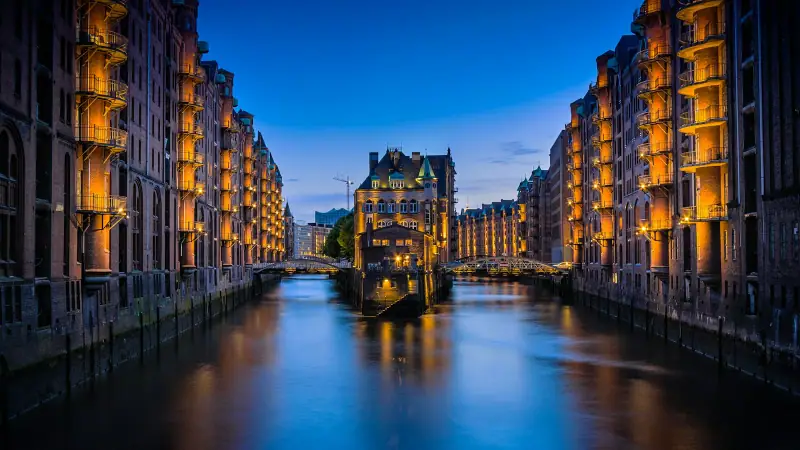
Start with the Speicherstadt, the largest complex of warehouses on wooden piles in the world, built of red brick along canals. Together with the neighboring Kontorhaus district, whose best-known building is the Chilehaus, it is a UNESCO World Heritage site. The best time for a walk is early morning, when the reflections on the water are at their finest and the streets are still calm.
Model enthusiasts can stop at the Miniatur Wunderland, set in the Speicherstadt. This miniature park is known for its huge railway network and draws crowds: book your slot in advance, especially on weekends and during school holidays.
Continue on foot to the HafenCity, the modern district built on former quays. Its contemporary architecture, waterfront promenades and public spaces contrast with the brick of the Speicherstadt. It is one of the largest urban development projects in Europe.
Day 1 afternoon: the Elbphilharmonie and the harbor
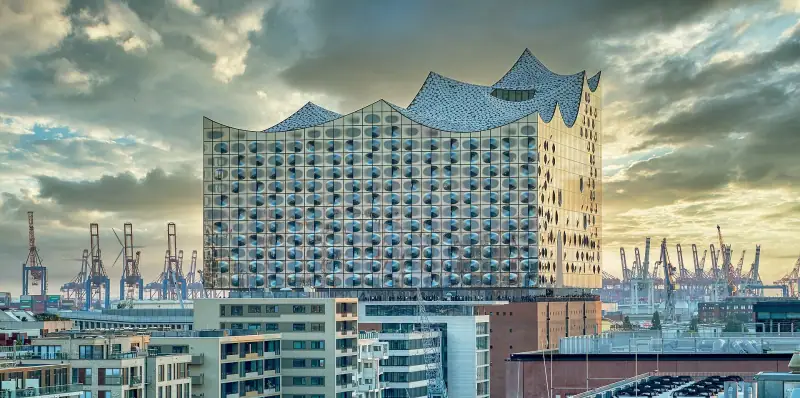
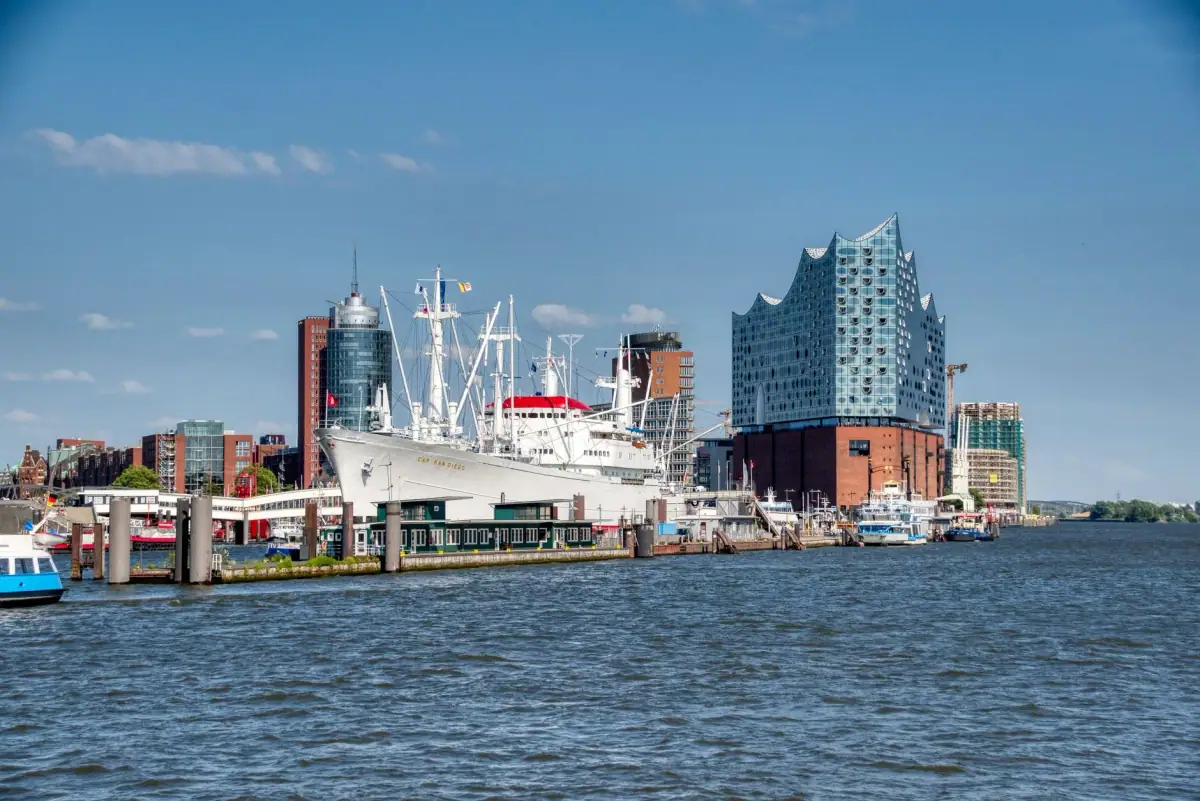
The Elbphilharmonie, inaugurated in 2017, has become the symbol of the city. Its glass silhouette rests on a former brick warehouse. Even without a concert ticket, you can go up to the Plaza, a panoramic platform reached by a long curved escalator, which offers a 360° view of the harbor, the Elbe and the city. Access conditions (ticket to book, hours, possible free entry) change: check the official website before planning your visit.
Then head down to the Landungsbrücken, the harbor’s main landing stage, reached on foot from the Elbphilharmonie by following the river. A boat ride is one of the best ways to understand Hamburg: you pass the cranes, cargo ships, docks and shipyards. Two options are open to you: a narrated cruise in the harbor, or the regular line of the transit network, cheaper and just as picturesque.
Cruise in Hamburg harbor: boat tours let you see the Speicherstadt from the canals and the port facilities from the water. Compare durations, commentary languages and cancellation conditions before you book.
If the weather allows, walk through the old tunnel under the Elbe, opened in 1911 near the Landungsbrücken: you cross it by a monumental elevator and then a long tiled corridor, with a view of the other bank as a bonus. Above, St. Michael’s Church, nicknamed the “Michel”, is the other great landmark of the city, with a bell tower that offers another viewpoint.
Day 1 evening: Sankt Pauli and the Reeperbahn
The evening is spent in Sankt Pauli. The Reeperbahn is the district of bars, concert halls and theaters. It is also where the Beatles got their start in Germany, in the early 1960s, as recalled by a small space dedicated to them. The atmosphere is festive, sometimes very lively: watch your belongings and take care late at night.
If you prefer a quieter evening, have dinner at one of the restaurants in the neighboring districts, or end the day with a drink facing the harbor. On Sunday morning, the Sankt Pauli fish market takes place early, on the banks of the Elbe: it is a local institution, very popular with early risers as well as with partygoers finishing their night.
Day 2 morning: the center, the town hall and the Alster
The second day is devoted to the heart of the city. The town hall (Rathaus), in neo-Renaissance style, dominates Rathausmarkt square. It can be visited with a guide, according to the day’s schedule. The neighboring arcades, the Alsterarkaden, line a canal and house elegant shops.
Then walk to the edge of the Alster. The lake is divided in two: the small Binnenalster, in the heart of the city, and the large Außenalster, lined with villas, green spaces and jetties. A walk along the Außenalster is one of the finest in the city, on foot, by bike or on the water. Boats cross the lake in season, and you can also rent a pedal boat or a small sailboat.
Day 2 afternoon: parks, museums and shopping
In the afternoon, you have several options depending on your tastes. The Planten un Blomen park, near the center, offers gardens, ponds and greenhouses: it is a good choice for a green break. Art lovers can visit the Kunsthalle, near the main station, which brings together collections spanning several centuries. For shopping, the pedestrian streets of the city center and the covered passages concentrate shops and cafés.
Guided tours in Hamburg: a walking tour helps you understand the Hanseatic history, the fires and the reconstructions of the city. Compare the options, durations and meeting points before you book.
What to eat in Hamburg
A port city, Hamburg puts fish in the spotlight. The Fischbrötchen, a bread roll filled with herring, mackerel or shrimp, is the local snack, eaten at the harbor. Labskaus, a sailor’s dish of salted meat, potatoes and beet, is a specialty to taste out of curiosity. Anyone with a sweet tooth will enjoy the pastries of the cafés in the center. For other ideas on the country’s cooking, see our page on food specialties.
To avoid tourist traps, avoid the restaurants closest to the landing stages at peak hours and prefer side streets, where the tables are often more authentic and the prices gentler.
Extending your stay
Hamburg is a good starting point for other trips. Lübeck, also a former Hanseatic city, is about forty minutes away by train and is very easy to visit in a day. Berlin is linked by a fast train in about two hours: our Berlin itinerary will help you plan what comes next.
Practical tips
The climate of northern Germany is changeable: even in summer, bring a windbreaker and an umbrella, because rain can arrive quickly. The months from May to September are the most pleasant for sailing and sitting outdoors at cafés, but the harbor also has its charm in fall and winter, with its Christmas markets. To choose the best time, see our guide on when to go to Germany.
On Sundays, many shops are closed, but restaurants, museums and tourist sites stay open. Finally, consider travel insurance to cover medical costs and cancellations before departure.
Frequently asked questions
How long do you need to visit Hamburg?
Two days are enough to see the essentials: the harbor, the Speicherstadt, the Elbphilharmonie, the center around the Alster and an evening in Sankt Pauli. A third day lets you add museums, a park or an excursion to Lübeck.
How do you get around Hamburg?
The U-Bahn, S-Bahn, buses and even some harbor boats are part of the public transport network. A day ticket or a tourist card is generally enough, and you do not need a car in the city center.
Can you visit the Elbphilharmonie without a concert ticket?
Yes, a panoramic platform called the Plaza is open to visitors. Access generally requires a ticket that you collect or book in advance, and is sometimes free: check the current conditions on the official website before you go.
Which neighborhood should you choose to stay in Hamburg?
The center, near the Alster and the main station, is the most practical for a short stay. The HafenCity appeals for its modern architecture, and Sankt Pauli for the nightlife, with more noise on weekends.
Is Hamburg easy to combine with Berlin?
Yes. A fast train links the two cities in about two hours, which makes it possible to string together both metropolises on the same trip.
More Germany guides
Keep reading
What to see in Bavaria: Munich, castles, the Alps and medieval towns
What to see in Bavaria: Munich, Neuschwanstein, the Romantic Road, Bamberg, Regensburg, Berchtesgaden and the Alps. Tips for planning your trip.
Budget for a trip to Germany: real costs and 3 costed profiles
How much does a trip to Germany cost? Lodging, transport, meals, activities: prices by item, three daily budgets with figures and tips to pay less.

When to go to Germany: seasons, weather and events
What is the best time to visit Germany? Climate by season, Oktoberfest, Christmas markets, vineyards and tips for choosing your travel dates.
Ready-made
Germany itineraries
3 days
Munich in 3 days: an itinerary through the old town, museums and parks
What to do in Munich in 3 days? Marienplatz, Residenz, Englischer Garten, Nymphenburg, museums and beer halls: a day-by-day itinerary with practical tips.
3 days
Berlin in 3 days: a day-by-day itinerary
What to see in Berlin in 3 days: Brandenburg Gate, Reichstag, Museum Island, Wall memorial, Potsdam and neighborhoods. A clear day-by-day itinerary.
3 days
Black Forest in 3 days: a road trip itinerary from Baden-Baden to Freiburg
A 3-day Black Forest itinerary: Baden-Baden, Triberg, Gutach, Freiburg im Breisgau, Titisee and Feldberg. Stops, drives, tips and where to stay.