What to see
Visiting Paphos: A Complete Guide to the City of Aphrodite
We may earn a commission when you book through links on this page, at no extra cost to you. We don't visit or try the places we cover: we summarize published sources. How we work
In short
- Three days is the recommended minimum: the archaeological park and Tombs of the Kings, the harbor and old town, then Aphrodite's Rock, Coral Bay and the Akamas.
- The archaeological park (Roman mosaics) is about €4.50 (~$5), the Tombs of the Kings and the harbor castle about €2.50 each (~$3).
- Kato Paphos is walkable; a rental car is practically essential for Aphrodite's Rock (25 km / 16 mi), Coral Bay (10 km / 6 mi) and the Akamas (30 to 40 km / 19 to 25 mi).
- Best months are April-June and September-October; July-August is very hot (35 to 40 °C / 95 to 104 °F).
Paphos is the most mythical city in Cyprus. According to legend, Aphrodite was born on its shores, rising from the foam of the waves, a divine origin that has shaped the city’s identity for three thousand years. But beyond the myth, Paphos is also one of the richest archaeological destinations in the whole Mediterranean: its Roman mosaics, listed as UNESCO World Heritage as early as 1980, are of exceptional finesse and preservation. Add a medieval castle planted at the edge of the harbor, Tombs of the Kings cut into the limestone, golden sand beaches and the wild Akamas peninsula within easy reach, and you get a destination that could easily fill a whole week.
This guide takes you step by step through everything Paphos has to offer, from archaeological wonders to secret coves, local food and practical itineraries.
Paphos and UNESCO: three thousand years of history
Paphos is one of the few places in the world to have been listed in its entirety as UNESCO World Heritage. This recognition, obtained in 1980, covers two distinct sites: Nea Paphos (New Paphos, the main archaeological area) and Palea Paphos (Old Paphos, at Kouklia, 16 km / 10 mi to the east), both linked by a continuous history of more than three millennia.
The city was founded around the 4th century BC by King Nikokles, who moved the capital of the kingdom of Paphos from the old coastal city to its present location. Under Ptolemaic rule (around 295-58 BC), Paphos became the capital of the whole island of Cyprus, which explains the splendor of the Roman villas found here. It was also in Paphos that the apostle Paul and Barnabas landed around 45 AD to evangelize Cyprus, a founding episode of Cypriot Christianity still very present in local collective memory.
The Romans replaced the Ptolemies in 58 BC and made Paphos their provincial capital, giving it its monumental character. The catastrophic earthquake of 332 AD destroyed much of the city. But paradoxically, these disasters preserved the mosaics: buried under rubble for sixteen centuries, they escaped looting and weathering.
Paphos Archaeological Park: mosaics of the Roman Empire
Paphos Archaeological Park (also called Kato Paphos Archaeological Park) is the jewel of the city and one of the most impressive sites in the whole Mediterranean. Covering about 23 hectares (57 acres) by the sea, it brings together the remains of several large Roman villas of the 2nd to 4th centuries whose floors are covered in polychrome mosaics of extraordinary quality.
The four mosaic houses to see:
The House of Dionysos
The most visited and most spectacular. This 2nd-century Roman villa owes its name to the many depictions of Dionysos, god of wine and festivities, that adorn its floors. In all, 556 m² (5,985 sq ft) of mosaics cover the reception rooms of this aristocratic residence.
The scenes tell mythological episodes: Narcissus gazing at his reflection, Apollo chasing Daphne transformed into a laurel, Pyramus and Thisbe (the Romeo and Juliet of antiquity), and the triumphs of Dionysos himself. The details are striking: faces are expressive, drapery realistic, colors still vibrant despite the centuries.
The House of Theseus
Larger than the House of Dionysos, this late 2nd-century villa probably housed the Roman governor of Cyprus. Its most famous mosaic shows Theseus slaying the Minotaur in the labyrinth of Minos, a circular composition of great beauty, very well preserved.
The House of Aion
Discovered only in the 1980s, the House of Aion (4th century) has some of the best-preserved mosaics in the park, with scenes of musical contests between Apollo and Marsyas, and a depiction of the birth of Aphrodite rising from the sea, a choice of decor perfectly suited to Paphos.
The House of Orpheus
More modest but just as interesting, this house holds a large mosaic showing Orpheus surrounded by wild animals charmed by his lyre, an iconography very popular in ancient Rome.
Practical information:
- Admission: about €4.50 (~$5) (individual rate for the archaeological site + lighthouse)
- Hours: 8 am-5 pm (low season) / 8 am-7:30 pm (high season)
- Visit length: 1 h 30 to 2 h 30 depending on your interest in archaeology
- The mosaics are protected under modern canopies, so a visit is possible even in hot weather
Hotels in Kato Paphos
Stay within walking distance of the mosaics and the castle: the best hotels in Kato Paphos for exploring the archaeological site at opening time.
The Tombs of the Kings: the Hellenistic necropolis
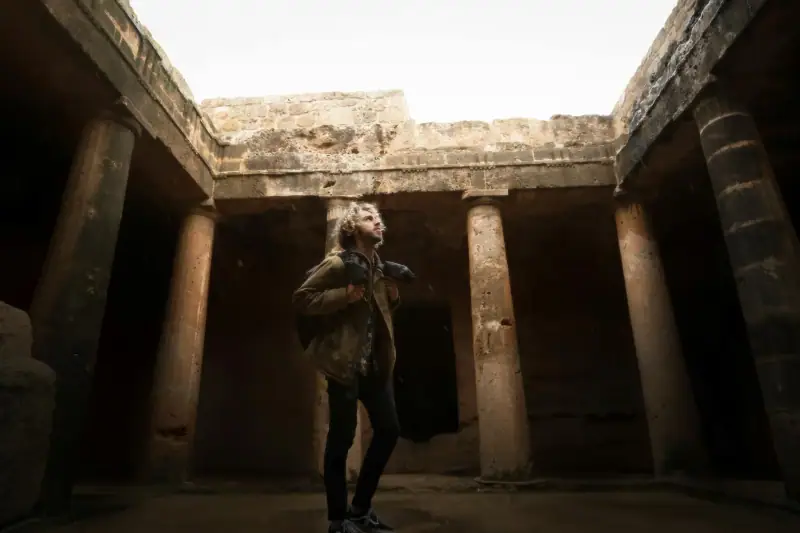
About 2 km (1.2 mi) north of the archaeological park, the Tombs of the Kings are one of the most impressive burial sites in Cyprus. Despite their name, these monumental tombs cut into the limestone held not kings but aristocrats and senior officials of the Hellenistic and Roman periods (4th century BC to 3rd century AD).
What strikes you first is the architecture. Several tombs are organized around an open-air sunken (underground) courtyard surrounded by Doric columns carved directly into the rock. The inspiration comes from the Ptolemaic architecture of Alexandria, proof of the close cultural ties between Paphos and Hellenistic Egypt at that time. Some burial complexes have ten or more chambers, arranged like a home to receive the deceased in the afterlife.
Tombs no. 3 and no. 4 are the most spectacular for their peristyle (colonnade) architecture and preservation. Crouch to enter the inner chambers; the atmosphere is striking, between the pinkish limestone walls and the silence.
Good to know: the site is large (several hectares of rock pierced by hundreds of chambers) and lightly signposted. Bring good shoes, as the ground is uneven, and a little shade at midday is welcome. Allow 1 to 1.5 hours for the visit. Admission: about €2.50 (~$3).
Kato Paphos: the harbor and the medieval castle
Kato Paphos harbor is the living heart of the modern city. The harbor promenade (Poseidonos Avenue and around) brings together the restaurants, terraces and shops that give Paphos its Mediterranean resort feel. But the jewel of the harbor is the castle.
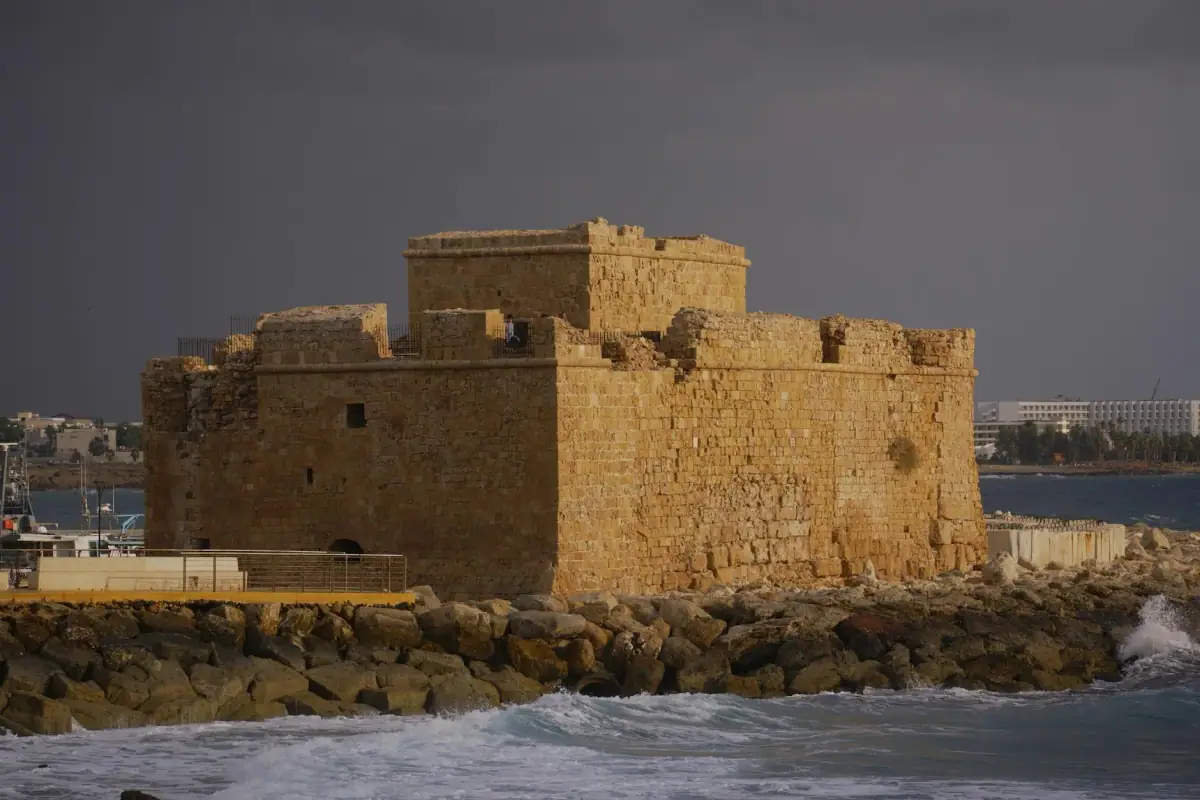
Paphos Castle is a medieval fort originally built by the Byzantines in the 7th century, remodeled by the Frankish Lusignans in the 13th century, then modified one last time by the Venetians before being seized by the Ottomans in 1571. It stands at the end of the harbor jetty with its feet in the sea, with a massive square silhouette visible from the whole promenade.
The interior holds a few exhibition rooms on the city’s history and above all a panoramic terrace with a magnificent view over the harbor, the sea and the coastal cliffs, especially at sunset. Admission: about €2.50 (~$3).
Paphos Lighthouse, visible from the promenade and reached from the archaeological park, is an active 19th-century lighthouse on the cliff edge in Kato Paphos. It offers a fine perspective on the coast and is included in the archaeological park ticket.
The ruins of Saranta Kolones
300 meters (985 ft) from the harbor castle, the ruins of Saranta Kolones (the “Forty Columns”) are the remains of a Byzantine castle built in the 7th century, then enlarged by the Lusignan Crusaders after 1192. It was destroyed by the earthquake of 1222; the stone columns that gave it its name still lie scattered on the ground, creating a landscape of romantic ruins that is freely accessible (included in the archaeological park ticket).
The visit takes 30 minutes and is worth the detour for medieval history buffs: the ramparts, towers and arrow slits recreate the image of a medieval crusader fortress amid Mediterranean vegetation.
Car rental in Paphos
Essential for Coral Bay, Aphrodite's Rock and the Akamas peninsula. Book ahead in high season for the best rates.
Aphrodite’s Rock: Petra tou Romiou
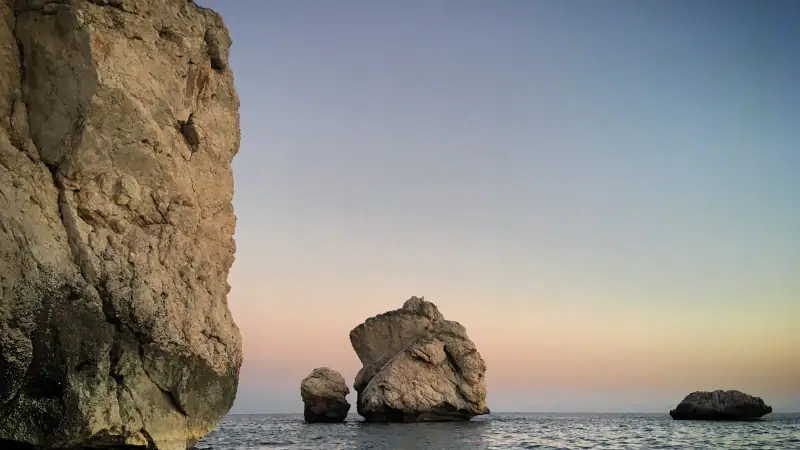
About 25 km (16 mi) southeast of Paphos on the coastal road to Limassol, Aphrodite’s Rock (Petra tou Romiou in Greek, “the rock of the Roman”) is the most emblematic and most photographed site on the whole island. This is where Greek mythology places the birth of Aphrodite, rising from the sea foam.
What you will see: two large limestone rocks emerge from the turquoise water of a pebble and coarse sand beach. The backdrop of golden cliffs and the extraordinary clarity of the water make an image worthy of a Renaissance painting. The beach itself is not the best for swimming (the pebbles are sharp and the sea can be rough), but the atmosphere of the place is unique.
Legend has it that swimming three times around the rock guarantees eternal beauty, a promise many try every year. The site is free, reached from a parking lot (paid in high season) and a visitor center with an exhibition and cafeteria on the cliff side.
Tip: come early in the morning (before 9 am) or in the late afternoon for the light and to avoid the tour buses. At sunset, the rock turns a pink gold and the photos are splendid.
Access, swimming and visit length are detailed in the guide Petra tou Romiou: is Aphrodite’s Rock worth the detour?.
Paphos’s beaches: from Coral Bay to hidden coves
Paphos is not known for its urban beaches; the Kato Paphos seafront is rather rocky. The best beaches are north and south of the city.
Coral Bay (Corallia Beach) is the most popular beach in the Paphos area, about 10 km (6 mi) north of Kato Paphos. This wide crescent bay of fine golden sand, with shallow turquoise water, is ideal for families. It is equipped (parasols, loungers, water sports) and lined with restaurants and bars. In midsummer it is very busy, so arrive before 10 am to find space.
Lara Bay (Lara Beach) is a wild beach in the Akamas peninsula, about 20 km (12 mi) north of Paphos. Hard to reach (dirt track), with no facilities, it is for adventurers, and for the nesting of loggerhead (Caretta caretta) and leatherback turtles, protected by an active conservation program. Turtle sightings are most likely from May to August, at night. The guide to seeing the turtles of Lara Bay details access and the rules to follow.
Pachyammos Beach and the coves between Paphos and Coral Bay offer less crowded alternatives for anyone seeking a little calm outside high season.
The Akamas Peninsula: hiking and wild nature
About forty kilometers (25 mi) north of Paphos, the Akamas peninsula is the best-preserved natural area in Cyprus, and one of the most beautiful. This 230 km² (89 sq mi) nature park brings together spectacular gorges, juniper and cedar forests, coastal cliffs and deserted beaches.
The Baths of Aphrodite (Loutra tis Afroditis) are the classic starting point for hikes in the Akamas. This small natural pool shaded by an old fig tree and fed by a spring is, according to legend, where Aphrodite bathed. The site itself is modest (a pool of a few square meters under the trees), but the trail leading up from it to the heights of the Akamas offers extraordinary views of the coast and the sea.
The Avakas Gorge is a 2 to 3-hour hike through a narrow limestone gorge, sometimes barely 3 meters (10 ft) wide, with vertical walls 30 meters (100 ft) high covered in clinging vegetation. The trail follows a stream (partly by fording) and ends at a viewpoint on the foothills of the Akamas. Level: moderate, but waterproof shoes are recommended.
For hikes in the Paphos and Troodos region, see the guide to hiking in the Troodos Mountains.
Excursions in Paphos and the Akamas
4x4 jeeps in the Akamas, cruises to Lara Bay, diving on coastal reefs: book your activities ahead in high season.
Food in Paphos
Ktima: the district of local tavernas
While Kato Paphos (the harbor) is dominated by tourist restaurants with menus in six languages, Paphos old town, called Ktima or Paphos Town, offers a much more authentic and affordable dining experience. This district perched on the hill 5 km (3 mi) from the harbor is where Cypriots live, and its tavernas serve traditional cooking with no concession to mass tourism.
Essentials of Cypriot dining in Paphos:
- Cypriot meze: a succession of 15 to 20 small dishes covering the whole palette of local cooking: tahinopitta (sweet bread rolled with tahini), loubia (black-eyed beans in olive oil), octopus marinated in red wine, keftedes (mint-flavored meatballs), pork or chicken souvlaki, grilled halloumi, all served with pita bread and commandaria (sweet wine from the Limassol/Troodos region)
- Grilled halloumi: Cyprus’s signature cheese, heat-resistant, slightly elastic, served hot with fresh herbs and lemon. Halloumi production is an old tradition in Cyprus, and the artisanal variants of the Paphos region taste slightly different from the industrial versions exported
- Fresh fish: Paphos is a port city, and the harbor restaurants offer the fish of the day landed that very morning: sea bream, sea bass, red mullet, squid
Paphos wines and Commandaria
The Paphos region is one of Cyprus’s historic wine areas, with several estates producing local grapes such as Xynisteri and Maratheftiko on the foothills of the Paphos Forest. Commandaria, a natural sweet wine produced since antiquity from sun-dried grapes, considered one of the oldest wines in the world still made, is not a Paphos wine: its designation of origin is strictly limited to 14 villages on the southern slopes of the Troodos in the Limassol district (Kalokhorio, Zoopigi, Lania, etc.), about 30 km (19 mi) north of Limassol. To go deeper, the article on Cyprus wines presents the local grapes and estates to visit.
A 3-day Paphos itinerary
Day 1: Archaeology in the city
Morning (8 am-12 pm): start at the archaeological park at opening time to see the mosaics in the cool. Spend 2 hours at the Houses of Dionysos, Theseus and Aion. Finish with the lighthouse.
Lunch: in the tavernas around Kato Paphos harbor.
Afternoon (2-5:30 pm): the Tombs of the Kings (1 h 30), then the ruins of Saranta Kolones (30 minutes). At sunset, climb onto the harbor castle terrace.
Evening: dinner on the harbor promenade, facing the sea.
Day 2: Aphrodite’s Rock and Coral Bay
Morning: drive to Aphrodite’s Rock (25 km / 16 mi southeast, ~30 min). Arrive around 9 am before the groups. Swim, take photos, explore the surroundings.
Lunch: on the way back, in one of the seaside tavernas between Petra tou Romiou and Paphos.
Afternoon: head for Coral Bay (10 km / 6 mi north of Paphos). Beach afternoon. Option: snorkeling on the Coral Bay reefs.
Evening: dinner in Ktima (Paphos old town) for a more local and more affordable experience.
Day 3: Akamas peninsula
Morning: excursion into the Akamas. Leave early for the Avakas Gorge (2-3 hours of hiking) or choose an organized jeep safari if you prefer not to drive on tracks.
Lunch: in the village of Latchi (fishing port at the northeast entrance of the Akamas peninsula) for fresh fish by the sea.
Afternoon: the Baths of Aphrodite, then a swim at Lara Bay if the track is passable.
Evening: back to Paphos, free evening.
Practical information for visiting Paphos
How to get to Paphos
By air: Paphos International Airport (PFO) is about 8 km (5 mi) southeast of the center of Kato Paphos.
Bus from Larnaca: about 2 h 15 by intercity bus, fare about €7 (~$8).
Bus from Limassol: about 1 h 15, fare about €4 (~$5).
From Nicosia: about 2 hours by intercity bus, fare about €7 to 8 (~$8 to 9).
Getting around Paphos and its surroundings
On foot: Kato Paphos (harbor, castle, archaeological park, Tombs of the Kings) is entirely walkable within a 2 km (1.2 mi) radius. Ktima old town is 5 km (3 mi) from the harbor; plan on a taxi or the local bus.
Local buses: the OSEA bus network links Kato Paphos to Ktima, the airport and a few nearby destinations such as Coral Bay (bus 615, about 25 to 30 minutes). Ticket about €1.50 (~$1.75).
Rental car: essential for Aphrodite’s Rock, Coral Bay, the Akamas and the surrounding villages. Allow €25 to 40 a day (~$29 to 46). Reminder: you drive on the left in Cyprus, a legacy of the British period.
Budget in Paphos
Paphos is slightly more expensive than Larnaca but comparable to Limassol. Ktima old town lets you cut the accommodation and dining budget significantly.
| Item | Budget | Comfort |
|---|---|---|
| Accommodation (night) | €50-80 (~$58-93) | €100-180 (~$115-210) |
| Meals (per day) | €25-40 (~$29-46) | €50-80 (~$58-93) |
| Transport (car) | €25-35/day (~$29-41) | €35-60/day (~$41-70) |
| Activities and admissions | €15-25 (~$17-29) | €40-80 (~$46-93) |
| Total / day | €115-180 (~$133-210) | €225-400 (~$260-465) |
For a full budget for your whole stay in Cyprus, see the guide to the Cyprus budget.
Paphos in your Cyprus trip
Paphos is often the start or end point of a road trip across Cyprus, thanks to its international airport and its strategic position on the west coast. For those who want to go deeper into the island’s ancient history, the article on Cyprus’s ancient sites puts the Paphos archaeological park in perspective within Cyprus’s whole historical heritage.
To choose where to stay during your visit, see the guide to where to stay in Paphos, which presents the best areas and hotels for your budget and priorities.
Paphos is one of those rare cities that manages to be both an international beach resort and a first-rank archaeological site. It can satisfy the culture-minded traveler as well as the vacationer looking for beaches and sun, a rare duality, and it is what makes it the most complete destination in Cyprus.
To plan your days there, find activity ideas in the guide what to do in Paphos.
Frequently asked questions
Is Paphos worth a detour in Cyprus?
Yes, Paphos is one of the richest destinations in Cyprus. A UNESCO World Heritage site since 1980, it holds the finest Roman mosaics in the eastern Mediterranean, the mysterious Tombs of the Kings and superb coastal scenery. It is also the legendary birthplace of Aphrodite, which gives it a unique atmosphere between myth, archaeology and beach.
How many days do you need to visit Paphos?
Three days is the recommended minimum to enjoy Paphos without rushing: one day for the archaeological park and the Tombs of the Kings, one day for the harbor, the castle and the old town (Ktima), one day for Aphrodite's Rock, Coral Bay and the first foothills of the Akamas. With five days, you can add a full excursion into the Akamas peninsula.
Where is Paphos in relation to the rest of Cyprus?
Paphos is on the west coast of Cyprus, about 65 km (40 mi) west of Limassol and 145 km (90 mi) from Nicosia. The city has its own international airport (PFO), which makes it a very practical entry point. It is about 45 minutes by car from the Paphos Forest and the first slopes of the Troodos.
What is the best time to visit Paphos?
April-June and September-October are the ideal months: generous sun, swimmable sea (22 to 26 °C / 72 to 79 °F) and archaeological sites not overrun by groups. Summer (July-August) is very hot (35 to 40 °C / 95 to 104 °F) and the beaches are crowded. Winter (December-February) is mild (15 to 18 °C / 59 to 64 °F by day) and excellent for archaeology and hiking, but the sea is cold.
Are the Paphos mosaics within walking distance of the harbor?
Yes, Paphos Archaeological Park (mosaics) is in Kato Paphos, the harbor district, about 500 meters (1,640 ft) on foot from the castle. Most of the major sites of Kato Paphos are within a 2 km (1.2 mi) area that can be covered on foot. A car is, however, essential to reach Coral Bay, Aphrodite's Rock or the Akamas peninsula.
Is Paphos expensive compared with the rest of Cyprus?
Paphos is one of the most touristy destinations in Cyprus, which shows in the prices of seafront accommodation and restaurants. However, Paphos old town (Ktima), 5 km (3 mi) from the harbor, is much more affordable. By avoiding places on the seafront promenade and choosing local tavernas in Ktima, a reasonable budget is still entirely possible.
Can you visit Paphos without a car?
The heart of Kato Paphos (harbor, castle, mosaics, Tombs of the Kings) is entirely reachable on foot. Local buses link Kato Paphos to Ktima and a few nearby sites. But for Aphrodite's Rock (25 km / 16 mi), Coral Bay (10 km / 6 mi) or the Akamas (30 to 40 km / 19 to 25 mi), a rental car is practically essential. Taxis are available but expensive for these distances.
More Cyprus guides
Keep reading
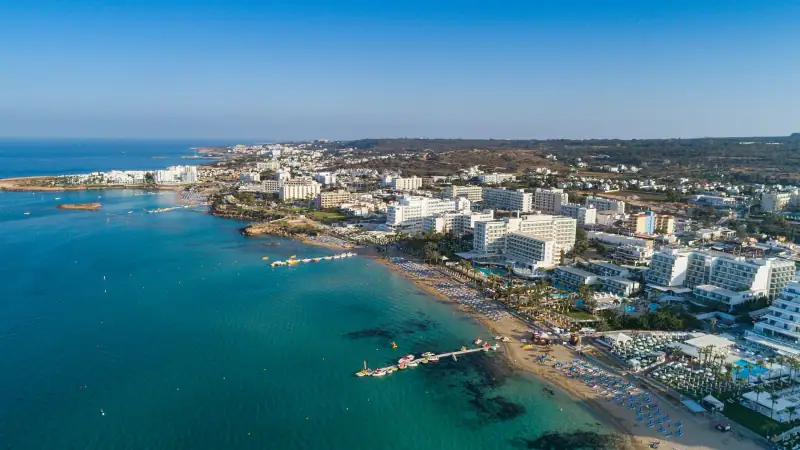
Visiting Protaras: A Complete Guide to Cyprus's Family Resort
Complete guide to Protaras: Fig Tree Bay, Cape Greco, beaches, diving, activities and practical information for Cyprus's east coast.
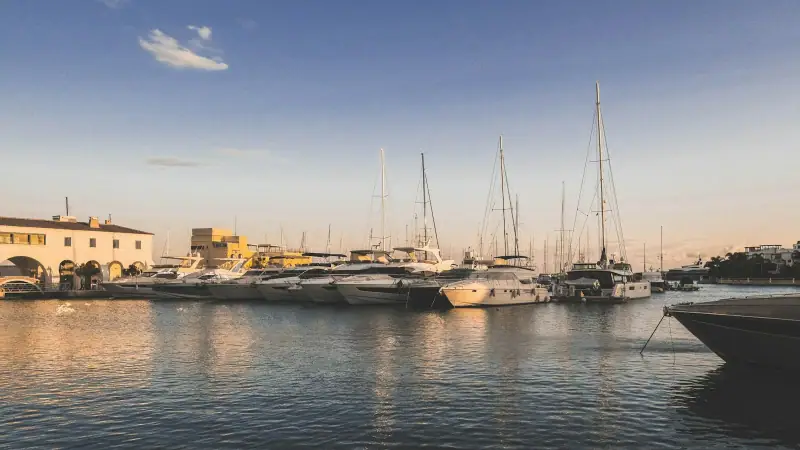
Visiting Limassol: A Complete Guide to Cyprus's Second City
Everything you need to visit Limassol: medieval castle, old town, marina, beaches, wine and food. A complete guide with a 2-day itinerary.
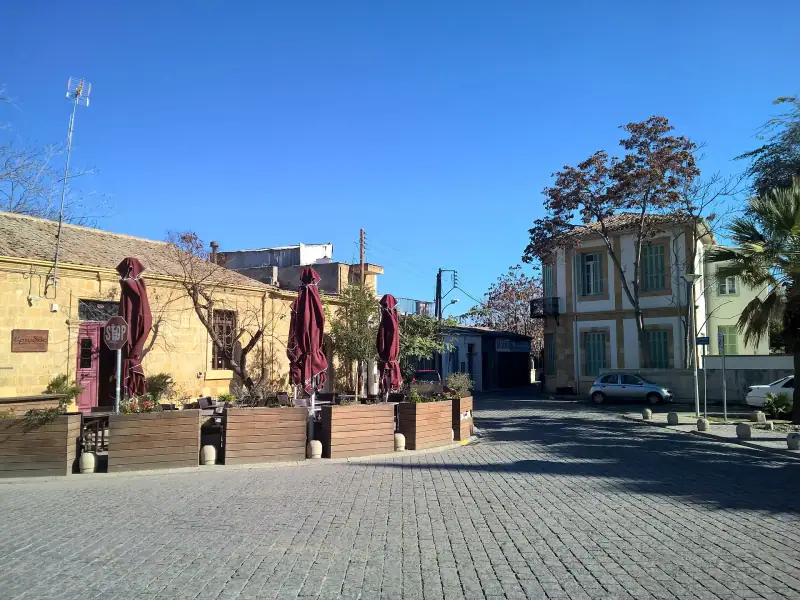
Visiting Nicosia: A Complete Guide to Cyprus's Divided Capital
Complete guide to Nicosia: Venetian walls, the Green Line, the Cyprus Museum, Laiki Yitonia and the north. The world's only divided capital.
Ready-made
Cyprus itineraries
5 days
Cyprus in 5 Days Without a Car: A Realistic Bus Itinerary
LarnacaLimassol
7 days
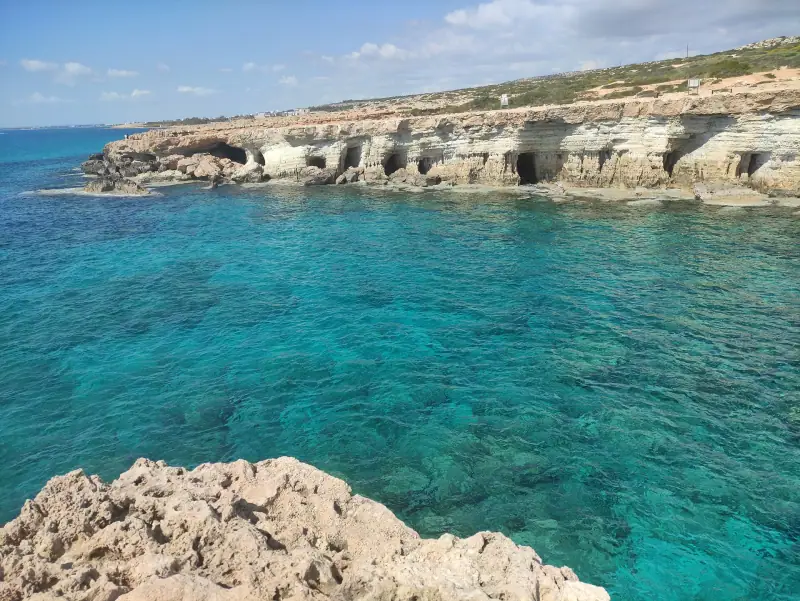
Cyprus in 7 Days: A Complete Day-by-Day Itinerary
Cyprus 7-day itinerary: the best plan for a full week. From Paphos to Ayia Napa via Limassol, Nicosia and the Troodos, day by day.
Cyprus Road Trip: The Complete Itinerary Around the Island
Drive around Cyprus in 10 to 14 days. Complete itinerary, essential stops and practical tips for an unforgettable road trip.